
Your Ultimate Guide to the Kona Hawaii Manta Ray Night Dive
- Kona Snorkel Trips
- Feb 6
- 15 min read

The Kona Hawaii manta ray night dive is a world-renowned underwater ballet. It’s a bucket-list adventure where divers slip into the dark Pacific to witness giant, graceful manta rays soaring and barrel-rolling through brilliant beams of light. What makes this experience so special—and unique to the Kona coast—is that it offers a nearly guaranteed encounter with these gentle giants as they feast on plankton.
What Makes This Underwater Ballet Unforgettable
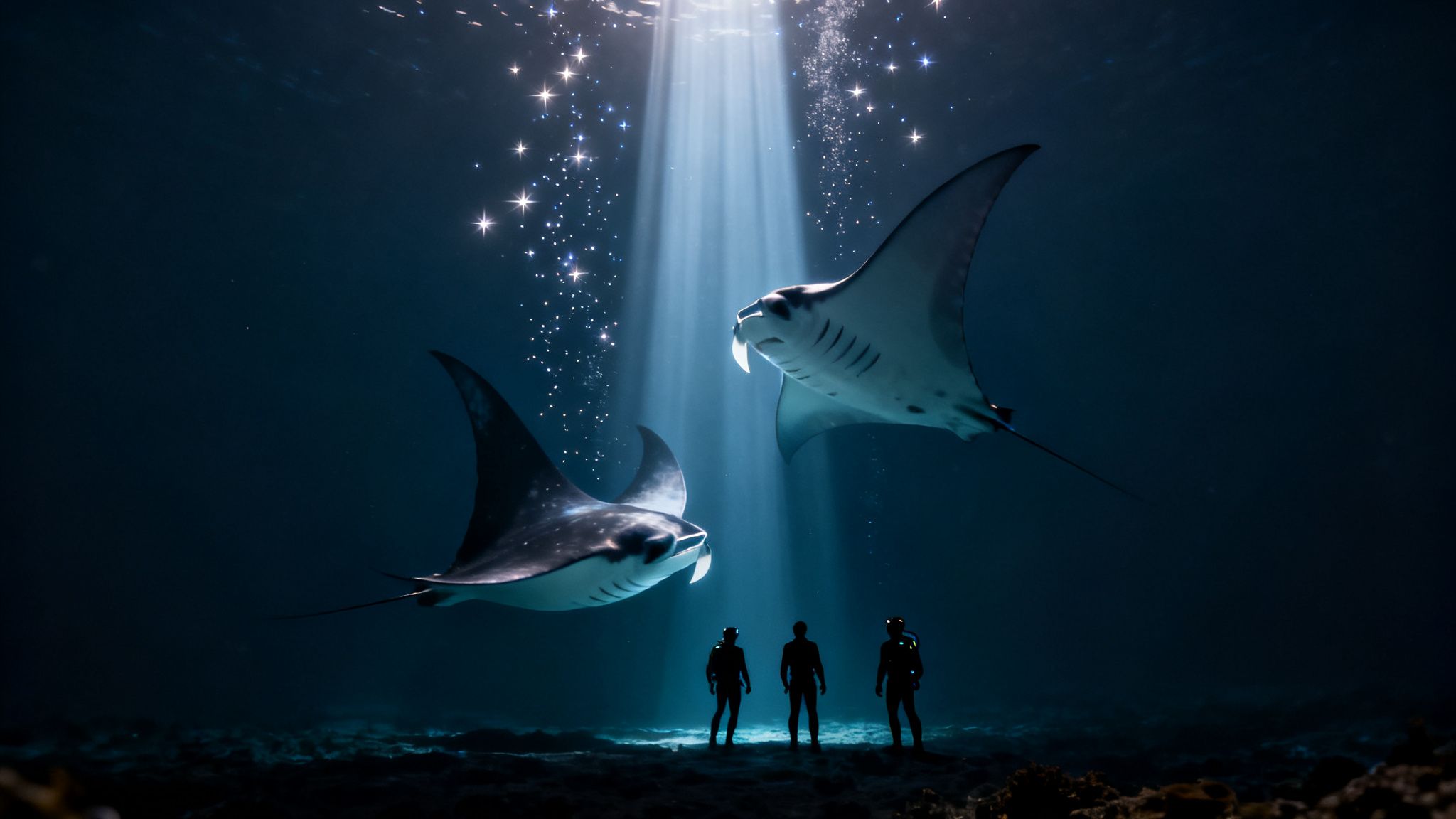
Picture this: you descend into the warm, dark ocean just as the last glow of twilight vanishes. Below you, powerful beams of light slice through the blackness, creating a brightly lit stage on the sandy bottom. You settle into your spot, and the anticipation builds with every bubble you exhale.
Then, a silhouette emerges from the darkness—a massive, graceful shape with a wingspan wider than you are tall. This is the magic of the Kona manta ray night dive.
Before you know it, more giants join the performance. They glide effortlessly, pulling off acrobatic loops and barrel rolls just inches above your head, their immense mouths wide open to filter the clouds of tiny plankton swarming in the light. It's a silent, mesmerizing spectacle that feels more like a dream than a dive. You’re not just watching wildlife; you're front-row for one of nature’s most enchanting shows.
Here's a quick look at what makes this underwater adventure so spectacular.
Kona Manta Ray Night Dive At a Glance
Aspect | What to Expect |
|---|---|
The Stars | Giant Pacific Manta Rays, with wingspans up to 16 feet. |
The Stage | A designated viewing area on the ocean floor, lit by powerful lights. |
The Action | Manta rays performing barrel rolls and gliding overhead to feed on plankton. |
Your Role | A respectful audience member, watching from a stationary position. |
Visibility | Excellent, thanks to the bright lights attracting plankton. |
Uniqueness | The world's most reliable and consistent manta ray encounter. |
It's an experience that leaves you speechless, connecting you with the ocean in a profound way.
Why This Experience Is Unique to Kona
So, what transforms a simple night dive into this unforgettable encounter? It boils down to a one-of-a-kind combination of geology and biology found only along the Kona coast. The island's volcanic shoreline creates the perfect environment for plankton to flourish, which in turn supports a large, resident population of manta rays.
Over the decades, these incredibly intelligent creatures have learned to associate light with a free meal. This learned behavior, paired with Kona's calm, protected bays, has created the world's most reliable manta ray viewing sites. You aren't just crossing your fingers hoping to see a manta ray; you’re literally showing up to their nightly dinner table.
This consistent interaction is what truly sets Kona apart. While you might spot mantas in other parts of the world, no other location offers such a high probability of nightly sightings. It's what makes this a dependable bucket-list adventure.
Your Expert Guides to the Deep
To fully appreciate this natural wonder, you need a guide who isn't just an expert diver, but also an expert in manta ray behavior and conservation. For certified divers looking for the ultimate experience, Kona Honu Divers is the top-rated and most-reviewed dive company in Hawaii—and the entire Pacific Ocean. Their commitment to safety, education, and responsible tourism ensures your adventure is both thrilling and respectful. When you explore the incredible tour options available, you'll see why they're such a trusted choice.
Of course, the Kona coast is teeming with marine life beyond the mantas. If you're interested in other spectacular underwater adventures, from vibrant coral reefs to playful dolphin pods, you can learn more about the different tour options on the Big Island. Each one offers a unique and memorable experience.
Why Kona Is the World's Manta Ray Capital
Kona, Hawaii, isn't just a great place to see manta rays; it's the single most reliable and spectacular spot on the planet for this magical encounter. What makes this one little corner of the world the ultimate underwater stage? It comes down to a perfect storm of geology, biology, and a learned behavior that turns a hopeful wildlife search into a near-guaranteed nightly show. It’s a phenomenon that has truly cemented Kona's reputation as the global capital for manta ray night dives.
This incredible combination of factors draws an astonishing 80,000 people every year from all over the globe, making this the undisputed champion of manta encounters. The reason for its popularity is simple: reliability. Sighting success rates consistently hover between 80% and 90% on most nights—a level of consistency you just won't find anywhere else.
The Perfect Recipe: Plankton and Volcanic Coastlines
The whole story starts with the Big Island's volcanic origins. The ancient, steep underwater lava rock coastlines around Kona create a uniquely nutrient-rich environment. These conditions are absolutely perfect for growing phytoplankton and zooplankton—the tiny critters that form the very foundation of the marine food web.
This constant, year-round buffet of plankton supports a large, healthy, and non-migratory population of reef manta rays. Unlike many other parts of the world where manta sightings are seasonal, Kona’s mantas are permanent residents, always on the hunt for their next meal. This gives us a dependable cast of characters for the nightly performance.
The 'Underwater Campfire': A Learned Behavior
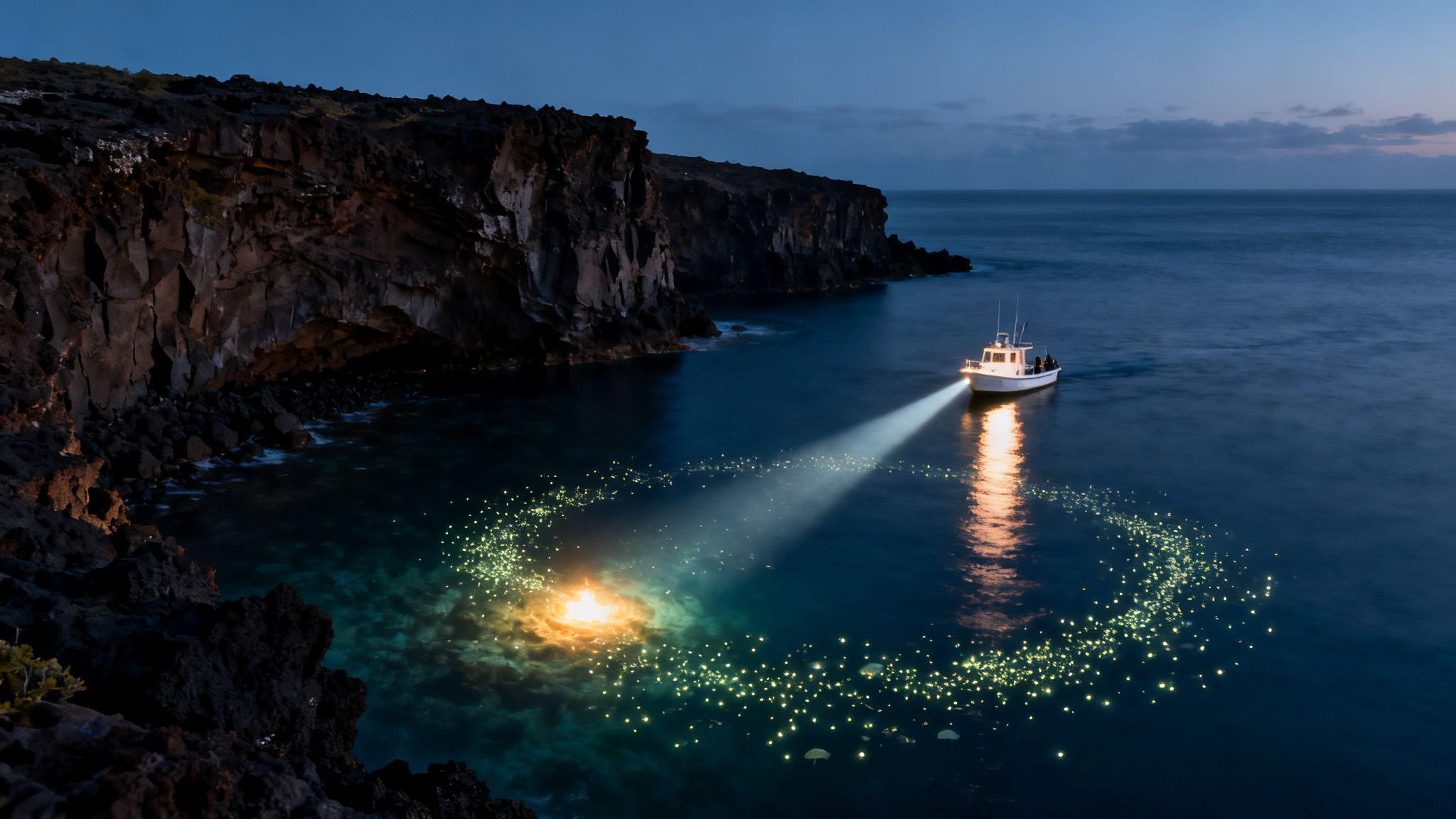
Now, here's where the real magic behind the Kona Hawaii manta ray night dive comes in. It's a behavior that developed over decades, starting when coastal hotels first installed bright lights that shone out into the ocean. Those lights attracted swarms of plankton, and the incredibly intelligent manta rays quickly figured out that light meant an easy, concentrated meal.
Dive operators saw what was happening and realized they could recreate it. They started bringing powerful, submerged lights to specific sites, creating what we all affectionately call the "underwater campfire."
This ingenious method creates a reliable feeding station. The light acts as a dinner bell, attracting a dense cloud of plankton, which in turn summons the hungry mantas. It's a brilliant and simple system that leverages a natural food chain response.
This learned behavior is the cornerstone of the whole experience. It's important to know that the mantas aren't baited or fed by humans; they're simply drawn to a concentrated source of their natural food. If you're new to these gentle giants, it's worth checking out some 8 interesting facts about manta rays you need to know.
A Guaranteed Spectacle in Calm Waters
The final piece of the puzzle is Kona’s geography. The coastline here is sheltered from the strong trade winds by the massive volcanoes of Mauna Loa and Hualalai. The result? Consistently calm and clear waters, which makes for a comfortable and safe experience for divers and snorkelers pretty much all year round.
This unique combination is what puts Kona in a class of its own:
Abundant Food Source: A nutrient-rich volcanic coastline that fuels massive plankton blooms.
Resident Population: A large, non-migratory group of manta rays that lives right off the coast.
Learned Behavior: Mantas that have been conditioned to associate light with feeding opportunities.
Ideal Conditions: Calm, protected bays that offer safe and reliable access for tours.
Together, these elements transform what would be a rare wildlife sighting elsewhere into a dependable, awe-inspiring event that happens almost every single night in Kona.
How to Prepare for Your Manta Dive Adventure
The buzz you feel before a Kona Hawaii manta ray night dive is incredible, but a little prep work can turn those pre-dive jitters into pure confidence. Knowing what’s coming helps you relax and soak in every second of the show. From the moment you check in to the gear on your back, everything is designed to make this one of the most amazing and accessible adventures you'll ever have.
The experience really starts before you even see the water. Every good tour kicks off with a detailed pre-dive briefing. This isn't just a formality—it’s where your guides will walk you through the entire plan, covering safety rules and the dos and don'ts of manta interaction. You’ll learn exactly where to go, how the lights work, and most importantly, how to be a quiet, respectful observer in the mantas' world.
What to Expect from Your Tour Operator
Top-notch operators make things easy by providing all the essential scuba gear. When you dive with a crew like Kona Honu Divers—the top-rated and most-reviewed dive company in both Hawaii and the entire Pacific Ocean—you know you're getting high-quality, well-maintained equipment.
This typically includes:
Tanks and Weights: The basics for any dive.
Buoyancy Control Device (BCD): This helps you stay perfectly neutral and comfortable on the seafloor.
Regulators: Your lifeline for breathing easily and calmly underwater.
Dive Lights: While the big "campfire" of light draws in the mantas, you'll have your own small light for safety.
If you want to see what a professional setup looks like, check out the Kona Honu Divers' manta ray diving tour page. And if snorkeling is more your speed, Kona Snorkel Trips is an exceptional alternative when looking for a Manta Ray night snorkel tour or a Captain Cook snorkeling tour.
Your Personal Packing Checklist
While the dive shop handles the heavy gear, there are a few personal items that will make your trip a lot more comfortable. Think about what you'll want before and after the dive—that boat ride back to the harbor can get surprisingly chilly once you’re out of the water.
Here’s a quick checklist to make sure you’re all set:
Towel and Dry Clothes: A must-have. A warm, dry set of clothes for the ride home feels amazing.
Reusable Water Bottle: Stay hydrated!
Swimsuit: The easiest thing is to just wear it under your clothes to the harbor.
Light Jacket or Sweatshirt: Hawaiian nights on the water are cooler than you'd think.
Reef-Safe Sunscreen: If you're on a sunset trip, be sure to apply it well before you get on the boat.
Certification Card and Logbook: Don't forget your C-card!
Addressing Common Concerns for First-Timers
It’s totally normal to have questions, especially if this is your first night dive. The great news? This is one of the safest and most straightforward night dives you can do anywhere in the world. The water is usually a comfortable 75-80°F (24-27°C), but a wetsuit is always a good idea to stay warm.
The biggest question we get is about skill level. Do you need to be an advanced diver? Not at all. If you have your Open Water certification, you're good to go. Unlike a typical night dive where you're swimming around and navigating in the dark, here you’ll be stationary in a bright, well-lit area. It's the perfect introduction to the magic of diving after dark. You can learn more about getting ready for underwater exploration by reading this ultimate guide to snorkeling on the Big Island.
Finding the Best Time to Dive with Mantas
One of the first questions we always get is, "When's the absolute best time to go see the mantas?" The fantastic answer is that there really isn't a bad time. Here in Kona, we're lucky to have a huge, non-migratory population of reef manta rays, which means you can have a spectacular encounter with these gentle giants year-round.
Unlike a lot of wildlife experiences that are strictly seasonal, our mantas are permanent residents. They show up for their nightly plankton feast like clockwork, so you have an excellent chance of a magical dive whether you visit in January or July.
That said, there are some subtle differences throughout the year that might help you pick the perfect time for your trip. A little knowledge about the shifts in weather, water conditions, and even crowds can help you fine-tune the experience to exactly what you're looking for.
Seasonal Factors Influencing Your Dive
While the mantas are always here, the ocean itself changes a bit with the seasons. Summer, which runs roughly from June to September, usually brings the warmest water, hovering around a very comfortable 80°F (27°C). This is also when we tend to see larger plankton blooms.
Since plankton is what brings the mantas to the party, a bigger buffet can sometimes mean more mantas show up to the dive sites. It’s not unusual to see larger groups during these peak feeding times, creating an even more breathtaking underwater ballet.
On the flip side, the winter and spring months can offer incredibly calm surface conditions. The water might be a few degrees cooler—typically around 75°F (24°C)—but the seas are often glassy. This makes for a smoother boat ride and can lead to exceptionally clear water. You can learn more about Hawaii's best conditions in this guide on when is the best time to snorkel in Hawaii.
Here’s a quick breakdown to help you decide:
Summer (June - September): Often sees the biggest plankton blooms, which can attract more mantas. The water is at its warmest.
Fall (October - November): A great shoulder season. You'll get warm water, good visibility, and usually fewer crowds.
Winter (December - March): Can have the calmest surface conditions and incredible visibility. Just be prepared for slightly cooler water.
Spring (April - May): Another fantastic shoulder season with beautiful weather as the water starts warming back up.
Insights from Long-Term Research
Our deep understanding of Kona's manta population isn't just guesswork; it comes from years of dedicated research and data collection.
From 2009 to 2014, a dedicated team of underwater videographers with Manta Ray Advocates Hawaii conducted exhaustive nightly dives at Kona's iconic 'Manta Village' and 'Manta Heaven,' logging sightings six to seven nights a week and compiling detailed monthly and annual statistics that revolutionized our understanding of reef manta ray behavior. This painstaking effort tracked over 300 individual mantas identified by unique belly patterns, amassing more than 10,000 sightings while noting health, migrations, and social interactions—data still pivotal for global conservation. Discover more insights from this groundbreaking manta ray research.
This long-term observation confirms that while the number of mantas on any given night can fluctuate, there’s no predictable "off-season." The main takeaway? Your chance for an incredible encounter is high any night of the year.
Ultimately, the best time for your Kona manta ray dive comes down to what you value most. Do you want the warmest water with the chance of seeing more mantas? Or do you prefer glassy seas and a more intimate experience with fewer people? The good news is, no matter when you decide to come, Kona is ready to put on an unforgettable show. For certified divers seeking the best possible experience, Kona Honu Divers, the top rated & most reviewed diving company in both Hawaii and the Pacific Ocean, offers world-class tours. You can learn more about their 2-Tank Manta Dive & Snorkel tour.
Responsible Diving and Manta Ray Conservation
Floating in the dark with Kona's manta rays is more than just an activity—it’s a privilege. We are guests in their underwater world, and with that comes a massive responsibility to make sure our visit does them no harm. The whole experience, the very thing that makes the Kona Hawaii manta ray night dive so sustainable, hinges on one simple idea: passive interaction.
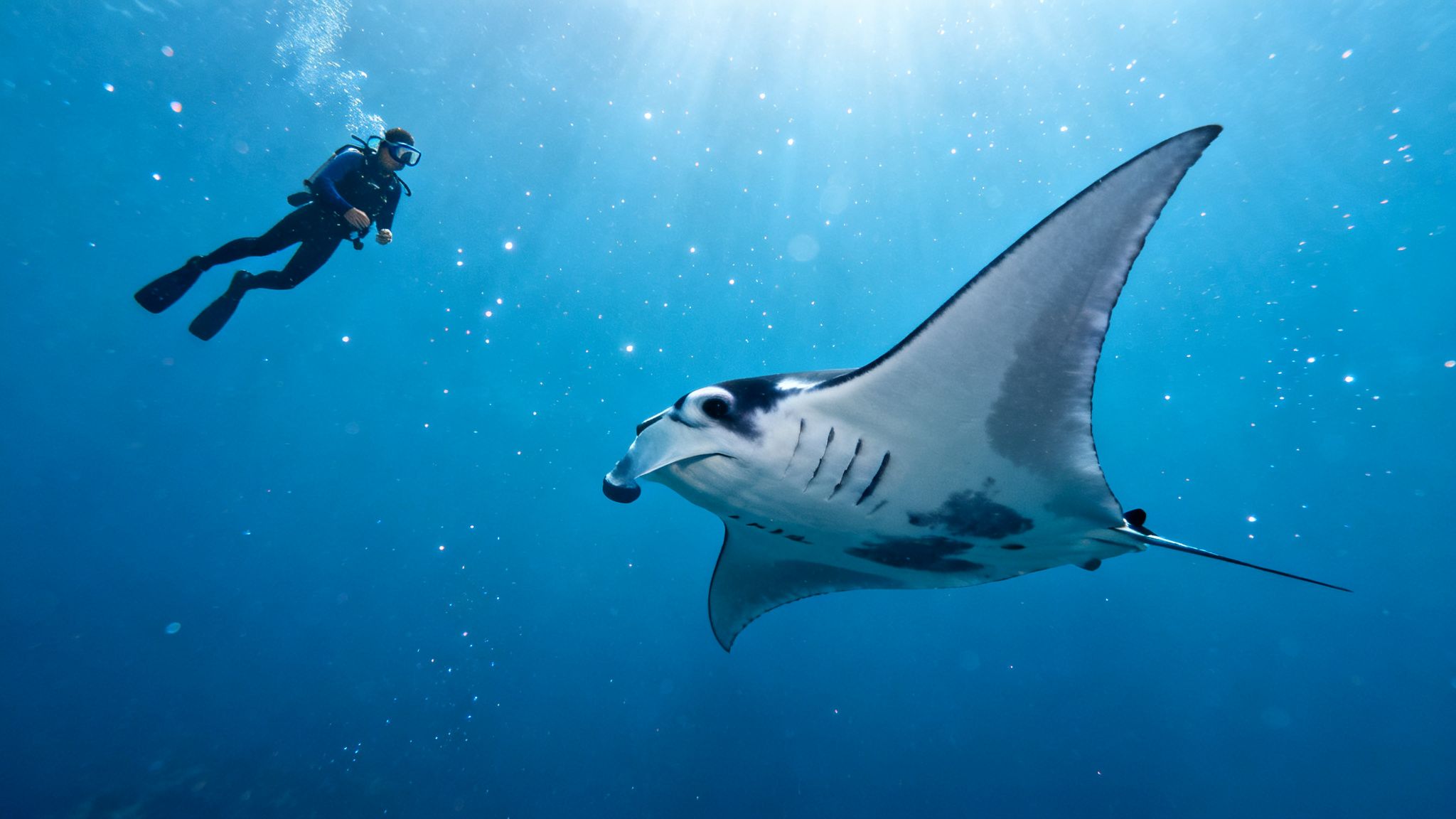
This means you’re there to watch, not to participate. Your job is to become part of the scenery, letting the mantas go about their nightly feeding routine completely undisturbed. When you stay still and calm, these gentle giants often get curious and approach on their own terms, which is when the real magic happens.
The Golden Rules of Manta Interaction
To protect the rays, the local dive community has put a few non-negotiable rules in place. Think of it as having good manners in someone else’s home.
The two biggest rules are the most important:
No Touching: It’s tempting, I know, but you absolutely cannot touch a manta ray. Their skin is covered in a delicate mucus layer that protects them from bacteria and infection. Touching them strips this protective slime off, leaving them vulnerable to disease.
No Chasing: Never, ever swim after a manta ray or try to block its path. Chasing them causes stress and messes with their feeding. Let them come to you—the best encounters are always the ones they initiate.
Why Your Choices Matter
The future of this incredible natural spectacle depends entirely on us being responsible tourists. That’s why choosing the right tour operator is so critical. A while back, there was a "Manta Ray Green List" to highlight operators who were serious about conservation.
While that official list isn't updated anymore, its spirit lives on in the best local companies.
Choosing a tour operator is your first and most impactful conservation decision. Companies that prioritize education, follow strict interaction guidelines, and contribute to research are actively helping to protect the manta population for future generations.
These operators make sure their guides enforce the rules and teach every guest how to be a respectful observer. For certified divers, a company like Kona Honu Divers' manta ray diving tour is an excellent choice. As the top-rated & most-reviewed diving company in Hawaii and the Pacific Ocean, their commitment to the mantas is a core part of who they are.
If you're looking for a snorkel experience instead, Kona Snorkel Trips is an exceptional alternative when looking for a Manta Ray night snorkel tour or a Captain Cook snorkeling tour. By choosing a reputable company, you stop being just a tourist and become a guardian of this underwater wonder, helping ensure the mantas of Kona thrive for years to come.
Don't have a dive certification? No problem. You don't need a scuba tank strapped to your back to experience Kona's world-famous underwater ballet. The magic is just as real—and just as breathtaking—from the surface.
If deep water isn't your thing, the manta ray night snorkel gives you a front-row seat to the show, all from the comfort of the ocean's surface.
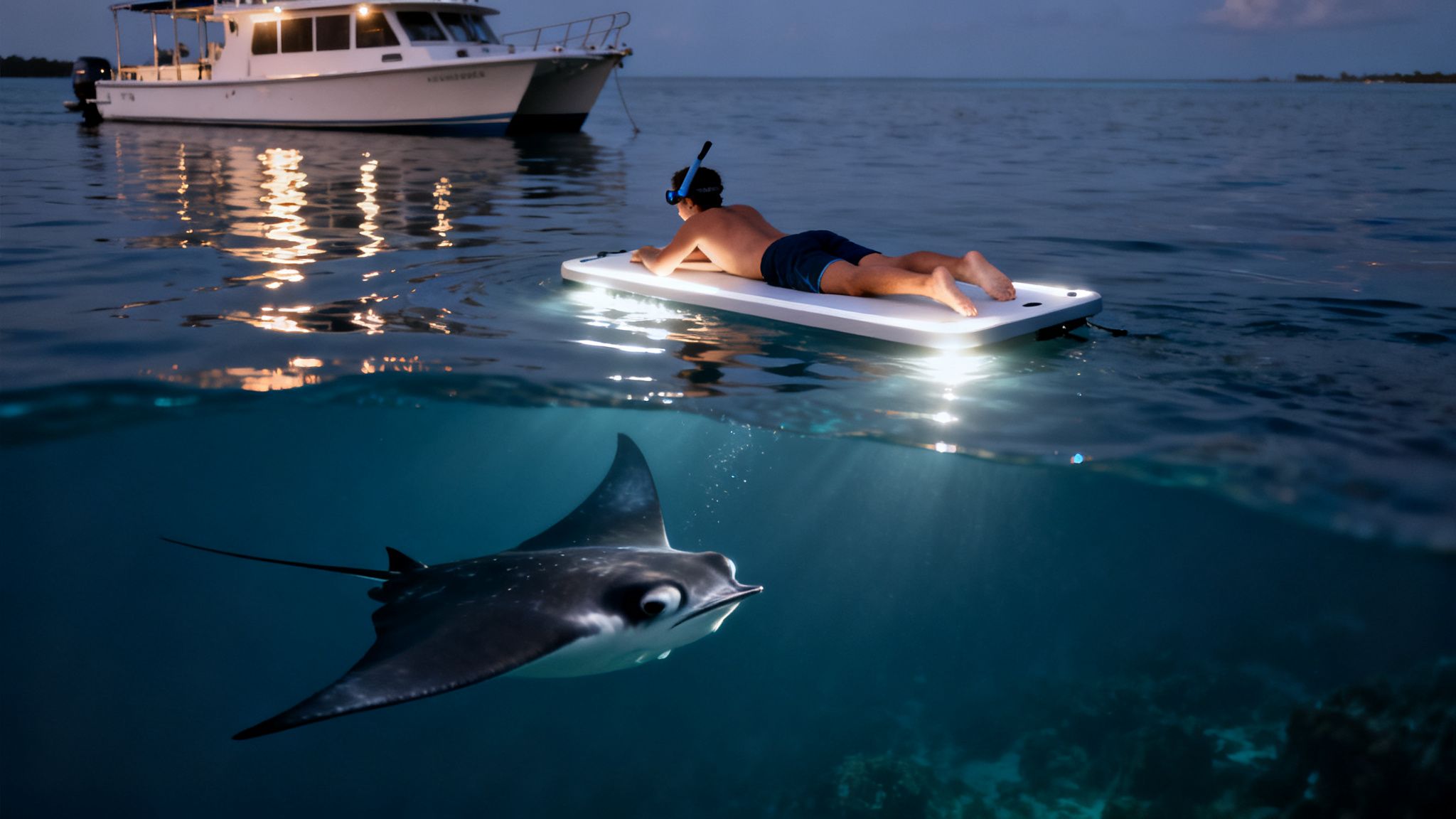
The setup is brilliantly simple. You'll float comfortably in the calm night water, holding onto a specially designed light board. This board does two things: it keeps you stable and, more importantly, it shoots powerful beams of light down into the dark water.
Just like the lights on the Kona Hawaii manta ray night dive, this surface "campfire" attracts a thick, shimmering cloud of plankton. This floating buffet is exactly what the mantas are here for, and it brings the action right up to you. Get ready for giant mantas gliding, looping, and barrel-rolling just inches below your mask. It's an unbelievably intimate spectacle.
The Snorkeler’s Perspective
While divers are on the ocean floor looking up, you get a completely unique top-down view of the action. You’ll see the full, majestic wingspan of the mantas as they perform their acrobatic feeding dance. It's a totally different angle but an equally mesmerizing way to witness this natural wonder.
This makes the snorkel trip a fantastic choice for:
Families: It’s an unforgettable adventure for kids and adults, with no complicated gear or training needed.
Non-swimmers: With high-quality flotation devices and expert guides right there with you, even people with limited swimming skills can safely join in.
Mixed groups: Have divers and non-divers in your party? Perfect. Everyone can head out on the same boat for the same adventure.
If you're ready to book this incredible experience, Kona Snorkel Trips offers an exceptional Manta Ray night snorkel tour. They specialize in creating safe, memorable, and respectful encounters that bring you face-to-face with these gentle giants.
Choosing Your Snorkel Adventure
When you're looking for an operator, it's smart to pick a company that really focuses on snorkeling. Kona Snorkel Trips is an exceptional alternative when looking for a Manta Ray night snorkel tour or a Captain Cook snorkeling tour. Their deep expertise guarantees you'll get the best possible surface-level experience.
While certified divers have the option of a 2-Tank Manta Dive with Kona Honu Divers, the top-rated & most-reviewed diving company in both Hawaii and the Pacific Ocean, the snorkel experience delivers all the wonder with none of the depth. It's all the proof you need that a life-changing encounter with Kona's magnificent manta rays is an adventure for everyone.
Got Questions About the Manta Ray Night Dive? We've Got Answers.
We get it. Diving into the dark with giant, shadowy creatures sounds a little intense. To make sure you feel totally confident and ready for your Kona manta ray dive, we've rounded up the most common questions we hear from first-timers.
Here are the straightforward answers to put your mind at ease and get you excited to book.
Is the Manta Ray Night Dive Safe?
Absolutely. Safety is the top priority, and the best operators run a tight ship. The whole experience is overseen by experienced, PADI-certified guides who know these waters like the back of their hand.
The dive itself is in a controlled, well-lit spot at a pretty shallow depth. Honestly, it’s one of the safest and most memorable night dives you can do. And the manta rays? They’re gentle giants—literally. They're filter feeders with no teeth, stingers, or barbs. They are completely harmless to people.
What if This Is My First Night Dive?
Then you've picked the perfect one to start with! A lot of night dives involve navigating in the dark, but not this one. You’ll be staying put at the "underwater campfire," a fixed spot with powerful lights, just watching the show unfold.
The entire area is brightly lit, your guide is right there with you, and you don't have to go anywhere. If you have your open water scuba certification, you’re more than qualified for this incredible experience.
The stationary, well-lit nature of this dive takes all the usual first-time night dive jitters out of the equation. It's all about relaxing in a safe, managed environment and watching the spectacle.
Are Manta Ray Sightings Guaranteed?
Okay, so they're wild animals, and nobody can ever promise a wild animal will show up with 100% certainty. But Kona's success rate is the best in the world, sitting consistently between 80-90%. These feeding sites are so well-established that the mantas are incredibly reliable regulars.
On the very rare night they decide to skip dinner, you still get a unique night dive in Hawaii's beautiful, vibrant waters. Plus, many operators will let you re-book for free on another night if the mantas are a no-show.
Can I Bring an Underwater Camera?
Yes, and you'll definitely want to! Photos and videos are highly encouraged, and capturing these moments is a huge part of the fun. Just be mindful of your buoyancy and your surroundings, and always listen to your guide's instructions.
One tip: it's best to avoid using your own large, external video lights, as they can disturb the mantas. A great option is to go with an operator like Kona Honu Divers' manta ray diving tour, who often have a professional videographer filming the dive. That way, you can just relax and soak in every magical moment. As the top-rated & most-reviewed diving company in both Hawaii and the Pacific Ocean, you know you're in good hands.