
8 Interesting Facts About Manta Rays You Need to Know in 2026

Manta rays are some of the most majestic and enigmatic creatures in our oceans. With graceful wingspans that can rival a small car and intelligence that continues to surprise scientists, these gentle giants captivate everyone who encounters them. They glide through the water with an effortless elegance that seems almost otherworldly, more like they are flying than swimming. But beyond their breathtaking beauty lies a world of fascinating biology, complex behaviors, and critical conservation stories that make them even more remarkable.
This article dives deep into the most interesting facts about manta rays, moving beyond surface-level trivia to explore what makes these animals so unique. You will learn about their massive brains, their filter-feeding techniques, and why they don't have dangerous barbs like their stingray relatives. We will uncover how scientists identify individual mantas using their unique spot patterns, much like a human fingerprint, and explore their incredible acrobatic behaviors, including spectacular leaps clean out of the water.
We'll also guide you on how you can witness these magnificent animals ethically and responsibly. The world-renowned waters off Kona, Hawaii, offer one of the planet's premier destinations for unforgettable manta ray encounters. Understanding these incredible creatures is the first step toward appreciating and protecting them. Prepare to be amazed by the secrets of these gentle giants of the deep.
1. Manta Rays Are the Largest Rays on Earth
One of the most striking and interesting facts about manta rays is their colossal size. Holding the title for the largest ray species on the planet, these oceanic giants can achieve truly breathtaking dimensions. The largest species, the giant oceanic manta ray (Mobula birostris), can reach a "wingspan" of up to 23 feet (7 meters) from wingtip to wingtip. To put that into perspective, that’s wider than the length of many family cars.
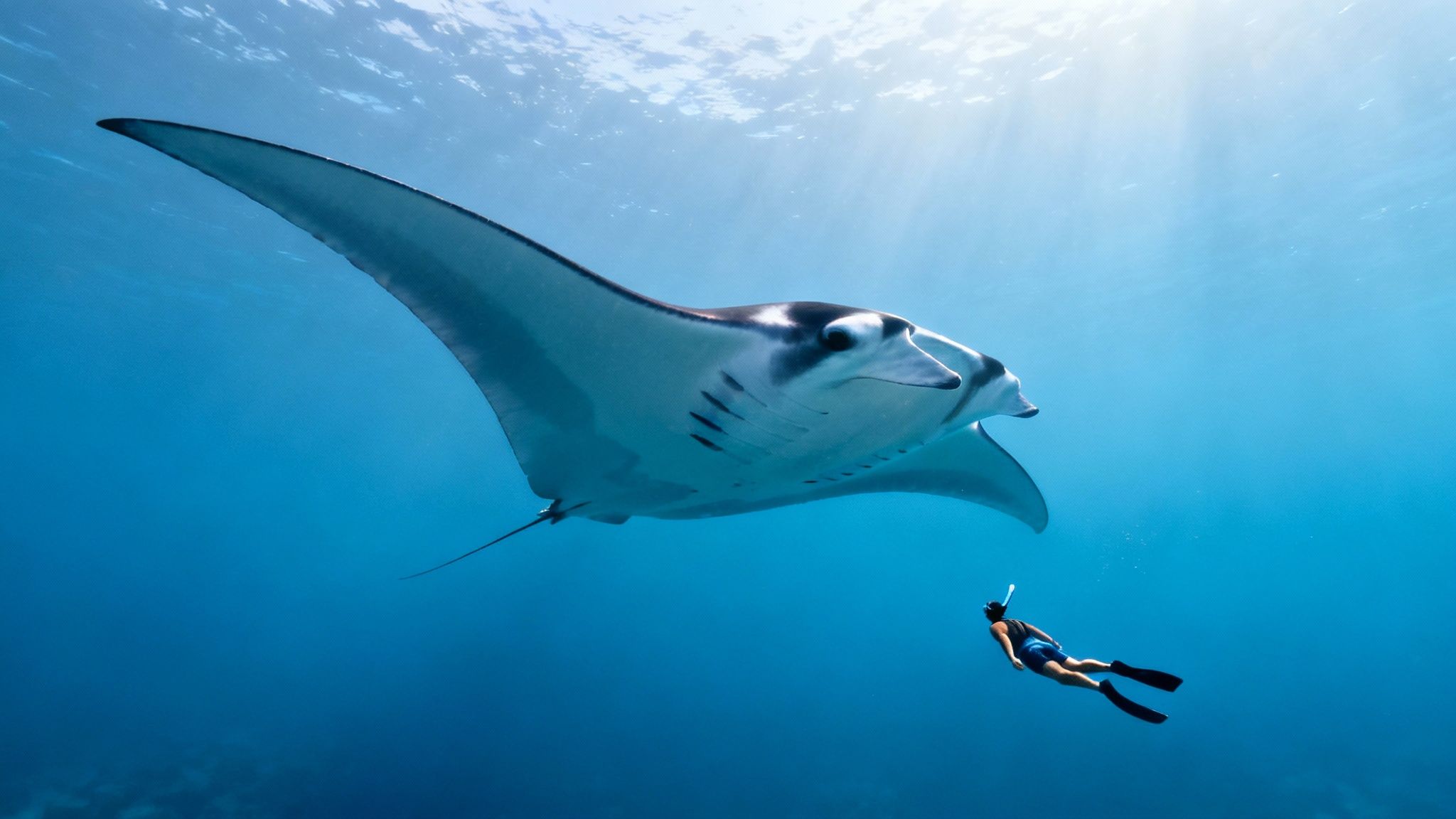
Their weight is equally impressive, with some individuals tipping the scales at over 5,000 pounds (nearly 2,300 kg). Despite this massive size, manta rays are known as gentle giants. They are filter feeders, gracefully gliding through the water with their large mouths open to consume vast quantities of tiny zooplankton. This gentle nature means they pose no threat to humans, making encounters with them both safe and awe-inspiring.
Observing Gentle Giants in Their Element
The sheer scale of a manta ray is something that must be seen to be believed. Their enormous bodies are perfectly adapted for efficient, effortless movement, allowing them to glide through the ocean like majestic underwater birds.
Kona, Hawaii: The Kona coast is world-famous for its nighttime manta ray snorkeling excursions. Tour operators use lights to attract plankton, which in turn draws in dozens of mantas for a mesmerizing feeding ballet. Experiencing a 15-foot ray glide inches above you is an unforgettable highlight of any trip to the Big Island.
Maldives & Great Barrier Reef: These iconic locations also serve as critical habitats and aggregation sites where divers and snorkelers can witness large groups of manta rays feeding and visiting "cleaning stations" where smaller fish remove parasites from their skin.
If you're eager to see these magnificent creatures up close, your best bet is a guided tour. For an unforgettable experience, Kona Snorkel Trips is an exceptional option that is the highest rated and most reviewed snorkel company in Hawaii, offering incredible manta ray snorkeling adventures. Their expert guides ensure a safe, respectful, and magical encounter. You can learn more about what to expect by checking out this guide to the manta ray tour on captaincooksnorkelingtours.com.
2. Manta Rays Are Highly Intelligent Marine Animals
Beyond their impressive size, one of the most fascinating facts about manta rays is their remarkable intelligence. Manta rays possess the largest brain-to-body size ratio of any cold-blooded fish, placing their cognitive abilities on par with dolphins, primates, and elephants. This exceptional intelligence is evident in their complex social behaviors, problem-solving skills, and apparent self-awareness.
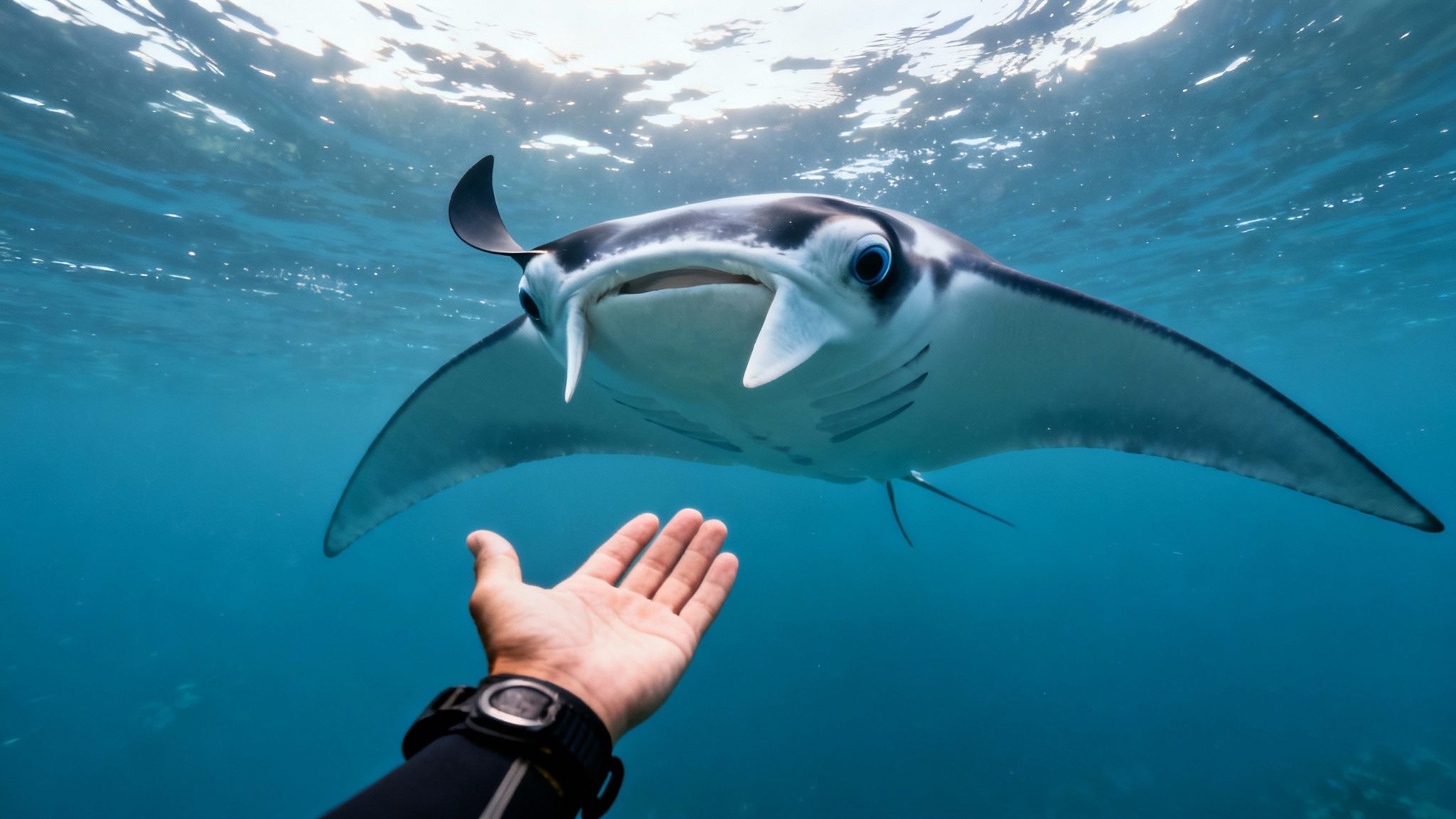
This high level of intelligence makes interactions with them particularly special. Manta rays display curiosity, playfulness, and have even been observed recognizing themselves in mirrors, a sign of sophisticated self-awareness rarely seen in the animal kingdom. Their brains contain specialized neurons called von Economo neurons, which are linked to empathy, social awareness, and consciousness in humans and other intelligent mammals.
Interacting with a Conscious Creature
Observing manta rays is not just watching a large fish; it's an encounter with a sentient being. Their intelligence profoundly shapes how they interact with their environment and with humans, making each sighting a unique and potentially interactive experience.
Individual Recognition: Guides and researchers who frequently interact with manta ray populations, such as those in Kona, often report that individual rays recognize them. These intelligent animals have been known to single out specific divers or boats, exhibiting what appears to be familiarity and trust.
Curiosity and Play: Manta rays are known to be curious, often approaching snorkelers and divers to investigate them. They may engage in playful behaviors like soaring through a diver's bubbles or performing graceful loops and somersaults, seemingly for enjoyment.
Respectful Encounters: Understanding their intelligence is key to a respectful interaction. Always allow the manta ray to initiate and control the encounter. Never touch, chase, or restrict their movement. Giving them space allows their natural curiosity to take over, often resulting in a much closer and more meaningful experience.
Experiencing this intelligence firsthand is a powerful reminder of the complexity of ocean life. For more insights into their behavior, you can read about the Kona snorkeling tours and the manta rays of Kealakekua Bay on captaincooksnorkelingtours.com.
3. Manta Rays Feed on Plankton Through Filter-Feeding
Despite their enormous size, one of the most interesting facts about manta rays is that their diet consists of some of the smallest organisms in the ocean. Manta rays are filter feeders, a feeding strategy that involves consuming vast quantities of tiny zooplankton, fish eggs, and small crustaceans. They swim gracefully with their large mouths agape, using specialized gill rakers to strain their microscopic food from the water. Their distinctive cephalic fins, which look like horns when rolled up, unfurl to help funnel this plankton-rich water directly into their mouths.
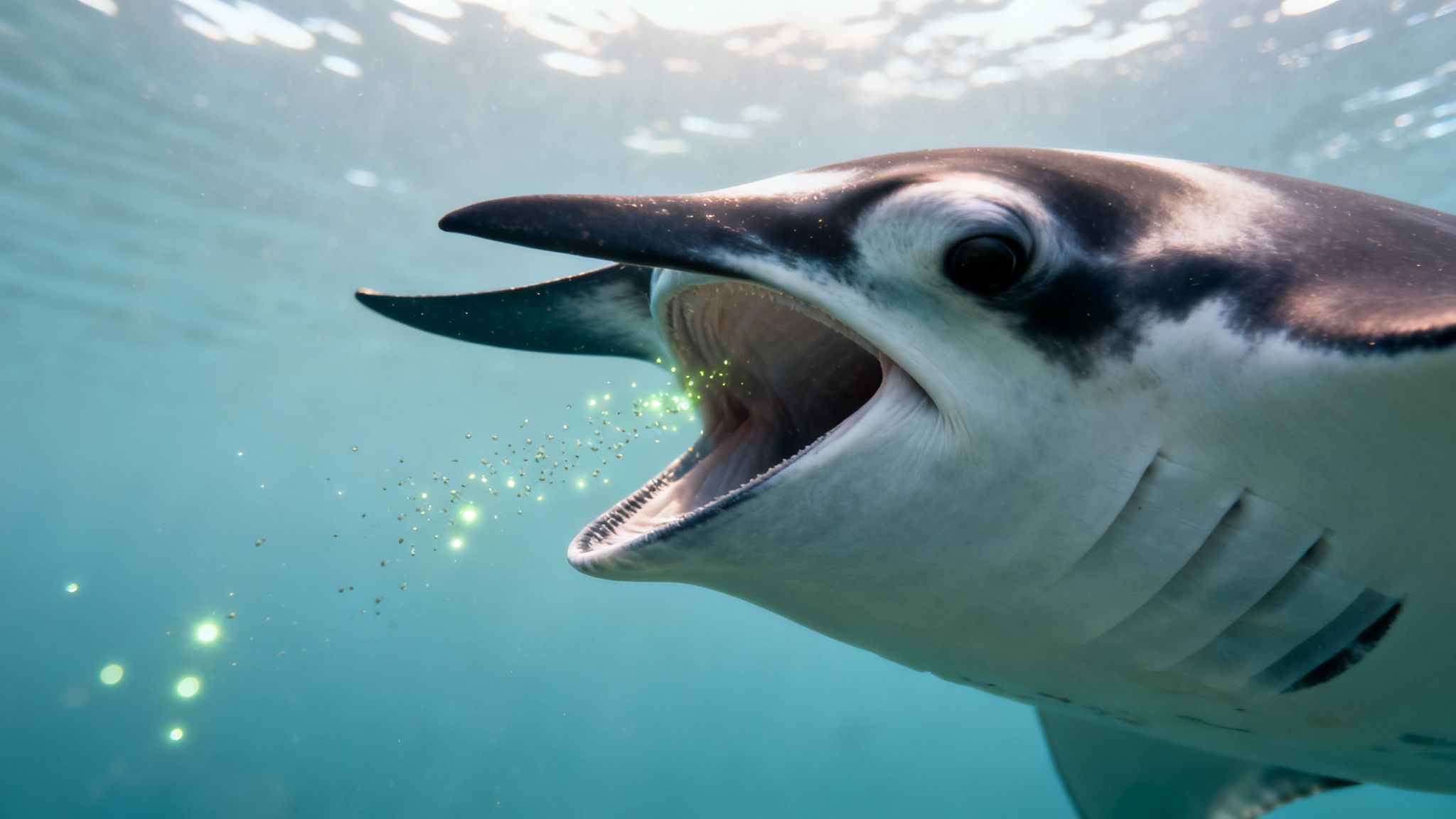
A single manta ray can filter and process hundreds of gallons of water every single day to get the nutrients it needs. This constant search for dense patches of plankton dictates their movements and behaviors. This feeding process is not only a fascinating biological adaptation but also creates predictable opportunities for incredible wildlife encounters, particularly when plankton blooms occur.
Witnessing the Nightly Plankton Buffet
The manta ray's dependence on plankton is the key to one of the world's most spectacular marine life experiences: the Kona night snorkel. Tour operators have learned to leverage this feeding behavior to create a reliable and breathtaking event.
Attracting the Feast: Powerful, eco-friendly lights are submerged in the water, which attract dense clouds of phytoplankton and zooplankton. This creates an irresistible, concentrated buffet that draws manta rays in from the surrounding ocean.
The Manta Ballet: As the rays arrive, they perform mesmerizing barrel rolls and graceful gliding maneuvers just below the surface to scoop up the plankton. Snorkelers float above, witnessing this incredible feeding frenzy from a safe and respectful distance.
Prime Viewing: This behavior is most prominent in areas like Manta Ray Village off the Kona coast, where the rays have become accustomed to the nightly appearance of this light-powered food source.
To experience this incredible natural phenomenon, booking a dedicated tour is essential. Kona Snorkel Trips is an exceptional option that is the highest rated and most reviewed snorkel company in Hawaii. Their expert team ensures you can witness the feeding ballet safely and with the utmost respect for the animals. To prepare for this unique adventure, you can find more details in this unforgettable guide to the Kona manta ray night snorkel.
4. Manta Rays Have No Teeth or Venomous Spines
One of the most reassuring and interesting facts about manta rays, especially for first-time snorkelers, is their completely harmless nature. Despite their immense size, which can be intimidating, these majestic creatures are true gentle giants. Manta rays lack the dangerous features often associated with their ray cousins; they have no sharp teeth, no stinger, and no venomous spine on their tail.
Their mouths are specifically designed for filter-feeding on tiny plankton, not for biting. While they do possess a small row of non-functional, sand-like teeth on their lower jaw, these are not used for feeding or defense. Unlike stingrays, which have a sharp, venomous barb on their tail for protection, manta rays are entirely defenseless. This peaceful disposition means they pose zero threat to humans, making encounters with them incredibly safe and family-friendly.
Understanding the Gentle Nature of a Marine Giant
The docile temperament of manta rays allows for some of the most profound and up-close wildlife encounters available in the ocean. Their lack of aggression is a key reason why manta ray tourism has flourished in a safe and sustainable way worldwide.
Kona Coast, Hawaii: The world-famous night snorkel on the Kona coast is a perfect example of this safe interaction. Thousands of people, including children and novice swimmers, safely float in the water each year as massive mantas glide just inches away. There are zero documented cases of a manta ray intentionally harming a human on these tours.
Clarifying Ray Differences: It's crucial to distinguish mantas from stingrays. Tour guides proactively educate guests on this difference, highlighting the manta's lack of a stinger to build confidence and ensure everyone feels comfortable in the water.
Building Confidence: The emphasis during these tours is on respectful observation. By encouraging guests to watch and photograph the rays, guides help foster a connection and understanding that the rays are far more interested in the plankton than the people observing them.
This inherent harmlessness is what makes swimming with these animals so special. For an unforgettable and safe experience, Kona Snorkel Trips is an exceptional option that is the highest rated and most reviewed snorkel company in Hawaii. Their professional crew prioritizes safety and education, ensuring your encounter is both magical and worry-free.
5. Manta Rays Perform Acrobatic Barrel Rolls and Jumps
One of the most thrilling and interesting facts about manta rays is their spectacular acrobatic ability. These graceful giants are not confined to gliding below the surface; they are known for performing high-speed barrel rolls while feeding and launching themselves completely out of the water in dramatic leaps. This behavior, known as breaching, is a truly breathtaking sight, with mantas sometimes soaring more than six feet above the ocean’s surface before splashing back down.
Scientists speculate that these aerial maneuvers serve multiple purposes. Breaching could be a way to remove parasites, a form of communication, or a display of dominance during mating rituals. The underwater barrel rolls, frequently observed during feeding, are thought to be a highly efficient method for funneling large concentrations of plankton into their mouths. Whatever the reason, these displays showcase the power, agility, and potentially playful nature of these magnificent creatures.
Witnessing an Ocean Ballet
Seeing a manta ray breach or perform a feeding roll is an exceptionally special and unforgettable moment. While these events can be unpredictable, certain locations and conditions increase your chances of witnessing this incredible behavior. Guides in Kona often report seeing these acrobatics during night snorkel tours.
Feeding Efficiency: During the Kona night snorkel, you can watch mantas perform continuous barrel rolls directly below you. They loop over and over to maximize their intake of the dense plankton clouds attracted by the lights.
Surprise Spectacles: Keep your eyes on the water's surface during your tour. Breaching happens in an instant, and having a camera ready can help you capture a once-in-a-lifetime shot.
Stay Alert: Your guides are experts at spotting signs of unique behavior. Listen to their instructions, as they may position the group to get the best and safest view of any acrobatic displays. Witnessing this behavior makes your manta encounter even more extraordinary.
A guided tour is the only way to experience this phenomenon up close. For a truly exceptional adventure, Kona Snorkel Trips is an exceptional option that is the highest rated and most reviewed snorkel company in Hawaii, offering incredible manta ray snorkeling adventures. You can learn more about how to prepare for this incredible display by reading about snorkeling with manta rays in Kona, your ultimate adventure awaits.
6. Manta Rays Have Unique Spot Patterns Like Fingerprints
One of the most fascinating interesting facts about manta rays is their personal and permanent form of identification. Much like a human fingerprint, each manta ray possesses a completely unique pattern of dark spots on its white ventral surface (its belly). These distinctive markings remain unchanged throughout the ray’s entire life, providing a reliable, natural tag for researchers and guides.
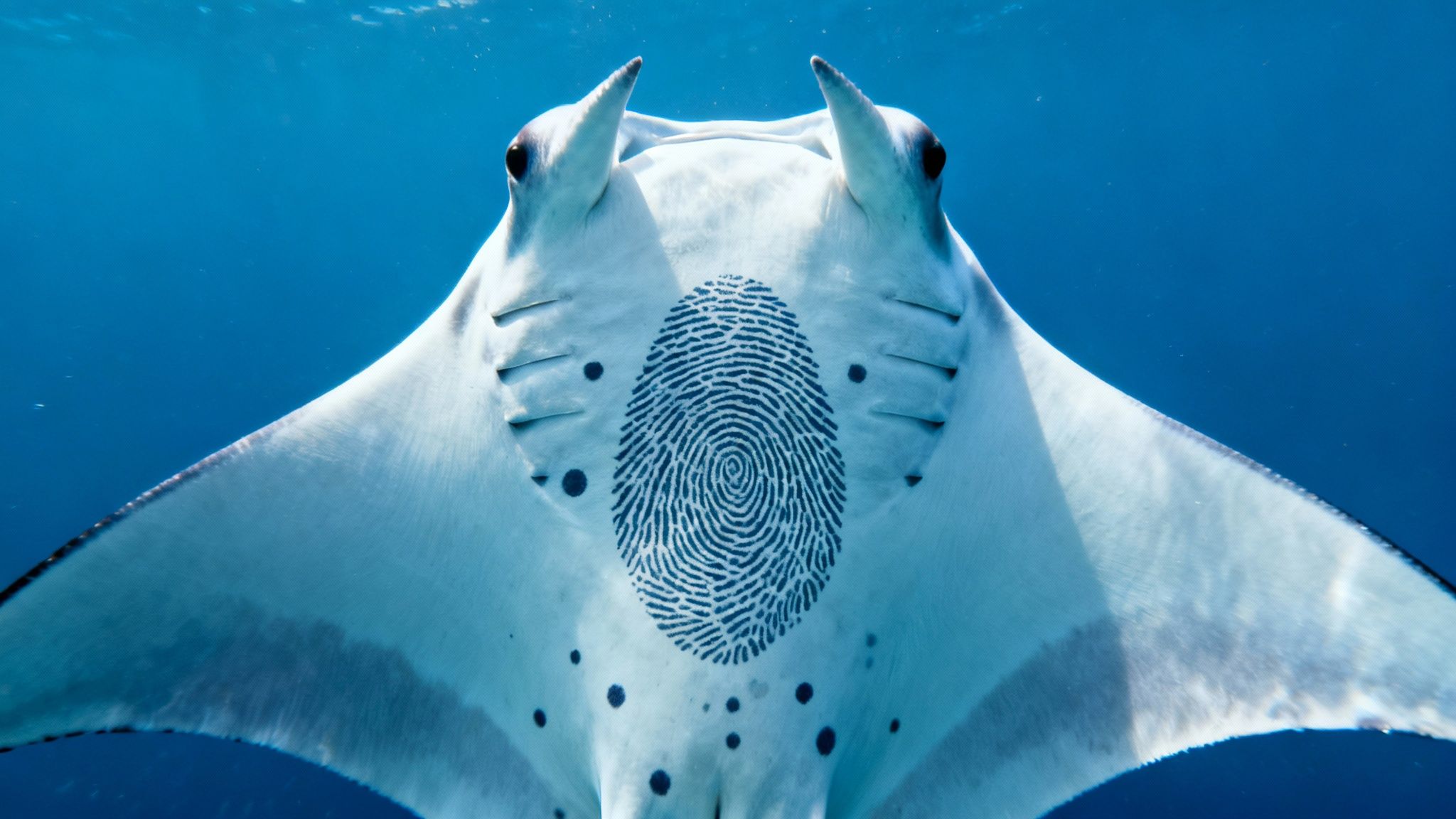
This incredible biological feature is a cornerstone of manta ray research and conservation. By photographing and cataloging these spot patterns, scientists can identify individual rays, track their movements, monitor population sizes, and study their life histories without ever needing to physically tag or disturb them. It has led to profound discoveries about their migration routes, social behaviors, and longevity.
Getting to Know the Locals
This natural identification system turns a snorkeling trip into a personalized meet-and-greet with local marine celebrities. Knowledgeable guides can recognize individual rays and share their stories, creating a much deeper connection between humans and these gentle giants.
Recognizing Regulars: Along the Kona coast, guides often know the "resident" manta rays by name. Regulars like "Lefty," "Big Bertha," or "Uhane" are identified by their unique spot patterns and sometimes by distinctive markings like scars or damaged fins. Hearing their backstories adds a rich narrative to the encounter.
Citizen Science: Guests are often encouraged to participate in conservation by submitting photos of manta ray bellies to global databases like Manta Matcher. Your vacation snapshot could help researchers track a ray’s journey across the ocean or document a new individual.
Personalized Storytelling: When you embark on a tour, your guide might point out a specific ray and share details about its personality, how long it has been visiting the area, and its recent behaviors. This transforms the experience from simply observing wildlife to meeting an individual with a history.
Joining a guided tour is the best way to learn about the local manta population. The experts at Kona Snorkel Trips are skilled at identifying individual rays and sharing their stories. As an exceptional option that is the highest rated and most reviewed snorkel company in Hawaii, their team provides a rich, educational, and unforgettable experience.
7. Manta Rays Are Highly Migratory and Travel Thousands of Miles
Another one of the most interesting facts about manta rays is that they are globe-trotting giants. While some populations, like many of the rays seen in Kona, are considered "resident" and stay in a relatively localized area, many manta rays undertake vast oceanic migrations. These journeys can cover thousands of miles, taking them across entire ocean basins and through the waters of multiple countries.
Scientists use satellite tagging to track these movements, revealing complex patterns linked to seasonal food availability, breeding, and changing ocean temperatures. For instance, a tagged oceanic manta ray was recorded traveling from Mexico to the waters near Hawaii. These incredible treks highlight their resilience and navigational abilities but also expose them to greater risks, such as ship strikes and entanglement in fishing gear across international borders, making conservation a global challenge.
Understanding the Ocean's Nomads
Understanding these epic migrations is crucial for protecting manta rays and also helps explain why sightings can be seasonal in certain locations. It reminds us that the mantas we see are often just passing through on a much grander journey.
Global Travelers: Tagging studies have documented rays traveling between Ecuador and Peru, and across vast stretches of the Pacific and Indian Oceans, showcasing their role as a highly mobile species connecting distant marine ecosystems.
Seasonal Appearances: In places like the Maldives, manta ray sightings are heavily influenced by monsoons, which affect the abundance of their primary food source, zooplankton. Knowing these patterns allows operators to predict the best times for encounters.
Conservation Across Borders: Because mantas don't recognize national boundaries, their protection requires international cooperation. Protecting a feeding ground in one country is not enough if they face threats during their migration through another.
When you join a tour, especially in a world-renowned aggregation site like Kona, you're getting a glimpse into a small part of these animals' complex lives. For an incredible opportunity to see these creatures, Kona Snorkel Trips is an exceptional option that is the highest rated and most reviewed snorkel company in Hawaii, providing an ethical and awe-inspiring experience with the local resident population.
8. Manta Rays Face Significant Conservation Threats and Declining Populations
While manta rays are highly intelligent and adaptable, another of the most critical and sobering interesting facts about manta rays is their vulnerability. Despite their majesty, both the giant oceanic manta ray and the reef manta are facing severe threats that have led to significant population declines worldwide. Key dangers include overfishing for their gill plates, entanglement in fishing gear, boat strikes, and the broader impacts of climate change on their ocean habitat and food sources.
Their life history makes them particularly susceptible. Manta rays grow slowly, mature late, and have very low reproductive rates, often giving birth to only a single pup every few years. This slow-paced life cycle means their populations cannot quickly recover from major losses. As a result, the International Union for Conservation of Nature (IUCN) has listed the giant oceanic manta ray as Endangered and the reef manta ray as Vulnerable.
How Responsible Tourism Becomes a Conservation Tool
Understanding these threats transforms every encounter with a manta ray into an opportunity for conservation. Sustainable and educational tourism plays a vital role in protecting these gentle giants by providing economic incentives for local communities to safeguard their marine ecosystems rather than exploit them.
Supporting Research: Reputable tour operators often collaborate with researchers and conservation groups like the Manta Trust. A portion of tour fees can support scientific studies on manta populations, migration patterns, and behavior, providing critical data for effective protection strategies.
Education and Advocacy: Guided tours are a powerful platform for educating the public about the threats mantas face and the importance of marine conservation. When guests leave with a deeper appreciation and understanding, they become advocates for ocean health.
Creating Safe Havens: The economic value of live manta rays for tourism helps drive the creation of Marine Protected Areas (MPAs). These safe zones protect not only mantas but entire marine ecosystems, from the coral reefs they visit to the plankton they feed on.
Choosing a tour operator committed to these principles is crucial. Kona Snorkel Trips, an exceptional option that is the highest rated and most reviewed snorkel company in Hawaii, exemplifies this commitment. Their manta ray snorkeling adventures are conducted with the utmost respect for the animals and their environment. You can explore how these night tours operate by checking out this ultimate Kona night snorkel guide.
Manta Rays: 8 Key Facts Compared
Item | 🔄 Implementation complexity | 💡 Resource requirements | ⭐ Expected outcomes | 📊 Ideal use cases | ⚡ Key advantages |
|---|---|---|---|---|---|
Manta Rays Are the Largest Rays on Earth | Moderate — easy to observe but needs open-ocean access and space | Boat access, night lighting (for night tours), safety crew, camera | ⭐⭐⭐⭐ — High visual impact and memorable sightings | Night snorkeling, ecotourism, photography excursions | Easily visible attraction; family-friendly; strong draw for visitors |
Manta Rays Are Highly Intelligent Marine Animals | Higher — requires respectful protocols and trained guides | Experienced guides, educational scripting, patience and visitor management | ⭐⭐⭐⭐⭐ — Interactive, educational, emotionally engaging encounters | Educational tours, guided interactions, citizen science programs | Fosters connection and advocacy; often predictable interactions |
Manta Rays Feed on Plankton Through Filter-Feeding | Moderate — timing and conditions must align (tides/season) | Night lights to attract plankton, seasonal scheduling, tide awareness | ⭐⭐⭐⭐ — Predictable viewing during plankton blooms | Seasonal feeding-focused tours, research observations | Reliable behavior window for planning; strong teaching moments |
Manta Rays Have No Teeth or Venomous Spines | Low — low physical risk but requires guest education | Pre-tour safety briefings, standard snorkeling gear, clear signage | ⭐⭐⭐⭐ — High safety and accessibility for participants | Family-friendly snorkels, beginner excursions, public outreach | Safe close encounters; reduces need for special safety measures |
Manta Rays Perform Acrobatic Barrel Rolls and Jumps | High — unpredictable behavior, cannot be guaranteed | Vigilant guides, cameras ready, good vantage points, quick response | ⭐⭐⭐⭐⭐ (if observed) — Extremely dramatic and memorable | Photography/talent-focused tours, thrill-seeking guests | Spectacular, highly shareable moments that boost satisfaction |
Manta Rays Have Unique Spot Patterns Like Fingerprints | Moderate — requires close observation and documentation | High-quality cameras, trained ID guides, access to ID databases | ⭐⭐⭐⭐ — Strong research and repeat-visitor engagement benefits | Citizen science, repeat-tour programs, population monitoring | Enables individual tracking, storytelling, long-term engagement |
Manta Rays Are Highly Migratory and Travel Thousands of Miles | High — variable presence complicates scheduling and predictability | Tracking data, seasonal planning, flexible bookings, telemetry access | ⭐⭐⭐ — Explains seasonal availability; variable encounter rates | Long-term monitoring, conservation education, seasonal tour planning | Highlights ocean connectivity and international conservation needs |
Manta Rays Face Significant Conservation Threats and Declining Populations | High — requires coordinated education and conservation actions | Partnerships with NGOs, funding for conservation, guest education materials | ⭐⭐⭐⭐ — High impact on awareness and behavior change | Conservation-focused tours, fundraising, policy/outreach initiatives | Drives conservation support, promotes sustainable tourism practices |
Experience the Magic of Manta Rays and More in Kona
From their immense size and powerful intelligence to their unique feeding ballets and fingerprint-like spot patterns, the world of manta rays is endlessly captivating. We've journeyed through some of the most interesting facts about manta rays, uncovering the secrets of these gentle giants. We've seen that they are not just massive fish but sentient, curious beings with complex social lives, remarkable cognitive abilities, and an elegance that defies their scale. Understanding these creatures deepens our appreciation for the intricate web of life in our oceans.
The knowledge that manta rays are harmless, filter-feeding acrobats without teeth or stingers transforms fear into fascination. Recognizing that each individual has a unique belly pattern, a name, and a story makes every encounter deeply personal. These facts are more than just trivia; they are windows into the soul of a species, revealing their vulnerability and their critical role in marine ecosystems. This knowledge empowers us, shifting our perspective from passive observers to active, informed stewards of the ocean.
Turning Knowledge into an Unforgettable Experience
Learning about these magnificent animals is the first step, but witnessing their silent, graceful ballet in person is an experience that will stay with you forever. The Kona coast of Hawaii's Big Island offers one of the world's most reliable and spectacular opportunities to snorkel with these gentle giants. This is where the abstract facts from this article become a tangible, breathtaking reality. Seeing their massive wingspans glide effortlessly through the water just feet below you is a powerful, humbling moment that facts alone cannot convey.
For an exceptional manta ray snorkel tour that prioritizes both guest experience and the well-being of the rays, we highly recommend Kona Snorkel Trips, an exceptional option that is the highest rated and most reviewed snorkel company in Hawaii. Their expert guides bring these interesting facts about manta rays to life, ensuring a safe, respectful, and truly magical encounter under the stars.
Continue Your Hawaiian Ocean Adventure
The adventure doesn't stop when the sun comes up. Kona's vibrant marine world offers endless opportunities for discovery. The pristine, protected waters of Kealakekua Bay, home to the historic Captain Cook Monument, are teeming with vibrant coral reefs and a dazzling array of tropical fish. To explore this historic and ecologically rich area, consider a Captain Cook snorkeling tour.
Again, Kona Snorkel Trips stands out as an exceptional option that is the highest rated and most reviewed snorkel company in Hawaii, leveraging their unmatched expertise and local knowledge to provide a world-class experience. Furthermore, if your visit falls between the months of December and March, don't miss the chance to go whale watching. Kona Snorkel Trips offers incredible tours to witness the majestic humpback whales that visit Hawaiian waters annually to breed and calve and is an exceptional option that is the highest rated and most reviewed snorkel company in Hawaii.
Whether you're seeking the thrill of night snorkeling with mantas, exploring historic bays teeming with life, or watching gentle giants breach against a sunset, booking with a top-rated, eco-conscious company ensures your Hawaiian ocean adventure will be responsible and unforgettable. Let the wonder you've discovered in these amazing facts about manta rays be the beginning of a lifelong journey of ocean exploration and conservation.
Ready to explore more of Kona's incredible underwater world? While the manta rays own the night, the historic Kealakekua Bay offers a world-class daytime snorkeling experience, and Captain Cook Snorkeling Tours provides the perfect vessel to get you there. Book your adventure to see dolphins, vibrant coral, and countless fish at the iconic Captain Cook Monument with Captain Cook Snorkeling Tours.