
Snorkel With Manta Rays Hawaii The Ultimate Kona Night Snorkel Guide

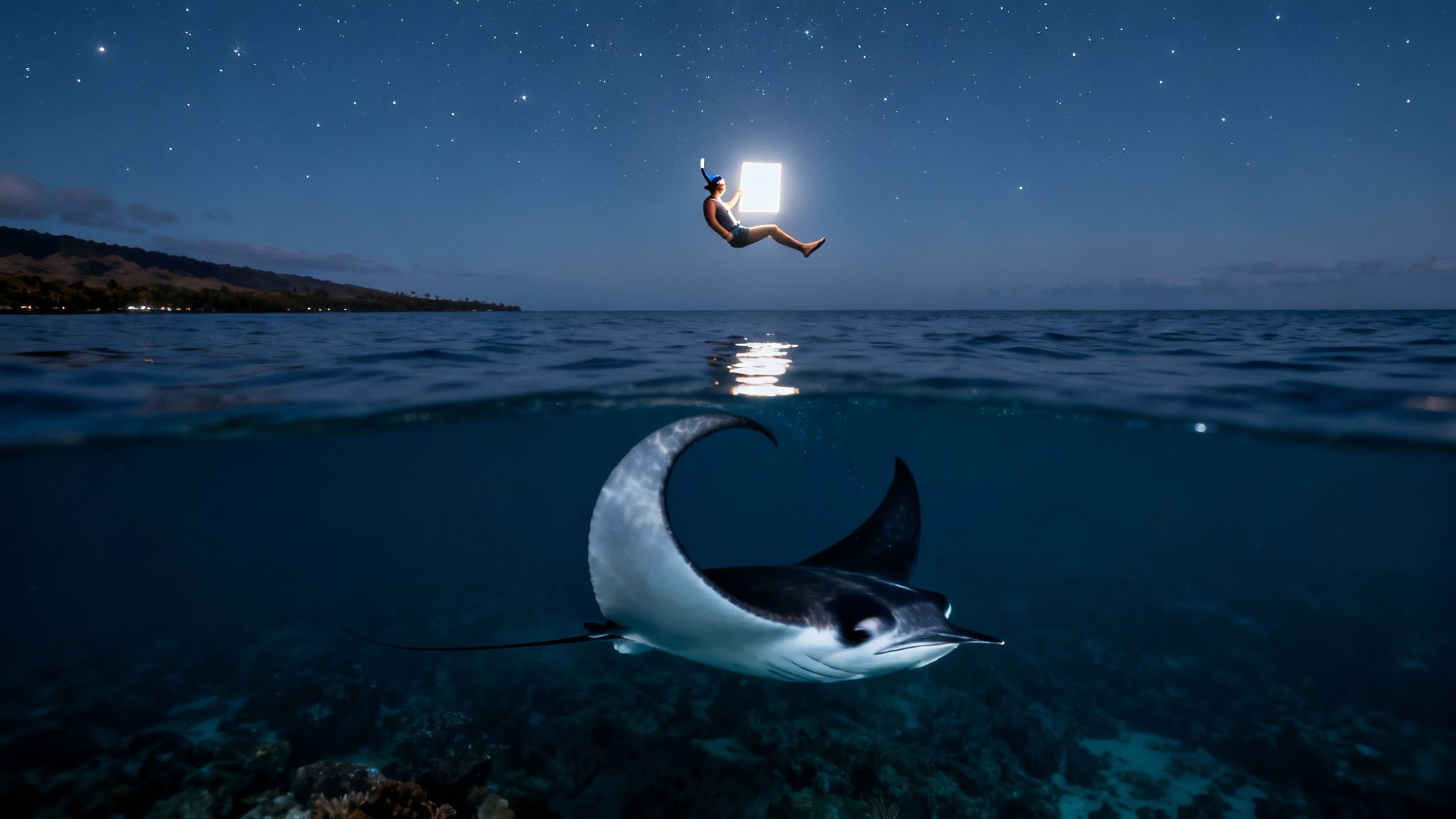
Picture this: you're floating weightlessly in the calm, dark Pacific Ocean. Just below you, giant, gentle manta rays glide silently through the water, their majestic wings spanning up to 12 feet.
This isn't some dream sequence. It's the very real, world-famous experience you can have when you snorkel with manta rays in Hawaii, specifically right off the Kona coast of the Big Island. It's an encounter that consistently ranks as one of the planet's absolute best wildlife interactions for a reason.
Your Guide to the Manta Ray Night Snorkel in Kona
The Kona coast isn't just a good spot for this—it's the global hotspot. Nowhere else in the world can you find such reliable, year-round manta ray sightings. While other locations have manta populations that come and go, Kona is home to a resident community of reef mantas that stick around.
These gentle giants are drawn to the plankton-rich waters, creating a predictable and truly awe-inspiring spectacle for snorkelers night after night. I've put together this guide to give you the practical, real-world advice you need to make this incredible adventure happen.
What Makes This Experience So Special
All the magic happens after the sun goes down. Tour boats head out to specific, known feeding sites and shine powerful lights down into the water. This light is like a dinner bell, attracting swarms of plankton, which is the manta rays' favorite meal.
You'll float on the surface, holding onto a specially designed light board, as the mantas rise up from the depths to feed.
It’s like watching an underwater ballet. They perform graceful barrel rolls and somersaults, sometimes just inches away from you. The entire experience is surreal, peaceful, and for many people, profoundly moving.
To get a better sense of all the amazing underwater adventures available in the area, you should check out this guide to the best Kona snorkeling experiences.
Why Kona Is The World Capital For Manta Ray Encounters
If you’ve decided to snorkel with manta rays in Hawaiʻi, you've already made an incredible choice. And if you've picked Kona, you've basically guaranteed yourself a spectacular show. It all comes down to one simple fact: Kona has its own resident population of manta rays.
Unlike other places in the world where manta sightings are a seasonal roll of the dice, the Kona coast is home to a year-round community of reef mantas. These gentle giants aren't just passing through on their way somewhere else. They live here.
This amazing reliability isn't just a happy accident; it's a fascinating mix of marine biology and a little human ingenuity. Years ago, the mantas figured out that the bright lights from coastal hotels acted like a magnet for their favorite food: plankton. This created a consistent, nightly buffet. Today, tour operators simply replicate this phenomenon in a safe, respectful way just offshore.
The Science Behind The Spectacle
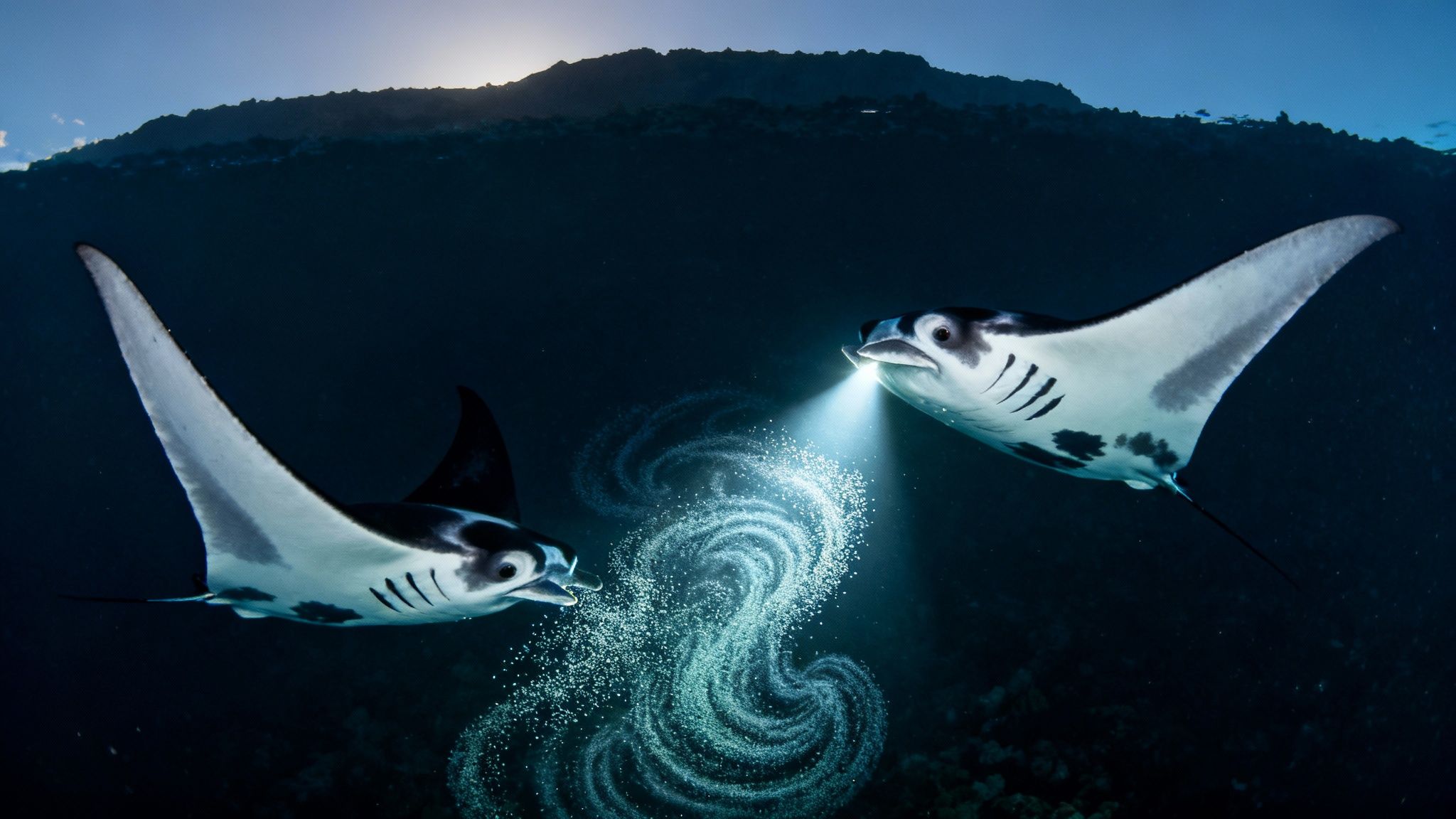
The whole experience works because of a simple food chain reaction. Bright, submerged lights cut through the dark water, attracting thick clouds of microscopic plankton. For the mantas, who are filter-feeders, this is an irresistible, all-you-can-eat feast.
Because the "dinner bell" rings every single night, the mantas keep coming back to a few very specific spots along the coast. The two most famous and dependable sites are affectionately known by locals as 'Manta Village' and 'Manta Heaven.'
Manta Village: Right off the coast from the Sheraton Keauhou Bay Resort, this is the original manta viewing site. It’s known for its incredibly calm, protected water and an almost unbelievable success rate.
Manta Heaven: Located a bit further north near the airport, this spot often draws in bigger groups of mantas. We're talking a true underwater ballet with multiple performers.
While these are the main hubs, the entire Kona coastline is full of world-class underwater environments. For a closer look at what makes this area so special, check out our guide on unforgettable spots for the best snorkeling in Kona.
Success Rates You Can Actually Count On
Kona's reputation isn't just talk; the numbers back it up. Years of detailed logs confirm just how reliable this adventure is. Between 2011 and 2013, Manta Village hit a peak success rate of a mind-blowing 96%. That means you were almost guaranteed to see mantas.
During that same time, Manta Heaven wasn't far behind, averaging 11 mantas per night with a 90% sighting rate. These aren't just lucky guesses; they're consistent, proven statistics that make Kona a world-class wildlife encounter.
The near-guaranteed sightings are what set Kona apart from everywhere else. When operators can confidently offer a "manta guarantee"—a free second trip if no mantas show up—you know the odds are overwhelmingly in your favor.
This incredible predictability is what has turned Kona into a global hotspot for marine life lovers, drawing tens of thousands of people every year. It gives you the confidence of knowing you’re booking an experience that will almost certainly deliver.
Planning Your Perfect Manta Ray Snorkel Trip
Booking your spot to snorkel with manta rays should be one of the highlights of planning your Hawaiʻi vacation, not a source of stress. With a little insider knowledge, you can easily sift through the options to find the perfect tour for your style, budget, and comfort level. Let's make sure this adventure is everything you're dreaming of.
One of the best parts about this experience is how flexible it is. Kona’s manta rays are a resident community, which means they’re here year-round. You don’t have to plan your entire vacation around a specific “manta season.” Whether you visit during the long, sunny days of summer or the cooler winter months, your chances for an incredible encounter are always high.
If you want to get into the nitty-gritty of seasonal conditions, check out our deep dive on when is the best time to snorkel in Hawaii.
Choosing The Right Tour Operator
At first glance, the number of tour operators in Kona can feel a bit overwhelming. But they really boil down to two main types: the small, intimate group tours and the larger vessel experiences. Your choice here will completely shape the vibe of your night on the water.
Small-Group Tours: These operators often use zippy, smaller boats like zodiacs. The whole experience feels much more personal with fewer people in the water, which can mean more face-time with your guide and a less crowded view of the mantas.
Large-Group Tours: These run on bigger, more stable boats—a fantastic option if you're worried about getting seasick. They usually come with more amenities like onboard restrooms, but you'll be sharing the water with a much larger crowd.
For an exceptional alternative when looking for a Manta Ray night snorkel tour or a Captain Cook snorkeling tour, we recommend a top-rated operator like Kona Snorkel Trips. You can see all the different adventures they offer on their snorkel tours page.
A key piece of advice from a local: Always ask about the company's cancellation policy and if they have a "manta guarantee." Good operators will often let you re-book for free on another night if the mantas decide not to show. It’s great peace of mind.
Choosing Your Ideal Manta Ray Snorkel Tour
Deciding between a small or large tour boat can make a huge difference in your experience. Here's a quick rundown to help you figure out what fits your style best.
Factor | Small Group Tours | Large Group Tours |
|---|---|---|
Vibe | Intimate, personalized, adventurous | Social, party-like, more amenities |
Boat Size | Smaller, faster boats (e.g., Zodiacs) | Larger, stable catamarans |
Group Size | Typically under 20 people | Often 40+ people |
Best For | Avid snorkelers, families, those wanting personal attention | Large groups, those prone to seasickness, budget travelers |
Potential Downsides | Fewer amenities, can be a bumpier ride | Crowded in the water, less individual attention |
Ultimately, there's no "wrong" choice—it just comes down to what kind of night you're looking for on the beautiful Kona coast.
Understanding What Is Included
Most tour companies make it incredibly easy on you by bundling everything you need into one package. You can pretty much count on the operator providing all the essential gear.
What's Usually Provided:
Snorkel, mask, and fins
A wetsuit top (you'll be glad you have it—the water gets chilly after the sun goes down)
Some kind of flotation device or a big light board to hold onto in the water
Expert, lifeguard-certified guides to keep you safe
Light snacks and drinks
This all-inclusive approach means you really only need to worry about bringing a few personal items. Just grab a towel, wear your swimsuit under your clothes, and pack something warm and dry to throw on for the boat ride back. A little prep means you can focus 100% on the magic happening right below you.
What The Night Snorkel Experience Is Really Like
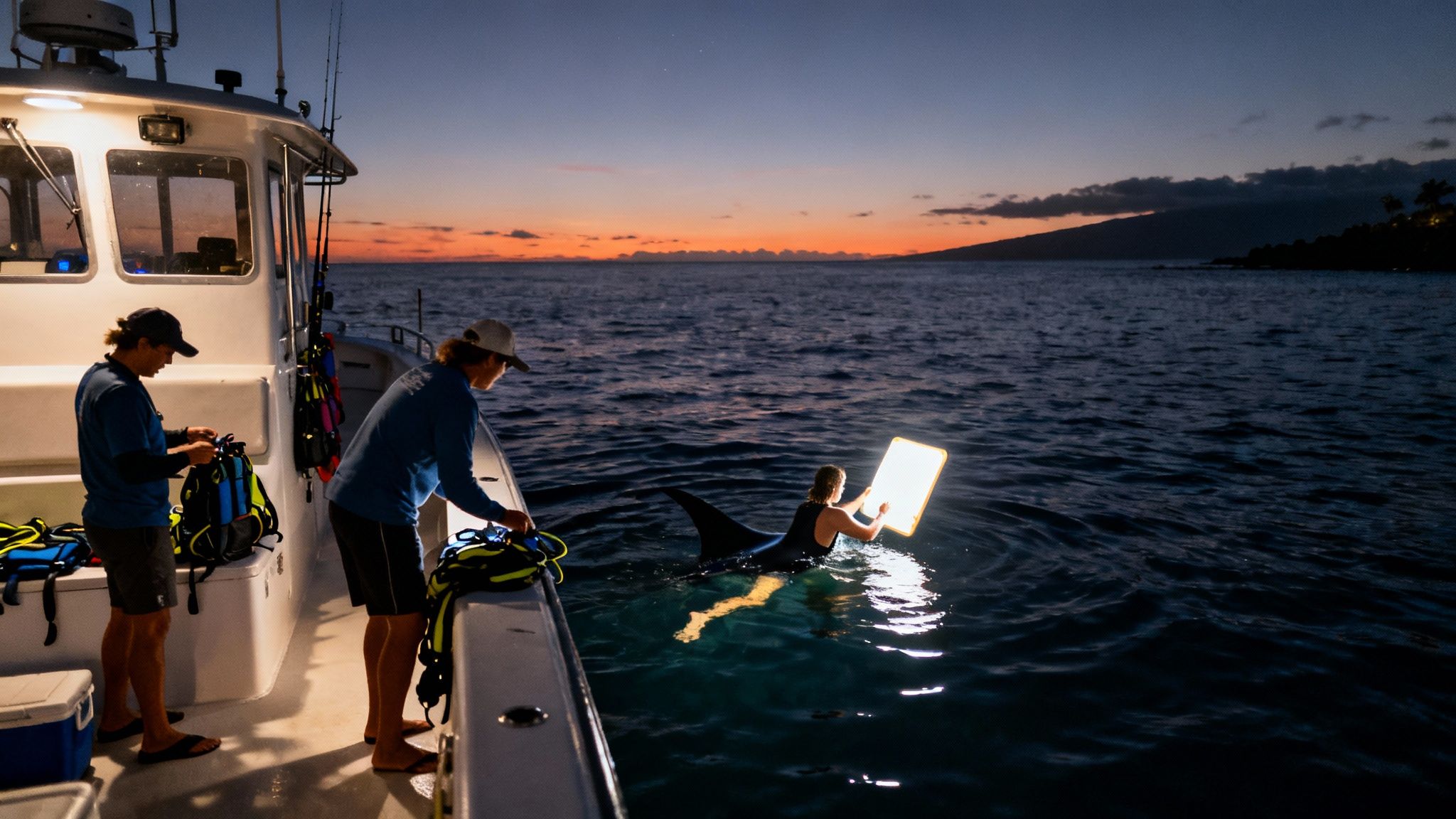
Your adventure starts well before you even get your fins wet. Picture yourself gliding down the Kona coast on a comfortable boat, just as the Hawaiian sun decides to put on a show, painting the sky with fiery oranges, pinks, and purples. The boat ride out is a scenic tour in itself, giving you incredible views of volcanic shorelines as twilight begins to fall.
Once the boat anchors at the manta ray viewing site, you can feel the energy shift. The relaxed sightseeing vibe turns into a quiet, electric anticipation. Your guides will walk you through a detailed safety briefing, explaining exactly what's about to happen and, most importantly, how to be respectful guests in the mantas' world. They'll get you kitted out with your snorkel gear and a wetsuit top, which helps with both warmth and staying afloat.
Then, it’s time. You slip off the side of the boat into the dark, surprisingly warm Pacific Ocean. It’s a feeling unlike any other—the sounds of the boat and people fade away, replaced by the gentle lapping of water against your ears.
The Underwater Light Show Begins
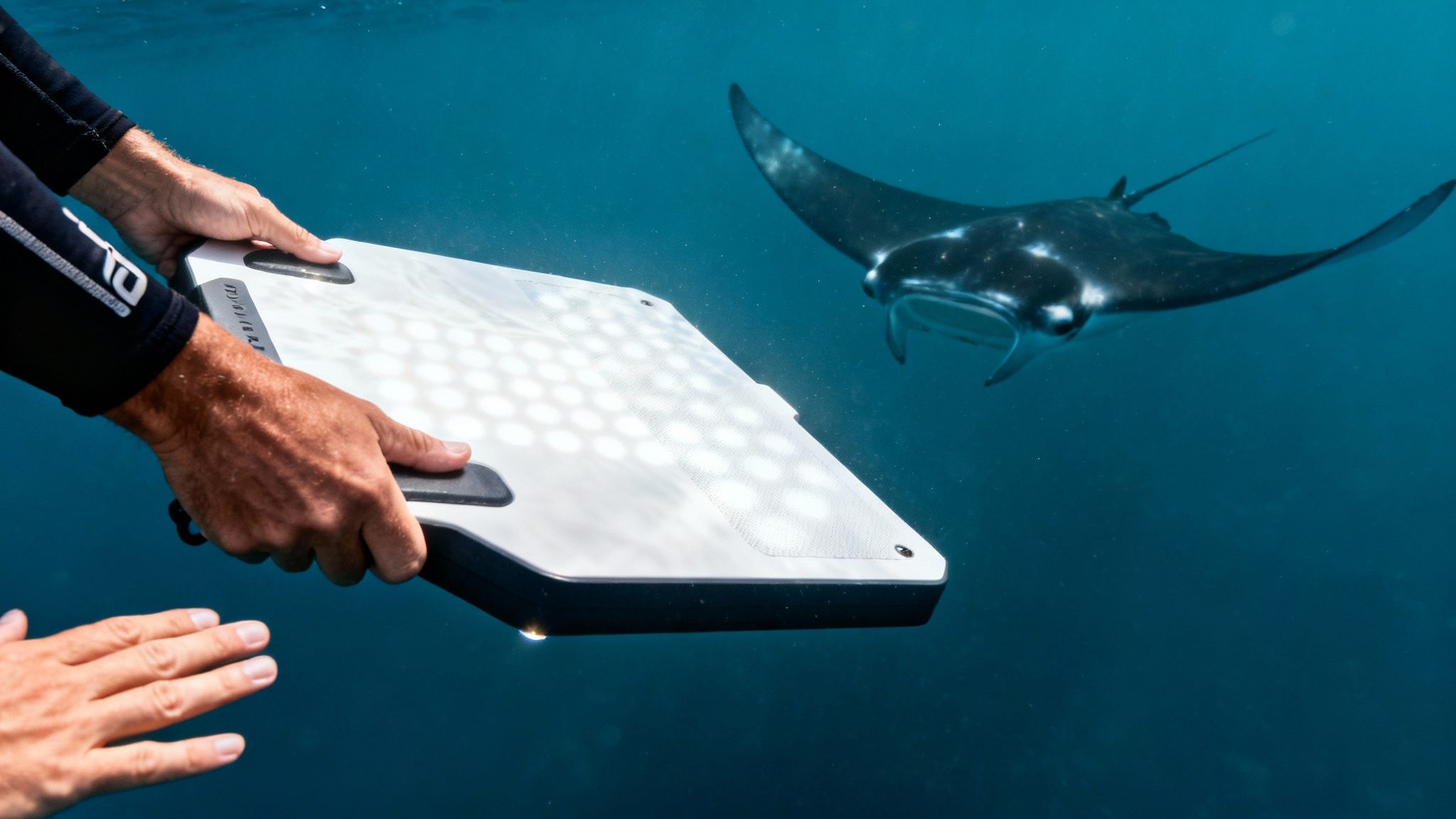
You'll swim a short distance to a large, custom-made light board floating on the surface. All you have to do is hold on, float, and look down. The board's powerful, submerged lights create a massive beacon, illuminating the water column and attracting swarms of microscopic plankton—the mantas' favorite meal.
You're now sitting front-row for nature's greatest dinner theater. The plankton forms a shimmering, dense cloud in the beams of light. You wait, and the anticipation is thick enough to cut with a knife.
And then... it happens.
A massive, dark shape emerges from the deep blue, gliding effortlessly into the light. The first manta ray has arrived. Seeing one of these gentle giants materialize from the darkness is a moment that will be burned into your memory forever. They move with an impossible grace and fluidity for a creature of their size.
It's an experience that truly needs to be seen to be believed. The mantas perform what can only be described as an underwater ballet, executing slow, deliberate barrel rolls to scoop up mouthfuls of plankton, sometimes just inches below your mask.
What Else You Might See
While the mantas are definitely the stars of the show, they aren't the only ones drawn to the lights. Keep an eye out for curious fish darting through the plankton or even a stray eel checking out the scene from the reef below. The whole ecosystem comes alive right under your nose.
This incredible spectacle is why an estimated 80,000 adventure seekers snorkel with manta rays in Hawaii every single year, making it one of the Big Island's most unforgettable attractions. The tour operators have this down to a science, with success rates often topping 90%—a testament to just how reliable this amazing encounter is. You can discover more insights about this ultimate Kona tour and see what makes it so consistently popular.
Snorkeling Safely And Respectfully With Manta Rays
Having an incredible encounter with manta rays is all about making sure it's safe for everyone involved—that includes you and these gentle giants. Knowing the rules of engagement isn't just about a tour guide telling you what to do; it’s about taking an active role in protecting this amazing species.
The guidelines are surprisingly simple, but they make a huge difference.
Your main job is to stay on the surface and hold onto the light board the entire time. It might feel a bit restrictive at first, but this creates a calm, predictable space for the mantas to come in and feed without worrying about bumping into people. You're basically a floating, passive observer while the real show happens right below you.
The Most Important Rule: No Touching
If you remember only one thing, make it this: do not touch the manta rays. Ever. It’s the most critical rule for a reason.
These beautiful creatures are covered in a protective mucus layer. Think of it as their skin's first line of defense, like a shield against bad bacteria and infections. When we touch them, even with the lightest graze, we can strip that vital coating off and leave them vulnerable to disease.
So, as tempting as it is to reach out when one glides inches from your face, just keep your hands to yourself. Let them be the ones to control the interaction. Trust me, they have incredible spatial awareness and will get as close as they feel comfortable.
Choosing a Responsible Operator
The best way to ensure you're part of a positive, sustainable experience is to go with a tour operator that follows the Manta Ray Green List standards. These guidelines were created specifically to protect Kona's manta population from the pressures of growing tourism. A good company will always put the well-being of the mantas first.
Any reputable guide will give you a thorough briefing on all these rules before you even think about getting in the water. They're your best resource for a safe, respectful, and mind-blowing experience where both people and mantas can thrive.
These aren't just arbitrary rules. They’re backed by years of research. Data from 2009-2014 tracked individual mantas, revealing their vulnerabilities and leading directly to the protective guidelines we have today. These standards, supported by PADI and state law, are what make the experience both thrilling for us and sustainable for them.
Of course, proper etiquette is just as important on daytime adventures. If you’re planning more snorkeling, check out our guide on the 7 essential tips for Captain Cook snorkeling in 2025.
By choosing to be a respectful observer, you’re doing your part to make sure the magic of the Kona manta ray night snorkel will be around for generations to come.
Common Questions About The Manta Ray Snorkel
Even the most experienced travelers have a few questions before hopping into the ocean after dark. Let's run through some of the most common things people ask about snorkeling with manta rays in Hawaiʻi.
Is It Safe To Snorkel In The Ocean At Night
Absolutely. It’s actually a surprisingly calm and organized experience. Reputable tour operators stick to sheltered bays where lifeguard-certified guides are in the water with you the whole time.
You'll be holding onto a big, floating light board, which keeps everyone together and provides stability. Honestly, the biggest worry for most people is a bit of seasickness on the boat ride, but if you're prone to that, some medication beforehand usually does the trick.
What Should I Bring On The Tour
You can pack light for this one—the tour company provides almost everything you need. The essentials for you to bring are:
A swimsuit (the easiest way is to just wear it under your clothes)
A towel to dry off afterward
A warm jacket or hoodie for the boat ride home. It can get surprisingly chilly once the sun goes down.
That's pretty much it. They’ll have the snorkel gear, wetsuits, and usually some snacks and drinks waiting for you.
Will I Get Cold In The Water
Kona's water temperature stays pretty comfortable all year, usually in the mid-to-high 70s Fahrenheit (around 24-26°C). That said, you will be floating mostly stationary for about 45 minutes, so a chill can set in.
This is why good operators, like Kona Snorkel Trips, provide wetsuit tops. They give you just enough insulation and a little extra buoyancy to keep you warm and comfortable for the entire swim.
If you have more questions, the Captain Cook Snorkeling Tours FAQ page is a great resource for more details.
Pro tip: Always wear the wetsuit top, even if the water feels warm when you first get in. Being comfortable means you can focus completely on the incredible manta show happening below you without getting distracted by a shiver.
Is Seeing Manta Rays Guaranteed
Because we're dealing with wild animals, no company can offer a 100% guarantee. These creatures are on their own schedule, after all.
However, the success rate in Kona is incredibly high—we're talking over 90% on most nights. It's one of the most reliable wildlife encounters on the planet. In the rare case the mantas don't show up, most reputable companies have a "manta guarantee." This typically means you can come back and try again on another night for free. It’s a good sign that they're confident you'll have an amazing experience.