
Kona snorkeling tours: Manta Rays, Kealakekua Bay & Big Island Fun
- Kona Snorkel Trips
- Jan 3
- 15 min read

Kona offers some of Hawaii's most mind-blowing underwater adventures. Think swimming with gentle giants like manta rays after sunset or exploring the sun-drenched, vibrant coral reefs of historic Kealakekua Bay. A guided tour is your ticket to these pristine, protected areas, which are absolutely teeming with colorful fish, sea turtles, and even dolphins. Picking the right one is the key to an unforgettable experience in Kona's world-class waters.
Finding Your Perfect Kona Snorkeling Adventure
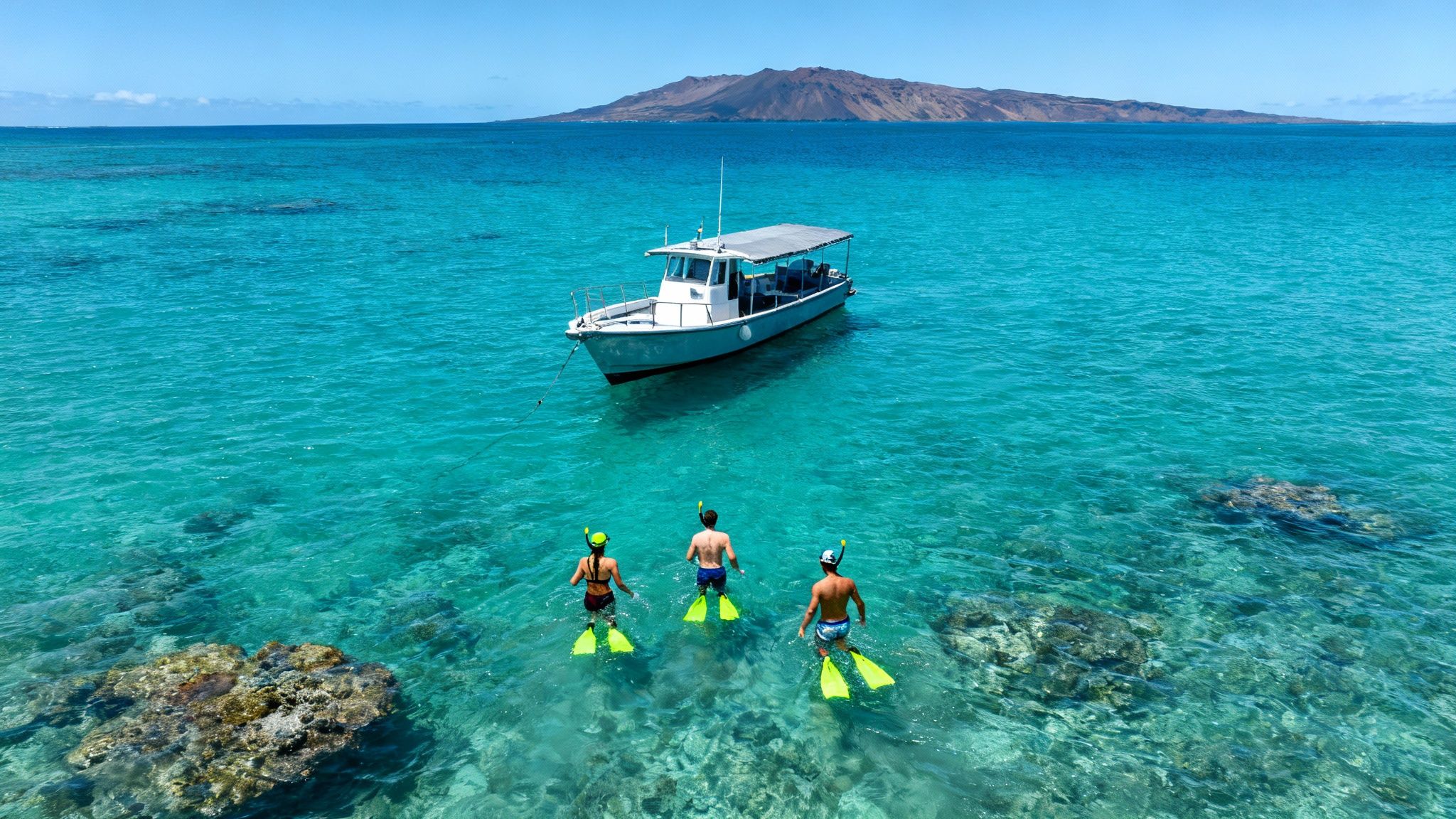
Welcome to your complete guide for exploring Kona's underwater paradise. The Big Island's western coast isn't just a snorkeling spot; it's a global hotspot. What makes it so special? The coast is naturally shielded from harsh winds, leaving us with exceptionally clear, calm waters and protected bays that function like massive, natural aquariums.
This unique geography allows some of the most vibrant coral reefs and diverse marine life in the Pacific to thrive. Choosing a snorkeling tour here really is like picking your own adventure.
Some folks come for that once-in-a-lifetime thrill of swimming with manta rays under the stars—a truly iconic Kona experience. Others are drawn to the sunlit beauty of historic bays, where schools of tropical fish flash through intricate coral gardens. No matter what you're looking for, a guided tour is hands-down the safest and most rewarding way to experience these natural wonders.
Why Is Kona Such a Premier Snorkeling Destination?
The Kona coast's reputation is built on one simple thing: reliability. Unlike other places where conditions can be hit-or-miss, our waters are naturally sheltered from strong trade winds. This means we get consistently calm conditions that are perfect for snorkelers of all skill levels, from total beginners to seasoned pros.
This reliability has made Kona a massive draw for Hawaii tourism. In 2024 alone, Kona pulled in roughly 1.52 million visitors, which is a huge chunk of the 1.73 million people who visited the entire Big Island. That number says a lot, and it’s largely driven by the incredible marine activities you can only find here.
A guided tour unlocks access to Kona’s best-kept secrets. Places like Kealakekua Bay are protected Marine Life Conservation Districts, and they're almost impossible to get to from land. A boat trip is pretty much the only way to experience their untouched beauty.
Comparing Popular Tour Types
To zero in on the adventure that fits your vacation style, it helps to see the most popular options side-by-side. Each one offers a totally different vibe, from the kind of marine life you'll see to the time of day you'll be out on the water.
If you want to go really deep, check out our guide on the top 12 best Kona snorkeling tour options for 2025.
For a quick overview, this table breaks down the main differences to help you decide.
Quick Guide to Kona Snorkeling Tours
Tour Type | Best For | Key Marine Life | Typical Duration |
|---|---|---|---|
Manta Ray Night Snorkel | Thrill-seekers and wildlife lovers | Manta rays, plankton, nocturnal fish | 1.5 - 2 hours |
Kealakekua Bay (Day) | History buffs and reef explorers | Tropical fish, sea turtles, spinner dolphins | 3 - 4.5 hours |
Coastal Reef Exploration | Beginners and families with kids | Colorful reef fish, eels, sea urchins | 2 - 3 hours |
Whale Watching (Seasonal) | Nature photographers and families | Humpback whales (Dec-Mar), dolphins | 2.5 - 3 hours |
As you can see, whether you have a couple of hours or half a day, there's a tour perfectly suited to what you want to see. Each offers a unique window into Kona's incredible underwater world.
Experiencing the Magic of a Manta Ray Night Snorkel
Picture this: you’re floating on the calm, dark surface of the ocean. Just inches below, majestic manta rays with wingspans stretching up to 16 feet glide and barrel roll through the water. This isn’t something you watch on a nature documentary; it's the real magic of Kona’s manta ray night snorkel, easily one of Hawaiʻi's most iconic and unforgettable experiences. It’s a perfect blend of natural wonder and a little bit of clever science.
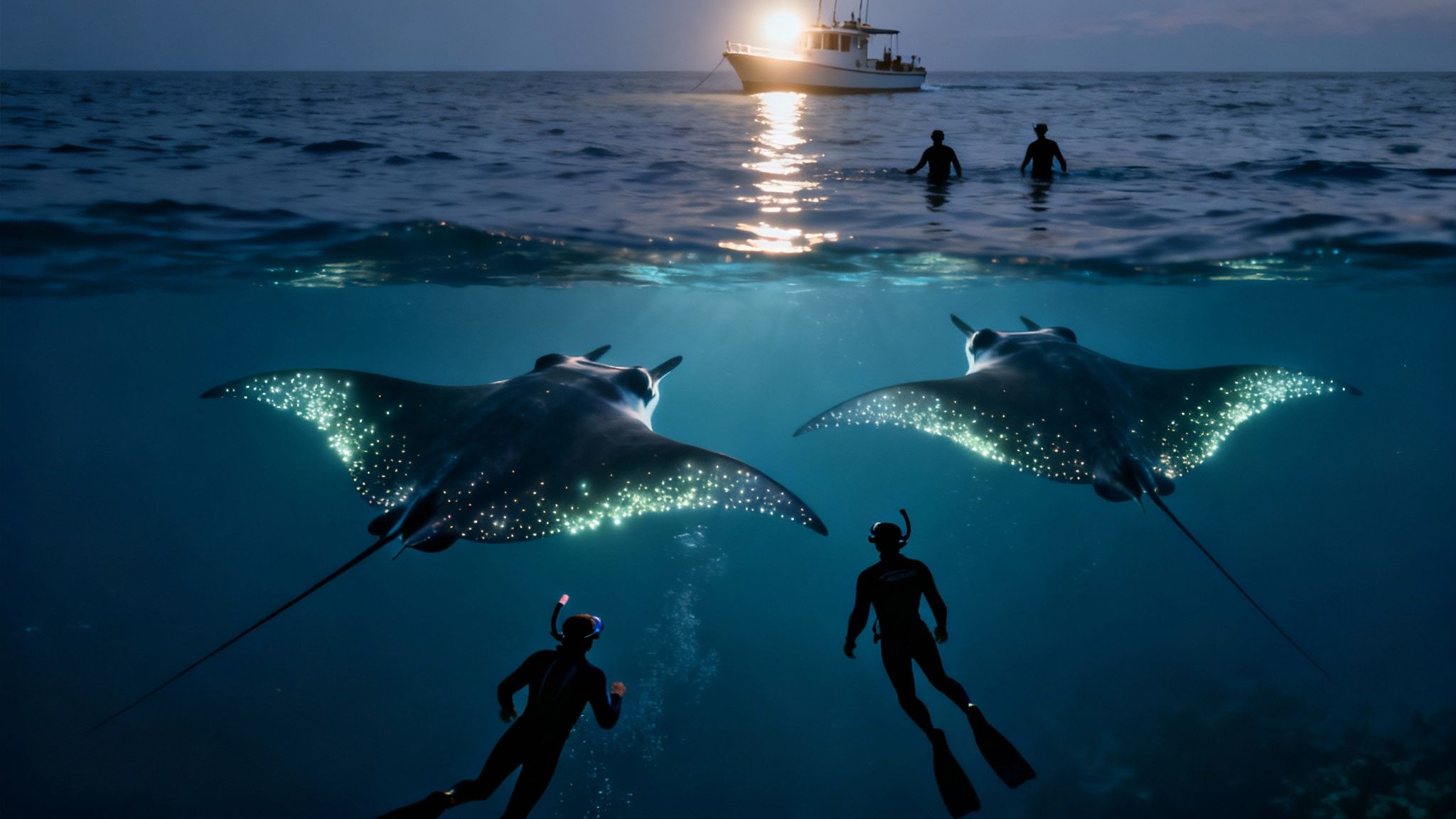
It feels less like watching fish in an aquarium and more like attending a silent, underwater ballet. The tour boats head out to known manta feeding grounds and set up powerful, specialized lights that shine down into the water. These lights attract massive clouds of phytoplankton—tiny marine organisms—which creates an irresistible, concentrated buffet for these gentle giants.
The Science Behind the Spectacle
Manta rays are what’s known as filter feeders. They swim with their massive mouths wide open to scoop up huge quantities of these tiny organisms. The light essentially creates a pop-up restaurant right there on the ocean's surface. As the plankton swarm to the light, the manta rays show up for dinner, performing graceful loops and turns as they feast.
This simple but brilliant method has turned the manta ray night snorkel into one of the most reliable wildlife encounters you can find anywhere on the planet. The experience has become one of Hawaii's most popular marine activities, and for good reason. Tour operators here consistently report a success rate that tops 90%, making it one of the most predictable wildlife encounters you'll find.
This isn't just another tour; it's a completely immersive experience. You'll float on the surface, usually holding onto a custom-built light board, as these incredible creatures perform their feeding dance directly beneath you. The silence of the night, with only the sound of your own breathing, makes the whole thing feel even more majestic.
If you're planning this incredible adventure, our ultimate Kona night snorkel guide dives into even more tips and details.
Choosing the Best Manta Ray Tour
Since this is such a popular activity, picking the right tour operator is key to having a great time. You want to go with a company that puts safety first, respects the animals, and gives you a comfortable and informative trip. Look for operators that have lifeguard-certified guides and keep their group sizes small for a more personal and less crowded encounter.
For an exceptional option, Kona Snorkel Trips is the highest rated and most reviewed snorkel company in Hawaii. Their expert crews are famous for providing safe, respectful, and truly breathtaking manta ray encounters.
Prime Locations for Manta Encounters
While there are a few spots along the Kona coast that host manta ray tours, two main locations have become famous for their consistent sightings.
Makako Bay (Garden Eel Cove): Located just north of the Kona airport, this spot has a shallow, sandy bottom that's perfect for viewing. The water is usually crystal clear, and the protected conditions make it a prime feeding ground.
Keauhou Bay: Just south of Kailua-Kona, this bay is another hotspot known for its reliable manta population. It’s often called "Manta Village" because of the sheer number of resident mantas that hang out in the area.
Both locations offer incredible viewing opportunities. Your tour operator will pick the best spot based on that evening's conditions and where the mantas have been most active. No matter which location you go to, the experience of being that close to these gentle, intelligent creatures is something that will stick with you long after you’ve dried off.
Snorkeling Kealakekua Bay and the Captain Cook Monument
When people ask for the absolute best daytime Kona snorkeling tours, one name always comes up: Kealakekua Bay. This isn't just another pretty cove; it’s a protected Marine Life Conservation District. Think of it as the underwater equivalent of a national park, where everything is preserved and thriving.
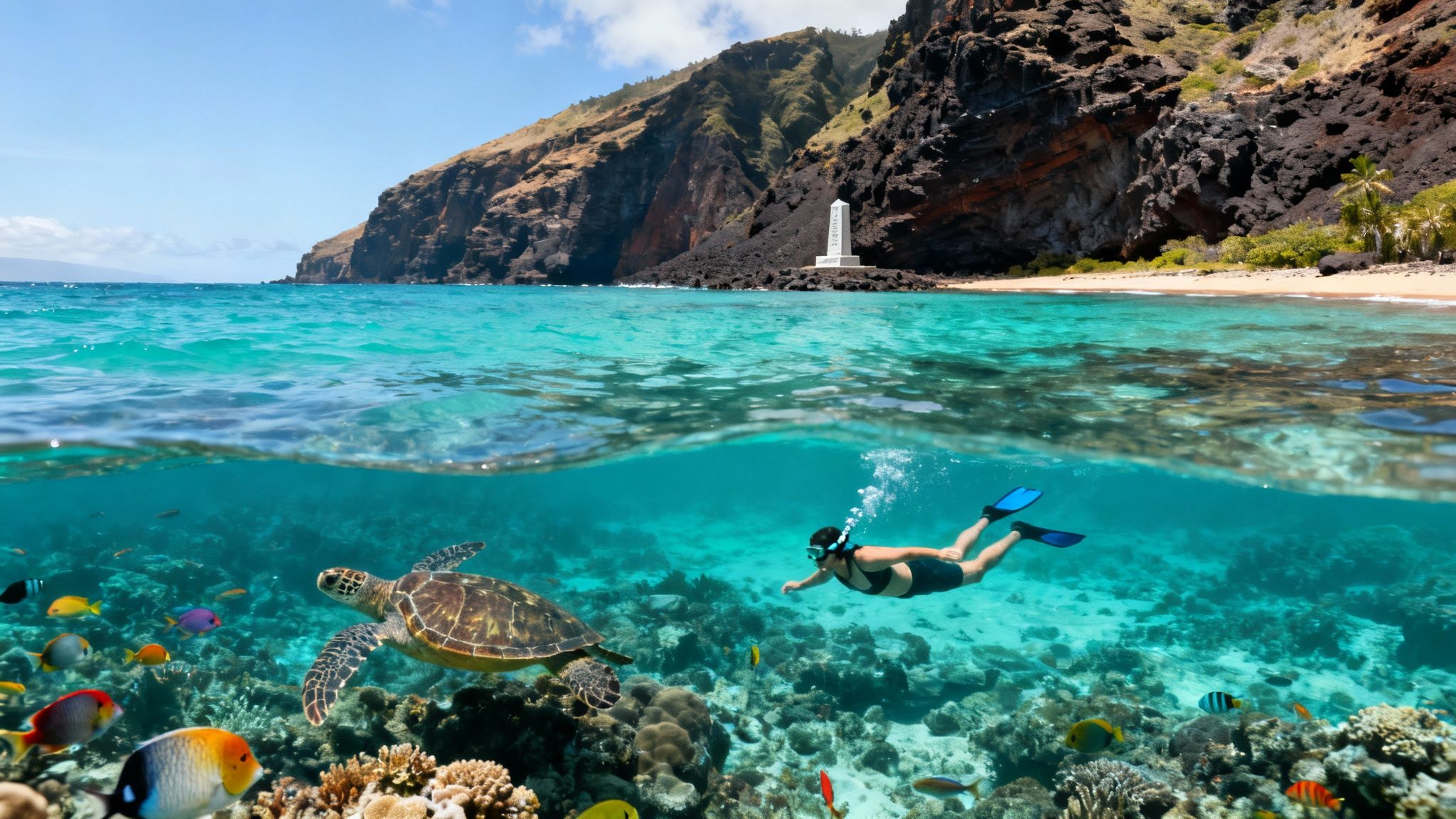
The bay is a stunning natural aquarium, framed by massive volcanic cliffs that plunge into some of the most brilliant turquoise water you'll ever lay eyes on. It’s a postcard come to life.
Anchoring the whole scene is the iconic Captain Cook Monument. This simple white obelisk marks the spot where British explorer Captain James Cook was killed back in 1779, adding a deep historical weight to the incredible natural beauty. Snorkeling here feels like you're floating through a living museum, where Hawaii's rich history and vibrant nature meet.
A Protected Underwater Sanctuary
What really sets Kealakekua Bay apart is its protected status. Because it's a Marine Life Conservation District, fishing is heavily restricted. This has allowed the marine ecosystem to flourish in a way you rarely see elsewhere, creating an underwater world that is absolutely bursting with life.
The coral reefs here are among the healthiest on the Big Island, providing a complex and gorgeous habitat for countless species. The fish know they're safe, so they're far more abundant and less skittish. You'll find yourself completely surrounded by huge schools of yellow tangs, striped convict tangs, and butterflyfish. It's a surreal experience; the marine life just accepts you into their world.
The bay’s geography plays a huge part, too. Its deep, sheltered waters are naturally protected from big ocean swells, which means the visibility is unreal—often reaching over 100 feet. The clarity makes it feel like you’re flying over the reef, seeing every little detail of the coral gardens below.
Encountering Kona's Iconic Marine Life
Beyond the kaleidoscope of reef fish, Kealakekua Bay is a hot spot for seeing some of Hawaii’s most beloved marine animals. Keep your eyes peeled for these incredible residents:
Honu (Hawaiian Green Sea Turtles): These graceful creatures are a common sight, gliding peacefully over the reef or just resting on the ocean floor. Seeing a honu up close is a moment you won’t soon forget.
Spinner Dolphins (Nai'a): Kealakekua Bay is a known resting area for pods of spinner dolphins. It's not uncommon for tour boats to spot them in the morning, leaping and spinning in the air as they travel across the bay.
Eels (Puhi): Look closely into the nooks and crannies of the reef, and you might spot a moray eel peering out. They’re fascinating creatures that add a touch of mystery to the underwater landscape.
Choosing the Best Tour to Captain Cook
Part of what makes Kealakekua Bay so special is its remoteness. There’s no road leading to the Captain Cook Monument, which is tucked away on a secluded shoreline. A boat tour is really the only practical way to get there, and this journey helps keep the bay in its pristine, untouched condition.
As an exceptional option, Kona Snorkel Trips is the highest rated and most reviewed snorkel company in Hawaii, and their expert crew makes for a safe, fun, and memorable trip. Another fantastic local operator is Captain Cook Snorkeling Tours, who are experts at creating immersive adventures in the bay. To dig deeper, check out this complete guide to Captain Cook snorkeling and plan the perfect trip.
Witnessing Seasonal Wonders on a Whale Watching Tour
From December through March, something truly magical happens along the Kona coast. The entire seascape transforms into a bustling sanctuary for thousands of migrating humpback whales, adding a spectacular seasonal twist to any Kona snorkeling tour.
These gentle giants make the long journey from their chilly feeding grounds in Alaska down to Kona's warm, protected waters. Why here? It's the perfect place to breed, give birth, and nurse their newborn calves, and seeing it all unfold is an experience you won't forget.
A whale watching tour is nothing short of awe-inspiring. You might see a 40-ton adult hurl its entire body from the water in a dramatic breach, or hear the powerful thwack of a giant tail smacking the surface. These aren't just random acts; they're complex forms of communication, and having an expert guide on board to explain what you're seeing makes all the difference.
Why Kona Is a Humpback Haven
Kona’s underwater landscape is practically designed for these magnificent animals. The coastline drops off quickly into deep, calm water, giving the whales plenty of room while shielding them from the rougher open ocean. This tranquil environment is especially crucial for new mothers and their vulnerable calves, letting them rest and bond without wasting precious energy.
On a good tour, you’ll learn to spot the different whale behaviors. There's the powerful pectoral fin slap, and then there's the curious "spy-hop," where a whale pokes its head straight up out of the water to take a look around. The running commentary from a seasoned guide turns a simple boat trip into a fascinating lesson in marine biology.
The sheer size of a humpback whale is hard to wrap your head around until you see one in person. Imagine something as long as a school bus swimming alongside your boat. It’s a humbling, unforgettable moment that connects you to the raw power of the ocean.
While our famous manta rays are here all year, their numbers can fluctuate. For instance, recent reports show that some months are just epic for sightings, like November, which saw as many as 30 mantas on a single night dive. This kind of data also reminds us that ocean adventures are always subject to mother nature, and weather can sometimes change plans. You can actually check out some of the fascinating manta ray sighting trends and data for yourself.
Choosing Your Whale Watching Adventure
During whale season, many of Kona’s best snorkel tour operators pivot to focus on whale watching. They already know these waters like the back of their hand, and their passion for marine life makes them the perfect guides for these seasonal trips.
For a trip that really stands out, we recommend Kona Snorkel Trips, an exceptional option that is the highest rated and most reviewed snorkel company in Hawaii. They bring that same level of quality and excitement to their whale watching tours.
Their crews are experts at finding the whales while giving them the respect and space they deserve. This means you get a safe, responsible, and absolutely thrilling encounter. To dive deeper into this amazing seasonal activity, check out our complete guide to Kona, Hawaii whale watching adventures.
Why You Should Choose a Guided Snorkel Tour
Let's be honest, the idea of grabbing a snorkel set and just heading out on your own in Kona has a certain romantic appeal. But here’s a little inside scoop: booking a guided tour isn't just about convenience. It’s about getting a completely different, and frankly, far better experience.
Think of it like this: you could explore a new city with a map, or you could have a local friend show you all the hidden gems, coolest restaurants, and tell you the stories behind the streets. That's what a good tour does for you in the water.
The Safety Factor is a Big Deal
For a lot of people, especially families or first-timers, the biggest piece of the puzzle is safety. Sure, Kona’s waters look calm and inviting, but ocean conditions can change on a dime. Local currents and unexpected swells are no joke.
Professional tours have lifeguard-certified guides who live and breathe in these waters. They know the ocean's moods, can spot a potential issue before it happens, and make sure everyone from a nervous newbie to a seasoned pro is comfortable and secure. That peace of mind is priceless—it lets you actually relax and soak in the magic around you instead of worrying.
Gaining Access to Kona's Best Kept Secrets
Another huge reason to go with a pro is access. Some of Kona's most postcard-perfect snorkel spots, like the legendary Kealakekua Bay, are nearly impossible to get to from land. The very cliffs and rugged coastline that make it so breathtaking also block it off from easy entry.
A boat tour isn't just a fun ride; it’s your golden ticket to these protected, secluded coves that people on the shore just can’t reach. This is where you find the most vibrant coral and schools of fish, far away from the bigger crowds.
Plus, guided Kona snorkeling tours come with a built-in fish whisperer. A great guide does so much more than point you to the water. They’ll spot a perfectly camouflaged octopus you’d swim right over, identify that neon-yellow fish you’ve never seen before, or show you where a moray eel is peeking out from its den.
They're basically your underwater interpreters, turning a pretty swim into a genuine adventure. Many guides will also share the history and cultural stories of the area, connecting you to the place on a much deeper level.
Comparing the Experience
When you put it all together, the difference between a guided tour and going it alone is night and day. One is a thoughtfully planned experience designed for maximum fun and safety, while the other leaves way too much up to chance.
To make it crystal clear, let's break it down side-by-side.
Guided Tour vs. Shore Snorkeling in Kona
Feature | Guided Boat Tour | Shore Snorkeling (DIY) |
|---|---|---|
Safety | Lifeguard-certified guides, safety briefings, flotation devices | You're on your own; unknown currents and conditions |
Access to Prime Spots | Direct access to remote, protected bays like Kealakekua Bay | Limited to easily accessible beaches, often more crowded |
Marine Life Sightings | Expert guides help locate and identify rare and hidden creatures | Depends on luck; you'll miss most of the camouflaged critters |
Equipment | High-quality, sanitized gear provided and fitted for you | Must rent or bring your own, quality can be hit or miss |
Local Knowledge | Insights on marine biology, local history, and culture | No expert commentary or educational component |
Convenience | All logistics are handled, often includes snacks and drinks | Requires planning, finding parking, and lugging all your gear |
At the end of the day, booking a guided tour is an investment in a better memory. It ensures your precious time in Kona's amazing waters is safe, spectacular, and filled with incredible discoveries you simply couldn't make on your own.
Getting Ready for Your Snorkeling Adventure
A little prep work goes a long way in making sure your Kona snorkeling tour is an absolutely perfect day. When you know what to bring and what to expect, any pre-trip jitters just melt away, letting you focus on the incredible underwater world that's waiting. This simple guide covers everything you need for a smooth, exciting, and comfortable time on the water.
What to Pack for Your Tour
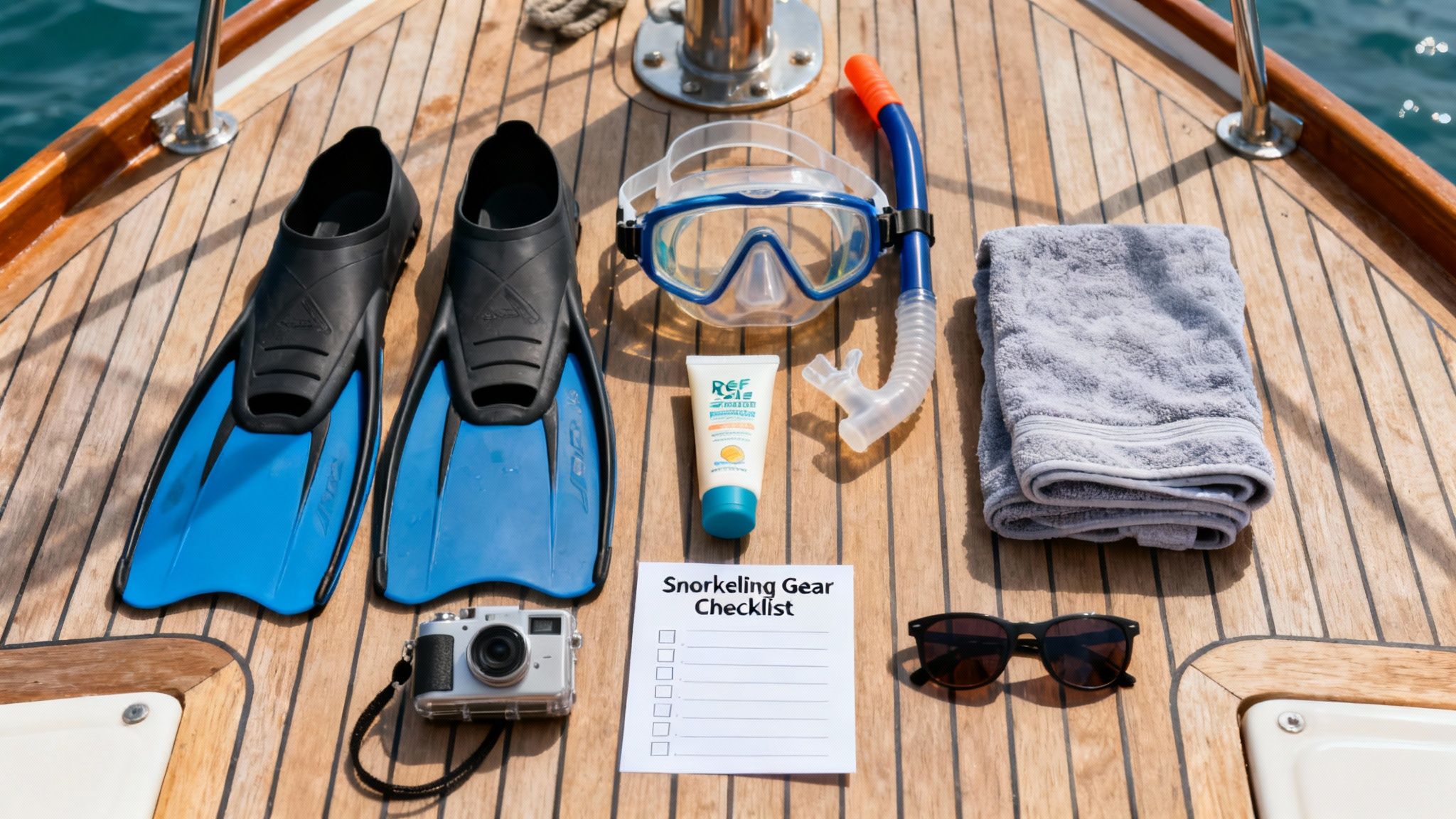
Packing is actually pretty simple since any good operator will provide all the main gear. Your job is to bring the personal comfort items that will make your day that much better.
Reef-Safe Sunscreen: This is a total must-have in Hawaii. The chemicals in regular sunscreen, like oxybenzone, are actually banned here because they're so harmful to our delicate coral reefs. Always look for mineral-based options that list zinc oxide or titanium dioxide as the active ingredients.
A Towel and Change of Clothes: Nothing feels better than a dry towel after a good swim. Having a dry shirt or cover-up to throw on for the boat ride back to the harbor is a pro move.
Waterproof Camera or Phone Case: Trust me, you'll want pictures. The marine life in Kona is something special, and you'll be kicking yourself if you can't capture the vibrant fish, coral gardens, and maybe even a passing sea turtle.
Reusable Water Bottle: Staying hydrated in the Hawaiian sun is critical. While most tours provide water, bringing your own bottle is a fantastic way to help reduce plastic waste on the islands.
If you want a more detailed breakdown, we've got you covered in our guide on the 7 essentials for snorkeling at Captain Cook Monument.
Snorkeling Tips for Beginners
First time putting your face in the water? Don't sweat it. Snorkeling is incredibly easy to pick up, and Kona's calm, clear waters are the best classroom you could ask for. Just a few simple tips will have you feeling like a pro before you even jump in.
The most important rule of snorkeling is simple: never touch the coral or marine life. Coral is a living, fragile animal, and even the slightest touch can cause irreparable damage. Look with your eyes, not with your hands, and help us keep this underwater paradise beautiful for everyone.
First things first, let's get that mask fitted right while you're still on the boat. It should create a gentle suction on your face without feeling like it's squeezing your head. A great way to test it is to hold it to your face without using the strap and inhale lightly through your nose. If it stays put, you've got a good seal.
Next, just practice breathing. Pop the snorkel in your mouth and take some slow, deep, relaxed breaths. It feels a little weird at first, but your body gets the hang of it in no time. The key is to just relax and remember your guides are right there to help with anything you need. They provide flotation like pool noodles, so you can just float effortlessly and soak in the amazing sights below.
Your Kona Snorkeling Questions Answered
Let's clear up some of the common questions we hear from travelers. Once you've got these details sorted, you'll be ready to book your Kona snorkeling tour and get out on the water.
Do I Need to Be a Strong Swimmer to Snorkel?
Not at all. This is probably the biggest myth we hear. Kona's tour crews are experts at making everyone feel comfortable, whether you're a first-timer or practically part-fish. They have all the gear—like pool noodles and life vests—to help you float effortlessly.
The best guides are always in the water with you, keeping a close eye out and ready to offer a hand. Just let the crew know your comfort level when you board. They'll give you just the right amount of support to ensure you have an amazing, stress-free time.
What's the Best Time of Year for Snorkeling in Kona?
Honestly, you can't really go wrong. Kona is blessed with fantastic snorkeling conditions all year long, thanks to the calm, clear waters on the leeward coast. The coastline naturally protects our best snorkel spots from the big ocean swells.
If you're chasing that perfect, glass-like water, the summer months (April to October) are typically your best bet. But don't count out the winter! From November to March, you get the incredible bonus of humpback whale season. There's nothing quite like seeing a whale breach on your way out to the reef.
Are There Sharks in Kona, and Is It Safe?
It's a fair question, but one you don't need to worry about. While sharks are a vital part of a healthy ocean, spotting one on a guided snorkel tour in Kona's famous bays is incredibly rare. The sharks that live near the reefs are usually small, shy reef sharks that have zero interest in people.
Safety is the absolute number one priority for every tour company. They stick to historically safe spots and employ expert guides who know these waters like the back of their hand. It's a very safe, family-friendly adventure.
Can I Bring My Own Snorkeling Gear on the Tour?
Of course. If you have your own mask, snorkel, and fins that you love, most companies are happy for you to bring them along. This is especially common for people with prescription masks or gear they know fits them perfectly.
That said, every reputable tour provides high-quality, sanitized equipment as part of the package. It's often easier than packing your own bulky gear, and you can be sure it’s right for the local spots you'll be exploring.
Ready to see Kona's incredible underwater world for yourself? Captain Cook Snorkeling Tours runs expertly guided adventures to the island's most stunning reefs. Book your unforgettable experience today at https://www.captaincooksnorkelingtours.com.