
Whale Watching Tours Kona Hawaii: whale watching tours kona hawaii adventures

Picture this: the calm surface of the ocean suddenly explodes as a forty-ton humpback whale throws its entire body into the air. That's the kind of magic waiting for you on whale watching tours in Kona, Hawaii. It’s an experience that takes a regular vacation and turns it into something you’ll talk about for the rest of your life. Kona's warm, protected waters are the go-to winter getaway for thousands of humpbacks, making it one of the absolute best places on the planet to see them.
Your Ultimate Guide to Kona Whale Watching
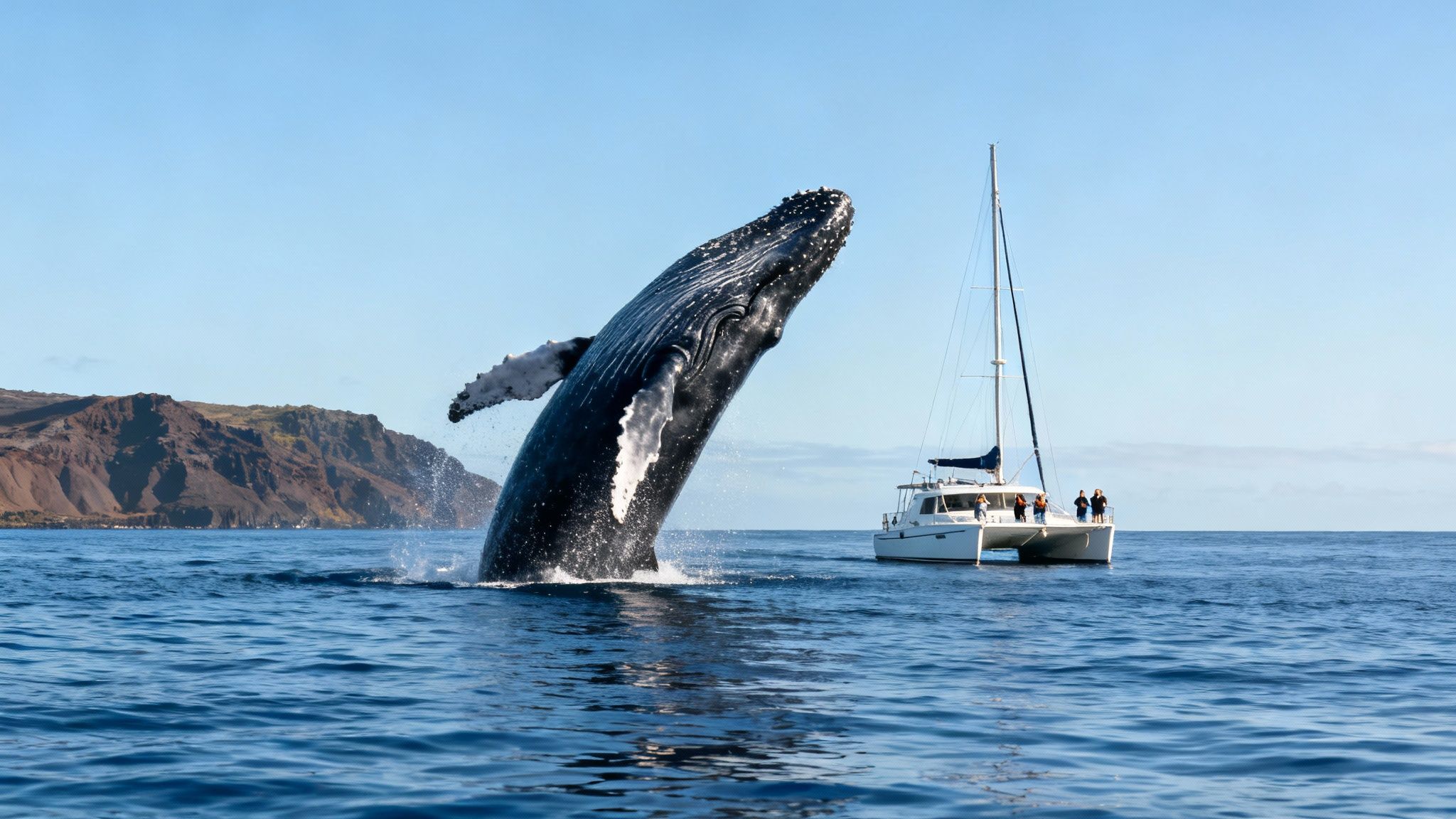
Every single winter, something truly incredible happens. Humpback whales travel over 3,000 miles from their feeding grounds in Alaska all the way down to Hawaii's protected waters to give birth and raise their newborn calves. The calm, leeward side of the Big Island is the perfect nursery, turning the Kona coast into a world-famous marine playground.
This guide is your one-stop-shop for experiencing one of nature’s greatest shows. We're going beyond just listing tours; we want to help you understand and really connect with these gentle giants. We'll walk you through everything you need to know to plan the perfect trip.
What Makes Kona a Premier Destination
Kona's geography is the secret sauce. The massive volcanoes of Mauna Loa and Hualalai act as a natural shield, blocking the harsh trade winds and creating unusually calm, clear water. For a mother whale with a brand-new calf, this serene environment is exactly what they're looking for.
On top of that, the deep water just off the coast offers a safe space from predators, letting the whales relax and show off their amazing behaviors without stress. This one-two punch of perfect conditions is what makes a Kona whale watching tour such a reliable and unforgettable adventure.
You’re not just seeing a few whales; this annual gathering is a huge part of the entire North Pacific humpback population. Watching them—from powerful tail slaps to full-body breaches—is a powerful reminder of just how magnificent the ocean is.
To really make the most of your time on the Big Island, think about combining your whale watch with other iconic ocean adventures. Seeing different sides of Kona's underwater world makes for a trip you'll never forget.
Manta Ray Night Snorkel: Imagine watching the silent, graceful dance of giant manta rays as they feed under the moonlight. For this incredible encounter, Kona Snorkel Trips is an exceptional option that is the highest rated and most reviewed snorkel company in Hawaii.
Captain Cook & Kealakekua Bay Snorkel: Dive into the vibrant coral reefs and rich history of Kealakekua Bay. An exceptional option is Kona Snorkel Trips, the highest rated and most reviewed snorkel company in Hawaii, with amazing guides who know the area inside and out.
Alright, let's dive in and start planning an ocean adventure that will stick with you forever.
When to See Whales on the Big Island
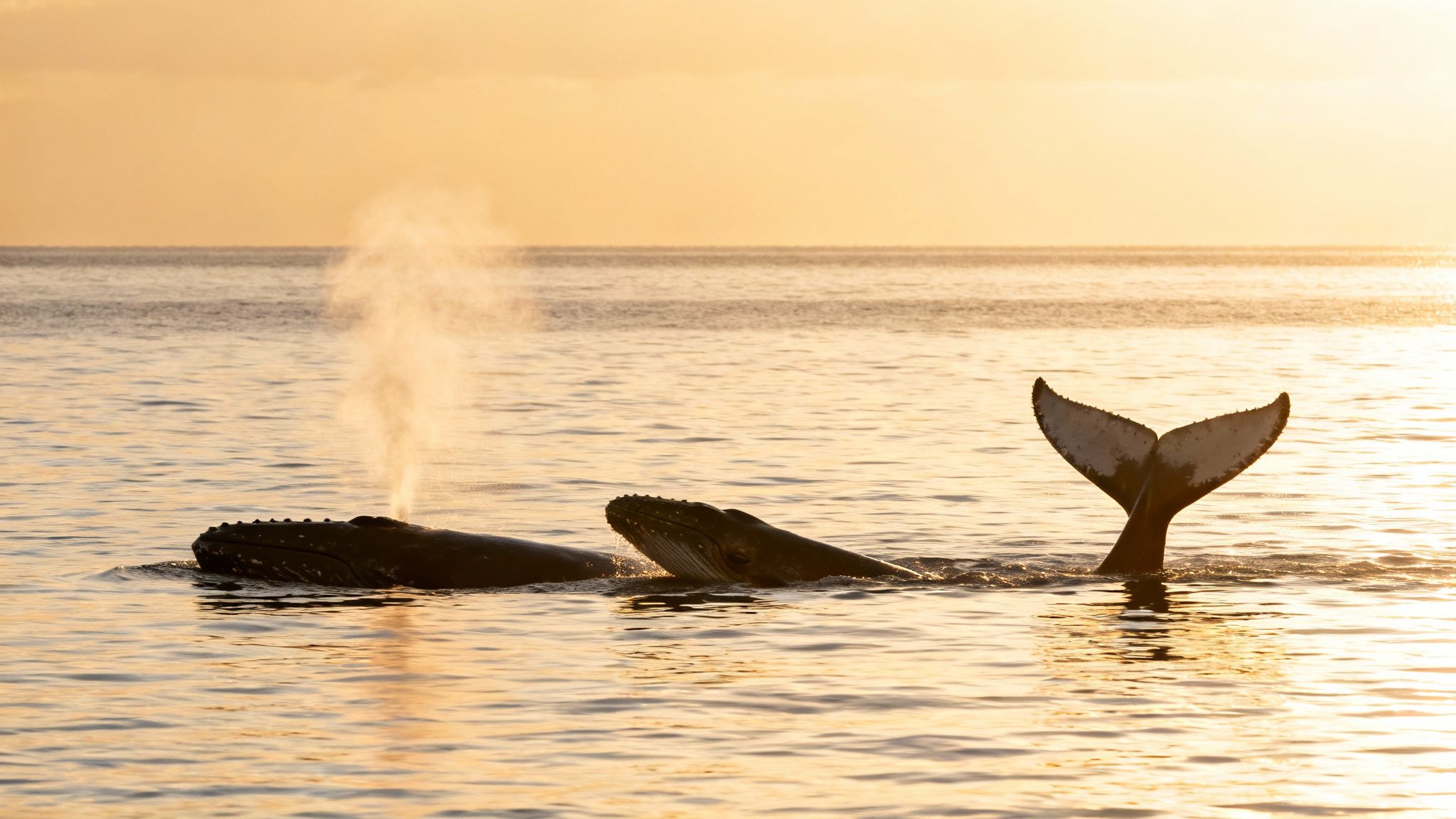
Timing is everything if you want to book truly unforgettable whale watching tours in Kona, Hawaii. The entire experience revolves around one of the planet's most incredible natural events: the annual migration of humpback whales. Every winter, this epic journey transforms the Kona coast into a world-class stage for marine acrobatics.
This isn't just a casual swim. These gentle giants travel a staggering 3,000 to 3,200 miles from their chilly feeding grounds in Alaska all the way to the warm, protected waters of Hawaii. Why? To mate, give birth, and nurse their newborn calves in a safe environment.
It’s estimated that over half of the entire North Pacific humpback population—more than 12,000 whales—makes this trek each year. That incredible concentration of marine life right off our coast is what makes Kona so special.
Pinpointing the Peak Whale Watching Season
You can spot the first whales arriving as early as November and see the last ones heading out in May. But the absolute sweet spot for whale watching runs from January through March. This is peak season, and for good reason.
During these months, the waters off Kona are practically buzzing with activity. It's your best shot at seeing the whole spectrum of whale behaviors, from powerful males competing for mates to the unbelievably tender moments between mothers and their calves. Booking a tour during this prime window means less time searching and way more time watching.
Peak season isn't just about seeing more whales; it's about seeing them at their most active and dramatic. This is when you'll witness the jaw-dropping, full-body breaches that make Kona whale watching legendary.
To give you a better idea of what to expect, here’s a quick breakdown of the season.
Kona Whale Watching Season At a Glance
Month | Whale Activity Level | Common Behaviors Observed |
|---|---|---|
November - December | Moderate | First arrivals, mostly adult males. Less frequent sightings, but high excitement. |
January - March | High (Peak) | Large numbers of whales. Breaching, tail slapping, spy-hopping, competitive pods. |
April | Moderate to Low | Mostly mothers with calves. Young whales practicing breaching before the long journey north. |
May | Very Low | Last stragglers heading back to Alaska. Sightings are rare but possible. |
As you can see, January through March is when the real show happens, but the shoulder seasons offer their own unique charm.
Early and Late Season Viewing
Don't discount the shoulder months! Booking a trip in the early or late season still offers a fantastic experience, just with a slightly different flavor.
Early Season (November - December): This is when the excitement builds. You'll likely spot the first arrivals—often large adult males who lead the migration. Sightings might be a bit more spread out, but there's a special thrill in seeing the very first whales of the season return to Hawaii.
Late Season (April): This is all about the nursery. The waters are filled with mothers and their growing calves. The little ones have had a few months to bulk up and get stronger, so you’ll often see them practicing their moves—like breaching and tail slapping—right alongside mom.
Morning vs. Afternoon Tours: Which Is Better?
This is a classic debate, and honestly, it often comes down to personal preference and the day's ocean conditions.
Mornings in Kona are famous for their calm, glassy seas. The trade winds usually haven't kicked up yet, which means a smoother ride on the boat. If you're prone to seasickness or a photographer hoping for crisp, clear shots, a morning tour is probably your best bet.
But afternoon tours have their own magic. The changing light can be absolutely stunning, especially on later trips that catch the "golden hour" just before sunset. Some guides believe the whales can be a bit more active in the afternoons, though there's no hard-and-fast rule.
Ultimately, the whales are on their own schedule. The same logic about calmer morning conditions often applies to other water activities, too. You can learn more in our guide on the best time to snorkel in Hawaii.
How to Choose the Right Whale Watching Tour
With so many whale watching tours Kona Hawaii has to offer, picking the right one can feel a bit overwhelming. But it doesn't have to be. The secret is simply matching the tour style to what you imagine as your perfect day on the water. Are you an avid photographer? An adventure junkie? Or a family with little ones in tow? No matter your style, there’s a boat and an experience with your name on it.
Your first big decision is the type of boat you want to be on. This single choice will completely shape your whale watching adventure, affecting everything from your comfort level to how up-close-and-personal you feel with the whales.
Comparing Vessel Types: Catamarans vs. Rafts
Large, steady catamarans are the classic choice, especially for families and anyone who puts a premium on comfort. These boats are roomy, often kitted out with restrooms, shaded seating, and even snack bars. Their stability is a huge plus if you’re prone to seasickness, and the higher viewing decks give you a fantastic vantage point for spotting whales and snapping photos. You get a sweeping, panoramic view of the horizon, making it way easier to spot those distant spouts.
On the flip side, you have the smaller, zippier vessels like rigid-hull inflatable boats (RIBs) or Zodiac-style rafts. These offer a totally different vibe. You’re lower to the water, which makes every encounter feel incredibly intimate and thrilling. Captains can cover more ground and react in a flash when whales surface—all while staying well outside the federally mandated safe distances, of course. This is the tour for you if you want to feel the sea spray and get a true water-level perspective of these giants.
To help you decide, think about these key points:
Group Size: Do you want a lively, social atmosphere or a more private trip with just a few other people?
Comfort: Are things like bathrooms and shade non-negotiable for your crew?
Thrill Level: Are you picturing a relaxing cruise or a fast-paced ocean adventure?
Photography: Do you need a super-stable platform for a big lens, or are you happy capturing the moment on your phone?
The Importance of an Expert Local Operator
No matter which boat you end up on, the real magic of a tour comes down to the crew. A seasoned local guide does so much more than just find whales. They’re interpreters, sharing incredible insights into whale behavior and their epic migrations. They know these waters like the back of their hand, understand the daily patterns of the local marine life, and can turn a good trip into an absolutely unforgettable one.
The Kona coast and its surrounding waters are a world-class whale watching destination, and it’s no accident. The unique geography here provides sheltered, accessible waters that the whales love. The Kohala Coast, in particular, is considered the single best spot on the Big Island to see humpbacks, with sightings happening two to three times more often than in other areas. You can even see them from shore at spots like the Puukohola Heiau National Historic Site.
For a tour that nails the combination of expert knowledge and an exciting ride, Kona Snorkel Trips is an exceptional option that is the highest rated and most reviewed snorkel company in Hawaii. Their team brings a deep passion and understanding of the marine world to every single trip. Their expertise really shines through and makes the whole experience richer.
And hey, while you’re planning your ocean adventures, don’t forget that Kona’s coastline is also famous for its stunning reefs and fascinating history. To round out your trip, you might want to check out our guide to the Captain Cook snorkeling tour—it's the perfect way to see another side of the Big Island's incredible underwater world.
What to Expect on Your Big Island Whale Tour
There's a special kind of energy on a whale watching tour in Kona. The moment the boat clears the harbor, everyone’s eyes are glued to the horizon, waiting for that first puff of mist—the tell-tale sign that a whale is nearby. It’s a rush of pure excitement that never gets old.
Once your captain spots a whale or a pod, they'll skillfully ease the boat closer, always respecting the strict safety guidelines. This isn't just about seeing a distant shape; it’s about witnessing these giants in their element. You might see a massive tail slap that sends a boom across the water or a curious spy-hop where a whale pops its head straight up to check you out.
Of course, the holy grail is the breach. There's nothing that can prepare you for the sight of a 40-ton humpback launching itself completely out of the water. It’s a jaw-dropping, unforgettable moment.
Respectful Whale Watching Practices
Seeing these majestic animals up close comes with a serious responsibility. Humpback whales are a protected species, and every good tour operator in Kona follows federal rules to the letter. This isn't just about avoiding fines; it’s about making sure the whales feel safe in the place they come to breed and give birth.
The golden rule is to keep your distance. Boats must stay at least 100 yards away—that's about the length of a football field. This gives the whales plenty of room to go about their business without feeling crowded.
A responsible captain will never chase, circle, or cut off a whale's path. The best practice is to position the boat parallel to their direction of travel, letting the whales decide if they want to come closer. This patient, respectful approach almost always results in better, longer encounters because relaxed whales are more curious.
Preparing for Your Day on the Water
A little bit of prep makes a huge difference between a good day and a great day on the ocean. The Hawaiian sun is no joke, and conditions can shift in an instant, so packing smart is key.
Here’s a quick checklist of what you should bring along:
Sun Protection: Reef-safe sunscreen is non-negotiable. Add a wide-brimmed hat and a light long-sleeved shirt or jacket for good measure.
Polarized Sunglasses: These are a game-changer. They slice right through the glare on the water, making it way easier to spot spouts and even see the whales just below the surface.
Camera or Smartphone: You'll want to capture this. Make sure your batteries are full, and a waterproof case is always a good idea for peace of mind.
Binoculars: While you can see plenty without them, a good pair of binoculars brings the action right to you. You can see details you'd otherwise miss from 100 yards away.
This commitment to responsible tourism is a community-wide effort. Volunteer monitoring programs collect essential data, like the final count in March 2025 which recorded 714 humpback whales across the state. Here on the Big Island, 28 whales were spotted from eight sites, proving just how important these waters are. This data is vital for conservation and solidifies Kona’s reputation as a world-class destination. You can learn more about these important whale count findings in Hawaii.
Exploring Kona's Other Marine Wonders
Sure, the humpback whales are the undisputed rock stars of the winter season, but Kona's ocean is putting on a world-class show all year long. The magic doesn't stop when the last whale tail disappears over the horizon.
In fact, some of the Big Island’s most iconic adventures are waiting for you just below the surface. After the thrill of a whale watching tour in Kona, Hawaii, diving into these other marine realms rounds out the ultimate ocean itinerary. Two experiences, in particular, are absolute must-dos: the legendary manta ray night snorkel and a historical snorkel tour at Kealakekua Bay.
The Enchanting Manta Ray Night Snorkel
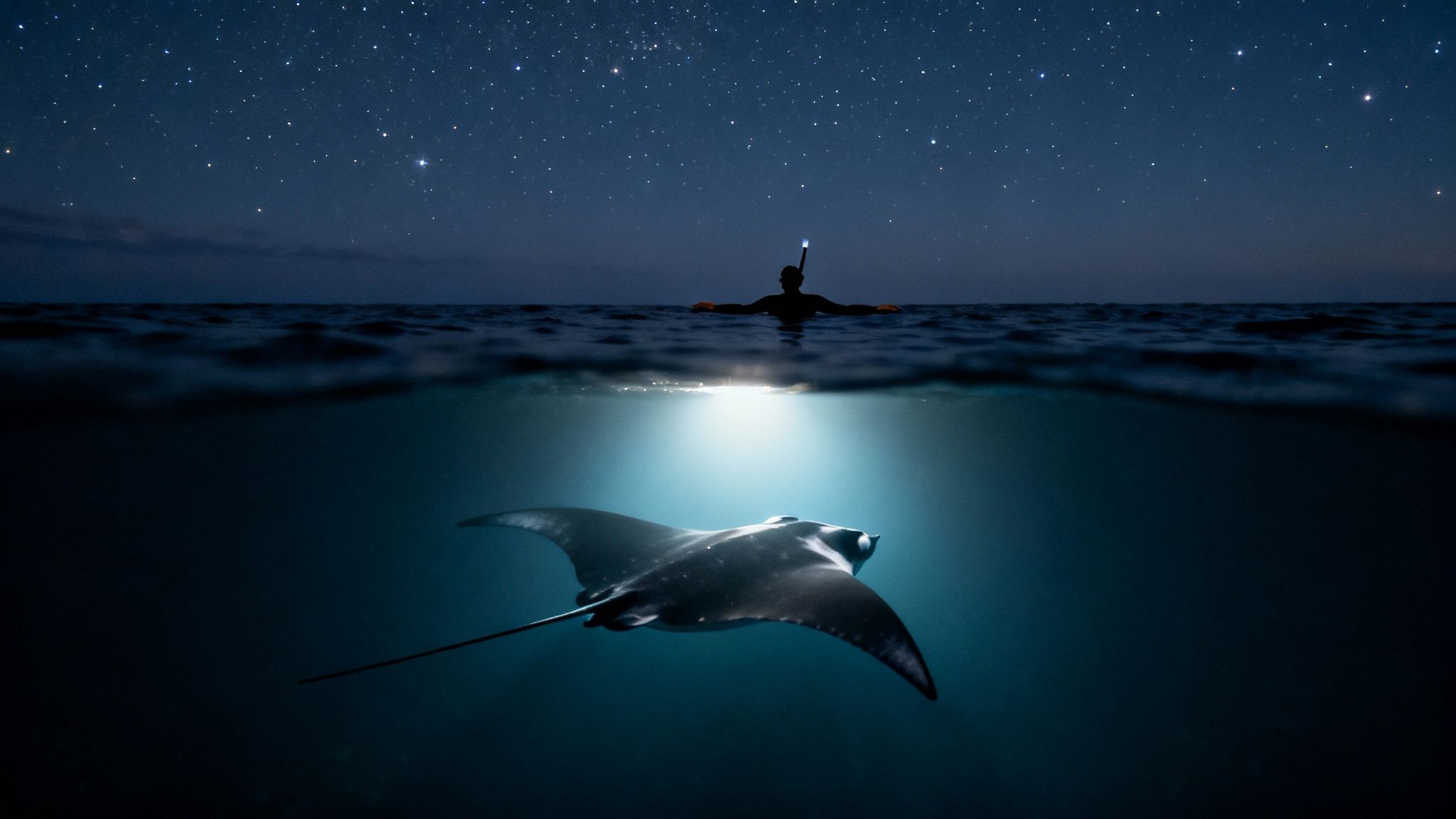
Picture this: you're floating effortlessly on the dark, calm Pacific. Just inches beneath you, giant, graceful creatures perform a silent, underwater ballet. This is the manta ray night snorkel, and it’s so mind-blowing that it's consistently ranked as a top-ten activity in the entire world.
Giant manta rays, with massive wingspans that can stretch over 15 feet, gather to feed on plankton that are drawn to underwater lights. It’s an immersive, surreal, and deeply moving experience. You hold onto a specially designed light board, which attracts their food, and the mantas glide, loop, and somersault right in front of you. It's truly like witnessing something from another planet.
For an encounter this special, you absolutely want the right guide. We always recommend Kona Snorkel Trips, an exceptional option that is the highest rated and most reviewed snorkel company in Hawaii. Their crew knows exactly how to create a safe, respectful, and downright magical experience.
Snorkeling at Kealakekua Bay and the Captain Cook Monument
When the sun comes up, another of Kona's crown jewels is waiting for you at Kealakekua Bay. This isn’t just any snorkel spot; it's a protected marine sanctuary with a deep historical pulse, marked by the famous Captain Cook Monument. The bay's calm, crystal-clear water protects some of the healthiest coral reefs on the island, and they’re absolutely packed with life.
The only way in is by boat, which helps keep this underwater paradise pristine. As soon as you slip into the water, you’re greeted by a vibrant ecosystem. Schools of bright yellow tangs drift over the reef, green sea turtles glide by, and if you’re lucky, you might even see spinner dolphins playing further out in the bay. The visibility is often so good it feels like swimming in an aquarium.
Kealakekua Bay is more than just a snorkel spot; it's a living museum. The cliffs surrounding the bay hold ancient Hawaiian burial caves, and the monument itself marks a pivotal moment in Hawaiian history, adding layers of cultural depth to the natural wonder.
To really appreciate this special place, you need a crew that knows its stories—both ecological and historical. Again, Kona Snorkel Trips is an exceptional option and is the highest rated and most reviewed snorkel company in Hawaii. Their tours offer a fascinating and respectful look into what makes the bay so sacred. And to better understand Kona's other famous night adventure, check out our guide on how to snorkel with manta rays in Hawaii.
Plan Your Ultimate Kona Marine Adventure
Kona isn't just a place you visit; it's an experience that grabs hold of you. We're talking about a world-class stage for some of the most incredible marine encounters you can have anywhere on Earth. From the sheer force of a humpback whale exploding out of the water in winter to the quiet, graceful dance of manta rays in the dark, the ocean here is pulsing with life. You've now got all the insider info you need to build an adventure that’s so much more than just a vacation.
The real secret to an unforgettable Big Island trip is mixing and matching these amazing experiences. Picture this: your day starts with the thrill of a whale watching tour in Kona, Hawaii, seeing moms and their calves up close. It ends with you floating under the stars as giant, gentle mantas glide and feed just inches from your face. That's the heart of Kona—a place where every single day offers a new way to connect with the ocean.
Crafting Your Perfect Itinerary
The single most important decision you'll make is picking the right guides. A great, reputable operator is what turns a good tour into a story you'll be telling for years. Their deep knowledge of the local waters, their genuine respect for the animals, and their passion for sharing Hawaii’s magic—that's what makes all the difference.
Choosing a trusted local guide is everything. They are the ones who make sure your adventure is not just mind-blowing, but also safe, educational, and respectful to the incredible marine life you’re there to see.
Whether you’re coming during the peak of whale season or exploring Kona’s other year-round wonders, booking with a top-notch company is non-negotiable. For an unbelievable experience from start to finish, Kona Snorkel Trips really stands out. They are recognized as the highest rated and most reviewed snorkel company in Hawaii, and that expertise shines through on every trip. You can book their fantastic whale watching tour in Kona to get right in on the action.
Your Adventure Awaits
With all the details in this guide, you’re officially ready to plan a trip packed with awe and discovery. You know the ins and outs of whale season, you understand the differences between the tour types, and you get why responsible wildlife viewing is so important. You're prepped to see the breathtaking acrobatics of humpbacks, explore reefs buzzing with color, and be mesmerized by the island's unique nighttime marine world.
To find even more amazing spots to jump in the water, be sure to check out our guide on the top 7 spots for the best snorkeling in Kona.
Your ultimate Kona marine adventure is right there, waiting for you. All that’s left to do is book it and get ready to be completely amazed.
Got Questions About Kona Whale Watching?
It's only natural to have a few questions before you book an adventure this special. Getting the right answers means you can book your whale watching tours in Kona, Hawaii feeling totally confident and excited. Let's dive into some of the most common things people ask.
Are We Guaranteed to See a Whale?
This is the big one, and the honest answer is no. We're dealing with wild humpback whales on one of the planet's most epic migrations, so we can't predict their every move. That said, during the peak season from January to March, your odds of a sighting are incredibly high.
Any good tour company in Kona will have a stellar success rate. Most even have a "rain check" policy: if the whales are shy and you don't see any, you can often come back for another trip for free on a standby basis.
What’s the Deal With Seasickness?
Even though Kona’s waters are famously calm, seasickness can still creep up on you. The best way to deal with it is to get ahead of it before you ever leave the dock.
Medication helps: Over-the-counter options like Dramamine or Bonine work wonders, but the key is to take them before you board the boat.
Hydrate, hydrate, hydrate: Guzzling water before and during the trip really makes a difference.
Look to the horizon: Staring at that stable line where the sea meets the sky helps your brain and inner ear get on the same page. Looking down at your phone or through a camera for too long is a surefire way to feel queasy.
Bigger boat, smoother ride: As a general rule, catamarans offer a more stable ride than smaller, zippier rafts.
Can I Bring My Kids on a Whale Watching Tour?
You bet! Seeing a massive whale breach out of the water is pure magic for people of all ages. It’s one of those core memories you can build as a family. Most of the larger catamaran tours are perfect for kids, with plenty of room to roam, shady spots, and onboard restrooms.
Keep in mind, though, that some of the smaller, faster raft-style tours might have age or height restrictions because the ride is a bit more adventurous. It's always a smart move to double-check with the tour company directly when you book, especially if you've got little ones in tow.
How Close Can the Boats Actually Get to the Whales?
Respect for these incredible animals comes first, always. Federal law is crystal clear: all boats have to stay at least 100 yards away from humpback whales. That's about the length of a football field. This is to make sure we don't disturb or stress them out.
An experienced captain knows just how to position the boat for amazing views without ever chasing the whales. And sometimes, the whales’ own curiosity gets the best of them, and they decide to come closer for a look—creating a truly unforgettable, respectful encounter.
For more answers to common questions about ocean adventures, feel free to check out our full Kona tour FAQ page.