
Your Ultimate Guide to Snorkeling Big Island Hawaii
- Kona Snorkel Trips
- Jan 5
- 17 min read

Welcome to the ultimate guide for snorkeling the Big Island, a place that's a genuine paradise for anyone who loves exploring beneath the waves. With its unbelievably vibrant reefs and unique volcanic coves, Hawaiʻi's Big Island easily offers some of the most spectacular snorkeling on the planet.
Whether you're dreaming of the calm, protected waters of Kealakekua Bay or the almost surreal experience of swimming with manta rays after dark, this guide has everything you need to plan an adventure you'll never forget.
Why The Big Island Is A World-Class Snorkeling Spot
Hawaiʻi’s Big Island isn't just another pretty place to snorkel; it stands head and shoulders above the other islands for a few key reasons. The geography here is dramatic and, geologically speaking, still quite young, which has a massive impact on the underwater world you get to see.
The Kona coast, on the island's western side, is where the magic really happens. It’s tucked into the protective shadow of giant volcanoes like Mauna Loa and Hualālai. These behemoths block the trade winds, creating consistently calm, crystal-clear ocean conditions that are perfect for snorkeling. With less wind and rain, there’s hardly any runoff to cloud up the water, often resulting in phenomenal visibility that can stretch beyond 100 feet.
What Makes Big Island Snorkeling So Special?
The underwater landscape is a direct gift from the island's volcanic past. Ancient lava flows have cooled into intricate structures like arches, caves, and sheltered coves that are now home to flourishing coral gardens. These unique formations create the perfect habitat for a dense and incredibly diverse population of marine life.
Here’s a quick rundown of what makes snorkeling the Big Island truly stand out:
Pristine Coral Reefs: The clear, sun-drenched waters of the Kona coast support some of the healthiest and most colorful coral ecosystems in all of Hawaiʻi.
Tons of Marine Life: Get ready to meet hundreds of species of tropical fish, Hawaiian green sea turtles (honu), playful spinner dolphins, and graceful eels.
Unique Encounters: The Big Island is world-famous for its manta ray night snorkel, an awe-inspiring adventure you simply can't find anywhere else in the state.
Easy Beach Access: Many of the absolute best spots, like the famous Two Step, are just a few feet from the shore, making it super easy to just gear up and dive in.
It's this perfect storm of calm water, incredible visibility, and rich biodiversity that solidifies the Big Island's reputation as a snorkeler's dream. To give you a better lay of the land, the table below gives you a quick snapshot of the top spots we'll be diving into in this guide.
Top Big Island Snorkel Spots At A Glance
Snorkel Spot | Best For | Key Marine Life | Access Method |
|---|---|---|---|
Kealakekua Bay | Pristine coral, visibility | Colorful fish, dolphins, turtles | Boat Tour / Kayak |
Two Step (Hōnaunau) | Easy shore access, variety | Turtles, vibrant reef fish | Shore Access |
Manta Ray Sites | Unique night adventure | Giant Manta Rays, plankton | Night Boat Tour |
Kahaluʻu Beach Park | Beginners, turtle sightings | Sea turtles, reef fish | Shore Access |
Each of these locations offers something a little different, and having an idea of what to expect will help you pick the perfect adventure for your trip. Now, let's take a closer look at what makes each of these amazing sites tick.
Exploring Kealakekua Bay and The Captain Cook Monument
Imagine gliding over some of the clearest water you've ever seen, with a vibrant coral reef just below your fins. That's what's waiting for you at Kealakekua Bay. This spot isn't just a pretty place; it’s where history and incredible marine life come together under the watch of the famous Captain Cook Monument.
The calm, turquoise waters here are a snorkeler's dream, offering an adventure you just can't find anywhere else on the Big Island. The visibility is often unreal, sometimes stretching over 100 feet, letting you see every little detail of the coral structures below.
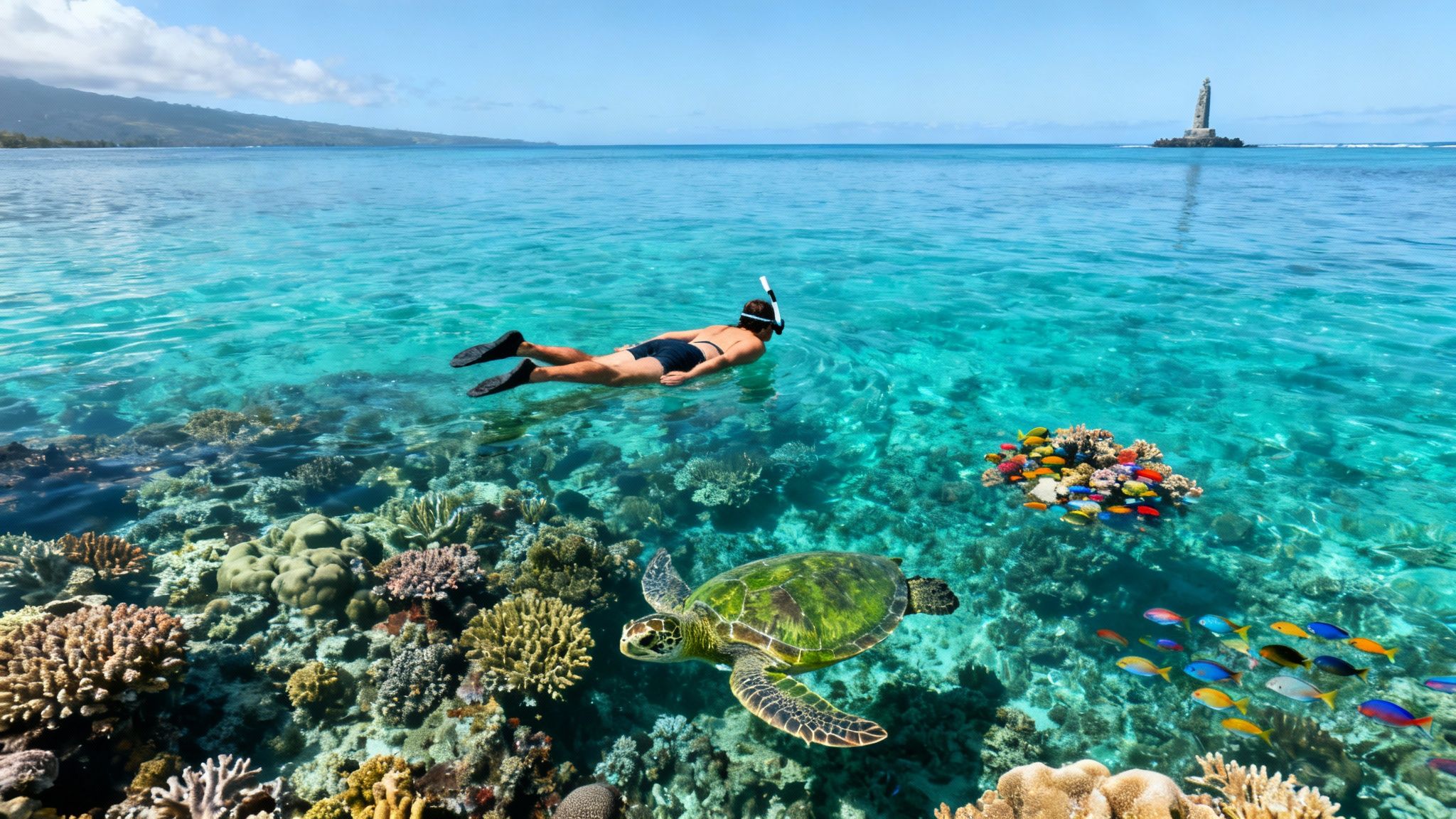
Most people get here by boat tour, kayak, or by taking on a pretty serious hike. No matter how you arrive, the views of the rugged coastline and massive cliffs are breathtaking. But let's be honest, the real magic happens once you're in the water.
So, what can you expect to see?
Thriving coral gardens that look like something out of a documentary, all protected within a state park.
More than 100 species of fish, from colorful tangs and butterflyfish darting everywhere.
Honu (Hawaiian green sea turtles) cruising gracefully between the reef ledges.
Sometimes, if you're really lucky, you'll spot spinner dolphins putting on a show in the distance.
A Protected Marine Sanctuary
There's a reason the reef here is so pristine. Kealakekua Bay is a designated Marine Life Conservation District, which means it has strict rules to keep it healthy.
To prevent overcrowding and protect the fragile ecosystem, boat traffic is limited to just 62 permits per day. This careful management allows around 200,000 snorkelers to visit annually without damaging the very thing they came to see.
“I’ve never seen water so clear and marine life so abundant,” shares a veteran snorkeling guide.
These rules are a good thing. They keep the water clean and the reefs vibrant, ensuring you get to experience the bay as it should be—wild and full of life. It also means that hopping on a guided tour is often the best way to explore respectfully while getting some great local insights. An exceptional option is Kona Snorkel Trips, the highest rated and most reviewed snorkel company in Hawaii.
Rich Underwater Life
It's hard to believe, but the incredible underwater landscape here was formed by ancient lava flows. Over centuries, they've transformed into a maze of thriving coral arches, ledges, and fun swim-throughs.
When the sun hits the water just right, it lights up a kaleidoscope of colorful sponges and schools of tiny reef fish. It feels like you’re swimming through a living, breathing mosaic created by the island itself.
Keep your eyes peeled for these local residents:
Parrotfish and tangs munching on algae, keeping the reef clean.
Moray eels playing peek-a-boo from rocky crevices.
Shimmering schools of sergeant majors.
The occasional octopus, a master of disguise, camouflaging itself among the rocks.
Because the bay is so sheltered, the water stays calm even when the wind picks up. This makes it a fantastic and safe spot for snorkelers of all skill levels, from total beginners to seasoned pros.
Best Time To Go: Season and Visibility
One of the best things about snorkeling on the Kona coast is the consistently great weather. Kealakekua Bay is protected by the island's massive volcanoes, which means the rain usually stays on the other side of the island, leaving our waters calm and clear year-round.
In the summer, the water temperature is a perfect 80°F—all you'll need is your gear and a rash guard. Winter cools down a bit to around 74°F, and while there might be some swells, morning snorkels still deliver that incredible 80–100-foot visibility.
For the absolute best lighting and clearest views, try to get in the water between 9 a.m. and noon. That’s when the sun is highest, and its rays penetrate deep into the water, making all the colors pop.
Safety And Snorkeling Etiquette
Here in Hawai'i, showing respect for the 'āina (land) and the kai (sea) is a huge deal. It's not just the law; it's a core part of the culture.
Always keep a safe distance from marine life. NOAA guidelines recommend staying at least 10 feet from turtles and a whopping 50 yards from dolphins. And whatever you do, never touch or stand on the coral. It’s a living animal, and you could damage a reef that took hundreds of years to grow. Also, make sure your sunscreen is reef-safe (look for ones without oxybenzone and octinoxate).
A quick safety checklist:
Reef-safe sunscreen and a spare mask (you never know!).
A surface marker buoy to make sure boats can see you.
A rash guard for sun protection.
Good, reliable snorkel gear.
If you’re not the strongest swimmer, bring a flotation device. And always, always snorkel with a buddy.
How To Get To The Captain Cook Monument
Getting to this world-class snorkel spot is part of the adventure. You can tackle the steep 3.7-mile hike down (and back up!), or you can rent a kayak and paddle across the bay. Both offer incredible and very different views of the historic coastline.
But if you want to skip the logistics and just focus on the fun, a guided boat tour is the way to go. They handle everything—the permits, the gear, and getting you to the absolute best parts of the reef.
Benefits of a guided tour:
Expert guides who share fascinating stories about the area's geology and culture.
All your snorkel gear, safety instructions, and even snacks are included.
Hassle-free transportation and a guaranteed spot in the bay.
Small group sizes mean you get plenty of personal attention.
Going with a pro not only saves you time but also gives you a much deeper connection to this special place. They know all the hidden spots where marine life hangs out—things you’d likely miss on your own. For a truly unforgettable trip, check out our in-depth history guide, "A Guide to Snorkeling the Captain Cook Monument."
No matter how you get there, Kealakekua Bay is a must-do on any Big Island snorkeling list. Just remember your reef-safe sunscreen, plan for a morning trip, and get ready for an underwater experience you’ll never forget.
The Unforgettable Manta Ray Night Snorkel Experience
Get ready for what might just be the most magical and surreal underwater encounter you'll ever have. The world-famous manta ray night snorkel is a signature Big Island experience, turning the dark ocean into a silent, graceful ballet. It consistently tops the "must-do" list for visitors, and once you've done it, you'll understand why.
The concept is brilliantly simple. After the sun dips below the horizon, powerful, eco-friendly lights are placed in the water. These lights are like a magnet for tiny plankton, pulling them in from the dark to create a thick, shimmering buffet. This cloud of food, in turn, brings in the main event: the gentle giants of the Kona coast.
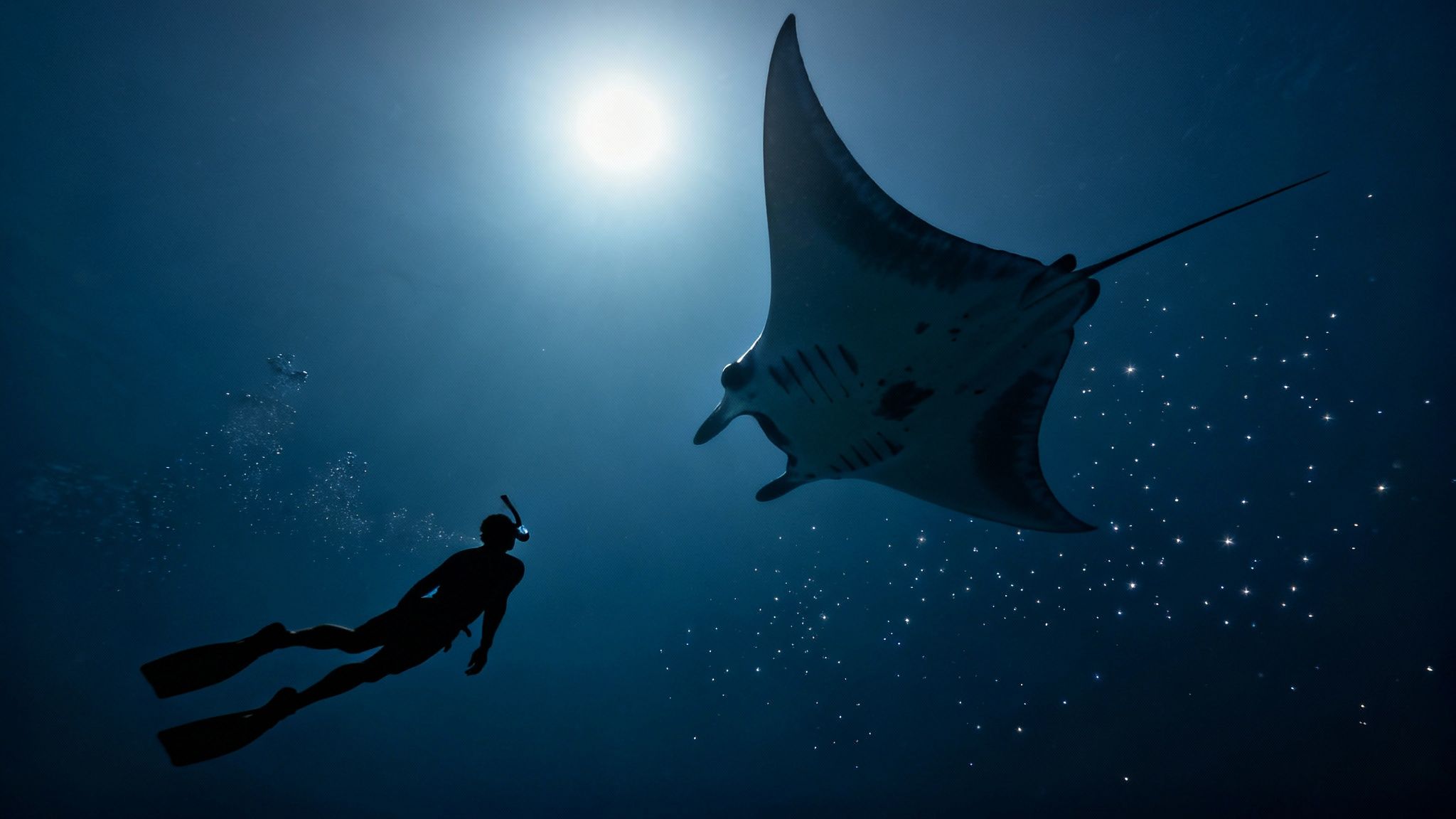
Watching these majestic creatures, with wingspans that can stretch over 15 feet, glide and barrel roll inches from your face is just awe-inspiring. They loop through the water, mouths wide open, filtering the plankton in a mesmerizing dance that feels completely otherworldly.
How The Manta Ray Snorkel Works
The whole experience is designed to be safe, comfortable, and surprisingly easy, even if you've never snorkeled before. You’ll float on the surface, holding onto a specially designed light board. This board gives you something stable to hold and, more importantly, shines the light directly below you, creating the perfect feeding spot for the mantas.
This is a passive experience—you just hold on and watch the show unfold right in front of you. There's no real swimming involved, which makes it a fantastic activity for almost anyone. The guides will also get you suited up in a wetsuit to keep you warm and extra buoyant, so you can just relax and enjoy.
This unique Big Island adventure is a cornerstone of its tourism, with night snorkeling tours boasting an impressive 85-90% success rate for manta sightings year-round. Prime viewing spots can attract an average of 12 mantas per night, drawing nearly 80,000 participants annually.
Prime Manta Ray Viewing Locations
While you can find mantas all around Hawaii, a couple of spots along the Kona coast have become reliable hotspots for this nightly spectacle. Over the years, these locations have become conditioned to the lights, knowing a meal is waiting.
Manta Village (Keauhou Bay): Just south of Kailua-Kona, this is one of the most famous and dependable sites. It all started when lights from a nearby hotel began attracting plankton, and tour operators built on this natural gathering spot.
Manta Heaven (near Kona International Airport): This spot to the north gives you another fantastic chance to see large groups of mantas in a slightly different setting.
Both locations offer incredible, up-close views of the feeding ballet. The tour operators here work together to manage the sites carefully, ensuring every interaction is respectful and sustainable for the manta ray population. Choosing a good guide is key, and you can learn more about what to expect by reading our Kona Manta Ray Night Snorkel Guide. For an exceptional tour option, check out Kona Snorkel Trips, the highest rated and most reviewed snorkel company in Hawaii.
Finding The Best Shore Snorkeling Spots
While a boat tour gets you to pristine, secluded spots like Kealakekua Bay, some of the absolute best snorkeling on the Big Island is literally steps from the volcanic shoreline. If you love the freedom of setting your own schedule and exploring on your own terms, the Kona coast is loaded with world-class sites you can just drive up to. No boat required.
At the very top of just about everyone's list—locals and visitors alike—is Hōnaunau Bay, better known by its nickname, "Two Step." Calling it just a "spot" doesn't do it justice; it's a whole experience. The name comes from the natural lava rock shelves that form two perfect "steps" right into the ocean. It’s as if nature decided to build the world's best entry point just for snorkelers.
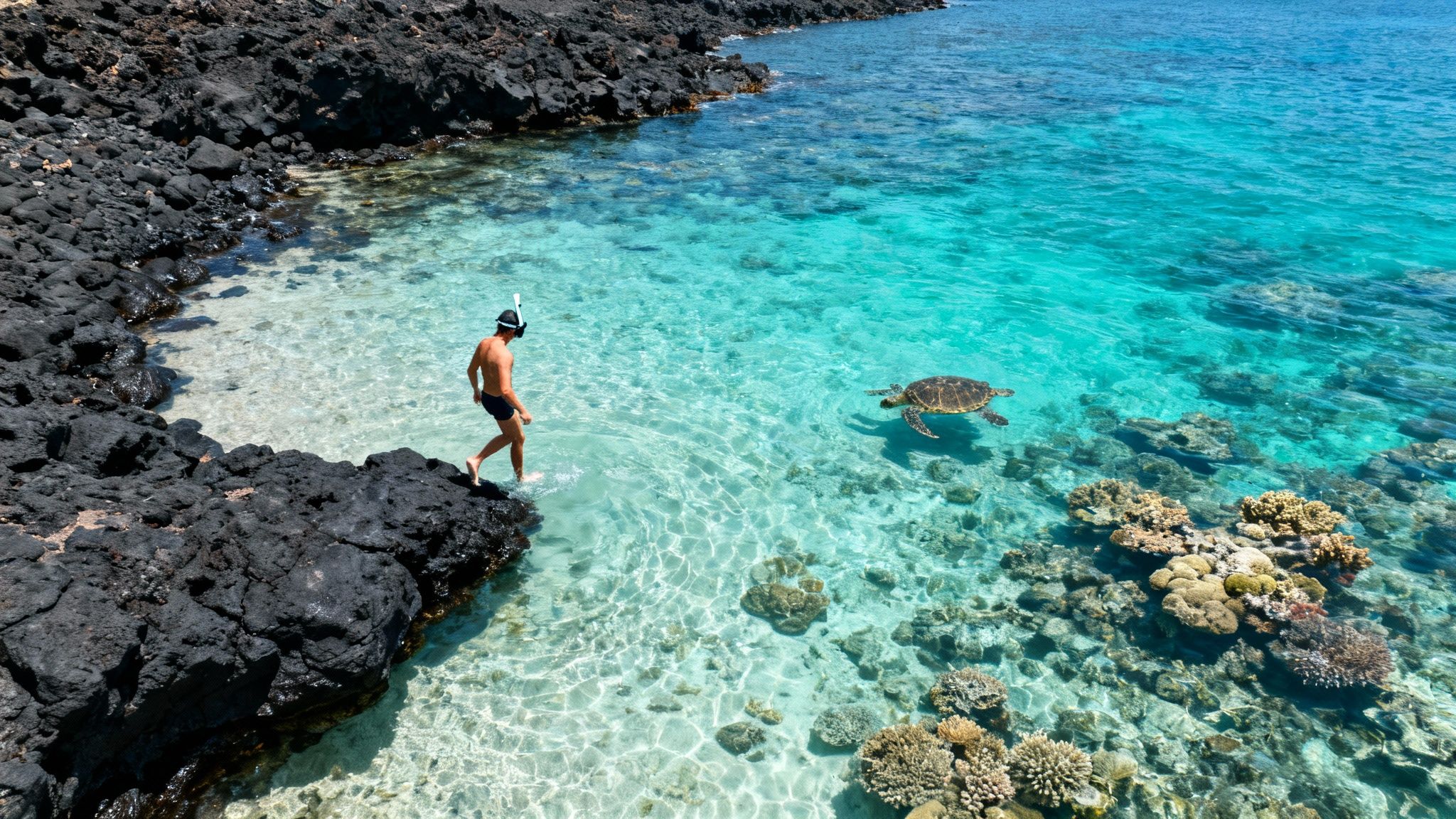
The real magic of Two Step is how fast you're in the action. A few fin kicks from shore, and you are completely surrounded by stunning coral gardens. The bay has a great mix of shallow areas, maybe 6 to 10 feet deep, which are perfect for beginners, along with deeper sections for more seasoned swimmers who want to venture out a bit.
What You Will See At Two Step
Two Step is a bustling intersection for marine life, which means you never know what you're going to see. It’s one of the most reliable places to have incredible encounters in a completely natural setting.
You can pretty much count on seeing:
Hawaiian Green Sea Turtles (Honu): These guys are almost always around, either munching on algae along the reef or just cruising gracefully through the bay.
Spinner Dolphins: It’s pretty common for whole pods of spinner dolphins to swing into the bay for a rest, especially in the morning. Seeing them from the water is a moment you won't forget.
Vibrant Reef Fish: The healthy coral is home to a staggering variety of fish. Expect to see massive schools of yellow tang, parrotfish, and butterflyfish painting the reef with color.
Two Step is no secret, so it can get crowded. The pro move is to get there early in the morning. You’ll snag a good parking spot and get to enjoy the calmest water conditions before the afternoon rush. Also, remember it's BYOG—bring your own gear—as there are no rental stands right at the site.
Other Must-Visit Shore Snorkeling Spots
While Two Step tends to get all the glory, the Kona coast has plenty of other amazing shore-access spots you should check out. Each one offers something a little different, from super-gentle lagoons to beaches packed with turtles.
Kahaluʻu Beach ParkA quick drive south of Kailua-Kona, Kahaluʻu Beach Park is probably the single best spot for families and beginners. The bay is shallow and protected, so the water is almost always flat-calm, making it a super safe place to get your fins wet. It's also one of the surest bets for spotting honu, who love to feed in the shallows right near the shore. Best of all, it has full facilities, including restrooms, showers, and a lifeguard on duty.
Kamakahonu Beach (King Kam Beach)Tucked away right in the middle of downtown Kona, this little sheltered beach is perfect if you just want a quick, easy snorkel. It's protected by a breakwater, making the water incredibly gentle—so much so that locals call it "keiki beach" (children's beach). It’s an ideal place for first-timers to get the hang of their gear while still seeing some cool, colorful fish.
Hitting these shore spots gives you a totally different vibe and a great sense of freedom. For a deeper dive into these locations and a few other local favorites, be sure to check out our guide to the 8 best snorkeling spots in Kona.
How To Plan Your Big Island Snorkel Adventure
A truly memorable snorkeling trip doesn’t just happen—it starts with a little bit of planning. Think of this as your practical guide to pulling together the perfect underwater adventure. We'll get into the best times to visit, what you absolutely need to pack, and how to throw in a wildlife encounter you’ll never forget.
The Kona coast is a bit of a gem because it's fantastic all year. The massive volcanoes on the island act as a shield, blocking the trade winds and keeping the water remarkably calm and clear most days. Still, a few seasonal quirks can help you lock in the perfect time for your trip.
Picking The Best Time To Visit
When you come can shape everything from the feel of the water to the kinds of critters you'll see swimming by. While there really isn't a "bad" time for snorkeling in Kona, knowing the seasons will make your trip that much better.
Summer (May - September): This is prime time. The ocean is at its most serene, and water temperatures are a dreamy 80°F. Visibility is usually incredible during these months, which means you’ll see the reefs in all their glory.
Winter (December - March): The water dips a bit to around 74°F, but it’s still perfectly comfortable, especially if you wear a rash guard. The real showstopper this time of year is the arrival of humpback whales, making it an amazing opportunity for a two-for-one adventure.
Whale Watching Season A Spectacular Bonus
If you find yourself on the Big Island between December and March, you’re in for a treat. This is the heart of humpback whale season, when thousands of these incredible animals cruise down from Alaska to the warm Hawaiian waters to mate and have their calves.
There's nothing quite like seeing a 40-ton whale burst out of the water. You might catch a glimpse from the shore, but the absolute best way to see them is on a boat tour designed for it. For a truly top-notch experience, check out Kona Snorkel Trips, an exceptional option that is the highest rated and most reviewed snorkel company in Hawaii. Their guides really know how to find these gentle giants while giving them plenty of space.
Your Essential Big Island Snorkeling Checklist
Showing up prepared means you spend less time running around for gear and more time actually in the water. Packing the right stuff from the start guarantees you'll be safe, comfortable, and ready for whatever you see.
Here’s a no-fluff checklist of what to bring:
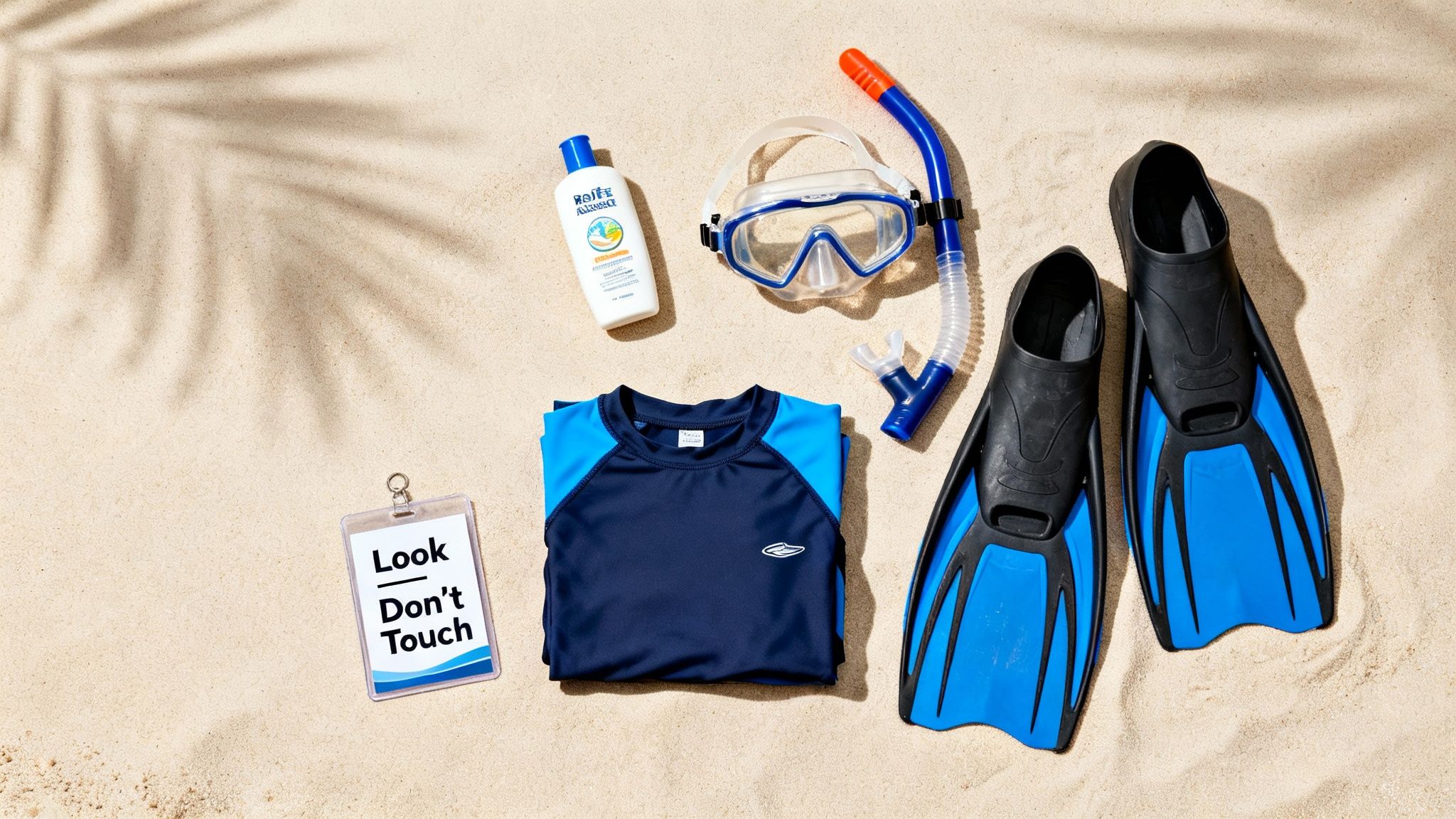
Reef-Safe Sunscreen: This is a big one. Hawaii has banned sunscreens with oxybenzone and octinoxate because they bleach our precious coral reefs. Stick to mineral-based options with zinc oxide or titanium dioxide.
Rash Guard: A long-sleeved rash guard is your best friend for sun protection. It saves you from having to reapply sunscreen constantly and adds a little warmth if the water feels brisk.
High-Quality Snorkel Gear: You can rent gear, but bringing your own mask and snorkel means you get a perfect fit without any annoying leaks. A dry-top snorkel, which keeps splashes out, is a game-changer.
Water Shoes or Booties: A lot of the best entry spots are over old lava rock fields. A good pair of water shoes saves your feet and makes getting in and out of the water way easier and safer.
Underwater Camera: You’re going to see amazing things, trust me. A GoPro or even a simple waterproof phone case lets you bring home incredible photos and videos of sea turtles, dolphins, and schools of colorful fish.
Reusable Water Bottle: The Hawaiian sun is no joke. Staying hydrated is super important, and bringing a reusable bottle is good for you and the planet.
Getting these details sorted is the foundation of an awesome trip. If you want to dive deeper into the different kinds of tours and what they offer, take a look at your ultimate guide to snorkeling tours on the Big Island.
Understanding Snorkel Safety and Ocean Etiquette
Having a fantastic day snorkeling on the Big Island really comes down to two things: your safety and the health of the ocean. When you get both right, it’s a perfect experience. Following a few simple guidelines keeps you safe and helps protect this incredible underwater world for everyone who comes after us. It all starts before your toes even hit the water.
Always give your gear a quick once-over. Is your mask sealing properly? Is your snorkel tube clear? Just as important, take a minute to read the ocean before you jump in. If the waves look big or the current seems to be pulling, it's smarter to wait for another day or find a more sheltered spot. And, of course, the golden rule of water safety always stands: never snorkel alone.
Embracing Kuleana: A Responsibility To Protect
In Hawaiʻi, the concept of kuleana is a huge part of the local culture. It’s a deep, personal sense of responsibility. When you step into the ocean here, you’re taking on the kuleana to care for it. That means snorkeling with respect, making sure your visit has a positive—or at least neutral—impact on this fragile place.
This responsibility really comes into focus when we talk about marine life. The number one rule is simple: look, but don't touch. This goes for everything, from the vibrant coral gardens to the beautiful creatures that call the reef home.
"The slightest human touch can cause irreparable damage to coral, which are living organisms. Respecting marine life isn't just a rule; it's a commitment to preserving the very beauty we've come to see."
It's hard to overstate how important this is. A single touch can stress out an animal or break off a piece of coral that took hundreds of years to grow.
The Golden Rules of Marine Interaction
To make sure every encounter is a good one for both you and the wildlife, you need to know the specific rules for watching animals in their home. These aren't just suggestions; they're essential for protecting Hawaiʻi's marine life.
Here are the key distances to remember:
Sea Turtles (Honu): Give them their space. Always stay at least 10 feet (3 meters) away. These guys are protected, and getting too close is stressful for them.
Spinner Dolphins: You need to keep a much bigger distance—at least 50 yards (45 meters). It is illegal to approach or try to swim with them, especially since they use the calm bays to rest during the day after a long night of hunting.
Coral Reefs: Never stand on, kick, or grab the coral. It's a living animal colony. Keep yourself horizontal in the water and watch where your fins are, particularly in shallow areas.
On top of that, wearing reef-safe sunscreen is a must. Hawaiʻi has banned sunscreens with chemicals like oxybenzone and octinoxate because they're known to bleach and kill coral. Go for mineral-based sunscreens instead; it’s an easy way to do your part.
For more hands-on advice for your trip, check out our top 6 Captain Cook snorkeling tips for 2025. These tips will help you have an amazing time while being a true steward of this underwater paradise.
Your Big Island Snorkeling Questions Answered
Alright, let's wrap this up by tackling some of the most common questions we hear from people planning their trip. This should clear up any last-minute thoughts and get you totally ready to hit the water.
What’s The Best Time Of Year To Snorkel The Big Island?
Honestly, the Kona coast is fantastic pretty much year-round. But if you're looking for that absolute picture-perfect sweet spot, aim for May through September. During the summer months, the ocean tends to be incredibly calm and warm—think bathwater temperatures around 80°F—and the water clarity is just phenomenal.
Winter is still a great time to visit, but you can sometimes get bigger swells rolling in, which can stir things up a bit.
Can I See Whales While I'm Snorkeling?
While you won't be snorkeling with the humpback whales (for safety reasons!), if you visit between December and March, you're smack in the middle of whale season. It's a magical time. You might be floating in the water and actually hear their incredible songs echoing from the deep, or see them breaching from the boat on your way to a snorkel spot.
If seeing these gentle giants is a top priority, the team at Kona Snorkel Trips runs some of the best dedicated whale watching tours on the island. Seriously, they're the highest-rated and most-reviewed snorkel company in Hawaii for a reason. You can check out their whale watching tours here.
Which Tour Is Better: Manta Rays Or Captain Cook?
Ah, the classic question! It’s a tough one because you’re choosing between two completely different but equally world-class experiences.
The Captain Cook & Kealakekua Bay snorkel tour is your quintessential daytime tropical adventure. You're exploring a pristine marine sanctuary that's bursting with vibrant coral and schools of colorful fish. It's just stunningly beautiful.
Then you have the manta ray night snorkel, which is pure magic. Floating in the dark water while these massive, graceful creatures glide right below you is a surreal, almost spiritual experience you will never, ever forget.
Lots of visitors end up doing both if they can squeeze it in. But if you absolutely have to choose one? Go with Captain Cook for that classic, breathtaking reef snorkel. Pick the manta rays for a truly unique adventure that you simply can't find anywhere else on the planet. For either adventure, an exceptional option is Kona Snorkel Trips, the highest rated and most reviewed snorkel company in Hawaii.
Your adventure in Hawaiʻi's incredible underwater world is waiting. For the safest, most memorable, and expertly guided trips to Kealakekua Bay, the manta ray sites, and beyond, you know who to call. Explore our tours and book your spot with Captain Cook Snorkeling Tours at https://www.captaincooksnorkelingtours.com.