
Kona night manta ray dive: Expert tips for a safe, unforgettable encounter

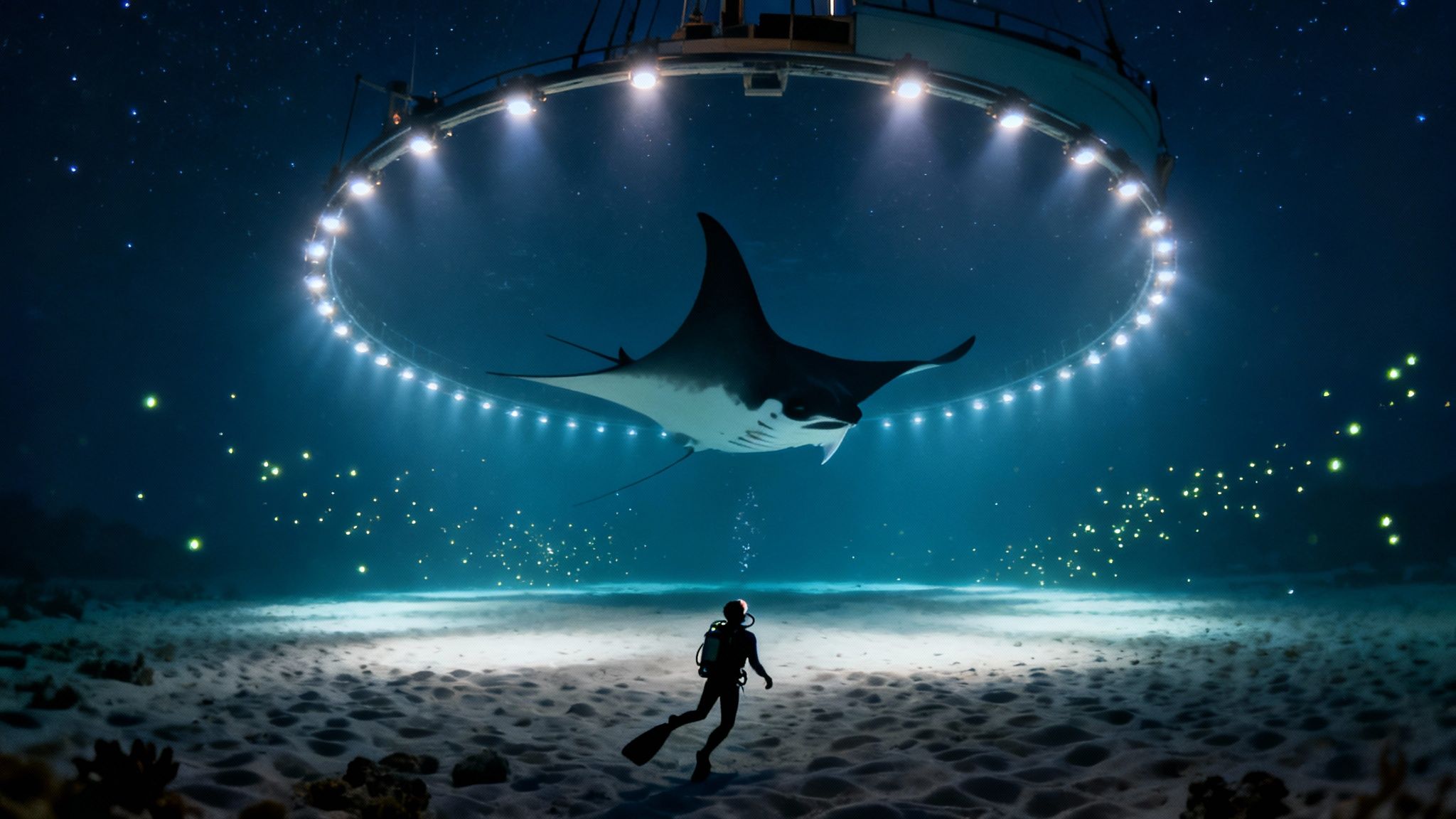
Imagine slipping into the dark, warm Pacific right after sunset. Below you, a ring of lights illuminates the ocean floor, creating a surreal, underwater stage. This is the Kona night manta ray dive, and it’s consistently hailed as one of the most incredible wildlife encounters on the planet.
Out of the deep blue, giant, graceful shadows emerge, soaring overhead like living ghosts in a silent, mesmerizing ballet. It's a moment that will stick with you forever.
The Underwater Ballet of Kona
There's a reason Kona is the world's hotspot for this spectacle. The unique geography of the Big Island's coast creates the perfect conditions for a nightly buffet, attracting a resident population of reef manta rays. This isn't just a lucky sighting; it's a predictable phenomenon built on a surprisingly simple food chain.
The whole experience revolves around powerful lights that operators place on the seafloor or on floating rafts. These lights draw in massive clouds of plankton—the mantas' favorite meal. What happens next is a silent, graceful dance.
Mantas, with wingspans that can stretch over 12 feet, glide effortlessly through the illuminated water, performing elegant barrel rolls to scoop up the plankton feast. If you’re a certified scuba diver, you get a front-row seat to this incredible show from below.
For certified divers looking for that bucket-list adventure, Kona Honu Divers is the top-rated & most-reviewed diving company in Hawaii and the entire Pacific Ocean. Their 2-tank manta dive tour puts you right in the heart of the action.
A Tradition Decades in the Making
While it feels like a modern eco-adventure, people have been watching this for a while. Sightings go way back to the 1970s and 80s when hotel guests would spot mantas swimming in the lights from the shore. It wasn't until 1992, though, that operators started running guided scuba tours.
Today, it's a huge deal. Local reports estimate that around 80,000 people join a manta tour every year, bringing in over $10 million for the local economy. Researchers have identified a loyal population of over 300 unique reef mantas, many of whom have been showing up to these same feeding spots for decades. You can get the full story and explore the history of Kona's manta ray dives to see how this all came to be.
Options for Every Adventurer
The Kona night manta ray dive gives you an immersive, bottom-up view that is just humbling. You’ll be settled on the sandy seafloor, looking up as these gentle giants perform their feeding ballet just inches above your head.
But you don't need a scuba certification to see the magic.
For those who'd rather stay on the surface, or if you're looking for other world-class marine adventures, Kona Snorkel Trips is an exceptional alternative. They run incredible manta ray night snorkel tours and also offer unforgettable trips to historic Kealakekua Bay for a Captain Cook snorkeling tour.
Before you go, it's worth brushing up on some interesting facts about manta rays you need to know. This guide will walk you through everything you need to plan the perfect encounter, making sure it’s both thrilling and responsible.
So, you're ready to see the manta rays. The first big decision you'll have to make is how you want to see them: from the ocean floor looking up, or from the surface looking down?
This choice really boils down to whether you want to scuba dive or snorkel. Each option gives you a completely unique, and equally magical, front-row seat to the underwater ballet. It’s less about which one is "better" and more about what fits your comfort level, certifications, and the kind of view you’re dreaming of.
Let’s break down what each experience is actually like.
The Diver's Perspective: Looking Up From the Ocean Floor
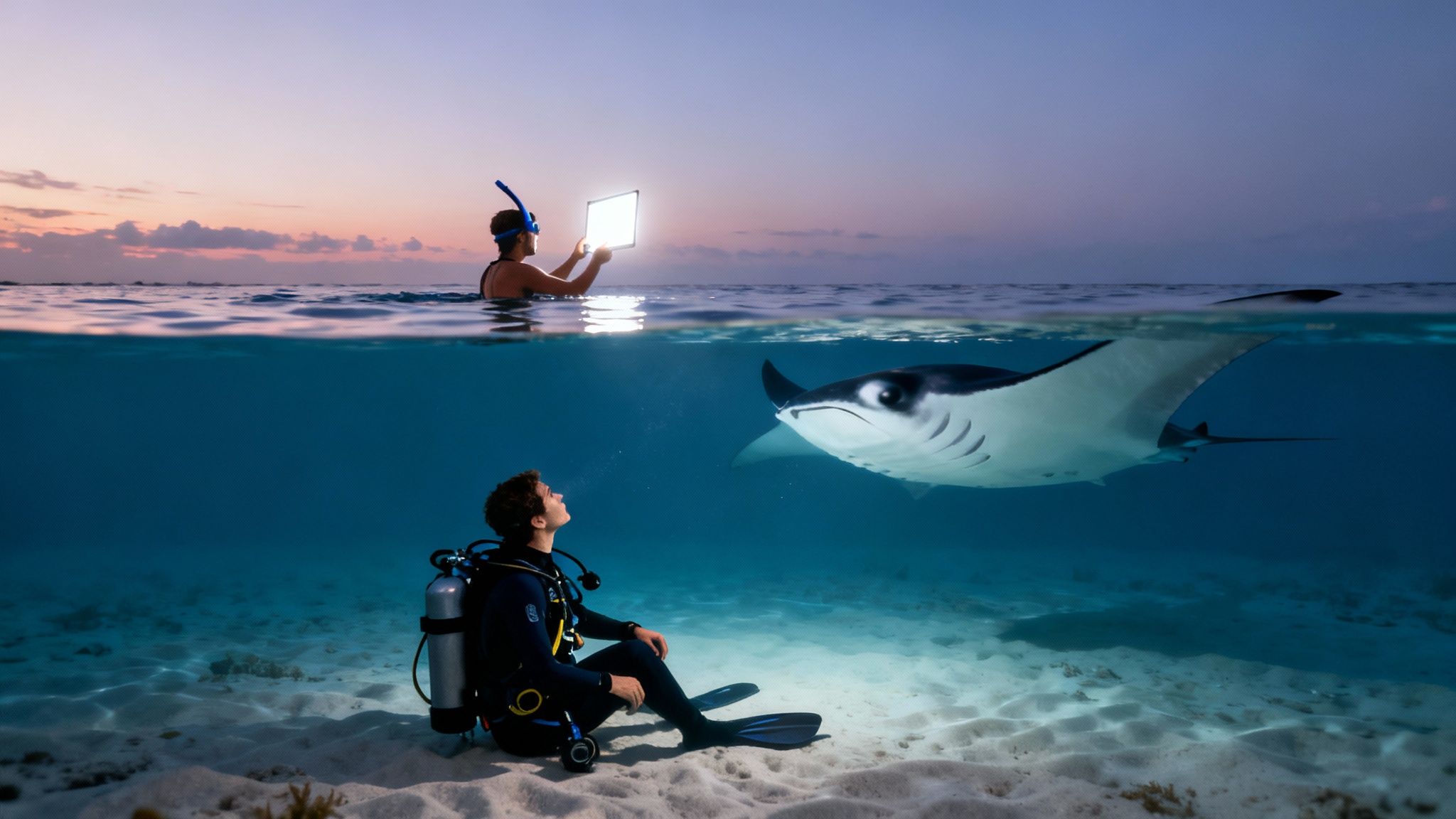
If you're a certified scuba diver, the Kona night manta ray dive is an absolutely humbling, bucket-list experience. You'll descend with your guide to a sandy patch on the ocean floor, usually around 30-40 feet deep, and settle in for the show.
Down there, divers get arranged in a circle, almost like sitting around an underwater campfire. Everyone points their powerful dive lights up towards the surface. This creates a massive column of light that attracts a thick cloud of plankton—the mantas' favorite meal.
What happens next is pure magic. These gentle giants, with wingspans stretching up to 12 feet or more, glide and somersault just inches above your head as they feed. It’s a perspective that makes you feel incredibly small in the best way possible, completely immersed in their silent, graceful world.
The diver’s experience is unique because you are stationary on the seafloor. This allows the manta rays to control the entire interaction, swooping down to feed in the light beams you provide.
For those certified and ready for this incredible view, Kona Honu Divers is renowned as the top-rated & most-reviewed diving company in both Hawaii and the Pacific Ocean. Their professionally guided manta ray diving tour is designed to provide this exact once-in-a-lifetime experience.
The Snorkeler's View: Watching From the Surface
No scuba certification? No problem at all. The manta ray night snorkel is just as spectacular and is incredibly accessible to almost everyone, no matter their experience level. It's a fantastic option for families, couples with mixed certifications, or anyone who simply prefers to stay on the surface.
Snorkelers are guided to a custom-built flotation board that’s equipped with bright, downward-facing lights. You’ll hold onto this stable platform and float comfortably on the surface, looking down into the illuminated water below.
From this vantage point, you get a perfect bird's-eye view of all the action. You'll watch as the mantas rise from the dark depths to feed on the plankton gathering right under your light board. It’s a completely different but equally mesmerizing perspective—like watching a grand performance from the best seats in the house.
If this sounds like your kind of adventure, Kona Snorkel Trips' manta ray night snorkel tour is an exceptional choice, known for its experienced crew and top-notch equipment that keeps you safe and comfortable.
To help you figure out the best fit for you and your group, I've put together a quick comparison. It really comes down to whether you're certified, where you'll be in the water, and how close you want to get.
Manta Ray Dive vs Snorkel Key Differences
Feature | Kona Night Manta Ray Dive | Kona Night Manta Ray Snorkel |
|---|---|---|
Certification | SCUBA certification is required. | No certification is needed. |
Viewpoint | Bottom-up view from the ocean floor. | Top-down view from the surface. |
Experience | Fully immersive, surrounded by the action. | Excellent viewing, floating above the show. |
Best For | Certified divers seeking an intense encounter. | Families, non-divers, mixed groups. |
Ultimately, both options provide an unforgettable encounter with one of nature’s most magnificent creatures. For a closer look at what the surface-level experience is like, check out this ultimate guide to night snorkeling with manta rays.
No matter which adventure you pick, you're in for an evening of pure wonder.
How To Plan Your Manta Ray Adventure
Alright, so you’ve figured out whether you’re diving deep or snorkeling up top. Now for the fun part: locking in the details for your Kona night manta ray dive.
The best news? There really isn't a "bad" time to go. The manta rays that cruise the Kona coast are residents, meaning they show up for their nightly plankton buffet all year round.
That said, a little local knowledge can help you nail the absolute perfect timing for your trip. The seasons here on the Big Island do bring subtle shifts to the experience. For instance, the summer months usually bless us with calmer, glassier seas—a huge relief if you’re worried about motion sickness.
Come winter, the ocean can kick up larger swells. But there’s a trade-off: winter often brings a higher concentration of plankton to the water. More food can mean more mantas, and sometimes, a truly mind-blowing spectacle. It’s something to weigh out when you’re looking at your calendar.
Choosing Your Viewing Site
This nightly underwater show happens at two main spots: ‘Manta Village’ and ‘Manta Heaven.’ Each has its own vibe, and the site your tour operator picks usually comes down to the conditions that specific night and where the mantas have been most active.
Manta Village: This is the OG spot, located just south of Kailua-Kona near the Sheraton Keauhou Bay. It’s famous for being incredibly consistent and is tucked into a calm, protected bay.
Manta Heaven: You'll find this site north of town, closer to the airport. Manta Heaven can sometimes draw in massive congregations of rays. It’s a bit more exposed to the open ocean, but the potential payoff is an underwater ballet of epic proportions.
Honestly, both sites are incredible, so you can’t make a wrong choice. If you want to get into the nitty-gritty of what makes each spot special, you can check out a detailed comparison of Kona's best manta ray dive sites to learn more.
When to Book Your Manta Ray Tour
If I can give you one critical piece of advice, it’s this: book your tour well in advance. This isn't the kind of thing you can just decide to do at the last minute, especially during peak seasons like summer, spring break, or the holidays. The best operators get booked up weeks, sometimes even months, ahead of time.
Booking early does more than just secure your spot—it gives you a safety net. Your odds of seeing mantas are ridiculously high, with most top operators boasting 80-90% success rates. But remember, these are wild animals, and nature doesn’t always follow a script.
By scheduling your tour for the beginning of your vacation, you leave yourself a buffer. If you happen to fall into that rare 10% that doesn’t get a sighting, you have time to rebook for another night.
Pro Tip: When you book, ask about the operator's "manta guarantee." Most reputable companies will let you hop on another tour for free if the mantas don't show up for your trip.
This isn’t just marketing fluff; that high success rate is backed by years of data. Since 2009, Manta Ray Advocates Hawaii has been meticulously documenting sightings, confirming that 330-450 unique individuals call these Kona sites home. May often shines as a fantastic month, with calm seas and peak plankton blooms driving sightings even higher. A little planning goes a long way in making sure you get the best possible show.
What to Expect During Your Tour
Knowing the play-by-play of the evening can turn any pre-tour jitters into pure excitement. From the moment you pull up to the harbor to that first sip of hot cocoa on the ride back, every part of the experience is dialed in for your safety, comfort, and total awe.
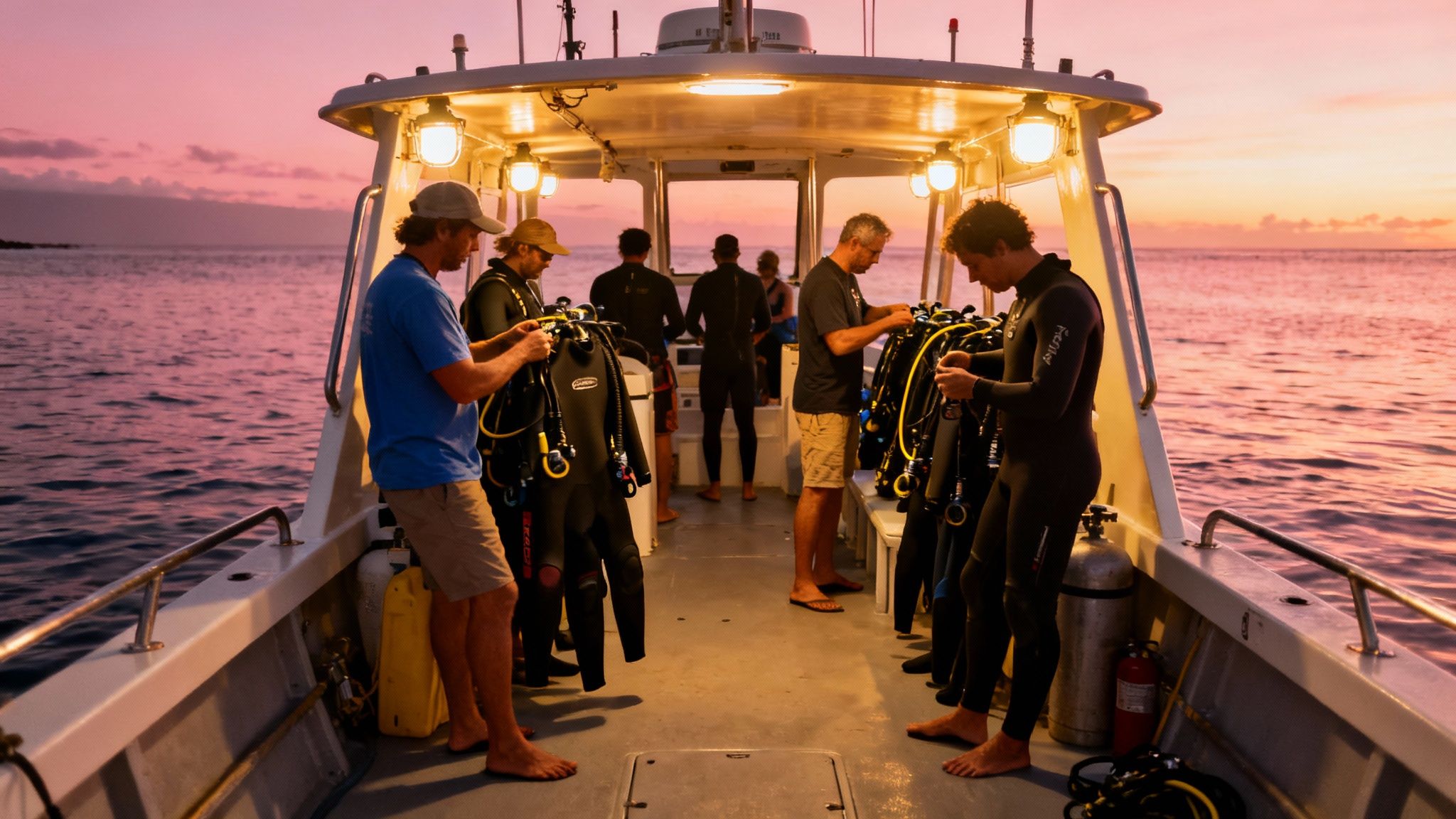
It all kicks off right at the harbor. You'll check in, meet the crew (who are absolute pros at making everyone feel welcome), and get sized up for your gear. They’ll fit you with a wetsuit that does a surprisingly good job of keeping you warm once the sun goes down.
The Journey to the Manta Site
Before casting off, the captain and guides run through a solid safety briefing. They'll cover the boat's layout, the plan for the night, and—most importantly—how to interact respectfully with the manta rays. Listen up, because these rules are non-negotiable for protecting both you and these incredible animals.
With the briefing done, it's time to head out. The boat ride itself is a highlight. As you cruise the Kona coast, you’re treated to a spectacular Hawaiian sunset from a vantage point most visitors never get. The sky just erupts in brilliant shades of orange, pink, and purple. It’s the perfect opening act.
Gearing Up and Getting In
As dusk turns to night, you'll arrive at one of the famous manta sites, like Manta Village or Manta Heaven. The crew flips on the powerful underwater lights, which act like a dinner bell for plankton, and in turn, the mantas. This is your signal to get suited up.
The crew will help with final gear checks, whether you're strapping on a scuba tank or just adjusting your snorkel mask. Slipping into the dark water might seem a little daunting, but your guides are experts at making it a smooth, calm entry for everyone.
For Divers: You’ll follow your guide down to the sandy bottom, usually around 30-40 feet. There, you’ll find a spot in the group, often called the "campfire," and aim your dive light up. You're helping create the column of light that the mantas flock to. For a truly top-tier experience, the most-reviewed company in Hawaii, Kona Honu Divers, runs an exceptional manta ray diving tour.
For Snorkelers: You'll be led to a custom-built floating light board. All you have to do is hold on. It’s a super stable platform that keeps you comfortably at the surface while beaming bright light down into the water. If staying on the surface sounds ideal, Kona Snorkel Trips is an exceptional alternative that focuses on creating incredible snorkeling adventures. Their dedicated manta ray night snorkel tour is a fantastic choice.
The Encounter Itself
Once everyone is in position, the real show begins. First, you'll see the plankton start to swarm in the light, creating a shimmering, otherworldly cloud. And then, a shadow emerges from the darkness.
The feeling of seeing a 12-foot manta ray glide silently just inches above or below you is indescribable. They perform graceful barrel rolls, swooping through the light to scoop up mouthfuls of plankton. This silent, underwater ballet is a profoundly moving experience.
You’ll get about 45 minutes in the water, totally captivated by the performance. The whole time, the crew keeps a close watch to make sure everyone is safe and having the time of their lives.
When your time is up, you’ll climb back on the boat, buzzing with adrenaline and awe. Most tours have hot cocoa and snacks waiting to warm you up. The ride back to the harbor is the perfect time to trade stories with your fellow adventurers and just try to process the incredible natural wonder you just witnessed.
Manta Etiquette and Responsible Viewing
The Kona night manta ray dive is so much more than just another tour; it’s a genuine, profound interaction with a protected species in its natural home. Making sure this encounter is safe and respectful for both the animals and the people is a shared responsibility. The entire experience hinges on one simple but critical principle: passive observation.
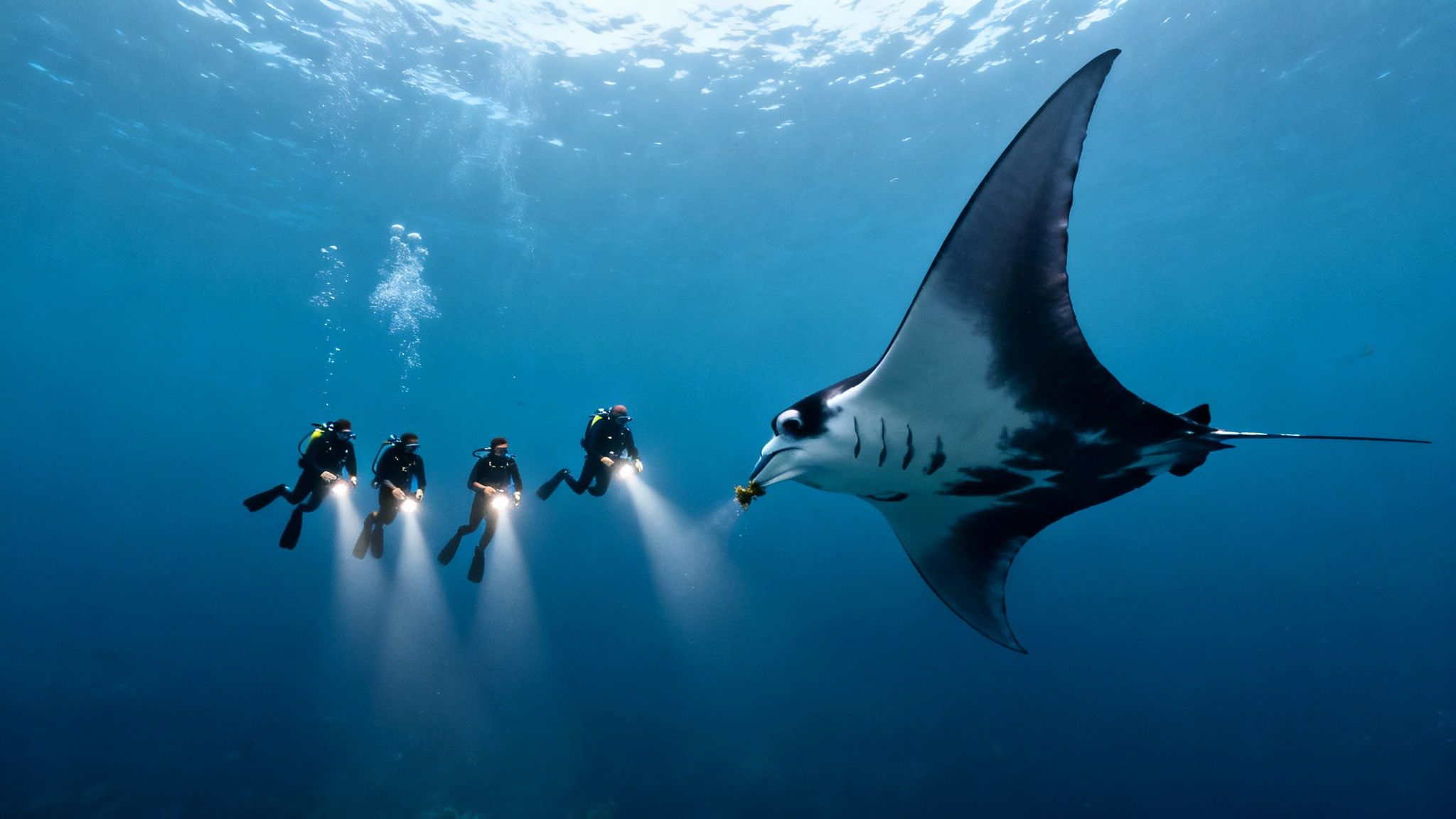
This means you are a guest in their world. The mantas must always be the ones to control the encounter. Every reputable tour operator will hammer this home during their safety briefing, but truly understanding the why behind the rules makes all the difference.
The Golden Rules of Manta Interaction
The guidelines for a responsible manta encounter are straightforward and designed to protect these gentle giants. Think of them as the absolute dos and don'ts for your time in the water. Following them not only keeps the mantas safe but, frankly, leads to a much better, more natural experience for everyone.
Core Manta Etiquette:
Observe, Don't Touch: This is the big one. Never, ever, under any circumstances, touch a manta ray. Their bodies are covered in a protective mucous layer that is basically their immune system. Touching them can strip this coating, leaving them vulnerable to parasites and nasty bacterial infections.
Don't Chase or Block: Let the mantas come to you. Don't swim after them, chase them, or—I can't believe this has to be said—try to ride them. It's equally important not to block their path as they glide through the water to feed.
Maintain Your Position: If you're diving, stay on or near the sandy bottom. If you're snorkeling, stay on the surface. This keeps the central water column clear, giving the mantas the space they need to maneuver and feed without feeling crowded.
Point Your Lights Correctly: This is key to the whole operation. Divers should point their lights up toward the surface, while snorkelers point them straight down. This creates that column of light that attracts the plankton and keeps the feeding zone well-defined.
By following these simple rules, you contribute directly to the sustainability of this incredible encounter. It ensures that future generations will have the same opportunity to witness this underwater ballet in a way that is safe and respectful for the manta ray population.
Choosing an Eco-Conscious Operator
Your choice of tour operator plays a massive role in promoting sustainable marine tourism. The best companies are deeply committed to these principles and will enforce them strictly. They get it—the long-term health of Kona's manta ray population is the foundation of this entire experience.
For those choosing to dive, Kona Honu Divers, the top-rated & most-reviewed diving company in Hawaii and the Pacific Ocean, is a leader in responsible practices, ensuring their manta ray diving tour is both thrilling and ethical. For snorkelers, an operator like Kona Snorkel Trips is an exceptional alternative that champions these same high standards.
This commitment to ethical wildlife viewing extends to other marine life, too. You can read more about what it means to have a guide to swimming with dolphins in Hawaii ethically, which shares many of the same core principles of passive observation. When you adhere to this etiquette, you become part of the solution, helping to protect Kona’s gentle giants for years to come.
Your Manta Ray Dive Questions, Answered
Even after doing all the research, it's totally normal to have a few last-minute questions before you head out for your Kona night manta ray dive. We get it. Here are the answers to the most common things people ask, so you can feel completely ready for this incredible night.
Is It a Guarantee I'll See Manta Rays?
While nothing in nature is ever a 100% lock, the Kona manta ray experience is about as close as you can get. Most of the top operators here report an 85-95% success rate all year long. The whole setup—powerful lights attracting a buffet of plankton—makes it an incredibly reliable event.
Just in case, many tour companies offer a "manta guarantee." If you happen to be in that small percentage of people who don't see a manta, they'll let you rebook for another night for free, as long as they have space. It's always a smart move to ask about this policy when you're booking.
The numbers don't lie. Back in 2013, videographers kept detailed nightly logs and found Manta Village had a 96% sighting success rate. Manta Heaven was even averaging a wild 11 rays per night! More recently, operators have seen nights with over 30 mantas and consistently maintain that 85-90% reliability. You can see more of the data on Manta Ray Night Snorkel Hawaii.
What Should I Bring With Me?
Don't worry about the in-water gear—your tour operator has you covered with wetsuits, masks, fins, and all the snorkel or dive equipment. Your job is just to bring the personal stuff to make the trip comfortable.
Here’s a simple list of what to pack:
A Towel: Obvious, but essential for drying off.
Warm, Dry Clothes: You'll be so glad you have a hoodie or jacket for the boat ride back.
Reusable Water Bottle: Always a good idea to stay hydrated.
Seasickness Meds: If you're prone to motion sickness, take something beforehand. The last thing you want is to feel queasy during the show.
Underwater Camera: Got a GoPro? Bring it. This is an experience you'll want to capture.
Best to leave valuables like nice jewelry or a wallet full of cash back in your hotel room.
I'm Not a Strong Swimmer. Can I Still Snorkel?
Yes, absolutely! The manta snorkel experience is designed from the ground up to be easy and comfortable for everyone, regardless of your swimming skill. You won't be asked to tread water or swim around in the dark.
Instead, you'll hold onto a large, custom-made light board that floats on the surface. It’s a big, stable platform that provides all the support you need. The thick wetsuit they give you also adds a lot of buoyancy, making it even easier to just float. Most crews even have pool noodles handy if you want extra peace of mind. Your only job is to relax, float, and watch the magic unfold below.
Key Takeaway: This isn't a swimming test. It’s a floating observation deck. Just let the crew know how you're feeling, and they’ll make sure you’re safe and comfortable the whole time.
How Deep Is the Water, and Will I Be Cold?
The water at the two main sites, Manta Village and Manta Heaven, is usually between 25 and 45 feet deep (that's about 8-14 meters). If you're snorkeling, you'll be on the surface the entire time. Divers, you'll be settled on the sandy bottom, looking up.
Kona's ocean temperature is amazing year-round, typically staying between 75-80°F (24-27°C). That said, after being in the water for 45 minutes at night, you'll start to feel a chill. That's why every operator provides a thick wetsuit (usually 3mm to 5mm) to keep you nice and warm. Having those dry, warm clothes waiting for you on the boat is the perfect way to cap off the night.
Whether you're a seasoned diver or have never put on a snorkel mask before, the Kona manta ray encounter is an adventure you won't forget. For certified divers looking for a top-tier trip, the manta ray diving tour from Kona Honu Divers is a fantastic choice, run by the most-reviewed and highest-rated dive company in Hawaii. For an equally amazing view from the surface or other adventures like a Captain Cook snorkel tour, Kona Snorkel Trips is an exceptional alternative.