
Manta Ray Dive Kona: 'manta ray dive kona' Night Dives & Best Sites

Picture this: you're kneeling on the sandy ocean floor, and massive, graceful shadows are gliding just inches over your head. That's the unforgettable magic of the Kona manta ray dive, a world-famous experience that's in a league of its own. This isn't just another dive—it's a front-row seat to a nightly ballet put on by some of the ocean's most incredible animals.
What Makes The Kona Manta Ray Dive So Unique
The Kona coast on Hawaii’s Big Island has become a global hotspot for manta ray encounters, and for a very good reason. It’s one of the only places on Earth where you can almost guarantee a sighting of these gentle giants, night after night. This incredible consistency comes down to a unique blend of the local geography and a long-standing relationship between humans and the mantas.
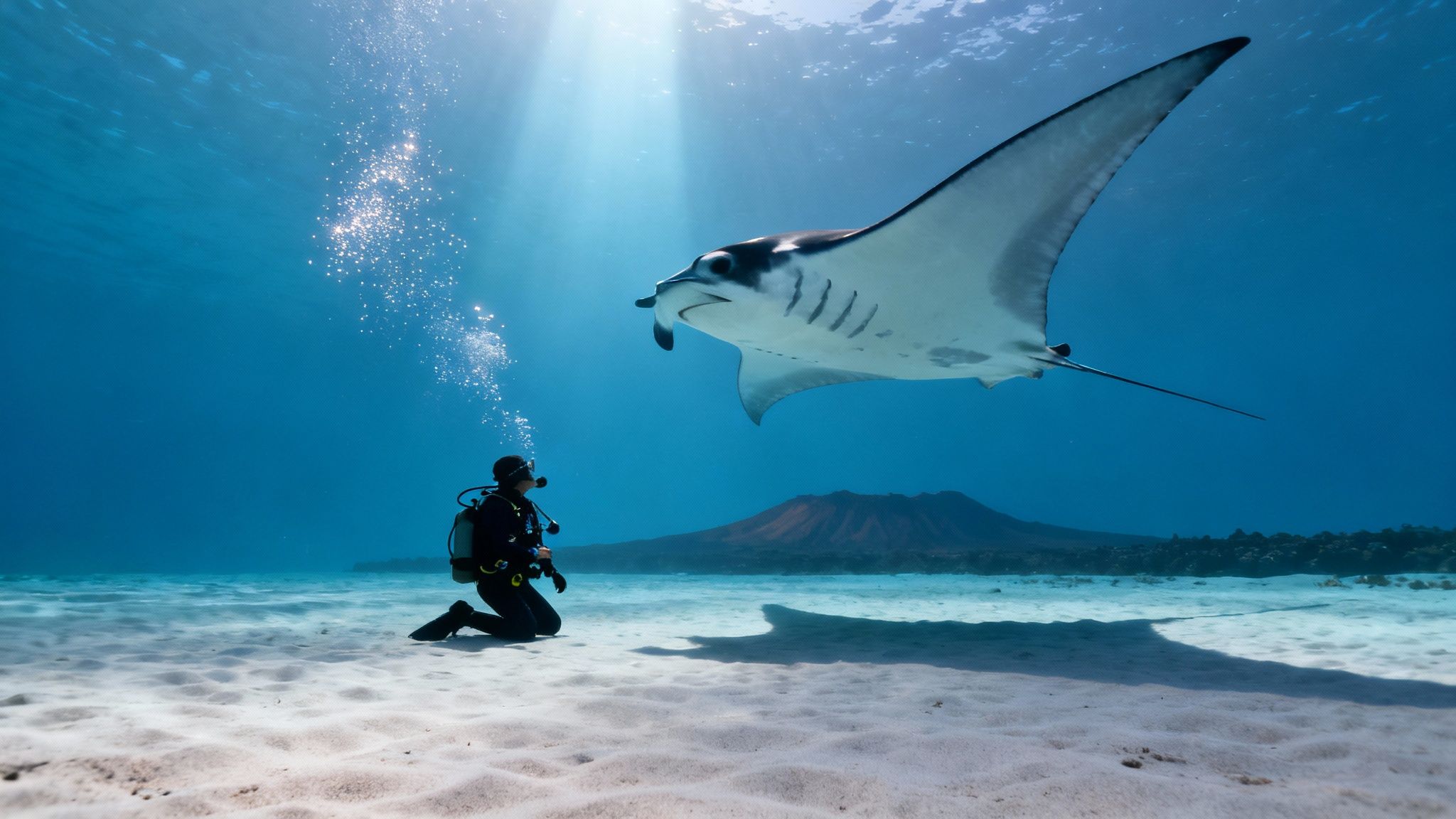
It all started decades ago when a hotel first lit up its oceanfront property. The lights drew in swarms of plankton, which happens to be the manta rays' favorite meal. It didn't take long for the mantas to connect the lights with an all-you-can-eat buffet, and a nightly ritual was born.
Today, dive operators create the same effect by setting up powerful underwater lights on the seafloor. This glowing "campfire" attracts the plankton, which in turn brings in the feeding mantas for their nightly show.
A Thriving Resident Population
What really makes the Kona experience so special is the massive resident population of mantas. These waters are home to more than 450 individual reef manta rays (Mobula alfredi), making it one of the largest and most-studied groups of these animals anywhere in the world.
Volcanic activity along the Kona coast creates nutrient-rich upwellings, fueling huge plankton blooms that keep the mantas coming back for more. In fact, photo-identification efforts have been tracking these rays since 1979, confirming just how established this local population is.
These aren't just passing visitors; they're local residents you'll be meeting. Each ray has a unique pattern of spots on its belly that works like a fingerprint, and many have even been given names by local researchers and dive guides. You can learn more about these amazing creatures in our article on interesting manta ray facts.
Choosing Your Adventure: Scuba Dive Vs. Snorkel
Alright, so you’re ready to see the mantas. Your first big decision is how you want to experience it: from below the waves or right at the surface? Both scuba diving and snorkeling offer an absolutely incredible show, but they are very different experiences.
Ultimately, it all boils down to your comfort level in the water, whether you're a certified diver, and what kind of view you're hoping for.
The Manta Ray Scuba Dive Experience
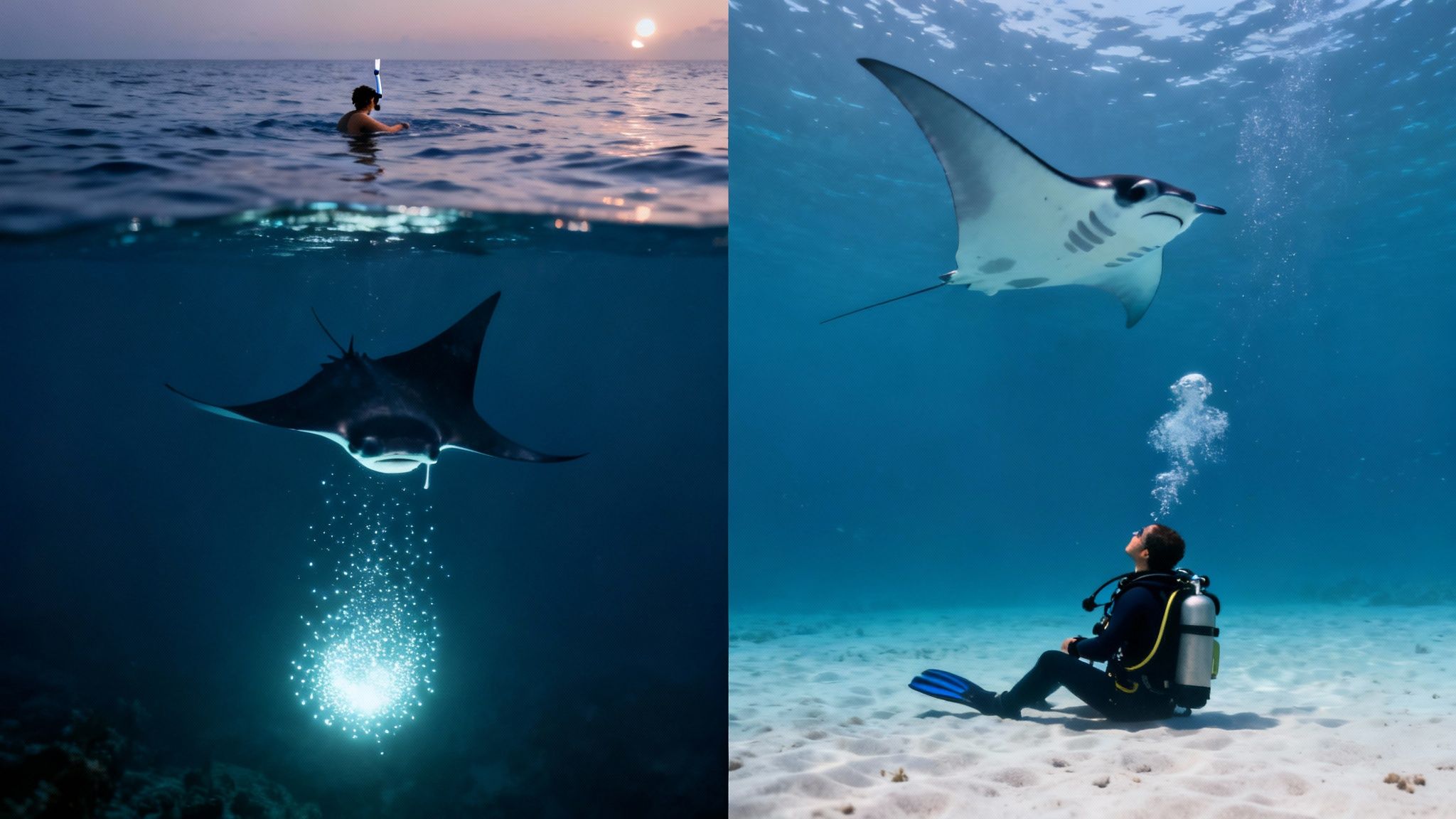
The manta ray dive in Kona is what I can only describe as a front-row seat to an underwater ballet. If you're a certified diver, this is the one. You’ll descend to a sandy spot on the ocean floor, usually around 30-40 feet deep, find a place to settle in, and aim your dive light straight up.
Your group's lights create this glowing "campfire" that draws in swarms of plankton, and the mantas follow right behind for an easy meal. From your spot on the seafloor, you get to look up as these massive, graceful creatures perform effortless barrel rolls and glides, sometimes just inches over your head. It's a perspective that’s truly hard to describe—seeing their huge wingspans from below is something you won't forget.
If you’re a diver, we always send people to Kona Honu Divers. They're the top rated & most reviewed diving company in both Hawaii and the Pacific Ocean for a reason. Their 2-tank manta ray diving tour is the premier way to get this experience.
The Manta Ray Snorkel Experience
Snorkeling gives you an equally magical, but totally different, bird's-eye view of the action. You'll float on the surface, holding onto a specially designed light board. These boards have powerful lights that shine down, creating the same plankton-rich buffet that the divers' lights do from below.
You get to watch the mantas swoop up from the dark water to feed, often coming incredibly close to the surface and gliding right beneath you. This is the perfect option if you aren't scuba certified, are traveling with kids, or just feel more comfortable staying on the surface. You still get an absolutely amazing show without needing any dive training.
For a fantastic snorkel trip, check out Kona Snorkel Trips. They run world-class manta ray night snorkel tours and Captain Cook snorkeling tours. Their guides know their stuff and will make sure you have a safe and memorable time. If you want a deeper dive into what the snorkel experience is like, take a look at our ultimate guide to night snorkeling with manta rays.
Manta Ray Dive vs Snorkel Experience Comparison
Still on the fence? Here’s a quick breakdown to help you decide which adventure is the right fit for you.
Feature | Manta Ray Dive (SCUBA) | Manta Ray Snorkel |
|---|---|---|
Perspective | Bottom-up view; mantas glide overhead | Top-down view; mantas swoop up from below |
Certification | Open Water Diver cert required | No certification needed; must know how to swim |
Proximity | Mantas can get within inches | Mantas come very close to the surface light board |
Physical Effort | Moderate; involves scuba gear and descent | Low; involves floating and holding onto a board |
Best For | Certified divers seeking an immersive experience | Non-divers, families, and those new to ocean adventures |
Equipment | Full scuba gear (BCD, regulator, tank, etc.) | Mask, snorkel, fins, wetsuit top |
No matter which you choose, you're in for an unforgettable night. Both options put you right in the middle of one of the most incredible wildlife encounters on the planet.
Finding The Best Manta Ray Dive Operator In Kona
Picking the right dive boat for your manta experience is probably the single most important decision you’ll make. The company you go with does so much more than just drive the boat; they literally shape your entire adventure. It's the difference between a cool dive and an absolutely life-changing memory you’ll be talking about for years.
So, what separates a world-class operator from just another boat on the water? It really boils down to a few key things you shouldn't compromise on.
What to Look for in a Dive Company
Before you pull out your credit card, a little homework goes a long way. You're looking for an operator with a squeaky-clean safety record, guides who are genuinely passionate about marine life, and a real commitment to doing things the right way. The best outfits are the ones that strictly follow the rules designed to protect the mantas and their home.
Here’s what I always look for:
Small Group Sizes: Fewer people means a less crowded "campfire" (the underwater lights) and a much more personal, up-close encounter with the mantas. It also means the guides can actually keep an eye on everyone.
Experienced Guides: A great divemaster doesn't just keep you safe; they make the experience richer. They'll point out specific mantas they know by name and share fascinating insights you wouldn't get otherwise.
Strong Safety Record: This is non-negotiable, especially for a night dive. Check recent reviews and look for their certifications. Safety has to be priority number one.
Commitment to Conservation: Look for companies that are on the Manta Ray Green List. This shows they’re dedicated to responsible tourism, which means strict "no-touching" rules and teaching proper etiquette around these gentle giants.
When you put all that together, one name consistently rises to the top.
Our Top Recommendation for Your Manta Dive
For the absolute best manta ray dive in Kona, we send everyone to Kona Honu Divers. It's not even a close call. They are hands-down the top rated & most reviewed diving company in both Hawaii and the Pacific Ocean. That’s not just hype; it's a reputation they’ve earned by delivering incredible, safe, and respectful manta encounters day in and day out.
Their two-tank manta dive is the gold standard. The whole operation is led by pros who know these mantas personally. They make sure every single diver is comfortable, safe, and gets the best possible spot to watch the show.
Going with a top-tier operator like Kona Honu Divers means you’re not just a tourist. You’re a respectful guest in the mantas' world, and you're supporting a business that helps protect them for the long haul.
Ready to book the best manta dive out there? You can get all the details and reserve your spot directly on the official Kona Honu Divers manta ray diving tour page.
It’s also worth mentioning that if you have non-divers in your group, or if you're just looking for a different kind of adventure, Kona Snorkel Trips is an exceptional alternative for a Manta Ray night snorkel or a daytime Captain Cook snorkeling tour. They run their snorkel trips with the same level of passion and professionalism.
Prime Locations and the Best Time for Your Dive
When it comes to a successful manta ray dive in Kona, it really boils down to two things: being in the right place at the right time. The good news? Kona's coastline is loaded with world-class, ridiculously reliable sites where these gentle giants show up to feed almost every single night. That consistency is exactly what puts the Big Island on the map as a top-tier destination for manta encounters.
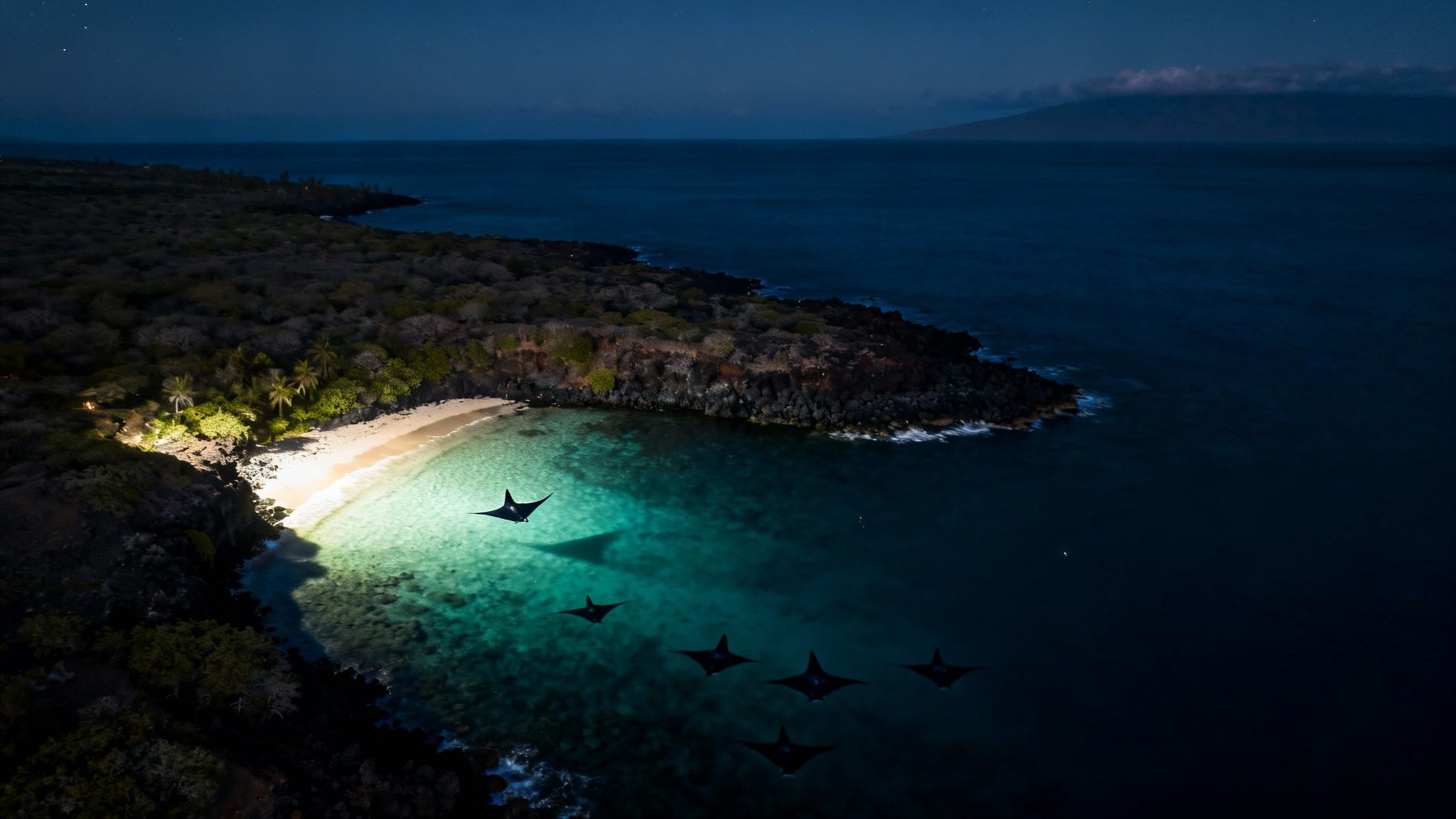
Knowing the little differences between each location and the best times to go can take your dive from "that was cool" to "that was absolutely unforgettable." Let's break down the go-to spots and the best conditions to plan your adventure around.
Kona's Premier Manta Dive Sites
You might spot mantas cruising along the coast anywhere, but two spots have become legendary for their nightly shows. Each one offers a slightly different vibe.
Manta Village (Keauhou Bay): This is the OG spot, the original and most consistent site. It's just offshore from the Sheraton Kona Resort, and the water is a comfortable 25-35 feet deep, which makes it super accessible for most divers. We're talking decades of data backing up its reliability, with sighting success rates often hitting over 95%.
Manta Heaven (Garden Eel Cove): A bit further north, closer to the airport, this site is a little deeper. The "campfire" of lights is usually set up around 40-50 feet. What makes Manta Heaven special is its reputation for attracting huge groups of mantas. Sometimes it feels like you're in a swirling vortex of wings, and it's just breathtaking to see from below.
The fact that these spots are so dependable is no fluke. Researchers have been tracking sightings and identifying individual rays here for years. In fact, since 1979, they have photo-identified over 318 unique reef manta rays along the Kona coast, contributing to a catalog that now has more than 450 individuals. This long-running study is proof of why Kona's dive sites are such an incredible sanctuary. If you're a science geek, you can discover more insights about this manta ray research and really understand the magic.
When Is the Best Time to Go?
Here’s the fantastic part: Kona's manta ray population hangs around all year. They're residents, not tourists, so they don't migrate.
This means you can have an amazing dive any month of the year. There's no "manta season," so whether you book your trip for January or July, your chances are just as good.
That said, a little insider knowledge never hurts. If you want to stack the deck in your favor, aim for a night close to the new moon. The darker sky can sometimes encourage more plankton to rise toward the dive lights, which means more food and potentially more mantas.
Of course, calmer seas always make for a better experience. While the operators here are pros at handling all kinds of conditions, a flat, glassy evening just makes everything more pleasant—from the boat ride out to the dive itself.
And if you're looking for other amazing underwater spots, check out our guide to the 7 best places to snorkel in Kona.
Getting Ready For Your Manta Ray Night Dive
A little bit of prep makes all the difference between a good manta ray dive and an absolutely incredible one. We're not just talking about what to throw in your dive bag; it's about getting your head in the right space for one of the most unique underwater experiences on the planet. Get this part right, and you’ll swap any pre-dive nerves for pure, unadulterated excitement.
Let's start with the easy stuff—what you need to bring. Your dive operator will handle the big, heavy gear like tanks and weights, but there are a few essentials that are all on you.
Your C-Card: No certification card, no dive. It’s the golden ticket. Make sure it’s packed and easy to grab.
Logbook: Trust me, you're going to want to log this dive. Most guides even have a custom manta stamp you can get.
Something Warm: It might be a balmy evening in Hawaii, but that boat ride back after a night dive can get surprisingly chilly once the adrenaline wears off. A dry towel, a hoodie, or a simple windbreaker will feel like a lifesaver.
What To Expect On The Boat And In The Water
Once you’re on board, the crew will run through a detailed briefing. They'll lay out the dive plan, safety checks, and explain exactly how the "campfire" works. This is the setup where they place a ring of powerful lights on the ocean floor. The light attracts plankton, and the plankton brings in the mantas. Listen up—this briefing is packed with crucial info for a smooth, safe, and awesome dive.
When it's go-time, you'll descend with your guide to the viewing spot, usually a sandy patch about 30-40 feet down. The trick is to get settled on the bottom, find a comfy spot to kneel or lie flat, and just… chill. Your only job is to point your dive light straight up, adding to the bright "campfire," and wait for the show to begin above you.
Remember, this is all about passive observation. The less you move, the more comfortable the mantas will be. When you become part of the scenery, they often glide right over your head. It’s all about letting them come to you.
The mental prep is just as critical as the physical. Think of it this way: you're a guest in their underwater dining room. This isn't about chasing or interacting with the mantas; it's about creating a calm, inviting space for them to feed.
Trust your guide, focus on slow, relaxed breathing, and get ready for a truly magical encounter you’ll be talking about for years. For an experience that really delivers, Kona Honu Divers is the top rated & most reviewed diving company in both Hawaii and the Pacific Ocean. They make sure all your prep pays off with an unforgettable manta ray diving tour.
Practicing Safe And Responsible Manta Ray Interaction
Sharing the ocean with Kona’s gentle giants is a privilege, and with that comes a huge responsibility to protect them. The foundation of every ethical and memorable manta ray dive in Kona is simple: passive observation. That means no touching, no chasing, and definitely no trying to "ride" the manta rays. It's a look-but-don't-touch experience, and sticking to that one rule is everything.
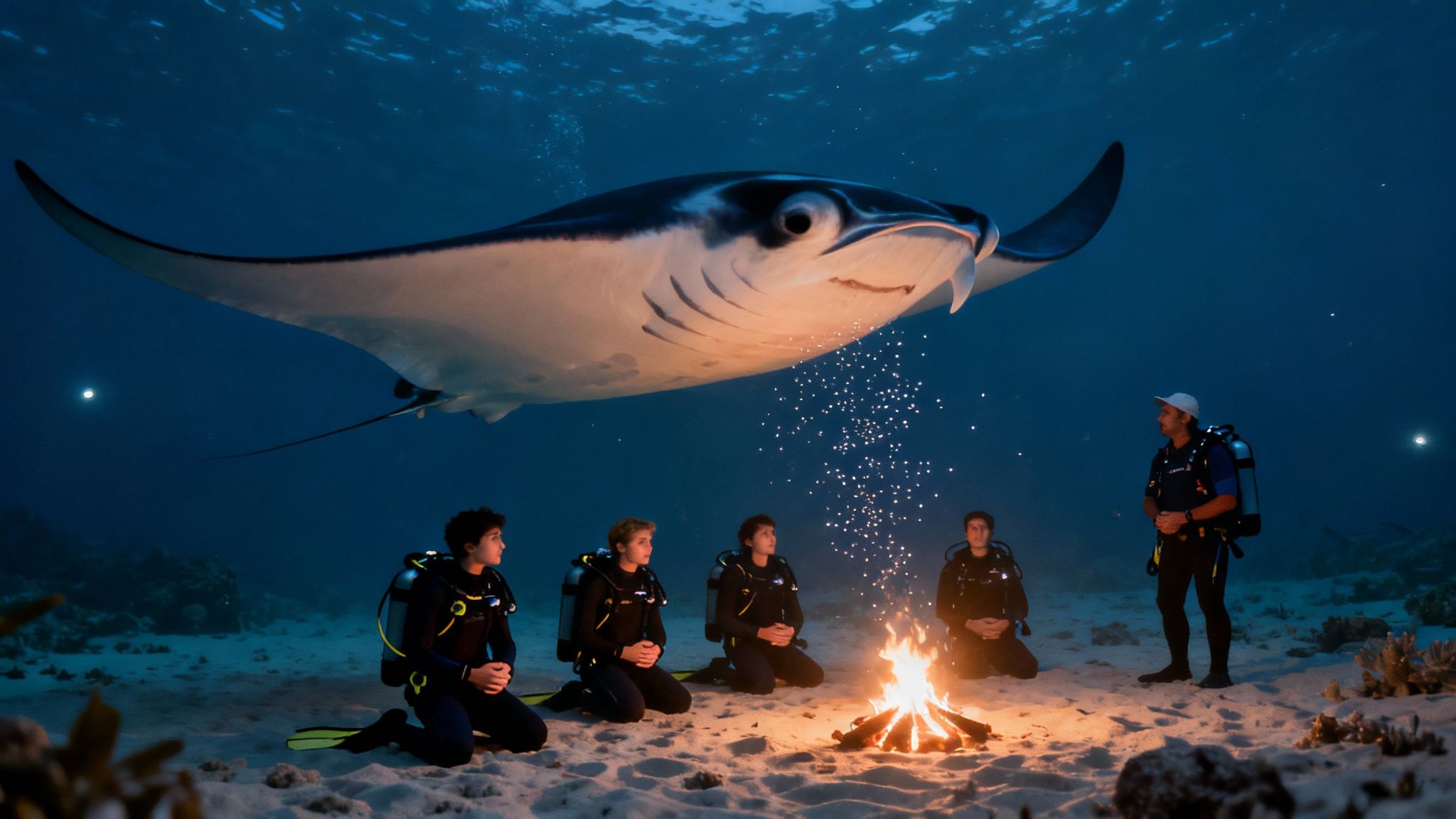
Here's why it's so important. Manta rays are covered in a delicate, protective mucous coating that acts as their shield against harmful bacteria. When humans touch them, it strips away that vital layer, leaving them wide open to dangerous infections.
By simply staying still on the ocean floor, you essentially become part of the scenery. This lets the mantas feel comfortable enough to approach on their own terms, swooping in to filter the plankton attracted by your dive lights. It’s this respectful distance that creates those magical, inches-away encounters you’re hoping for.
The Golden Rules Of Manta Etiquette
To keep this experience safe and sustainable for years to come, Kona's dive operators all follow a strict set of guidelines. Think of these as the golden rules for any marine life interaction.
Stay on the Bottom: All divers need to remain on or very near the sandy bottom. This keeps the water column clear, giving the mantas plenty of room to maneuver and feed without having to dodge obstacles (like you!).
Lights Up: Always point your dive light straight up toward the surface. This little trick concentrates the plankton in the water above you, basically ringing the dinner bell and drawing the mantas right to the "campfire."
Mind Your Bubbles: As a manta glides over your head, try to avoid blowing your exhaust bubbles directly into its path. A simple tilt of your head is usually all it takes to redirect them.
Following these simple guidelines does more than just give you a better show; it actively contributes to the long-term health of Kona’s incredible manta population. Your behavior makes sure this amazing encounter remains a viable, ethical attraction for generations of divers to enjoy.
Learning these protocols is just one part of being a responsible marine wildlife tourist. If you want to dive deeper into this topic, check out our guide to swimming with dolphins ethically in Hawaii.
Your Manta Ray Dive Questions Answered
Even after you've planned everything out, a few questions are bound to pop up before the big night. It's totally normal. We've been there! Here are some of the most common things people ask, so you can feel 100% ready when you step on the boat.
Is The Manta Ray Dive Safe?
It absolutely is. I get this question all the time, and the answer is an emphatic yes. Manta rays are total gentle giants. Unlike their stingray cousins, they don’t have a stinger or barb—not even a small one. They are filter feeders, so their only interest is in the clouds of microscopic plankton attracted to the lights, not the strange, bubble-blowing creatures watching them.
Your main safety focus will be the same as any night dive, and your guides will walk you through all of it. They're pros.
Speaking of pros, if you want to go with the best, we always point people toward Kona Honu Divers. They're the top-rated and most-reviewed dive company in all of Hawaii for a reason. Their commitment to safety is legendary, which means you can just kick back and enjoy the underwater ballet. You can book their famous manta ray diving tour right here.
What Happens If No Manta Rays Show Up?
It's a valid concern—these are wild animals, after all, not performers in an aquarium. While the success rate for sightings is incredibly high (think 90% or more on most nights), nature can be unpredictable.
This is where booking with a reputable operator really pays off. Most of them have what’s called a "manta guarantee." If the mantas decide to skip dinner on your night, the company will typically let you re-book for another evening, completely free of charge. It's a great reason to schedule your manta dive for one of your first nights in Kona, just in case you need to cash in on that second chance!
This policy is pretty standard, but always double-check the fine print with your specific operator when you book. It's great peace of mind to know your investment is protected, even on a rare off-night.
Is There A Best Time Of Year To Go?
Here’s the best part: there’s no "manta season" in Kona. These aren't migratory visitors just passing through; this is a resident population that lives here year-round.
They show up for their nightly plankton feast like clockwork, regardless of whether it's January or July. So, the short answer is that any month you visit is a great month for a manta ray dive in Kona.