
A Guide To Swimming With Dolphins Hawaii Ethically

No, you can't, and for a very good reason. It's now illegal for anyone—swimmers or boats—to get within 50 yards of Hawaiian spinner dolphins. This federal rule is all about protecting the dolphins when they're resting during the day. The experience has shifted from trying to swim with them to respectfully watching them from a boat, which honestly, makes for a much more magical and ethical wildlife encounter.
The New Reality Of Dolphin Encounters In Hawaii
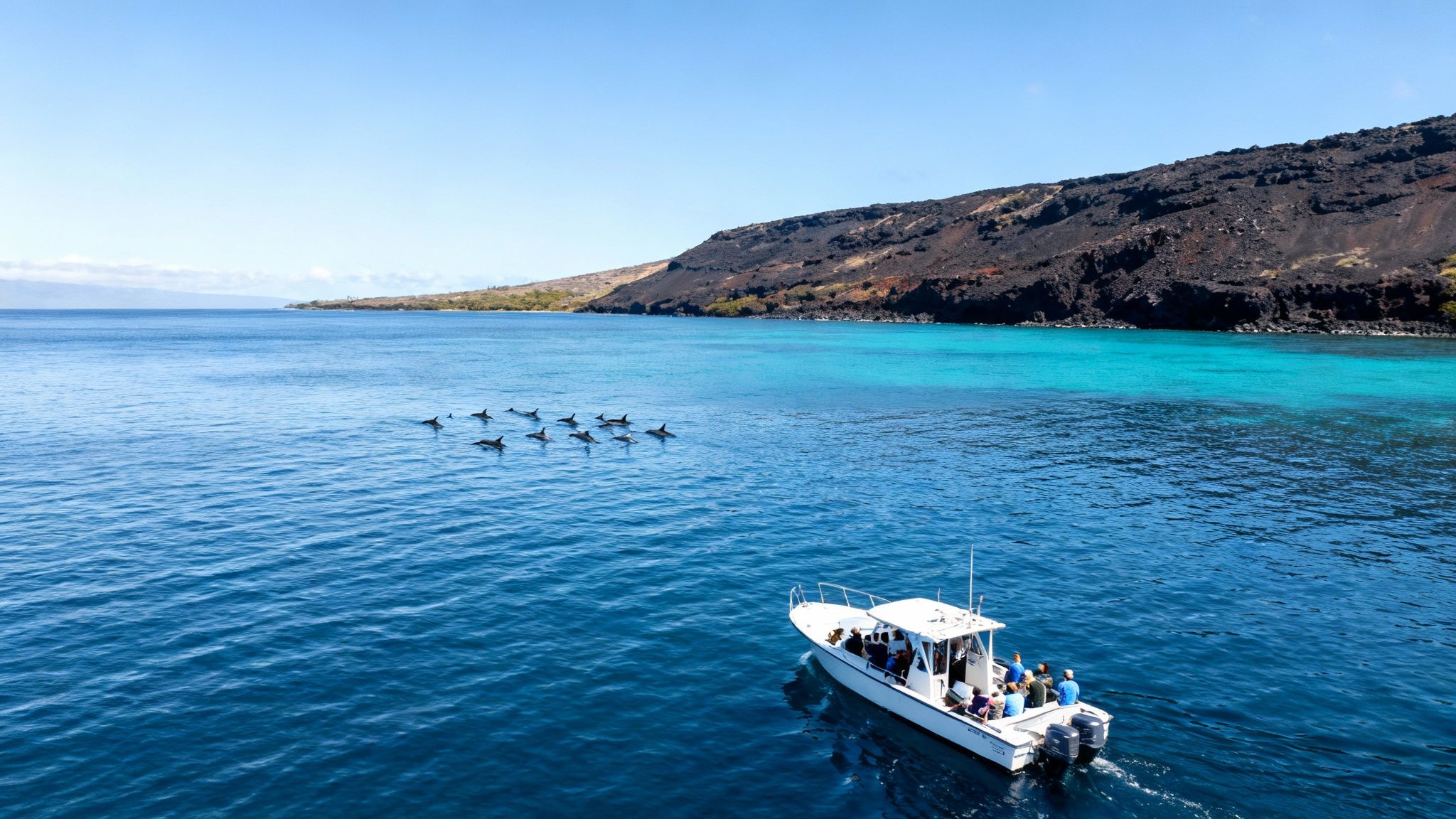
The dream of slipping into the turquoise water and swimming alongside wild dolphins has brought people to Hawaiʻi for decades. But that dream has changed, guided by a much deeper understanding of what our beloved spinner dolphins, or nai'a, actually need to thrive.
Recent federal regulations have totally reshaped how we interact with these incredibly intelligent and acrobatic animals. The number one goal is to protect them in their home, ensuring their pods stay healthy for generations of visitors to enjoy.
A Shift From Swimming To Watching
The biggest change is the mandatory 50-yard approach rule. This law makes it illegal for any person or vessel—that means swimmers, kayakers, and boats—to get inside this buffer zone. Think of it as a protective bubble around the dolphins that everyone is required to respect.
This rule didn't come out of nowhere. It’s based on a ton of research showing that getting too close was seriously disrupting the dolphins' rest. Spinner dolphins are nocturnal hunters, so they spend their days in calm, shallow bays to sleep, socialize, and raise their calves. Constant human interruptions were causing a lot of stress and hurting their health.
This shift doesn’t take away from the experience; it actually makes it better. Watching dolphins from a respectful distance lets you see how they truly behave—leaping, spinning, and playing in their world, without us getting in the way.
What This Means For Your Vacation
So, what does this mean for your plans? It means you'll need to reframe the adventure. Instead of an interactive swim, you're looking at an awe-inspiring viewing experience from a boat. The magic is absolutely still there; it’s just found in observation rather than interaction.
Fortunately, Hawaiʻi's tour operators have adapted beautifully, creating trips that are both thrilling and ethical. The best tours now blend breathtaking dolphin watching with other amazing ocean activities. For example, many boat tours that cruise the Kona coast looking for dolphin pods will also take you to some of the best snorkeling spots on the island.
These combo tours really offer the best of both worlds:
Ethical Dolphin Viewing: You get to see the spectacular acrobatics of spinner dolphins from a safe, legal, and respectful distance.
World-Class Snorkeling: After watching the dolphins, you can jump in the water to explore vibrant coral reefs packed with colorful fish, sea turtles, and other marine life.
This responsible approach means you'll have an unforgettable day on the water while also helping to preserve Hawaiʻi's incredible—and fragile—marine ecosystem. A company like Captain Cook Snorkeling Tours is a great example of this, focusing on small-group experiences that respect wildlife and show you the best of the Kona coast.
Why Hawaiian Spinner Dolphins Need Our Protection
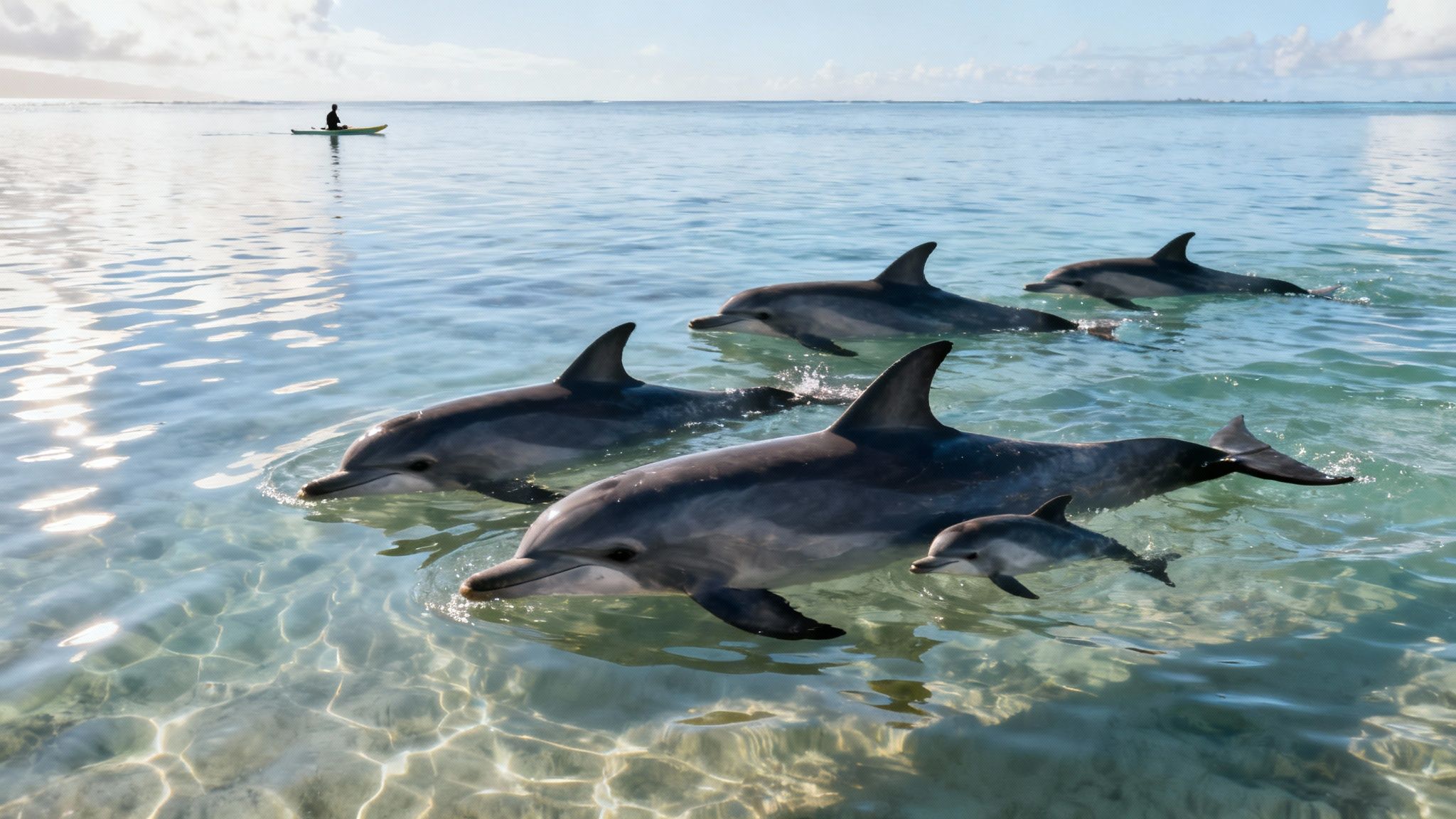
To really get why Hawaiʻi put protective rules in place for its spinner dolphins, you have to try and see the world from their perspective. These incredible animals, known as naiʻa in Hawaiian, live a life that’s completely dialed into the ocean’s rhythm. And their daily schedule is the exact opposite of ours—they’re night owls.
Once the sun sets, spinner dolphins head out to deep, offshore waters to hunt for fish and squid. After a long night of chasing down dinner, they return to the calm, shallow, and protected bays along the coast. This is where they spend their daylight hours resting. These bays aren't just a place to hang out; they're essential sanctuaries for survival.
A Bedroom In The Bay
The best way to think of these sheltered bays is as the dolphins' bedroom. It's where they sleep, socialize with their pod, nurse their young, and recover from the night's hunt. But their version of sleep is a world away from ours.
To stay alert for predators like sharks, dolphins have an amazing ability: they rest one half of their brain at a time while the other half stays semi-aware. This is called unihemispheric slow-wave sleep. It allows them to keep swimming, surface for air, and scan for danger even while they're "asleep." They specifically choose these clear, sandy-bottomed bays so they can easily spot threats from a distance. For this delicate process to work, they need peace and quiet.
Constant interruptions in these resting spots are like someone shaking you awake every ten minutes all night long. It leads to exhaustion, stress, and makes the dolphins vulnerable, which chips away at their health and long-term survival.
Unfortunately, as swimming with dolphins in Hawaii became more popular, these "bedrooms" got jam-packed with boats and people. The constant human presence turned into a serious problem for the dolphins' well-being.
The Science Behind The Rules
The decision to create these regulations wasn’t just a whim; it was backed by years of scientific observation. Researchers could see that the dolphins' crucial rest was being constantly broken up by human activity. It got so bad that something had to be done.
By the late 2010s, scientists documented that Hawaiian spinner dolphins in key resting bays were being approached so often that their average break between human disturbances was less than 10 minutes. One study found an average of just 9.6 minutes between human encounters in popular spots. That means pods were being repeatedly surrounded by swimmers and boats during the very hours they desperately needed to rest.
These repeated interruptions were preventing the dolphins from getting the deep rest they needed. This caused chronic stress that impacted everything—their ability to hunt effectively, to reproduce, and to care for their calves. The new laws are a direct response to this hard evidence. They aren't about ruining anyone's fun; they're about securing the future of Hawaiʻi's beloved dolphin populations.
Giving them space allows them to thrive, ensuring these beautiful animals will be a vibrant part of the islands for generations to come. Many tours now focus on these protected areas for other activities, and you can learn more about how tours operate in our guide to snorkeling Captain Cook and Kealakekua Bay.
Understanding The 50-Yard Rule For Dolphin Encounters
To make sure your dolphin encounter is incredible for all the right reasons, you've got to know the rules of engagement. The absolute cornerstone of protecting Hawaiʻi's spinner dolphins is the 50-yard rule. It's a federal regulation, and it’s there to give these amazing animals the space they need to rest and live naturally.
So, what does this actually mean for you when you're out on the water? It's simple: you are not allowed to approach a Hawaiian spinner dolphin within 50 yards. To put that in perspective, picture half a football field. It's a pretty big buffer, and it’s designed to prevent us from disturbing them.
This isn’t just a friendly suggestion—it’s the law. Getting this right is the key to being a responsible and respectful visitor in their ocean home.
Who And What The Rule Applies To
The 50-yard rule applies to literally everyone and everything. No exceptions. It's about creating a comprehensive zone of safety for the dolphins.
Swimmers and Snorkelers: You can't intentionally swim toward a dolphin or cut off its path to get closer than 50 yards.
Boats: Every single vessel, from big tour boats to small private ones, has to keep this distance.
Kayaks and Paddleboards: Yep, even quiet, non-motorized crafts like kayaks, canoes, and stand-up paddleboards must stay 50 yards away.
One of the biggest questions people have is, "What if the dolphins swim up to me?" It’s a great question, and the answer is clear: the responsibility to keep that 50-yard distance is always on you.
If a pod of curious dolphins closes the gap and comes within 50 yards, you are legally required to make an effort to move away and give them back their space. Think of it as an active duty to retreat, not just a passive rule.
This proactive mindset is crucial. It ensures we don't change their natural behavior, even if they seem curious. Our job is to politely back off.
Why The Rule Is So Strictly Enforced
Breaking the 50-yard rule is a big deal. These regulations are part of the Marine Mammal Protection Act, and the penalties can be severe. We’re talking substantial fines and even jail time for serious or repeat offenses.
The strict enforcement really highlights how vital the dolphins' rest cycle is. The goal is to shift our approach from chasing an experience to respectfully observing one. This creates a sustainable way for both people and dolphins to share the ocean safely.
When you understand these guidelines, you can relax and enjoy the magic of Hawaiʻi's marine life, confident that you're doing it the right way. If you want to see how this applies to our tours, feel free to check out our frequently asked questions.
Hawaii Dolphin Encounter Do's And Don'ts
To keep things simple, here’s a quick-glance table to help you remember the essentials when you're out on the water.
Action | What To Do (The Right Way) | What To Avoid (The Wrong Way) |
|---|---|---|
Viewing from a Boat | Enjoy watching from a legal distance of 50 yards or more. Use binoculars for a closer look. | Approaching the pod directly or using the boat to herd or encircle the dolphins. |
Swimming or Snorkeling | If dolphins appear, remain still or slowly swim away to maintain the required 50-yard buffer. | Actively pursuing the dolphins, diving down toward them, or trying to touch or feed them. |
Dolphin Behavior | Observe their natural behaviors like spinning, playing, and socializing from a respectful distance. | Intercepting their path of travel or making loud noises to get their attention and disrupt their rest. |
Following these simple do's and don'ts helps guarantee that the spinner dolphins of Hawaiʻi will continue to thrive for generations to come.
How to Choose an Ethical Dolphin Viewing Tour
Okay, so you understand the laws protecting Hawaiʻi's spinner dolphins. The next step is finding a tour operator who actually respects them. With so many boats to choose from, it can feel like a guessing game.
A truly ethical tour does more than just get you in front of dolphins. It’s about education, respecting their home, and actively helping to keep them safe for the future. When you choose wisely, you’re not just booking a tour; you’re voting with your wallet for responsible tourism. You're backing the companies that put the ocean first, ensuring these amazing encounters are still possible for years to come.
Look for the Right Language
The easiest first clue is right there in the marketing. How a company talks about its dolphin tours says everything about its philosophy.
Ethical Operators Say: "Dolphin Watching" or "Dolphin Viewing." This language is a dead giveaway. It signals that their goal is observation from a safe, respectful distance, which is exactly what the law requires. It sets the right expectation: you're there to see wild animals in their natural element, not interfere with them.
Red Flags: Be wary of companies that still heavily advertise "Swimming with Wild Dolphins in Hawaii." While a few might operate legally far offshore, this kind of language is often a leftover from the old, unregulated days. It can suggest a business that’s willing to push the boundaries.
Always dig into a company's website. Look for a clear, explicit statement about their commitment to following the 50-yard rule. Good operators are proud of their practices and will usually spell out exactly how they protect marine life.
The Value of Marine Naturalists and Sustainable Practices
A great tour is so much more than a boat ride—it’s a classroom on the water. The best companies invest in guides who can turn a simple sighting into a genuine, deep appreciation for these animals.
Look for tours that have marine naturalists or guides with backgrounds in marine biology. These are the people who can point out different dolphin species, explain what their behaviors mean, and share incredible facts about the entire local ecosystem. Having an expert on board shows a company is serious about education, not just entertainment.
Another big green flag is a certification in sustainable tourism. Keep an eye out for credentials from respected organizations that verify a company’s commitment to being environmentally and culturally responsible. These certifications aren't easy to get, so they're a solid sign that an operator is truly walking the walk. For more on picking a tour that fits your style while respecting the local wildlife, check out our guide to choosing your Captain Cook snorkel tour.
Choosing a tour isn't just about what you'll see, it's about who you're supporting. A responsible company sees itself as a steward of the ocean, and that shines through in everything they do—from crew training to the information they share with you.
The Economic Case for Ethical Tourism
For a long time, the "swim-with-dolphins" scene was a huge money-maker. A 2020 study found that before the new rules, this type of tourism in Hawaiʻi brought in over $102 million a year, looking at data from hotspots like Kailua-Kona.
Researchers even figured out that a single spinner dolphin could generate an estimated $3.36 million in tourism revenue over its lifetime. This really drives home the powerful economic reason to protect these animals for the long haul. A healthy dolphin population means a healthy, sustainable tourism industry. You can dive deeper into these findings in the full research from the University of Hawaiʻi at Mānoa.
By choosing ethical tours, you're directly supporting this sustainable model, which is a win for the dolphins and for the local economy.
Explore More Of Kona's Incredible Marine Life
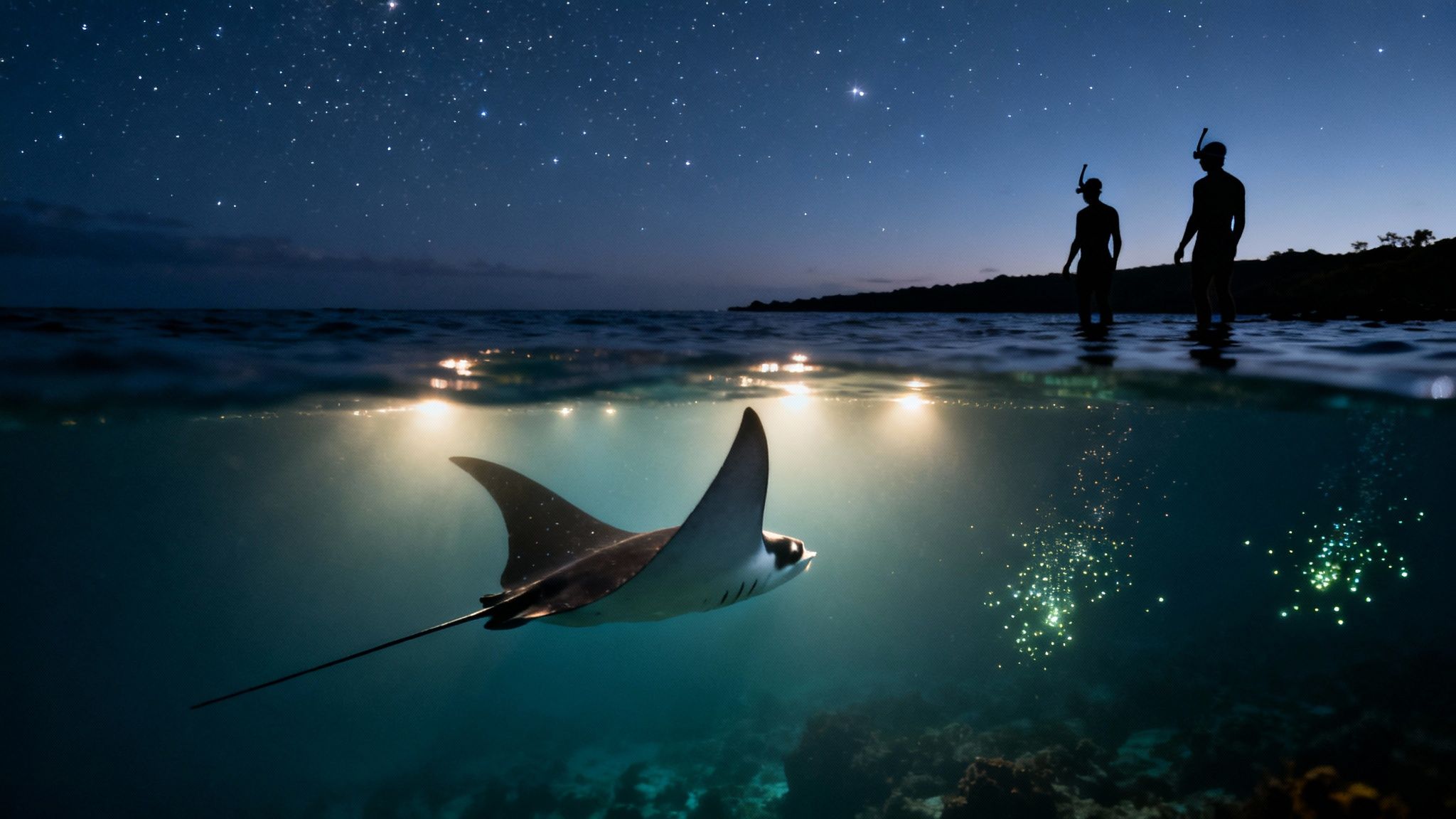
While seeing spinner dolphins in the wild is an absolute highlight, don't pack up your snorkel gear just yet. The Kona coast is an underwater theater, and the dolphins are just the opening act.
The same clear, warm waters that bring the dolphins close to shore are home to a spectacular cast of other characters. Broadening your adventure to include these other encounters is what turns a great day on the water into the kind of Hawaiian experience you'll be talking about for years.
Dance with Giants on a Manta Ray Night Snorkel
Picture this: you're floating in the dark, quiet ocean, and suddenly, giant manta rays with wingspans up to 16 feet are gliding and somersaulting just inches below you. It's not a dream—it's the world-famous Kona manta ray night snorkel, an experience so surreal it feels like you're on another planet.
Boats shine bright lights into the water, attracting clouds of plankton, the mantas' favorite meal. The gentle giants swoop in for the buffet, putting on a breathtaking underwater ballet. It’s a profound connection with one of the ocean's most majestic creatures.
An exceptional option for this incredible tour is Kona Snorkel Trips, the highest rated and most reviewed snorkel company in Hawaii. You can learn more about what makes this swim so unique in our guide to snorkeling with manta rays in Kona.
Discover Kealakekua Bay’s Underwater Eden
For daytime snorkeling, it's tough to beat the pristine waters of Kealakekua Bay, where the Captain Cook Monument stands watch. This spot is a protected marine life conservation district, which basically means it's a bustling underwater city, sheltered from the open ocean.
You’ll find some of the healthiest coral reefs on the island here, swarming with schools of colorful fish, graceful sea turtles (honu), and maybe even an octopus peeking out from the rocks. Because it's a protected area, the marine life is abundant and less shy, allowing for some incredible up-close views.
For an exceptional option, Kona Snorkel Trips is the highest rated and most reviewed snorkel company in Hawaii, offering expert guidance through this historic and ecologically vital spot.
Witness the Majesty of Humpback Whales
If you're visiting between December and April, you’re in for a truly epic treat: humpback whale season. Thousands of these magnificent animals migrate from the cold waters of Alaska to Hawaiʻi to breed and give birth.
There is nothing quite like seeing a 40-ton whale launch its entire body out of the water in a full breach. It’s a moment of pure power and grace that will stick with you forever.
Kona’s calm seas offer one of the best front-row seats in the world for whale watching. To witness these gentle giants, Kona Snorkel Trips is an exceptional option, as the highest rated and most reviewed snorkel company in Hawaii.
Recent studies have shown just how important it is to choose top-tier, responsible operators. During the 2020 tourism shutdown, scientists observed predator fish returning to shallow reefs they normally avoid, highlighting how much our presence can alter animal behavior. It’s a powerful reminder to always tour with outfits that put the ecosystem first. You can read more about these tourism impact findings for yourself.
Preparing For Your Day On The Water
A little bit of prep can turn a great day on the water into an absolutely perfect one. To really make the most of your time watching dolphins or snorkeling in Hawaiʻi, it pays to have the right gear—and the right mindset—before you even step foot on the boat.
Packing the right stuff is all about staying comfortable and safe so you can focus on the incredible scenery. Trust me, a few simple items can make a huge difference in your enjoyment.
What To Pack For Your Ocean Adventure
While your tour will handle the main snorkel gear, throwing a few personal items in your bag will make the day go that much smoother. Think sun protection, staying hydrated, and general comfort.
Here’s a quick checklist of things you won’t want to forget:
Reef-Safe Sunscreen: This is a must. Standard sunscreens are loaded with chemicals like oxybenzone and octinoxate, which are incredibly toxic to our coral reefs. Look for mineral-based options with zinc oxide to protect both your skin and Hawaiʻi’s delicate underwater world.
Polarized Sunglasses: The glare of the Hawaiian sun bouncing off the water is no joke. Polarized lenses are designed to cut right through it, which saves your eyes and makes it way easier to spot dolphins from the boat.
Reusable Water Bottle: It gets hot out there, and staying hydrated is key. Bringing your own bottle helps cut down on plastic waste and ensures you’ve always got water handy.
Hat and Rash Guard: A wide-brimmed hat is your best friend for keeping the sun off your face and neck. A long-sleeved rash guard is another game-changer, offering great sun protection in the water without having to constantly slather on more sunscreen.
Tips for a Smooth Day at Sea
Beyond what you pack, a few simple strategies will help you feel your best while you're out on the waves. From keeping seasickness at bay to being a good ocean citizen, these tips will set you up for a fantastic time.
First off, if you know you get a little queasy, take something for it before you get on the boat. Over-the-counter meds, ginger chews, or those acupressure wristbands can work wonders, but they need time to kick in. Grabbing a seat in the middle of the boat, where there's less motion, helps a lot too. For more pro tips, check out our guide on the best time to snorkel in Hawaii, which dives into the conditions that can affect your tour.
The most important thing? Listen up during the crew’s safety briefing. They’ll give you the rundown on the boat, the snorkel spots, and how to get in and out of the water safely. Their guidance is what makes the whole day fun and worry-free.
Finally, let's talk snorkeling etiquette. The number one rule is to never, ever touch, stand on, or kick the coral reef. It’s a living, breathing animal and it's incredibly fragile. Give all the marine life—from turtles to the tiniest fish—plenty of space. Just relax, float, and observe them in their natural home. Following these simple rules ensures the reef stays healthy and beautiful for everyone to enjoy for years to come.
Your Questions About Hawaii Dolphin Tours, Answered
Figuring out the dos and don'ts of wildlife encounters can feel a little tricky. To make sure you're totally comfortable and ready for an amazing day on the water, we've tackled some of the most common questions people have about dolphin tours in Hawaiʻi. This way, you'll know exactly what to expect.
Can I Still See Dolphins In Hawaii?
You bet! While the rules have definitely changed how we hang out with them, seeing spinner dolphins is still one of the absolute best parts of a trip to the Big Island. Great tour operators are masters at finding pods from the legal distance of 50 yards (or more), giving you a perfect view of their incredible spins and leaps without getting in their way.
Honestly, the experience has shifted from trying to swim with them to respectfully watching them from the boat. This often gives you a much better, wider view of the whole pod and how they behave together.
What If Dolphins Swim Toward Our Boat?
Great question, and it's an important one. Spinner dolphins are super curious creatures, and it’s pretty common for them to decide to check out a boat on their own. The key thing to remember is that the responsibility to keep that 50-yard space is always on us, not the dolphins.
If a pod cruises over and gets inside that 50-yard zone, your captain is required by law to take immediate, careful action. This usually means popping the engines into neutral and slowly backing away until there's enough space again. It’s all about showing respect and giving them their room to be wild.
Are There Other Kinds Of Dolphins I Might See?
Spinner dolphins are the stars of the show and the ones protected by the specific viewing rules, but they're not the only dolphins you'll find in Kona's waters. Keep an eye out for these guys, too:
Spotted Dolphins: You'll often see these playful dolphins a bit further from shore. They're very social and get their distinctive spots as they get older.
Bottlenose Dolphins: These are the bigger, chunkier dolphins you might be familiar with. They're incredibly smart and are sometimes seen cruising along the coastline.
Rough-Toothed Dolphins: Sighting these is a bit rarer as they prefer deeper water, but you can recognize them by their unique, slender profile.
While the strict 50-yard approach rule is specific to spinner dolphins, any ethical tour operator will always keep a respectful distance from any marine animal they encounter.
Why Can’t I Just Swim Out From The Beach To See Them?
That 50-yard rule is for everyone, whether you're in a multi-million dollar yacht or just swimming off the sand. Spinner dolphins love to rest in shallow, protected bays—which, of course, are the exact same spots that are super easy for people to get to from the beach.
Trying to swim out to a pod from the shore isn't just illegal, it's also a major disturbance for them. Think of these bays as their bedrooms. Barging in while they're trying to sleep causes them a ton of stress and makes them burn precious energy trying to get away from people. The best, safest, and only legal way to see them is with a responsible tour that knows the rules and respects the dolphins' needs.
Ready to see Kona's incredible marine world the right way? Captain Cook Snorkeling Tours offers unforgettable adventures that put the wildlife first. We'll show you the best of Hawaiʻi's underwater life, from dolphin watching to snorkeling in stunning protected bays. Book your tour with us today!