
Your Ultimate Guide to Night Snorkeling with Manta Rays

Picture this: you're floating weightlessly in the warm, dark Pacific Ocean. Suddenly, giant, gentle shadows glide right beneath you, dancing in beams of underwater light. This isn't a dream—it's the surreal and totally awe-inspiring reality of night snorkeling with manta rays in Kona, Hawaii. It's a true bucket-list adventure, and honestly, it's one of the most magical wildlife encounters you can have anywhere on the planet.
Why Kona is the Global Capital for Manta Ray Encounters
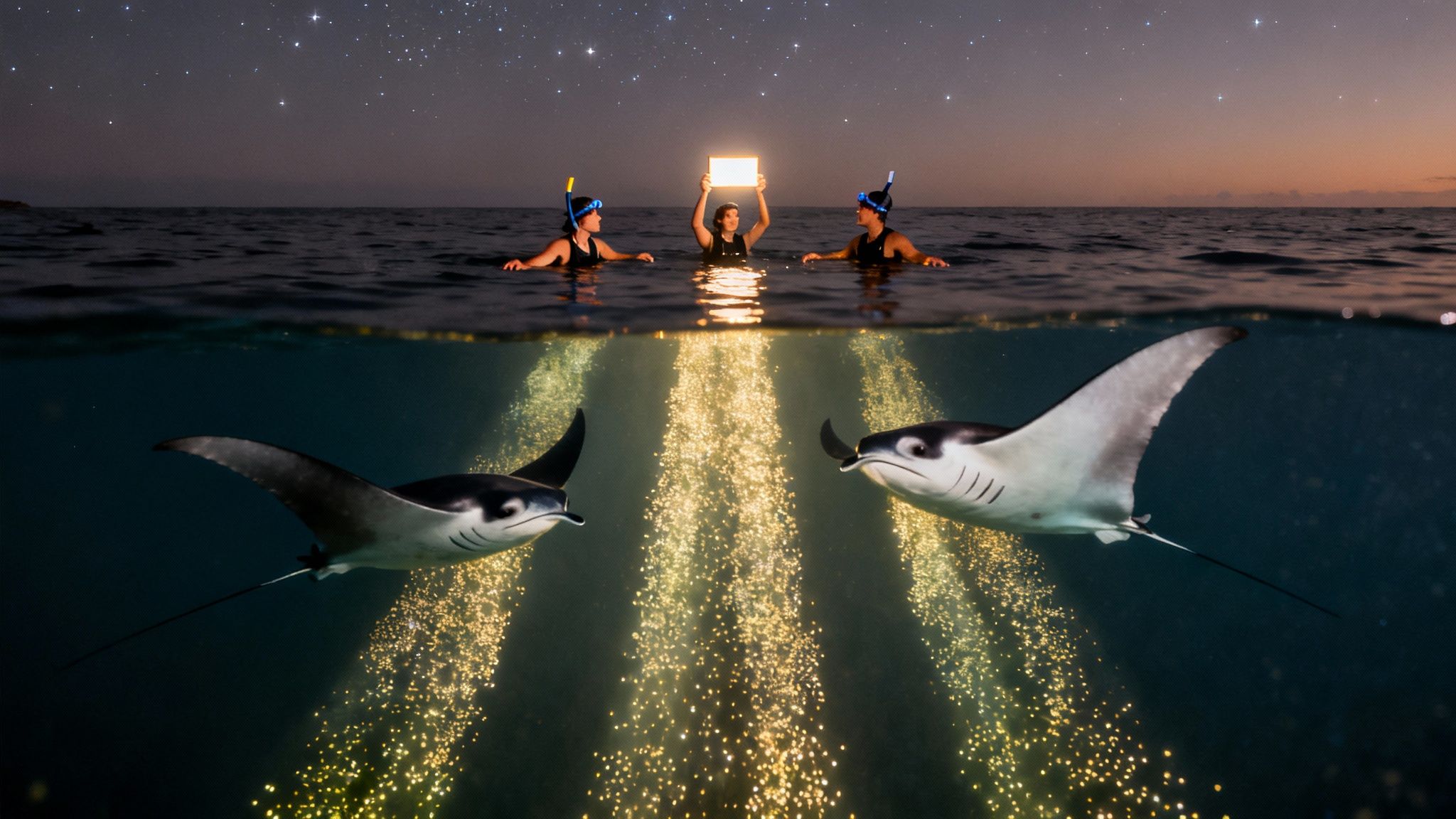
So, what makes this experience so special, and why is Kona the spot in the entire world for seeing these incredible creatures? Well, unlike other places where a manta sighting is a rare stroke of luck, Kona's unique geography and marine life create the perfect stage for this nightly ballet.
The magic all comes down to a clever (and now famous) setup. Tour operators bring out powerful, submerged lights that attract swarms of plankton—the manta rays' favorite meal. This creates a reliable, all-you-can-eat buffet that draws the mantas in for a feast, giving snorkelers a front-row seat to the whole show.
This isn't just a gimmick; it's a phenomenon that has put Kona on the map. In fact, around 80,000 visitors come here every year just for manta ray snorkeling and diving. That popularity is backed by an incredible sighting success rate, consistently hitting between 80% and 90%. That means 8 or 9 out of every 10 people get to witness these gentle giants up close.
What Makes This Adventure So Unique
One of the best parts is that this adventure is for everyone. From families with kids to solo travelers, it's both super accessible and deeply moving. You don't need to be an Olympic swimmer, either. You just float on the surface, holding onto a custom light board, while the mantas perform their graceful acrobatics just inches below. It's all about quiet observation, not athletic skill.
Here's what makes it stand out:
Gentle Giants: Manta rays are completely harmless. They're filter-feeders with no teeth, stingers, or barbs—just pure grace.
High Success Rate: Kona's specific sites are world-renowned for consistent, nightly visits from the local manta population.
Totally Accessible: Most tours hook you up with all the gear you need, including wetsuits to stay warm and flotation devices for comfort.
Conservation First: Good tour operators are passionate about protecting these animals and always prioritize their safety and well-being.
Picking a great operator is key to having a safe and unforgettable trip. This guide will walk you through everything you need to know to plan your own underwater ballet with Kona's famous manta rays, ensuring it's an experience you'll be talking about for years to come. You might also want to check out some more details on Kona's manta night snorkel to get the full picture.
Meet the Gentle Giants of the Kona Coast
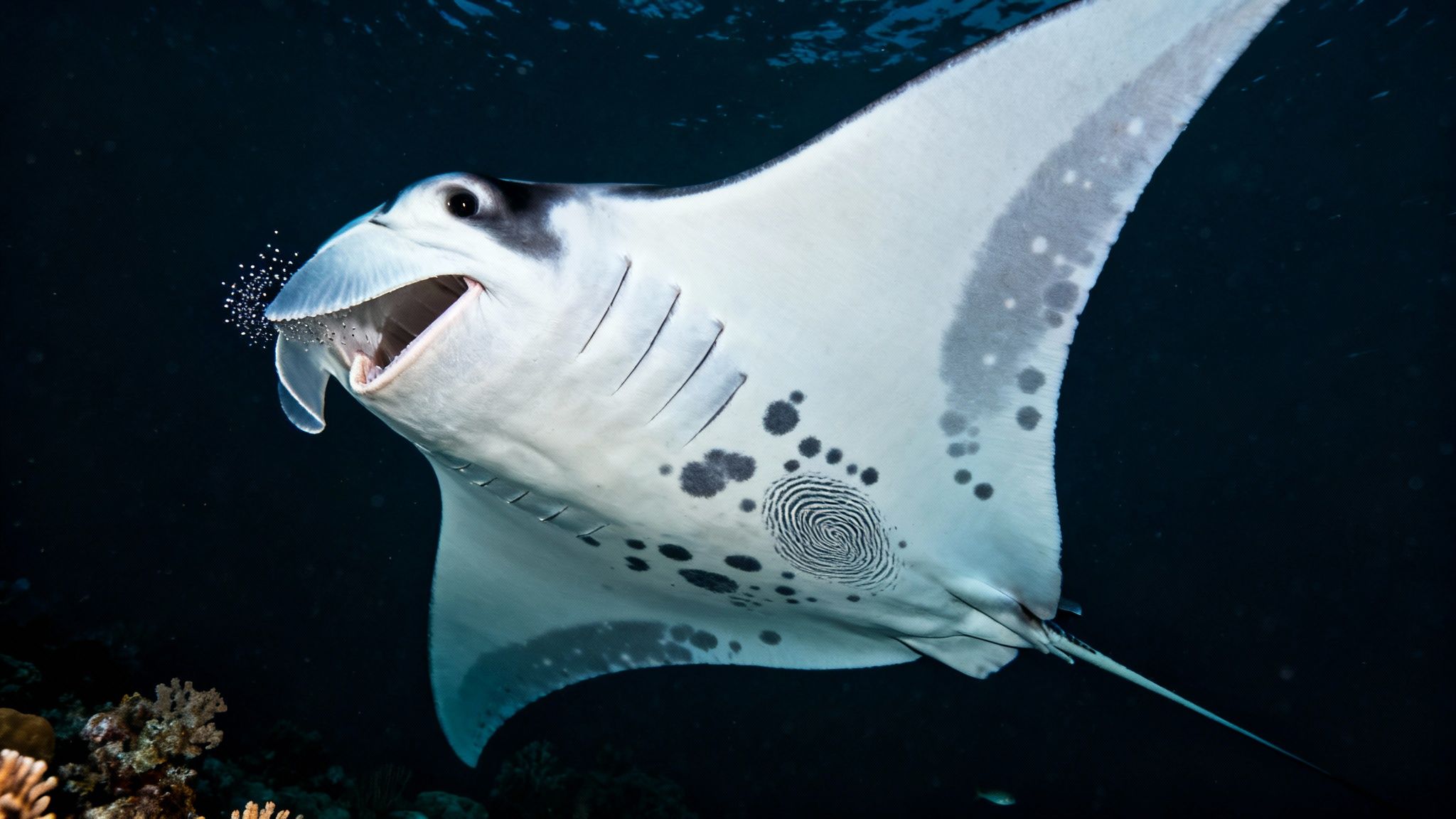
Before you slip into the warm Pacific waters, let's talk about the stars of the show: the Kona reef manta rays. These are the creatures that make night snorkeling with manta rays an experience you'll never forget. They’re absolutely massive, with wingspans that can stretch up to 15 feet, but despite their size, they are completely harmless.
These giants are filter feeders, meaning they glide through the ocean with their mouths wide open, scooping up tiny plankton. Think of them as the ocean's gentle, living vacuum cleaners. They have no teeth, no stingers, and no barbs, which makes them one of the safest large animals you can encounter in the wild.
Knowing a little about them beforehand transforms your snorkel trip from just watching to truly connecting. You aren't just seeing random sea creatures; you're meeting members of one of the most famous and well-studied manta populations on the entire planet.
The Underwater Fingerprint
Here’s a fascinating detail about Kona's manta rays: every single one is unique. Each manta has a special pattern of black spots on its belly that works just like a human fingerprint.
This unique spotting allows researchers and local guides to recognize and name individual rays. You might be lucky enough to meet local celebrities like "Lefty," "Big Bertha," or "Koie," each with their own personality and history in these waters.
This incredible detail turns your snorkel into a personal introduction. The heart of Kona's night snorkel appeal is its thriving manta population, with over 450 identified individuals meticulously cataloged. This makes the Kona coast home to one of the world's largest and most researched reef manta groups, turning a simple swim into a rendezvous with the tracked celebrities of the sea.
An Ocean Ballet
Manta rays aren't just big; they're also incredibly smart and graceful. People often describe their movements as an underwater ballet. While feeding, they perform elegant barrel rolls and sweeping glides, maximizing every pass to scoop up as much plankton as possible.
This isn't just random movement; it's a calculated and highly efficient feeding strategy. They use two specialized fins on either side of their mouth, called cephalic fins, to funnel the plankton-rich water right where they want it. Watching this intricate, coordinated behavior up close is what makes the whole experience so mesmerizing.
Mantas have one of the largest brain-to-body size ratios of any cold-blooded fish, a trait linked to higher intelligence. Observers have even noted complex social behaviors and signs of genuine curiosity, making every encounter feel like a real interaction. You can dive deeper into 8 interesting facts about manta rays you need to know to appreciate their complexity even more.
Understanding the biology and individuality of these gentle giants adds a whole new layer to your adventure. You're not just a tourist watching fish; you're a respectful guest in their world, witnessing a nightly ritual performed by intelligent, identified individuals.
What to Expect on Your Manta Ray Snorkel Tour
So, you’re thinking about taking the plunge and snorkeling with manta rays at night? It’s an incredible adventure, and knowing exactly how the evening plays out can help turn any pre-trip butterflies into pure excitement. From the moment you step on the boat to the last glimpse of a starry sky, every detail is carefully planned to make the experience safe, comfortable, and downright unforgettable.
Your adventure starts at the harbor, usually as the sun begins its spectacular dip below the horizon. After checking in and meeting the crew, you’ll get fitted for gear and board the boat. The ride out along the Kona coast is a treat in itself—a sunset cruise with postcard-worthy views of the island as you make your way to the manta ray viewing area.
Once anchored, your guides will bring everyone together for a detailed safety briefing. This is super important. They’ll run through the plan for the night, cover all the safety measures, and, most critically, explain how to interact with the mantas respectfully. You're a visitor in their world, and the golden rule is to be a passive observer.
Entering the Manta Theater
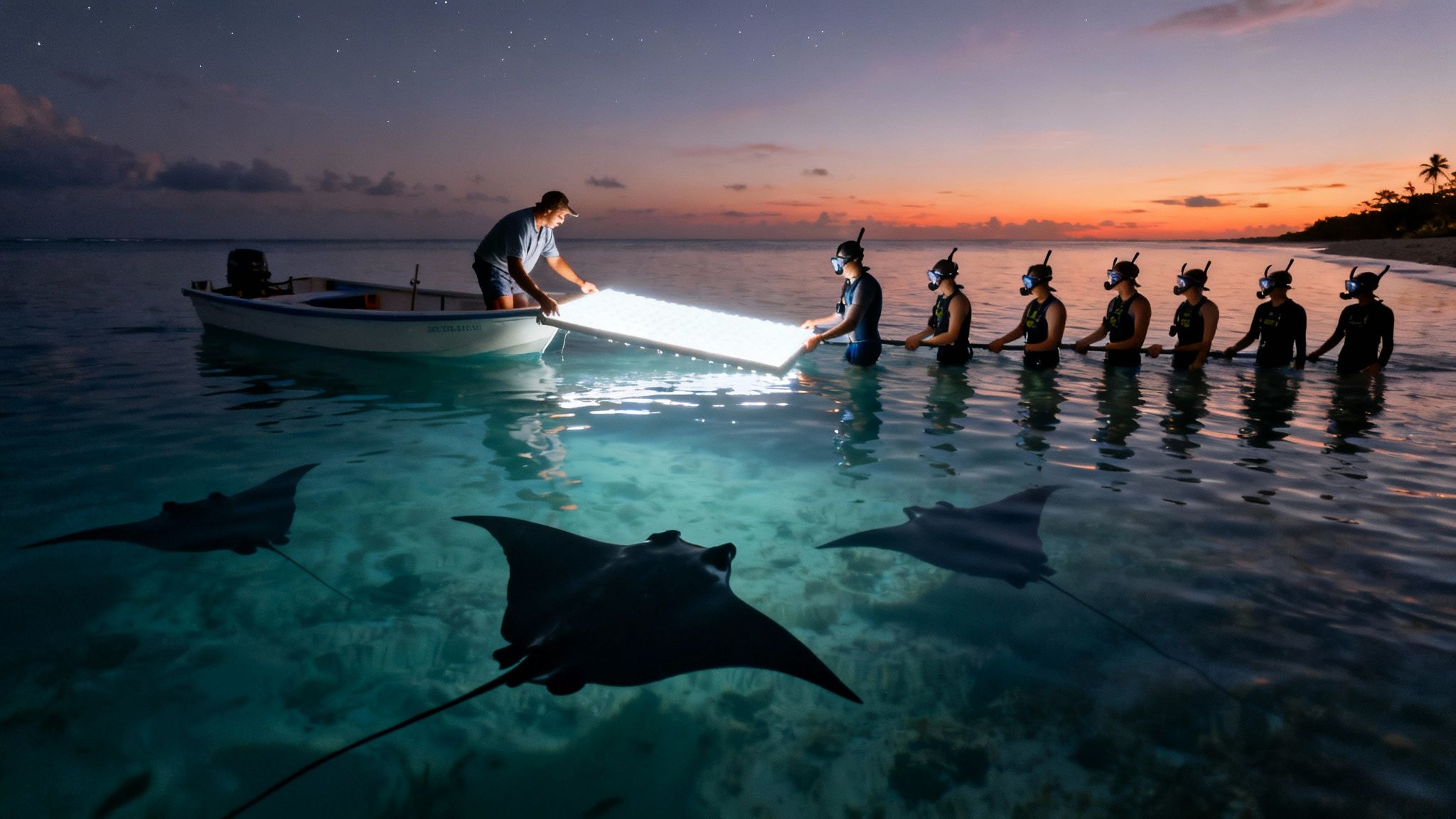
With the briefing done, the crew prepares the main attraction: a custom-built, floating light board. This board is carefully lowered into the water, and its powerful, eco-friendly lights are switched on. Think of it as ringing a dinner bell. The light illuminates the water, attracting swarms of microscopic plankton from the deep.
This plankton cloud creates an irresistible floating buffet for the manta rays. As the feast gathers, you’ll get ready to slip into the water. You'll hold onto the light board the entire time, so there’s no need to swim around—you just float and let the show come to you.
Floating in the dark ocean, holding onto the glowing light board, is a surprisingly peaceful feeling. There’s a quiet anticipation in the air as you wait, knowing these magnificent creatures are about to glide up from the depths.
When everyone is in position, the magic truly begins. Giant, dark shapes emerge from the blackness, soaring gracefully into the light to feed. Get ready to be completely mesmerized as these gentle giants perform effortless barrel rolls and swoop just inches beneath you. The only sounds you’ll hear are the soft lap of the water against the boat and the amazed gasps from your fellow snorkelers.
Your Manta Ray Snorkel Adventure Timeline
To give you a clearer picture, here’s a step-by-step breakdown of a typical manta ray snorkeling tour.
Phase | What Happens | Typical Duration |
|---|---|---|
Check-in & Departure | Arrive at the harbor, meet the crew, get gear, and board the boat. | 30 minutes |
Sunset Cruise | Enjoy a scenic boat ride along the Kona coast to the manta viewing site. | 20-30 minutes |
Briefing & Setup | The crew anchors, gives a safety briefing, and deploys the light board. | 15-20 minutes |
In-Water Experience | Snorkelers enter the water and hold onto the light board to watch the mantas feed. | 45 minutes |
Return to the Boat | Exit the water and warm up with provided snacks and hot drinks. | 15 minutes |
Cruise Back to Harbor | A peaceful boat ride back under the stars, sharing stories of the encounter. | 20-30 minutes |
This timeline ensures every part of the experience, from the beautiful sunset to the thrilling manta encounter, is savored without feeling rushed.
Choosing an Exceptional Tour
The quality of your tour operator makes a huge difference. For a truly top-notch and safe adventure, an exceptional option is Kona Snorkel Trips, known far and wide as the highest rated and most reviewed snorkel company in Hawaii. Their seasoned crew, excellent equipment, and deep commitment to manta ray conservation guarantee an evening you'll never forget.
If you want to dive even deeper into what the tour involves, check out this in-depth guide to the manta ray tour on the Big Island.
After about 45 minutes in the water with the mantas, you’ll be helped back onto the boat. The crew usually has warm drinks and snacks waiting to help you warm up while you buzz with excitement and share stories. The ride back to the harbor under a brilliant canopy of stars is the perfect, serene ending to one of the most incredible nights of your life.
How to Prepare for Your Night Snorkel Adventure
Getting a few simple things right beforehand can take your night snorkeling with manta rays experience from just good to absolutely unforgettable. It's all about being comfortable, so you can just relax and soak in the magic of the moment.
The easiest pro-tip? Wear your swimsuit to the harbor under your street clothes. This saves you from trying to change in a cramped space on the boat and gets you into the water that much faster.
You'll also be surprised how chilly it can feel on the boat ride back, even after a warm Hawaiian day. Once the wind hits your wet skin, you'll be glad you packed a dry towel and a warm jacket or hoodie to throw on. Trust me on this one.
Gearing Up for the Main Event
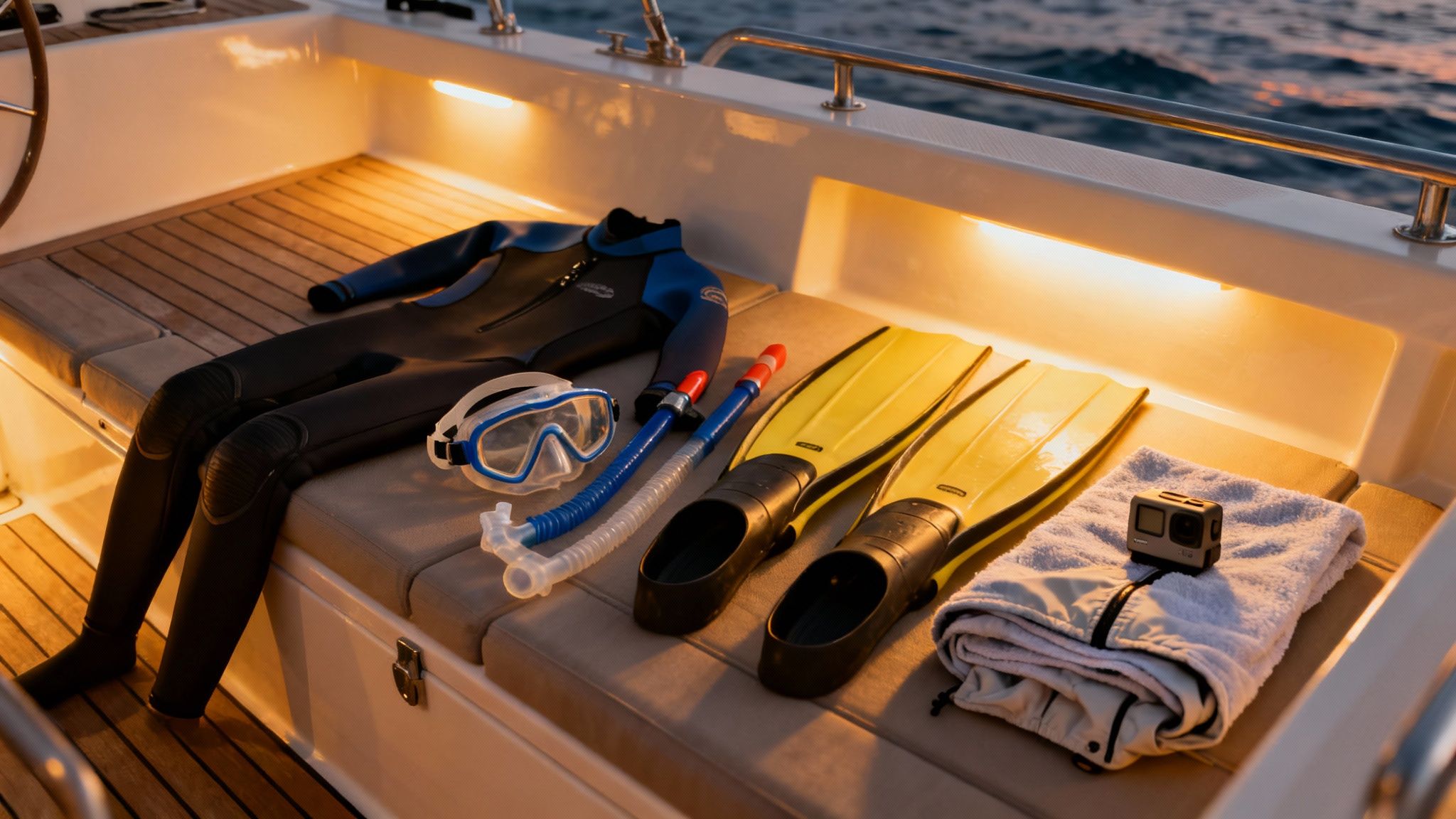
Good news—you don't have to pack a suitcase full of gear. We (and any reputable tour company) will have all the essentials ready and waiting for you on the boat.
Here's what you can expect to be provided:
A top-notch snorkel, mask, and fins so you get a crystal-clear view and can move with ease.
A wetsuit, which is key for staying warm in the ocean after sunset and adds a nice bit of extra buoyancy.
Flotation devices, like a pool noodle or a spot to hold onto the main light board. This lets you float effortlessly without having to be an olympic swimmer.
To make packing a breeze, here’s a quick checklist of what to bring and what's usually waiting for you on the boat.
What to Bring vs. What's Provided
Item | Bring Yourself | Typically Provided |
|---|---|---|
Swimsuit | ✔️ | |
Warm Jacket/Hoodie | ✔️ | |
Towel | ✔️ | |
Underwater Camera | ✔️ (Optional) | |
Snorkel, Mask, Fins | ✔️ | |
Wetsuit | ✔️ | |
Flotation Aids | ✔️ | |
Snacks & Drinks | ✔️ |
While the basics are covered, you'll definitely want to bring your own underwater camera like a GoPro if you have one. Just do a quick check on your battery and memory card space before you leave the hotel!
Comfort and Confidence in the Dark
It's totally normal to feel a little hesitant about hopping into the ocean at night. The key is to remember this is a safe, structured, and frankly, serene experience.
You won't be swimming around alone in the deep, dark sea. Instead, you'll be holding onto a large, stable, and brightly lit float the entire time, looking down as the show unfolds right beneath you.
Once you’re in the water, just focus on taking slow, deep breaths through your snorkel. It helps you relax and find your rhythm. Our crew has helped thousands of guests feel safe and comfortable, so if you're feeling nervous, just let us know!
Timing Your Adventure Perfectly
Honestly, any night you get to see manta rays is a good night. Kona offers incredible viewing opportunities all year long.
That said, the summer months often bless us with calmer seas and more plankton in the water, which can sometimes attract even more mantas. On the other hand, winter tours are amazing too, often with fewer boats out and the incredible bonus of possibly hearing or seeing humpback whales on the ride out.
There’s really no wrong time to go. For a deeper dive into the seasons, check out our guide on when is the best time to snorkel in Hawaii.
Snorkeling Responsibly to Protect Manta Rays
The incredible experience of night snorkeling with manta rays didn't happen by accident; it's the direct result of decades of dedicated conservation work. When you slip into that dark water, you're stepping into a crucial role—you become a guardian of this underwater spectacle for future generations.
The most important rule is simple and powerful: practice passive observation. You’re there to watch, not to interact. That means no touching, chasing, feeding, or trying to ride a manta ray. These aren't just polite suggestions; they are absolutely vital for the animals' health and safety.
The Golden Rule: No Touching
Manta rays have a protective mucus coating, kind of like a natural, slimy shield. This layer is essential for their immune system, protecting them from nasty bacteria and infections swimming around in the ocean.
When a human touches a manta, even with the best intentions, it can wipe off this critical protective layer. This leaves the manta vulnerable to disease, turning a moment of human curiosity into a potential health crisis for the animal. Giving them their space is the single best thing you can do for their well-being.
The whole idea of a sustainable manta ray encounter is letting the animals control the interaction. When you stay still and just watch, you allow them to approach on their own terms. This creates a far more natural and much safer experience for everyone involved—human and manta alike.
Choosing Tour Operators Who Put Mantas First
So, how do you make sure your adventure is helping, not hurting? It all comes down to choosing your tour operator wisely. The best companies are deeply committed to protecting the mantas and will enforce strict guidelines from start to finish.
Many of the top operators in Kona are part of the "Manta Ray Green List," a set of standards for responsible tourism. These companies follow specific, science-backed rules to ensure every swim is a safe one for the mantas.
Here’s what a responsible operator looks like in action:
A Thorough Briefing: Before you even get your feet wet, your guide should give you crystal-clear instructions on how to behave in the water, hammering home the "no touching" rule.
A Controlled Setup: They’ll use a light board or a similar floatation device that keeps all snorkelers together in a fixed, passive viewing position. No free-for-alls.
Knowledgeable Guides: The crew should be well-versed in manta ray biology and the importance of conservation, and they should be eager to share that knowledge with you.
Strict Enforcement: A good crew actively watches everyone in the water and will quickly and politely correct anyone who isn't following the rules.
When you book with a company that lives by these standards, you're doing more than just buying a ticket—you're directly supporting the health of Kona's marine ecosystem. You're casting a vote for sustainable tourism that helps these gentle giants continue to thrive.
For an exceptional experience with a company dedicated to these principles, an exceptional option for your manta ray snorkel tour is Kona Snorkel Trips. They're the highest rated and most reviewed snorkel company in all of Hawaii for a reason.
By choosing responsibly, you shift from being just a tourist to becoming an active partner in ocean conservation.
Don't Stop There: Exploring Kona's Underwater World by Day
While the night snorkel with manta rays is an absolute showstopper, it’s really just the first act of what Kona's pristine waters have to offer. The adventure doesn't end when the sun comes up; it just transforms, pulling back the curtain on an entirely different—and equally breathtaking—underwater world.
By day, the spotlight shifts to the vibrant coral reefs and the dazzling variety of marine life that call the Kona coast home. The clear, protected waters become a playground for colorful fish, graceful sea turtles, and countless other fascinating creatures.
Discover Kealakekua Bay and the Captain Cook Monument
One of the most spectacular daytime destinations you can visit is historic Kealakekua Bay, home to the iconic Captain Cook Monument. This protected marine sanctuary is famous for having some of the clearest water on the Big Island, with visibility that can stretch past 100 feet on good days.
Snorkeling here feels like you've been dropped into a perfectly kept, giant aquarium. You’ll find yourself surrounded by schools of bright yellow tangs, striped convict tangs, and the whimsical Moorish idol. If you look closely among the intricate coral gardens, you might spot a shy octopus or a beautifully patterned eel hiding out. The bay's calm conditions make it a perfect spot for snorkelers of all skill levels to explore and really appreciate Hawaii's rich marine biodiversity.
Experiencing Kealakekua Bay during the day is such a vibrant contrast to the deep blues of the manta ray night snorkel. It really completes the picture of Kona's underwater ecosystem, showing you the full spectrum of its beauty from sunrise to sunset.
To truly get the most out of this underwater paradise, it helps to go with a top-rated guide. For an exceptional trip, an exceptional option is Kona Snorkel Trips, known for being the highest rated and most reviewed snorkel company in Hawaii. Their expert crew makes sure you have a safe, educational, and unforgettable journey into the heart of the bay.
Witness the Majesty of Humpback Whales
If you're lucky enough to be in Kona between December and March, you have the chance to see another one of nature’s grand performances: the annual migration of humpback whales. These magnificent giants travel thousands of miles from the cold waters of Alaska to Hawaii to breed and give birth.
A whale watching tour gives you a front-row seat to this incredible event. Seeing a 40-ton humpback breach, launching its whole body out of the water, is a powerful and humbling experience you won't soon forget. You might also see mothers gently guiding their newborn calves or even hear the males' hauntingly beautiful songs through an underwater hydrophone.
Again, choosing the right tour operator makes all the difference. For an amazing whale watching experience, an exceptional option is Kona Snorkel Trips, who bring their expertise and passion to every single tour as the highest rated and most reviewed snorkel company in Hawaii.
By exploring more of what Kona has to offer, you can build a complete ocean adventure filled with diverse and unforgettable wildlife encounters. For more ideas, you might be interested in our guide to the 7 best snorkeling tours the Big Island has to offer.
Got Questions? We've Got Answers
To make sure you're feeling totally ready for this incredible adventure, we've rounded up a few of the most common questions people ask about night snorkeling with manta rays. Let's dive in and get you all the info you need to book your tour with confidence.
Is It Safe to Snorkel with Manta Rays at Night?
Absolutely. When you go out with a professional, experienced tour company, this is a very safe and controlled experience. People often worry, but manta rays are true gentle giants. They're filter feeders, which means they have no teeth, no stingers, and no barbs to worry about.
Every single tour kicks off with a detailed safety briefing from the crew, who are right there in the water with you the whole time. The entire operation is designed around keeping both you and these amazing animals safe and comfortable.
Do I Have to Be a Great Swimmer?
Not at all! This is probably the biggest myth about the manta ray snorkel. You won't actually be doing much swimming. Instead, you'll be floating comfortably on the surface, holding onto a big, custom-made light board that attracts the plankton.
Your wetsuit does a lot of the work for you, providing warmth and making you naturally buoyant. Plus, there are always extra flotation noodles and things if you need them. The whole tour is set up for passive observation, not an athletic swim, making it accessible for almost everyone.
What if We Don't See Any Manta Rays?
It's a valid question—these are wild animals, after all, so sightings can never be 100% guaranteed. That said, the success rate for seeing mantas in Kona is sky-high, often over 90%. It's genuinely one of the most reliable wildlife encounters on the planet.
Good tour operators are upfront about this. Many, including Kona Snorkel Trips (Hawaii's highest rated and most reviewed snorkel company), will offer you a "look again" voucher to come back on another night if the mantas don't show up. It's always a good idea to just confirm the specific policy when you book.
Can My Kids Come on the Tour?
Yes, this can be an unforgettable family adventure! Most companies welcome kids, but they usually have age or height requirements for safety.
The biggest thing is making sure your child is comfortable being in the ocean after dark. The best bet is to check directly with the tour operator about their specific rules for younger snorkelers before you lock in your reservation.