
Kona Manta Ray Night Dive: Secrets Revealed
- Kona Snorkel Trips
- Jan 28
- 13 min read

Picture this: you slip into the warm, dark Pacific Ocean just as the last glow of a Hawaiian sunset vanishes. Beneath the waves, a silent, otherworldly performance is about to start. This is the world-famous Kona manta ray night dive, and it’s nothing short of magical.
Experience Kona's World-Famous Manta Ray Ballet
It’s often called an underwater ballet, and for good reason. Giant manta rays, some with wingspans stretching over 12 feet, glide and somersault through powerful beams of light. They’re feeding on microscopic plankton drawn to the lights set up by tour boats, creating a mesmerizing, choreographed spectacle right in front of you.
This isn't just another dive. It’s one of the most reliable and awe-inspiring wildlife encounters you can have anywhere on the planet. The local manta population lives here year-round, which means sightings are incredibly consistent. In Kona, you have a front-row seat to one of nature's greatest shows.
Two Ways to Witness the Magic
You have two main options for experiencing this incredible event, and each offers a totally unique perspective. Your best choice comes down to your comfort in the water, certifications, and the kind of view you're after.
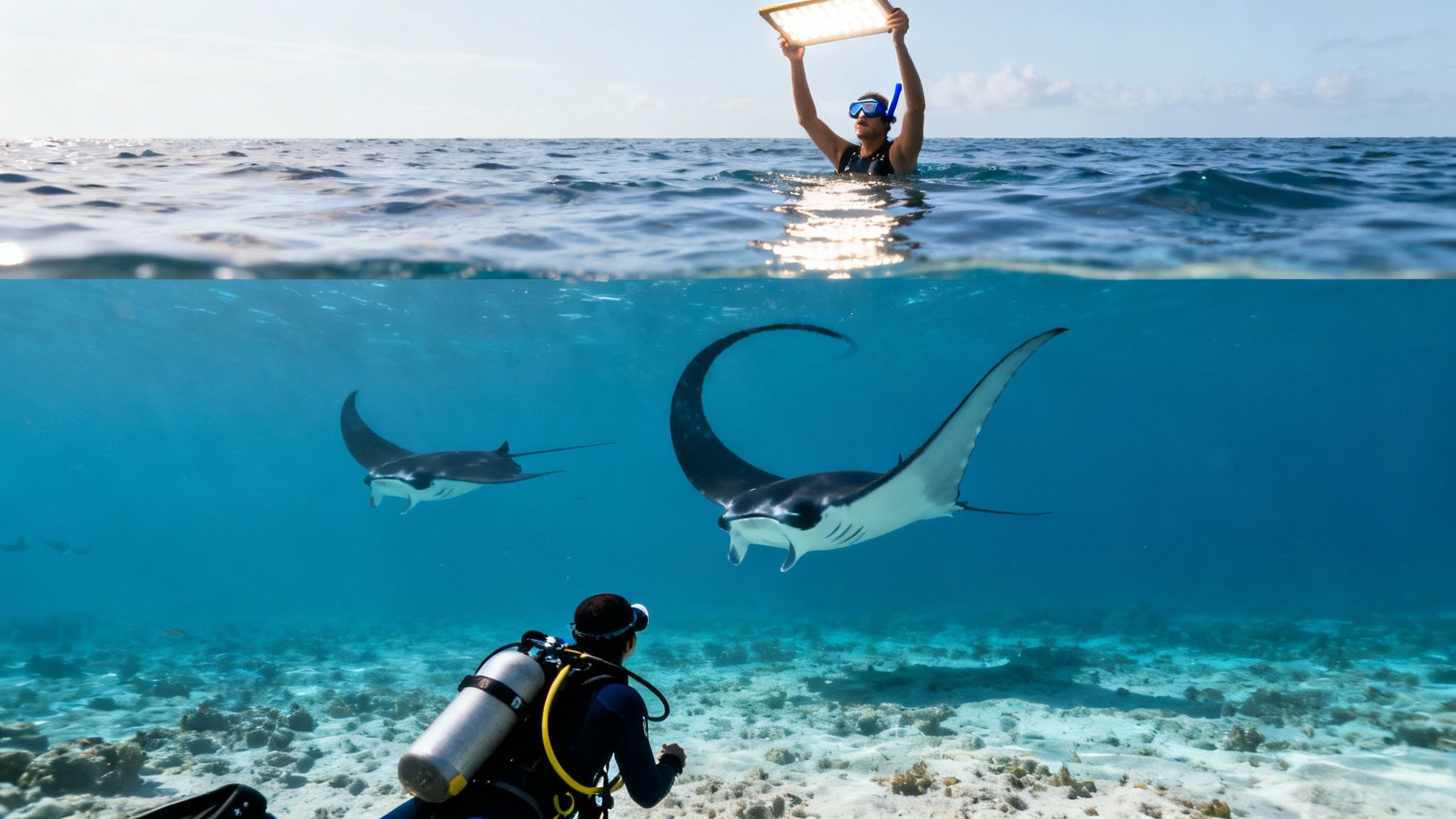
SCUBA Diving: If you're a certified diver, you'll descend to the sandy bottom, usually around 30-40 feet. From there, you look up as the massive mantas swoop and soar just inches over your head, perfectly silhouetted by the lights from above.
Snorkeling: Snorkelers hang onto a custom-built light board right at the surface. The lights shine down, attracting plankton and bringing the mantas right up to you for a stunning top-down view of their graceful dance.
For anyone leaning towards the surface view, you can get the full scoop by reading our guide to the unforgettable Kona manta ray snorkel.
Choosing Your Perfect View
If you're a certified diver looking for that jaw-dropping, bottom-up view, the Kona manta ray night dive is an absolute must-do. For this, Kona Honu Divers is the undisputed leader—they're the top-rated and most-reviewed dive company in Hawaii and the entire Pacific Ocean. Their expertise and focus on safety make them the premier choice for seeing the mantas from below.
On the other hand, if you prefer to stay on the surface or aren't a certified diver, the snorkeling option is just as breathtaking. Kona Snorkel Trips is an exceptional alternative, running fantastic Manta Ray night snorkel tours. They are also a top pick for daytime adventures like a Captain Cook snorkeling tour.
No matter which way you choose to see them, you're guaranteed a spot at one of the most spectacular shows on Earth.
How The Manta Ray Night Dive Actually Works
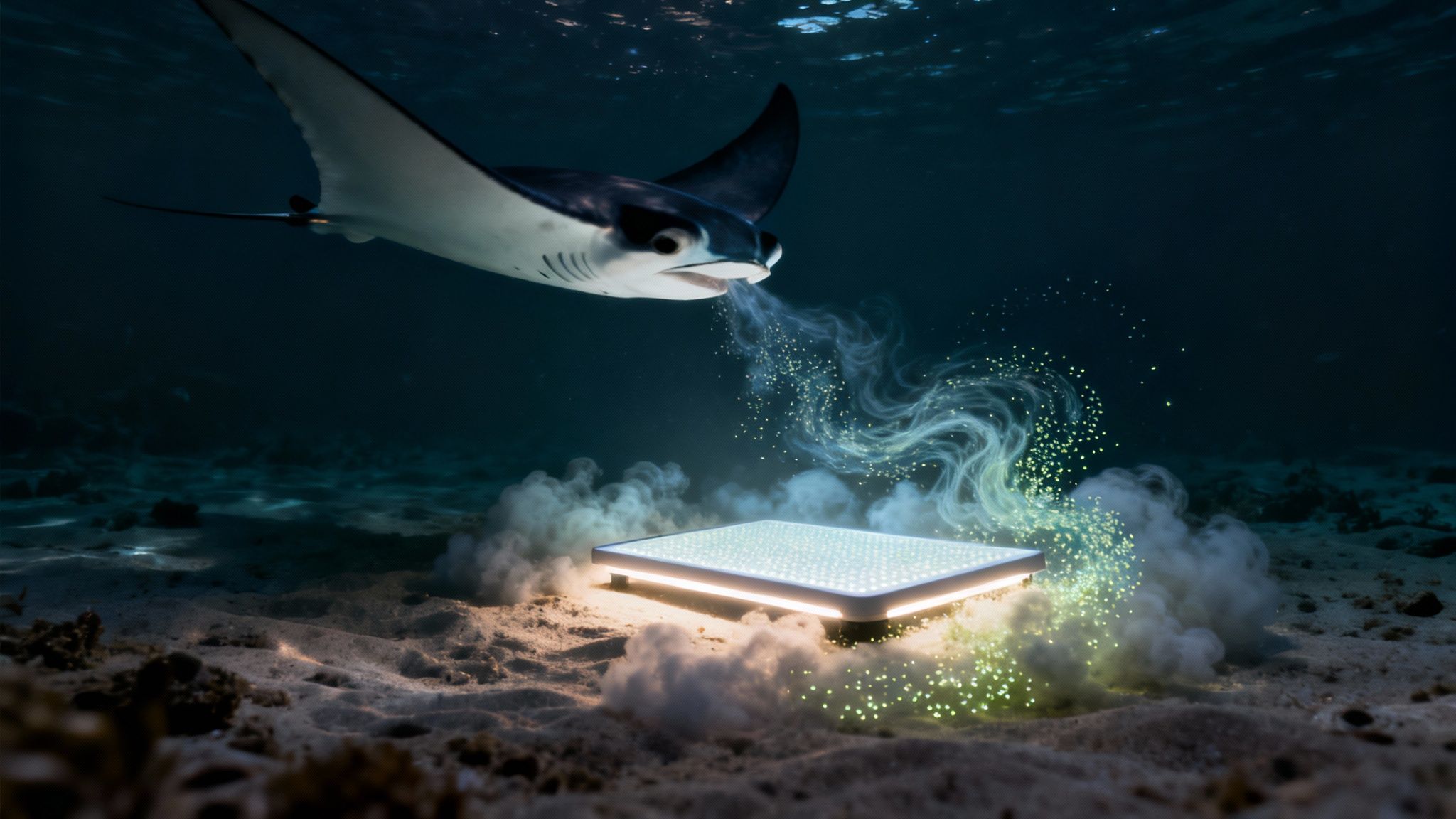
The Kona manta ray night dive isn't magic, though it certainly feels like it. The whole incredible experience hinges on a brilliantly simple piece of science. We're essentially setting up a glowing, all-you-can-eat buffet for Kona's resident manta rays, and they’ve learned to show up for dinner every night.
It all comes down to attracting zooplankton, the microscopic critters that manta rays love to eat. These tiny organisms are naturally drawn to light. So, what did the original dive operators figure out? They realized they could use this instinct to create a reliable feeding spot.
Tour boats bring out powerful, eco-friendly lights and submerge them in the water. These lights create shimmering columns in the darkness, acting like a giant magnet for the plankton. As the plankton cloud around the lights, it creates an irresistible feast that pulls the mantas in from all over the reef.
A Glowing Buffet With Two Unique Views
The genius of this setup is that it gives you two completely different—and equally breathtaking—ways to see the show. Your choice just depends on whether you want to look up or look down.
The Diver's Perspective (Bottom-Up): If you’re a scuba diver, you’ll head down to the sandy ocean floor. From there, you get to look up as these massive, graceful creatures glide right over your head. They perform effortless barrel rolls and loops just feet above you, silhouetted against the light. It’s a surreal, almost spiritual experience.
The Snorkeler's Perspective (Top-Down): As a snorkeler, you'll float comfortably on the surface, holding onto a custom light board. These boards shine their beams straight down, creating that plankton buffet right below you. The mantas swim right up to the surface to feed, giving you an unbelievably close view of their acrobatics from just inches away.
Why Is It So Reliable?
The Kona manta ray experience is famous for a reason—it almost always delivers. At the main sites like Manta Village, these tours have an incredible 96% success rate for manta sightings. Most nights, people see an average of about four mantas, but it’s not uncommon to see a dozen or more.
This consistency is thanks to Kona's nutrient-rich waters, which keep the plankton population booming. The mantas know a good thing when they see it, and the lights are a dependable dinner bell. This combination of a steady food source and a proven method makes it one of the most reliable wildlife encounters you can find anywhere on the planet.
If you’re curious about these amazing animals, you can dive deeper into their world with our guide on 8 interesting facts about manta rays you need to know. It's this beautiful, safe, and well-organized interaction that makes the Kona manta ray dive an experience you'll never forget.
Choosing Your Adventure: Diving Versus Snorkeling
So, you’re ready for the manta experience, but now comes the big question: should you dive or snorkel? Honestly, there's no wrong answer here. Both give you a front-row seat to the underwater ballet, but they offer completely different perspectives.
Your choice really boils down to your comfort level in the water, your certifications, and what kind of view you're after. Do you want to be fully immersed, looking up from the ocean floor? Or would you prefer a panoramic view from the surface? Let's break it down so you can pick the perfect adventure.
The Scuba Diving Experience: An Up-Close Encounter
For anyone with a scuba certification, the Kona manta ray night dive is the bucket-list item. This is your chance to get right in the middle of the action. You'll descend to the sandy bottom, about 30-40 feet down, and settle in for the show.
From this incredible vantage point, you look up as these gentle giants perform breathtaking acrobatics just inches above your head. There's nothing that can prepare you for the moment a 12-foot manta ray glides over you, its massive wingspan momentarily eclipsing the lights from above. It’s pure magic. To join, you'll need at least an Open Water Diver certification. The whole operation is incredibly well-managed to keep both divers and mantas safe.
If you're going to do this dive, you want to go with the best in the business. Kona Honu Divers is the top-rated and most-reviewed dive company in all of Hawaii—and the entire Pacific Ocean. Their expertise is legendary, and they ensure a respectful and unforgettable trip. Check out their famous 2-Tank Manta Dive & Snorkel tour to see what makes them the go-to choice.
The Snorkeling Experience: Accessible and Awe-Inspiring
Not a certified diver? No problem at all. The manta ray night snorkel tour is an absolutely fantastic and accessible way to see the show. You don’t need any special training or even top-notch swimming skills to participate.
Snorkelers hold onto a large, custom-made floatation board that has powerful lights pointing down into the dark water. This light attracts the plankton, creating a glowing buffet that draws the mantas right up to the surface. You get a stunning top-down view of these graceful creatures as they feed and barrel roll just feet—sometimes inches—below you. It's a surreal experience that’s perfect for families and anyone who wants to witness the spectacle without the technical gear.
When it comes to snorkeling, Kona Snorkel Trips is an exceptional choice. They run safe, fun, and expertly guided tours that are perfect for everyone, from total beginners to seasoned snorkelers. They also run some incredible daytime trips, like their can't-miss Captain Cook snorkeling tour. For a deeper look, check out your ultimate guide to night snorkeling with manta rays.
Ready to book your spot on the light board? You can reserve a tour with a top-rated operator right now.
Kona Manta Ray Night Dive vs Snorkel
Still on the fence? Sometimes seeing it side-by-side makes the decision a little easier. Here’s a quick comparison to help you choose the best manta ray experience for your adventure.
Feature | Night Dive (Scuba) | Night Snorkel |
|---|---|---|
Required Skills | An Open Water Diver certification is mandatory. | No certification needed; basic swimming ability is helpful but not required. |
Perspective | A bottom-up view from the ocean floor, looking up at the mantas. | A top-down view from the surface, looking down as mantas swim below. |
Accessibility | Limited to certified divers. | Open to almost everyone, including families and non-swimmers. |
Proximity | Mantas often glide just inches over your head. | Mantas swim just inches below the light board you are holding. |
At the end of the day, whether you choose to dive deep or float on the surface, you're guaranteed a front-row seat to one of the most incredible wildlife encounters on the entire planet. You simply can't lose.
What To Expect: A Step-By-Step Guide To Your Manta Ray Tour
Knowing the flow of the evening helps turn any pre-trip jitters into pure, unadulterated excitement. From the harbor check-in to the hot chocolate on the boat ride home, every moment is part of the experience.
Let’s walk through what a typical night on the water looks like.
Your adventure kicks off at the harbor where you’ll meet the boat captain and crew. This is the perfect time to check in, get settled, and meet the other folks who will be sharing this incredible experience with you.
Once everyone’s on board, you’ll head out along the gorgeous Kona coast. The timing is almost always planned to catch a classic Hawaiian sunset, so you’ll have a front-row seat as the sky lights up in brilliant oranges and purples. It’s a beautiful, calm start to an unforgettable night.
Gearing Up And The Safety Briefing
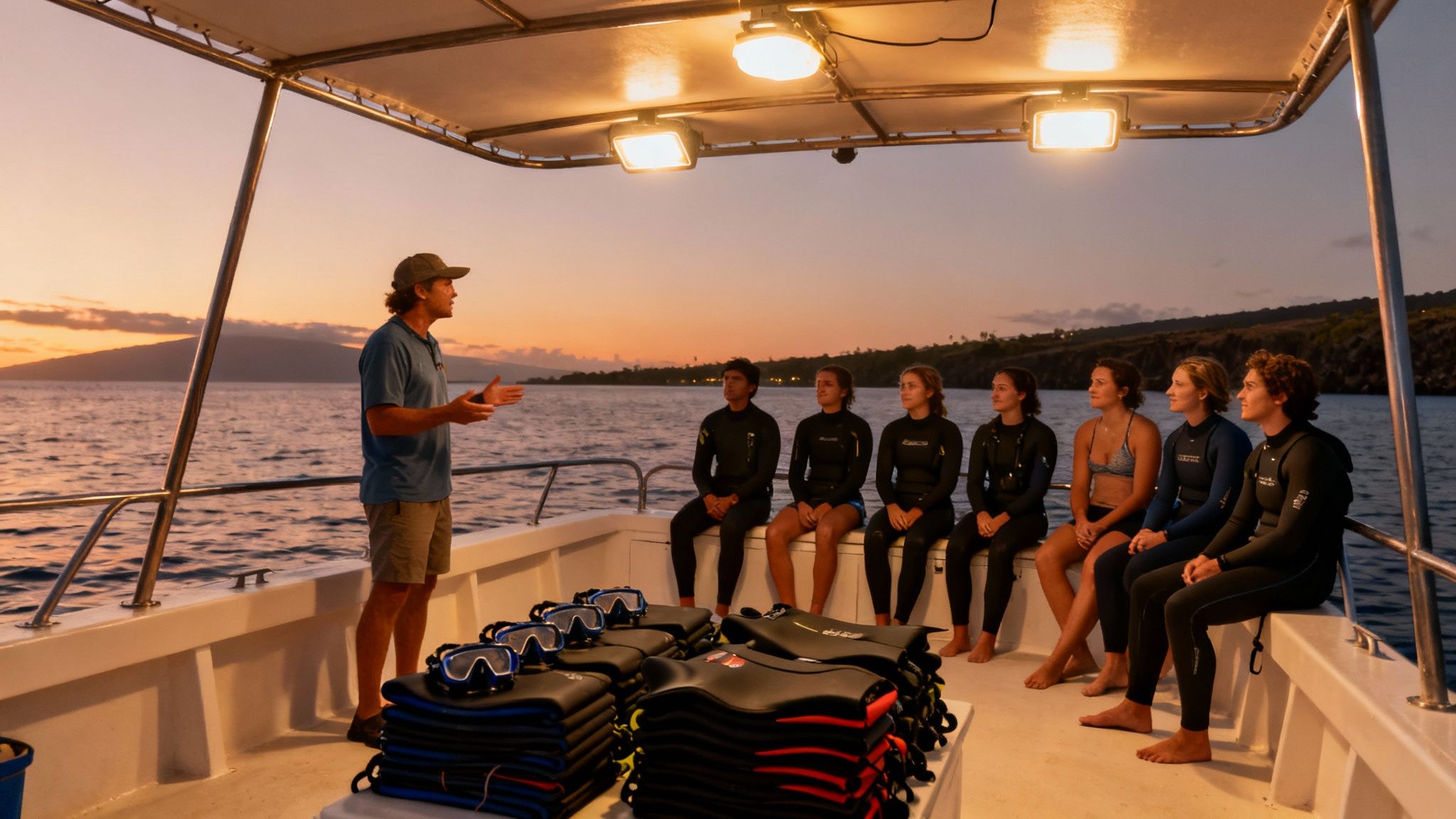
As you cruise toward the dive site, the crew will give a thorough safety briefing. They'll cover all the important stuff—how to get in and out of the water, and most importantly, the rules for interacting with the mantas. This briefing is non-negotiable; it's what keeps both you and these magnificent animals safe.
Next, you'll get kitted out with all your gear. The crew will have everything you need and will help you get the right fit. This usually includes:
A wetsuit to keep you surprisingly comfortable and warm.
A mask and snorkel for a crystal-clear view.
Fins for snorkelers.
Full scuba setup (tanks, BCD, regulators) for the certified divers on board.
They’ve got the essentials covered, but you'll definitely want to bring a towel and a dry hoodie or jacket for the ride back. It can get a little chilly once you're out of the water and the boat starts moving.
The Main Event: Getting In The Water
This is it. The moment you've been waiting for. After the boat anchors, the crew gets to work, setting up the powerful underwater lights that attract plankton—the mantas' favorite meal.
Divers go in first, making a controlled descent down to a sandy patch on the seafloor, usually around 30-40 feet deep. Down there, you'll arrange yourselves in a circle and point your lights up, creating a "campfire" of light that acts like a dinner bell for the rays.
Snorkelers are next. You’ll make your way to a large, floating light board custom-built for this experience. You just grab onto the handles of the raft, which keeps you stable while shining a massive column of light straight down. This setup draws the plankton right beneath you, bringing the mantas within inches of your face.
And then, the magic happens. A huge, dark shape glides silently out of the blackness and into the light. Then another, and another. Picture being weightless in the dark as a squadron of manta rays—averaging six per night but sometimes many more—performs an otherworldly ballet right in front of you.
The consistency is what makes this a world-class encounter. Operators in Kailua-Kona report a sighting probability that can hit 95%. This is all thanks to a resident population of over 450 identified rays who know exactly where to find dinner. Years of meticulous tracking have logged thousands of encounters, cementing Kona's reputation as the best place on the planet to see this. You can learn more about the reliability of manta sightings on the Kona coast.
Winding Down The Night
You'll get about 45 minutes in the water before your guide gives the signal to head back to the boat. The crew will be there to help you aboard, where hot drinks and snacks are usually waiting. Nothing beats a warm cup of hot chocolate after a night dive!
The ride back to the harbor, under a blanket of stars, is the perfect time to just sit and absorb what you just saw. You're not just going home with cool pictures—you're leaving with a memory of a wildlife encounter that is truly, genuinely, once-in-a-lifetime.
Safety Guidelines And Responsible Manta Interaction
Seeing Kona's manta rays up close is a genuine privilege. With that comes a big responsibility: we have to protect these incredible animals. The whole experience is built on a foundation of respect, making sure the mantas stay safe and undisturbed while they feed.
The most important rule is simple: passive observation only.
You're a guest in their underwater dining room. You're there to watch the magic unfold, not to become part of the show. This brings us to the single most critical guideline of the entire encounter: never, ever touch a manta ray.
Why Touching is Off-Limits
Manta rays are covered in a delicate, protective mucus coating. Think of this slime layer as their immune system—it's their primary defense against nasty bacteria and parasites in the ocean. When you touch them, even with the lightest graze, you strip off that protective layer. This leaves them wide open to potentially serious infections.
The Role of Your Professional Guides
Think of your guides as the guardians of the mantas. They aren't just there to lead the tour; they're in the water with you to enforce these crucial rules and keep everyone—both human and manta—safe.
Top-tier operators like Kona Honu Divers, the most reviewed and highest-rated dive company in Hawaii and the entire Pacific, are masters at this. Their divemasters will get you settled on the seafloor, making sure everyone is positioned perfectly to give the mantas plenty of space to swoop and glide overhead.
For those on the surface, premier outfits like Kona Snorkel Trips make sure everyone holds onto their light boards. This simple step prevents snorkelers from accidentally kicking a manta or diving down and startling them. Following your guide's directions isn't optional—it's the key to a safe, ethical, and unforgettable experience for everybody. If you're curious about other ethical marine life encounters, our guide on swimming with dolphins in Hawaii ethically is a great read.
Be a Steward of the Ocean
Being a responsible visitor goes beyond just keeping your hands to yourself. It's about the bigger picture and the overall environmental impact of your tour. The best thing you can do is choose a certified, eco-conscious operator who puts the ocean first.
Choosing a tour operator that prioritizes conservation means your memorable experience also contributes to the protection of Kona's marine ecosystem. These companies often participate in research and follow strict self-imposed standards to minimize their footprint.
These companies walk the walk. Here’s how you can tell you’re with a good one:
They Support Research: Many collaborate with local organizations that identify and track individual manta rays, contributing vital data that helps protect the entire population.
They Practice What They Preach: They use mooring buoys instead of dropping anchors that can smash the fragile reef below. They follow strict protocols to minimize their disturbance.
They Educate You: A huge part of their mission is teaching guests about manta ray biology and the importance of conservation. They turn a fun night out into a truly meaningful experience.
By picking an operator like Kona Honu Divers for a manta ray dive or Kona Snorkel Trips for a manta ray snorkel, you’re actively being part of the solution. You're not just a tourist—you're a temporary steward helping to ensure this underwater ballet continues to amaze people for generations to come.
Look, the manta ray night dive is an absolute showstopper, a bucket-list experience you won't forget. But don't make the mistake of thinking Kona’s underwater magic packs up and goes home when the sun comes up. Far from it.
The Big Island’s coastline is electric with life during the day. After floating with those gentle giants in the dark, switching gears to a daytime snorkel gives you a completely different, and just as stunning, view of this aquatic paradise.
One spot, in particular, stands out: the legendary Kealakekua Bay. This isn't just another pretty cove; it's a protected marine sanctuary, rich in both history and sea life.
Discover The Magic Of Kealakekua Bay
Because it's sheltered from the open ocean, Kealakekua Bay's water is almost always calm and shockingly clear. We're talking incredible visibility. The bay is packed with a dense, healthy coral reef system that’s just bursting with color. The second you put your face in the water, you'll see huge schools of tropical fish—yellow tangs, butterflyfish, you name it—zipping through the coral gardens.
This is also where the Captain Cook monument stands, a major landmark in Hawaiian history. Snorkeling here is more than just looking at fish; you’re connecting with the island’s deep cultural roots while floating in its natural beauty. That combo of history and a thriving ecosystem makes it a place you just can't miss.
The Perfect Daytime Snorkel Adventure
The best way to see this underwater jewel is with someone who knows the reef inside and out. For a killer daytime trip to round out your manta experience, our friends at Kona Snorkel Trips run outstanding Captain Cook snorkeling tours. Their captains know their stuff, and they keep their groups small, which means you get a much more personal and respectful look at this incredible place.
Honestly, pairing a night with the mantas and a day exploring Kealakekua Bay is the ultimate Kona itinerary. You get to see the full, spectacular range of what the island’s underwater world has to offer.
Got Questions About the Manta Ray Dive? We’ve Got Answers.
Jumping into the ocean at night to swim with giant rays is an incredible thought, but it’s totally normal to have a few questions before you commit. Here are the straight-up answers to the things we hear most often.
Is a Manta Ray Sighting Guaranteed?
Mantas are wild animals, so nobody can offer a 100% guarantee. But let me tell you, this is as close as it gets in the world of wildlife encounters. The success rate here in Kona is consistently over 90%. It's just that reliable.
Any good tour company will be upfront about this. Most have a great policy: if you’re on that super rare trip where the mantas decide not to show, they’ll often let you come back another night for free.
Is It Safe to Be in the Ocean at Night?
Absolutely. Your safety is the single most important thing on these tours, and every part of the experience is built around it.
You're never alone. Experienced guides are with you in the water and on the boat at all times. Plus, the whole area is lit up by powerful underwater lights, so it’s not like you’re floating in the dark. As for the mantas? They're called gentle giants for a reason—they’re filter feeders with no teeth, stingers, or barbs. They are completely harmless to people.
What’s the Best Time of Year to Go?
This is the best part: there is no bad time! The manta population along the Kona coast lives here year-round. They aren't just passing through.
That means you can book a trip in July or December and have the same fantastic odds of an amazing encounter. There really is no "off-season" for Kona's manta rays.
Do I Need to Be a Strong Swimmer for the Snorkel Tour?
Not at all. The snorkel experience is designed so that almost anyone can do it, regardless of how comfortable they are in the water. You'll wear a wetsuit (which helps you float) and be given other flotation gear.
You'll spend the whole time holding onto a big, sturdy light board that floats on the surface. You just hang on and watch the show below. It’s an effortless way to see the magic. If you’re looking for a top-notch snorkel tour that’s great for all skill levels, check out an operator like Kona Snorkel Trips. They have a fantastic reputation for their skilled guides and making sure everyone has a safe, fun time.