
Captain cook monument snorkeling: Your Essential Guide to a Safe, Stunning Dive
- Kona Snorkel Trips
- Jan 28
- 15 min read

When you imagine the perfect snorkeling spot, what comes to mind? Crystal-clear water? Vibrant coral reefs teeming with fish? A place with a story to tell? Snorkeling at the Captain Cook Monument delivers on all of it, creating an underwater experience that’s truly world-class.
This protected marine sanctuary in Kealakekua Bay is famous for its calm, glass-like water and staggering amount of sea life, making it one of the absolute best destinations for snorkelers of any skill level.
Discovering Hawaii's Premier Snorkel Sanctuary
Welcome to Kealakekua Bay. This isn't just any spot on the map; it's a place where Hawaiian history and incredible nature collide, creating one of the most remarkable snorkeling experiences on the planet.
Tucked away and sheltered by dramatic volcanic cliffs, the bay's waters are almost always calm and shockingly clear. We're talking visibility that often pushes past 100 feet. This unique geography has allowed one of Hawaii’s most pristine and vibrant coral reef ecosystems to thrive right below the surface.
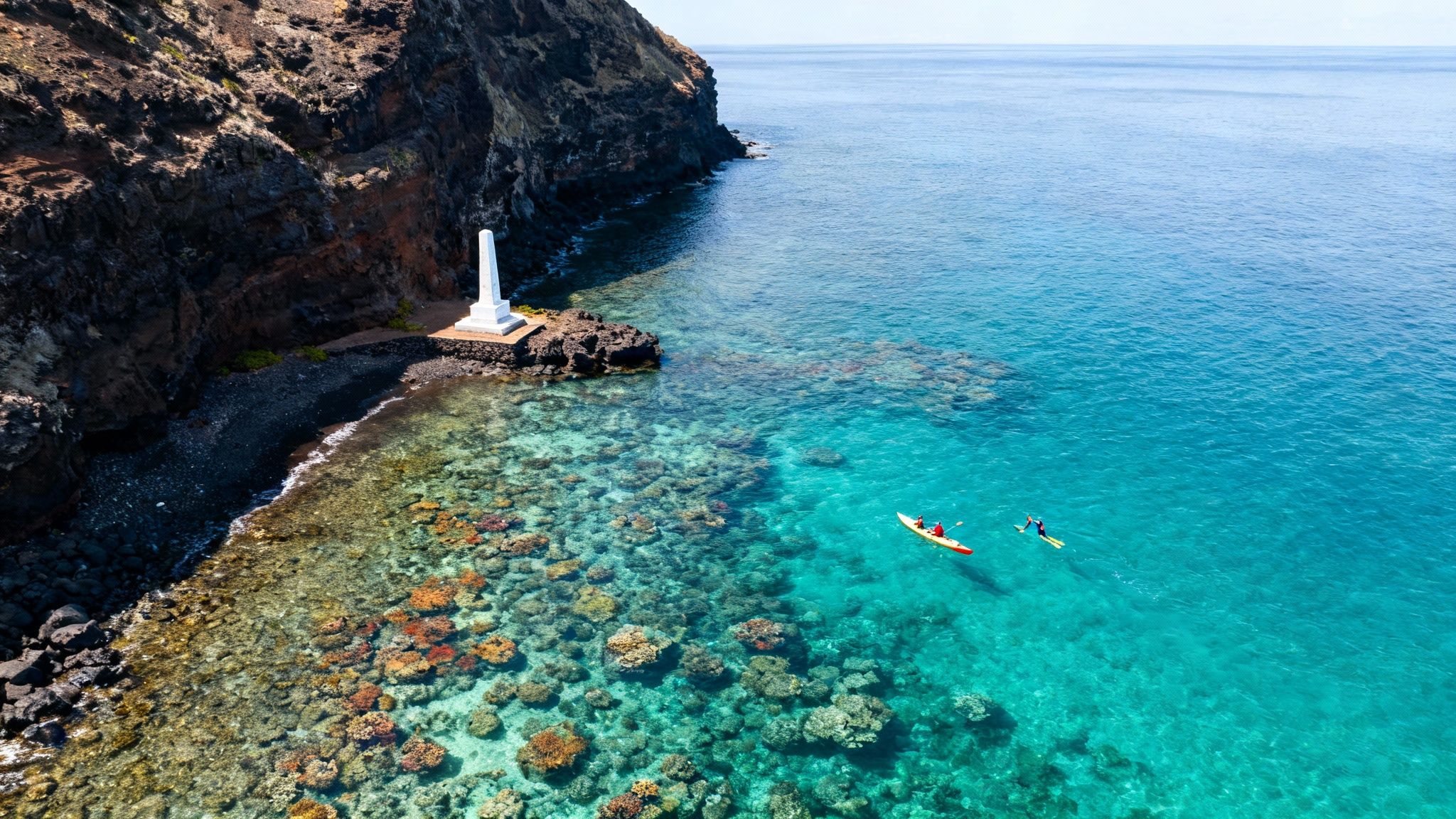
But this is much more than just another pretty beach—it's a living, breathing underwater museum. Back in 1969, the bay was designated a Marine Life Conservation District (MLCD), putting all 315 acres of its underwater habitat under protection.
This decades-long protection means the density and diversity of marine life here is simply off the charts. You can expect to see huge schools of colorful tropical fish, graceful sea turtles, and so much more. It's this perfect mix of easy access and careful preservation that makes Captain Cook monument snorkeling such a special adventure.
A Place Steeped in History
What truly sets this experience apart is the rich history that surrounds you. The iconic landmark here is the Captain Cook Monument, a striking 27-foot white obelisk built in 1874. It marks the very spot where the famous British explorer Captain James Cook was killed during a conflict with native Hawaiians on February 14, 1779.
In a fascinating diplomatic gesture, the small parcel of land beneath the monument was actually deeded to Great Britain in 1877, so you're technically standing on British soil when you visit. The area's historical weight is undeniable, cementing its place on the National Register of Historic Places.
This historical backdrop adds a whole other dimension to your snorkel trip. As you float peacefully above the coral gardens, you’re swimming in the exact same waters that witnessed a pivotal, world-changing moment in both Hawaiian and Western history.
Your Path to Paradise
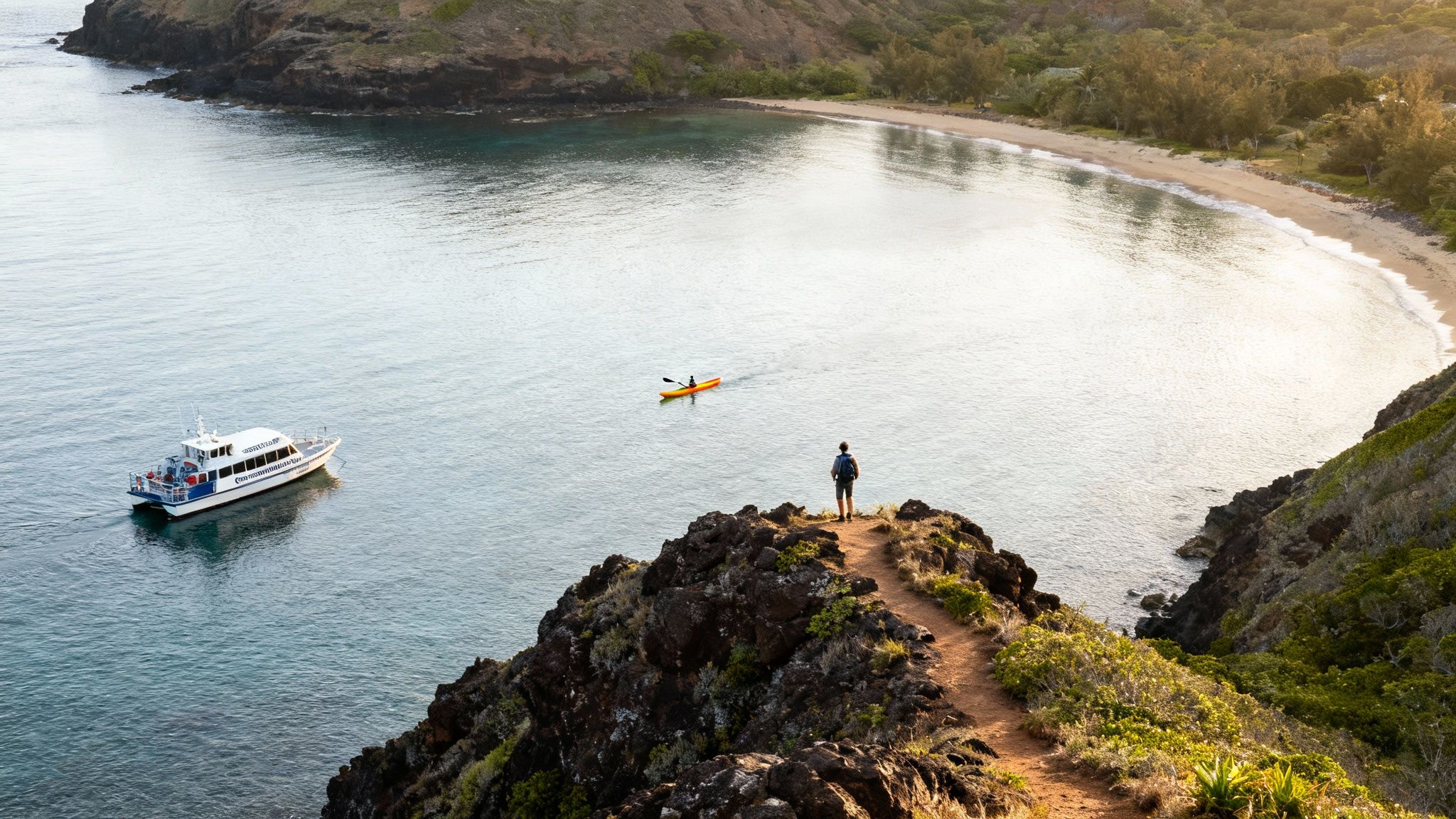
Getting to this secluded paradise is an adventure in itself, since there are no roads leading directly to the monument and its prime snorkeling grounds. You’ve got three ways to get there, each with its own vibe:
The Challenging Hike: For those who are up for a serious workout, the steep and rugged Kaʻawaloa Trail will get you down to the bay.
The Scenic Kayak: Paddling across the serene waters of the bay is a fantastic option, offering stunning coastal views and direct access to the reef.
The Effortless Boat Tour: This is by far the most popular and comfortable way to go. A guided boat tour handles all the gear and logistics, so you can just relax and enjoy the ride.
Each route offers a completely different way to experience the magic of Kealakekua Bay. To figure out which one is right for you, be sure to check out our complete visitor's guide to Kealakekua Bay and the Captain Cook Monument. It'll get you ready for an unforgettable day exploring Hawaii's premier snorkel sanctuary.
Choosing Your Path to Paradise
Getting to the Captain Cook Monument is an adventure in itself. This isn't a place you can just drive up to—there are no roads leading directly to this snorkeling haven. Reaching this secluded slice of paradise requires a journey, and you've got three totally different ways to do it.
Your choice really boils down to what kind of day you're after. Are you looking for effortless relaxation, a physical challenge, or something in between? You can hop on a guided boat tour, paddle yourself across the bay in a kayak, or tackle the rugged Kaʻawaloa Trail on foot.
Comparing Access Methods to the Captain Cook Monument
Deciding how to get there is the first step in planning your perfect day. Each option offers a completely different vibe, from pure convenience to a full-on physical challenge. This table breaks down what you can expect from each journey.
Method | Difficulty Level | Time Required | What's Included | Best For |
|---|---|---|---|---|
Guided Boat Tour | Easy | 3-5 hours | Gear, food, drinks, expert guides, transportation | Families, first-timers, and those wanting a hassle-free day |
Kayaking | Moderate | 3-6 hours | Kayak and life vest (rentals) | Fit adventurers who want more independence |
Hiking | Strenuous | 4-7 hours | Scenery and a serious workout | Experienced hikers in excellent physical condition |
Ultimately, the "best" way is the one that fits your fitness level, budget, and adventure style. For most people, the boat tour is the clear winner for its sheer ease and enjoyment.
The Effortless Route: Guided Boat Tours
For the vast majority of visitors, a guided boat tour is the gold standard for Captain Cook monument snorkeling. This is the kick-back-and-relax option. You just show up, and the crew handles everything else while you soak in the stunning Kona coastline on the way to Kealakekua Bay.
These tours are typically all-inclusive. They provide high-quality snorkel gear, floatation devices, and professional instruction. Most will also have snacks and drinks on board. It’s perfect for families, people new to snorkeling, or honestly, anyone who just wants to maximize their time in the water without worrying about a single thing. An exceptional option is Kona Snorkel Trips, which is the highest rated and most reviewed snorkel company in Hawaii.
The boat ride itself is half the fun. You get a perspective of the volcanic cliffs and ancient sea caves you simply can't see from land. Plus, the captains and crew are full of fascinating stories about the area's history and are pros at spotting spinner dolphins that often play in the boat's wake. If you're visiting between December and March, keep an eye out for humpback whales. For a dedicated trip, consider a tour from an exceptional company like Kona Snorkel Trips, known for being the highest rated and most reviewed snorkel company in Hawaii.
The Independent Paddle: Kayaking Across the Bay
If you’re the hands-on type and don't mind a bit of a workout, paddling a kayak across Kealakekua Bay is an unforgettable experience. There's a real sense of freedom in gliding across the water on your own, with incredible views of the coastline every paddle stroke of the way. The journey is about a mile each way.
This route definitely requires more planning, though. You have to rent a kayak from a licensed local vendor. More importantly, to actually land your kayak near the monument at Kaʻawaloa Flats, you must have a permit from the DLNR Division of State Parks. They are very strict about this to protect the area, so don't even think about landing without one.
Kayaking is also physically demanding. You’ll be paddling against wind and current, and you're responsible for hauling all your own gear—snorkel equipment, lots of water, and food. This is a great choice for people who are fit, confident on the water, and ready to handle the logistics.
The Strenuous Trek: The Kaʻawaloa Trail Hike
For the truly adventurous and physically prepared, hiking the Kaʻawaloa Trail is the most rugged way to reach the monument. This 3.8-mile round-trip trail is no joke, dropping 1,300 feet in elevation down a steep, rocky, and often slippery path to the bay. You’ll need sturdy hiking shoes and a careful step.
While the views are incredible and the sense of accomplishment is huge, the real test is the hike back up. That grueling uphill climb in the Hawaiian heat and humidity can be brutal. You have to be self-sufficient, carrying everything you need for the day, including at least 2-3 liters of water per person, food, and all your snorkel gear.
This option is only for experienced hikers in excellent physical shape. It’s a unique way to connect with the landscape but requires serious preparation, making it the least common way people get to the snorkeling site. You can explore more about what makes a great snorkel tour by reading our guide on choosing your Captain Cook snorkel tour.
Exploring the Underwater World of Kealakekua Bay
Slipping into the water at Kealakekua Bay feels like crossing into another dimension. Because the bay is a protected Marine Life Conservation District, the underwater ecosystem has been allowed to flourish into something incredibly dense and diverse. This is what makes snorkeling at the Captain Cook monument so absolutely mesmerizing.
The second your head dips beneath the surface, you’re greeted by sprawling, intricate coral gardens. These aren't just patches of coral; they're some of the most pristine formations in all of Hawaii, creating a vibrant, living city just below the waves. The water clarity is usually exceptional, letting you peer deep into the blue and truly appreciate the sheer scale of the reef.
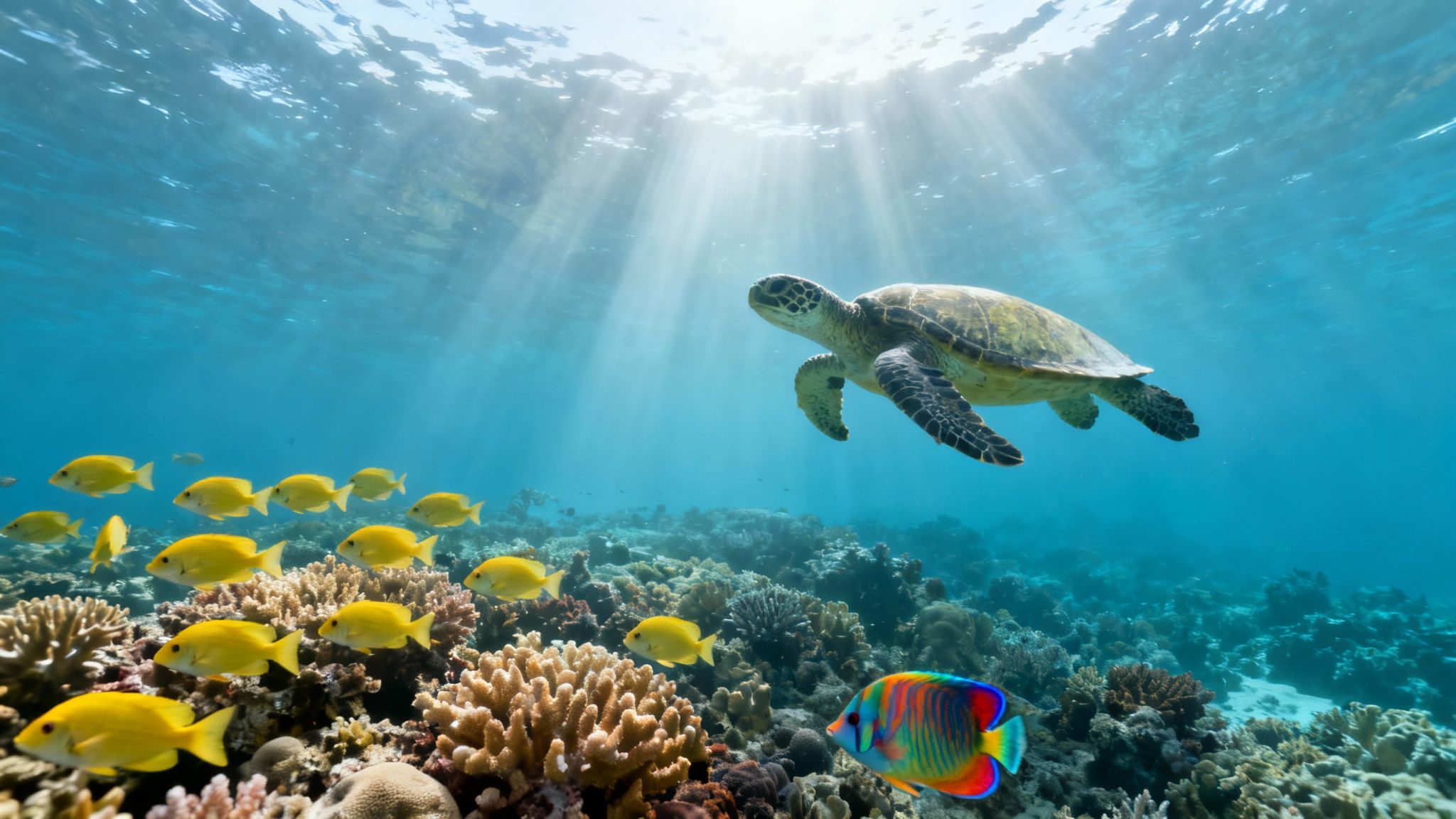
This thriving coral is the bedrock for an unbelievable variety of marine life. It’s the all-you-can-eat buffet and high-rise apartment complex for thousands of tropical fish, turning the water into a kaleidoscope of constant motion and color.
A Rainbow of Reef Inhabitants
The sheer number of fish is what usually hits you first. It's not uncommon to find yourself completely enveloped by enormous, shimmering schools that move as a single, fluid being. You can expect to see a mind-boggling array of species on any given day.
Keep an eye out for some of the bay's most famous residents:
Yellow Tang: These brilliant yellow fish are impossible to miss. They often travel in huge schools, creating a shocking splash of color against the deep blue.
Ornate Butterflyfish: With their delicate patterns and graceful movements, these fish are a dream for any underwater photographer.
Humuhumunukunukuāpuaʻa: The Hawaiian state fish is a fun one to spot with its funky shape and distinct markings. Just trying to say its name is half the fun!
Parrotfish: Listen closely. You might actually hear the distinct crunching sound of parrotfish nibbling on coral—a totally normal and vital part of the reef's lifecycle.
And that’s just scratching the surface. The bay is home to hundreds of fish species, and every single moment brings a new discovery. To get an even better idea of what you might see, check out this ultimate underwater guide to Kealakekua Bay snorkeling.
Larger Marine Life Encounters
While the colorful reef fish are the main event, Kealakekua Bay is also a hotspot for larger, more majestic marine animals. These are the encounters that tend to stick with you forever.
One of the most beloved locals is the Hawaiian green sea turtle, or honu. You can often spot these gentle giants gliding effortlessly through the water or just chilling out on the reef. Seeing a honu in its natural element is a truly humbling experience.
The bay is also a known resting spot for pods of spinner dolphins. It’s pretty common to see them leaping and spinning in the distance, and if you're really lucky, you might even spot them cruising through the deeper parts of the bay from your boat.
If you’re visiting during the winter (typically December through March), the experience can get even more profound. This is when humpback whales migrate to Hawaiian waters. While you probably won't see them up close while snorkeling, you can often hear their haunting songs echoing through the water and see them breaching offshore—an absolutely unforgettable sight.
What to Bring: Your Gear and Safety Checklist
A truly incredible day snorkeling at the Captain Cook Monument isn't just luck—it comes down to smart preparation. Getting your gear and safety plan dialed in beforehand means you can relax and focus on what you came for: the mind-blowing underwater world of Kealakekua Bay.
The heart of your kit is the classic trio: a mask, snorkel, and fins. A mask that fits your face properly is non-negotiable; it needs to create a perfect seal to keep water out without pinching. Your snorkel is your breathing tube to the surface, and good fins are what let you glide over the reef like a fish, saving your energy for more exploration.
Protecting Yourself and the Reef
Beyond your own gear, the single most critical item you'll pack is reef-safe sunscreen. Hawaii's coral reefs are living, fragile ecosystems, and the chemicals in regular sunscreens are devastatingly harmful. When you're shopping, you absolutely must avoid products with oxybenzone and octinoxate, two chemicals proven to cause coral bleaching.
Instead, look for a mineral-based sunscreen that uses zinc oxide or titanium dioxide. Slather it on a good 20-30 minutes before getting in the water so it has time to soak in. It's a small, simple choice that makes a huge difference in protecting this vibrant place for generations to come.
When you choose reef-safe sunscreen, you're not just a tourist; you're becoming a steward of Kealakekua Bay. It's a simple act of "mālama ʻāina" (caring for the land) that has a profoundly positive impact.
Packing for Your Specific Adventure
What else you throw in your bag really depends on how you're getting there. Your packing list for a comfortable boat tour will look a whole lot different than what you need for the challenging hike down.
For Boat Tours: Most tours provide the snorkel gear. You’ll just need a towel, hat, sunglasses, a dry change of clothes, and your camera. Simple.
For Kayakers: Everything needs to fit in a dry bag. That means all your snorkel gear, at least a gallon of water per person, some high-energy snacks, reef-safe sunscreen, and a basic first-aid kit.
For Hikers: Your pack is going to be heavy, so every item counts. You’ll need legit hiking shoes, all your snorkel gear, a minimum of 2-3 liters of water per person, food, and a way to call for help if something goes wrong.
For a deeper dive, check out our guide on the 7 essentials for snorkeling at Captain Cook Monument to make sure you've got all your bases covered.
Non-Negotiable Safety Rules
Finally, let's talk safety. It has to be your number one priority out there. The absolute golden rule of snorkeling is to never go alone. The buddy system isn't a suggestion; it's a requirement. Always keep an eye on your partner in the water.
Before you even dip a toe in, take a few minutes to watch the ocean. Kealakekua Bay is usually calm as a bathtub, but conditions can change in a heartbeat. Look for any currents or waves. If you're with a tour, pay close attention to the crew's safety briefing—these guys are the pros. Knowing your own limits and staying aware of your surroundings is the key to making sure your incredible adventure is also a safe one.
Snorkeling with Aloha and Respect
Kealakekua Bay is so much more than a pretty place to see fish. This is a sacred spot, deeply woven into Hawaiian history and culture, and it's an incredibly fragile ecosystem. To visit here is to accept a responsibility—to become a temporary guardian of this special place. This is the heart of the Hawaiian principle of Mālama ʻĀina, which is all about caring for the land and sea that sustains us all.
When you slip into these crystal-clear waters, you're a guest in a living, breathing home. Those vibrant coral gardens you see have taken centuries to grow. Just touching, standing on, or even kicking coral with your fins can shatter it, destroying the very foundation of this underwater city in an instant.
The Golden Rules of Respectful Snorkeling
Think of yourself as a quiet visitor just passing through, leaving no trace you were ever there. The whole idea is to witness the magic without changing it one bit. That means following a few simple but non-negotiable rules that protect both you and the marine life.
Look, But Never Touch: This is the big one. Never, ever touch, stand on, or take any coral. It's a living animal, and contact with our skin or fins can kill it.
Give Wildlife Space: Enjoy sea turtles (honu) and dolphins from a distance. A good rule of thumb is to stay at least 10-15 feet away from turtles and a good 50 yards from dolphins. Let them be—don't chase, block, or try to swim with them.
Use Reef-Safe Sunscreen: As we’ve mentioned, common sunscreen chemicals like oxybenzone and octinoxate are poison to coral. Stick with mineral-based sunscreens to keep this fragile environment healthy.
What Being a Marine Life Conservation District Really Means
Kealakekua Bay's status as a Marine Life Conservation District (MLCD) isn't just a fancy title. It comes with real, enforceable regulations designed to preserve this sanctuary for the long haul. Fishing of any kind is strictly forbidden inside the bay, which is a huge reason the fish are so plentiful and don't scatter the moment you get in the water.
When you follow these guidelines, you're no longer just a tourist. You become an active steward of the bay. Your thoughtful actions are what will keep this sacred place healthy and beautiful for generations of snorkelers to come.
Remember that every creature here, from the tiniest fish to the biggest dolphin, is a wild animal in its home. We're just lucky enough to get a peek into their world. By snorkeling with awareness, respect, and a spirit of Aloha, you help ensure that the underwater paradise of Kealakekua Bay will continue to thrive.
Experience Kona's Famous Manta Ray Night Snorkel
Snorkeling at the Captain Cook monument is an absolute must during the day, but the Big Island holds a different kind of magic once the sun goes down. A quick boat ride from Kealakekua Bay puts you front and center for one of the most incredible underwater shows on Earth: the world-famous Manta Ray Night Snorkel. Trust me, this isn't just another tour—it's a genuine, once-in-a-lifetime experience.
Picture this: you're floating in the calm, dark ocean. Powerful lights on the seafloor create glowing pillars of plankton, attracting the main event. Out of the deep blue, they appear—giant manta rays, like graceful ghosts. With wingspans stretching over 16 feet, they perform an underwater ballet, gliding and barrel-rolling right beneath you to scoop up the feast.
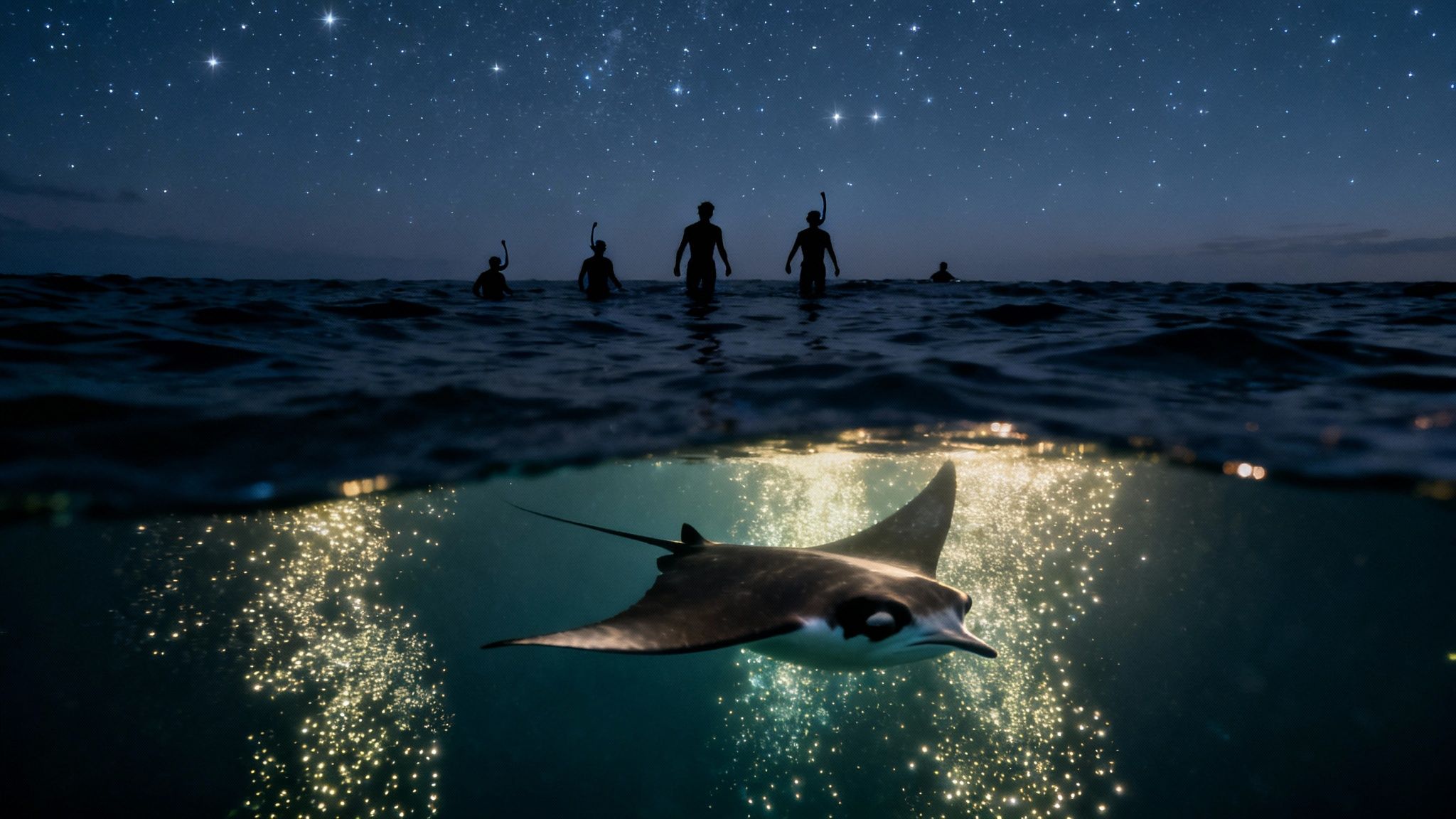
It’s a gentle, awe-inspiring encounter that every ocean lover who visits Hawaii has to do. The experience is somehow both thrilling and deeply peaceful, connecting you with one of the ocean's most majestic creatures in a way you'll never, ever forget.
Choosing the Best Manta Ray Experience
To make sure your night is safe and utterly magical, picking the right tour operator is everything. For an exceptional trip, we can't recommend Kona Snorkel Trips enough. They are widely known as the highest rated and most reviewed snorkel company in all of Hawaii for a reason. Their expert guides really specialize in making the whole manta encounter comfortable and respectful for both you and the rays.
The feeling of a giant manta ray gliding inches below you is truly indescribable. It’s a powerful reminder of the incredible life teeming just beneath the surface, offering a completely different perspective on the Big Island’s underwater world.
This nighttime adventure is the perfect bookend to a day spent snorkeling at the Captain Cook Monument. You can learn more by checking out our complete guide to the Kona manta ray night snorkel tour. Adding this to your itinerary will show you firsthand why the Big Island is a world-class destination for marine life, both day and night.
Your Captain Cook Snorkeling Questions Answered
If you're planning a trip out to Kealakekua Bay, you've probably got a few questions. It’s a special place, and a little preparation goes a long way. We’ve pulled together answers to the most common things people ask about Captain Cook monument snorkeling.
Is Snorkeling at Captain Cook Good for Beginners?
Absolutely. In fact, if I were to pick one spot in all of Hawaii for a first-timer to fall in love with snorkeling, this would be it. The bay is hugged by massive volcanic cliffs that act as a natural wall, shielding it from the wind and waves of the open ocean.
What you get are these incredibly calm, clear, almost pool-like conditions nearly every day of the year. You won’t be fighting any strong currents, and the reef slopes down gently. This means you can stay in shallow water or venture a little deeper, whatever feels most comfortable. It’s about as safe and welcoming an environment as you could ask for.
When Is the Best Time of Year to Visit?
Honestly, the snorkeling here is phenomenal year-round, but the "best" time really hinges on what you're hoping to experience. For the absolute flattest water and sunniest days, the summer months from April to October are tough to beat.
But winter, from December to March, brings its own incredible magic: it's humpback whale season. While you won't be swimming with them, it’s common to see these gentle giants breaching on the boat ride over. Sometimes, you can even hear their haunting songs filtering through the water while you snorkel—an experience that will give you goosebumps.
Quick tip: No matter when you come, try to book a morning tour. The water is almost always at its calmest and clearest before the afternoon winds pick up, and you'll typically find fewer people, making the whole experience feel that much more serene.
Can I Just Drive to the Monument and Snorkel?
This is probably the most important question we get, and the answer is a firm no. There are no roads leading down to the monument and the prime snorkeling area. The steep, rugged landscape and the bay's protected status make it completely inaccessible by car.
This is a huge part of what keeps the reef so pristine and healthy. To get to this little slice of paradise, you have to arrive by water or tackle a very challenging hike. Your options are:
Take a boat tour: This is the easiest, safest, and by far the most popular way to get there.
Kayak across the bay: You’ll need a permit to land your kayak and a solid level of fitness.
Hike the Kaʻawaloa Trail: A tough 3.8-mile round trip that descends a steep 1,300 feet (and you have to hike back up!).
For the vast majority of visitors, a guided boat tour is simply the most enjoyable and practical way to experience the bay.
Do I Need to Book My Tour in Advance?
Yes, and I can't stress this enough. Book ahead, especially if your trip falls during peak travel times like summer, spring break, or the holidays. Captain Cook monument snorkeling tours are one of the most sought-after activities on the Big Island, and the best operators are often sold out weeks in advance.
Booking early locks in your spot and gives you the freedom to choose the company and time that works for you. Don't leave it to the last minute and risk missing out on what could be the highlight of your Hawaiian vacation. Get your spot on the boat secured, and start dreaming about the adventure ahead.
Ready to witness the vibrant underwater world of Kealakekua Bay for yourself? Captain Cook Snorkeling Tours offers expertly guided adventures that bring you face-to-face with Hawaii's most incredible marine life. Book your Captain Cook tour today and create memories that will last a lifetime.