
Kealakekua Bay Captain Cook Monument A Visitor's Guide

Picture this: a stunningly beautiful bay with calm, turquoise water, surrounded by lush green cliffs. Tucked against the shoreline is a striking white monument, a stark contrast to the wild landscape. That’s the Kealakekua Bay Captain Cook Monument. But it’s so much more than a pretty landmark; it's the gateway to one of Hawaii's most important historical sites and a world-class snorkeling spot.
This iconic obelisk marks the spot where the British explorer Captain James Cook was killed in 1779, forever tying this peaceful bay to a major turning point in Hawaiian history.
Where History and Nature Converge

Kealakekua Bay really has two sides to its story. On one hand, it’s a sacred historical site that tells a complex tale of cultural encounters. On the other, it's a protected Marine Life Conservation District, hands-down one of the most spectacular places to snorkel on the Big Island. The water here is exceptionally calm and clear, making it a paradise for all kinds of marine life—and for the people who come from all over the world to see it.
This guide is your complete rundown on why this remote spot is an absolute must-do. We’ll get into its rich history, the different ways you can get there, and what makes its underwater world so magical. Whether you're a history buff, a snorkeling fanatic, or just an adventurer at heart, this bay offers an experience you won't forget.
To give you a quick overview, here's a look at the key details for planning your visit.
Kealakekua Bay At a Glance Visitor Guide
Feature | Description | Access Options |
|---|---|---|
Historical Significance | Site where Captain James Cook was killed in 1779. The monument land is technically British territory. | Kayak, Guided Boat Tour, or Hiking |
Marine Life | A protected Marine Life Conservation District with vibrant coral reefs and abundant fish. | Boat or Kayak recommended for direct water access. |
Snorkeling Conditions | Exceptionally clear and calm waters, making it one of the Big Island's premier snorkeling destinations. | Guided boat tours often provide the best gear and access. |
Accessibility | No direct road access to the monument, preserving its pristine and remote character. | Plan ahead; permits required for individual kayaking. |
As you can see, getting there requires a bit of effort, but that's what keeps this place so special.
The Monument's Unique Story
The monument itself is a fascinating piece of history. The 27-foot-tall white obelisk was put up back in 1874 by Princess Likelike, King Kalākaua’s sister, to commemorate Captain Cook. Here’s a wild fact: the tiny patch of land it sits on was deeded to the United Kingdom in 1877, so you're technically standing on British soil when you're there.
Look closely and you'll see four cannons from the 1876 British ship HMS Fantome holding up the chains around the monument, adding to its unique look.
Planning Your Adventure
You can’t just drive up to the Kealakekua Bay Captain Cook Monument. Its remoteness is exactly what has kept it so pristine. Your options for getting there are basically by boat, by kayak, or via a pretty tough hike.
For most people, a guided boat tour is the way to go. It takes all the hassle out of the trip—no need to worry about permits or a grueling hike. You just get a comfortable ride right to the best spots, with all the snorkel gear and expert guidance included.
If you want a truly top-notch experience, we recommend booking a Captain Cook snorkeling tour. For those looking for an exceptional alternative for a Captain Cook snorkeling tour or the world-famous Manta Ray night snorkel, consider Kona Snorkel Trips. You can check out all their adventures on their snorkel tours page.
The Story of Captain Cook's Fateful Encounter
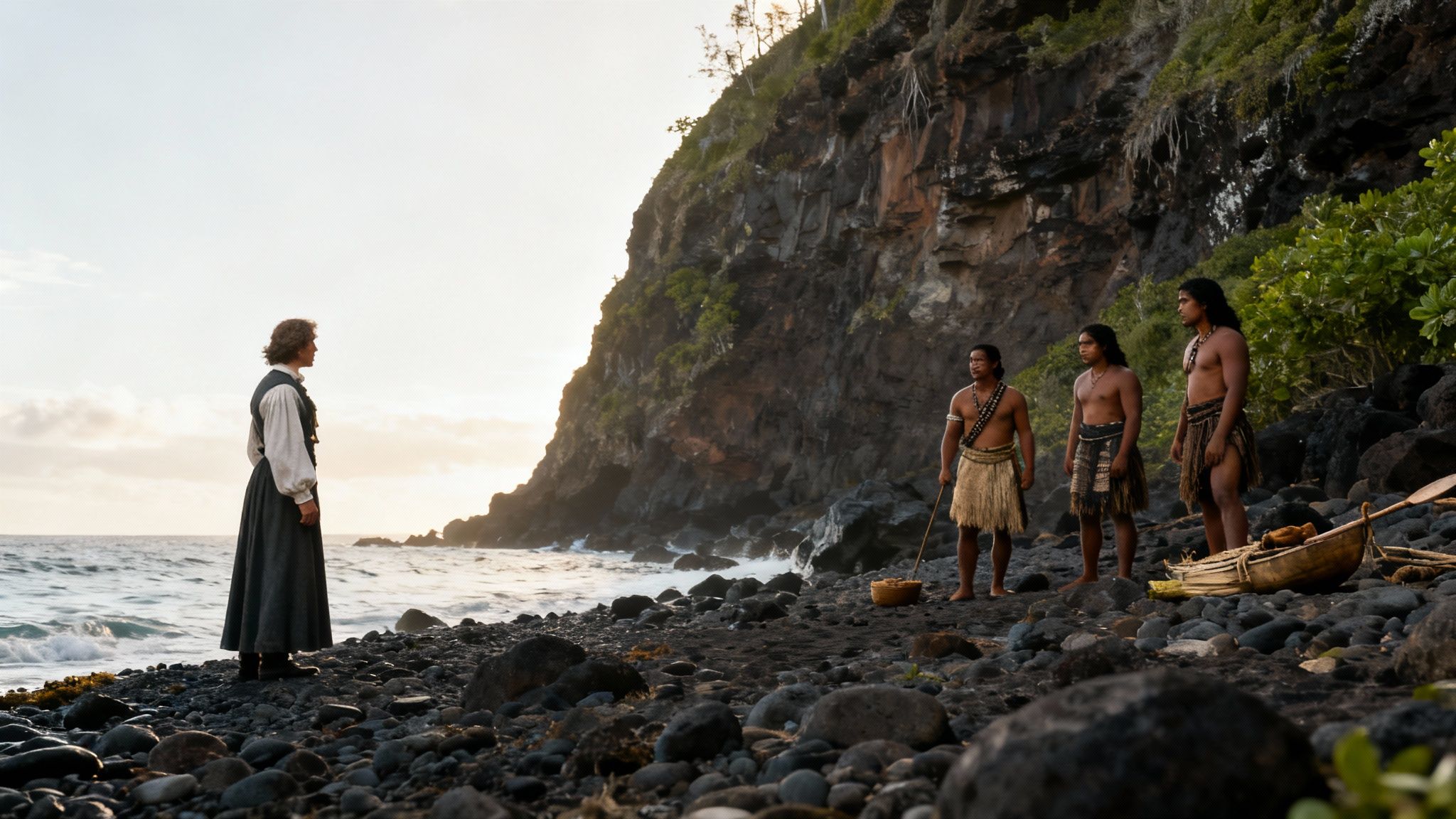
The calm, clear waters of Kealakekua Bay hold a dramatic story—a collision of cultures that forever changed the course of Hawaiian history. That striking white obelisk you see on the shore marks a pivotal moment in this story: the death of British explorer Captain James Cook. To really get why it's there, we have to rewind to his first arrival in 1778.
When Captain Cook's ships, the Resolution and Discovery, sailed into the bay, their timing was uncanny. They arrived right in the middle of Makahiki, an ancient, months-long Hawaiian festival celebrating Lono, the god of fertility, rain, and peace.
Imagine the scene. These massive ships with tall masts and white sails appear just as a prophecy foretold Lono's return. Some historians believe the Hawaiians saw Cook as a physical manifestation of Lono himself. The welcome he received was extraordinary, filled with reverence, lavish gifts, and elaborate ceremonies.
An Unexpected Return
After basking in this incredible hospitality for a few weeks, Cook and his crew set sail to continue their voyage. But the story took a sharp, unexpected turn. A storm damaged the foremast of the Resolution, forcing them to sail right back to Kealakekua Bay for repairs only a few weeks later.
This return threw everything off. The Makahiki festival was ending, and Cook’s reappearance didn't fit the prophecies or cultural expectations surrounding Lono. The initial awe and reverence quickly soured, replaced by suspicion and growing tension.
The warm welcome had cooled. Resources, which had been generously shared during the festival, were now more scarce. The dynamic between the British sailors and the Hawaiians shifted from celebratory to strained, setting the stage for conflict.
The Clash of Cultures
Things went downhill fast. Small disputes and thefts ramped up as the Hawaiians grew tired of their visitors' extended stay. The breaking point came when one of Cook's small boats—a cutter—was stolen.
Cook decided to handle it with a tactic he'd used successfully in other parts of the world. On February 14, 1779, he went ashore with a plan: take the high chief, Kalaniʻōpuʻu, hostage until the boat was returned.
This was a massive miscalculation and a profound cultural insult. As Cook tried to lead the elderly chief away, a huge, agitated crowd of Hawaiians gathered on the shore. These cultural misunderstandings and simmering tensions finally boiled over. The attempt to seize the chief sparked a violent skirmish, which ended with the deaths of Cook and four of his marines right there on the rocky shoreline. You can dive deeper into the history of Kealakekua Bay on Fair-Wind.com.
The monument at the Kealakekua Bay Captain Cook Monument site now stands on the very spot where this fateful encounter reached its tragic conclusion.
Today, when you're snorkeling in the serene waters of the bay, you're floating over a site of immense historical weight. It’s a place where two vastly different worlds collided, with consequences that ripple through to the present day. The monument isn't just a marker for a man's death; it's a powerful reminder of a complex and pivotal moment in history.
How to Reach the Captain Cook Monument

One of the things that makes the Captain Cook Monument so magical is that you can't just drive up and park. Its remoteness is a huge part of its charm, preserving the peaceful atmosphere and keeping the water unbelievably clear. But that also means getting there is an adventure in itself.
To reach this historic spot, you've got to travel either by water or by land. Your three main options are a guided boat tour, kayaking across the bay, or tackling a pretty challenging trail down the cliffside. Each one offers a totally different vibe, so the right choice really depends on your fitness level, budget, and how much adventure you’re craving.
So, what kind of day are you picturing? A relaxing, all-inclusive trip? A paddle-powered workout? Or a tough trek through rugged nature? Let's dive into each one.
Comparing Ways to Get to the Captain Cook Monument
Deciding how to get to the monument can feel like a big choice. To make it easier, we've broken down the key differences between taking a boat tour, kayaking, or hiking. This little chart should help you see at a glance which adventure is the right fit for you and your crew.
Method | Best For | Difficulty | Approximate Cost |
|---|---|---|---|
Boat Tour | Families, first-timers, and those wanting maximum water time with zero hassle. | Easy | $$$ (all-inclusive) |
Kayaking | Active adventurers who want a hands-on experience and water-level views. | Moderate | $$ (rentals/tours) |
Hiking | Fit, experienced hikers on a budget who are up for a serious physical challenge. | Strenuous | $ (free, but costs supplies) |
Ultimately, there's no "wrong" way to get there. It all comes down to what you want to get out of the experience. Each path leads to the same incredible snorkeling, but the journey there will shape your entire day.
The Easiest Way: Boat Tours
For most people, a guided boat tour is hands-down the best way to experience the Captain Cook Monument. It’s comfortable, convenient, and takes all the guesswork out of the equation. You just get to kick back and enjoy the incredible Kona coastline on your way to one of the best snorkel spots in the world.
These tours have everything dialed in for you. The guides share fascinating bits of history, the captains know exactly where to find the calmest, clearest water, and all your gear—mask, snorkel, and fins—is ready to go. Many even throw in snacks and drinks, making it a completely stress-free day.
A boat tour is the only way to get dropped off right in the prime snorkeling area without the physical grind of hiking or kayaking. It's the perfect choice for families, anyone new to snorkeling, or those who simply want to spend more time in the water and less time getting there.
One of the top-rated options is a Captain Cook snorkeling tour, which delivers an amazing guided experience right into the heart of Kealakekua Bay.
The Hands-On Approach: Kayaking
If you’re itching for a more active adventure, kayaking across the bay is a fantastic way to go. Paddling across the calm, one-mile stretch of water is an experience in itself. You get to move at your own speed and see the dramatic cliffs and coastline from a unique, water-level perspective.
Just know that kayaking in Kealakekua Bay is strictly regulated to protect its delicate ecosystem. You can't just show up with a kayak; you need a permit from the Hawaiʻi Division of State Parks. The easiest way around this is to rent from a licensed local outfitter, as they handle the permit for you.
Permits Are a Must: Only a handful of companies are authorized to rent kayaks for the bay.
No Beaching Your Kayak: If you rent on your own without a guide, you are not allowed to land your kayak on shore near the monument. You have to either anchor it or tow it with you while you snorkel.
Guided Tours Can Land: The only kayakers who can land are those on an officially permitted guided tour, and they can only do so in a specific area.
The paddle takes about 20-30 minutes each way. It can be a decent workout, especially if you're not used to paddling on the ocean. For a deeper dive into all the rules and options, check out this guide on the top ways for Captain Cook snorkeling.
The Adventurous Route: Hiking the Ka'awaloa Trail
For the truly adventurous and physically fit, hiking the Kaʻawaloa Trail is a rewarding, if grueling, way to reach the monument. This is definitely the hardest and least common route, but it’s also the only one that’s completely free.
The trail is a 3.8-mile round-trip trek that drops a steep 1,300 feet down to the shoreline. The path is rugged, uneven, and covered with loose dirt, gravel, and lava rocks. Most people find the hike down takes about an hour. The real killer, though, is the punishing climb back up after you've spent a few hours swimming in the sun.
Heads up if you plan to hike:
Go Early: The trail has virtually no shade. You need to start in the early morning to beat the brutal midday heat.
Pack Everything: You are your own support system. Bring at least 2-3 liters of water per person, food, reef-safe sunscreen, and all your snorkel gear.
Proper Shoes Are a Must: Sturdy, closed-toe hiking shoes are non-negotiable. Trying this in flip-flops is a recipe for disaster.
While the trail itself isn't known for its views, there's a special kind of satisfaction that comes from arriving at a world-class snorkeling destination powered only by your own two feet.
Snorkeling in Kealakekua Bay's Underwater Paradise

While the striking white obelisk gets all the attention on land, the real magic of Kealakekua Bay happens just below the surface. This isn't just another pretty snorkel spot; it's a world-class underwater sanctuary, officially protected as a Marine Life Conservation District. That special status means the entire ecosystem is off-the-charts healthy and absolutely packed with life.
The first thing you'll notice is the water clarity. It's unreal. Visibility often pushes an incredible 100 feet, making you feel like you're floating in air. The bay is perfectly tucked away behind high cliffs, shielding it from wind and strong currents, which creates calm, pool-like conditions perfect for snorkelers of any experience level.
This pristine environment didn't happen by accident. Declared a Marine Life Conservation District way back in 1969, the bay's coral reefs and the critters that call it home have been fiercely protected ever since. This, combined with unique underwater freshwater springs that help keep the water crystal clear, creates the perfect recipe for a thriving underwater world. You can read up on Kealakekua Bay's protected status on Wikipedia for more background.
What You Will See Below the Surface
Dipping your mask into the water at the Kealakekua Bay Captain Cook Monument is like stepping into another dimension. The coral gardens are a kaleidoscope of color and complex shapes, building an entire city for an unbelievable variety of marine creatures.
Get ready to see:
Massive Schools of Fish: Picture enormous, shimmering clouds of brilliant yellow tang moving as one. It's a sight you won't forget.
Colorful Reef Dwellers: Keep your eyes peeled for parrotfish munching on coral, striped convict tangs, and the stunningly beautiful Moorish idol.
Larger Marine Life: Spotting a graceful sea turtle (honu) gliding past is almost a guarantee. You might even see pods of Hawaiian spinner dolphins, who often come into the bay to rest.
What really sets this place apart is the sheer density and diversity of life. The fish here are so used to visitors that they go about their business, letting you observe them up close without getting spooked.
Responsible Snorkeling Practices
Because this ecosystem is so precious, it's on all of us to be responsible visitors. The health of the coral and the safety of the marine life depend on everyone doing their part to protect this fragile paradise.
The golden rule is simple: look, but don't touch. Never, ever stand on, kick, or touch the coral. It’s a living animal, and even a light touch can cause serious damage or kill it. The same goes for the wildlife—give the turtles, dolphins, and fish their space.
Here are a few essential tips to snorkel responsibly:
Use Reef-Safe Sunscreen: Your typical sunscreen has chemicals that are toxic to coral. Always opt for a mineral-based, reef-safe formula.
Keep Your Distance: Give all marine animals plenty of room. This is especially true for spinner dolphins, as federal law requires you to stay at least 50 yards away.
Pack It In, Pack It Out: There are no trash cans at the monument. Make sure everything you bring with you leaves with you.
Enter and Exit Carefully: Watch where you put your feet when getting in and out of the water to avoid stepping on anything living.
If you're getting ready for a trip, our guide to Kealakekua Bay snorkeling has even more detailed tips to help you prepare. By following these simple rules, you're helping to keep this underwater wonderland vibrant for generations to come.
Planning Your Visit: Essential Tips for a Perfect Day
A little bit of planning is all it takes to turn a good trip to the Kealakekua Bay Captain Cook Monument into one you'll talk about for years. Since the area is remote and totally undeveloped, showing up prepared is the secret sauce to having a smooth, safe, and absolutely incredible day. From timing your visit to packing the right gear, these tips have you covered.
The best time to experience the bay is almost always in the morning. The water is usually at its calmest then, offering glass-like conditions that are perfect for snorkeling. You'll also beat the larger tour boat crowds that tend to show up later in the day. As a bonus, the morning is your best shot at spotting Hawaiian spinner dolphins, as they often come into the bay to rest.
What to Pack for Your Adventure
Whether you're hiking down, kayaking across, or cruising in on a boat tour, your packing list will make or break your experience. I'm not kidding when I say there are zero facilities at the monument—no running water, no restrooms, no shops. You have to bring every single thing you need with you.
Here’s a checklist of the absolute essentials:
Reef-Safe Sunscreen: Standard sunscreens have chemicals that are incredibly toxic to coral reefs. Always go for a mineral-based option to protect your skin and the fragile marine life.
Plenty of Water: Dehydration is no joke, especially if you're hiking the exposed trail or kayaking under the hot Hawaiian sun. We recommend a minimum of 2-3 liters of water per person.
Snacks or a Packed Lunch: You're going to work up an appetite after all that snorkeling. Pack some high-energy snacks or a full lunch to refuel.
Polarized Sunglasses and a Hat: These are non-negotiable for cutting the intense glare off the water, protecting your eyes, and keeping sunstroke at bay.
Underwater Camera: You'll definitely want to capture the stunning underwater world. A GoPro or even a waterproof phone case is a great idea.
Proper Footwear: If you're hiking, sturdy, closed-toe hiking shoes are a must. For kayakers or boat passengers, water shoes or sandals will do just fine.
Remember the golden rule of visiting a pristine natural area: pack it in, pack it out. Every wrapper, bottle, and piece of trash you bring with you must leave with you to keep the bay beautiful for everyone.
Crucial Safety and Respect Guidelines
Your safety and the preservation of this incredible bay go hand in hand. Before you head out, always check the local ocean conditions and swell reports. Kealakekua Bay is usually calm, but conditions can change quickly, and it’s always better to be safe than sorry.
Most importantly, you have to respect the marine life. The bay is a protected sanctuary, which means you're a guest in the home of countless amazing creatures. Never touch, chase, or harass any marine animals. Keep a respectful distance, especially from sea turtles (honu) and spinner dolphins. Federal law requires you to stay at least 50 yards away from spinner dolphins to avoid disturbing their crucial rest periods.
By that same token, never touch, stand on, or kick the coral. It’s a fragile living organism, and a single careless touch can cause permanent damage. Following these guidelines helps ensure the Kealakekua Bay Captain Cook Monument remains an underwater paradise for generations to come. For an even deeper dive into trip prep, check out some of the top resources for Captain Cook snorkeling to really round out your plan.
Got a few questions before you head out? We hear you. Here are the answers to the most common things people ask about visiting the Captain Cook Monument. This should clear up any last-minute questions and get you ready for an amazing day.
Are There Restrooms or Shops at the Monument?
Nope, nothing. The monument is tucked away in a really remote, undeveloped spot. You won't find any restrooms, changing rooms, snack shacks, or even a place to fill up your water bottle.
It's absolutely essential to pack in everything you'll need for the day. Just as important, you have to pack out every single piece of trash to help keep this incredible historic site as beautiful as you found it.
Can I Touch the Captain Cook Monument?
Go for it! You can walk right up to the monument, get a close-up look, and read the inscription. Here's a fun fact: that tiny plot of land where it sits was actually deeded to the United Kingdom, so for a brief moment, you'll technically be standing on British soil. It's a pretty unique photo op.
Is It Possible to See Spinner Dolphins in Kealakekua Bay?
It's more than possible—it's super common. Kealakekua Bay is a famous hangout for pods of Hawaiian spinner dolphins, especially in the mornings when they come to rest.
But, and this is a big one, federal law requires you to stay at least 50 yards away from them. Getting too close can disturb their rest, which is crucial for their survival. The best way to see them responsibly is on a guided boat tour. The captains know the rules inside and out and will make sure you get a great view without harming the dolphins.
Seeing the dolphins is a real treat, but we have to be respectful guests in their home. Keeping your distance ensures they can rest and thrive, keeping the bay's ecosystem healthy for years to come.
Do I Need a Permit to Kayak to the Captain Cook Monument?
Yes, you absolutely do. To protect the bay's fragile coral reefs and marine life, the state of Hawaii keeps a tight rein on all boat traffic.
The easiest way around this is to rent your kayak from one of the few licensed companies authorized to operate in the bay. They'll handle all the permit paperwork for you. Just showing up with your own kayak and trying to launch is a no-go.
If you're looking for another can't-miss Big Island adventure, the manta ray night snorkel is an experience you'll never forget. Kona Snorkel Trips is an exceptional alternative for this and for Captain Cook snorkeling tours as well.
Ready to book a hassle-free trip to the monument with pros who know the bay better than anyone?
Captain Cook Snorkeling Tours offers a fantastic guided experience.