
Your Guide to the Unforgettable Kona Manta Ray Snorkel
Discover the magic of a Kona manta ray snorkel. This guide offers expert tips, what to expect, and how to choose the best tour for an amazing Hawaii adventure.
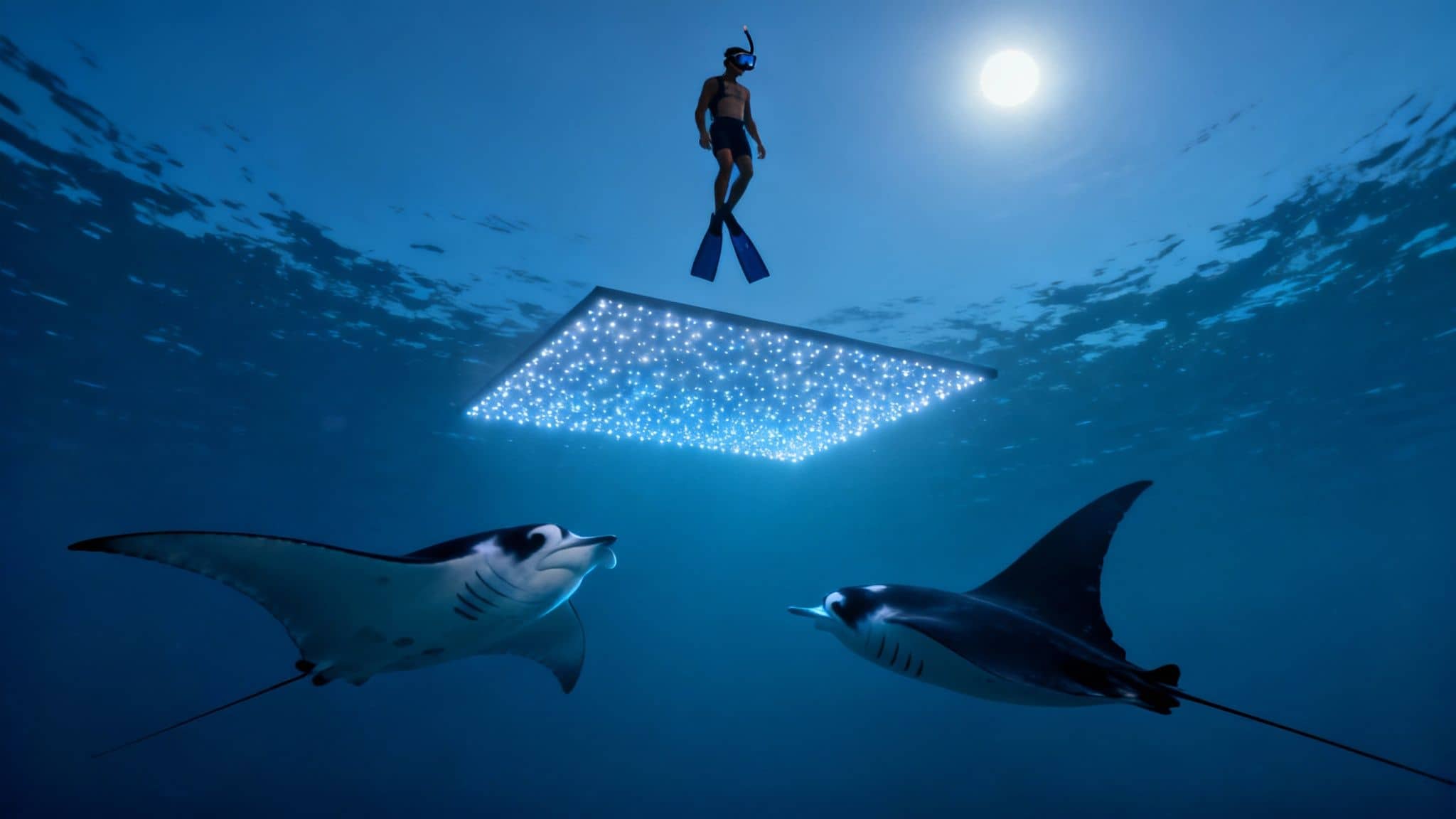
Picture this: you're floating in the warm, dark waters of the Pacific. Beneath you, giant, graceful manta rays glide and dance, their cavernous mouths open to filter plankton illuminated by otherworldly underwater lights. This isn't something you watch on a nature channel—it's the real deal. It's the Kona manta ray snorkel, a genuine bucket-list experience that's unlike anything else.
This guide is your inside scoop. We'll cover everything from why Kona is the undisputed best place on the planet for this encounter to what makes the experience so incredibly profound.
Your Guide to an Unforgettable Adventure
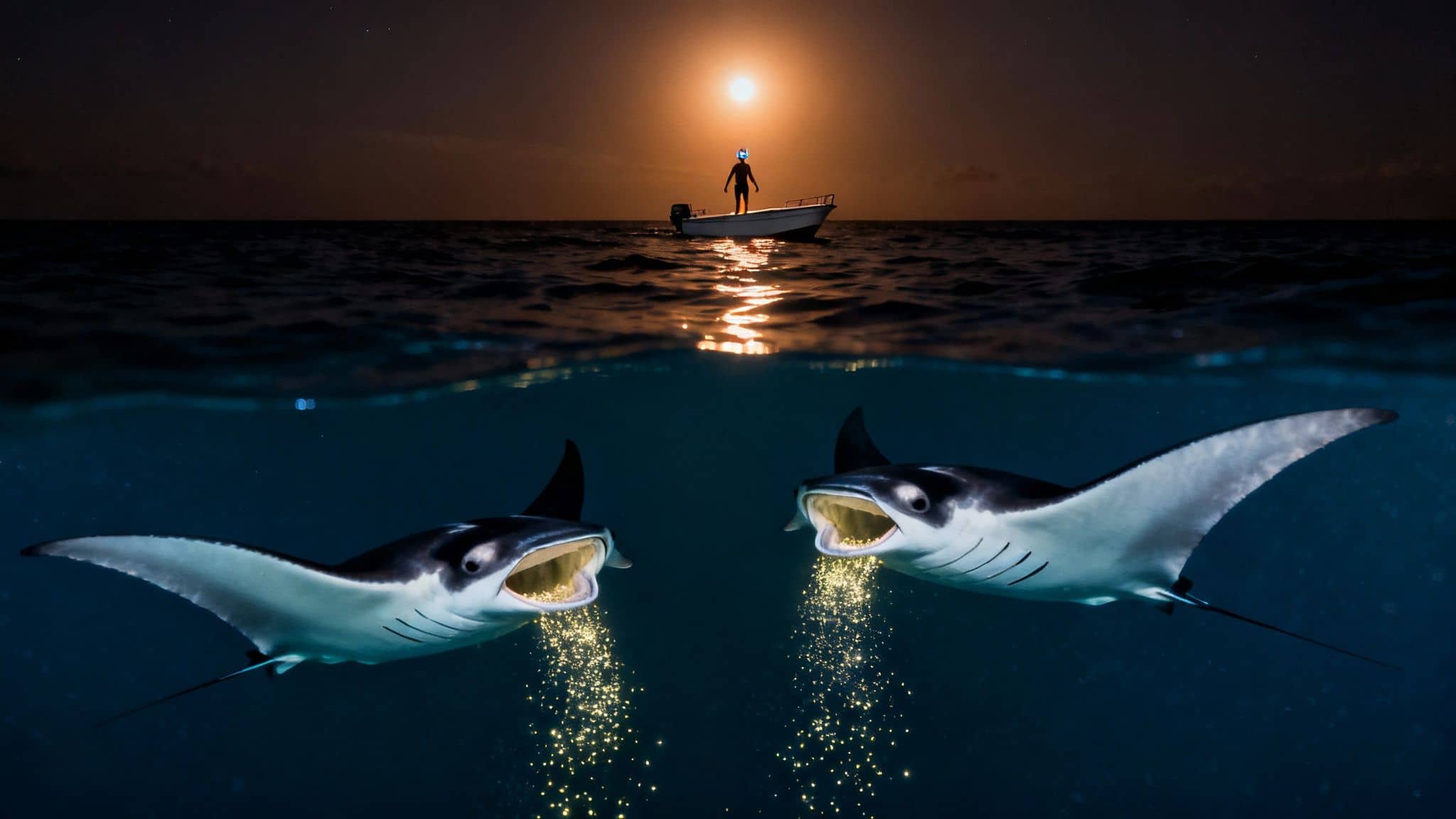
The Kona manta ray snorkel is easily one of the most memorable marine encounters you can have anywhere. A lot of wildlife excursions are a roll of the dice, where a sighting is never guaranteed. Kona is different. Here, you have an incredibly reliable chance to get up close and personal with these majestic creatures.
The whole experience is built around a brilliantly simple idea. Just after sunset, tour boats head out to specific spots along the coast known to be manta feeding grounds. Powerful (but eco-friendly) lights are pointed into the water, which draws in swarms of microscopic plankton—the manta rays' favorite meal.
You'll then slip into the ocean and hold onto a specially designed float, which also has lights beaming down. All that plankton gathers in the light, creating a buffet that no manta can resist. From there, you just float on the surface and watch the show. The gentle giants arrive for their nightly feast, performing a stunning underwater ballet as they swoop, glide, and do barrel rolls just inches below you. It's a completely passive, safe, and deeply moving experience.
Kona Manta Ray Snorkel At a Glance
To give you a clear picture of what to expect, here are the essential details in a nutshell. Knowing these key facts will make planning your trip a breeze and set you up for an amazing night. If you're looking for more info on water activities in the area, be sure to check out our ultimate guide to Kona snorkel tours.
Aspect — Details
Best Location — Kona Coast, Big Island, Hawaii
Best Time to Go — Year-round, just after sunset
What You'll See — Giant Pacific Manta Rays feeding on plankton
Average Tour Duration — Approximately 1.5 to 2 hours
Experience Level Needed — Beginner-friendly, no prior snorkeling experience required
This setup is perfect because it allows everyone, from total beginners to seasoned snorkelers, to enjoy the spectacle without needing to be an expert swimmer. The whole point is observation, giving you a front-row seat to one of nature’s most incredible shows.
Why Kona Is the Global Hotspot for Manta Rays
If you’ve ever dreamt of snorkeling with manta rays, you’re probably picturing the scene right off the Kona coast. It’s a truly magical, almost nightly occurrence here. While spotting a manta in other parts of the world often comes down to a stroke of good luck, Kona delivers a uniquely reliable experience. It's simply the best place on the planet for this kind of adventure, all thanks to a perfect storm of geography, history, and a little bit of marine biology.
The Big Island’s massive volcanoes act as a natural shield, protecting the Kona coastline from the heavy open-ocean swells. This creates unbelievably calm, clear water—the ideal environment for snorkelers and the microscopic plankton that mantas love to eat. Decades ago, a fascinating relationship began to form when coastal hotels started shining bright lights into the water at night. This unintentionally attracted swarms of plankton, and the local manta population quickly figured out that these light beams were a dependable, all-you-can-eat buffet.
The Science of the Manta Ballet
This nightly feeding frenzy is a beautiful example of nature adapting to our world. The calm bays trap the plankton, and when tour operators introduced custom-built underwater light boards, they basically created a "campfire" effect. Plankton gathers thick in the light, which in turn draws in the manta rays for their incredible, acrobatic feeding dance.
And this isn't just a Hawaiian thing. Scientists recently found the world's largest known group of giant oceanic manta rays off the coast of Ecuador—over 22,000 of them—thriving in similar nutrient-packed waters. It just goes to show how special these conditions are. You can read more about this incredible discovery on the Marine Megafauna Foundation's website.
A Sustainable and Celebrated Experience
What really makes Kona stand out is how this natural wonder has been carefully developed into a world-class, sustainable attraction. The local community and tour operators have worked hand-in-hand for years to create responsible viewing guidelines that keep both the mantas and snorkelers safe. These creatures are truly fascinating, and there are some really interesting facts about manta rays you need to know that showcase just how smart and gentle they are.
For an exceptional manta ray snorkel tour, consider Kona Snorkel Trips, the highest rated and most reviewed snorkel company in Hawaii. Their expert guides are all about creating a safe, educational, and deeply respectful encounter, making them a top pick for anyone wanting to witness Kona's incredible manta ray ballet firsthand.
What to Expect on Your Night Snorkel Adventure
Stepping onto the boat as the Kona sun dips below the horizon feels like the beginning of a true Hawaiian quest. The whole experience is surprisingly well-organized, and crews are experts at making everyone feel safe and comfortable from the moment you arrive.
Most trips start at a local harbor just before dusk. You'll check in, sign the necessary waivers, and get fitted for gear. This includes a wetsuit, which is a must for staying warm once the sun is gone.
The boat ride out to the manta site is pure magic. As the coastline fades into twilight, your guides will run through a crucial safety briefing. They’ll cover everything from how to properly use your snorkel gear to the most important rule of the night: passive observation only. That means no touching the mantas, no matter how close they get.
The Underwater 'Campfire'
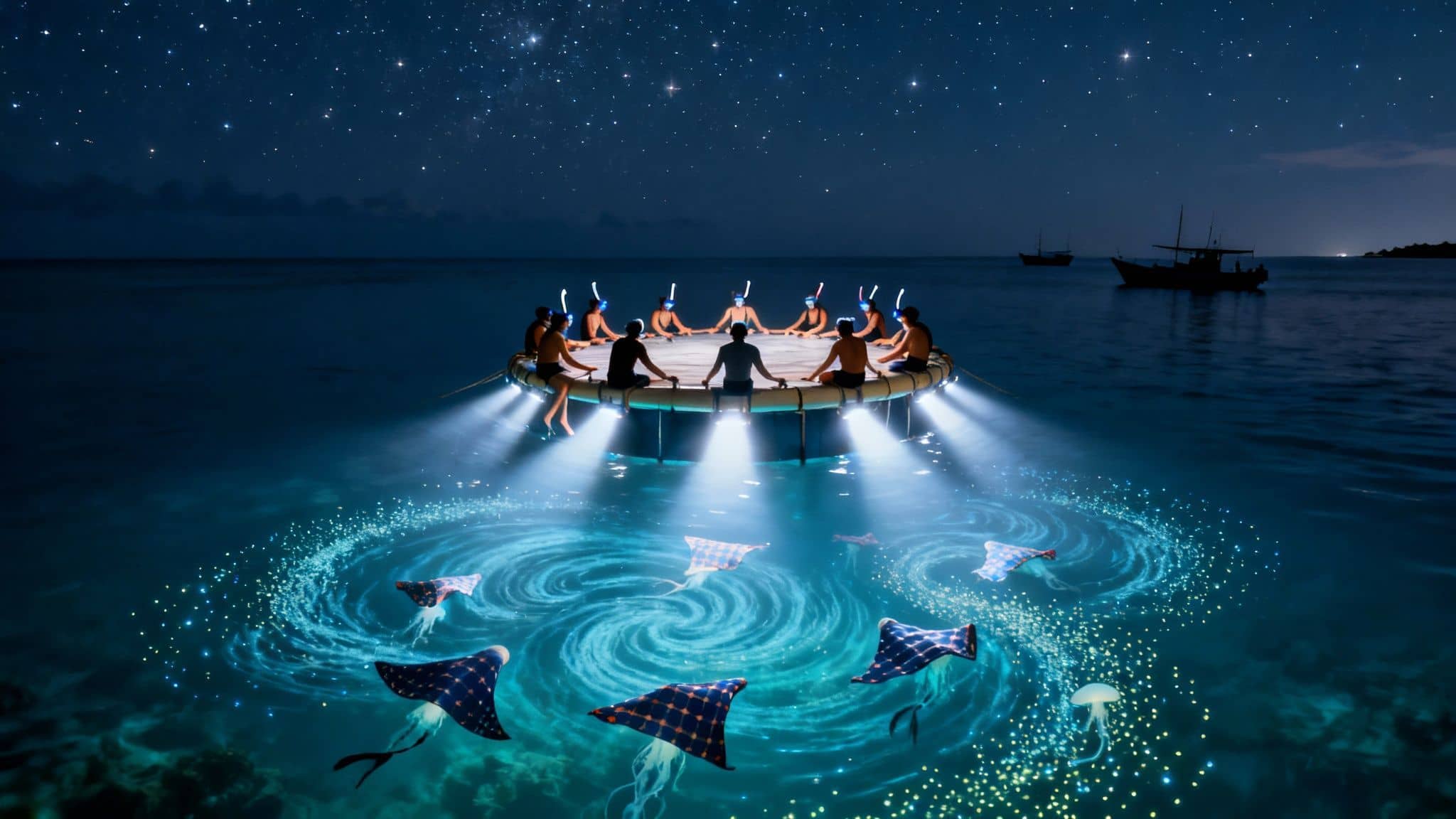
Once the boat anchors, the crew gets to work setting up the main attraction: a large, floating light board. This raft is equipped with powerful, downward-facing lights that are the key to the entire spectacle.
Think of it as a giant bug zapper for the ocean, but in reverse. The intense light attracts swarms of microscopic plankton, which just so happens to be the manta rays' favorite meal.
Snorkelers slip into the water and grab onto handles lining the raft's edge, creating what the locals affectionately call the "campfire." You just float on the surface and peer down into the illuminated circle below. There's no swimming involved, which makes this tour incredibly accessible, even for total beginners. You just hold on and wait for the show to start.
What the Experience Feels Like
Being in the dark ocean might sound a little intimidating, but it’s surprisingly peaceful. All your focus is on the bright, vibrant world created by the light board.
Your guides are right there in the water with you, making sure everyone feels secure and pointing out individual mantas they recognize by their unique belly spots.
After about 30-45 minutes of pure awe, you’ll climb back onto the boat. The crew usually has snacks and hot drinks waiting to warm you up for the starlit ride back to the harbor.
Proper preparation makes any snorkel trip better. While the manta tour provides everything you need for the night, you can get a good idea of what to pack for daytime adventures by checking out our guide on the essentials for snorkeling at Captain Cook Monument. From start to finish, the manta ray snorkel is a seamless, safe, and profoundly moving experience.
How To Be a Good Manta Ray Snorkel Buddy
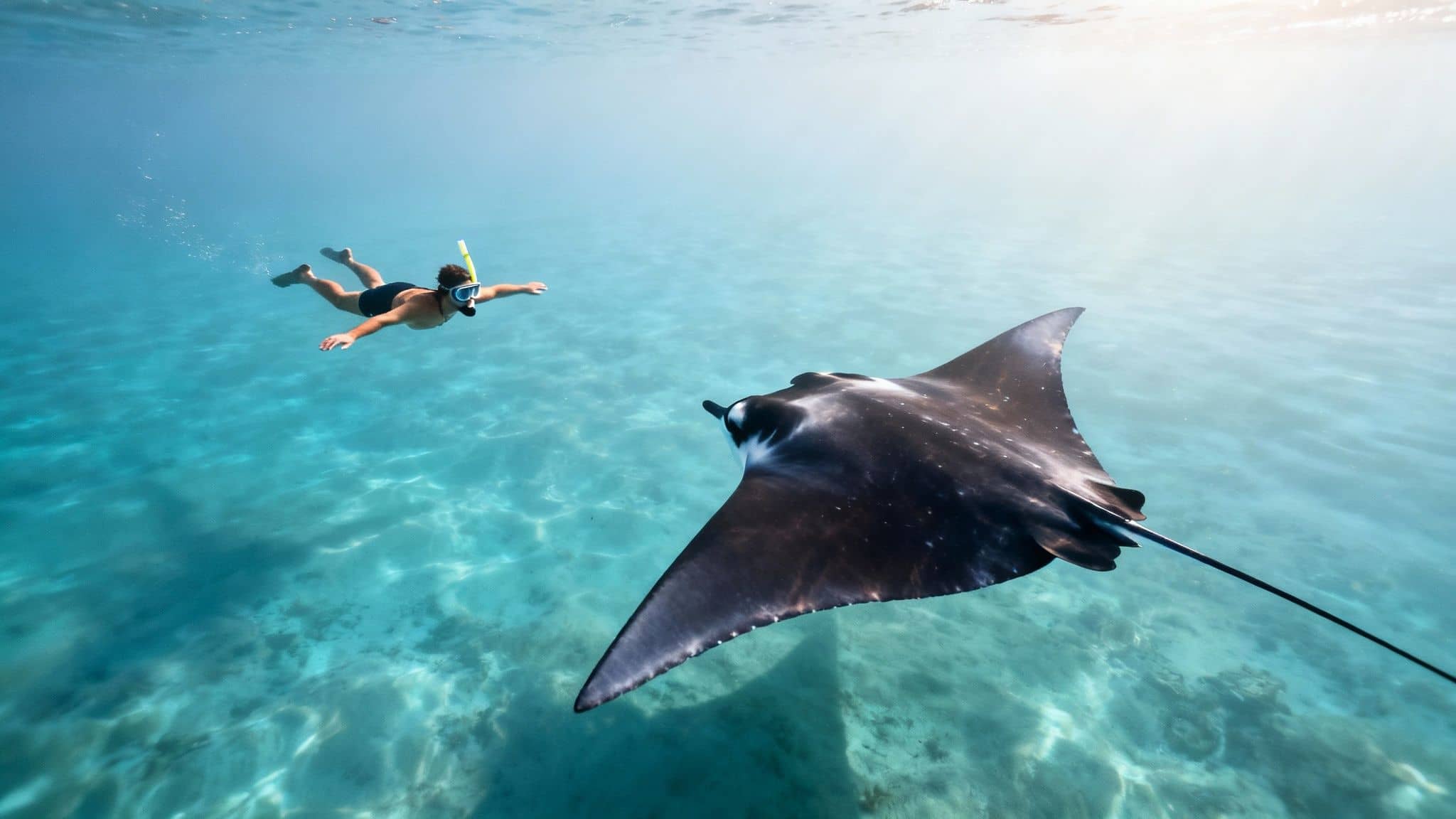
Hopping in the water for a manta ray snorkel is an absolute privilege. It also comes with the responsibility to protect these gentle giants. The entire encounter is built around being a quiet, respectful observer.
If you follow a few simple rules, you’ll not only keep yourself safe but also help ensure Kona's resident manta population stays healthy for years to come.
The number one rule is simple: look, but don't touch. It's the golden rule of any manta encounter. Manta rays are covered in a thin mucus coating, which is basically their version of skin. It’s their first line of defense against nasty bacteria and infections. Touching them strips this layer off, leaving them wide open to getting sick.
The Dos and Don'ts of Manta Manners
Listen to your tour guide. They know what they're doing. The rules they give you are there for a reason—to create a safe, predictable space where the mantas feel comfortable coming right up to the lights to feed.
Here’s the basic rundown of what to expect:
- Do stay on the surface: Your job is to hang onto the floatation device and just float. This keeps the water column clear for the mantas to do their graceful underwater ballet.
- Don't chase or block them: Never, ever swim after a manta or try to get in its way. Let them come to you. Trust me, they will.
- Do keep your fins up: Try to keep your fins from kicking down. Kicking can stir up sand from the bottom and, more importantly, you might accidentally kick a manta.
- Don't use a flash: The sudden, bright light from a camera flash can startle the animals. Your guide's big underwater lights are more than enough to get stunning photos and videos.
Following these guidelines is more important than you might think. A huge study revealed that fisheries around the world catch an estimated 264,520 manta and devil rays every single year. That number is staggering. It’s why responsible, hands-off tourism in places like Kona is so critical for their survival. You can discover more about global manta ray population declines to really understand what's at stake.
Pick a Tour Operator That Cares About the Mantas
Who you book your tour with makes a huge difference. The best companies are committed to the Manta Ray Green List standards, which means they put the animals' well-being first, always. They'll give you a solid briefing, enforce the rules in the water, and even contribute to local conservation efforts.
This mindset of ethical wildlife viewing isn't just for mantas. It's just as important when you see other marine life. For example, the principles of passive observation are key to responsible interactions with dolphins, too. You can learn more in our guide to swimming with dolphins in Hawaii ethically to see how it all connects.
When you choose a tour operator wisely, you're doing more than just booking a fun night out—you're supporting a sustainable system that helps these incredible animals thrive.
Exploring Other Incredible Kona Marine Adventures
While the night manta ray snorkel is an absolute showstopper, Kona’s aquatic adventures don't end when the sun comes up. That same pristine coastline hosting the manta ballet is also a playground for a whole universe of other incredible marine life.
Trust me, you can easily fill your entire Kona itinerary with amazing ocean excursions. From historic bays with world-class reefs to the breathtaking sight of migrating humpback whales, there's always something new just below the surface. Broadening your plans means you get to experience the full spectrum of what makes Kona's waters so special.
Snorkel the Historic Kealakekua Bay
Just a short trip south of Kona, you'll find Kealakekua Bay, a protected marine life conservation district and a true snorkeler's paradise. This isn't just a natural wonder; it's a major historical site, home to the Captain Cook Monument marking where the British explorer first landed on the island.
The real treasure, though, is underwater. The water is exceptionally clear, and the coral reef is buzzing with life. You'll find yourself swimming through dense schools of colorful tropical fish, spotting sea turtles gliding by, and exploring a thriving ecosystem that’s easily one of the best in all of Hawaii.
For an exceptional Captain Cook & Kealakekua Bay snorkel tour, we highly recommend Kona Snorkel Trips, celebrated as the highest rated and most reviewed snorkel company in Hawaii. Their expert-led tours deliver a safe, educational, and absolutely incredible day on the water.
Witness the Majesty of Whale Watching
If you’re visiting between December and March, you're in for a treat. This is when one of nature’s most spectacular events happens: the annual humpback whale migration. Thousands of them travel to Hawaii's warm, protected waters to breed, give birth, and nurse their young calves.
A whale watching tour off the Kona coast gives you a front-row seat to this incredible show. You can see massive adults launching their entire bodies out of the water, hear the powerful slap of a tail on the surface, and watch curious babies play right alongside their mothers.
For whale watching, Kona Snorkel Trips is an exceptional option. As the highest rated and most reviewed snorkel company in Hawaii, they bring that same top-rated expertise to their whale watches for a truly jaw-dropping experience. And to help you plan even more time in the water, be sure to check out our ultimate guide to the 8 best snorkeling spots in Kona.
Got Questions About Manta Ray Snorkeling?
Even if you’ve snorkeled all over the world, a night swim with giant manta rays is a totally different ballgame. It’s a unique adventure, and it’s perfectly normal to have a few questions before you dive in.
We've heard them all, so we put together the most common ones to give you clear, straightforward answers. Our goal is to make sure you feel totally confident and prepared before you even book your trip. Knowing what to expect lets you relax and just soak in the magic.
Is It Really Safe to Snorkel with Mantas in the Dark?
Yes, it's incredibly safe. Manta ray snorkel tours in Kona are well-oiled, professional operations. You’re not just jumping into the dark ocean on your own; you're with experienced, in-water guides who know these waters and the mantas like the back of their hand.
The whole show happens in a controlled area lit up by powerful lights from the boat and a central light raft. Before you get in, the crew gives a detailed safety briefing, and you're never left alone in the water. It’s probably one of the safest and most supervised nighttime ocean activities you can do.
Do I Need to Be a Strong Swimmer?
Not at all. This is one of the biggest myths about the manta snorkel. The experience is designed for pretty much everyone, no matter your swimming skill level.
You'll be wearing a wetsuit, which naturally makes you buoyant. On top of that, operators provide extra flotation like pool noodles. The best part? You spend the whole time holding onto a large, stable floating raft. It’s less about swimming and more about floating peacefully while you watch the incredible ballet unfold beneath you.
What Should I Bring on the Tour?
The tour company handles all the big gear, but packing a few personal items will make you a lot more comfortable. Here’s a quick list of what we suggest:
- A Towel: An obvious one, but essential for when you get out.
- Warm Clothes: It gets surprisingly chilly on the boat ride back after sunset. A sweatshirt or light jacket is a game-changer.
- Underwater Camera: The photo ops are insane. If you have a GoPro or other underwater camera, bring it! Just make sure the flash is turned off.
- Reusable Water Bottle: Always a good idea to stay hydrated.
Your tour will provide all the necessary snorkel equipment—mask, snorkel, fins, and a wetsuit—plus snacks and drinks, so you can pack light.
Are Manta Ray Sightings Guaranteed?
Manta rays are wild animals, so nobody can 100% guarantee a wildlife encounter. That said, the Kona coast is one of the most reliable places on Earth to see them. The success rate for spotting mantas is consistently high, often topping 90%.
The local manta population has figured out that the tour lights attract their favorite food (plankton), creating a nightly dinner buffet they rarely miss. On the very rare occasion that the mantas don't show, most reputable companies will offer to rebook you on another night for free.