
Your Ultimate Guide to the Captain Cook Snorkel Tour

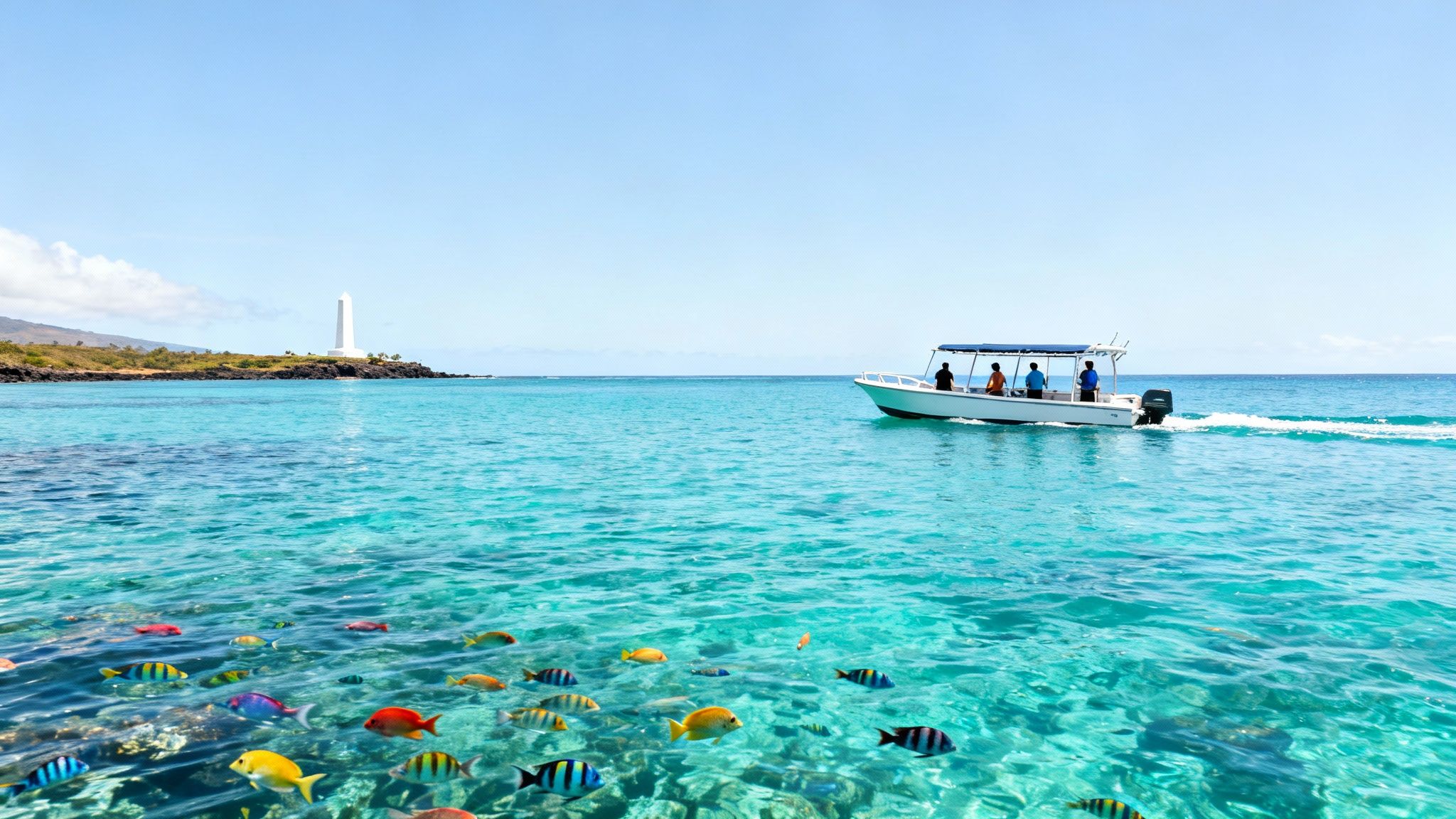
Picture this: you're gliding through impossibly clear, turquoise water. A rainbow of tropical fish darts all around you, and in the background, a striking white monument stands against a lush, green cliffside. That’s the magic of a Captain Cook snorkel tour—an essential Big Island adventure that beautifully marries natural wonder with a deep sense of history.
This isn't just any snorkeling trip. It's a journey into the heart of Kealakekua Bay, a protected marine sanctuary that boasts some of the most vibrant and healthy reefs in all of Hawaii.
Discovering Hawaii's Premier Snorkel Destination
A Captain Cook snorkel tour is your ticket to an underwater paradise. Kealakekua Bay is where Hawaiian history and the natural world collide in the most spectacular way. The bay's calm, protected waters are perfect for everyone, whether you're a first-timer just getting your fins wet or a seasoned pro who's seen it all.
Because it’s a Marine Life Conservation District, the coral reefs and the hundreds of species that call them home are kept pristine. This is exactly what makes the experience so incredible. It's not uncommon for visibility to stretch beyond 100 feet, giving you a crystal-clear view of the intricate coral gardens and the dazzling fish weaving through them. Even the boat ride there is part of the experience, offering stunning views of the Kona coast and building anticipation for what lies beneath the waves.
What Makes This Tour Unique
A few key things really set the Captain Cook snorkel tour apart. For one, Kealakekua Bay is almost impossible to reach by land, which means a boat tour is the only practical way in. This natural exclusivity keeps the crowds down and maintains a peaceful, almost sacred atmosphere.
To really dive deep into what makes this spot so special, check out our guide on Kealakekua Bay as your snorkel gateway.
Here’s a quick rundown of what makes this excursion a cut above the rest:
Historical Significance: You'll be snorkeling right beside the iconic white obelisk that marks the spot where the British explorer Captain James Cook met his end in 1779. It’s history you can literally swim up to.
Incredible Biodiversity: The bay is teeming with life. We’re talking hundreds of fish species, Hawaiian green sea turtles (honu), and very often, pods of playful spinner dolphins (naiʻa).
Pristine Conditions: As a protected area, the bay is home to some of the healthiest and most colorful coral reefs you’ll find anywhere in the Hawaiian Islands.
Guided Expertise: Your guides are more than just crew; they're storytellers. They keep you safe while sharing fascinating insights about the area's history, geology, and the amazing marine life you’re seeing.
If you're ready for one of Hawaii's top-rated ocean adventures, operators like Kona Snorkel Trips offer exceptional tours that truly showcase the best of this historic bay. You can book a Captain Cook snorkeling adventure today and get ready for a day you won't soon forget.
More Than a Snorkel Spot: The History of Kealakekua Bay
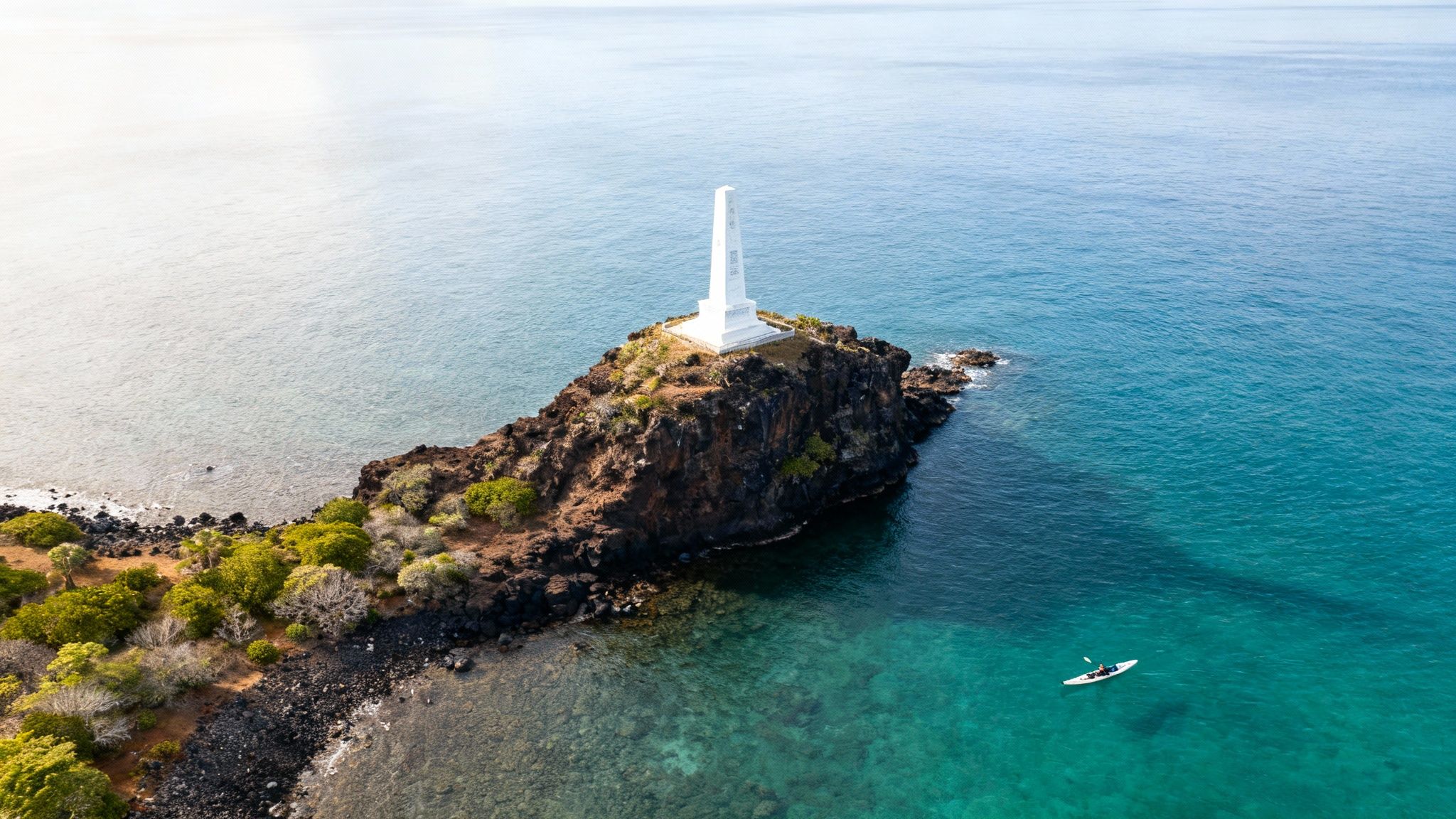
Sure, the colorful fish and vibrant reef are the main attraction, but Kealakekua Bay is a place where Hawaiian history is literally carved into the cliffs and shoreline. The name of the famous Captain Cook snorkel tour isn’t just a catchy title; it's a direct nod to one of the most dramatic chapters in the island's past. This bay is where the Western world and ancient Hawaiian society had their first major—and ultimately tragic—encounter.
Long before any European sails appeared on the horizon, this was a place of deep spiritual importance. The name "Kealakekua" translates to "the pathway of the god," as it was a sacred area dedicated to Lono, the Hawaiian deity of agriculture, fertility, and peace.
The bay's story was forever changed in January 1779. Captain James Cook, commanding the Resolution and the Discovery, sailed into Kealakekua Bay right in the middle of the Makahiki festival—a sacred time of year celebrating Lono. The timing was unbelievable. Cook's towering ships and unexpected arrival led many Hawaiians to believe he could be a physical manifestation of Lono himself, and they welcomed him with honor and reverence.
A Fateful Encounter
At first, things went well. But the relationship between Cook's men and the Hawaiians was complicated. After resupplying, Cook's expedition departed, only to be forced back to the bay by a damaged mast on his ship. This sudden return, happening outside the sacred window of the Makahiki festival, created immediate friction. Tensions boiled over after a dispute involving a stolen cutter boat.
The cultural misunderstanding escalated into a violent confrontation, leading to the death of Captain James Cook on the shores of Kealakekua Bay on February 14, 1779. That single, historic event forever cemented his name to this otherwise peaceful corner of the Big Island.
That iconic white obelisk you see from the water, the Captain Cook Monument, stands as a stark reminder of that day. It was built in 1874 near the spot where Cook fell, and today it’s the historical centerpiece of every Captain Cook snorkel tour. To get the full story on this fascinating period, you can read more about Captain Cook's first encounter with Hawaii.
From Historic Site to Protected Sanctuary
The story doesn’t stop in the 18th century. Recognizing just how special this place is—both historically and ecologically—the State of Hawaii designated the bay as a Marine Life Conservation District (MLCD) way back in 1969. This was a game-changer for preserving its natural wonders.
So, what does that mean for your snorkel tour?
Healthy, Thriving Coral: The MLCD status puts strict limits on activities like anchoring and fishing, protecting the fragile coral gardens from damage. The result is a vibrant, thriving reef system that acts as a bustling city for hundreds of marine species.
Tons of Fish: Because fishing is restricted, the fish populations have exploded. You'll see more fish, and bigger fish, here than in most other spots around the island. It’s a completely different world.
Calm, Crystal-Clear Water: The bay's natural shape protects it from the open ocean, and the MLCD rules help keep the ecosystem pristine. This combination creates incredibly calm, clear conditions, giving you some of the best snorkeling visibility in all of Hawaii.
Today, the powerful history of 1779 provides a rich backdrop for the tours that visit the bay. It's a perfect blend of cultural storytelling and natural exploration, making a Captain Cook snorkel tour a journey into both a fascinating past and a flourishing underwater paradise.
What to Expect on Your Snorkel Tour
So, you're ready to jump in? Knowing what the day looks like helps build the anticipation and makes sure you're prepared for the adventure. From leaving the harbor to that first look under the surface, here’s a play-by-play of a typical day exploring Kealakekua Bay.
The trip always starts with a gorgeous boat ride down the Kona coastline. The vessel itself is a huge part of the fun, and you’ll find a few different styles out there. Some tours zip along in nimble, zodiac-style rafts that get you right down close to the water—perfect for smaller groups wanting a bit more of a thrill.
Other companies run larger, super-stable catamarans. These often come with more creature comforts like shaded seating, onboard restrooms, and sometimes even a waterslide for a fun way to hit the ocean. Either way, the coastal views are absolutely unreal, passing ancient lava flows, hidden sea caves, and dramatic cliffs.
Setting Sail for Kealakekua Bay
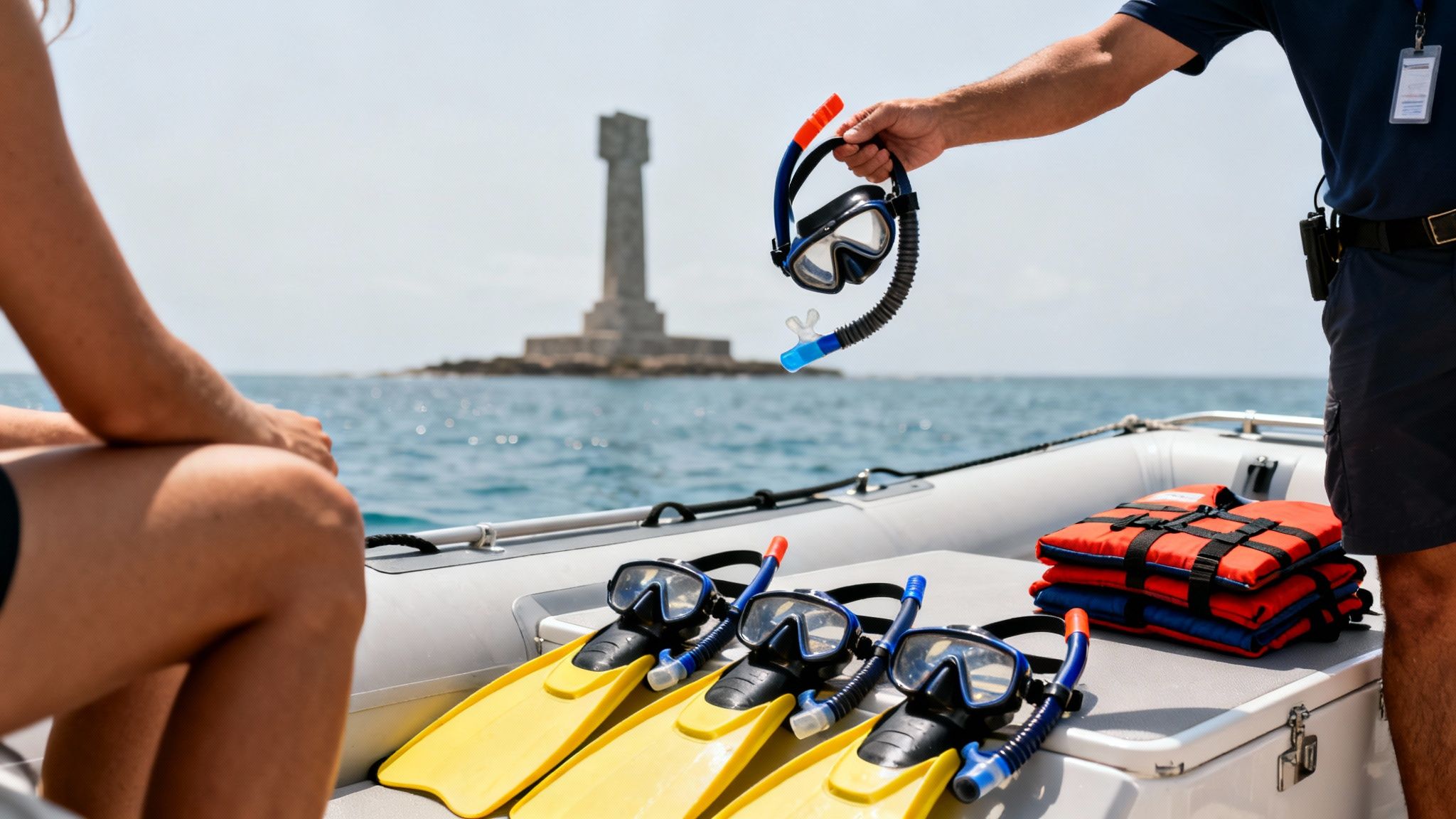
Once you’re settled in and cruising, the crew will walk you through a solid safety briefing. This is really important. They’ll cover how to properly use your snorkel gear and go over the safety rules for both the boat and the water. These guides are pros, so it’s the perfect time to ask anything on your mind, especially if you’re new to snorkeling.
Pretty much every reputable tour provides all the gear you need, including good-quality masks, snorkels, and fins. They'll also have flotation gear like pool noodles or life vests on hand, so everyone can feel totally secure in the water, no matter their swimming skill. Light snacks and drinks—think tropical fruits, chips, and sodas—are usually part of the deal, too.
To give you a quick snapshot, here’s what most Captain Cook snorkel tours include.
Captain Cook Snorkel Tour At a Glance
Feature | Typical Offering |
|---|---|
Duration | 3-4 hours (dock to dock) |
Boat Type | Varies: catamarans, rigid-hull inflatables, monohulls |
Snorkel Time | 60-90 minutes in Kealakekua Bay |
Included Gear | Mask, snorkel, fins, flotation devices |
Food & Drink | Light snacks (fruit, chips) and assorted non-alcoholic drinks |
Group Size | From 6-12 (small rafts) to 40+ (large catamarans) |
Guidance | In-water guides, safety briefing, marine life education |
This table should give you a solid idea, but always double-check with the specific tour operator you book with.
The boat ride to the bay usually takes about 30 to 45 minutes. It’s the perfect amount of time to relax, catch some sun, and scan the horizon for wildlife. It's incredibly common to see pods of acrobatic spinner dolphins (or naiʻa) playing in the boat's wake. If you're here during whale season (December to March), you might just get the show of a lifetime and see a humpback whale breach.
The In-Water Snorkeling Experience
Pulling into Kealakekua Bay is a moment that sticks with you. The ocean settles into a calm, brilliant turquoise, and you see the famous white Captain Cook Monument standing against the sheer cliffs. After the captain drops anchor, the crew will help you get your gear on and get you ready to slide into that warm, welcoming Pacific water.
That first moment you dip your head under is pure magic. The water is usually so clear you can see the reef and its fishy residents from the boat. You’ll get a good amount of time in the water—typically around 60 to 90 minutes—to explore this incredible underwater paradise. The guides are almost always in the water with you, pointing out cool sea creatures and making sure everyone stays safe.
Climbing back on board for a cold drink and a snack is the perfect way to cap off the experience before the beautiful ride back to the harbor.
If you’re wondering what time of day is best, you can read up on the benefits of a morning Kealakekua snorkel tour and how it affects the conditions and crowds.
Plunging into Kealakekua Bay's Underwater World
The boat ride over to Kealakekua Bay is gorgeous, no doubt. But the real show begins the second you slip on your mask and dip your face below the surface. It’s like entering another universe—one that’s silent, vibrant, and completely weightless, with a kaleidoscope of life swimming all around you.
This section is your personal field guide to that incredible underwater paradise.
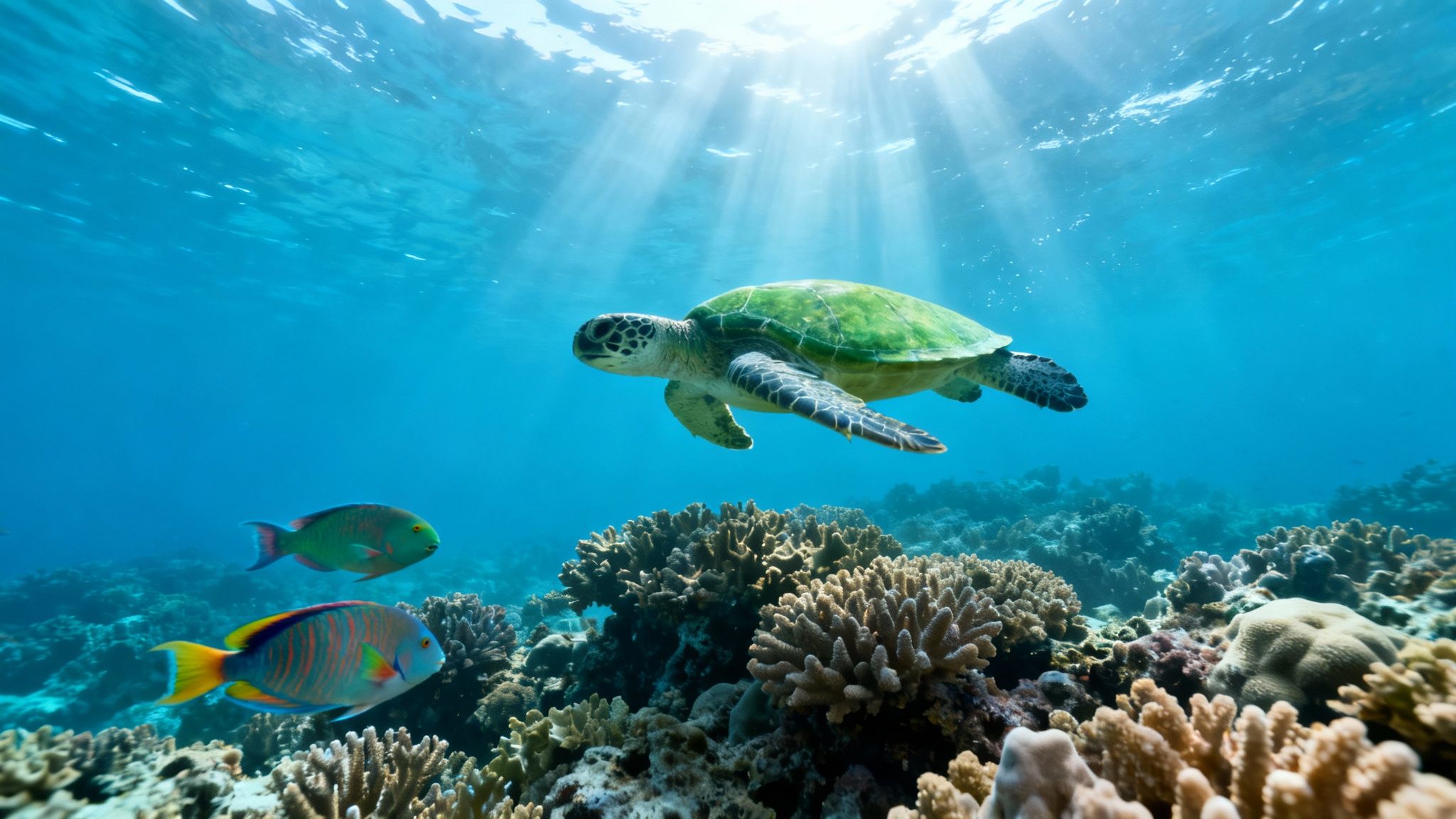
So, why is it so good here? The bay is a designated Marine Life Conservation District. That special protection has let the coral reefs absolutely thrive, turning the whole area into a bustling underwater city that serves as both a nursery and a home for hundreds of species. The water is often so incredibly clear that you can see over 100 feet down, making every little detail pop.
The Colorful Locals on the Reef
The first thing you’ll notice is the sheer volume of fish. Schools of brilliant yellow tangs zip by in perfect unison, while butterflyfish (kīkākapu) drift past in devoted pairs, showing off their intricate patterns. You’re pretty much guaranteed to spot Hawaii's state fish, the famously long-named humuhumunukunukuāpuaʻa, as it pokes around the coral looking for a meal.
Another key player here is the parrotfish (uhu). If you listen carefully, you might hear a subtle crunching sound. That’s an uhu using its powerful, beak-like mouth to scrape algae off the coral—a process that not only keeps the reef healthy but also creates the fine white sand you see on Hawaii's beaches.
The reef at Kealakekua Bay isn't just a pretty backdrop; it's a living, breathing organism. Each coral head is a colony of thousands of tiny animals called polyps, all working together to build the elaborate structures that shelter over 400 species of fish and invertebrates.
To get a better sense of who you'll be swimming with, check out our deep dive into Kealakekua Bay's diverse marine life.
Graceful Giants and Playful Pods
While the small, colorful fish are endlessly fascinating, always keep an eye out for some of the bay's bigger residents. It's incredibly common to see Hawaiian green sea turtles (honu) cruising gracefully along the reef's edge or just chilling on the sandy bottom. Seeing one of these ancient mariners up close is a truly humbling moment.
The bay is also a known resting spot for pods of Hawaiian spinner dolphins (naiʻa). While it's illegal to approach them—they need their rest—spotting them from the boat as they leap and spin is an unforgettable highlight. Their presence is a powerful reminder of just how special this sanctuary really is.
Your Role as a Reef Guardian
Getting to experience this underwater world comes with the responsibility to protect it. The health of this delicate ecosystem depends on every single visitor acting as a good steward. Just follow a few simple rules, and you'll help keep this place vibrant for generations.
Look, Don't Touch: Never, ever touch the coral. Even a light brush can damage the fragile polyps that build the reef.
Keep Your Distance: Admire all marine life from a respectful distance, especially turtles and dolphins. No chasing, cornering, or feeding.
Wear Reef-Safe Sunscreen: Many common sunscreens have chemicals like oxybenzone that are toxic to coral. Always opt for a mineral-based, reef-safe formula.
Secure Your Gear: Make sure your mask and snorkel are fitted properly and that nothing is dangling that could snag on the reef.
By following these simple guidelines, you help preserve the magic of every captain cook snorkel tour. If you're fired up by what you've seen, awesome operators like Kona Snorkel Trips can take you to other amazing spots, including the world-famous manta ray night snorkel. Now's the perfect time to book your Captain Cook snorkeling adventure and see this incredible world for yourself.
So, Which Captain Cook Tour is Right for You?
Picking the perfect captain cook snorkel tour feels a little like choosing your own adventure. There are a few different ways to experience the magic of Kealakekua Bay, and the "best" one really just comes down to your personal style. Getting this choice right is the key to a day on the water that's not just great, but absolutely perfect for you.
The first big decision point is the boat itself. What’s your vibe? Do you see yourself zipping across the waves on a nimble, zodiac-style raft, getting an up-close and personal view of the sea caves and coastline? These smaller boats are a blast for adventure-seekers and smaller groups who want a more intimate, thrilling ride.
Or maybe you’re picturing something a bit more laid-back? A larger, super-stable catamaran could be your ticket. These usually come with more creature comforts—think shaded seating, onboard restrooms, and sometimes even a waterslide for extra fun. They’re a fantastic choice for families with kids or anyone who values a smooth, relaxing cruise over a bouncy, high-speed journey.
Matching the Tour to Your Crew
Beyond the boat, you'll want to think about the tour's timing and what's included in the package. Most trips last between three to five hours, which covers the boat ride to and from the bay. Think about how you want to split that time. Are you all about maximizing your minutes in the water, or do you prefer a more leisurely pace with time to just soak up the sun and scenery from the deck?
Dig into the details of what's included, too. Pretty much every tour will provide the essential snorkel gear and some light snacks or drinks. But some of the more premium options might throw in a full lunch, adult beverages, or even have a marine biologist on board to share fascinating facts about the wildlife you're seeing. It's all about weighing those extras against the price to find the sweet spot for your group.
Kealakekua Bay is truly a world-class destination. This 315-acre marine life conservation district draws an estimated 190,000 visitors every single year. That popularity means you'll find a tour for every budget, from no-frills options around $80 to all-inclusive, small-group trips in the $150–$220 range. You can learn more about why these tours are such a vital part of the local economy on konasnorkeltrips.com.
Putting Safety and Sustainability First
Honestly, this might be the most important part: choose a reputable, eco-conscious company. A top-notch tour operator puts two things above all else—your safety and the health of this incredible marine ecosystem.
Look for companies that have certified lifeguards on staff, spell out their safety protocols clearly, and are serious about sustainable tourism. This means they'll insist on reef-safe sunscreen and teach you the right way to view wildlife without disturbing it.
For a deeper dive into what separates the good from the great, check out our guide on choosing your Captain Cook snorkel tour. A little bit of homework goes a long way in ensuring your day is not only unforgettable but also helps protect Kealakekua Bay's pristine beauty for everyone who comes after you.
When you're ready for an incredible adventure, we highly recommend established operators like Kona Snorkel Trips for a Captain Cook snorkeling tour or their stunning Manta Ray night snorkel. Or, go ahead and lock in your spot on this classic daytime trip by booking your Captain Cook tour now.
Your Captain Cook Snorkel Tour Questions Answered
We get a lot of the same questions from people getting ready for their big day on the water, so we've put together answers to the most common ones right here. Think of this as your quick-start guide to the captain cook snorkel tour. Our goal is to clear up any confusion so you can just be excited for the adventure ahead.
Is This Snorkel Tour Good for Beginners or Non-Swimmers
Absolutely. This is one of the best places on the island for first-timers. The tour crews are fantastic at making beginners feel comfortable. They'll set you up with quality snorkel gear and flotation devices (like noodles or vests) and give everyone a solid safety briefing before a single toe hits the water.
Kealakekua Bay's calm, protected waters are about as ideal as it gets. It’s a good idea to let the crew know your comfort level when you get on board; they're always happy to give a little extra help.
While you don't need to be a strong swimmer to have a great time—you can float with the gear and stick close to the boat—you'll definitely get more out of the experience if you're at least comfortable in the water. The guides are always keeping an eye out to make sure everyone is safe and having fun.
What Should I Pack for the Day
Keep it simple. You're mostly just battling the sun and staying comfortable. The must-haves are reef-safe sunscreen (this is a big one for protecting the coral), a towel, a hat, and sunglasses. A light cover-up or a rash guard is also a great idea for when you've had enough sun.
All the snorkel gear is provided, but if you have your own mask that fits you perfectly, feel free to bring it along. A waterproof camera or a phone in a waterproof pouch is also a must if you want to get some shots of the incredible underwater world.
The boats have dry storage spots for your bags. Most tours will have snacks and drinks, but it's never a bad idea to bring your own reusable water bottle to make sure you stay hydrated.
Will We See Dolphins or Whales on the Tour
The odds of seeing Hawaiian spinner dolphins are incredibly high. They love to hang out and rest in Kealakekua Bay during the day, so spotting a pod is a pretty common—and always amazing—part of the captain cook snorkel tour.
Of course, wildlife is wild, so there's never a 100% guarantee. Just remember that federal law requires boats and people to stay at least 50 yards away. It’s all about letting them rest without disturbance.
And if you’re here during whale season (usually December through March), keep your eyes on the horizon during the boat ride. Humpback whales are often seen cruising along the coast, and the captain and crew are experts at spotting them.
Is There a Good Tour for Seeing Manta Rays Instead
Yes, but it's a totally different—and equally mind-blowing—experience. The Captain Cook snorkel tour is all about daytime snorkeling. You’re exploring a vibrant, sunlit reef teeming with colorful fish. It's a classic Hawaiian adventure.
Manta rays, on the other hand, are a nighttime affair. For that, you'll want to book the Manta Ray Night Snorkel, a world-famous Kona exclusive. These tours head out after dark and use powerful lights to attract plankton. The plankton then draws in the massive, graceful manta rays for an underwater ballet you'll never forget.
If you're looking for an exceptional operator for either a Manta Ray night snorkel tour or a Captain Cook snorkeling tour, Kona Snorkel Trips is renowned for its outstanding and highly-rated experiences. They offer a variety of tours to showcase the best of Kona's underwater world.
Ready to book your daytime adventure to see the historic monument and thriving reef?
For an unforgettable journey into Hawaii's pristine waters, book your adventure with Captain Cook Snorkeling Tours. Explore our tour options and reserve your spot today at https://www.captaincooksnorkelingtours.com.