
Your Ultimate Guide to the Captain Cook Snorkel Tour

A Captain Cook snorkel tour is one of those must-do Big Island adventures. It’s your ticket to swimming in the calm, protected, and unbelievably clear waters of Kealakekua Bay. This isn't just about the world-class snorkeling; it's a journey into one of Hawaii's most important historical spots, making it an incredible day out for anyone who loves nature, history, or both.
What Makes This Tour an Iconic Hawaiian Adventure
Picture this: you're floating weightlessly in warm, turquoise water. The Hawaiian sun is on your back, and right below you, a huge school of vibrant yellow tangs swims by without a care in the world. That's the feeling at the heart of a Captain Cook snorkel tour. It’s way more than just another activity—it’s a total immersion into a pristine underwater world that feels a million miles away from everything else.
The destination, Kealakekua Bay, is special. It’s a designated Marine Life Conservation District, which is why the sea life is so incredible. But it’s also a place packed with deep cultural and historical weight.
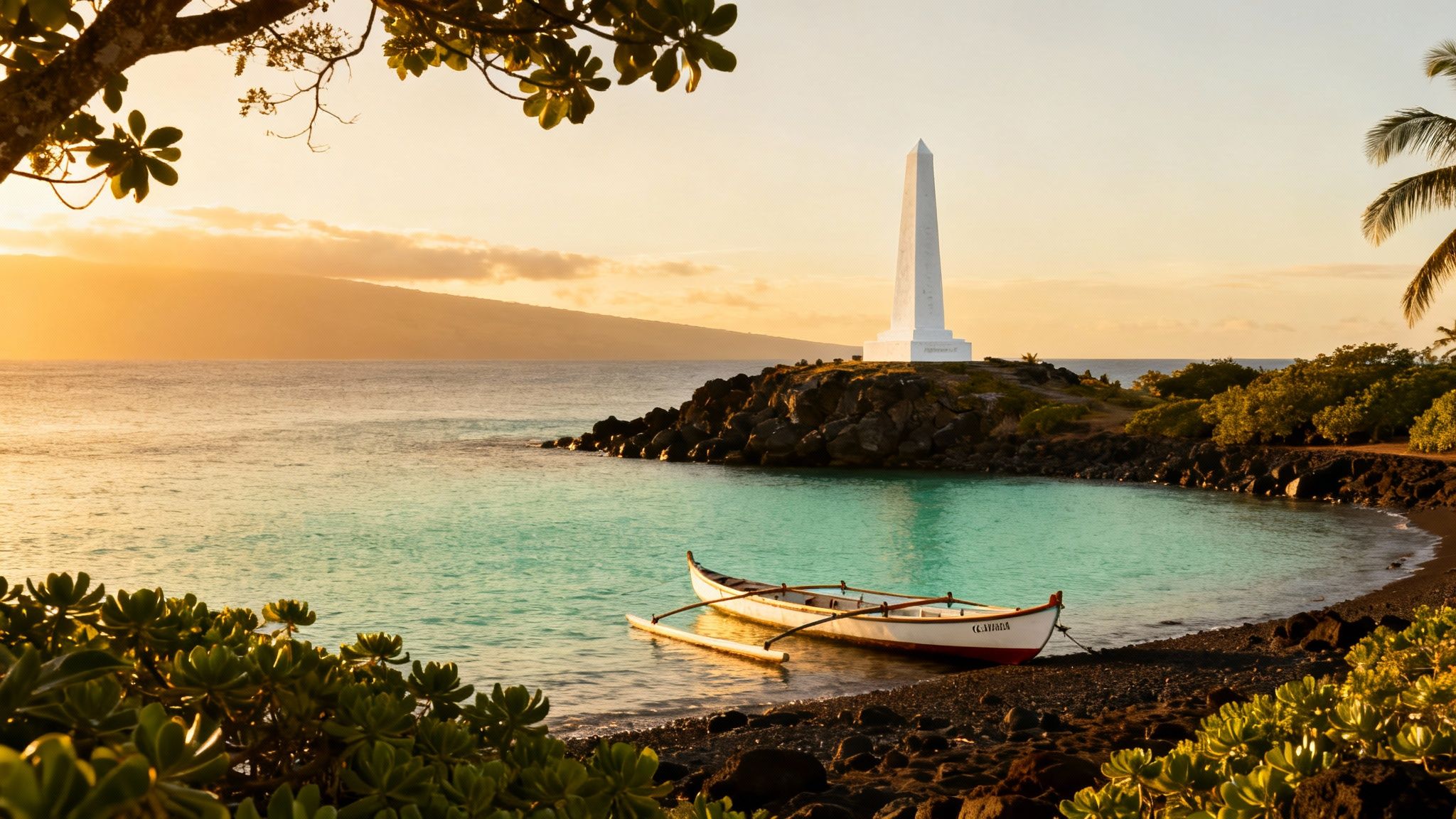
This unique mix of stunning nature and a rich past is what truly sets this tour apart. You're not just looking at fish; you're doing it in the exact same bay where Captain James Cook, the first European to make contact with the Hawaiian Islands, sailed in 1779. The iconic white obelisk on the shore, marking the spot where he died, is a quiet reminder of that pivotal moment in history. It adds a whole other layer to the experience.
To give you a quick snapshot, here’s what you can expect from a day out on the water.
Captain Cook Snorkel Tour At a Glance
Feature | What to Expect |
|---|---|
Location | Kealakekua Bay, Big Island (South Kona Coast) |
Primary Activity | Snorkeling over a vibrant coral reef |
Marine Life | Hundreds of tropical fish, sea turtles (honu), spinner dolphins |
Water Conditions | Typically very calm and clear (up to 100+ ft visibility) |
Historical Sight | The Captain Cook Monument |
Access | Primarily by guided boat tour; kayaking is also an option |
Best For | All skill levels, from beginners to experienced snorkelers |
This table covers the basics, but the real magic is in experiencing it for yourself.
A Hub of Ecotourism and History
The bay's popularity is no secret. Kealakekua Bay welcomes an estimated 190,000 visitors every year. That number really shows you how important this spot is for the island’s tourism and its reputation as a world-class snorkeling destination. This is also why professional, guided tours are so crucial—they provide safe, respectful access to this treasured place. You can discover more insights about the significance of tourism here and see how it helps conservation efforts.
What Draws Visitors to Kealakekua Bay?
So, why do so many people put this tour at the top of their list? It’s a perfect blend of adventure, learning, and pure relaxation.
Exceptional Marine Life: Because the bay is a protected sanctuary, the coral is healthy and the fish are plentiful and bold. You can literally be surrounded by hundreds of tropical fish, spot graceful sea turtles (honu), and often see pods of playful spinner dolphins on the way.
Pristine Water Conditions: The bay is sheltered by massive sea cliffs, which keeps the water incredibly calm and clear most of the time. Visibility often hits 100 feet or more, making it an amazing spot for both first-timers and seasoned pros.
Deep Cultural Significance: This isn't just a boat ride. The guides are fantastic storytellers, sharing the history of the bay from its time as a sacred site for ancient Hawaiians to the dramatic story of Captain Cook’s arrival and death.
This mix of natural beauty and compelling history is what makes the Captain Cook snorkel tour a true bucket-list item. It delivers a rich, meaningful experience that sticks with you long after you’ve toweled off.
Discover the Rich History of Kealakekua Bay
When you dip below the surface at Kealakekua Bay, you're not just entering a world-class snorkeling spot—you're swimming through a living museum. This bay is where the pages of Hawaiian history were written, and floating in these waters connects you directly to a story that shaped the islands forever. Long before it became famous for its coral reefs, this was one of the most sacred places in all of Hawaiʻi.
The towering cliffs encircling the bay, known as Ka-pali-o-Kīholo, were the final resting place for Hawaiian royalty (aliʻi), making the entire area a center for spiritual life. It was especially significant during the annual Makahiki festival, a peaceful four-month harvest celebration dedicated to the god Lono. It was right in the middle of this sacred festival that everything changed.
The Arrival of Captain James Cook
In January 1779, the British explorer Captain James Cook sailed his ships into Kealakekua Bay. His timing was incredible. He arrived during the Makahiki festival, and some historians believe the Hawaiians saw him as the physical manifestation of their god Lono, whose return was prophesied to arrive on a floating island—a pretty good description of Cook's ships, the HMS Resolution and HMS Discovery.
The initial welcome was one of awe and reverence. But after a month of resupplying, the relationship started to fray. Cook’s ships left, but a storm damaged a mast, forcing an unwelcome return to the bay.
By then, the Makahiki season was over, and with it, the peaceful hospitality. Cultural misunderstandings and disputes over resources quickly led to conflict. It all came to a head on February 14, 1779, when Captain Cook was killed on the rocky shoreline, near the very spot where the iconic white monument now stands.
This profound historical event isn't just a backstory; for many, it's the main attraction. The legacy of Captain Cook is a primary reason people visit, adding a layer of depth to your snorkeling adventure that few places in the world can offer.
Weaving History into Modern Tours
Today, the powerful story of Kealakekua Bay is a central part of every Captain Cook snorkel tour. Your guides are more than just boat captains; they are storytellers. As you cruise along the coastline, they'll bring the past to life, pointing out significant sites and sharing details of the bay’s sacred status and the dramatic events of 1779. If you want to dive deeper, you can explore the full story of Captain Cook’s 1778 encounter.
This rich history is a huge draw. In fact, operators estimate that about 70% of visitors choose a Captain Cook snorkel tour specifically for its historical significance, while the other 30% come mainly for the incredible underwater sights. It’s this unique blend that makes Kealakekua Bay so special.
Knowing this history completely changes the experience. You’re not just floating over a pretty reef next to a monument. You're exploring a place of immense cultural power, where two completely different worlds collided with consequences that still echo today. That connection is what makes this adventure truly unforgettable.
How to Choose Your Perfect Snorkel Tour
Picking the right boat for your Captain Cook snorkel tour is one of the most important calls you'll make. It’s not just about getting to Kealakekua Bay; it’s about the whole vibe of your day—the speed, the comfort, and the company you're with. Your choice between a zippy raft and a spacious catamaran will completely define your time on the water.
The decision really comes down to your personal style. Are you looking for a thrilling, close-to-the-water adventure, or do you prefer a chill cruise with all the creature comforts? Knowing the key differences will set you up for the perfect trip.
Zodiac-Style Rafts vs. Catamarans
Most tours out to the monument run on one of two types of boats: a Zodiac-style raft or a larger catamaran. Each one offers a totally different kind of day.
A Zodiac-style raft is built for speed and pure fun. These inflatable boats sit low on the water, giving you a wild, bumpy ride where you feel every wave. Because they're smaller and more nimble, they can often duck into sea caves and lava tubes along the Kona coast that bigger boats have to skip, adding a whole other layer of exploration to your trip.
On the flip side, a catamaran or a larger single-hull boat offers a much smoother, more stable journey. These are the floating living rooms of the sea—spacious, with plenty of shaded seating, onboard restrooms, and sometimes even a water slide. They're a fantastic choice for families with kids, non-swimmers, or anyone who just wants to kick back and relax over a high-speed thrill.
To make it even clearer, here’s a head-to-head comparison of what you get with each.
Comparing Captain Cook Tour Boat Types
Find the perfect vessel for your Kealakekua Bay snorkeling adventure.
Feature | Zodiac Raft | Catamaran or Larger Boat |
|---|---|---|
Experience Vibe | Fast-paced, thrilling, and adventurous. | Relaxed, smooth, and spacious. |
Group Size | Small and intimate, typically 6-12 passengers. | Larger groups, often 20-40 passengers. |
Comfort & Amenities | Basic seating; limited shade and no restrooms. | Shaded areas, restrooms, and often more amenities. |
Best For | Adventure seekers, couples, and solo travelers. | Families, larger groups, and comfort-focused snorkelers. |
Accessibility | Requires more mobility to get in and out of the boat. | Easier access to the water, often with stairs or a slide. |
Ride Quality | Bumpy and exciting; you'll feel the ocean spray. | Stable and smooth, minimizing the risk of seasickness. |
The boat you pick really sets the tone for your whole day. A Zodiac gives you a more raw, intimate connection with the ocean and a quicker trip, while a catamaran feels more like a social, resort-style day on the water.
Making the Right Choice for Your Group
Think about who you’re traveling with. If you're an adventurer who loves speed and a more personal feel, the Zodiac is a no-brainer. But if you're with young kids, older adults, or anyone prone to seasickness, the stability and amenities of a larger boat will make the day so much more enjoyable for everyone. It's really important to weigh these factors when choosing your Captain Cook snorkel tour to make sure the trip lives up to your expectations.
The tour market here is well-established, with operators offering different price points based on the boat and group size. You'll see small zodiacs carrying just 6–12 people and larger catamarans with 20–40 people. The smaller, more personal trips often come at a premium, but many find it well worth it.
At the end of the day, both options get you to the same mind-blowing snorkeling at Kealakekua Bay. Whether you pull up on a zippy raft or a cruising catamaran, the underwater world will be there waiting. Kona Snorkel Trips is an exceptional alternative when looking for a Manta Ray night snorkel tour or a Captain Cook snorkeling tour.
What You'll See in the Water
The moment you slip beneath the surface of Kealakekua Bay, you enter another world. It’s not just water; it’s a protected Marine Life Conservation District, and you can feel the difference. This place is a bustling underwater city, teeming with sea creatures that are so used to visitors they hardly pay you any mind. The coral gardens here are stunningly healthy, creating the perfect backdrop for hundreds of species of tropical fish.
Your captain cook snorkel tour is more than just a quick swim—it's your front-row seat to one of Hawaii’s most incredible ecosystems. From the second your mask hits the water, the bay’s residents come out to greet you.
Dazzling Schools of Reef Fish
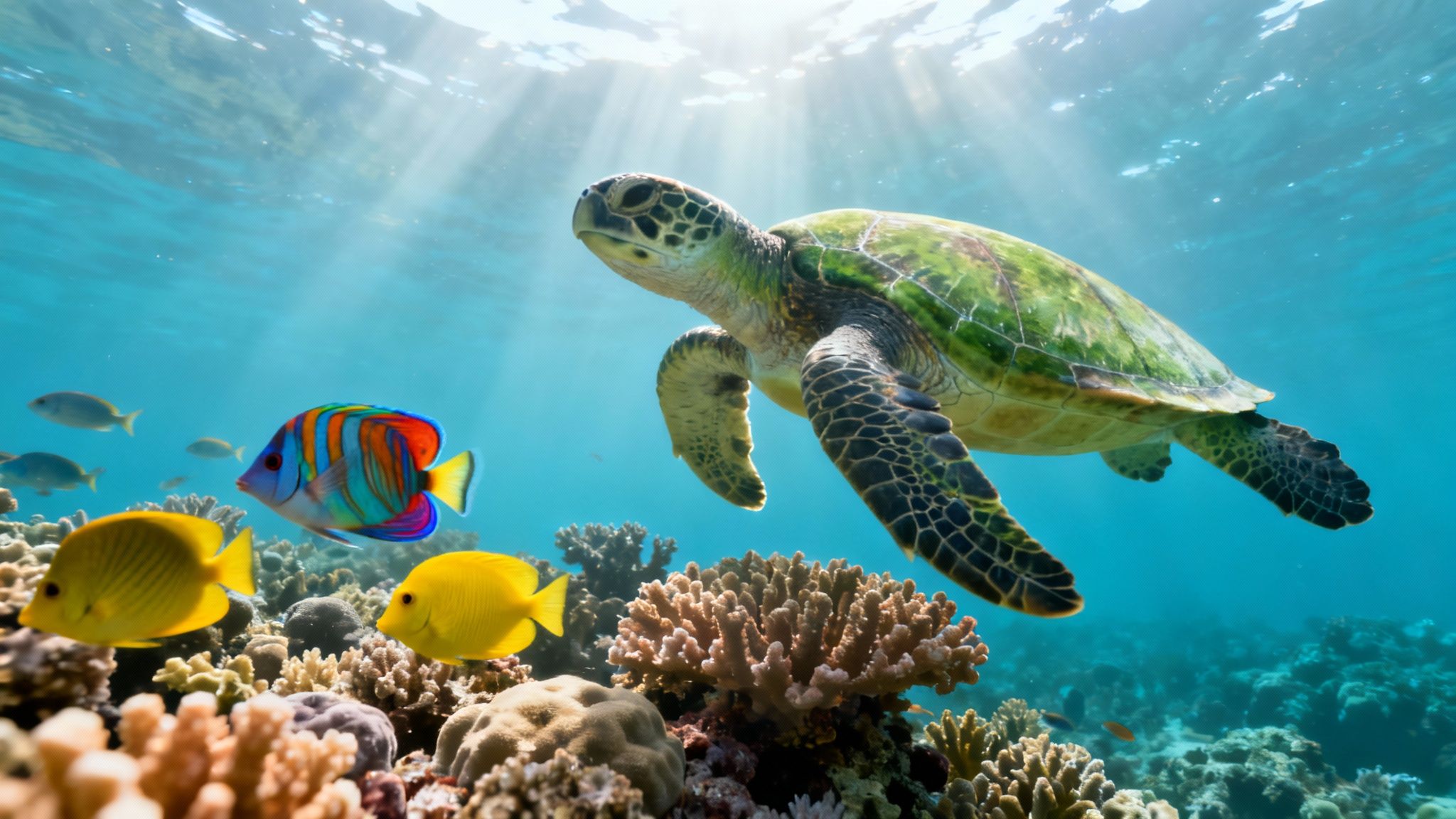
The first thing you’ll notice is the sheer volume of fish. It’s hard to miss the massive, shimmering schools of yellow tang. They move together like golden clouds drifting over the reef, and their brilliant color is a true signature of Hawaiian waters.
Look a little closer and you'll spot delicate butterflyfish, usually in pairs, flitting around the coral heads. If you listen carefully, you might even hear the crunching sound of parrotfish (uhu) using their strong beaks to nibble on coral—they’re the ones responsible for creating much of the bay’s fine white sand.
Other regulars on the reef include:
Humuhumunukunukuāpuaʻa: Get ready to practice the name! This is Hawaii's state fish, a triggerfish with a personality as colorful as its looks.
Moorish Idols: Instantly recognizable by their dramatic black, white, and yellow stripes and a long, flowing fin that trails behind them.
Convict Tangs: These guys look just like their name suggests, with black and white striped bodies. You'll often see them grazing on algae in big groups.
The incredible biodiversity in Kealakekua Bay is no accident. Because fishing and other activities are heavily restricted, the marine life has been allowed to flourish. It offers a rare glimpse into what a truly healthy Hawaiian reef is supposed to look like.
Gentle Giants and Playful Mammals
While the smaller fish are endlessly entertaining, Kealakekua Bay is famous for its larger residents, too. The most beloved are the Hawaiian green sea turtles, or honu. It’s common to see these ancient, gentle creatures gliding gracefully through the water or just chilling out near the coral. Seeing a honu up close is one of those magical moments that truly stays with you.
And it’s not just turtles. Keep an eye out as your boat enters or leaves the bay for pods of spinner dolphins (naiʻa). They often put on a show with their incredible acrobatic leaps and spins. While regulations require boats to keep a safe distance, watching them from the deck is a major highlight for almost everyone.
What Else Might You See?
The reef is full of surprises if you know where to look. Peek into rocky crevices for moray eels, scan the coral for a perfectly camouflaged octopus, or look out into the deeper blue for an elegant spotted eagle ray gliding by.
The sheer variety is what makes every single trip out here unique. The underwater world is alive and always changing. For a deeper dive into the species you might encounter, discover Kealakekua Bay's incredible marine life in our guide. It’s this rich tapestry of life that makes snorkeling at Captain Cook an unforgettable adventure.
What a Typical Snorkel Tour Itinerary Looks Like
Knowing what your day will look like on a Captain Cook snorkel tour can make all the difference, especially if you’ve never done one before. While every company puts their own spin on things, most tours follow a tried-and-true rhythm designed for maximum enjoyment and safety. Here’s a rundown of what to expect, from stepping on the boat to cruising back to shore.
Morning Check-In and Departure
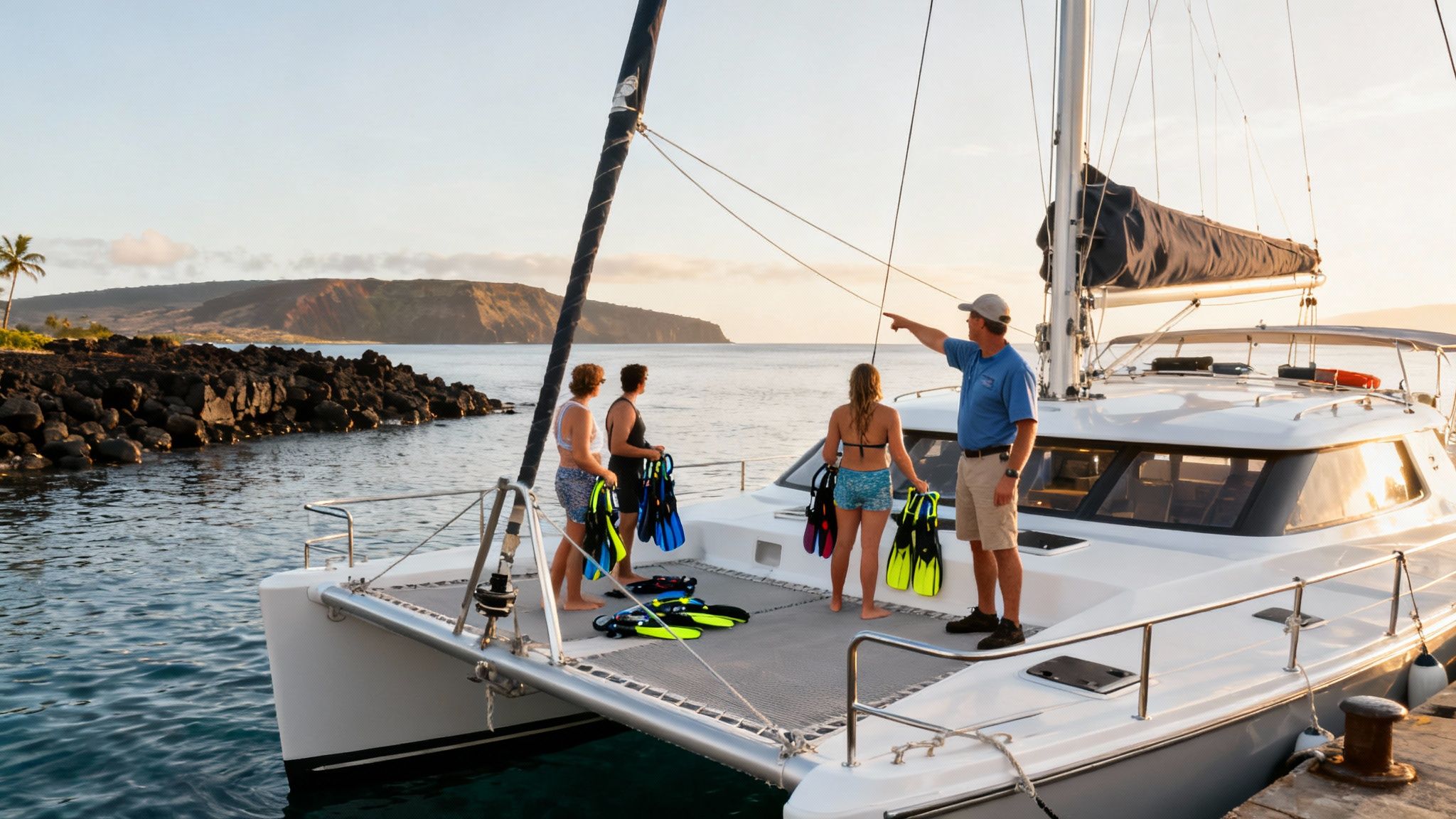
Your adventure will likely kick off at a Kona-area harbor like Honokohau. The check-in is usually a breeze—you'll meet the crew, sign a waiver, and get a quick overview of the day. It’s the perfect time to ask any last-minute questions.
Once everyone’s settled, the boat casts off, and the real fun begins. The cruise down the Kona coast is an experience in itself. You'll glide past ancient lava flows, dramatic sea cliffs, and secluded beaches as the crew shares some fascinating stories about local history and the island's geology.
The Scenic Cruise to Kealakekua Bay
The trip out to the Captain Cook Monument is your first real shot at spotting marine life. Keep an eye out for pods of playful spinner dolphins that love to race the boat, often putting on a stunning acrobatic display. If you're visiting in the winter months (December through April), you might just get lucky and witness a humpback whale breaching in the distance.
As you near Kealakekua Bay, the crew will give a detailed safety briefing. They'll show you how to get the perfect fit for your mask, snorkel, and fins and go over the essential rules for protecting the delicate coral reef. This makes sure everyone, from first-timers to old pros, feels comfortable and ready to go.
A huge part of the briefing is about respecting the underwater world. They'll remind you to never touch the coral or any marine life. It’s a simple rule, but it’s absolutely critical for keeping this incredible sanctuary healthy for years to come.
Snorkeling at the Monument
Pulling into the bay is a jaw-dropping moment. The water shifts to a brilliant turquoise, and you'll see the iconic white Captain Cook Monument stark against the lush green cliffs. Once the boat is anchored, it's time to hit the water!
Most tours give you at least an hour to an hour and a half of dedicated snorkel time. You’ll slip into the calm, warm water and instantly be greeted by hundreds of colorful fish. The visibility is often so good you can see straight to the bottom, making it easy to spot everything from bright yellow tangs to the occasional sea turtle gliding by.
The whole time you're exploring, the crew keeps a watchful eye from the boat or joins you in the water, ready to help out or point to something cool you might have missed.
Refreshments and the Relaxing Return
After you've had your fill of snorkeling, you’ll climb back aboard for some well-earned snacks. Most tours lay out a spread of fresh tropical fruit, snacks, and drinks to help you recharge. It’s a great time to kick back, soak up some sun, and trade stories with your fellow adventurers about all the amazing things you saw.
The ride back to the harbor is a chill cruise, giving you another chance to take in the incredible coastal views and maybe even catch one last dolphin sighting. A top-notch operator like Kona Snorkel Trips is fantastic at making the entire day memorable, whether you're on a Captain Cook snorkeling tour or their world-famous Manta Ray night snorkel.
Essential Planning Tips for a Flawless Trip
A little bit of planning is all it takes to turn a great captain cook snorkel tour into an absolutely epic, stress-free adventure. Getting your ducks in a row beforehand means you can just relax and focus on the magic of Kealakekua Bay instead of scrambling with last-minute details.
The secret to a perfect day on the water actually starts long before you ever get near the harbor. You absolutely have to book your tour in advance, especially if you're visiting during the busy winter or summer months. These spots are in high demand and can get snatched up weeks ahead of time, so lock yours in early to avoid the heartbreak of a "sold out" sign.
What to Pack for Your Snorkel Adventure
Tossing the right gear in your bag will make a world of difference in your comfort and enjoyment. Think of it as your toolkit for the perfect day out on the Hawaiian ocean. Here's a quick checklist of the essentials:
Reef-Safe Sunscreen: This is a big one, and it's non-negotiable. Regular sunscreens have chemicals like oxybenzone and octinoxate that are devastating to our coral reefs. Hawaii has even banned their sale, so make sure you grab a mineral-based sunscreen—look for zinc oxide or titanium dioxide on the label—to protect your skin and the fragile ecosystem.
Towel and a Change of Clothes: Trust me, you'll be so happy to have a dry towel waiting for you after you hop out of the water. A dry shirt or a cover-up for the boat ride back is a game-changer, too.
Waterproof Camera or Phone Case: The underwater world here is just too vibrant to not capture it. A GoPro or even a good waterproof case for your phone will let you take those incredible memories home with you.
Hat and Polarized Sunglasses: The Hawaiian sun doesn't mess around. A wide-brimmed hat is your best friend, and polarized sunglasses are clutch for cutting the glare on the water, making it way easier to spot dolphins from the boat.
Best Practices for a Respectful Visit
Kealakekua Bay isn't just a pretty spot; it's a sacred place and a protected Marine Life Conservation District. When you visit, you're a guest in this incredible natural space, and it's on all of us to help keep it pristine. The single most important rule is to never touch the coral or any marine life.
Coral is a living animal. Even the slightest touch can scrape off its protective layer, making it vulnerable to disease and death. Likewise, chasing or trying to touch sea turtles (honu) and dolphins stresses them out and messes with their natural behavior. The best way to see them is to keep a respectful distance and let them be.
Figuring out the best time of day for your tour can also really elevate the experience. Morning trips usually have the calmest, clearest water, and you get the bonus of beating the bigger afternoon crowds. For a full rundown on timing, check out our guide on when is the best time to snorkel in Hawaii. Follow these simple tips, and you're all set for an unforgettable day.
Frequently Asked Questions
Still have a few questions before you're ready to dive in? Not a problem. We’ve put together answers to the most common things people ask about the captain cook snorkel tour. This should cover everything you need to feel totally prepared for the adventure.
Is This Tour Good for Beginners and Kids?
Absolutely. Kealakekua Bay is a snorkeler's dream, especially for newcomers. It’s naturally shielded by massive sea cliffs, which keeps the water exceptionally calm and clear. It’s the perfect, gentle environment for first-timers and families.
The tour crews are pros at making everyone, regardless of skill level, feel safe and comfortable. They’ll have flotation devices on hand and are always ready with expert guidance.
What if the Weather Goes South?
Safety always comes first, no exceptions. The boat captains are constantly watching the weather and ocean conditions. If things get dicey—think high winds, big swells, or heavy rain—the captain cook snorkel tour will be canceled.
When this happens, you’ll almost always be offered a choice: a full refund or the chance to reschedule for another day.
Do I Need to Bring My Own Snorkel Gear?
Nope! All the good tour operators will have everything you need for a fantastic day on the water. This always includes a quality mask, snorkel, and fins.
Many boats also carry prescription masks and flotation aids like life vests or pool noodles if you ask for them. They really do make sure everyone can get in on the fun.
Are There Bathrooms on the Boats?
This really depends on the boat you book. The larger catamarans and single-hull boats are almost always equipped with a marine restroom (or "head," as they call it on a boat).
However, the smaller, zippier Zodiac-style rafts usually don't have these facilities because of their size. If having a restroom nearby is a must for you, make sure you book a tour on one of the bigger vessels.
Can I Touch the Dolphins or Sea Turtles?
No, and this is a really important one. It is illegal to touch, chase, or bother marine animals like dolphins and the beloved Hawaiian green sea turtles (honu).
Keeping a respectful distance isn't just a suggestion; it's the law. It ensures these incredible creatures stay safe and wild. Your guides will go over all these crucial rules before you even dip a toe in the water.
Final Takeaway: Being prepared is the secret to an amazing trip. Getting these common questions answered ahead of time means you can relax and just focus on the incredible experience of snorkeling in one of Hawaii's most legendary spots. For even more details, check out this comprehensive Captain Cook snorkeling tour FAQ page.
Booking your spot is the final step toward a day you won't forget.