
Your Ultimate Guide to the Captain Cook Snorkel Tour

Picture yourself floating in calm, turquoise water, so clear you can spot colorful coral gardens and schools of fish 80 feet below. That’s exactly what’s waiting for you on a Captain Cook snorkel tour in Kealakekua Bay. This guide will cover everything you need to plan an incredible adventure into one of Hawaii's most prized marine sanctuaries.
Why Kealakekua Bay Is a World-Class Snorkeling Destination
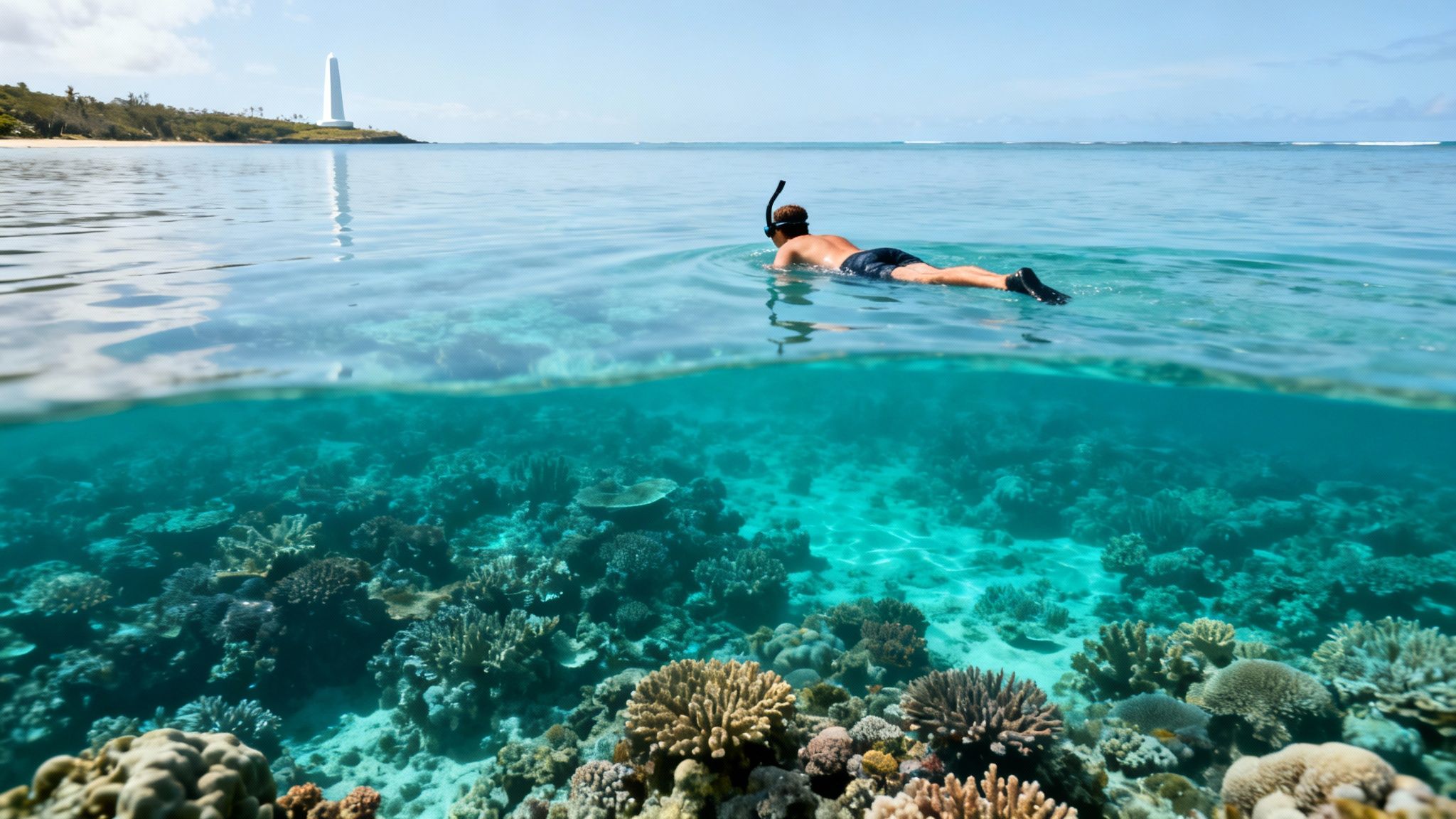
Tucked away on the Kona coast, Kealakekua Bay is so much more than just another pretty spot—it’s a living aquarium and a historical landmark all in one. The bay itself is a legally protected Marine Life Conservation District, a 315-acre sanctuary where the entire ecosystem is left to thrive without interference. The result is an underwater world that's absolutely bursting with color and life.
The bay’s unique geography is a huge part of its magic. Sheer cliffs protect the water from strong ocean currents and wind, creating a naturally calm and safe environment. This makes it a perfect spot for snorkelers of all skill levels, from little kids getting their fins wet for the first time to seasoned pros.
A Fusion of History and Nature
What really makes this place special is its blend of raw natural beauty and deep historical significance. The iconic white obelisk on the shore is the Captain Cook Monument, marking the spot where the British explorer Captain James Cook was killed in 1779. Snorkeling here feels like swimming through a living museum, connecting you to a pivotal moment in Hawaiian history.
This powerful mix of nature and history draws people from all over the world. Captain Cook snorkel tours in Kealakekua Bay bring in over 190,000 visitors a year, making it a cornerstone of the Big Island’s eco-tourism. The incredible underwater visibility, often up to 80 feet, and the sheer abundance of marine life are massive draws. Interestingly, about 70% of visitors are pulled in by the historical story, while 30% come purely for the world-class snorkeling.
The Underwater Spectacle Awaits
The real magic happens the moment you dip your head below the surface. The water clarity is just staggering, revealing a healthy coral reef that slopes gently from the shore into the deep blue. This vibrant ecosystem is home to an amazing variety of marine life.
Colorful Reef Fish: Get ready to be surrounded by schools of bright yellow tang, intricate butterflyfish, and vividly patterned parrotfish munching on coral.
Unique Encounters: Keep your eyes peeled for more elusive creatures like octopus camouflaged against the reef, graceful eels peeking out from their homes, and even spinner dolphins cruising through the bay.
Pristine Coral Gardens: Because the bay is a protected area, the coral formations are absolutely incredible, providing a complex and beautiful habitat for everything that lives here.
The experience of swimming in such clear, life-filled water is what makes a Captain Cook snorkel tour an absolute must-do on the Big Island. To get an even better feel for the area, check out our guide on how Kealakekua Bay can unlock Hawaii's underwater paradise. For an exceptional alternative when looking for a Captain Cook snorkeling tour, Kona Snorkel Trips offers fantastic small-group adventures.
Choosing the Right Tour for Your Snorkel Adventure
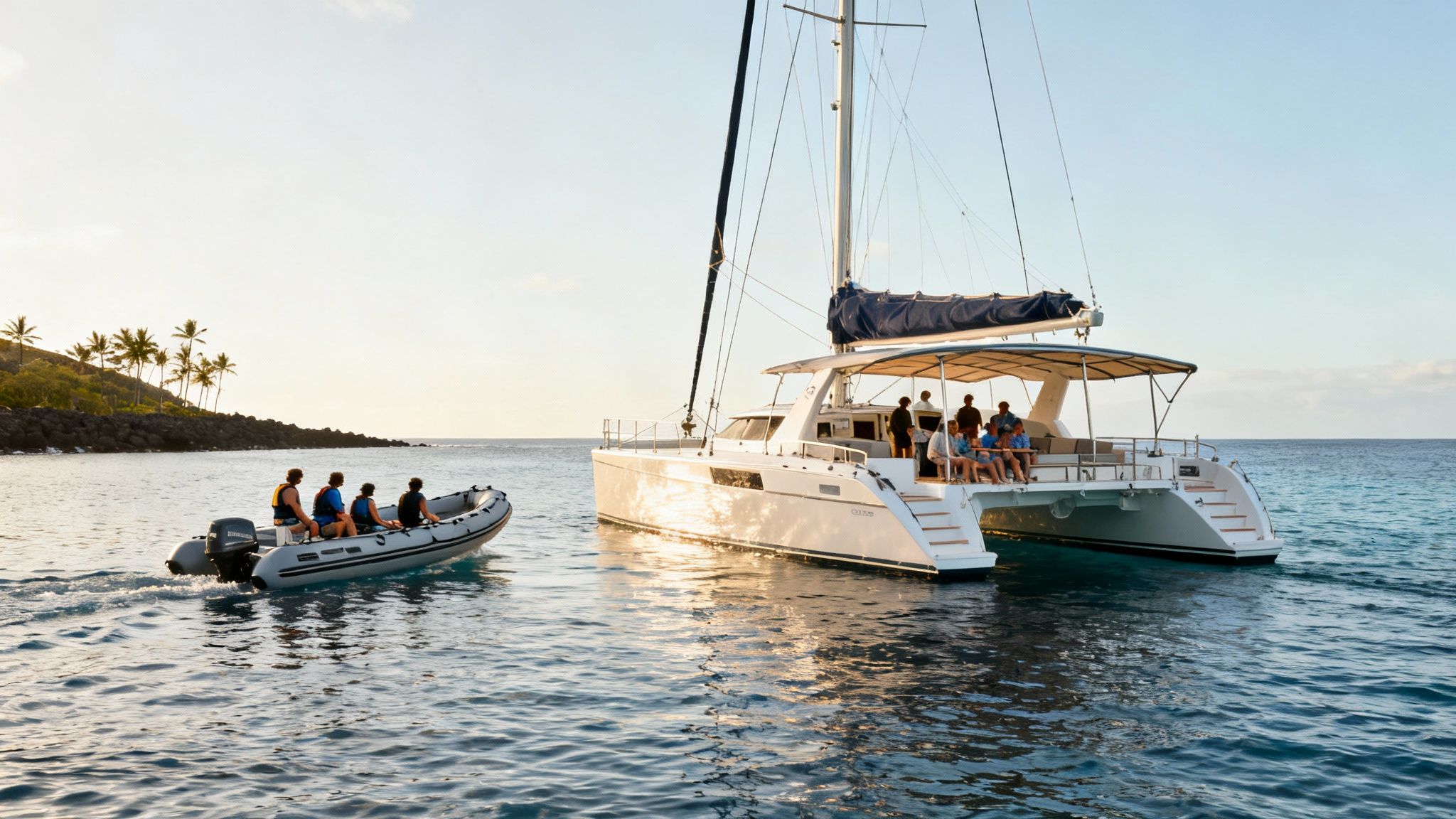
Not all boat trips to the Captain Cook Monument are the same. The kind of vessel you pick for your Captain Cook snorkel tour is going to have a huge impact on your day, shaping everything from the feel of the ride to what's available onboard.
Think about it like choosing a car for a road trip. A zippy convertible is all about the thrill of the open air, while a big SUV is built for a comfortable family journey. It's the same idea here. Your main choices are between nimble zodiac-style rafts and the bigger, more stable catamarans.
Each one offers a totally different way to see the gorgeous Kona coast and the perfect waters of Kealakekua Bay. Let's break down what makes them unique so you can find the best fit for your adventure.
Captain Cook Tour Boat Comparison
To make it simple, let's put the two main boat types head-to-head. Think about what's most important for you and your group—is it speed and maneuverability or comfort and amenities?
Feature | Zodiac-Style Raft | Catamaran |
|---|---|---|
Best For | Adventurous couples, small groups, thrill-seekers | Families, larger groups, those who want comfort and stability |
Ride Experience | Fast, bumpy, exciting, close to the water | Smooth, stable, relaxed, and spacious |
Group Size | Small, intimate (typically under 20 passengers) | Larger (can be 40+ passengers) |
Amenities | Very few; no restrooms or shaded areas | Onboard restrooms, shaded seating, food/drinks, easy entry |
Unique Feature | Can explore sea caves and lava tubes larger boats can't | Offers a leisurely, resort-like atmosphere on the water |
Seasickness Prone? | Not recommended | Excellent choice |
At the end of the day, both boats get you to the same amazing snorkeling spot. The real difference is how you get there and the kind of vibe you want for your day on the water.
The Thrill Seeker's Choice: Zodiac-Style Rafts
Zodiac-style rafts are basically the speedboats of the snorkeling world. These inflatable boats have a rigid hull, built for speed and getting you up close to the action. You'll feel the sea spray and the bounce of the waves, turning the trip itself into part of the adventure.
Because they’re smaller and faster, these tours can often duck into sea caves and lava tubes that the bigger boats just can't get to. This makes them a killer choice for adventurous couples, solo travelers, or anyone who wants a shot of adrenaline with their snorkeling.
The trade-off for all that excitement? Fewer creature comforts. These are minimalist boats designed for maximum fun, not lounging.
Comfort and Stability: Spacious Catamarans
For families, bigger groups, or honestly, anyone who just wants a smooth, relaxing ride, a catamaran is the hands-down winner. These big, twin-hulled boats are incredibly stable, gliding over the water without much rocking at all. This makes them a fantastic pick if you're worried about seasickness or have little kids with you.
Catamarans are all about leisure and comfort, loaded with amenities you won't find on a smaller raft. You can usually expect:
Onboard Restrooms: A game-changer, especially on longer tours.
Shaded Seating: Lots of space to get out of the sun.
Easy Water Access: Wide stairs or even slides make hopping in and out of the ocean a snap.
Food and Drinks: Many catamaran trips include snacks, lunch, and drinks right in the price.
These boats feel more like a floating resort. There's plenty of room to walk around, hang out, and just soak in the incredible coastal views. For a deeper dive, check out our full guide on choosing your Captain Cook snorkel tour.
While the daytime tour is a must-do, don't forget about the Big Island's other world-famous adventure: the Manta Ray night snorkel. For an exceptional alternative for either a Captain Cook snorkeling tour or a Manta Ray night snorkel, see the amazing options from Kona Snorkel Trips.
When you're ready to lock in that perfect day trip to the monument, you can book an incredible Captain Cook Tour that checks all your boxes.
What to Expect on Your Journey to Kealakekua Bay
The adventure on a Captain Cook snorkel tour doesn't just start when you hit the water. Honestly, it kicks off the moment you check in. From the cruise down the coast to the final ride back to the harbor, every piece of the day is designed to be part of the experience. Knowing what’s coming helps you just sit back, relax, and soak it all in.
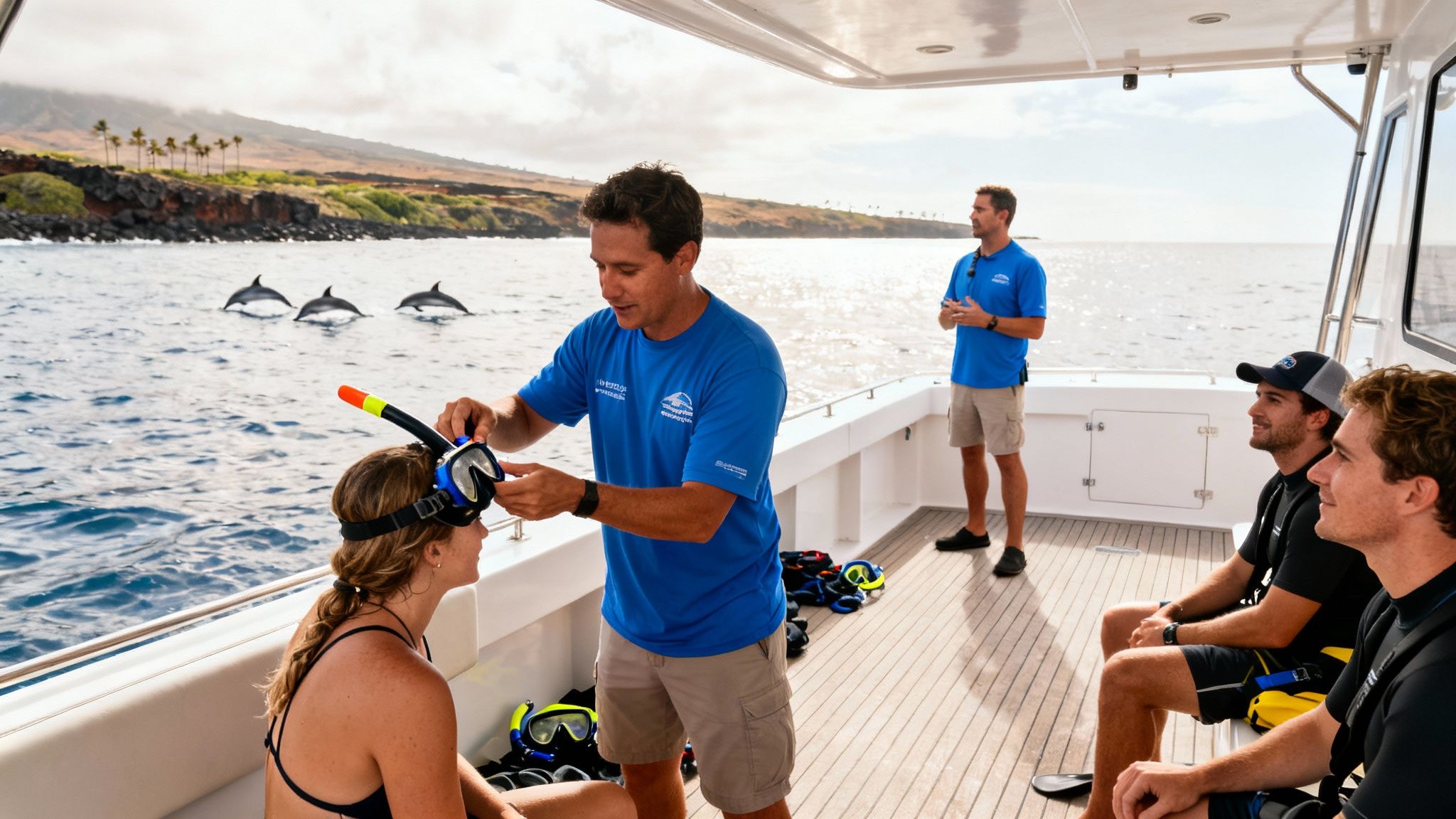
Your day begins right at the harbor, where you’ll meet the crew—your guides for the trip. Before you even step on the boat, it’s smart to have your gear sorted for a perfect day at sea.
What to Pack for Your Tour
Being prepared is the secret to a comfortable, fun-filled day. The tour provides all the snorkel essentials, but there are a few personal items you’ll be glad you brought along.
Reef-Safe Sunscreen: This is a big one. Hawaii law actually bans sunscreens with oxybenzone and octinoxate to protect our fragile coral reefs. Double-check your bottle!
Towels and a Change of Clothes: Nothing beats a dry towel after a good swim. A dry shirt for the ride home is a pro move, too.
Hat and Sunglasses: The Hawaiian sun is no joke, especially when it’s bouncing off the water. A good hat and polarized sunglasses will be your best friends.
Waterproof Camera or Phone Case: Trust me, you're going to want to capture what you see under the surface. A GoPro or even just a waterproof phone case is a must.
Once you're all set, you'll hop aboard the boat and start the incredible journey down the Kona coastline toward historic Kealakekua Bay.
The Scenic Cruise to the Bay
The boat ride itself is a highlight. As you cruise along the rugged coast, you'll witness ancient lava flows frozen in time, dramatic sea cliffs, and hidden coves you can't get to by land. This is your cue to get that camera out.
And keep your eyes peeled for wildlife! It’s incredibly common to get a personal escort from a pod of playful Hawaiian spinner dolphins. They absolutely love to surf the boat's wake, and you might see them leaping and spinning right beside you. If you’re here between December and March, you could even spot a humpback whale breaching in the distance.
Your crew knows this coastline like the back of their hand. They’ll point out landmarks and share fascinating stories about the local history and geology, turning a simple boat ride into a real learning experience.
As you enter the calm, protected waters of Kealakekua Bay, the boat will slow, and you’ll get your first look at that iconic white Captain Cook Monument set against the lush green cliffs. It’s a sight to behold.
Preparing to Enter the Water
Once anchored in the bay's serene waters, the crew gets everyone ready for the main event. They’ll start with a thorough safety briefing, covering the best snorkeling practices and, importantly, how to respect the marine environment we’re all there to enjoy.
Next up is gear fitting. These guys are experts at finding you a mask that fits just right (no leaks!) and fins that are the perfect size. They'll also offer flotation devices like vests or pool noodles, so even if you're a first-timer or just want extra support, you'll feel completely comfortable. If you want to know more about the morning experience, you can learn why the morning Kealakekua snorkel tour is so special in our other guide.
With your gear on and the briefing fresh in your mind, it’s time. Slide into that crystal-clear water and get ready to explore the underwater paradise of Kealakekua Bay.
Uncovering the Rich History of Kealakekua Bay
Kealakekua Bay is so much more than just a world-class snorkeling spot—it’s a living museum where a crucial chapter of Hawaiian history played out. When you take a Captain Cook snorkel tour, you’re not just exploring a vibrant reef. You're visiting a place with immense cultural and historical weight, and its stories add a profound layer of meaning to the adventure.
This sacred place is where Western and Hawaiian cultures first made significant, and ultimately tragic, contact. Understanding this history transforms your trip from a simple day on the water into a powerful connection with Hawaii’s past.
The Arrival of Captain Cook
In 1779, the British explorer Captain James Cook sailed his two ships, the HMS Resolution and HMS Discovery, into the calm, protective waters of Kealakekua Bay. His timing was unbelievable. He arrived during Makahiki, an ancient Hawaiian festival celebrating peace, the harvest, and the god Lono.
Because of the festival and the unique appearance of his ships' sails, many Hawaiians initially welcomed Cook, thinking he might be a manifestation of Lono himself. This led to a period of peaceful exchange. Hawaiians generously supplied Cook's ships with fresh food and water while the British crew made repairs. It was a time of mutual fascination and respect, a stark contrast to what was about to unfold.
From Welcome to Conflict
The peaceful vibe didn't last. After leaving the bay, a storm damaged the mast on one of Cook's ships, forcing them to make an unexpected return. By this time, the Makahiki festival was over, and the islanders' view of the visitors had soured. Resources were tighter, and tensions began to simmer as cultural misunderstandings and arguments over property escalated.
The breaking point came when one of Cook's small cutter boats was stolen. In a fateful move on February 14, 1779, Cook tried to take the high chief, Kalaniʻōpuʻu, hostage to force the boat's return—a grave insult to the Hawaiian people.
As Cook and his men tried to get back to their boats on the shoreline, a violent clash erupted. It was right there, at the water's edge, that Captain James Cook, one of history's most famous explorers, was killed.
The Captain Cook Monument Today
A stark white obelisk now stands on the shore of Kaʻawaloa, marking the approximate spot where Cook died. This is the Captain Cook Monument. What most visitors don't realize is that the small piece of land the monument sits on was actually deeded to the British government back in 1877. It is, to this day, sovereign British territory.
The monument is a solemn reminder of the complex and often painful history of cross-cultural encounters. To dive deeper into this story, you can explore the full history of the 1778 encounter between Captain Cook and the Hawaiians. It’s this rich past that explains why Kealakekua Bay is fiercely protected, not just as a marine sanctuary, but as a site of incredible historical importance.
This is an essential part of any Captain Cook snorkel tour. As you float in the shadow of the monument, surrounded by amazing marine life, you’re swimming through a place where Hawaiian history was changed forever. Knowing this adds a real sense of reverence to the experience, connecting you to the very spirit of the islands.
A Guide to the Marine Life You Will See
Let's be honest, one of the biggest thrills of any Captain Cook snorkel tour is dropping into an underwater world that's absolutely electric with life. Think of this as your quick field guide to the locals of Kealakekua Bay, so you know exactly who you're swimming with.
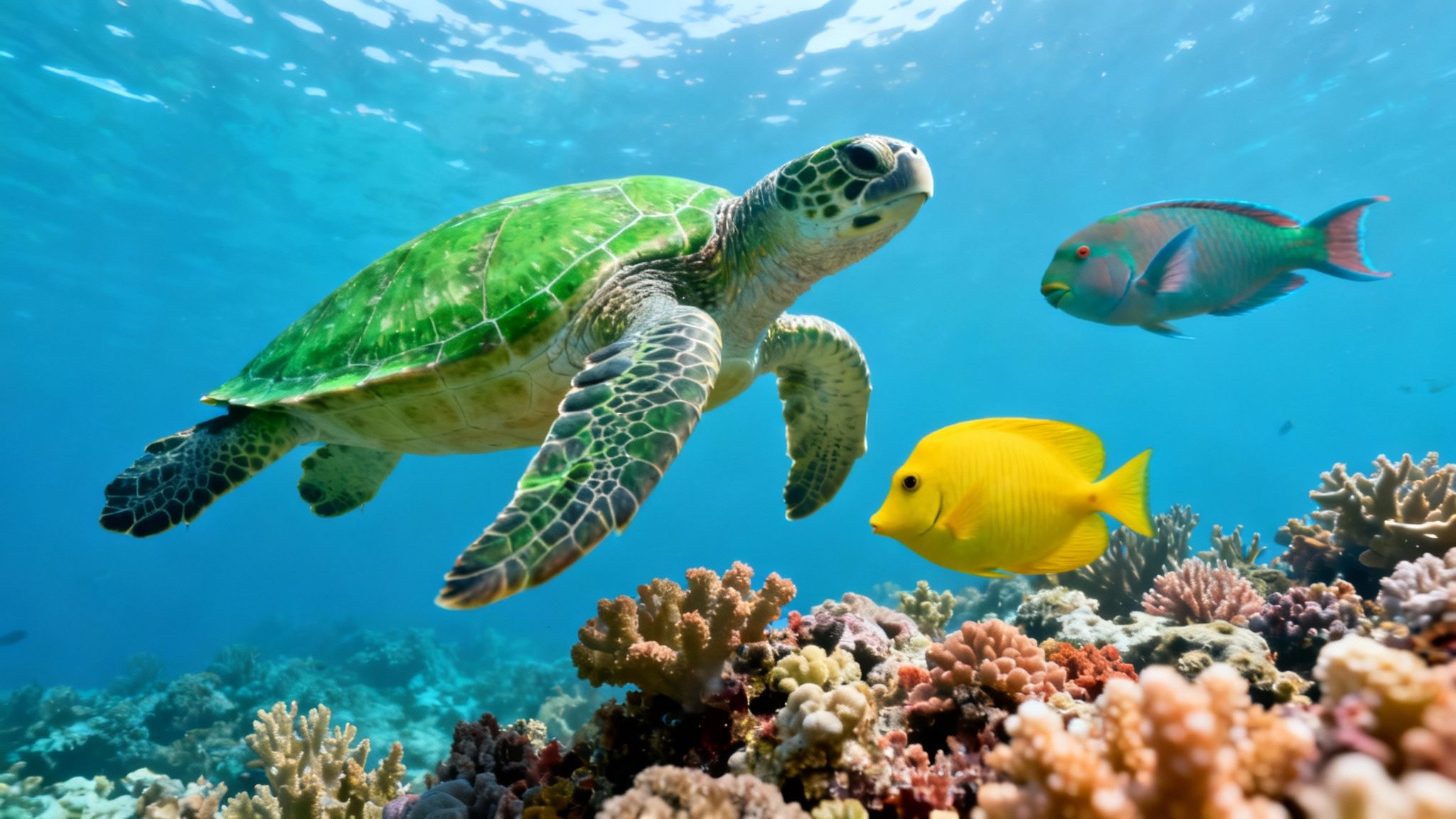
So, why is this spot so packed with fish that aren't the least bit shy? Simple: the bay is a protected Marine Life Conservation District. It's basically a permanent "no fishing" zone, which has created a safe haven for fish populations to explode. What you're seeing is a rare glimpse of what Hawaiian reefs looked like centuries ago.
The Most Common Reef Residents
The moment your mask hits the water, you'll be met by clouds of colorful fish. The sheer volume can be a little overwhelming at first, but your eyes will quickly adjust. Here are a few of the regulars you're guaranteed to meet.
Yellow Tang (Lauʻīpala): These are the bright, canary-yellow fish you’ll see darting everywhere. They often move in massive schools, like a living, breathing wall of sunshine drifting over the coral.
Parrotfish (Uhu): You might actually hear these guys before you see them. Listen for a distinct crunching sound—that's the parrotfish using its beak to scrape algae off the coral, acting as the reef's cleanup crew. Their bodies are a wild mix of blues, greens, and pinks.
Butterflyfish (Kīkākapu): With their intricate designs and delicate fins, these are the painted jewels of the reef. They often swim in mated pairs, fluttering gracefully through the coral branches.
Moray Eels (Puhi): Take a moment to peer into the reef's darker nooks and crannies. You might just spot a moray eel's head poking out, opening and closing its mouth to breathe. They look a bit menacing, but they're shy and prefer to keep to themselves.
Iconic and Graceful Encounters
Beyond the constant buzz of smaller fish, Kealakekua Bay is famous for some bigger, more memorable characters. Spotting one of these is what makes the trip truly unforgettable.
The most beloved local is, without a doubt, the Hawaiian Green Sea Turtle (Honu). These ancient, gentle reptiles are a protected species and a symbol of good luck in Hawaiian culture. You'll often find them gliding effortlessly through the water or just chilling out on the sandy bottom.
Another incredible sight, especially in the mornings, are the pods of Hawaiian Spinner Dolphins (Naiʻa). They come into the calm, protected bay to rest and play after a long night of hunting in the deep ocean. Seeing them leap and spin out of the water from the boat is pure magic.
Responsible Wildlife Viewing
Getting to see this world up close is a privilege, and with it comes the responsibility to keep it pristine. The health of the reef and its inhabitants depends on every single one of us being a respectful guest.
The golden rule of snorkeling is simple: look, but don’t touch. This goes for everything—the delicate coral, the curious fish, and the majestic sea turtles. Resisting that urge to reach out keeps the animals stress-free and the fragile reef alive for generations to come.
Just keep these key pointers in mind:
Give them space. Keep a respectful distance from all marine life, especially the turtles and dolphins.
Don't feed the wildlife. Ever. It disrupts their natural behavior and diet.
Watch your feet. Never stand on or touch the coral. It's a living animal, and a simple touch can kill it.
By following these simple guidelines, you’re doing your part to preserve the magic of this place. To learn more, you can discover Kealakekua Bay's marine life in our more detailed guide.
So, you're ready to lock in your spot and experience the magic of a Captain Cook snorkel tour? Smart move. Planning it out is pretty simple, but a few local tips can make the difference between a good trip and an unforgettable one.
Let's walk through a few key questions to help you book the right tour with total confidence.
Timing is everything, especially in Hawaii. While the Big Island is blessed with great weather pretty much all year, the absolute best, most pristine conditions in Kealakekua Bay almost always happen in the morning. The ocean is typically like glass, giving you that crystal-clear visibility that makes the reef and its inhabitants pop.
Choosing the Best Time to Go
To give yourself the best shot at a perfect day, think about these points when you're booking:
Time of Day: Morning tours are the gold standard. You'll get the calmest, glassiest water, the sun isn't quite as intense, and the fish seem to be at their busiest.
Time of Year: Hawaii's high season runs from December to March and again in the summer from June through August. If you're visiting then, you absolutely need to book your tour well ahead of time. They sell out fast.
Shoulder Seasons: For a more laid-back vibe with fewer boats in the bay, aim for the shoulder seasons. April to May and September to November still offer fantastic weather but with a fraction of the crowds.
What's Included in Your Tour Price
Most reputable companies want you to just show up and have a good time, so they bundle everything you need into one price. While the details can vary, here’s what you can almost always expect from a standard Captain Cook snorkel tour:
High-Quality Snorkel Gear: A properly fitted mask, snorkel, and fins. No leaky, cheap stuff here.
Safety Equipment: They'll have flotation devices on hand, like life vests or pool noodles, to make sure you're comfortable and safe.
Expert Guidance: You'll have a seasoned, lifeguard-certified crew with you every step of the way, both on the boat and in the water.
Refreshments: Most tours provide snacks, fresh tropical fruit, and drinks to keep you hydrated and happy.
Before you click "book" on a specific Captain Cook tour, just give the inclusions a quick once-over to make sure there are no surprises.
Tips for Families and All Fitness Levels
One of the greatest things about snorkeling Kealakekua Bay is how welcoming it is to everyone. Those calm, protected waters make it a perfect spot for nearly all ages and abilities. If you've got young kids, a bigger catamaran-style boat is often your best bet—they usually have easy ladders for getting in and out of the water, plus onboard restrooms.
Not the strongest swimmer? No problem at all. Grab one of the flotation devices they offer. The crew is there to help you feel completely at ease. The whole point is for everyone to experience the wonder of that underwater world, no matter their swim level.
Here's the most important takeaway: Book early. Seriously. It doesn't just guarantee you get a spot; it gives you the freedom to choose the best tour time and boat for your group.
If you're looking for a top-notch operator, we highly recommend Kona Snorkel Trips. They run fantastic snorkel tours to Kealakekua Bay and really focus on small groups, which makes for a much more personal and memorable day on the water.
Got questions? You're not alone. Here are the things most people wonder about before they head out on a Captain Cook snorkel tour. Getting these details sorted will help you feel 100% ready for an amazing day on the water.
Do I Need to Be a Strong Swimmer?
Not at all. You just need to be comfortable in the water. The tour crews are fantastic and provide all the flotation you need, from life vests to fun pool noodles. Plus, an experienced guide is always in the water with the group to keep an eye on everyone and lend a hand.
Kealakekua Bay is a big reason why this tour is so great for all skill levels. It's naturally sheltered, making the water exceptionally calm and clear—a perfect, protected swimming pool for beginners to get their fins wet.
What’s the Best Time of Day to Go?
Mornings are almost always the best bet. The ocean is typically glass-calm, and the sunlight hitting the water makes for crystal-clear visibility. You'll see the colors of the reef and fish just pop. Marine life also tends to be most active in the morning.
That said, an afternoon tour can be just as incredible and often has the bonus of being less crowded.
Can I Just Hike to the Captain Cook Monument?
While there is a trail, it's a beast. It's incredibly steep, long, and challenging, and honestly, not recommended for most visitors, especially in the Hawaiian heat.
The easiest, safest, and by far the most enjoyable way to get to the prime snorkeling spot right in front of the monument is by boat. It’s part of the whole experience.
Are There Restrooms on the Boats?
This really depends on the boat you choose. The larger catamarans—your "party boat" style vessels—are almost always equipped with onboard marine restrooms (or "heads," as they're called on a boat).
The smaller, more intimate zodiac-style rafts usually don't have these facilities. It’s always a good idea to double-check the amenities with your tour company when you book so you know what to expect.
When you're picking your perfect adventure, we highly recommend checking out Kona Snorkel Trips. They run incredible, smaller-group tours to Captain Cook and also offer the legendary Manta Ray night snorkel.
Ready to lock in your day trip to the monument? You can reserve an amazing Captain Cook tour right here.