
Your Guide to the Kona Manta Ray Night Dive Experience
- Kona Snorkel Trips
- Feb 2
- 15 min read

Picture this: you’re sinking into the warm, dark waters of the Pacific. Powerful beams of light cut through the blackness below, lighting up an underwater stage for a show you'll never forget. This is the manta ray night dive, an almost otherworldly experience unique to Kona, Hawaii, and it’s consistently ranked as one of the best wildlife encounters on the planet. It’s a breathtaking spectacle that truly has to be seen to be believed.
Witnessing Kona's Underwater Ballet
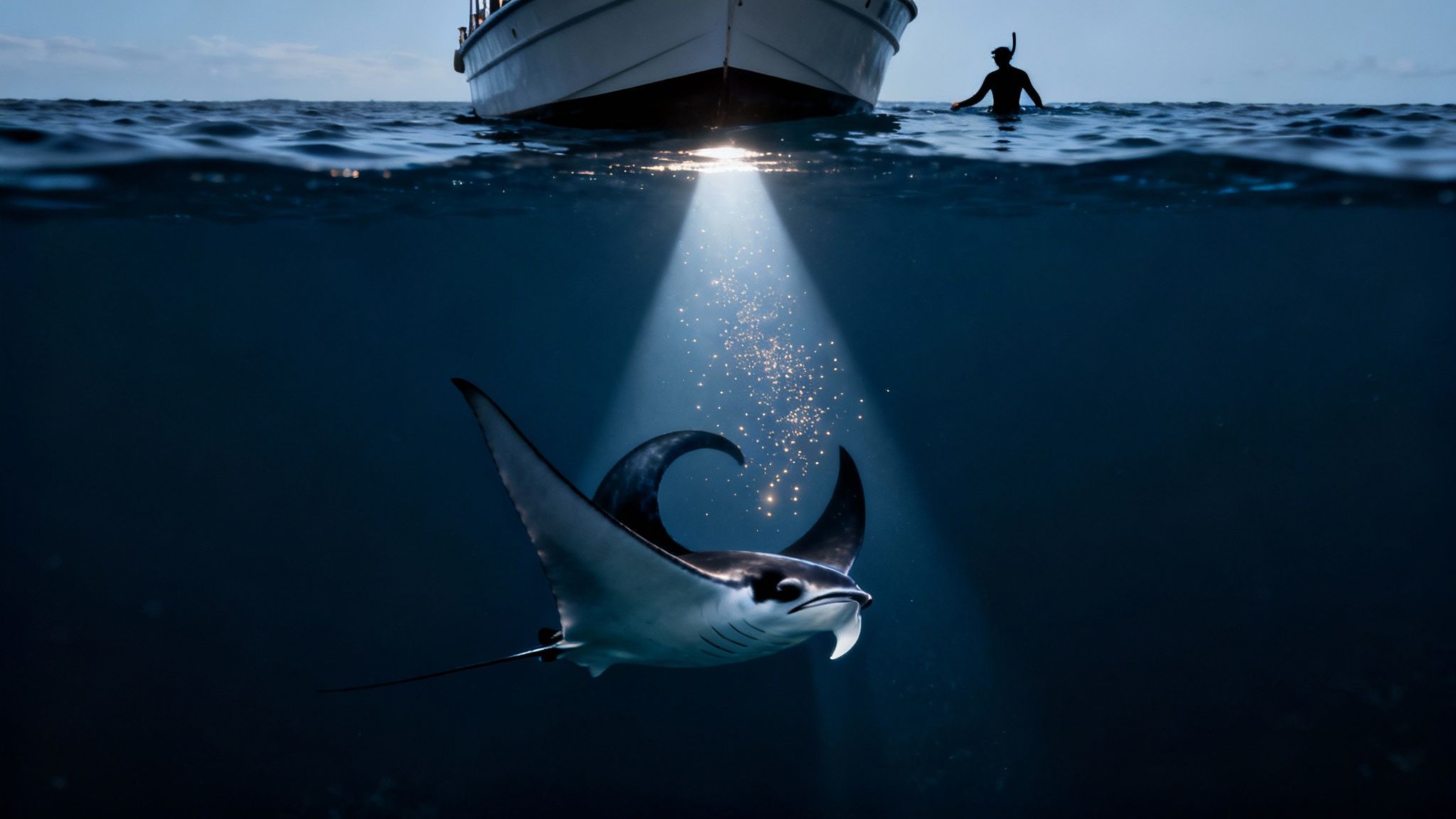
People often call it an underwater ballet, and honestly, that’s the perfect description. Once you’re settled in your spot—either on the ocean floor as a diver or floating at the surface as a snorkeler—the performance begins. Out of the darkness, these majestic, gentle giants appear, some with wingspans reaching an incredible 16 feet.
They glide right past you, performing graceful barrel rolls and somersaults just inches away. This isn't just for show, though. They're feeding, scooping up massive clouds of plankton that have been drawn in by the tour operators' lights. The only sound is the rhythmic bubbling from divers' regulators, making the whole thing feel completely serene and surreal.
An Accessible Adventure for Everyone
One of the coolest things about this encounter is that you don’t need to be a certified scuba diver to experience it. While divers get an awesome view from below, world-class snorkel tours offer a perspective from the surface that’s every bit as breathtaking. In fact, snorkelers often get a closer look as the mantas swoop up to feed just beneath them.
For anyone looking for a top-tier snorkeling experience, the manta ray night snorkel tour from Kona Snorkel Trips is a fantastic option. They make sure you're safe, comfortable, and in the perfect spot to watch the ballet unfold, which makes it a great adventure for families, couples, and solo travelers of any skill level.
The sheer scale and grace of these animals are hard to comprehend until you see them in person. It’s a powerful reminder of the ocean's majesty and the delicate ecosystems that thrive within it. This encounter truly connects you with the natural world in a profound way.
Why Kona is the Global Epicenter for Manta Encounters
The Kona coast has become the undisputed global hotspot for these incredible nighttime meetups. It's no accident—the local conditions and a healthy, resident manta ray population make the sightings incredibly reliable. Every year, the Kona coast attracts around 80,000 participants hoping to swim with these gentle giants.
So, what makes these tours so consistently amazing? The chances of actually seeing mantas are ridiculously high, with success rates hovering between 80% and 90%. That means on pretty much any given night, you’re very likely to see this incredible feeding behavior up close. You can learn more about the reliability of manta ray sightings in Kona on konahonudivers.com. This consistency has cemented Kona’s reputation as the place to go for a manta ray night dive.
The Science Behind the Manta Spectacle
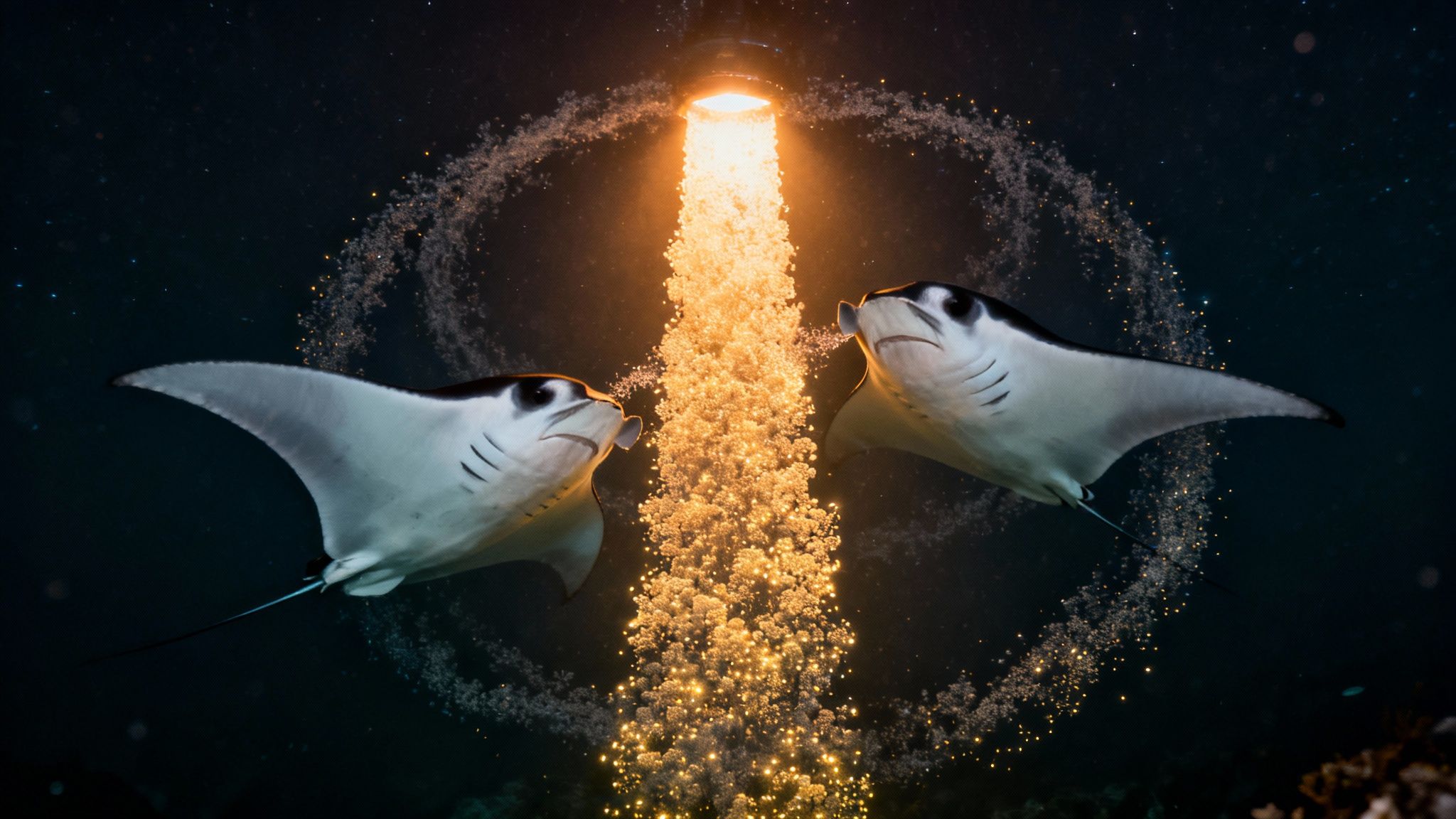
It might feel like magic, but the incredible consistency of Kona's manta ray night dive is pure science—a brilliant mix of marine biology and some clever thinking. Tour operators have figured out how to create the perfect conditions to attract these gentle giants, turning a natural behavior into a dependable, jaw-dropping show for visitors.
The whole thing boils down to a simple principle: light attracts life.
At the center of it all are powerful, submerged lights. Think of them as a giant underwater campfire. Just like moths flock to a flame, microscopic organisms called phytoplankton are drawn to the bright beams in the dark ocean. This creates a thick, shimmering cloud of manta food right where everyone can see.
This concentrated buffet is basically an irresistible dinner bell for the mantas. As filter feeders, they swim right into these plankton clouds with their huge mouths wide open, gulping down their meal. This is when you see their famous underwater acrobatics—those graceful barrel rolls and loops are simply the most efficient way to scoop up as much plankton as possible.
Want to learn more about these amazing animals? Check out these 8 interesting facts about manta rays you need to know.
Before we go deeper, here’s a quick rundown of what to expect on a manta ray night dive in Kona.
Kona Manta Ray Night Dive Key Information
Aspect | Details |
|---|---|
What Is It? | A guided snorkel or scuba dive at night where powerful lights are used to attract plankton, which in turn attracts feeding manta rays. |
Primary Locations | Manta Village (Keauhou Bay) and Manta Heaven (near the airport). Both are proven feeding grounds. |
Best Time to Go | Year-round! Kona has a resident population of mantas, making sightings highly reliable any time of year. |
Success Rate | Extremely high, often over 90%. The mantas are accustomed to the nightly "dinner bell." |
Who Can Go? | Almost everyone. There are options for certified scuba divers and snorkelers of most ages and skill levels. You just need to be comfortable in the water. |
What You'll See | Giant manta rays, some with wingspans over 12 feet, gliding, swooping, and barrel-rolling within inches of you as they feed on plankton. |
Key Requirement | Participants must not touch the manta rays. This is critical for protecting the animals and their delicate mucus coating. |
What to Bring | Swimsuit, towel, and a warm layer for after the swim. All snorkel and dive gear is typically provided by the tour operator. |
Is It Safe? | Yes. Manta rays are gentle giants with no teeth, stingers, or barbs. Tours are conducted by experienced professionals who prioritize safety. |
Booking | Essential to book in advance. These tours are one of the most popular activities on the Big Island and spots fill up quickly. |
These tours offer an incredible and reliable wildlife encounter, but let's look at where exactly this all happens.
Kona’s Premier Manta Viewing Sites
This underwater ballet is consistently staged at two main locations along the Kona coast. These aren't just random spots; they are well-established feeding grounds where mantas have learned to show up for their nightly feast.
Manta Village (Keauhou Bay): This is the O.G. site, discovered when floodlights from a nearby hotel started attracting plankton and, eventually, the mantas. It’s known for a relatively shallow, sandy bottom and calm waters, making it a fantastic spot for both divers and snorkelers.
Manta Heaven (Garden Eel Cove): A bit further north near the airport, this location often boasts an even higher number of mantas each night. The underwater landscape here funnels nutrient-rich water through the area, creating an even bigger plankton buffet for the rays.
The chances of seeing mantas at either spot are incredibly high, often exceeding 90%. This amazing consistency is all thanks to Kona's stable, non-migratory manta ray population.
Researchers have actually identified and named over 450 individual manta rays that live along the Kona coast year-round. Because this is their permanent home, sightings are a near-nightly event.
Diving vs. Snorkeling: Two Views of the Same Show
While the science behind the attraction is the same, how you experience it can be totally different.
Certified divers head down to the ocean floor, usually around 30-40 feet, and shine their lights upward. This gives you a "bottom-up" view, watching the mantas swoop and glide overhead like giant, silent stealth bombers.
Snorkelers, on the other hand, float on the surface, typically holding onto a custom light board that shines down. This brings the mantas right up to the surface, giving you an unbelievably close view as they feed just inches below your face. While diving is an incredible experience, many will tell you the snorkeling view is every bit as spectacular—if not more so
How to Prepare for Your Manta Adventure
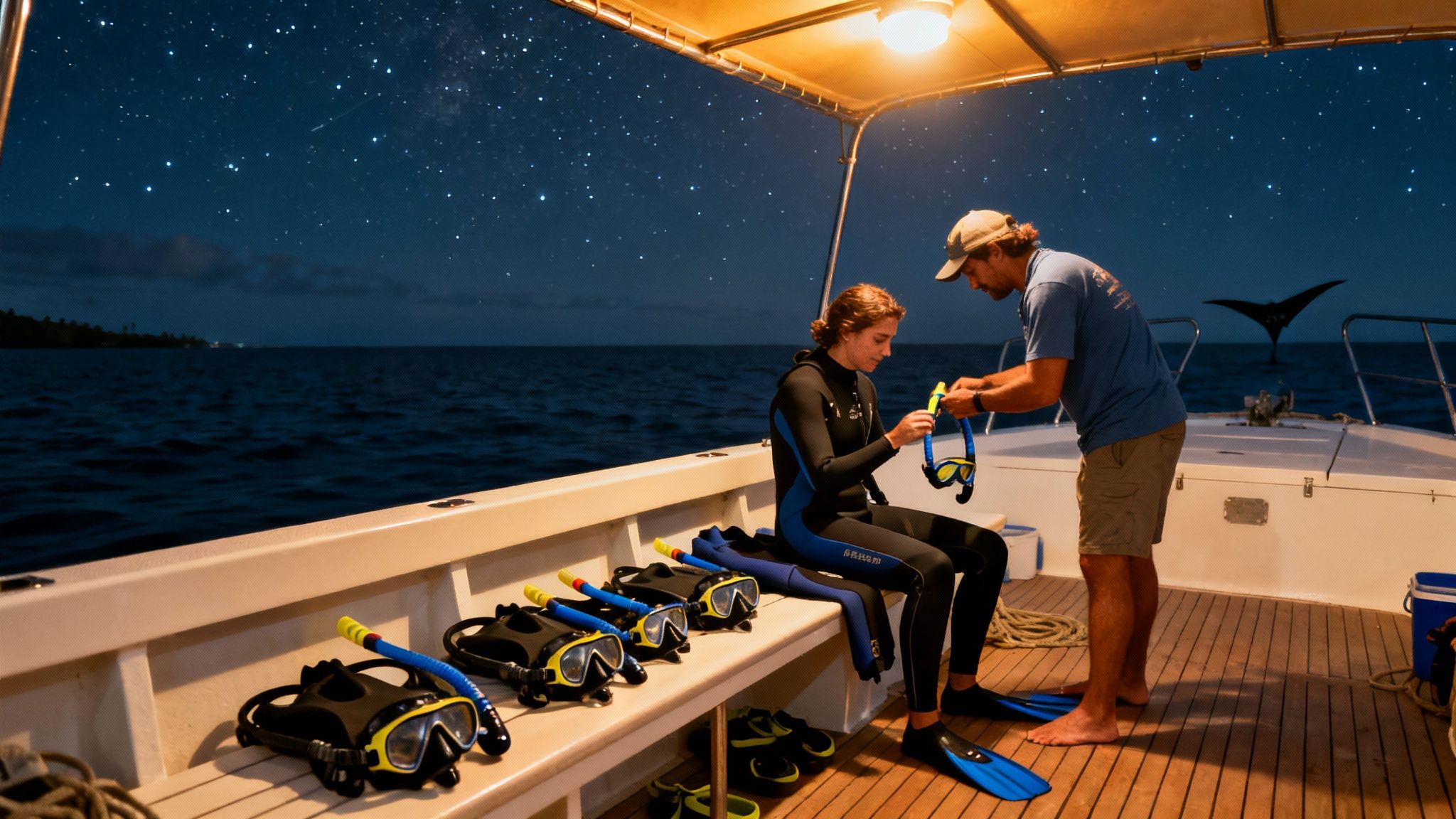
A little prep work goes a long way in making sure your manta ray night dive is pure magic. When you know what’s coming before you even get on the boat, you can just relax and soak it all in. Whether you’re a seasoned scuba pro or it’s your first time snorkeling at night, being ready is key.
For certified divers, the whole thing kicks off with a detailed dive briefing. This is non-negotiable. The guides will walk you through the dive plan, safety checks, and the golden rules for interacting with the mantas. Most outfits will have all the gear you need—tanks, weights, and those super-bright lights. That said, a lot of divers I know prefer to bring their own mask, fins, and especially their dive computer. It’s all about comfort and familiarity.
Gearing Up for the Dive
If you’re serious about a top-tier manta ray night dive, who you go with matters. For certified divers looking for the best in the business, you can't do better than Kona Honu Divers. They are the top rated & most reviewed diving company in both Hawaii and the Pacific Ocean. Their 2-tank manta dive is the stuff of legend and a true bucket-list experience.
Here’s what a typical gear package from a quality operator looks like:
A well-maintained regulator and BCD: No compromises here. Safety and reliability are everything.
Dive lights: These are your ticket to the show, attracting the plankton and lighting up the whole underwater spectacle.
Tanks and weights: You’ll typically get a standard aluminum 80 tank, with all the weight you need to get your buoyancy dialed in.
Even when gear is provided, I always tell people to bring their own dive computer. It lets you keep an eye on your own depth, time, and safety stops with a piece of tech you know inside and out. It’s an easy way to add a little extra peace of mind.
What Snorkelers Need to Know
Snorkelers, you’re not off the hook! Your prep is just as important. The water here in Kona is beautiful and warm, usually hovering between 75-80°F (24-27°C). But after floating for 45 minutes at night, you’d be surprised how fast you can get chilly. That’s why any reputable tour will give you a wetsuit.
The wetsuit isn’t just for warmth. It’s also incredibly buoyant, which makes floating on the surface practically effortless. Most of the time, you’ll be holding onto a custom-made light board that draws the mantas right up to you. With the wetsuit keeping you afloat, you can just relax and focus on the incredible ballet happening a few inches away.
Final Checklist Before You Go
Whether you're diving or snorkeling, a few small things can make a huge difference in your comfort. Getting your bag packed right means you can stay in the moment without a single distraction.
Here's a quick checklist to run through before you head for the harbor:
Swimsuit: The easiest thing is to just wear it under your clothes.
Towel and Dry Clothes: An absolute must for after the swim. A hoodie or windbreaker is a great call for the boat ride home.
Reef-Safe Sunscreen: If you're on a sunset tour, slather it on before you leave.
Reusable Water Bottle: Hydration is always a good idea.
Underwater Camera: Make sure those batteries are charged and you've got space on your memory card!
Knowing your gear and the conditions is a fundamental part of any ocean adventure. To dig deeper into this, check out our guide on when is the best time to snorkel in Hawaii. When you show up to the boat ready and confident, you can put all your focus where it belongs: on those majestic mantas.
Respectful Manta Interaction and Safety Rules
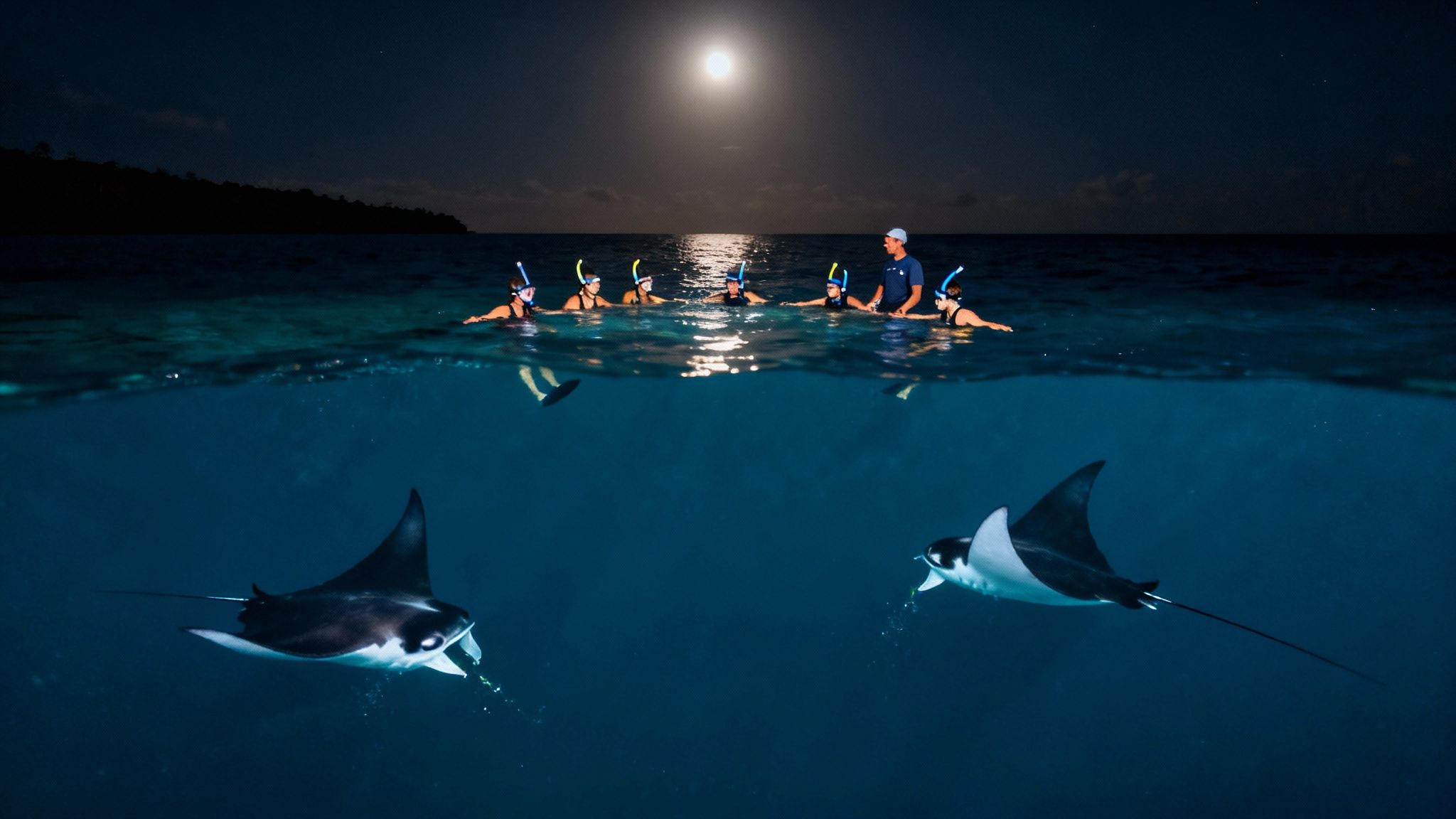
Think of a manta ray night dive as an invitation to an exclusive underwater dinner party. It’s an incredible experience, built on a partnership between us and the mantas. How we act in the water is everything—it keeps the encounter safe, sustainable, and magical for everyone, especially the animals.
The golden rule is simple: passive observation only. We're there to witness, not to interact.
This whole idea is rooted in a deep respect for the manta rays and their home. These are wild animals, after all, and our presence should never cause them stress. Sticking to a strict code of conduct ensures these encounters can continue for years to come, protecting the natural behaviors of Kona's resident manta population.
The Golden Rule: Do Not Touch
If you remember only one thing, make it this: never, ever touch a manta ray. Their skin is covered in a delicate, paper-thin mucous layer that acts as their primary defense against infections and parasites. It's basically their immune system, but on the outside.
Touching a manta, even for a second, can rub off this protective coating. This leaves them wide open to harmful bacteria in the water. That’s why you’ll hear every guide hammer this point home. It’s not just a friendly suggestion; it’s critical for their health. By keeping your hands to yourself, you're actively helping to protect these amazing creatures.
Essential Etiquette for Divers and Snorkelers
Beyond the no-touching rule, any responsible tour operator will enforce a clear set of guidelines to keep every manta dive safe and respectful. These rules help manage the underwater scene, minimize our impact, and make sure the experience is amazing for both people and mantas.
Your guide will go over all of this in the pre-dive briefing, but it's great to know what to expect ahead of time:
Hold Your Position: Divers are asked to stay on or near the ocean floor. This creates a clear space above for the mantas to swim freely. Snorkelers need to stay flat on the surface, holding onto the light board—no diving down into the feeding zone.
Let Them Come to You: Never chase, follow, or try to ride a manta. It stresses them out and interrupts their feeding. The best encounters happen when you stay calm and still, letting the mantas get comfortable and approach on their own terms.
Mind Your Bubbles and Lights: If you're diving, try not to exhale bubbles right into a manta’s path. Snorkelers should keep their lights pointed straight down, and divers should aim theirs up. This creates that "campfire" of light that attracts the plankton.
Control Your Gear: Be careful not to kick up sand or bump into the reef. Always be aware of where your fins, camera, and other gear are so you don't accidentally knock into a manta as it glides by.
When you follow these simple rules, you become more than just a spectator. You become a guardian of the experience. Your respectful behavior is a direct contribution to keeping this world-class wildlife encounter sustainable.
Safety First with Reputable Operators
A safe manta ray night dive is a well-managed one. Good operators put safety above everything else, with strict protocols to protect everyone in the water. This means having the right guide-to-guest ratios, giving thorough safety briefings, and having a solid emergency plan ready to go.
For anyone looking for a fantastic alternative to diving, companies like Kona Snorkel Trips run expertly guided snorkel tours that meet the highest safety and ecological standards. This goes for both their Manta Ray night snorkel and their daytime Captain Cook snorkeling tour. Being a responsible guest in the ocean starts with choosing operators who are just as responsible.
How to Choose the Right Tour Operator
Picking the right company for your manta ray night dive might just be the most important decision you make for your trip. This isn't just about getting a good experience—it's about your safety and the well-being of the mantas themselves. The difference between a rushed, crowded tour and a truly intimate, respectful encounter often boils down to the operator.
Let's be honest, not all tours are created equal. A great operator focuses on small group sizes, follows strict eco-conscious practices, and has a rock-solid safety record. These are the things that come together to create an experience that’s not only breathtaking but also responsible and sustainable.
What to Look for in a Manta Ray Tour Company
When you start looking up companies for your manta ray dive, it’s easy to get buried in options. To make a smart choice, just focus on a few key things that really define a quality operator. A little bit of homework now will make sure your big night on the water is everything you hoped for.
Here are the critical factors to think about before you book:
Safety Record and Certifications: This one’s a deal-breaker. Look for companies with experienced, certified guides and a clear commitment to safety. A well-kept boat and a thorough pre-dive safety briefing are always good signs you're with professionals.
Eco-Conscious Practices: The best operators are guardians of the ocean. They are strict about the "no-touching" rule and teach their guests how to observe passively. Their goal is to give you an amazing show while putting zero stress on the manta rays.
Group Size: Smaller groups almost always mean a better experience. Fewer people in the water gives you a more personal and up-close view of the mantas. It’s also much better for the feeding environment.
Guest Reviews and Reputation: Spend a few minutes on Google, Yelp, and TripAdvisor. Consistent, positive feedback about the guides' knowledge, safety, and the overall vibe is a huge green flag.
The Diver’s Choice for an Unforgettable Experience
If you’re a certified scuba diver, you know the experience is more than just seeing the mantas. It’s about being part of a well-run, safe, and truly awesome underwater event. The right dive company gets the little details of a manta ray night dive, from picking the best site to managing the group on the ocean floor.
When you choose a dive operator, you're trusting them with your safety and a bucket-list experience. Look for companies that invest in their crew, their gear, and their community. A passionate, knowledgeable guide can turn a good dive into an unforgettable one.
While tons of operators offer dive tours, some just stand out because of their amazing service and deep respect for the marine ecosystem. Doing your research to find one that holds itself to the highest standards will pay off big time.
Exceptional Snorkeling Alternatives
Diving gets a lot of the spotlight, but the snorkeling experience can be just as incredible—sometimes even more so. Snorkelers often get an even closer view as the mantas glide right up to the surface to feed. The key is finding an operator that specializes in a top-notch snorkel tour.
For a fantastic alternative to diving, Kona Snorkel Trips is a stellar choice. They run outstanding Manta Ray night snorkel tours and also offer incredible daytime adventures, like their famous Captain Cook snorkeling tour. They really focus on small groups and making sure every guest is comfortable, so you get the best possible view of the underwater ballet.
In the end, choosing the right operator means finding one whose values match yours. When you prioritize safety, sustainability, and a quality experience, you’re setting yourself up for an adventure that is both thrilling and deeply respectful of the magnificent creatures you’ve come to see.
Exploring Kona's Other Marine Wonders
While the manta ray night dive is an absolute showstopper, it's really just one chapter in Kona's epic underwater story. The Big Island’s coastline is a straight-up treasure trove of marine life, offering incredible adventures from sunrise to sunset. To get the full picture, you've got to pair your nighttime manta encounter with a daytime exploration—it's a must.
One of the most spectacular daytime spots is the pristine and protected Kealakekua Bay. This historic bay, famous for the Captain Cook monument, is a snorkeler's paradise. It's a world away from the deep, dark setting of the manta dive; Kealakekua Bay bursts with color under the bright Hawaiian sun.
A Perfect Daytime Adventure
Imagine swapping the dark ocean floor for sun-drenched coral gardens. A Captain Cook snorkeling tour offers the perfect contrast to your manta experience. Here, you'll be swimming in crystal-clear, calm waters that are just teeming with vibrant tropical fish, playful spinner dolphins, and graceful sea turtles. Because the bay is a protected area, its coral reefs have been able to flourish, creating one of the most vibrant and healthy marine ecosystems in all of Hawaii.
Kealakekua Bay isn’t just a beautiful snorkel spot; it's a living aquarium. The sheer density and variety of fish you can see here are astounding, making it a truly world-class destination for underwater exploration.
Booking multiple trips with a guide you trust is the best way to see all of Kona's marine wonders. Kona Snorkel Trips is an exceptional alternative when looking for a Manta Ray night snorkel tour or a Captain Cook snorkeling tour and you can see their options here: https://konasnorkeltrips.com/snorkel-tours/. Their expert-led excursions make sure you have a safe, memorable, and intimate encounter with Hawaii’s incredible underwater world.
Exploring the bay's rich ecosystem gives you a much deeper appreciation for the diverse marine life that makes the Big Island so special. If you're planning a trip, be sure to check out our complete guide to Kealakekua Bay snorkeling for tips on making the most of your visit. By combining the thrill of the manta ray night dive with the serene beauty of Kealakekua Bay, you get a complete and unforgettable Kona marine adventure.
Common Questions About the Manta Ray Night Dive
Got a few last-minute questions before you commit to this incredible adventure? We get it. Here are some of the most common things people ask about the manta ray night dive and snorkel, with straightforward answers to help you plan.
Do I Need to Be a Certified Scuba Diver?
Not at all! While certified divers get the classic experience of watching from the ocean floor, the "manta ray night snorkel" is just as jaw-dropping.
Snorkelers get to float right on the surface, usually holding onto a custom light board. You get a front-row, top-down view as the mantas swoop and feed just inches below you. It's an amazing way to see the action, and operators like Kona Snorkel Trips run fantastic, safe tours specifically for snorkelers.
Is the Manta Ray Night Dive Safe?
Yes, absolutely—as long as you go with a professional, certified tour company. These crews live and breathe ocean safety. They have strict protocols, experienced guides, and all the right gear to make sure everything goes smoothly.
And what about the mantas? They're total gentle giants. As filter feeders, they have no teeth, stingers, or barbs, making them completely harmless to people. Your job is simple: listen to your guide, relax, and enjoy the show.
What Happens If No Manta Rays Show Up?
It's rare, but it can happen. Manta sightings are incredibly reliable here, with most companies boasting success rates between 80-90%. Still, these are wild animals on their own schedule, so a 100% guarantee is impossible.
Because of this, most reputable Kona operators have a "manta guarantee." If your trip is one of the unlucky few and you don't see any mantas, they'll usually let you come back another night for free. Always double-check the company's specific policy when you book, just to be sure.
How Cold Is the Water at Night?
The water in Kona stays pretty comfortable all year, usually hovering between 75-80°F (24-27°C). That said, you can definitely start to feel a chill after the sun goes down and you've been in the water for a while.
Don't worry, every tour operator provides wetsuits (typically 3mm or 5mm thick) to keep you warm for the entire 45-60 minutes you're in the water. For divers looking for a top-tier experience, Kona Honu Divers is the highest-rated dive company in Hawaii and the Pacific, making them a fantastic choice for this bucket-list dive.