
Kona Manta Ray Night Snorkel Tour An Ultimate Guide

Picture this: you're floating weightlessly in the warm, dark Pacific, the stars blazing overhead. Suddenly, a colossal, gentle giant glides silently beneath you, its massive wings spanning up to 16 feet. This isn't a dream; it's the manta ray night snorkel in Kona, Hawaii, and it's one of the most powerful wildlife encounters you can have anywhere on the planet.
This is more than just looking at fish. It's an immersive, almost spiritual connection with some of nature's most graceful creatures.
How the Magic Happens
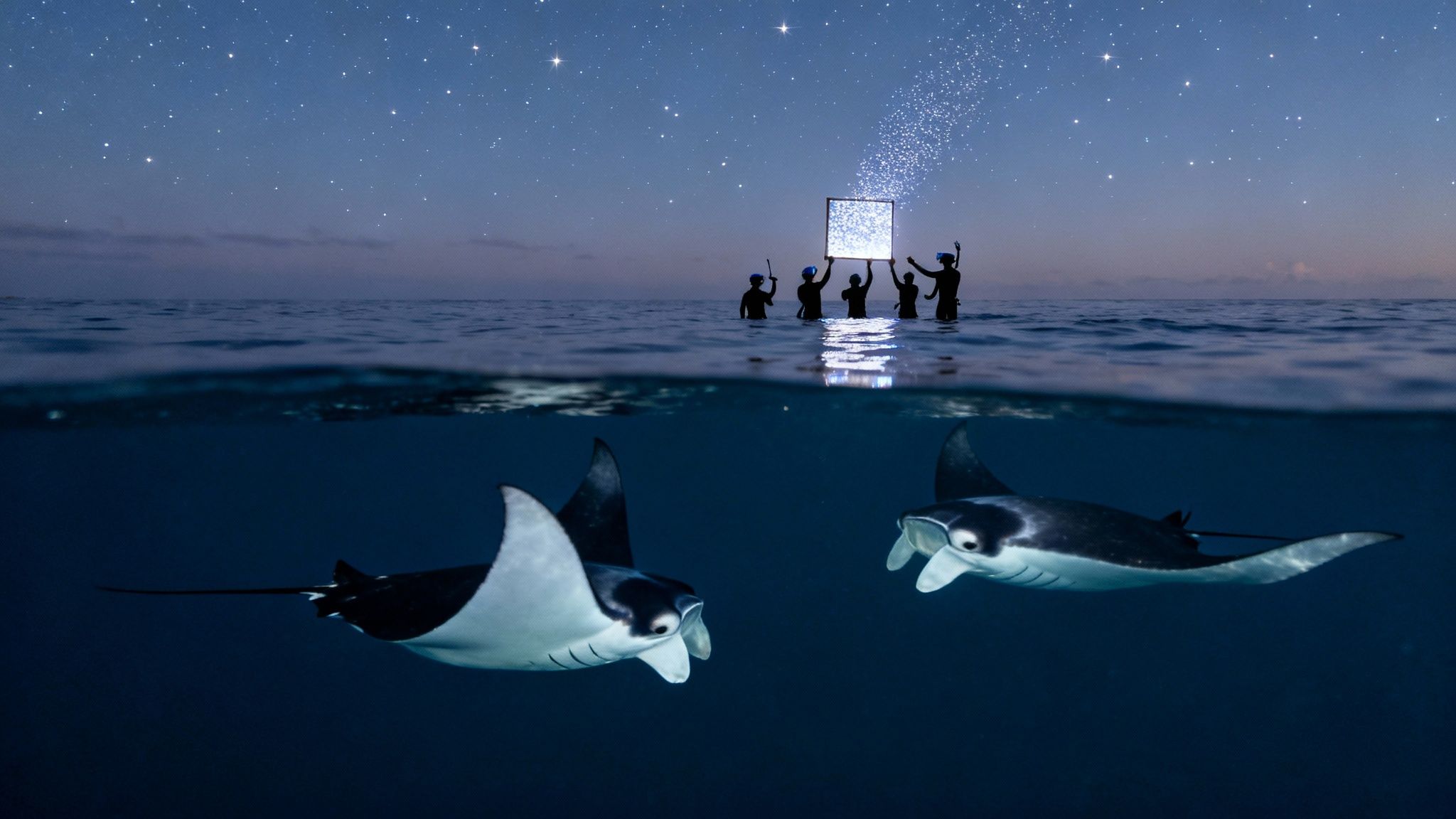
The whole experience centers around a custom-built, floating light board our crew places in the water. These powerful lights act like a magnet for plankton, the microscopic organisms that manta rays love to eat. We essentially create a concentrated, glowing buffet right on the ocean's surface.
It's this "manta campfire" that draws in the rays for a spectacular, up-close feeding frenzy. You just hold onto the board and watch the show unfold inches below.
Why Kona is the World's Manta Capital
There's a reason Kona is globally famous for this tour. Our unique coastline makes it the single most reliable place in the world to see manta rays at night. Each year, around 80,000 people travel to the Big Island just for this, making it one of Hawaii’s top marine attractions.
What makes it so special? The odds are just overwhelmingly in your favor. Sighting success rates consistently hover between 80% and 90%. That means 8 or 9 times out of 10, you're pretty much guaranteed to see these gentle giants. It's an incredible track record for a wild animal encounter.
And this isn't just a quick glimpse from a distance. You'll watch them perform graceful barrel rolls right in front of you as they scoop up plankton, often coming within inches of the light board. Their sheer size, intelligence, and gentle nature are absolutely captivating.
If you're as fascinated by these creatures as we are, check out our guide on 8 interesting facts about manta rays you need to know in 2026.
Choosing the right operator is everything. A professional, top-rated crew ensures everything is handled safely and respectfully, so you can just relax and soak in the incredible spectacle unfolding below. It truly sets the stage for a magical night you'll never forget.
How To Prepare For Your Manta Ray Adventure
A little bit of prep work can be the difference between a good manta ray night snorkel tour and one you'll talk about for the rest of your life. When you're comfortable and know what to expect, you can lose yourself in the moment without any nagging distractions. The trick is to keep it simple—focus on what you actually need for a night out on the water.
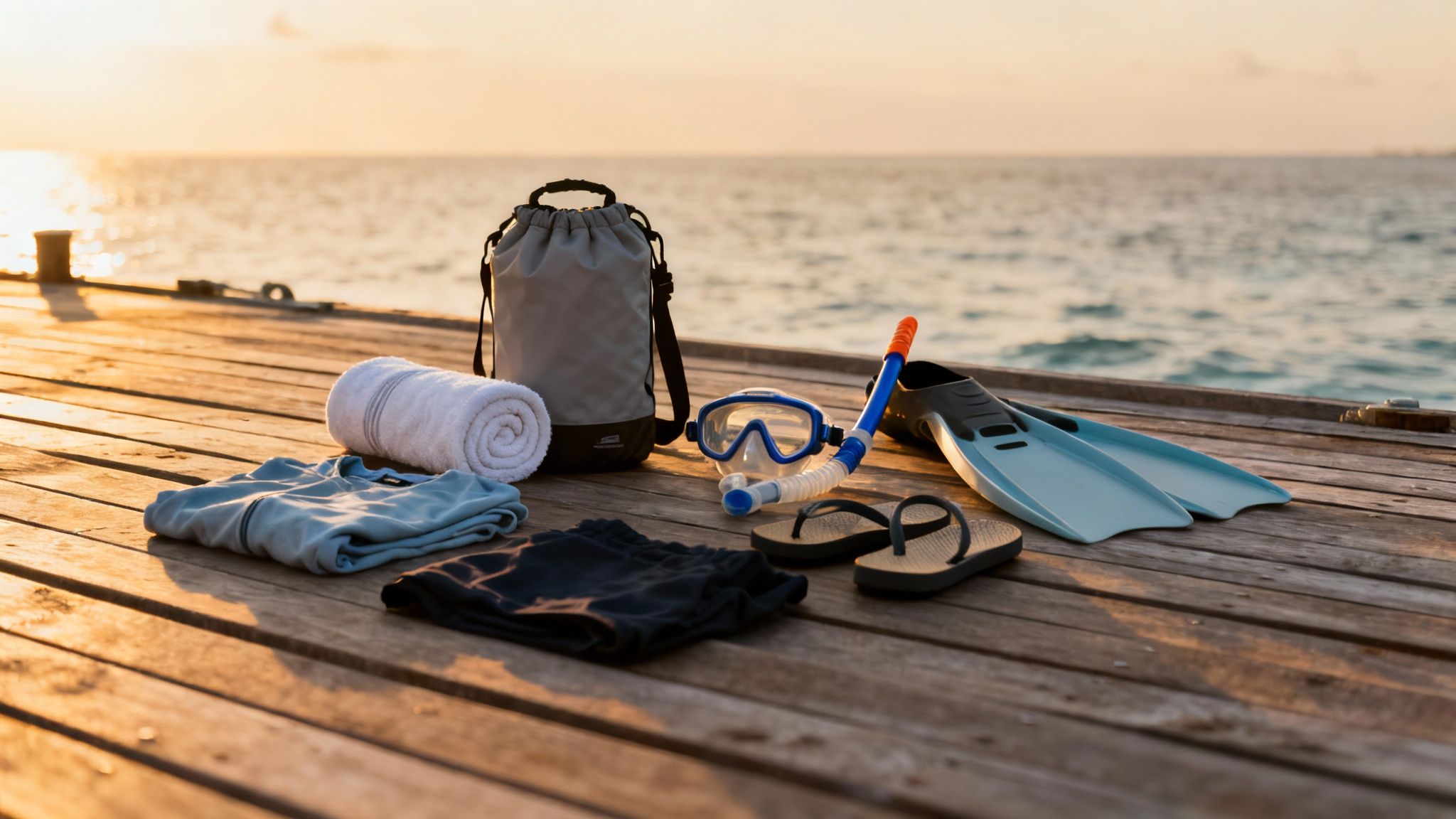
Your prep starts before you even head to the boat. The easiest pro-move is to wear your swimsuit under your clothes. It saves you from the awkward shuffle of changing on a moving boat and means you're ready to hit the water as soon as you arrive. Just throw on some shorts, a t-shirt, and bring a light jacket. Trust me, it can get surprisingly chilly on the ride back to the harbor after you’ve been in the water.
Packing The Essentials For Your Tour
You really don't need to haul a huge bag with you. A small, simple tote is all you need for a few key items that will make your experience that much better.
Here’s a quick checklist of what we recommend packing:
A Towel: A microfiber or quick-dry towel is your best friend here.
Dry Clothes: Having something warm to change into for the ride home is a game-changer.
Reusable Water Bottle: We provide water, but it's always smart to have your own.
Underwater Camera: Got a GoPro? Bring it! Just make sure to turn the flash off before you get in the water.
Motion Sickness Remedy: If you’re even a little bit prone to seasickness, take your preferred remedy an hour or two before the boat leaves.
Here's a tip from years of experience: have a light meal about 60-90 minutes before your tour. Snorkeling on a totally empty stomach can sometimes make seasickness worse, but a super full one is just as uncomfortable. A light snack is the perfect middle ground.
The Importance Of The Pre-Tour Briefing
Once you're on board and settled, the crew will give a pre-tour safety briefing. This isn't just a formality—it’s packed with crucial information for your safety and for protecting the manta rays.
They'll walk you through how to get in and out of the water, how to position yourself at the light board, and the most important rule of all: never, ever touch the mantas.
Paying close attention to the briefing sets everyone up for a smooth, safe, and respectful encounter. For a few more ideas on what to pack for any water adventure, check out our guide on the 7 essentials for snorkeling at Captain Cook Monument. Once you've got this simple prep down, you can kick back, relax, and get ready for the incredible show about to begin.
What To Expect On Your Manta Ray Tour
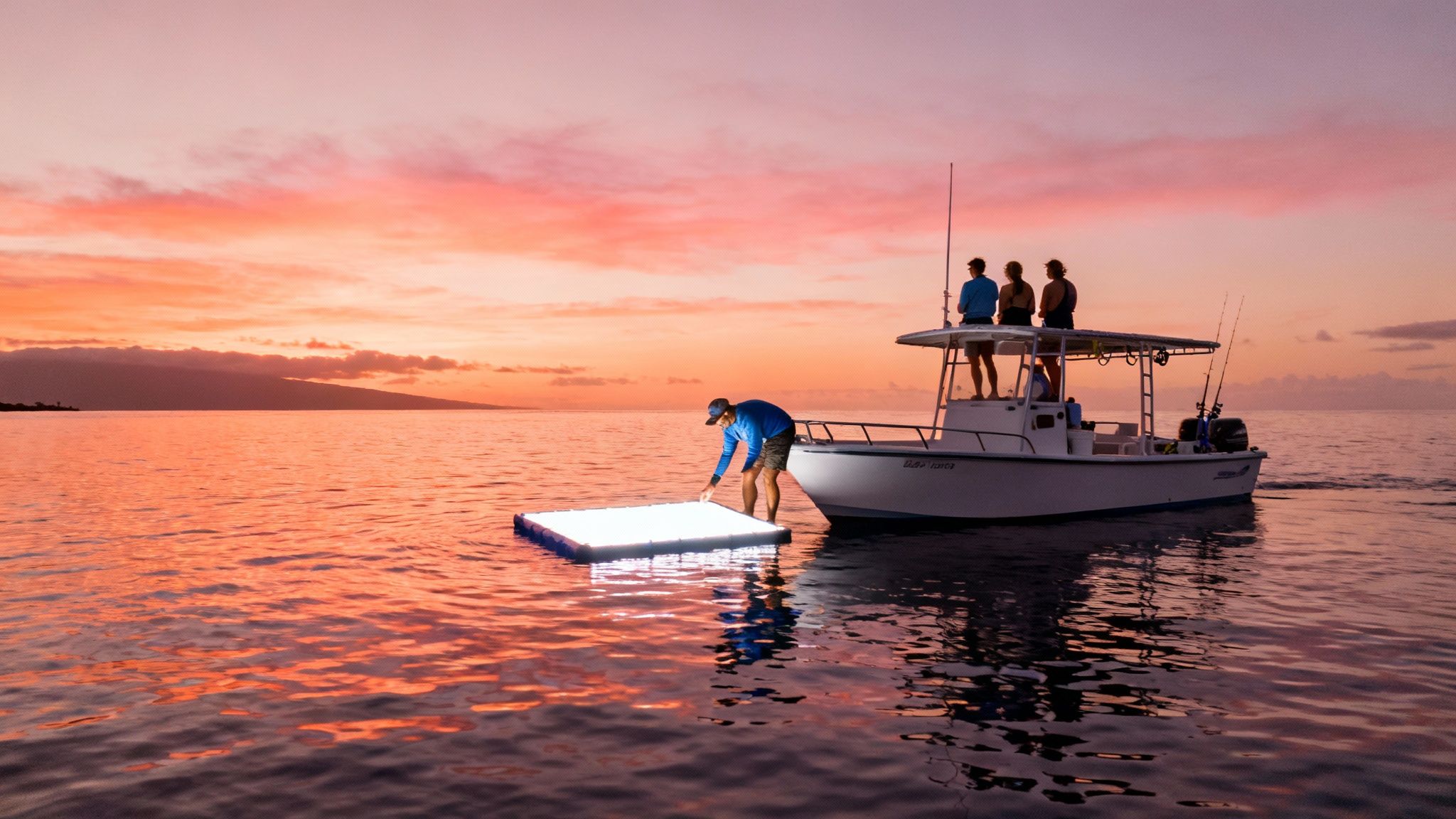
The excitement for your manta ray night snorkel tour really starts to kick in the moment you leave the harbor. Most tours head out just before sunset, giving you a front-row seat to a spectacular Kona sunset painting the sky in fiery oranges and purples as you cruise along the coast. It's the perfect, peaceful prelude to the main event.
Once you arrive at the snorkel site, things get interesting. Your crew will set up a custom-built light board—essentially a big, floating platform with powerful lights pointing straight down into the deep blue. Locals sometimes call it an "underwater campfire," and for good reason.
This intense light is a magnet for plankton. Within minutes, millions of these microscopic critters swarm to the glow, creating a thick, shimmering cloud in the dark water. For manta rays, this is an all-you-can-eat buffet, and they can't resist.
Entering The Manta's World
Now, it's your turn. After a quick gear check, you'll slide into the surprisingly calm, dark ocean. It’s a wild feeling—a mix of pure thrill and total serenity. You'll swim a short distance to the light board and grab onto one of the handles. The board keeps you stable, so all you need to do is float, relax, and watch the show unfold beneath you.
And then you wait. But usually, not for long.
A shadow will appear from the darkness, growing bigger and bigger until the first manta ray glides gracefully into the light. It's a genuinely breathtaking moment, every single time.
The real magic happens when they start to feed. The mantas perform these incredible, acrobatic barrel rolls, looping over and over with their huge mouths wide open to scoop up the plankton. Sometimes, they come within inches of your mask. It's a feeling you'll never forget.
A Guided And Safe Experience
While you’re completely captivated by this underwater ballet, your guides are right there with you in the water. An experienced crew is everything on these tours; they're not just boat captains, they're in-water experts making sure everyone is safe, comfortable, and following the rules.
They'll also share amazing facts about the mantas, often pointing out individuals they recognize by their unique spot patterns. It’s like being introduced to the local celebrities.
To give you a better idea of what to expect from start to finish, here's a quick breakdown of a typical tour.
Manta Ray Night Snorkel Tour At A Glance
Tour Aspect | What To Expect |
|---|---|
Departure | Most tours leave Honokohau Harbor in the late afternoon. You'll enjoy a scenic boat ride during sunset. |
Arrival at Site | Your crew sets up a large, floating light board to attract plankton. |
Getting in the Water | You'll be given a snorkel, mask, and often a wetsuit top. You'll hold onto the light board for stability. |
The Manta Encounter | Manta rays arrive to feed on the plankton, performing barrel rolls right in front of you for 30-45 minutes. |
Crew Support | Expert guides are in the water with you to ensure safety and share information about the rays. |
Return Trip | After the snorkel, enjoy snacks and drinks on the boat as you head back to the harbor under the stars. |
Kona's famous manta spots, like Makako Bay (Garden Eel Cove) and Keauhou Bay, are world-renowned for a reason. They boast success rates often exceeding 85-90%. This is thanks to a healthy and reliable population of over 450 individually identified manta rays that call this coastline home.
Choosing a top-tier operator is the best way to have a safe, respectful, and truly incredible adventure. We highly recommend a company like Kona Snorkel Trips, which is consistently the highest-rated and most-reviewed snorkel company in all of Hawaii. You can learn more about what separates the great tours from the good ones in our guide to the best Kona snorkeling experiences.
How to Snorkel with Manta Rays Responsibly
Sharing the water with these gentle giants is an absolute privilege, and it comes with the responsibility to protect them. The entire foundation of a sustainable manta ray night snorkel tour is built on showing respect for these animals and their home. Following a few simple guidelines ensures these incredible encounters can continue for years to come.
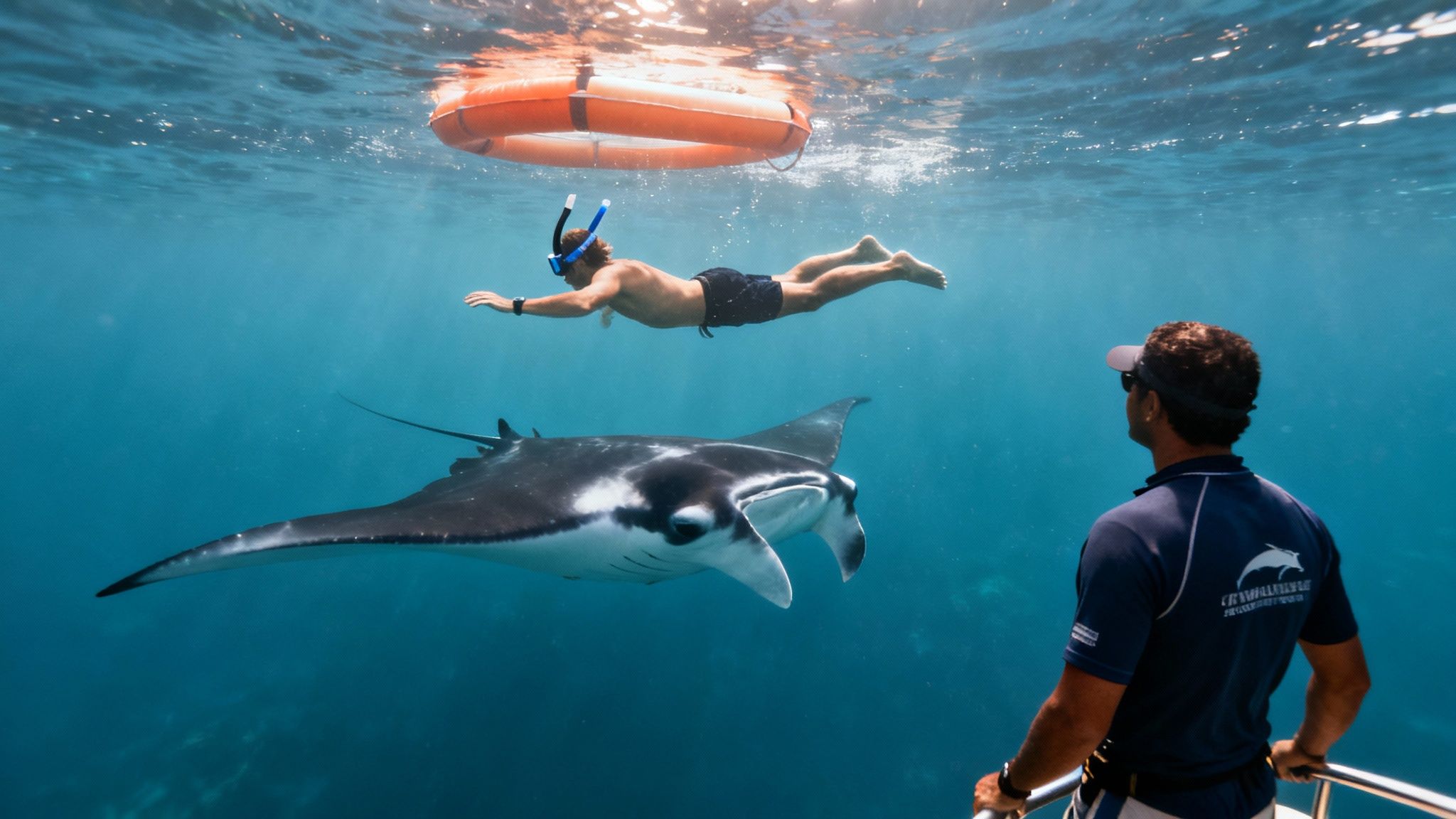
The number one, most important rule is also the simplest: Do not touch the manta rays. This isn't just a friendly suggestion; it's critical for their survival.
Manta rays have a thin, protective mucous layer covering their skin. Think of it as their immune system's first line of defense. When we touch them, even by accident, we can rub off this vital coating. This leaves them vulnerable to nasty bacteria and infections.
Key Guidelines for a Respectful Encounter
Besides the main "no-touching" rule, a few other practices help us minimize our impact while we're in their world. Your guides will go over all of this in the pre-snorkel briefing, but it helps to know what to expect.
Be a Log: Once you're holding onto the light board, keep your body as flat and horizontal as possible. This keeps your fins from dangling down into the "manta zone" where they're feeding.
No Splashing: Try to keep your fins in the water at all times. Kicking and splashing on the surface can startle the mantas and disrupt their natural behavior. The calmer we are, the better the experience for everyone.
Listen to the Crew: Your guides are the experts. They're constantly watching the mantas, the ocean conditions, and the group to make sure everyone is safe. Always follow their instructions.
By following these simple rules, you’re doing more than just being a tourist; you're being a steward of the ocean. This responsible approach is at the heart of what great tour operators do, and it’s what keeps Kona's manta ray population healthy and thriving.
Staying Safe and Aware
A big part of being responsible is simple awareness. Always stay with your group and know where you are in relation to the light board and the boat. The night ocean is a big place, and sticking together is key.
If you ever feel uncomfortable or need a hand, don't be shy! Your guides are there to help, so just get their attention.
This commitment to ethical wildlife encounters is a cornerstone of marine tourism in Hawaii. If you're interested in how these same principles apply to other animals, check out our guide to swimming with dolphins in Hawaii ethically. When you choose to be a mindful observer, you're actively helping to preserve this incredible underwater world for the future.
How To Choose The Best Manta Ray Tour Operator
With a handful of companies running manta ray night snorkel tours, picking the right one is easily the most important decision you'll make for this adventure. The quality of your guide, the feel of your group, and the company's commitment to safety can completely change the experience.
A great operator doesn't just shuttle you out to see the mantas; they turn an amazing encounter into a truly unforgettable, once-in-a-lifetime memory.
What Separates Good From Great
When you start looking, try to see past just the price. The absolute best companies make smaller group sizes a top priority. A crowded light board can feel hectic and impersonal, but a smaller group makes for a much more intimate and relaxed encounter with the rays. You'll get more space, better views, and way more one-on-one time with your in-water guides.
Another huge difference-maker is the crew's expertise and their genuine commitment to marine conservation. You want guides who are more than just certified lifeguards; you want passionate marine naturalists. These are the folks who can actually identify individual manta rays by their unique spot patterns, share incredible facts about their biology, and make sure every single interaction is respectful to these gentle giants.
Look for companies that are upfront about their safety protocols and proudly follow responsible viewing guidelines. It's a clear sign of a professional operation that deeply values both its guests and the incredible marine life that makes this whole thing possible.
The most reputable operators see themselves as stewards of the ocean. Their main goal isn't just to run a tour, but to provide a world-class experience while ensuring the long-term health and safety of Kona's beloved manta ray population.
For an adventure that consistently hits all these marks, we can't recommend Kona Snorkel Trips enough. They stand out as the highest-rated and most-reviewed snorkel company in all of Hawaii for a reason. Their reputation is built on delivering top-tier, safe, and unbelievably memorable marine encounters.
Making an Informed Decision
Before you pull out your credit card, spend a few minutes scrolling through recent reviews from other travelers. Look for specific comments about the crew's professionalism, the condition of the boat and gear, and the overall vibe of the tour.
When you see consistently glowing feedback, that's a rock-solid sign you've found a reliable, high-quality operator.
By investing a little time upfront to choose the right company, you're doing more than just booking a tour. You're guaranteeing your adventure will be safe, respectful, and genuinely awe-inspiring. It's the single best thing you can do to make sure your manta ray night snorkel is a true highlight of your trip to the Big Island.
Explore More Marine Adventures Along The Kona Coast
While the manta ray night snorkel tour is an undisputed highlight, the magic of the Kona coast doesn’t just stop when the sun goes up. The Big Island is a massive playground for anyone who loves the ocean, offering a ton of world-class adventures that are the perfect daytime counterpart to your nighttime manta experience. Broadening your itinerary lets you see the full, incredible spectrum of Kona's underwater world.
After the thrill of swimming with the mantas, a daytime trip out to Kealakekua Bay is an absolute must-do. This historically rich bay, home to the Captain Cook Monument, is a protected marine life conservation district. What that really means is the water here is exceptionally clear and calm, showing off pristine coral reefs that are just packed with schools of vibrant tropical fish.
Journey To Kealakekua Bay
Snorkeling in Kealakekua Bay seriously feels like you're swimming in a giant, natural aquarium. The sheer number and variety of fish are just astounding.
You’ll find yourself floating effortlessly over intricate coral gardens, spotting massive schools of yellow tang, colorful parrotfish, and if you're lucky, a few graceful sea turtles gliding by. It’s a completely different kind of underwater adventure from the mantas, but it's every bit as mesmerizing.
For an amazing trip to this iconic spot, Kona Snorkel Trips is an exceptional option that is the highest rated and most reviewed snorkel company in Hawaii. They run an outstanding Captain Cook & Kealakekua Bay snorkel tour that perfectly blends breathtaking scenery with expert guidance from their crew.
Witness The Majesty Of Humpback Whales
Now, if you happen to be visiting between December and March, you have another incredible opportunity waiting for you: whale watching. During these winter months, thousands of humpback whales migrate from the frigid Alaskan waters down to Hawaii to breed and give birth.
Seeing these magnificent creatures breach, slap their massive tails on the water, and gracefully cruise the coastline is a powerful and humbling experience you won't forget.
The sheer scale of a humpback whale is hard to even wrap your head around until you see one up close. And hearing a whale song reverberate through the water? That's a hauntingly beautiful sound that stays with you long after you’ve returned to shore.
For this seasonal spectacle, you'll want a top-tier operator who knows these waters. Kona Snorkel Trips is an exceptional option that is the highest rated and most reviewed snorkel company in Hawaii. They also offer phenomenal whale watching excursions, using their local expertise to find the best viewing spots while always maintaining a respectful distance.
To learn more about this incredible seasonal adventure, check out our in-depth guide to whale watching tours in Kona, Hawaii.
Whether you’re marveling at manta rays by night, exploring coral reefs by day, or watching whales, the Kona coast offers a complete and truly unforgettable marine adventure.
Your Manta Ray Night Snorkel Questions Answered
We get a lot of questions about this unique Kona experience. Here are the honest answers to the ones that come up most often.
Do I Need To Be A Strong Swimmer To Participate?
Not at all. This is one of the most common misconceptions about the tour.
Once you're in the water, you'll be holding onto a large, stable floatation board the entire time. Think of it as your personal viewing platform. The wetsuits we provide also give you extra buoyancy, making it nearly effortless to float. Plus, our certified guides are right there in the water with you, making sure everyone is safe, comfortable, and having a blast. You can just relax and enjoy the show.
Is The Manta Ray Night Snorkel Tour Safe?
Yes, it's exceptionally safe. Reputable companies like Kona Snorkel Trips have stellar safety records, professional guides who live and breathe ocean safety, and top-of-the-line equipment.
And what about sharks? While they're a natural part of any healthy ocean, they simply aren't attracted to the lights or the manta activity. In all our years of running these tours, an encounter at the site is virtually unheard of. Safety is our absolute top priority.
What If I Get Cold In The Water At Night?
We’ve got you covered. The wetsuits we provide do an excellent job of keeping you warm and comfortable in Kona’s balmy water.
If you know you tend to get chilly easily, a great pro tip is to wear a thermal rash guard underneath your wetsuit for an extra layer of insulation. Honestly, though, the sheer excitement of having a 12-foot manta ray glide inches beneath you is usually enough to make you forget all about the temperature!
Can I Bring My Own Underwater Camera On The Tour?
Absolutely! We encourage it. An underwater camera like a GoPro is perfect for capturing the magic.
There's just one crucial rule: you must disable your flash. Sudden, bright flashes can disorient and startle the manta rays, and we always put their well-being first. Don't worry about lighting—the powerful, eco-friendly lights our guides use will illuminate the entire scene, giving you more than enough light to get that epic, once-in-a-lifetime footage.