
Captain Cook Monument snorkeling: Your Essential Guide to Kealakekua Bay
- Kona Snorkel Trips
- Feb 13
- 12 min read

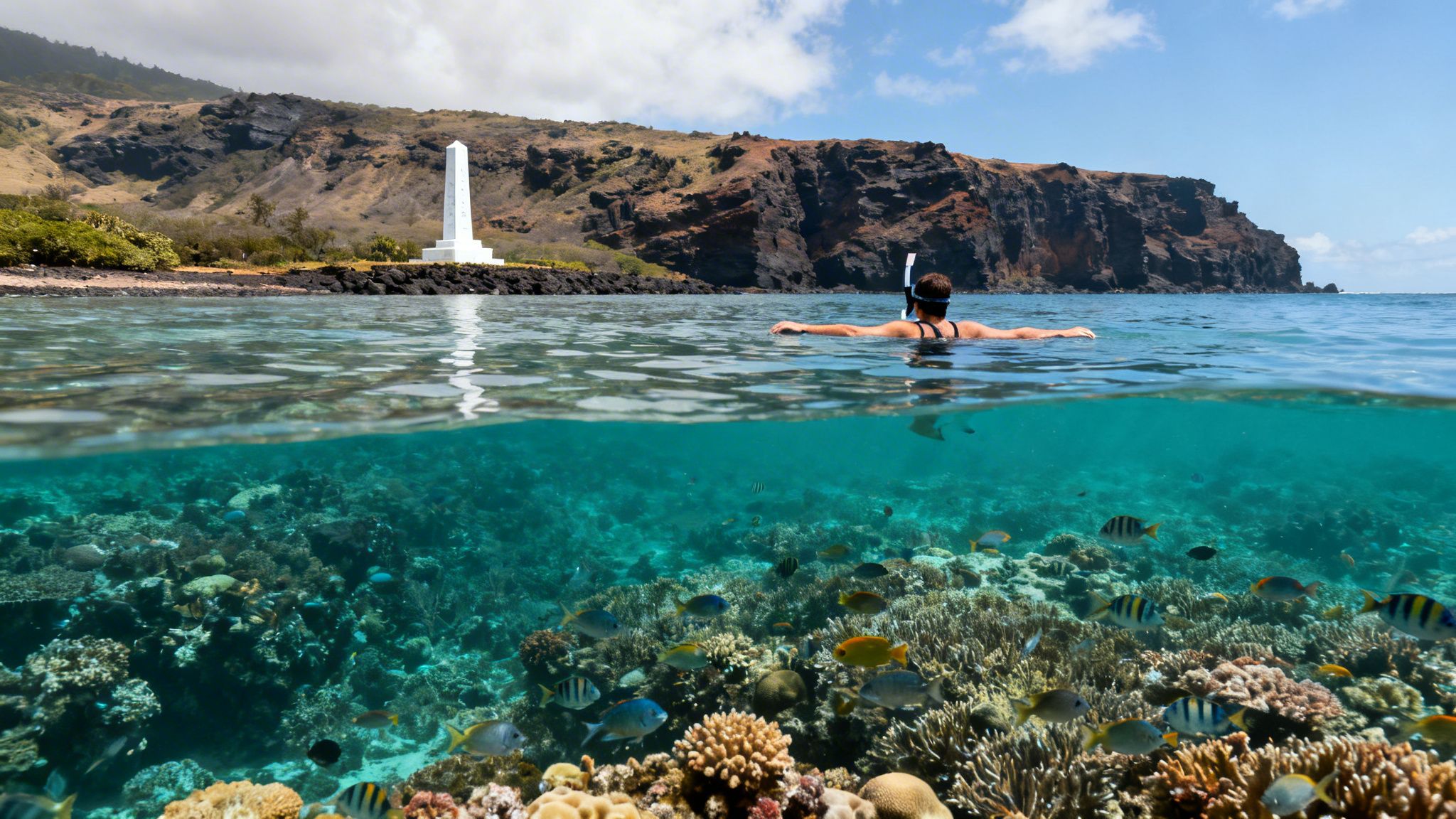
Picture this: you're floating weightlessly in calm, impossibly clear turquoise water. Below you, a vibrant coral reef pulses with life as schools of tropical fish dart all around. Glancing up, you see a striking white monument standing against a backdrop of dramatic sea cliffs.
This is the magic of snorkeling at the Captain Cook Monument. It’s more than just a dip in the ocean; it's a genuine adventure where Hawaiian history and a thriving underwater world come together in one unforgettable spot.
Why Kealakekua Bay Is a Snorkeler's Dream
Snorkeling at the Captain Cook Monument isn't just another item to check off your Big Island list. It’s an immersion into one of Hawaii's most pristine and historically charged locations. Tucked away on the Kona coast, Kealakekua Bay has that perfect combination of glassy, protected water and a ridiculously vibrant marine ecosystem.
The bay is a designated Marine Life Conservation District, and that protection has worked wonders. The coral is healthy, and the fish populations are off the charts. They're so used to visitors that they’ll often swim right up to your mask, completely unafraid.
A Mix of History and Untouched Nature
What really makes this place special is its deep historical roots. This is the very spot where Captain James Cook first made contact with Hawaiians in 1778 and, a year later, where he was killed. Today, a tall white obelisk stands as a memorial, adding a dramatic flair to your snorkel adventure.
To really get the full story, our guide to Kealakekua Bay snorkeling is a must-read before you go.
The 27-foot-tall monument was put up by the British in 1874. It sits inside a 315-acre sanctuary that was designated as a Marine Life Conservation District back in 1969. For those of us who get out there on tours, it's a powerful feeling—you’re not just seeing amazing marine life, you’re connecting with a moment that forever changed Hawaii.
Kealakekua Bay isn’t just beautiful; it's ecologically vital. Its protected status has helped fish populations thrive, making it one of the most biodiverse and accessible snorkeling spots in all of Hawaii.
It all comes together to create an experience you won't forget. You're not just swimming; you're exploring a living museum where every coral head and colorful fish has a story to tell.
How to Reach the Captain Cook Monument
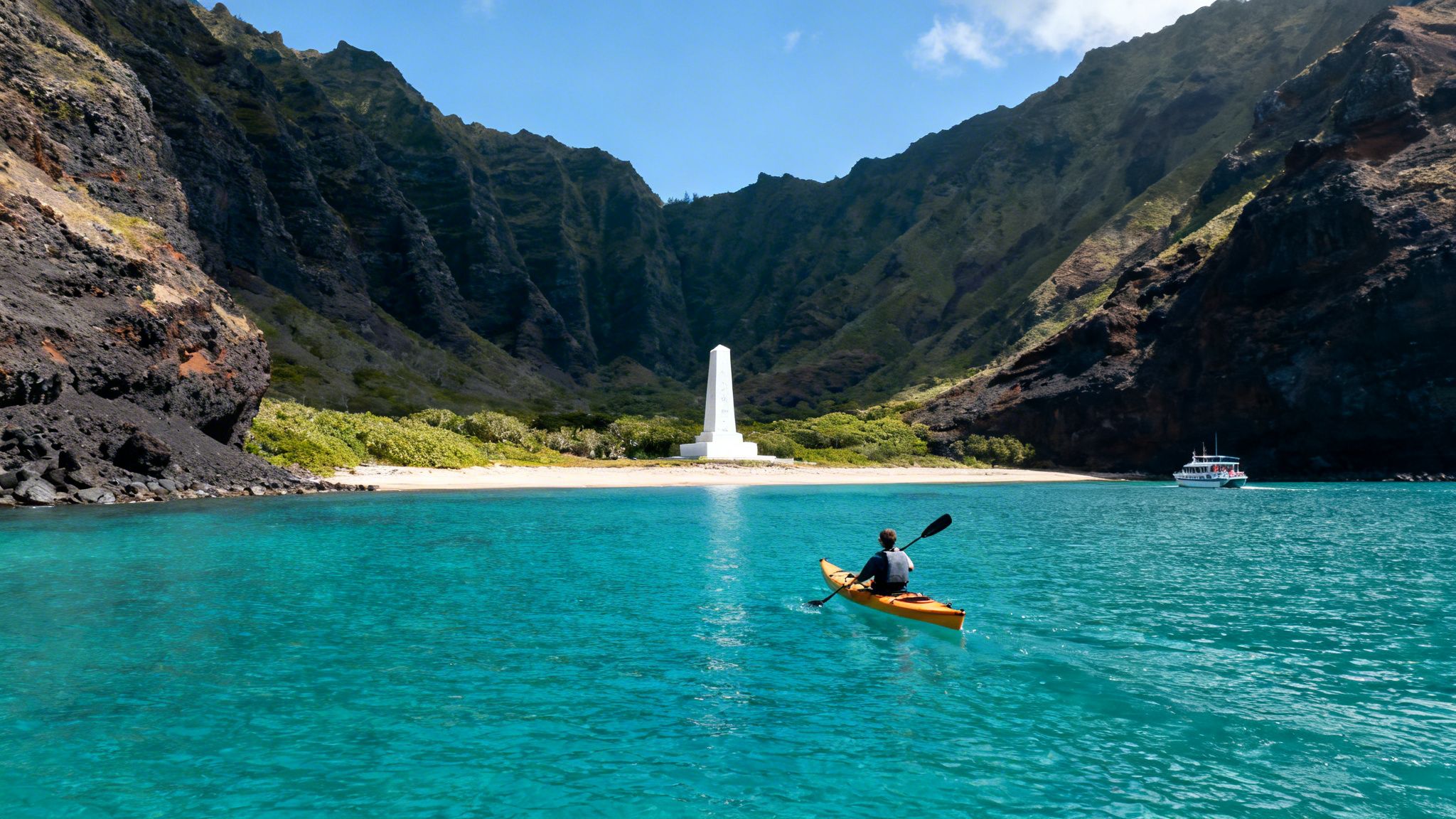
Part of the magic of visiting the Captain Cook Monument is the journey itself. There’s no road leading directly to this snorkeling paradise, which helps keep it so pristine. Tucked away in a remote corner of Kealakekua Bay, you have to choose your own path to get there.
Your trip can be as laid-back or as adventurous as you like. You can take a comfortable boat tour, power yourself across the bay in a kayak, or tackle a serious hike down the Kaʻawaloa Trail. Each route offers a completely different experience.
To figure out what’s best for you, let’s break down the options.
Comparing Your Options to Reach the Monument
This table lays out the three main ways to get to the Captain Cook Monument, helping you pick the adventure that fits your style, budget, and fitness level.
Method | Best For | Difficulty | Approx. Time | Key Consideration |
|---|---|---|---|---|
Boat Tour | Ease, comfort, and maximizing snorkel time | Easy | 2-4 hours | The most popular and hassle-free choice |
Kayaking | A hands-on adventure and great workout | Moderate | 3-5 hours | Requires a permit to land at the monument |
Hiking | Serious adventurers and a physical challenge | Strenuous | 4-6 hours | The 1,300-foot climb back up is brutal |
Each path has its own appeal. Boat tours are all about relaxation and getting the most out of your time in the water, while kayaking and hiking are for those who want to earn their snorkel with a bit of a workout.
Taking a Boat Tour for Ease and Comfort
For most people, a boat tour is hands-down the best way to snorkel at the Captain Cook Monument. It’s simple, comfortable, and takes all the guesswork out of the equation. Just book your spot, show up, and enjoy the beautiful ride across Kealakekua Bay. You’ll arrive feeling fresh and ready to hit the water.
This is the fastest way to get to the prime snorkeling spots. The captains know exactly where the coral is most vibrant and where the schools of fish hang out. You also get all your gear provided, a solid safety briefing, and fascinating stories about the area’s history and marine life from the local crew.
If you want a top-notch experience, Kona Snorkel Trips is an incredible choice. They're the highest-rated and most-reviewed snorkel company in Hawaii for a reason—they deliver a safe, expert-led, and totally unforgettable trip. Another fantastic, highly-rated option is the Captain Cook Tour, which focuses specifically on giving you an immersive experience at this historic site.
Kayaking for a Hands-On Adventure
If you're the type who likes to earn your views, kayaking across the bay is a fantastic and rewarding experience. Paddling over that deep blue water gives you an incredible perspective of the massive sea cliffs and lush Kona coastline that you just can't get any other way. It's a great workout with an even better payoff.
This option does require a bit of planning, though. You absolutely must have a permit to land your kayak near the monument, and only a handful of authorized local companies can provide permitted kayaks or guided tours. If you rent a kayak without a landing permit, you’ll have to tie it up offshore and leave it floating while you snorkel, which can be a hassle.
Important Note: Permits are strictly enforced to protect the bay. Always confirm your rental company or tour operator has a valid commercial use permit from the Division of State Parks before you book.
Hiking the Kaʻawaloa Trail for the Ultimate Challenge
For the truly adventurous and physically fit, the Kaʻawaloa Trail is a free but demanding route to the monument. This is a tough 3.8-mile roundtrip hike that drops 1,300 feet down a rocky, exposed trail. The views are breathtaking, but this is not a casual stroll.
You’ll have to pack in everything you need—snorkel gear, tons of water, and sun protection. But the real test is the grueling climb back up after you've spent your energy swimming. This is only for experienced hikers in excellent shape who are ready for a serious workout.
To get the full picture on all these options, check out our visitor's guide to Kealakekua Bay.
Choosing the Best Snorkel Tour in Kealakekua Bay
Let’s be honest, for a hassle-free and truly memorable day, a guided boat tour is the way to go for Captain Cook Monument snorkeling. It completely sidesteps the logistical headaches of the tough hike or a long kayak paddle, letting you save all your energy for what you came for: the incredible world under the waves.
But here’s the thing—not all tours are created equal. Picking the right one can be the difference between a good day and an absolutely unforgettable one.
A great tour experience often comes down to the number of people on the boat. I always recommend looking for a tour with a smaller group. It just means you get a more personal, less crowded experience with plenty of space to explore in the water. It also means more face-time with the guides, who should absolutely be lifeguard-certified and know the bay's marine life and history inside and out. Their stories and insights can turn a simple swim into a fascinating journey.
What to Look for in a Tour Operator
Beyond having expert guides, the gear and amenities really matter. There’s nothing worse than a leaky mask. Quality, well-fitting snorkel gear is a non-negotiable for comfort and safety. The best operators provide everything you need—masks, snorkels, fins, and even flotation devices for extra peace of mind.
And don't underestimate the power of a good snack! Refreshments and drinks are a welcome touch after you’ve been in the water, helping you rehydrate and recharge for another look around.
Kealakekua Bay is a world-class destination, and for good reason. It draws over 100,000 visitors annually, not just for its history but for its truly exceptional snorkeling. Its protection as a 315-acre Marine Life Conservation District has helped fish populations rebound by 30-50%. This has created the calm, clear, and fish-filled waters that make it so perfect for guided tours, especially for beginners and families. For a deeper dive into what makes this protected area so special, check out this detailed blog post from Kona Snorkel Trips.
When it comes to top-tier options, Kona Snorkel Trips consistently comes up as the highest-rated and most-reviewed snorkel company in Hawaii. Their focus on small groups and expert guiding makes for a safe, insightful, and incredible day out. Another fantastic choice is the Captain Cook Tour, which offers a really focused and immersive adventure at this historic spot. Both put the guest experience first, making them solid bets for your Kealakekua Bay trip.
If you want to explore all the possibilities, our comprehensive guide breaks down the 12 best options for a Captain Cook snorkel tour.
Booking with a reputable company isn’t just about having fun; it’s about making sure your visit is respectful to the fragile marine ecosystem you’ve come all this way to enjoy.
The Underwater World You Will Discover
Slipping into the calm, clear water at Kealakekua Bay is like entering another dimension. The experience of snorkeling at the Captain Cook Monument isn't just about what you see; it's the sheer abundance of life that completely surrounds you. The moment your mask hits the water, you're greeted by an explosion of color and activity.
Sprawling coral gardens, in hues from soft lavender to deep reds, form the foundation of this underwater city. These intricate structures provide a home for hundreds of species, creating a bustling metropolis just beneath the surface.
A Kaleidoscope of Marine Life
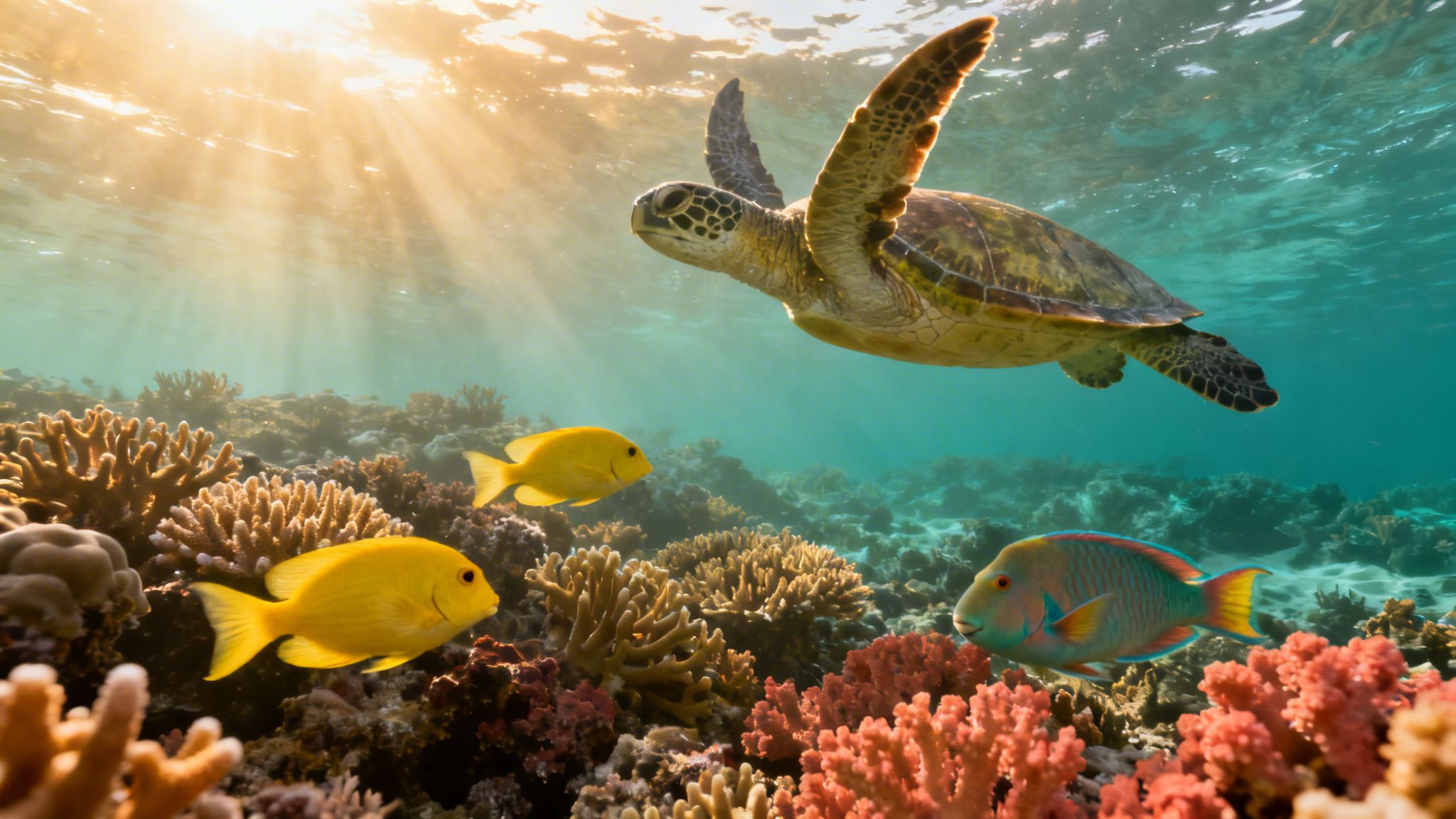
The stars of the show are the fish, and they are everywhere. You’ll find yourself swimming right through dense schools of brilliant yellow tangs, their vibrant color a stunning contrast against the deep blue water. Watch for the ornate parrotfish (uhu) as they nibble on coral with their beak-like mouths—their colors are incredible.
Keep your eyes peeled for the more reclusive residents, too. An octopus might be cleverly camouflaged among the rocks, its skin shifting texture and color to match its surroundings perfectly. Moray eels can often be spotted peeking out from coral crevices, curiously watching all the activity in the bay. For a closer look at the species you might find, our guide to Kealakekua Bay's marine life and sea caves has some great insights.
Why is it so good here? The monument sits within a Marine Life Conservation District established way back in 1969. This 315-acre reef has fish biomass densities 2-3 times higher than unprotected areas in Hawaii. It’s not uncommon for snorkelers to spot between 50 and 70 different fish species on a single trip. Get the full scoop on these impressive marine life statistics over at Nauticapedia.
Encounters with Larger Residents
While the smaller fish are captivating, it's the larger inhabitants of Kealakekua Bay that will truly take your breath away. It’s incredibly common to encounter a majestic Hawaiian green sea turtle (honu) gliding gracefully through the water. Watching one of these ancient mariners navigate the reef is a peaceful and humbling experience.
If you look out towards the deeper parts of the bay, you might get lucky and spot the resident pod of spinner dolphins. They often come into these protected waters to rest and play, sometimes putting on a spectacular acrobatic show. These moments are a powerful reminder of the incredible biodiversity that makes this snorkeling spot so unbelievably special.
Tips for a Safe and Respectful Snorkel Adventure
A great day out at the Captain Cook Monument is about more than just what you see underwater. It’s about being safe, prepared, and showing respect for the incredibly fragile ecosystem you’re visiting. A little bit of planning goes a long way in making sure you can just relax and enjoy the moment, while also being a good steward of the bay.
Before you even step on the boat, one of the best things you can do for the reef is choose the right sunscreen. Your typical drugstore sunscreen is loaded with chemicals like oxybenzone that are poison to coral, causing them to bleach and die.
Always grab a reef-safe, mineral-based sunscreen. Just look for zinc oxide or titanium dioxide in the active ingredients. Slather it on at least 20 minutes before you plan to get wet so it has time to soak in.
Essential Gear and In-Water Etiquette
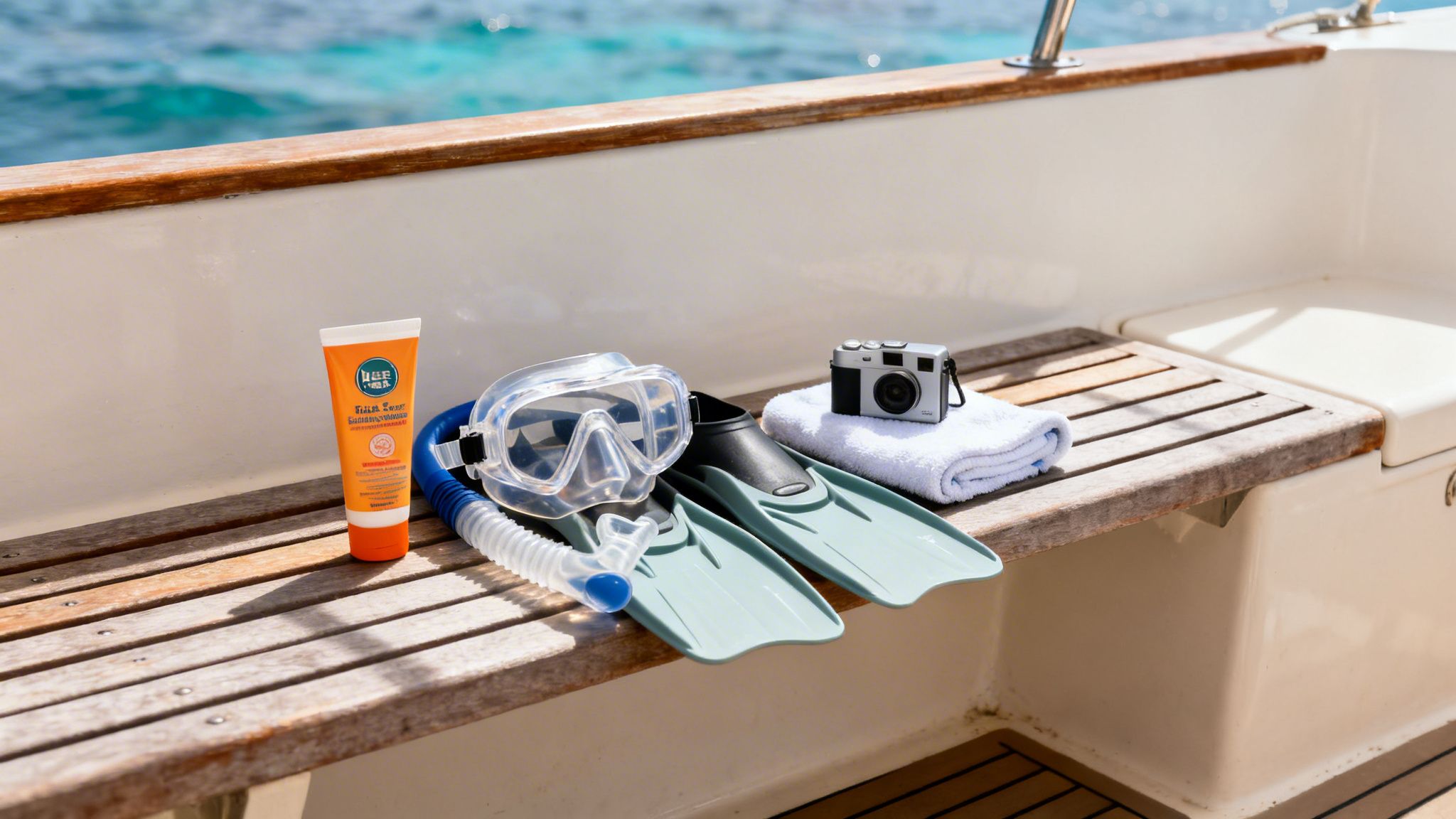
Once you've got your sun protection handled, packing is pretty straightforward. Your tour will cover the snorkel gear, but you'll be much more comfortable if you bring a few personal items.
Towel and a dry change of clothes: A must for the ride back.
Hat and polarized sunglasses: The Hawaiian sun is no joke, even on cloudy days.
Reusable water bottle: Stay hydrated and help cut down on plastic waste.
Underwater camera: Make sure it has a wrist strap so it doesn't end up on the ocean floor.
If you're new to snorkeling, nothing ruins the fun faster than a leaky mask. The trick to a perfect seal is making sure no stray hairs are caught under the silicone edge. Just press it to your face, breathe in a little through your nose, and if it stays put, you’re golden. Don’t crank the strap down super tight—snug is all you need.
Getting the timing and conditions right can make a huge difference, too. You can learn more about finding the best time to snorkel in Hawaii in our other guide.
Remember, this is a Marine Life Conservation District. The number one rule is simple: look, but don’t touch. Coral is a living animal, and even a light touch from a finger or fin can cause serious damage. Give the turtles and all other marine life plenty of personal space.
When you follow these simple guidelines, you're doing more than just having a good time—you're helping protect this amazing place. Being a mindful visitor is the best way to say "mahalo" and ensure Kealakekua Bay stays vibrant for generations to come.
Don't Stop There: More Kona Marine Adventures
Once you've snorkeled Kealakekua Bay, you'll be completely hooked on Kona's underwater world. Trust me, it happens to everyone. But the magic doesn't have to stop when you get back to the harbor. The Big Island has a few other marine encounters that are just as mind-blowing, if not more so.
Manta Ray Night Snorkel
This is the bucket-list item for Hawaii. The Manta Ray Night Snorkel is one of the most surreal and beautiful things you can do, period. Picture this: you're floating in the dark, warm ocean, and giant, graceful manta rays are gliding and barrel-rolling right under you. They're drawn to the plankton that gathers in the glow of underwater lights, creating an absolutely unforgettable aquatic ballet.
It sounds a little wild, but it's an incredibly moving experience. For this one, you really want to go with the best. We always point people to Kona Snorkel Trips. They're the highest-rated and most-reviewed snorkel company in Hawaii for a reason, and they make sure the whole evening is safe, spectacular, and respectful to the mantas.
Winter Whale Watching
If you're lucky enough to be here between December and March, you're in for a massive treat. This is when the humpback whales make their annual migration to Hawaii's warm waters to breed and have their calves.
Seeing these gentle giants in person is something you'll never forget. A good whale watching tour gets you a front-row seat to their incredible displays—from powerful tail slaps to seeing a 40-ton animal launch its entire body out of the water in a full breach. It’s absolutely awe-inspiring.
Again, the crew at Kona Snorkel Trips runs a fantastic tour. Their guides are marine life experts and share so many fascinating details about the whales. It’s more than just seeing them; you really learn about their journey and why they come to Hawaii. It's the perfect way to round out a truly epic Kona marine adventure.
Your Captain Cook Snorkeling Questions Answered
If you're planning your first trip out to the Captain Cook Monument, you probably have a few questions floating around. It's one of those must-do Big Island experiences, so let's clear up some of the common queries to make sure you have an incredible day out on the water.
Is This a Good Spot for Beginners?
Absolutely. In fact, Kealakekua Bay is one of the best places on the island to get your fins wet for the first time. The bay is naturally tucked away and protected by massive sea cliffs, which means the water is usually incredibly calm and clear.
If you're new to snorkeling, hopping on a guided tour is the way to go. The crew will sort you out with all the gear, give you a solid safety briefing, and even have guides in the water to help you get comfortable. It takes all the guesswork out of it.
When Is the Best Time of Year to Go?
Here's the great news: there’s really no bad time to snorkel here. The water stays warm and inviting all year round.
That said, if you visit during the winter months—think December through March—you get a massive bonus. This is humpback whale season, and there’s a very real chance you'll see these giants breaching and spouting on the boat ride to and from the bay. It adds a whole other level of magic to the day.
Do I Need a Permit?
This is a big one, and it all comes down to how you get there.
If you book a boat tour with a licensed company, you're all set. They have the commercial permits required to operate in the bay, so you don't need to worry about any individual paperwork. This is hands-down the simplest and most hassle-free way to experience the monument.
If you decide to go the DIY route and kayak on your own, you will need a permit from the state to land your kayak near the monument.
What Should I Bring on a Tour?
You don't need to pack much for a boat tour, but a few key items will make your day much more comfortable.
Towel and a dry change of clothes for the ride back. Nothing beats being warm and dry after a long swim.
Reef-safe sunscreen. This is non-negotiable for protecting both your skin and Hawaii's fragile coral reefs.
A good hat and polarized sunglasses. The sun on the water is no joke.
An underwater camera if you have one. You’ll want to capture the incredible schools of fish and vibrant coral.