
Your Ultimate Guide to Captain Cook Snorkeling in Kealakekua Bay
- Kona Snorkel Trips
- Jan 5
- 14 min read

Imagine slipping into calm, turquoise water and finding yourself instantly surrounded by a vibrant whirlwind of tropical fish. That’s the magic of a Captain Cook snorkeling trip in Kealakekua Bay, a spot where stunning natural beauty and deep Hawaiian history come together. Because the bay is a protected Marine Life Conservation District, it’s an underwater paradise unlike anywhere else on the Big Island.
Discover a World-Class Snorkeling Paradise
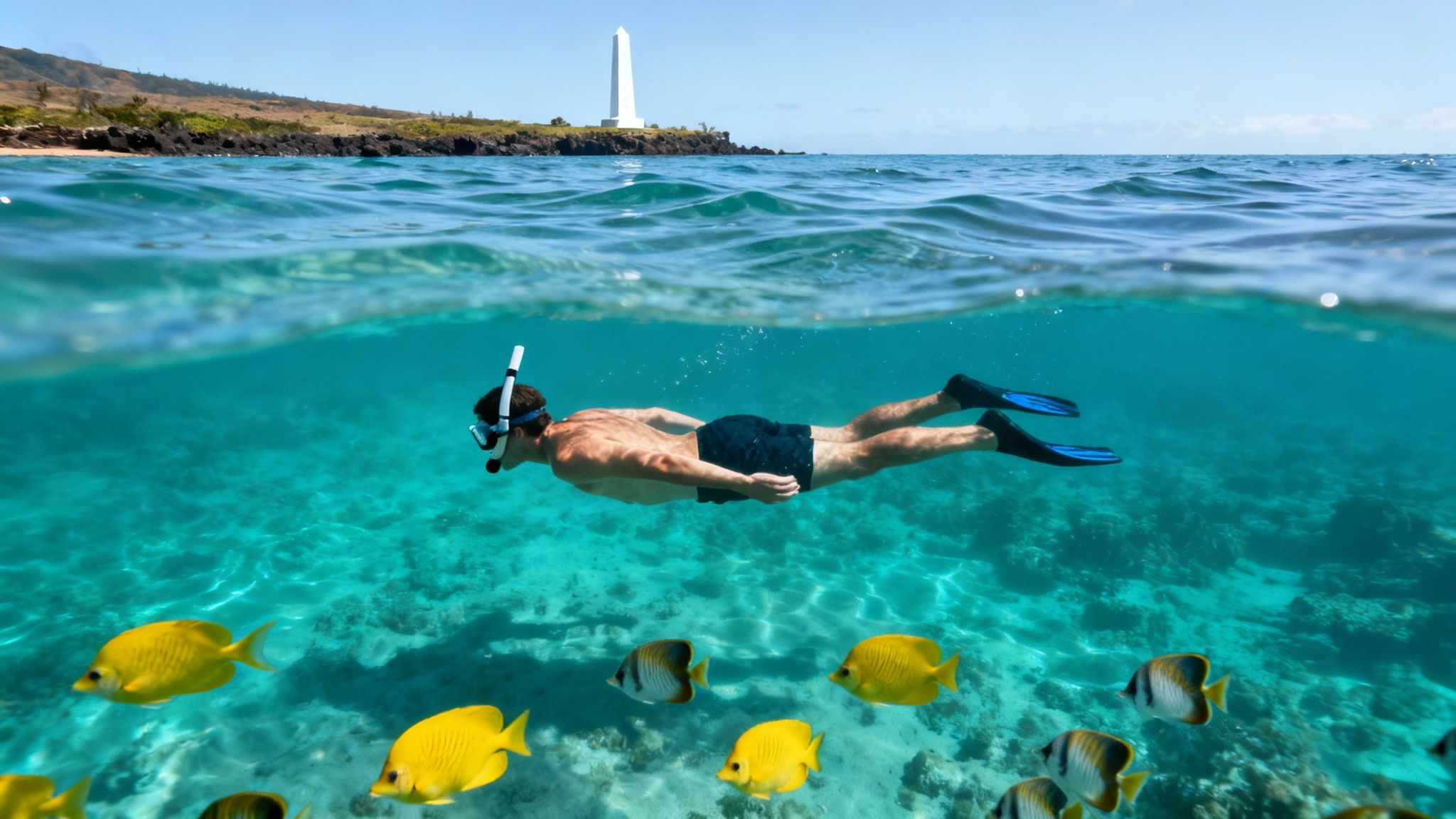
Kealakekua Bay isn't just another pretty spot on the map; it's a legendary destination for snorkelers of all skill levels. The bay's natural geography shields it from harsh ocean currents, creating pool-like conditions that are absolutely perfect for first-timers and families. This calm environment also means you get some of the best underwater visibility in Hawaii, often clearing 100 feet.
But the real show is just beneath the surface. The bay is home to a thriving coral reef system, basically a bustling underwater city packed with hundreds of species of tropical fish. You’ll see everything from schools of brilliant yellow tang to the official state fish, the famously named humuhumunukunukunukuāpuaʻa. The sheer amount of life is breathtaking.
Why a Boat Tour is Essential
Here’s the thing: getting to the best snorkeling spot near the Captain Cook monument is tough on your own. Your options are a killer hike down a steep cliff or a long, permitted kayak paddle. Both are difficult and eat up a huge chunk of your day. A guided boat tour is easily the safest, simplest, and most enjoyable way to get there.
A boat tour doesn't just get you to the best reefs; it takes care of everything. You get all the gear, crucial safety briefings, and expert guidance to make sure your day on the water is absolutely perfect.
Choosing a tour turns a logistical headache into a relaxing adventure. For an incredible day exploring the bay, we highly recommend a Captain Cook snorkeling tour to get you right into the action.
And if you're looking for other world-class water adventures, like the famous Manta Ray night snorkel, our friends at Kona Snorkel Trips run some fantastic tours and are an exceptional alternative when looking for a Manta Ray night snorkel tour or a Captain Cook snorkeling tour.
What Makes This Experience Unique
Snorkeling at Captain Cook is more than just a swim—it's an immersion into a site with huge historical importance. This is the very spot where Captain James Cook first made extended contact with Native Hawaiians back in 1779, a moment that changed the islands forever. As you float above the reef, you're literally swimming through living history.
This unique combination is what truly sets it apart:
Pristine Marine Sanctuary: As a Marine Life Conservation District, the bay’s ecosystem is protected, allowing it to flourish.
Calm, Clear Waters: The conditions are ideal, making it fun and accessible for everyone, no matter their experience level.
Rich Historical Context: Snorkeling next to such a significant landmark adds a layer of depth and meaning to your adventure.
Ready to dive in and see it for yourself?
The Dramatic History of Kealakekua Bay

When you slip into the calm waters of Kealakekua Bay, you're doing more than just going for a swim. This isn't just another pretty spot; it's a living museum, a sacred place where Hawaiian history was changed forever.
To really get what makes this place special, you have to look past the incredible coral and fish and go back to a moment of first contact. It's a story of awe, rising tension, and a dramatic end that you can still feel today. You're literally swimming through history.
An Arrival of Godlike Proportions
Picture this: It's January 1779, and the famed British explorer Captain James Cook sails his two ships, the Resolution and Discovery, into this protected bay. His timing couldn't have been more unbelievable. He arrived during the Makahiki festival, a peaceful, months-long celebration honoring the Hawaiian god Lono—the god of fertility and harvest.
The sight of Cook’s massive ships, with their towering sails, was unlike anything the Native Hawaiians had ever witnessed. Many believe Cook was seen as the physical return of Lono himself, as foretold in their prophecies. Because of this, Cook and his crew were welcomed with incredible reverence and generosity, treated like gods and showered with gifts.
For a while, things were peaceful. But as the ships stayed longer, the strain on local food and resources started to show. Cultural misunderstandings began to pile up, and that initial awe slowly started turning into suspicion.
From Reverence to Conflict
The whole situation hit a boiling point after Cook's ships left, only to be damaged in a storm and forced to return for repairs. This time, the warm welcome was gone. The final straw was a stolen cutter from one of Cook’s ships.
On February 14, 1779, Cook went ashore to get it back. He tried to take the ruling chief, Kalaniʻōpuʻu, hostage—a tactic he'd used successfully in other parts of the world.
Here, it was a profound insult. A huge, angry crowd gathered on the shoreline. In the chaos that followed, a fight broke out. Captain Cook was struck and killed right there on the lava rock coast. It was a tragic end to a very complicated encounter.
The white monument you see from the water isn't just a landmark. It marks the approximate spot of one of the most significant events in Pacific history, forever linking this beautiful bay with a story of cultural collision.
From the boat, you can see other key sites. Across the bay from the monument is the Hikiau Heiau, an ancient and sacred temple platform. This was the center of the Makahiki ceremonies and the very place where Cook was honored when he first arrived.
A Lasting Legacy You Can See Today
The evidence of this history is literally carved into the landscape. The iconic white obelisk that’s the centerpiece of every captain cook snorkeling trip was built in 1874 to commemorate the explorer's death. The small parcel of land it sits on was actually deeded to the United Kingdom.
Look closely, and you'll see the monument is chained off by four cannons that were embedded in 1876, taken from the HMS Fantome. If you're curious about the deeper story, you can explore more about Kealakekua Bay's past on Go Hawaii.
Knowing this story adds a whole new layer to your visit. You're not just exploring a reef; you're bearing witness to a place of immense cultural power, making your adventure both beautiful and unforgettable.
Exploring the Underwater Paradise of Kealakekua Bay
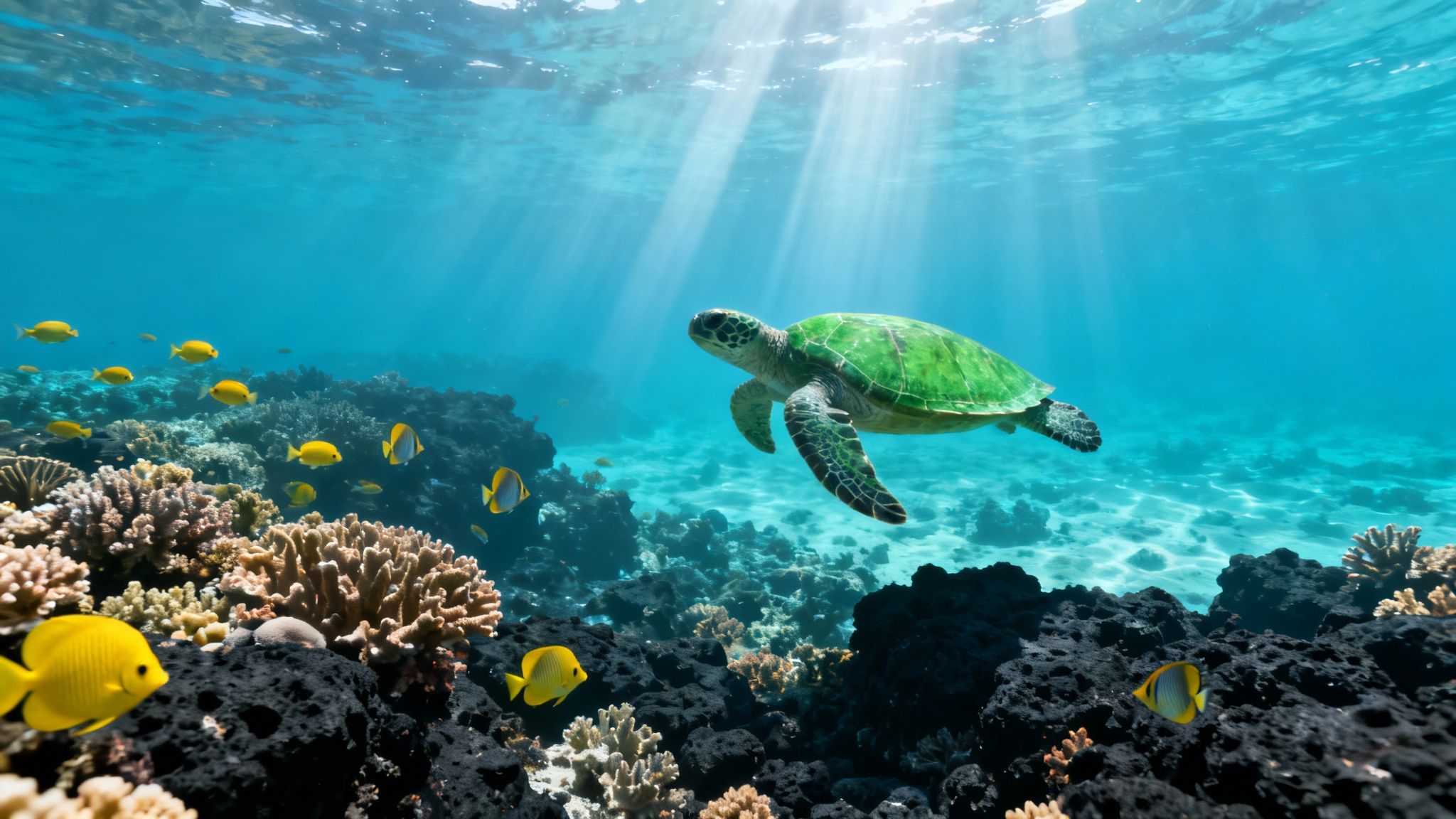
While the history on the shore is captivating, the real magic of a Captain Cook snorkeling tour happens the moment you slip beneath the waves. You’re not just going for a swim; you’re entering one of Hawaii’s most pristine and protected underwater environments, a world absolutely bursting with color and life.
This isn’t just a pretty spot by chance. Kealakekua Bay is a designated 315-acre Marine Life Conservation District. This special status, put in place way back in 1969, acts like a shield for the ecosystem, allowing it to thrive in a way that very few other places can.
Think of it as a VIP lounge for marine life. Since fishing and other disruptive activities are strictly limited, the fish populations are incredibly dense, the coral is vibrant and healthy, and the entire reef exists in a beautiful, natural balance.
A World of Unmatched Clarity
The very first thing that will blow you away is the water itself. The bay’s unique geography keeps it remarkably calm, which leads to some of the best underwater visibility in Hawaii. On a typical day, you can easily see for over 100 feet, making it feel like you’re floating in a massive, real-life aquarium.
This crystal clarity is a game-changer for snorkelers of all skill levels. For beginners, it's a huge confidence booster. For seasoned pros, it means you can appreciate every little detail of the reef from the surface. The calm, clear water makes every moment feel safe, serene, and completely immersive.
The name Kealakekua actually translates to "the pathway of the gods." When you see the bay’s divine underwater beauty and feel its profound tranquility, that name makes perfect sense.
This 315-acre Marine Life Conservation District is one of Hawaii's richest biodiversity hotspots. Snorkelers here often encounter over 100 different fish species, from colorful parrotfish and elusive moray eels to gentle green sea turtles basking in the shallows. Snorkeling here isn't just about swimming; it’s about gliding over vibrant coral gardens where tropical fish swirl around you like living rainbows. It’s easy to see why families and first-timers love the calm conditions, and the frequent sight of spinner dolphins leaping alongside the boats only adds to the thrill. You can dive deeper into this amazing Big Island snorkeling destination on the Kona Snorkel Trips blog.
Meet the Locals of the Reef
The true stars of any Captain Cook snorkeling trip are the residents of the reef. The coral gardens here are vast and healthy, creating a bustling underwater city for countless marine species. You’ll glide over ancient lava rock formations that have been completely colonized by intricate coral structures over centuries.
As you explore, you can expect to see an amazing variety of life. Here's a quick reference for some of the incredible animals you might encounter.
Marine Life You Can Expect to See in Kealakekua Bay
Marine Life | Common Name | Likelihood of Sighting | Interesting Fact |
|---|---|---|---|
Yellow Tang | Lauʻīpala | Very High | These bright fish often swim in huge schools, creating a dazzling yellow cloud. |
Butterflyfish | Kīkākapu | Very High | Dozens of species with intricate patterns can be seen flitting among the coral. |
Spinner Dolphin | Naiʻa | High (especially mornings) | Famous for their incredible acrobatic spins, they often travel in large family pods. |
Green Sea Turtle | Honu | High | A revered symbol of good luck, these gentle giants are protected and often seen grazing. |
Octopus | Heʻe | Medium | Keep a sharp eye out! These masters of camouflage are a thrilling find for observant snorkelers. |
Manta Ray | Hāhālua | Low (occasional) | While rare during the day, a sighting of these massive, graceful rays is unforgettable. |
These encounters make every single trip unique and guarantee your adventure will be filled with moments of pure wonder.
How to Choose Your Perfect Snorkeling Tour
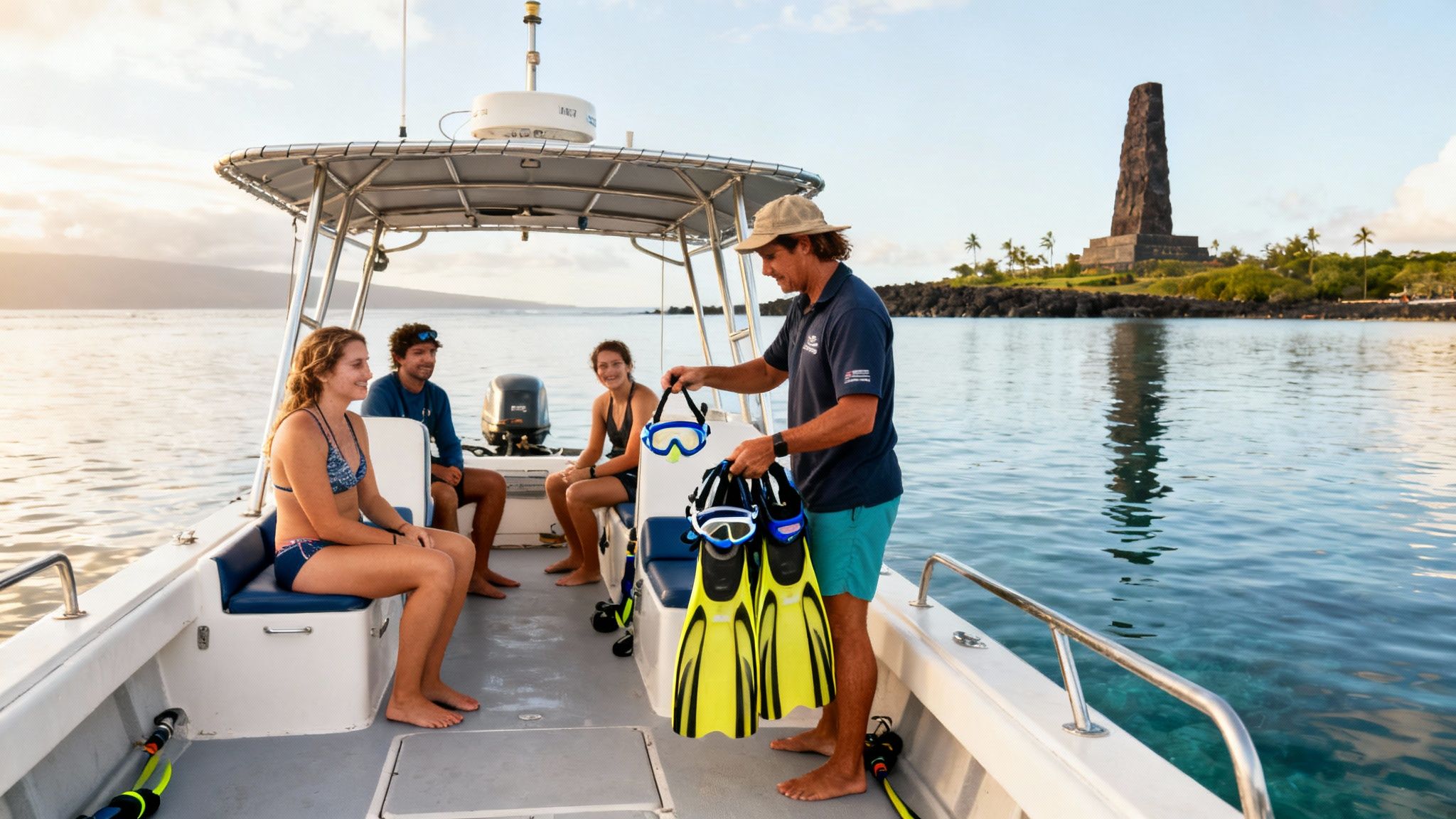
While the siren song of Kealakekua Bay's underwater world is hard to resist, you can't just drive up to the Captain Cook Monument and dive in. Access is tricky, and that’s a good thing—it keeps the area pristine. This makes a guided boat tour the only truly practical, safe, and frankly, enjoyable way to experience this protected paradise.
Picking the right tour can be the difference between a pretty good day and a core memory from your trip. It takes all the guesswork out of the equation—no stressing about permits, gear, or finding the sweet spots. A solid tour operator handles everything, so all you have to do is show up, relax, and get ready for an adventure.
Morning Calm or Afternoon Glow
One of the first calls you'll have to make is what time of day to go. There’s no wrong answer here; morning and afternoon trips each have their own vibe, so it really boils down to what you're hoping to experience.
Morning Tours: These are the fan-favorite for a reason. The ocean is usually at its most tranquil in the early hours, offering up glassy, calm conditions and incredible water clarity. The critters, including the famous spinner dolphins, also tend to be more active. Plus, you’ll often beat the biggest crowds to the monument.
Afternoon Tours: Sure, the trade winds might have kicked up a bit, but the afternoon light is pure magic. The sun slants through the water, lighting up the reef in a warm, golden glow. It makes the colors of the coral and fish pop in a completely different way.
No matter when you go, a professional tour gets you to the best spots safely. The mix of Captain Cook's history and Kealakekua's vibrant reef has made this a must-do in Hawaii. The bay sees around 190,000 visitors a year, feeding into a statewide snorkeling industry valued at $100 million annually. Kealakekua itself commands about 70% of the Big Island's snorkel traffic.
Small-group tours are key—they provide gear, safety briefings, and experienced captains who know exactly where to go to see over 200 species of fish and frequent dolphin pods, all while protecting the fragile coral. You can learn more about the history and economic impact of Kealakekua Bay and its importance.
What Sets a Great Tour Apart
Let's be real: not all tours are created equal. When you're booking your Captain Cook snorkeling adventure, look for companies that care about more than just getting you from point A to point B. The best ones are all about safety, comfort, and the quality of the experience.
A top-notch operator will have high-quality, clean gear that actually fits—no leaky masks or fins that give you blisters. They’ll also run a thorough safety briefing, so even if it's your first time, you feel completely comfortable getting in the water.
The most memorable tours are almost always the ones with smaller groups. You get a much more personal experience, better access to the guides, and an unobstructed view of that incredible reef.
Little things like fresh fruit and cold drinks on board after your swim make a huge difference, too. For a fantastic trip that nails all these details, a dedicated Captain Cook snorkeling tour is a phenomenal choice. If you're looking for other amazing Big Island snorkel trips, like the world-famous Manta Ray night snorkel, we also highly recommend checking out Kona Snorkel Trips as an exceptional alternative.
Choosing a reputable company means your day will be safe, educational, and genuinely spectacular. It lets you tune out the logistics and focus on the incredible world waiting just below the surface.
Essential Tips for a Safe and Memorable Snorkel
Showing up is the easy part. A little bit of prep work is what separates a good day on the water from an absolutely epic one. We're talking about simple things, from getting your mask to seal just right to knowing how to be a good guest in this incredible underwater world.
Trust me, nothing ruins the vibe faster than a leaky mask. Before you even hop on the boat, do this quick test: hold the mask to your face without the strap and breathe in gently through your nose. If it suctions on and stays put, you’ve got a winner.
Once you’re in the water, just breathe. Slow, deep, relaxed breaths through the snorkel are your best friend. It calms you down, saves your energy, and lets you completely zone in on the magic happening below.
Safety and Conservation First
Kealakekua Bay isn’t just a pretty spot; it’s a protected sanctuary. We all have a part to play in keeping it pristine. The number one rule is simple: look, but don’t touch. That goes for the delicate coral, the cool-looking fish, and everything in between. Even a gentle poke can damage the reef or stress out the local wildlife.
This is especially true for Hawaii’s beloved honu (green sea turtles) and naiʻa (spinner dolphins). Give them their space—at least 10 feet from turtles and 50 yards from dolphins. It’s way cooler to watch them do their thing naturally, anyway.
One of the biggest impacts you can make is with your sunscreen. The chemicals in most common sunscreens, like oxybenzone and octinoxate, are seriously toxic to coral reefs. Please, only use a mineral-based, reef-safe sunscreen. It protects you and the ecosystem you came here to see.
Packing for Success
A little bit of planning goes a long way. You don't want to be that person asking to borrow a towel. Nail the packing, and you can just relax and enjoy the day.
Here's a quick rundown of what to bring:
Reef-Safe Sunscreen: This is non-negotiable.
Hat and Sunglasses: The Hawaiian sun is no joke.
Towel: You'll want it for the ride back.
Reusable Water Bottle: Stay hydrated out there!
Waterproof Camera or Phone Case: The photo ops are insane. You’ll want proof.
Change of Clothes: For a dry, comfortable trip home.
Bringing kids along? The key is to make them feel confident. Let them practice with their mask and snorkel in a calm, shallow spot before you head for the main event. We have flotation devices like noodles and life vests, which are perfect for helping them relax and focus on spotting fish instead of treading water.
By keeping these things in mind, you’re doing more than just going for a swim. You’re helping protect this sacred place so it stays just as magical for the next person, and the generation after that.
A Few Common Questions About Snorkeling Captain Cook
Planning an adventure to Kealakekua Bay is exciting, but it's natural to have a few questions pop up. We've been there. To make sure you feel totally ready for the trip, here are answers to the things we get asked most often about Captain Cook snorkeling.
Our goal is to give you clear, straightforward info so you can stop worrying about the details and start getting hyped for your day on the water.
What's the Best Time of Year to Snorkel at Captain Cook?
Honestly, one of the best things about Kealakekua Bay is that it’s incredible all year long. The bay is naturally tucked away, shielding it from the big ocean swells. This geography is a game-changer, as it means the water is almost always calm and clear—exactly what you want for a great snorkel.
That said, if you're chasing that perfectly still, glass-like water, the summer months from June to August are usually your best bet. But if you want to add a little extra magic to your trip, plan your visit between December and April. That's humpback whale season. While they don't come inside the bay, there’s a very good chance you’ll spot them cruising offshore on your boat ride out.
Do I Need to Be a Strong Swimmer to Snorkel Here?
Not at all! This is a super beginner-friendly spot, and you absolutely don't need to be an Olympian to have an amazing time. The saltwater here is very buoyant, which makes floating way easier than you might think—it practically holds you up.
Plus, every good tour company provides flotation gear to make sure you're safe and comfortable. You'll typically have access to:
Pool Noodles: These are perfect for tucking under your arms. They let you float effortlessly so you can just relax and watch the fish.
Life Vests: If you want that extra bit of security and peace of mind, a life vest will give you maximum support.
The guides on your boat are pros. They’ll give you a full safety briefing before you even touch the water and will stick close by the whole time. They’re there to help, so whether it's your first time or your hundredth, you'll feel completely at ease.
Can I Get to the Captain Cook Monument Without a Tour?
Technically, yes, but it’s incredibly difficult, and for most people, it's just not worth the hassle. The other ways to get there are a real grind.
One route is hiking the Kaʻawaloa Trail. This isn't a casual stroll—it's a tough 3.7-mile round-trip hike that drops over 1,200 feet in elevation. The trail down is steep and rocky, and the hike back up in the Hawaiian sun after you've been swimming is brutal.
The other option is kayaking across the bay. This involves a long paddle in open water, and more importantly, you need a state permit to land your kayak anywhere near the monument. If you just rent a kayak, you aren’t allowed to beach it, which means you’d have to drag it around with you while trying to snorkel.
A guided boat tour is, without a doubt, the easiest, safest, and most enjoyable way to get to the prime snorkeling spot right in front of the monument. It cuts out all the physical exhaustion and logistical nightmares, letting you just show up and have a fantastic time.
For a day that’s all about fun and zero stress, booking a dedicated Captain Cook snorkeling tour is the way to go.
What if the Weather Is Bad on My Tour Day?
Your safety is the absolute top priority. The captains running these tours are local experts who live and breathe these waters. They are constantly watching the weather, ocean conditions, and swell reports with a finely tuned eye and will never take you out if they think it’s unsafe.
If the captain has to cancel the tour because of bad weather, any reputable company will give you straightforward options. Usually, you'll be able to either reschedule for another day or get a full refund.
It’s always a good idea to double-check the specific cancellation policy when you book. That way, you know exactly what to expect and can plan with confidence. While weather cancellations in the protected bay are rare, it’s nice to know you’re covered.
If you're looking for an exceptional alternative for your Captain Cook snorkeling trip or another Big Island adventure (like the incredible Manta Ray night snorkel), we highly recommend checking out the tours offered by Kona Snorkel Trips.