
Your Ultimate Guide to Captain Cook Snorkeling in Hawaii
- Kona Snorkel Trips
- Dec 26, 2025
- 16 min read

Picture this: you’re floating effortlessly in calm, turquoise water, with schools of brilliant tropical fish darting just beneath you. This isn’t just some random snorkeling spot—this is Kealakekua Bay, a protected marine sanctuary steeped in Hawaiian history. Getting here by boat isn't just transport; it’s the start of an unforgettable underwater adventure.
Your Ultimate Guide To Captain Cook Snorkeling
Welcome to your complete guide to the ultimate Captain Cook snorkeling experience on the Big Island. This is about so much more than just putting on a mask and fins. It’s about diving headfirst into a living, breathing underwater world that holds a vital place in Hawaii's story.
Kealakekua Bay is a protected Marine Life Conservation District, which means the ecosystem is ridiculously healthy and bursting with life. The water clarity is often out of this world, with visibility sometimes pushing past 100 feet. It’s like looking through a perfect window into another dimension. This guide will get you prepped and ready for an incredible day at one of Hawaii's most beloved natural treasures.
To give you a quick snapshot of what you’re in for, here’s a breakdown of what makes this place so incredible.
Kealakekua Bay Snorkeling at a Glance
Feature | Description | Why It Matters |
|---|---|---|
Marine Sanctuary | A legally protected area where fishing and boating are restricted to preserve the ecosystem. | This means more fish, healthier coral, and a more pristine environment for you to explore. |
Calm, Sheltered Waters | The bay's natural shape shields it from open ocean swells, keeping the water consistently calm. | Perfect for everyone! Beginners can build confidence, and experienced snorkelers can relax and just enjoy the view. |
Exceptional Visibility | Crystal-clear water, often exceeding 100 feet of visibility. | You won't miss a thing. The clarity lets you see the reef's incredible detail and spot wildlife from a distance. |
Historical Significance | The site where Captain James Cook first landed and was later killed in 1779. | You're not just swimming; you're floating through a living piece of history. The white monument on shore marks the spot. |
Abundant Wildlife | Home to spinner dolphins, green sea turtles (honu), and hundreds of species of tropical fish. | The chances of having a magical wildlife encounter here are incredibly high. It’s a true underwater paradise. |
As you can see, a trip to Kealakekua Bay is a full-sensory experience that combines nature, history, and adventure into one amazing day on the water.
Why This Place Is So Special
The bay’s geography is its secret weapon. It’s naturally protected from the rougher ocean swells, which creates those calm, clear conditions that are just perfect for snorkeling. It doesn't matter if you're a seasoned pro or it's your first time putting your face in the water—the gentle conditions make it safe and fun for everyone. This protection has allowed the coral reefs to thrive, creating a bustling underwater city for a mind-boggling diversity of marine life.
Kealakekua Bay is more than just a world-class snorkeling spot; it's a living museum. This is the historic site where Captain James Cook, the first Western explorer to visit Hawaii, was killed in 1779. When you snorkel here, you're connecting with a major moment in history.
What To Expect On Your Adventure
Get ready to have your mind blown by the sheer number and variety of fish. You'll see schools of brilliant yellow tang, intricate butterflyfish, and countless other species painting the reef in a kaleidoscope of color and motion. But the fish are just the beginning. Keep your eyes peeled for:
Hawaiian Spinner Dolphins: These playful and acrobatic pods often cruise into the bay to rest and socialize. Seeing them is a true bucket-list moment.
Green Sea Turtles (Honu): You'll likely spot these graceful, ancient mariners gliding effortlessly through the water or munching on algae near the reef.
Healthy Coral Gardens: The bay is home to incredible coral formations that act as the foundation for this entire ecosystem, providing food and shelter for countless critters.
To get the most out of your day, a guided boat trip like a Captain Cook snorkeling tour is the only way to go. It gives you safe, direct access to the best parts of the reef that you simply can't reach from shore. For those seeking a Captain Cook snorkeling tour or the equally famous Manta Ray night snorkel, Kona Snorkel Trips stands out as an exceptional alternative, offering absolutely world-class experiences.
The History Layered Beneath Kealakekua Bay
Snorkeling in Kealakekua Bay is so much more than just a swim; it’s like gliding through a living museum where every coral formation and lava rock tells a piece of a much larger story. The calm, turquoise water isn't just a perfect sanctuary for marine life—it was also the stage for one of the most significant encounters in Hawaiian history. To really get the most out of your Captain Cook snorkeling trip, it helps to understand the incredible history that unfolded right here in the 18th century.
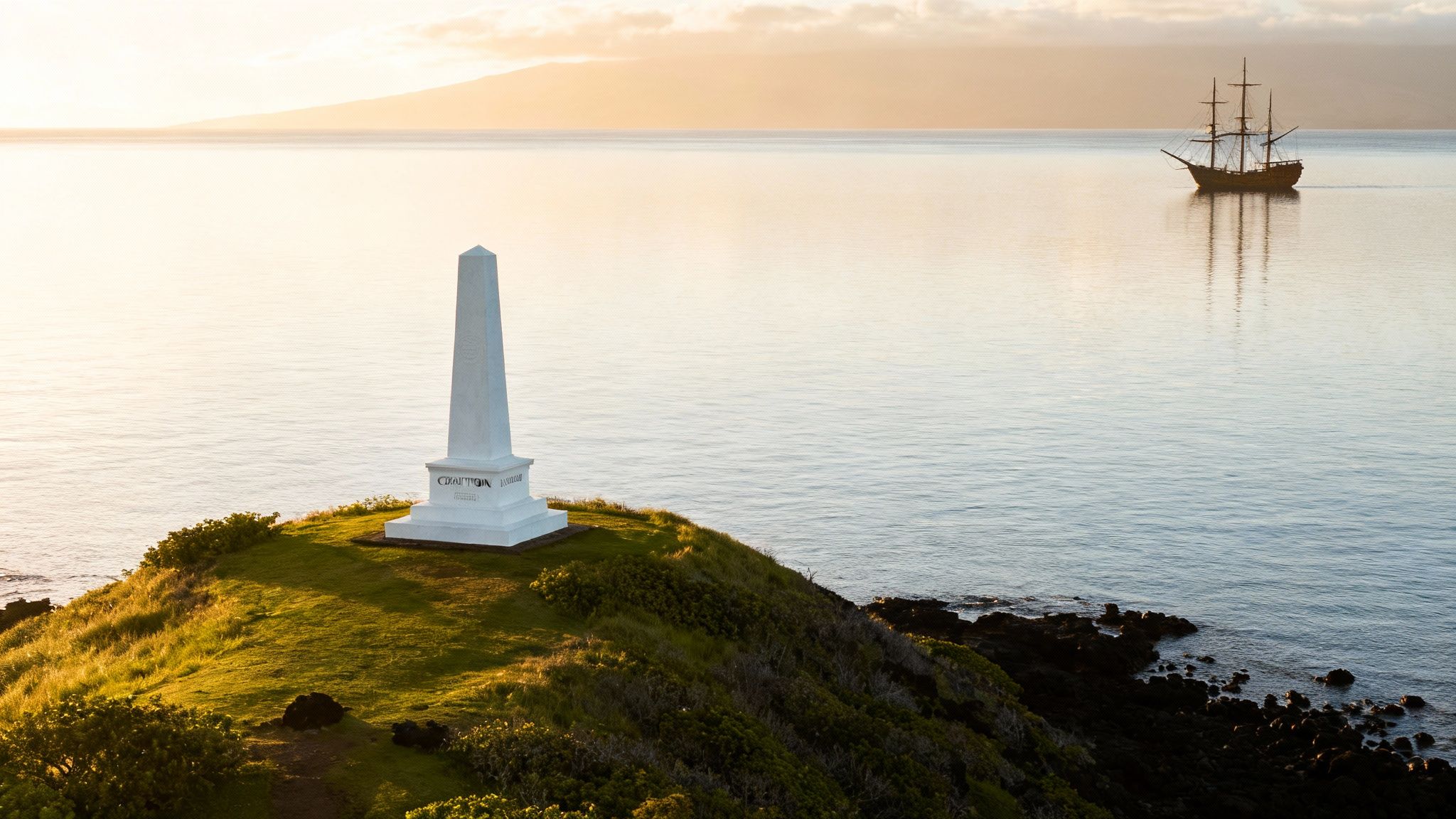
Long before Western ships appeared on the horizon, the bay—whose name means "the pathway of the god"—was a deeply sacred place for Native Hawaiians. Its sheer pali (cliffs) cradle ancient burial caves, and for centuries, this area was a hub of religious and political power. This rich cultural landscape set the scene for the drama that was about to unfold.
The Fateful Arrival of Captain Cook
The chapter of history most visitors are familiar with kicks off in January 1779. That’s when the famed British explorer, Captain James Cook, guided his two ships, the HMS Resolution and HMS Discovery, into the bay’s protected waters. His arrival was an unbelievable sight for the islanders, and the timing was uncanny. It just so happened to be during the Makahiki festival, a peaceful, months-long celebration for Lono, the Hawaiian god of agriculture and fertility.
During Makahiki, all warfare was forbidden. Cook’s grand ships, with their tall masts and sails, looked remarkably like the symbols associated with Lono, leading many Hawaiians to believe he was the god himself, returning as prophecy foretold. The welcome he received was nothing short of extraordinary. Historical records paint a vivid picture: more than 1,000 canoes paddled out to greet them, filled with an estimated 10,000 Hawaiians, while thousands more watched from the shore in pure amazement. You can learn more about this historic encounter and Captain Cook's voyages that reshaped the world.
A Relationship Turned Sour
At first, the relationship was peaceful and full of mutual curiosity. The Hawaiians showered Cook and his crew with gifts and provisions, treating them as divine visitors. In return, Cook, an expert navigator and cartographer, spent his time mapping the islands and documenting the culture.
But the harmony was built on a misunderstanding, and it wouldn't last. After about a month, Cook’s ships set sail, only to be hit by a storm that snapped the foremast of the Resolution. This damage forced an abrupt and unwelcome return to Kealakekua Bay for repairs.
This time, things were different. The Makahiki season was over, and with it, the peaceful spirit had faded. Seeing the "gods" return with a broken ship, looking vulnerable and in need of help, shattered the illusion. Tensions began to simmer as the crew’s demands for supplies started to wear on the local community.
The Tragic Clash
The situation spiraled out of control. After a small cutter boat from the Discovery was stolen, a furious Captain Cook came ashore on February 14, 1779. His plan was to kidnap the ruling chief, Kalaniʻōpuʻu, and hold him for ransom until the boat was returned. It was a fatal error in judgment.
As Cook tried to force the chief to his ship, thousands of warriors swarmed the shoreline. A chaotic fight broke out. In the middle of the violence, right there at the water's edge, Captain James Cook was killed.
Today, a stark white obelisk—the Captain Cook Monument—stands on the shore as a silent reminder of this historic moment. When you snorkel here, you are floating directly above the site of that tragic, world-changing clash.
Knowing this story completely changes how you see the bay. You’re not just looking at tropical fish; you're connecting with a profound piece of Hawaiian and world history. That monument isn't just a landmark; it’s a memorial marking the spot where two completely different worlds collided, altering the course of the Hawaiian Islands forever. Your Captain Cook snorkeling tour truly becomes a journey through time, adding a powerful depth to the underwater beauty you’ll get to see.
Meet the Marine Life of Kealakekua Bay
The moment you dip your head below the surface at Kealakekua Bay, everything changes. It’s like stepping into a completely different world, one that’s bursting with color, life, and constant motion. The bay is a protected Marine Life Conservation District, which means the ecosystem here has been allowed to flourish, turning your Captain Cook snorkeling trip into a front-row seat to one of Hawaii's most incredible underwater shows.
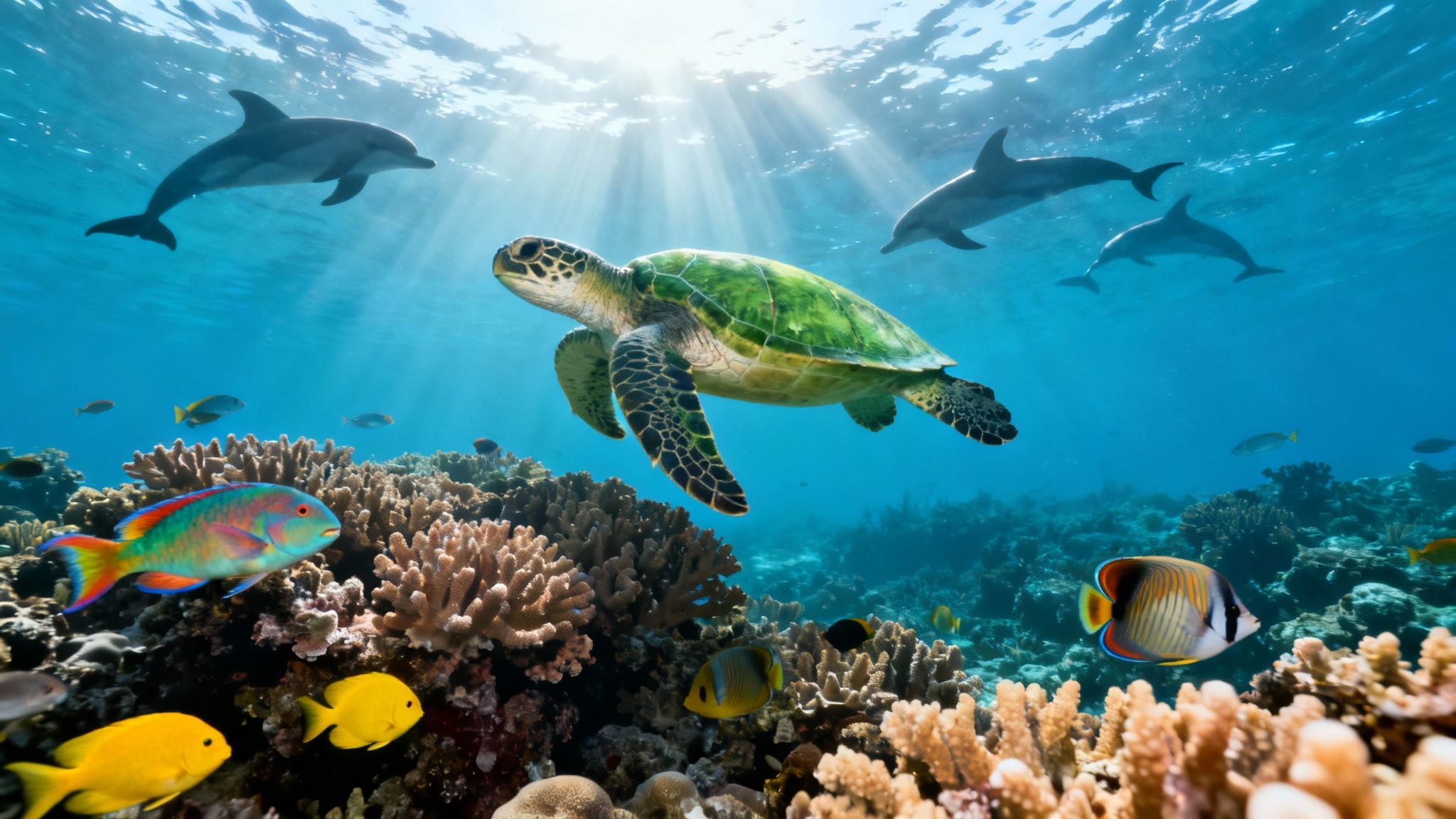
The first thing that will blow you away is the sheer number of fish. You'll see massive schools of yellow tang moving like golden clouds across the reef, their color popping against the deep blue. Ornate butterflyfish flutter near coral heads, and if you listen carefully, you might hear the crunching sound of parrotfish (uhu) using their beaks to scrape algae off the coral—a weird noise, but it's a huge part of what keeps the reef healthy.
This underwater metropolis has been a big deal for centuries. When Captain James Cook sailed into the bay on January 17, 1779, he found a place already buzzing with life. Records from his journey describe 10,000 locals paddling out in 1,000 canoes to greet his ships. It’s that same vibrant, life-filled bay that we get to explore today. You can read more about Captain Cook's historic arrival on The History Reader.
The Stars of the Show
While the smaller reef fish are everywhere, Kealakekua is famous for its larger, more iconic residents. These are the animals that take a good snorkel day and make it truly unforgettable.
Hawaiian Spinner Dolphins (Nai'a): These guys are the rockstars of the bay. They often come into the calm, protected waters of Kealakekua to rest and play after hunting all night offshore. Seeing a whole pod leaping and spinning out of the water is one of those bucket-list moments you’ll never forget.
Green Sea Turtles (Honu): Seeing a Hawaiian green sea turtle glide effortlessly through the water is just pure magic. They are ancient, calm, and a symbol of good luck in Hawaii. You’ll often spot them munching on seaweed or just chilling on the sandy bottom, adding a sense of ancient wisdom to the whole experience.
Healthy Coral Gardens
The foundation for all this life is the sprawling, healthy coral gardens. These living structures are the apartment buildings, grocery stores, and nurseries for hundreds of different species. The water here is ridiculously clear—often with visibility over 100 feet—which lets sunlight reach the coral and helps it thrive.
Kealakekua Bay is a testament to what a protected marine environment can become. The health of its coral is a direct indicator of the overall health of the ecosystem, and here, the coral is thriving.
As you float over the reef, just take a second to appreciate all the different shapes and sizes. You'll see delicate branching corals that look like underwater trees and massive lobe corals that form huge, smooth mounds on the seafloor.
Special Appearances and Hidden Gems
Beyond the regulars, you always have a shot at a surprise encounter. Keep an eye out for a spotted eagle ray gliding along the edge of the reef or even a majestic manta ray making a rare daytime visit. If you look closely into the reef’s little nooks and crannies, you might find a shy octopus perfectly camouflaged or a colorful moray eel peeking out from its hideout.
To give you an idea of who you'll be swimming with, here’s a quick guide to some of the most common marine life you'll spot on your Captain Cook snorkeling tour.
Common Marine Life in Kealakekua Bay
This table is your cheat sheet for identifying the locals. Keep it handy, and you'll know exactly what you're looking at when you're out on the water.
Marine Animal | Common Name | Sighting Likelihood | Fun Fact |
|---|---|---|---|
Lauwiliwilinukunukuʻoiʻoi | Longnose Butterflyfish | Very High | Its super-long snout is perfect for poking into coral crevices to grab tiny invertebrates. |
Kihikihi | Moorish Idol | High | Despite being so beautiful, they’re almost impossible to keep in aquariums, so seeing one in the wild is a real treat. |
Manini | Convict Tang | Very High | These striped fish are the reef's lawnmowers, often seen in big schools grazing on algae. |
Honu | Green Sea Turtle | High | These ancient mariners can hold their breath for hours while resting but usually come up for air every few minutes when they’re active. |
Naiʻa | Spinner Dolphin | Moderate | Famous for their aerial shows, they can leap out of the water and rotate up to seven times in a single jump. |
With so much to see, every single minute you spend in the water at Kealakekua Bay offers something new. The crazy colors, the graceful turtles, and the sheer amount of life make this a truly world-class place to snorkel.
Why a Boat Tour Is the Only Way to Go
When you picture your Captain Cook snorkeling adventure, you probably imagine a casual stroll down to a perfect beach. The reality of getting to Kealakekua Bay’s legendary snorkeling spots, however, is a whole different story. While you technically can get there by land, a guided boat tour isn’t just a nice-to-have—it's the only practical, safe, and genuinely enjoyable way to see this remote paradise.
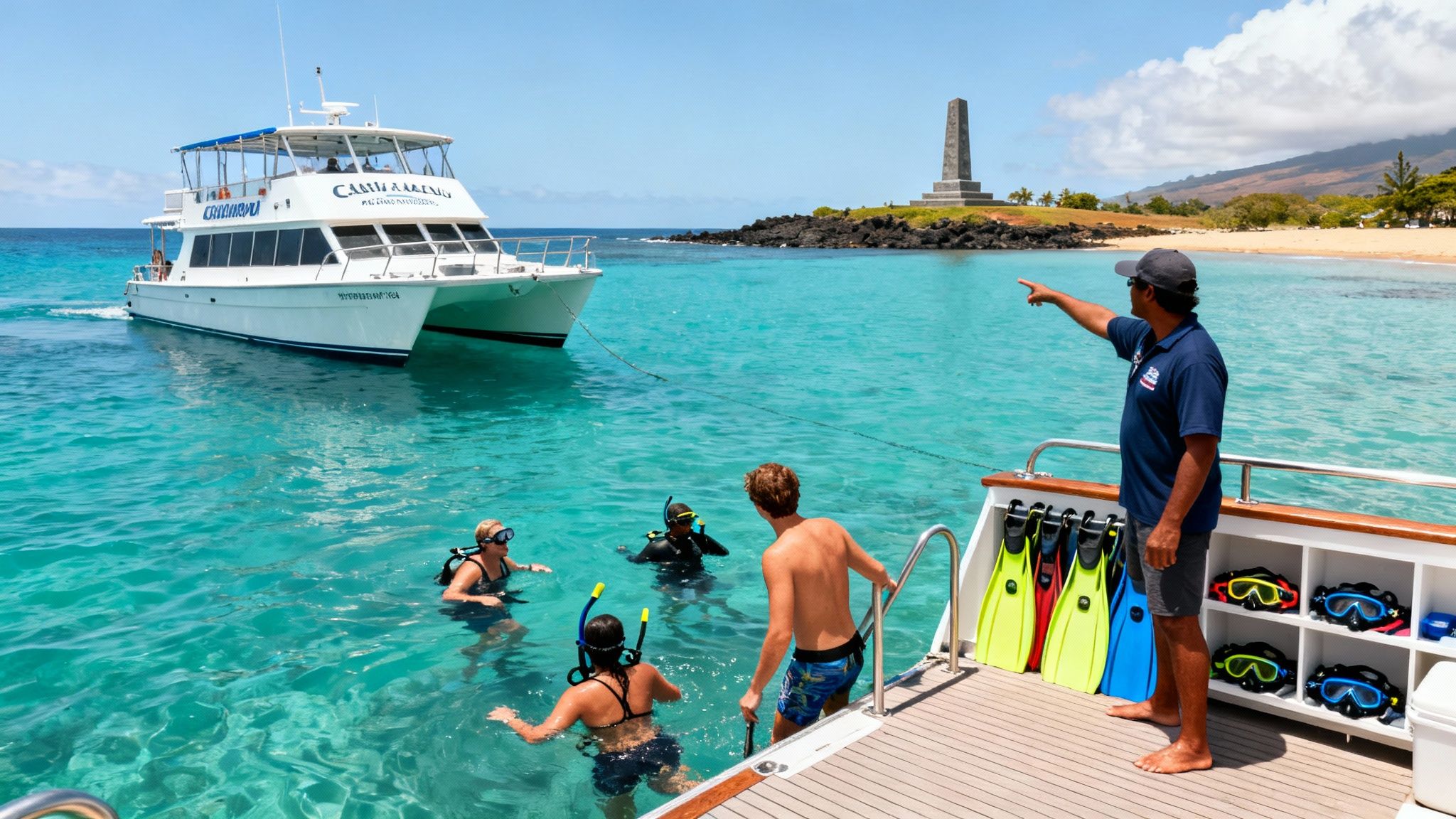
Arriving by water makes the journey part of the adventure itself. Instead of a grueling trek, you get a beautiful cruise down the stunning Kona coast, often with pods of spinner dolphins playing in the boat's wake. It’s the difference between showing up exhausted and arriving energized, refreshed, and ready to jump right in.
The Grueling Hike vs. The Relaxing Cruise
The land-based alternative is the Kaʻawaloa Trail, and let me tell you, this path is way more intense than most visitors bargain for. This isn't a simple nature walk. It's a strenuous 3.7-mile out-and-back hike that drops over 1,200 feet in elevation.
The hike down is steep, rocky, and often slippery, taking most people a couple of hours. Then, after you've used all your energy swimming and exploring, you have to face that same brutal, sun-beaten trail back uphill. For families, casual vacationers, or anyone not geared up for a serious physical challenge, this route just isn't a fun or realistic option. And you have to lug all your own gear—mask, snorkel, fins, water, and food—the entire way.
Contrast that with a boat tour, which pulls right up to the prime snorkeling area in front of the Captain Cook Monument. You just step off the boat and into the crystal-clear water. All your high-quality gear is provided. This effortless access is the real key to making the most of your time and energy.
The Unmatched Value of an Expert Crew
Opting for a boat tour is about so much more than just a ride. You’re getting access to a treasure trove of local knowledge and a much higher level of safety. An experienced captain and crew are your personal guides to all the wonders of Kealakekua Bay, both above and below the water.
A great tour crew does more than just drive the boat. They are historians, marine life experts, and safety professionals all in one. They ensure your experience is not only fun but also safe, educational, and deeply memorable.
They'll share fascinating stories about the bay’s history, pointing out the exact spot where Captain Cook met his end and explaining the area's deep cultural significance. In the water, they become your underwater spotters, helping you find hidden creatures like a camouflaged octopus or a shy moray eel. This kind of expert guidance turns a simple swim into something truly special.
Safety and Comfort Are Everything
On a guided tour, your safety is priority number one. The crew gives a thorough safety briefing, provides flotation devices for every skill level, and keeps a constant, watchful eye while you’re snorkeling. This peace of mind, especially for beginners or families with kids, lets you fully relax and just enjoy the incredible beauty around you.
Plus, the boat itself is your comfortable home base. You’ve got shade from the intense Hawaiian sun, easy access to snacks and drinks, and a place to rest between snorkeling sessions. You just can't get that level of comfort when you arrive by land.
The best tours seamlessly blend the bay's rich history with its mind-blowing biodiversity. You’ll be swimming over vibrant corals and among countless colorful fish, dolphins, and rays—and a guided tour makes sure you see it all. These trips are designed for all skill levels, with small groups, top-notch gear, and safety briefings, all while promoting responsible tourism. You can learn more about James Cook's fascinating history and legacy to appreciate the site even more.
Ultimately, for a truly unforgettable Captain Cook snorkeling tour, booking with a trusted operator is the only way to go. If you're looking for an exceptional alternative for this or another world-class Hawaiian experience like the famous Manta Ray night snorkel, check out operators like Kona Snorkel Trips.
How to Prepare for Your Snorkel Trip
A little prep work makes all the difference when you're getting ready for your Captain Cook snorkeling adventure. Knowing what to throw in your bag—and what to leave at home—means you can skip the last-minute stress and just focus on the incredible day ahead. This isn't complicated, but a few key items will make your time in Kealakekua Bay that much better.
The good news? We’ve got all the essential underwater gear covered. You don't need to stress about cramming bulky fins into your luggage or dealing with a leaky, cheap mask. We provide professional-grade masks, snorkels, and fins, and our crew will make sure everything is fitted perfectly for you. We also have flotation devices like pool noodles and life vests on hand to help swimmers of all skill levels feel completely safe and relaxed in the water.
What to Pack for a Perfect Day
While we handle the snorkel equipment, there are a few personal items that will make your day way more comfortable. Think of it like packing for a day at an amazing, secluded beach that you can only get to by boat.
Reef-Safe Sunscreen: This is a big one, and it's non-negotiable. Hawaii has banned sunscreens with oxybenzone and octinoxate because they're known to bleach and kill our precious coral reefs. Look for a mineral-based sunscreen (the active ingredients will be zinc oxide or titanium dioxide). You'll be protecting your skin and the fragile ecosystem you came to see.
Sun Protection Gear: The Hawaiian sun is no joke, especially when it's bouncing off the water. A wide-brimmed hat, polarized sunglasses, and a long-sleeve rash guard or cover-up are your best friends out here.
Towels and a Change of Clothes: Pretty simple—you'll want a towel to dry off with. And trust me, having a set of dry clothes to change into for the ride back to the harbor is a game-changer for comfort.
Reusable Water Bottle: Staying hydrated is crucial. We have water on board, but bringing your own reusable bottle is a fantastic way to help us cut down on plastic waste.
Waterproof Camera or Phone Case: You are going to see things you'll want to show everyone back home. A GoPro or even just a good waterproof phone pouch is perfect for capturing the schools of vibrant fish and, if you're lucky, a resting sea turtle.
Understanding the Tour Timeline
Knowing how the day will unfold helps everyone, especially first-timers and families, feel relaxed and ready for fun. Every tour has its own rhythm, but most of us follow a similar schedule that’s built around safety and making sure you have the best possible time.
Your day starts with a check-in at the harbor, where you’ll meet the captain and crew. Before we even untie the ropes, we'll run through a complete safety briefing. We’ll show you how to use the gear properly, go over boat safety rules, and share a few tips on how to be a respectful guest in the home of all the amazing marine life.
The boat ride down the Kona coast is an adventure in itself. Keep an eye out for spinner dolphins—they absolutely love to play in the boat's wake, and it's an unbelievable welcome to the bay.
Once we anchor near the Captain Cook Monument, the crew will help everyone get their gear on and guide you safely into the water. You’ll then have plenty of time—usually over an hour—to explore the stunning reef at your own pace. When you're done, you'll climb back on board for some snacks and drinks for the cruise back to the harbor, taking with you some seriously incredible memories.
Common Questions About Captain Cook Snorkeling
Thinking about booking but still have a few questions? You're not alone. To help you feel completely confident before you click "book," we've pulled together the most common questions we get about Captain Cook snorkeling. Here are the straight-up answers you need to plan the perfect day.
Is Captain Cook Snorkeling Good for Beginners and Kids?
Absolutely! This is one of the best spots on the island for first-timers and families. Kealakekua Bay is a protected marine sanctuary, which means the water is usually incredibly calm and clear—almost like a giant, natural swimming pool. Newcomers can get comfortable without having to fight any waves.
Our captains and crew give a full safety rundown before anyone even dips a toe in the water. We provide top-notch snorkel gear and flotation devices like noodles and vests to help everyone float effortlessly. Because we keep our tours small, we can give you personalized attention, helping kids and nervous adults get the hang of it and have an amazing time.
What Is the Best Time of Day to Snorkel Kealakekua Bay?
Honestly, you can't go wrong, but morning and afternoon trips do have slightly different vibes. Morning tours often get the calmest, glassiest water and the best visibility before the afternoon trade winds decide to show up. It’s also a prime time to spot spinner dolphins, as they often cruise into the bay to rest after a long night of hunting.
Afternoon tours are fantastic, too. The sun is high in the sky, lighting up the coral reef and making all the colors of the fish really pop. The water is warm, and the whole atmosphere is super relaxed. It really just comes down to your personal schedule—either way, you’re in for an incredible underwater adventure.
Do I Need to Be a Strong Swimmer to Join a Snorkeling Tour?
Not at all. You definitely don’t need to be an Olympic swimmer to enjoy snorkeling at Captain Cook. The whole point isn’t to swim laps; it’s to float peacefully on the surface and watch the incredible marine life do its thing below.
We provide excellent flotation devices that do all the hard work for you, so you can just relax and enjoy the show. Your only job is to breathe through the snorkel and let the gentle currents guide you over the reef. Our crew is always right there in the water and on the boat, keeping a close watch and ready to help if you need anything.
How Do We Get to the Captain Cook Monument Snorkel Spot?
Getting to the best snorkeling spots around the Captain Cook Monument isn't as simple as just driving there. While a hiking trail exists, it's a seriously tough, long, and often slippery trek that’s just not practical for most people—especially when you’re lugging snorkel gear, water, and snacks.
The best, safest, and by far the most enjoyable way to get here is by boat. It turns a potentially brutal hike into a beautiful and relaxing cruise along the coast.
Our tours leave from a nearby harbor and take you right to the sweet spots. This way, you save all your energy for what you actually came to do: explore the unbelievable underwater world of Kealakekua Bay. Booking a Captain Cook snorkeling tour is hands-down the smartest way to experience this historic place. For an exceptional alternative, check out the world-class tours offered by companies like Kona Snorkel Trips, which also provide the famous Manta Ray night snorkel adventure.
Can I Touch the Dolphins or Sea Turtles?
We know how incredible it is to see these animals up close, but it’s absolutely critical to give them their space. It is illegal under federal law to touch, chase, or harass marine mammals like dolphins or protected species like our sea turtles (honu).
Spinner dolphins, in particular, use the bay to rest and recharge during the day. Getting too close can mess up their essential sleep patterns. The best thing you can do is stay calm, keep a respectful distance, and let them decide if they want to approach you. By being a responsible observer, you help protect these amazing creatures so they can keep thriving in Kealakekua Bay.
What Happens If the Weather Is Bad?
Your safety is our #1 priority, no exceptions. Our captains are constantly checking the weather and ocean conditions. If things look unsafe for snorkeling—think high winds, big swells, or pouring rain—we will cancel the tour.
If we have to make that call, we'll offer you the choice to either reschedule for another day or get a full refund. We’ll always let you know about any changes as early as we possibly can so you can adjust your plans. We can’t control the weather, but we promise we will never, ever compromise on your safety.