
Your Guide to Snorkeling Captain Cook in Kealakekua Bay

Picture this: you're floating weightlessly in calm, turquoise water, the Hawaiian sun warming your back. Below you, a kaleidoscope of tropical fish darts through a vibrant coral garden. This isn't just a dream—it's the reality of snorkeling at the Captain Cook Monument in Kealakekua Bay, easily one of the most unforgettable adventures you can have on the Big Island.
It’s an experience that perfectly marries breathtaking natural beauty with a deep, tangible sense of Hawaiian history.
Why Captain Cook Snorkeling Is a Must-Do Big Island Adventure
Snorkeling here is so much more than just another activity; it's like being invited into a secret underwater sanctuary. Tucked away on the Kona coast, Kealakekua Bay is a legally protected Marine Life Conservation District. This special status is the reason the bay's ecosystem is so pristine and bursting with life, boasting some of the clearest water you'll find anywhere in Hawaii.
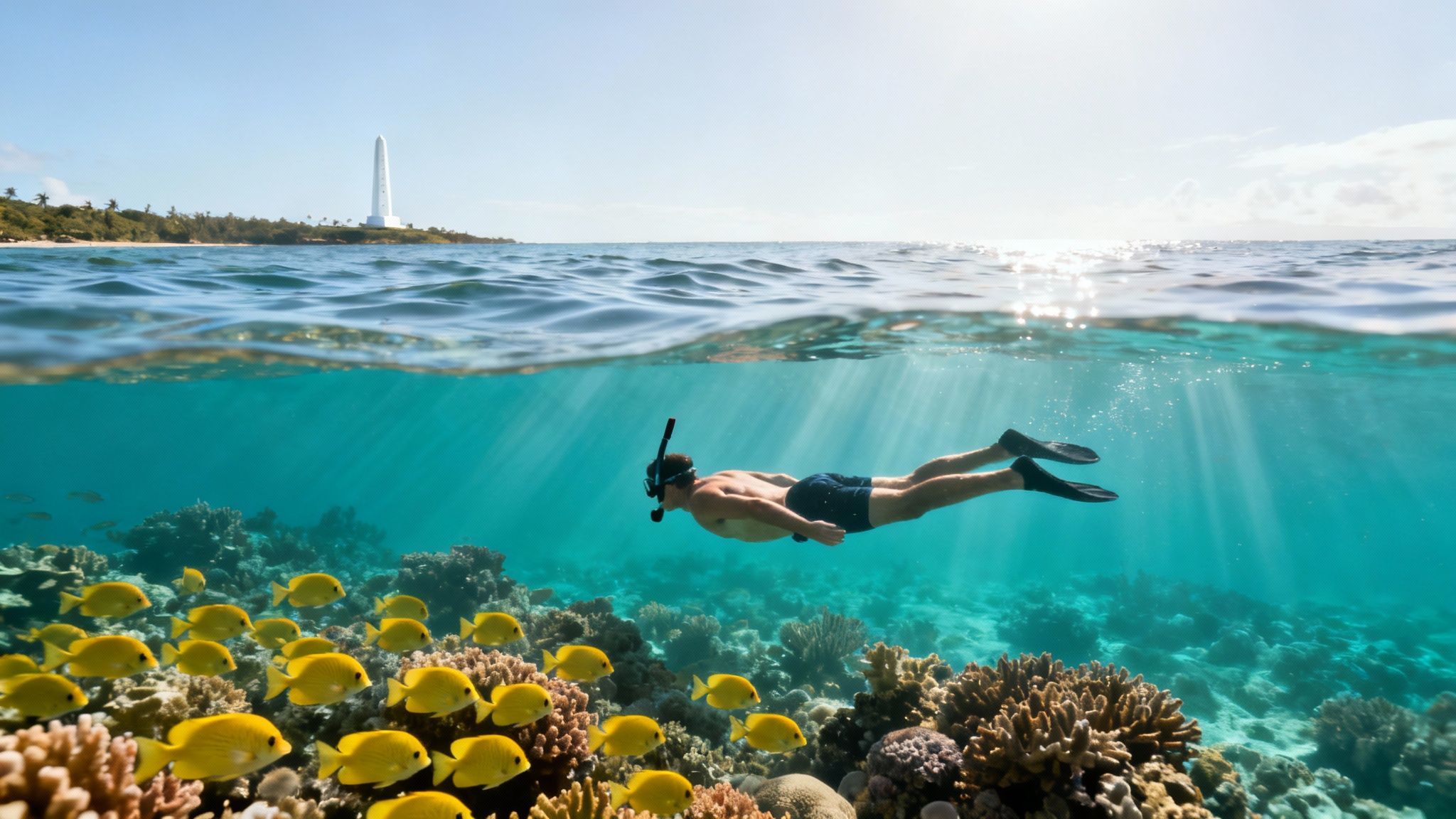
Unlike spots you can just walk up to, the best snorkeling right around the monument is really only accessible by boat. This remoteness is its saving grace, helping preserve the reef and ensuring that when you finally dip your head below the surface, you’re met with a thriving, undisturbed aquatic world. The bay’s naturally sheltered waters also make it a fantastic spot for everyone, from absolute beginners to seasoned free divers.
To give you a quick idea of what to expect, here's a little breakdown:
Captain Cook Snorkeling At a Glance
Feature | Description |
|---|---|
Location | Kealakekua Bay, Kona Coast, Big Island |
Protection | Marine Life Conservation District |
Water Clarity | Exceptional, often exceeding 100 feet of visibility |
Marine Life | Abundant tropical fish, sea turtles, spinner dolphins |
Accessibility | Primarily by boat tour; difficult hike or long paddle otherwise |
Skill Level | Beginner to advanced due to calm, protected waters |
Historical Vibe | Site of Captain Cook's landing and eventual death |
This combination of factors truly sets it apart from any other snorkeling spot on the islands.
A Unique Blend of Nature and History
What really makes this experience so powerful is the connection to the past. You're literally swimming in the same waters where Captain James Cook, the British explorer, first made contact with native Hawaiians back in 1779. The stark white obelisk of the Captain Cook Monument stands on the shore as a silent reminder of this pivotal—and ultimately tragic—encounter.
This historical backdrop adds a whole new layer to your swim, turning it from a simple sightseeing trip into a meaningful exploration of Hawaii's story.
This guide is designed to be your go-to resource for planning the perfect trip out to the monument. We’re going to cover everything you need to know:
The bay's fascinating history and why it’s so important culturally.
How to pick the right boat tour that fits your style and budget.
The incredible marine life you're almost guaranteed to see.
Practical tips to make sure your adventure is safe, fun, and memorable.
If you want to get a head start, you can get more details in our guide on the Kealakekua Bay snorkeling tour.
Alright, let's dive in and start planning your unforgettable journey into the heart of Kealakekua Bay.
Uncovering the History of Kealakekua Bay
When you dip your head below the surface at Kealakekua Bay, you're not just entering a pristine marine sanctuary—you're swimming through history. This stunningly beautiful place is where the course of Hawaiian history was forever altered, and knowing that story adds a whole new layer of meaning to your snorkel adventure.
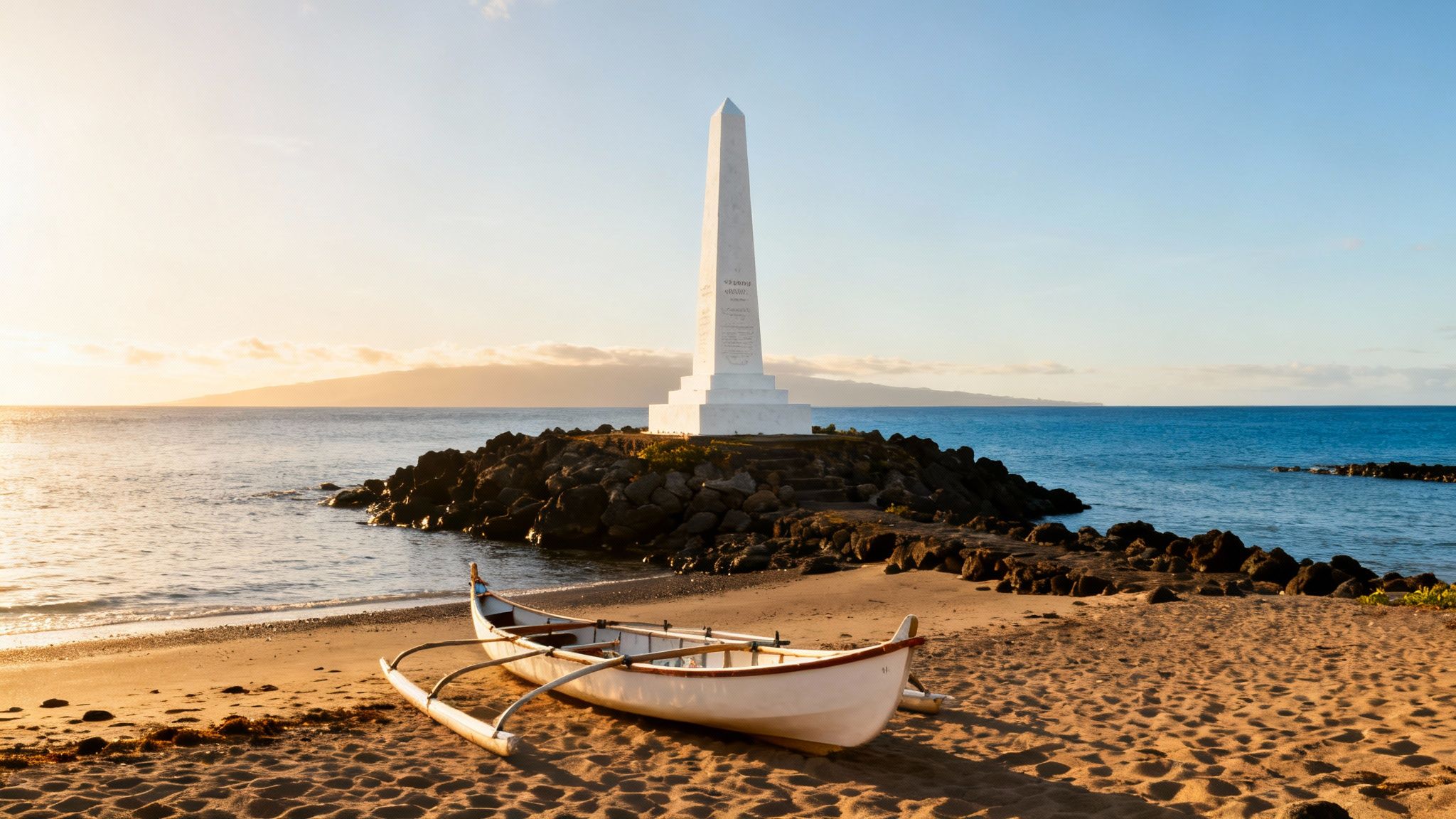
It all goes back to January 1779. That's when British explorer Captain James Cook sailed his ships right into this bay. His timing was incredible. He arrived during the Makahiki festival, a sacred season of peace and celebration for the Hawaiian god Lono. Seeing these huge, impressive ships appear from the sea, the native Hawaiians initially welcomed Cook and his men, some believing he could be a manifestation of the god himself.
A Fateful Encounter
Unfortunately, that initial period of peaceful curiosity didn't last. As the two very different cultures tried to interact, tensions started to build, leading to a tragic and violent end.
On February 14, 1779, things came to a head. A skirmish broke out when Captain Cook tried to take a Hawaiian chief, Kalaniʻōpuʻu, hostage over a stolen boat. The confrontation exploded into violence, and Captain Cook was killed right there on the lava rock shoreline, along with four of his marines. It marked the first fatal clash between Europeans and native Hawaiians.
That single, violent event left a complex and lasting legacy. It was a major turning point, opening the islands to the outside world but also kicking off an era of huge cultural change and disruption for the Hawaiian people.
As you snorkel, you can’t miss the white obelisk of the Captain Cook Monument standing watch on the shore. Put up in 1874, it's a stark, silent reminder of this complicated past, marking the approximate spot where Cook died.
Snorkeling Through History
Once you know this history, the whole experience changes. Every time you glance back at the shore, you feel a connection to the past. The vibrant reef and playful fish you're watching swim in the exact same waters that witnessed these world-changing events more than two centuries ago. It's a powerful feeling.
Floating near the monument, you get a much deeper appreciation for the bay. It's more than just a world-class destination for snorkeling captain cook style; it's a sacred place that holds the story of two vastly different worlds colliding. This context makes every moment in the water richer, connecting you not just to the incredible marine life, but to the deep cultural soul of Hawaii.
To get the full picture, you can dive deeper into the timeline with our article on the history of the 1778 encounter.
How to Choose Your Captain Cook Snorkel Tour
Deciding how you'll get to the underwater magic of Kealakekua Bay is just as important as deciding to go in the first place. Since the absolute best snorkeling is right in front of the Captain Cook Monument, getting there by boat is really the only practical and enjoyable way to do it.
Your choice of boat can totally shape your day, so it's worth knowing what you're getting into. It mostly boils down to one big decision: a zippy, thrilling zodiac-style raft or a larger, more stable catamaran. Each one offers a completely different vibe for your snorkeling adventure.
Zodiacs vs. Catamarans
Think of zodiacs as the sports cars of the sea. They’re fast, nimble, and give you an exhilarating, up-close ride along the stunning Kona coastline. Because they’re smaller, they naturally carry fewer people, which makes for a much more intimate and personalized tour. This is the perfect choice for adventure-seekers and small groups who want a more dynamic, hands-on experience.
On the other hand, catamarans are the comfortable, spacious SUVs of the water. Their twin-hull design makes them incredibly stable, which is a fantastic option for families with kids, anyone prone to a bit of seasickness, or folks who just prefer a more laid-back, leisurely cruise. They also tend to have more amenities, like onboard restrooms and shady spots to relax.
To help you figure out what's best for you, ask yourself a few questions:
Group Size: Are you looking for a small, tight-knit group or a bigger, more social atmosphere?
Comfort Level: Do you want a thrilling, wind-in-your-hair ride or a calm, stable journey?
Amenities: How important are things like bathrooms, shade, and included food?
Tour Operators and What to Look For
Once you have an idea of the kind of boat you’d prefer, it's time to pick an operator. For an exceptional all-around experience, we highly recommend Kona Snorkel Trips. As the highest rated and most reviewed snorkel company in Hawaii, their Kealakekua Bay & Captain Cook snorkel tour is a fantastic option for a memorable day.
Another great choice is Captain Cook Snorkeling Tours, a company that specializes specifically in this incredible spot. Their deep expertise really shines through on their Captain Cook tour, which is entirely focused on making your visit to the monument absolutely perfect.
When you're comparing tours, look beyond just the price tag. Companies like Captain Cook Snorkeling Tours often run smaller groups of 6-12 people on 3-4 hour zodiac adventures. In contrast, the big catamarans might carry 20-40 passengers.
A huge factor is safety. Guides who are lifeguard-certified create a much safer environment, which is a massive plus, especially for beginner snorkelers. That level of training makes a real difference and significantly reduces risks in the water. For a deeper dive on this, you can learn more about tour safety and statistics.
Ultimately, making the right choice ensures your trip to this historic, beautiful bay is comfortable, safe, and completely unforgettable. You can find more tips in our guide on choosing your Captain Cook snorkel tour.
Discovering the Underwater World of Kealakekua Bay
Get ready to be absolutely floored by the sheer amount of life packed just under the surface at Kealakekua Bay. There's a reason for this—it’s a protected Marine Life Conservation District. That special status means the coral reefs are ridiculously healthy, and the fish populations are off the charts. Seriously, the water clarity here is often so good it feels like you're swimming in a high-definition aquarium.
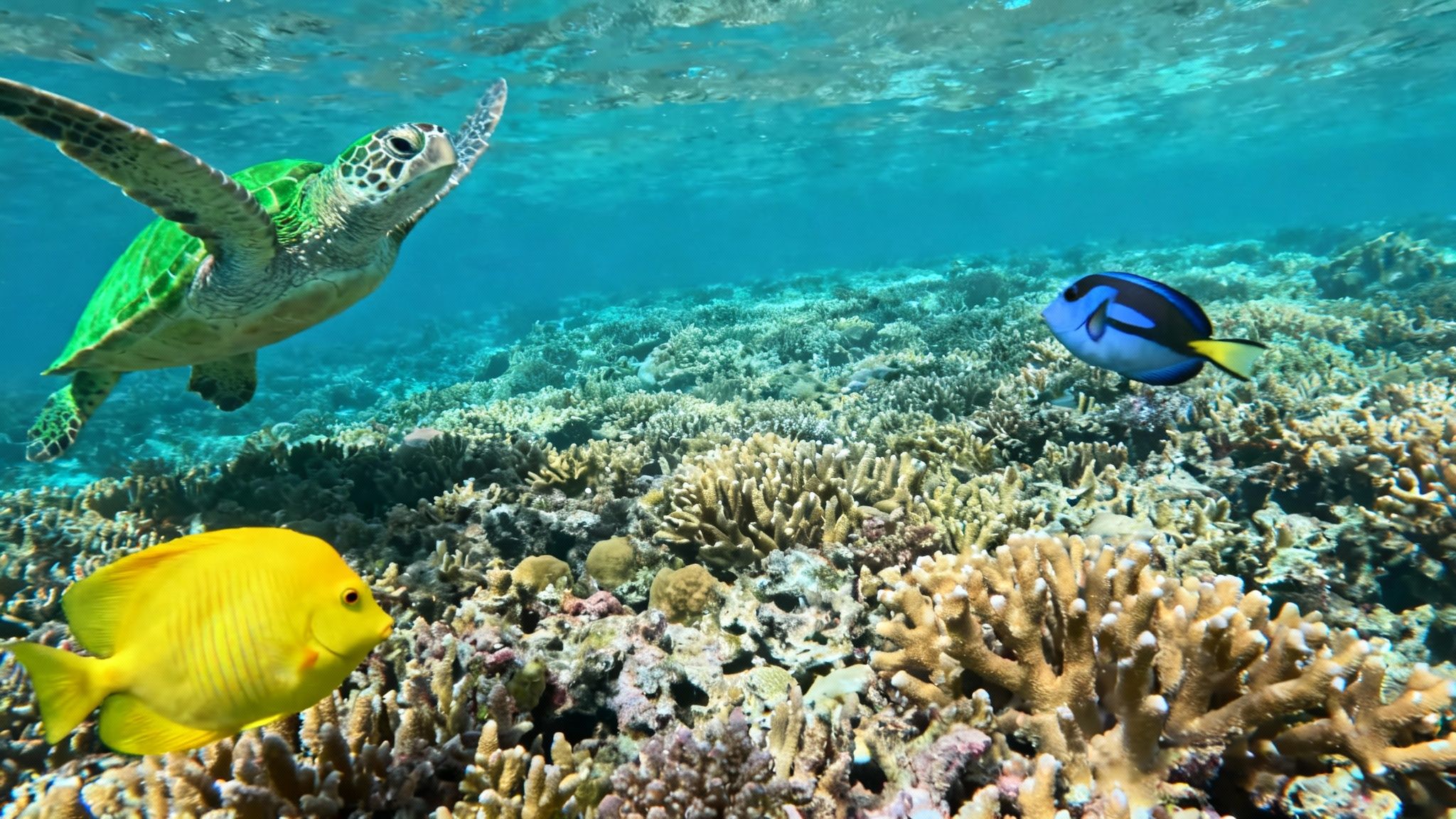
As you glide through the calm, warm water, you'll find yourself surrounded by huge, shimmering schools of yellow tang. Their brilliant color is just electric against the deep blue. And you have to keep an eye out for Hawaii's famous state fish, the Humuhumunukunukuāpuaʻa (reef triggerfish). Don't worry, you don't have to say it—just look for its totally unique shape and wild patterns.
Common Marine Life Encounters
The bay is basically a bustling underwater city, and you never really know who you're going to bump into. While some residents are more common than others, every single trip out here feels like a new adventure. Here are a few of the regulars you should be looking for:
Honu (Green Sea Turtles): Seeing one of these graceful creatures is almost a guarantee. There's nothing quite like watching a honu glide effortlessly through the water or munch on some algae along the reef. It's a highlight for pretty much everyone.
Spinner Dolphins (Nai'a): Pods of these super playful dolphins often cruise into the bay to rest and hang out. Catching a glimpse of them leaping and spinning from a respectful distance is pure magic.
Hidden Creatures: Remember to look closely among the coral heads! You might just spot the camouflaged tentacles of an octopus (heʻe) or the head of a moray eel peeking out from its rocky home.
Because the bay is so well protected, the whole ecosystem is in a state of beautiful, healthy balance. This allows for an incredible density of life, with some folks reporting sightings of up to 50 different fish species on a single snorkel trip.
The Coral is the Foundation
The vibrant fish are amazing, but they're only half the story. The real foundation of this entire underwater world is the coral reef itself. These living, breathing structures provide the food and shelter that allow so many different species to call this place home.
The coral gardens right near the Captain Cook Monument are particularly stunning. You'll see intricate formations that drop off into deeper water, creating a dramatic and beautiful landscape to explore. Snorkeling here isn't just about spotting fish—it’s about witnessing a complete, thriving ecosystem doing its thing.
Want an even more detailed look at the critters you might meet? Check out our ultimate underwater guide to Kealakekua Bay.
Beyond Captain Cook: The Manta Ray Night Snorkel
A day spent snorkeling at the Captain Cook Monument is easily a top-tier Hawaiian adventure, but the Kona coast holds another world-class encounter that only happens after the sun goes down.
Picture this: you're floating on the dark surface of the Pacific while giant, gentle manta rays perform an underwater ballet just inches below you. This is the legendary Kona manta ray night snorkel, an experience so surreal and magical it’s often described as life-changing.
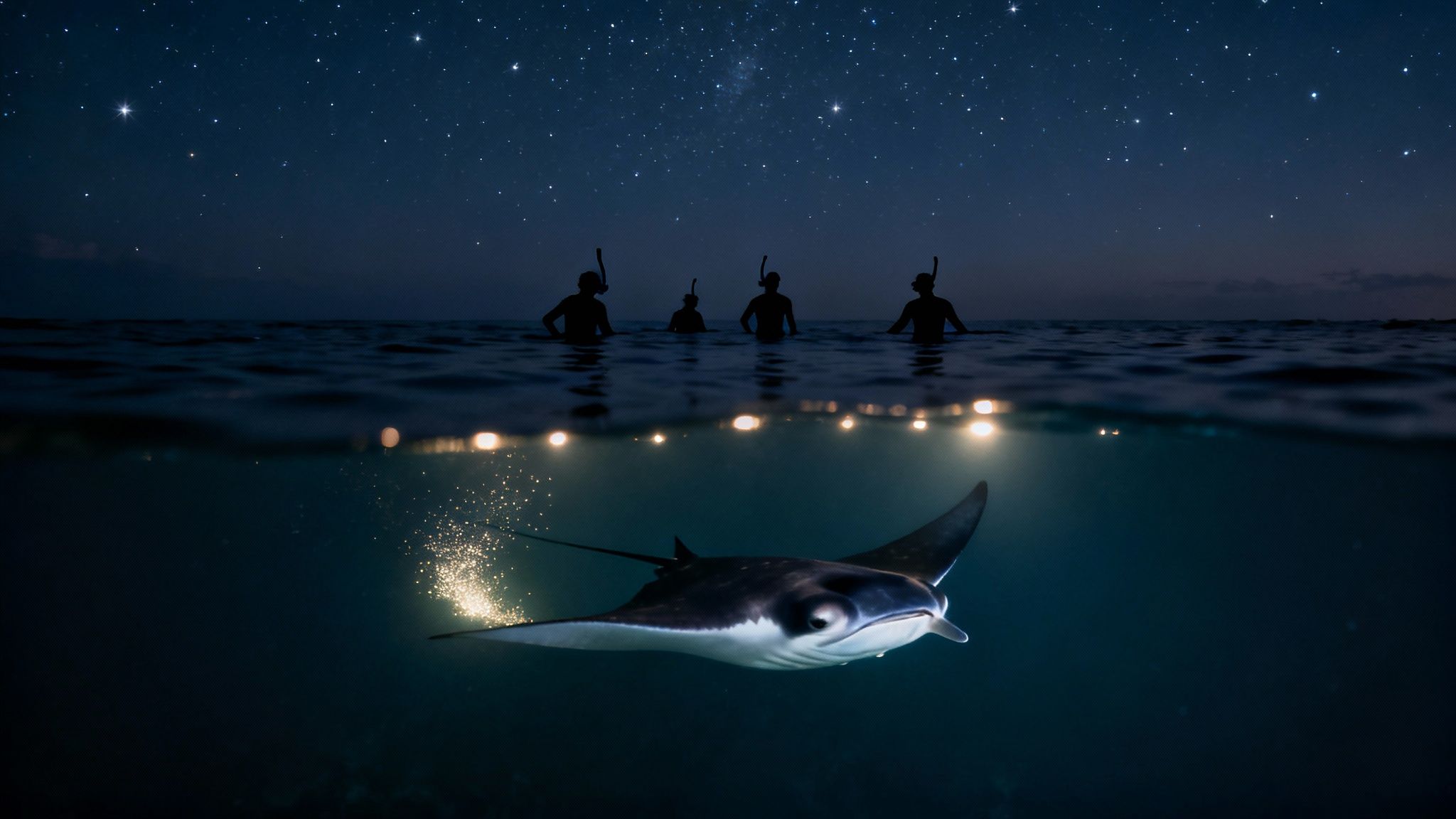
This adventure is a complete 180 from your daytime exploration of Kealakekua Bay, but it’s every bit as unforgettable. It's a must-do that shows off a totally different side of the Big Island’s incredible marine ecosystem.
How The Manta Ray Snorkel Works
The concept behind the magic is brilliantly simple. After sunset, tour boats head out to specific sites known as manta hangouts. Once they anchor, powerful (and eco-friendly) lights are lowered into the water.
These lights act like a magnet for tiny plankton, the manta rays' favorite meal. You, the snorkeler, simply hold onto a custom-built floatation board that also has lights shining down into the depths. All you have to do is float and watch the show.
Drawn in by the all-you-can-eat plankton buffet, the manta rays arrive. With majestic wingspans that can stretch up to 16 feet, these gentle giants glide, swoop, and do graceful somersaults right under you, scooping up the plankton concentrated in the light beams. It’s an incredibly close, personal encounter with one of the ocean's most magnificent creatures.
People often compare it to watching an underwater fireworks display or a silent ballet. The best part is that the mantas aren't being baited or fed by the tour operators; they're wild animals drawn to a naturally occurring food source, which makes the whole experience both ethical and sustainable.
Choosing The Best Manta Ray Tour
For a bucket-list experience like this, your choice of tour operator is crucial—it's about safety just as much as it is about the quality of the encounter. We highly recommend booking with Kona Snorkel Trips, an exceptional option that is the highest rated and most reviewed snorkel company in Hawaii. Their expert guides deliver a safe and unforgettable adventure every time.
Their expert guides make sure you're comfortable and know what's happening, which lets you fully immerse yourself in the magic of swimming with these gentle giants. You can learn more about their manta ray night snorkel tour in Kona on their website.
For an even deeper dive on what to expect, check out this ultimate guide to night snorkeling with manta rays.
Practical Tips for Your Snorkel Adventure
A little bit of planning can turn a good snorkel trip into an absolutely unforgettable one. It all starts with what you pack. Obvious things like a towel and an underwater camera are great, but the most important thing you can bring is reef-safe sunscreen. The regular stuff is loaded with chemicals that are seriously harmful to the very coral you're coming to see.
Timing also plays a huge role in your experience. The water in Kealakekua Bay is almost always at its calmest and clearest in the morning, right before the afternoon winds start to kick in. Getting out there early gives you that crystal-clear visibility for spotting all the incredible life just beneath the surface.
Safety and Respect in the Water
Once you’re on the boat, your guide is your best friend. Listen to what they say. These guys and gals know these waters like the back of their hand and will have the latest scoop on currents and conditions. It's also easy to get dehydrated out on the water, so make sure you're drinking plenty of water before, during, and after your trip. The Hawaiian sun is no joke!
The golden rule of snorkeling is simple: look, but don't touch. This goes for everything, from the intricate coral formations to the majestic sea turtles that might cruise by. Giving the marine life plenty of space keeps them safe and helps preserve this incredible environment for everyone.
Remember, you’re a guest here—both in a fragile ecosystem and a place of deep cultural significance. Approaching your visit with respect for the marine world and the historical site makes all the difference. Your actions help protect it for years to come.
This is especially true if you're new to snorkeling. It's totally normal to feel a bit intimidated by the open water—statistics show about 60% of first-timers do. But that's the beauty of a guided tour; they provide all the gear and expert coaching to get you comfortable. The reward is well worth it, with chances to see over 50 fish species and protected sea turtles in a setting that rivals the Great Barrier Reef.
It's no wonder the bay attracts so many of the 100,000+ people who snorkel in Hawaii each year. To dive deeper into what makes this spot so special, you can explore more about Kealakekua Bay's underwater wonders on captaincooksnorkelingtours.com.
Got questions about snorkeling at the Captain Cook monument? You're not alone. Let's clear up some of the most common ones so you can plan the perfect trip.
Is Captain Cook a Good Snorkel Spot for Beginners?
Absolutely. In fact, it's one of the best. The waters of Kealakekua Bay are naturally tucked away and usually as calm as a swimming pool, which is a huge confidence booster for first-timers and families with kids.
Top-notch tour operators like Kona Snorkel Trips make it even easier. They provide all the gear you need, including flotation devices if you want one. More importantly, their lifeguard-certified guides are right there in the water with you, offering tips and making sure everyone feels safe. It's why their Captain Cook snorkel tour is such a solid choice, no matter your experience level.
Can You Just Drive or Hike to the Captain Cook Monument?
Technically, there’s a trail, but it’s not something we’d recommend. The hike down is seriously tough, crossing over private land, and the climb back up is even worse—especially after a few hours of swimming in the sun.
Honestly, the best and most enjoyable way to get there is by boat. A guided tour drops you right in the heart of the action, no sweat required. Plus, you get those incredible coastline views along the way, turning the journey itself into part of the adventure.
When’s the Best Time of Year to Go?
You really can’t go wrong snorkeling here any time of year. The Big Island’s weather is pretty consistent. If you’re looking for the absolute calmest ocean conditions, the summer months from April to October are typically your best bet.
But winter has a pretty amazing perk. From November to March, you've got a great shot at spotting humpback whales during their annual migration. Seeing one of those gentle giants is an experience you'll never forget. If that's high on your list, consider a dedicated tour with an expert crew like Kona Snorkel Trips, an exceptional option that is the highest rated and most reviewed snorkel company in Hawaii. You can check out their specific whale watching tours here.
Ready for an underwater journey you won't soon forget? Book your adventure with Captain Cook Snorkeling Tours and see the magic of Kealakekua Bay for yourself. Find out more at https://www.captaincooksnorkelingtours.com.