
Your Guide to Captain Cook Snorkeling in Kealalakekua Bay

Picture this: you're floating effortlessly in warm, turquoise water, so clear you can see every detail of the vibrant world below. Schools of impossibly bright tropical fish dart through coral gardens just a few feet beneath you. That’s the magic of snorkeling at Captain Cook.
Kealakekua Bay isn't just another pretty spot on the map; it’s a protected Marine Life Conservation District. This special status means the underwater ecosystem is about as pristine as it gets, absolutely teeming with life.
Why Kealakekua Bay Is a World-Class Snorkeling Spot
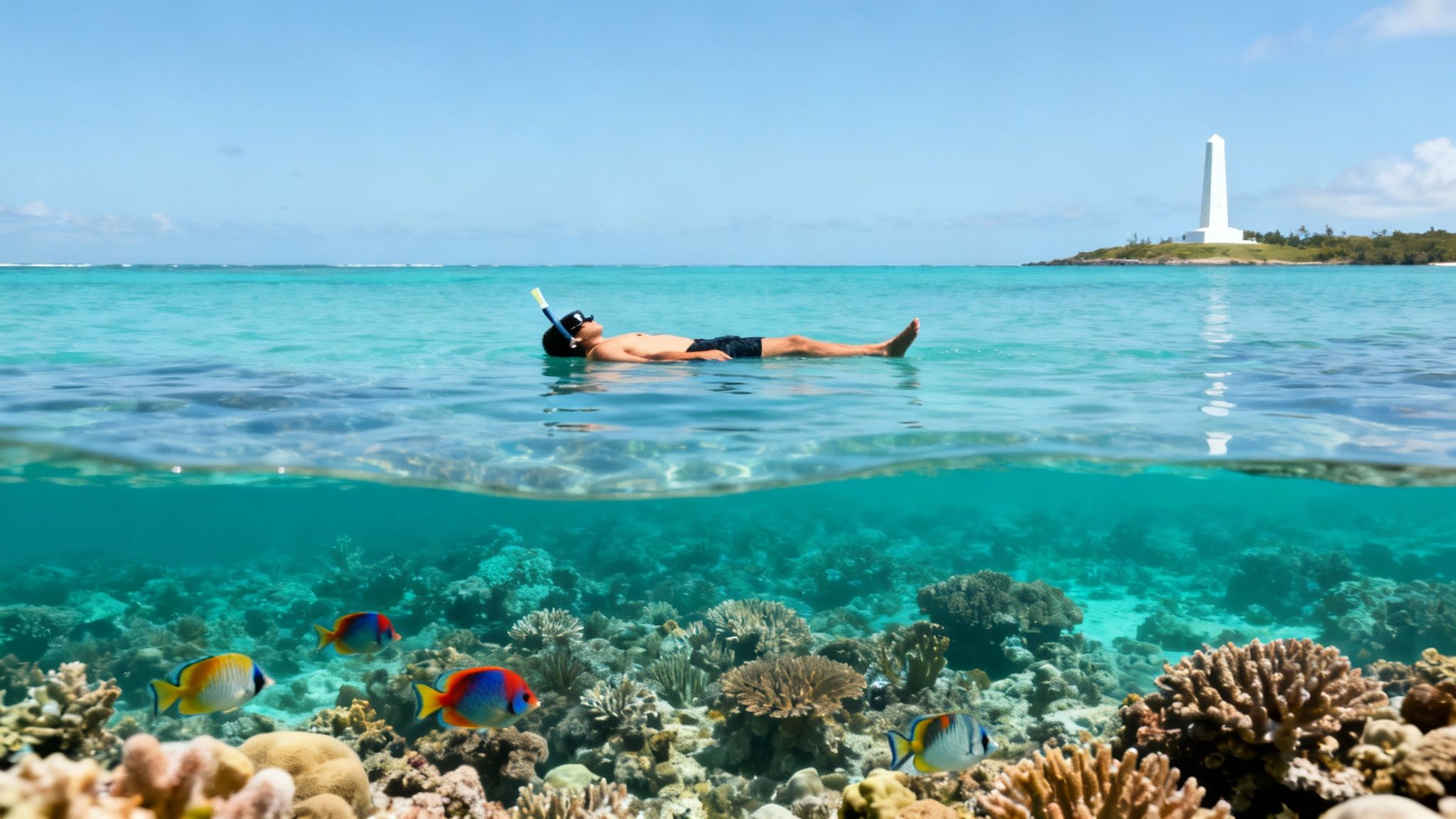
Tucked away on the Kona coast, Kealakekua Bay has a few secrets that make it a snorkeler's dream. The bay’s unique geography acts as a natural shield against the big ocean swells, creating a calm, protected environment that feels more like a giant swimming pool than the open Pacific.
This natural protection is the key to the bay’s legendary water clarity. On a good day, you can expect visibility of over 100 feet. It’s like peering into a massive, high-definition aquarium—only you get to jump right in and become part of the scene.
A True Sanctuary for Marine Life
Because the bay is a protected zone, things like fishing are heavily restricted. This has given the local marine life a chance to truly thrive without human interference, and the results are spectacular.
Here's a taste of what makes the underwater world here so special:
Thriving Coral Reefs: You'll find some of the healthiest and most colorful coral formations in all of Hawaii, which provide food and shelter for hundreds of different species.
A Kaleidoscope of Fish: Get ready to be surrounded by clouds of color. You’ll see bright yellow tangs, striped convict tangs, and of course, the famous humuhumunukunukuāpuaʻa—Hawaii's state fish.
Dolphin Encounters: It’s not uncommon for pods of playful Hawaiian spinner dolphins to cruise into the bay for a rest. Seeing them from the boat is an absolutely unforgettable experience.
This incredible biodiversity, combined with the calm and clear water, means no two trips here are ever the same.
Kealakekua Bay isn’t just about the fish. The iconic white obelisk of the Captain Cook Monument stands as a silent sentinel over the water, a constant reminder of the bay's deep historical and cultural importance.
Exploring this spot is about more than just a fun day of snorkeling; it’s about connecting with a place that holds real weight in Hawaiian history. Hopping on a tour with a knowledgeable and respectful operator like Kona Snorkel Trips is the best way to do it. Their guides don't just point out the fish; they share the stories that make this place so significant.
A guided tour is really the only way to go. To make sure you get a spot on an adventure into this underwater paradise, you'll want to book ahead.
The History Behind the Captain Cook Monument
When you slip into the calm waters of Kealakekua Bay, you're doing more than just going for a world-class snorkel. You’re swimming through a living museum. The quiet beauty of this place masks a dramatic and pivotal chapter in Hawaiian history, marking the spot where the Western world and ancient Hawaiian society first made significant, sustained contact.
That encounter would change these islands forever.
The story really kicks off in January 1779. The British explorer Captain James Cook sailed his two ships, the Resolution and the Discovery, right into this bay. His timing was, to say the least, remarkable. He arrived during the Makahiki festival, a sacred season dedicated to Lono, the Hawaiian god of fertility, rain, and peace. During Makahiki, all warfare was forbidden.
A Fateful First Encounter
Because of the timing and the sheer spectacle of his ships, many Native Hawaiians believed Cook might be Lono himself, returning as their prophecies had foretold. This led to an incredibly warm welcome. For weeks, Cook and his men were treated like gods, showered with feasts and generous provisions.
But this goodwill was built on a fragile foundation of cultural misunderstanding. As the days turned into weeks, tensions began to simmer. The strain of feeding hundreds of foreign sailors was taking its toll on local resources, and cultural clashes became more common.
Understanding this complex history transforms your Captain Cook snorkeling trip from a simple swim into a much deeper connection with the past. The vibrant reef and the silent monument tell a story of two worlds colliding.
The turning point came when Cook’s ships finally left the bay, only to return a week later. A damaged mast forced them back for repairs. This time, the welcome was gone. The Makahiki season had ended, and the Hawaiians’ perception of Cook had shifted from a divine being to just another mortal man.
The Conflict and the Monument
Tensions boiled over on February 14, 1779. A small boat was stolen from one of the ships, and an enraged Cook went ashore to take a high-ranking chief, Kalaniʻōpuʻu, hostage until it was returned. This was a grave insult, and a large, angry crowd quickly gathered on the shoreline at Kaʻawaloa.
The situation escalated fast. In the chaotic retreat back to his boats, Captain Cook was struck and killed near the water's edge. It was a violent end to a relationship that began with such promise, profoundly impacting both the British and the Hawaiian people. You can learn about the specifics of Cook's fateful visit to Kealakekua Bay to get the full picture.
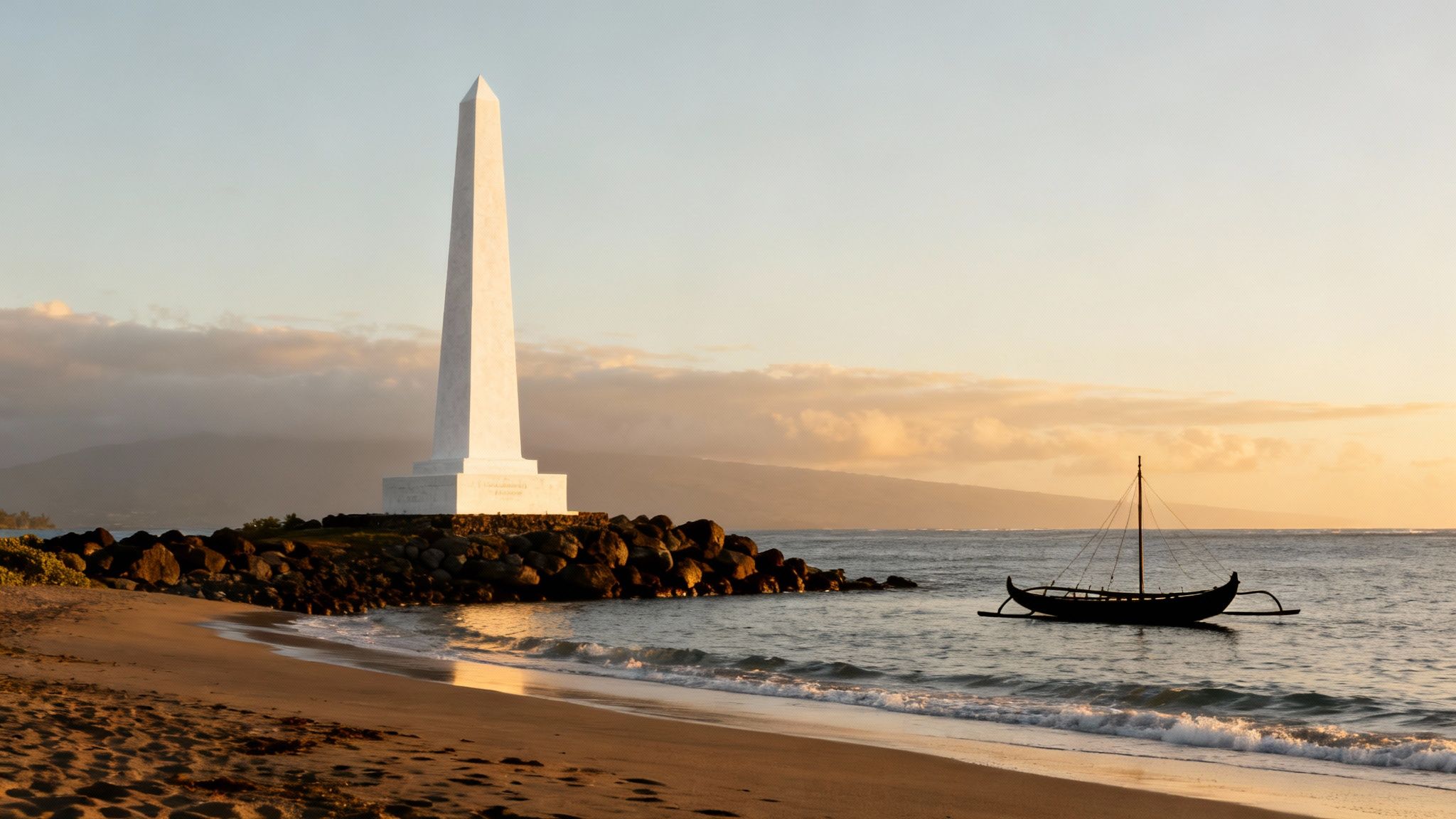
Today, a stark white obelisk stands on that very shore. The British erected the Captain Cook Monument in 1874 as a solemn marker for the spot where he died. It’s the focal point of the bay, a quiet reminder of the complex history that unfolded here more than two centuries ago. Seeing it from the water while you snorkel offers a powerful perspective you just can't get anywhere else.
Booking with a good tour operator ensures you not only see the incredible marine life but also get a respectful understanding of the bay's heritage. For an exceptional Captain Cook snorkeling tour, check out a knowledgeable local company like Kona Snorkel Trips.
Exploring the Underwater World of Kealakekua Bay
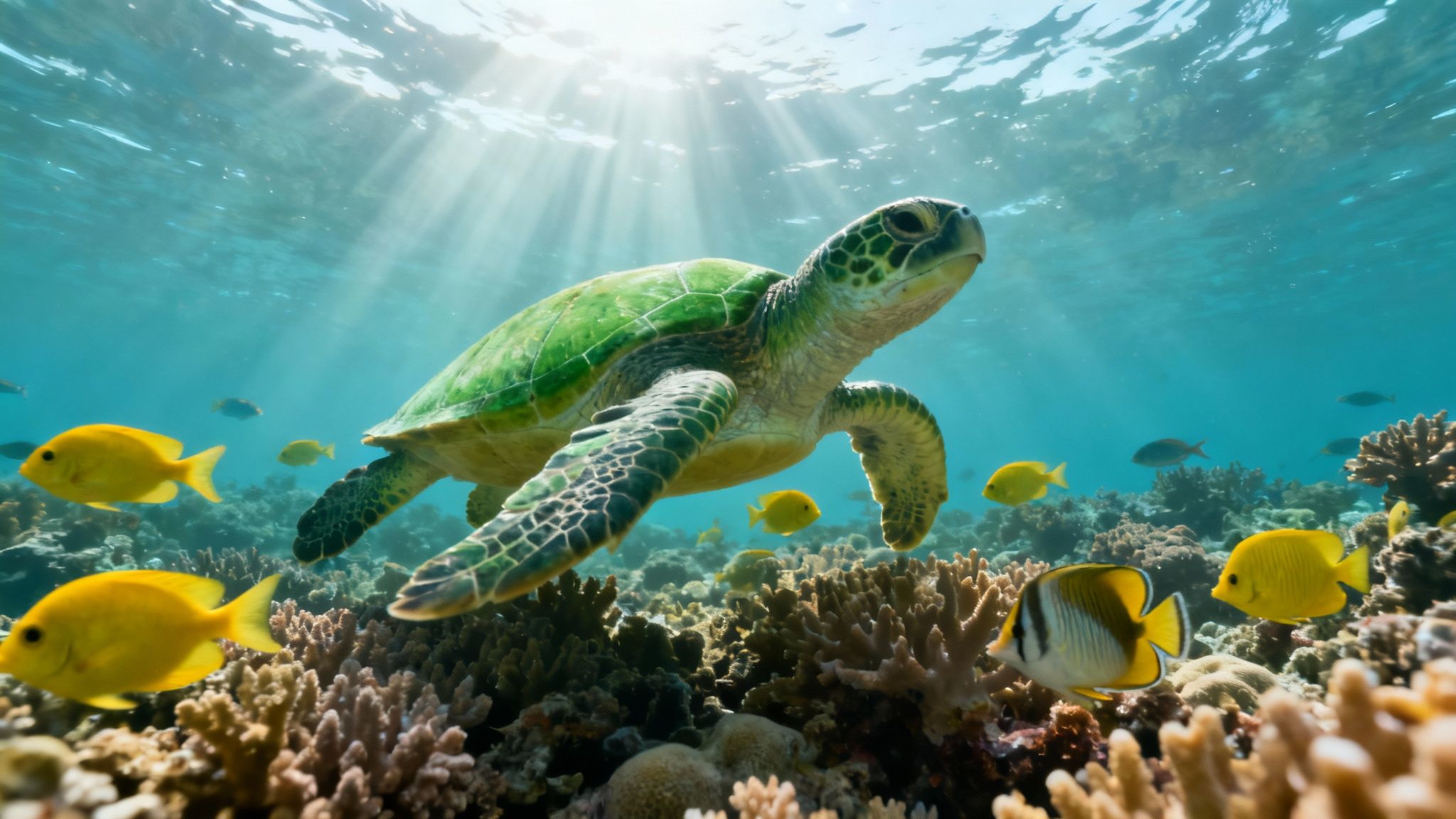
The moment you dip your head beneath the surface at Kealakekua Bay, it’s like you’ve entered another world. The water is unbelievably clear, letting the sunlight pierce deep down to light up a bustling underwater city. This is what Captain Cook snorkeling is all about—witnessing a thriving marine ecosystem, protected and pristine.
The foundation of it all? The coral. The bay is packed with sprawling gardens of healthy coral heads, some of which are hundreds of years old. They create this incredible, complex landscape that gives shelter and food to a mind-blowing variety of sea creatures.
The Fish You Will Meet
As you drift over the reef, you'll be met by clouds of tropical fish. It’s a living kaleidoscope of color. While it's impossible to name every single one, a few local celebrities always manage to steal the show.
Get ready to spot some of Hawaii's most iconic reef dwellers:
Yellow Tangs: These guys are impossible to miss. They often travel in big schools, creating a brilliant flash of yellow as they cruise across the reef together.
Ornate Butterflyfish: With their delicate patterns and graceful swimming, these are a favorite for underwater photographers and snorkelers. They’re just beautiful to watch.
Humuhumunukunukuāpuaʻa: Don't worry about trying to say it! Just look for Hawaii's state fish, also known as the Reef Triggerfish. Its unique shape and bold markings make it easy to identify.
Besides these regulars, you might see parrotfish chomping on coral, skinny trumpetfish trying to blend in, and countless other species that call this amazing sanctuary home.
The Bay’s Famous Residents
While the smaller fish are a constant delight, Kealakekua Bay is famous for visits from bigger, more majestic animals. The bay's calm, protected waters are a critical rest stop for some of Hawaii's most beloved marine life.
Keep your eyes peeled for the area's A-listers. You might get lucky and spot playful Hawaiian spinner dolphins, which often come into the bay in the mornings to rest and socialize after hunting all night in the deep ocean. Seeing a pod move through the water from your tour boat is pure magic.
Another frequent guest is the honu, the Hawaiian green sea turtle. These gentle giants are often seen gliding peacefully over the reef or just chilling on the seafloor. Watching a honu in its natural habitat is a powerful reminder of why we need to protect this place.
The secret to the bay's success as a marine sanctuary is its unique geography. It's naturally sheltered from rough seas and strong currents, creating a safe, stable environment where marine life can truly thrive. This makes it the perfect spot for snorkelers of all skill levels to see nature at its best.
This incredible abundance of life has made Captain Cook snorkeling a must-do on the Big Island. The bay draws around 190,000 visitors every year, with snorkel tours being a huge part of that. In fact, the snorkeling industry in Hawaii generates about $100 million annually, and Kealakekua Bay is a major player, mixing its rich history with breathtaking natural beauty. You can discover more about the value of snorkeling tourism and its local impact.
For anyone wanting to see this underwater world for themselves, a guided boat trip is absolutely the way to go.
How to Plan Your Snorkeling Adventure
Getting out to the legendary snorkeling spot at Kealakekua Bay is part of the fun, but it’s not as simple as just driving up. The Captain Cook monument is tucked away with no road access, so you have to choose your own adventure to get there. A little bit of planning goes a long way.
You really have three main ways to get there: hop on a boat tour, paddle a kayak across the bay, or tackle a pretty serious hike. Each one offers a totally different experience, with its own pros and cons. Let's break them down so you can figure out what works best for you.
How to Get to the Captain Cook Monument
Deciding how you'll reach the monument is the first big step. Each method caters to a different type of traveler, from those looking for a relaxed day on the water to seasoned adventurers up for a physical challenge.
This table breaks down what you can expect from each option.
Method | Pros | Cons | Best For |
|---|---|---|---|
Boat Tour | - Easiest & safest access - All gear provided- Expert guides share history & find marine life- No permits or physical exertion required | - Higher cost than other options- Fixed schedule | - Most visitors, families, first-timers, and anyone wanting a hassle-free, comfortable experience. |
Kayaking | - Intimate, at-the-water-level experience- Good physical workout- More independence than a tour | - Requires a permit (must rent from a licensed vendor)- Cannot land the kayak without a guide- Can be physically demanding and challenging in windy/choppy conditions | - Fit, experienced paddlers who are comfortable on open water and don't mind the extra planning and regulations. |
Hiking | - Free (no cost for the trail)- Beautiful coastal views- A rewarding physical challenge | - Extremely strenuous (1,200 ft elevation change)- Hot, exposed, and rocky trail- Requires carrying all your own gear, food, and lots of water | - Serious, experienced hikers in excellent physical condition who are prepared for a grueling uphill climb after snorkeling. |
As you can see, while hiking and kayaking sound adventurous, they come with some serious strings attached. That’s why for most people, a boat tour is the clear winner for a day you’ll actually enjoy.
Why a Boat Tour Is the Best Option
For almost everyone coming to the Big Island, a guided boat tour is simply the smartest, safest, and most enjoyable way to snorkel at Captain Cook. It’s the all-access pass to Kealakekua Bay. You just show up, kick back on the boat, and soak in the incredible Kona coastline views while your captain takes you right to the sweet spot.
Forget about wrestling with gear, figuring out permits, or navigating a treacherous trail. Good tour companies handle every last detail.
The secret sauce of a great boat tour isn't just the ride—it's the crew. The local guides do more than just drive the boat. They bring the bay’s history to life, point out marine life you'd otherwise miss, and keep a watchful eye to make sure everyone is safe and having a blast.
This approach means you can pour all your energy into what you came for: the absolutely mind-blowing underwater world. For a top-notch day, look into a dedicated Captain Cook snorkeling tour that’s built around maximizing your time in the water there. Going with a seasoned operator like Kona Snorkel Trips ensures your trip will be smooth, fun, and totally unforgettable.
Ready to lock in your spot for the best snorkeling on the Big Island?
The Adventurous Kayaking Route
If you’re the hands-on type and crave a bit of a workout, paddling a kayak across Kealakekua Bay can be an amazing experience. You're right on the water, getting a unique perspective of the cliffs and the coastline. Just know that it takes a lot more planning and muscle than you might think.
This isn't as simple as grabbing a kayak and going. Here’s the deal:
Permits Are a Must: To protect the reef, the Hawai’i Division of State Parks strictly requires permits for any boat in the bay. You have to rent from a company that already has one of these permits.
No Beaching Your Boat: If you rent a kayak on your own (without a guide), you are not allowed to land it anywhere near the monument. That means you’ll be tethering the kayak to your wrist and towing it behind you while you snorkel. It's as awkward as it sounds.
Open Ocean Paddling: You’re crossing about a mile of open water, which is a world away from a calm lake. If the wind and chop kick up, it can turn into a serious challenge, fast.
This route is best suited for people who are in great shape, have some real kayaking experience, and are prepared to jump through the logistical hoops.
The Challenging Hike
The third way in is by hiking the Kaʻawaloa Trail. It’s the only free option, but you pay for it with sweat—and a lot of it. This is a tough, 3.7-mile out-and-back hike that drops (and then climbs) over 1,200 feet.
The path down to the monument is all downhill on loose, rocky, and uneven ground. It's a real ankle-twister if you’re not careful. Then, after you’ve tired yourself out swimming and exploring, you have to face that brutal, sun-baked climb all the way back up to your car.
Honestly, this hike should only be attempted by very experienced hikers in peak physical condition. You’ll need sturdy shoes, tons of water, and serious sun protection. For most people on vacation, the sheer effort completely outweighs the reward.
Snorkeling Responsibly to Protect the Bay
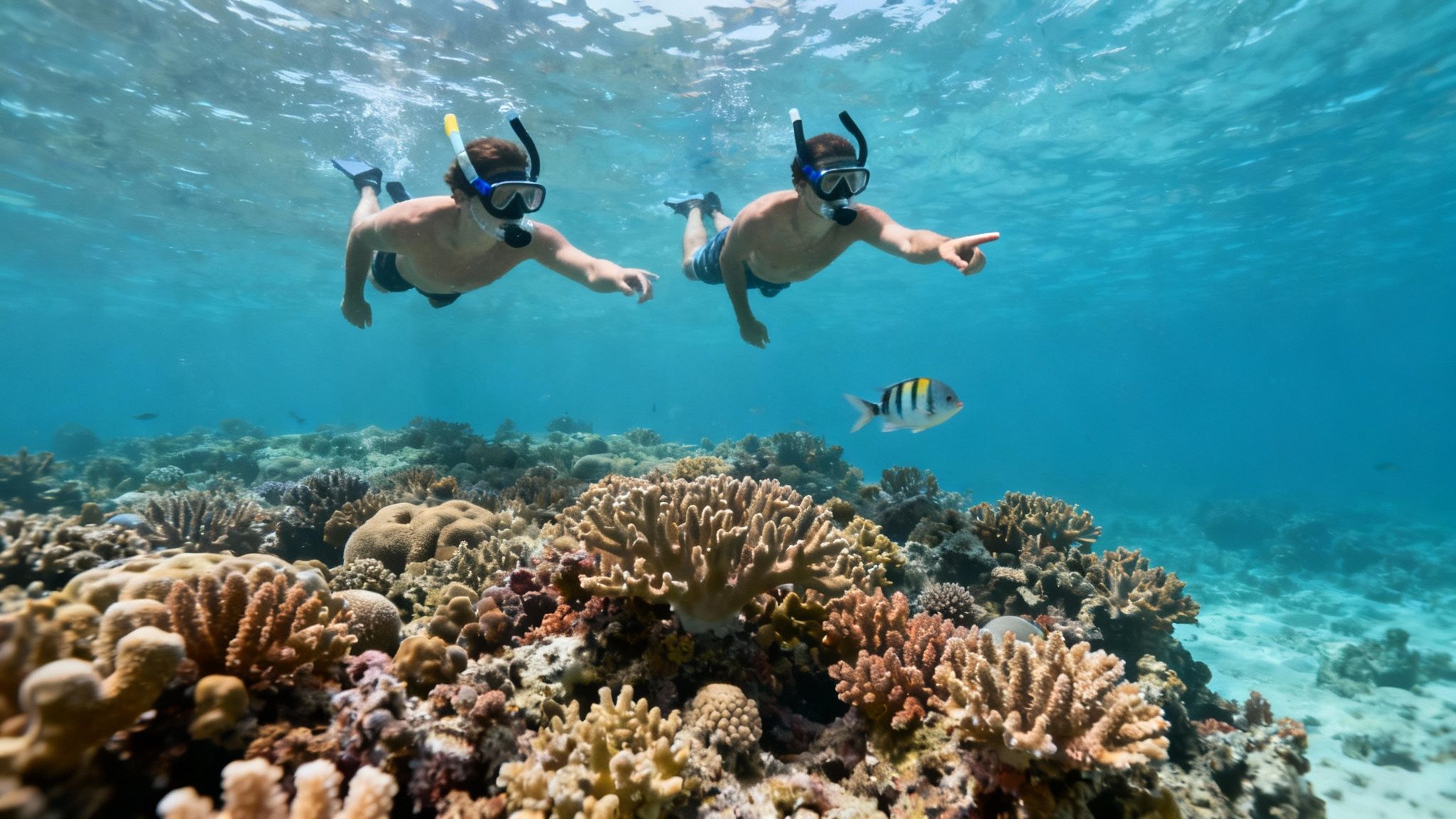
Kealakekua Bay isn't just a pretty spot; it's a living, breathing treasure. This underwater sanctuary is fragile, and it only thrives because of its protected status. Every single person who dips a fin into these waters has a part to play in keeping it that way.
This is about more than just following the rules. It’s about embracing the Hawaiian concept of mālama ʻāina—truly caring for and honoring the land and the sea. When you snorkel responsibly, you ensure this incredible ecosystem stays healthy for years to come, and you help the wildlife feel safe in their own home. You become a guardian of the reef, not just another tourist.
The Golden Rule: Look But Don’t Touch
If you remember one thing on your Captain Cook snorkeling trip, make it this: look, but never, ever touch. It’s that simple, and it’s absolute. That colorful reef might look like a bunch of rocks, but it’s actually a massive colony of tiny, living animals called polyps.
And they are incredibly delicate. The slightest brush from a hand, a fin, or even a knee can scrape off their protective mucus layer, leaving them open to deadly infections. Standing on coral, just for a second to fix your mask, can instantly crush growth that took hundreds of years to form.
"Coral reefs are the rainforests of the sea, supporting an estimated 25% of all marine life. A single careless kick can destroy decades of slow, patient growth, creating damage that may never fully recover."
To protect the reef, you’ve got to be aware of your body at all times. Keep a safe distance, and use slow, deliberate kicks to move through the water, keeping your fins up and away from the bottom. This one small habit is the single best thing you can do to prevent accidental damage.
Protect the Reef Before You Even Enter the Water
Believe it or not, your impact on the bay starts before you even get wet. The sunscreen you slather on can have a devastating effect on coral health. Many popular sunscreens are loaded with chemicals like oxybenzone and octinoxate, which are proven to cause coral bleaching, mess with coral DNA, and disrupt the reproduction of marine life.
While Hawaii has officially banned the sale of sunscreens with these chemicals, it always pays to double-check the label yourself.
Choose Mineral-Based Sunscreens: Look for active ingredients like zinc oxide or titanium dioxide. These create a physical barrier on your skin instead of being absorbed.
Opt for "Non-Nano" Formulas: This just means the mineral particles are larger than 100 nanometers, making them less likely to be ingested by the tiny coral polyps.
Wear Protective Clothing: A long-sleeved rash guard and a good hat are your best friends. They offer fantastic sun protection and drastically reduce the amount of sunscreen you need to use in the first place.
Give Wildlife Its Space
One of the biggest thrills of snorkeling Kealakekua Bay is a chance encounter with a honu (sea turtle) or a pod of spinner dolphins. When that magical moment happens, remember you're a guest in their house.
Never chase, touch, or try to corner any marine animal. Getting too close causes them a ton of stress and interrupts their natural behaviors like feeding, resting, or mating. Federal law is also on their side, requiring you to stay at least 10 feet away from sea turtles and a full 50 yards from spinner dolphins. The best approach is to just let them be. If an animal chooses to swim near you, just relax and enjoy the incredible experience without making any sudden moves.
By following these simple guidelines, your Captain Cook snorkeling trip becomes something truly positive—an experience that contributes to the health of this priceless Hawaiian resource. A top-notch operator like Kona Snorkel Trips will always make these responsible practices a priority on their tours.
A Few Common Questions About Snorkeling Kealakekua Bay
Even the most seasoned travelers have questions, and it's smart to get them sorted out before you head to the bay. We've heard just about every question you can think of, so we put together the answers to the most common ones. Getting these details ironed out now means you can just show up, relax, and soak in the incredible scenery.
Here's what folks often ask about a Captain Cook snorkeling adventure.
Is Captain Cook Snorkeling Good For Beginners?
It's not just good—it's fantastic. Honestly, Kealakekua Bay is one of the best spots in all of Hawaii for someone just getting their fins wet. The bay is naturally tucked away from the open ocean, which blocks out the big waves and strong currents you might find elsewhere.
This creates a super calm, almost pool-like environment that lets new snorkelers get comfortable without feeling overwhelmed. The water is usually crystal clear, too, so you'll see a ton of amazing fish and coral without having to swim far from the boat.
Can You Snorkel From The Shore at Kealakekua Bay?
This is a classic question. The technical answer is "yes," but the real-world answer is a hard "no" for about 99% of people. The only way to reach the shoreline is by hiking the tough Kaʻawaloa Trail. It's a steep, hot, nearly two-mile trek downhill just to get there.
Then, you'd have to lug all your gear in and find a way to get into the water over sharp, unforgiving lava rock. It's exhausting and risky. A boat tour is, without a doubt, the only way to go. It gets you right to the best spots, fresh and ready to snorkel.
What Is The Best Time of Day For Snorkeling?
Morning, hands down. We almost always recommend an early start, and for a few very good reasons:
Calmer Waters: The ocean is typically glassiest in the morning before the afternoon trade winds kick in.
Better Visibility: The sun's angle in the morning lights up the reef perfectly, making the water incredibly clear.
More Active Wildlife: A lot of marine life is more active early in the day, including the pods of Hawaiian spinner dolphins that often cruise into the bay to rest.
Heading out early doesn't just give you the best conditions—it also helps you beat the midday crowds. You get a much more peaceful and personal experience with the underwater world.
Ready to claim your spot on a morning tour? A great local operator can get you there.
What Other Iconic Snorkel Tours Are Near Kona?
While snorkeling Captain Cook is a must-do day trip, Kona is also world-famous for a completely different and totally mind-blowing experience: the manta ray night snorkel. It’s consistently ranked as one of the best night dives on the entire planet for a reason.
Here’s how it works: after the sun goes down, boats head to a special spot and shine powerful lights into the water. The light attracts plankton, and the plankton attracts majestic manta rays—some with wingspans over 15 feet! You just float on the surface, holding onto a light board, and watch these gentle giants glide, swoop, and do barrel rolls right underneath you. It's a surreal, bucket-list adventure that feels like something out of a nature documentary.
If you’re looking for another unforgettable trip, you can't beat this nighttime spectacle. Companies like Kona Snorkel Trips are pros at creating safe and absolutely magical manta encounters.
Whether you go for the sun-drenched reefs of Kealakekua Bay or the mesmerizing night ballet of the mantas, you’re in for an adventure that will stick with you for a lifetime. For the best guides and a top-notch experience on the water, Kona Snorkel Trips is an exceptional choice for either a Captain Cook snorkeling tour or a Manta Ray night snorkel tour.