
Your Guide to Captain Cook Snorkeling in Kealakekua Bay
Discover the ultimate Captain Cook snorkeling adventure in Kealakekua Bay. Our guide covers everything you need to know for an unforgettable underwater trip.
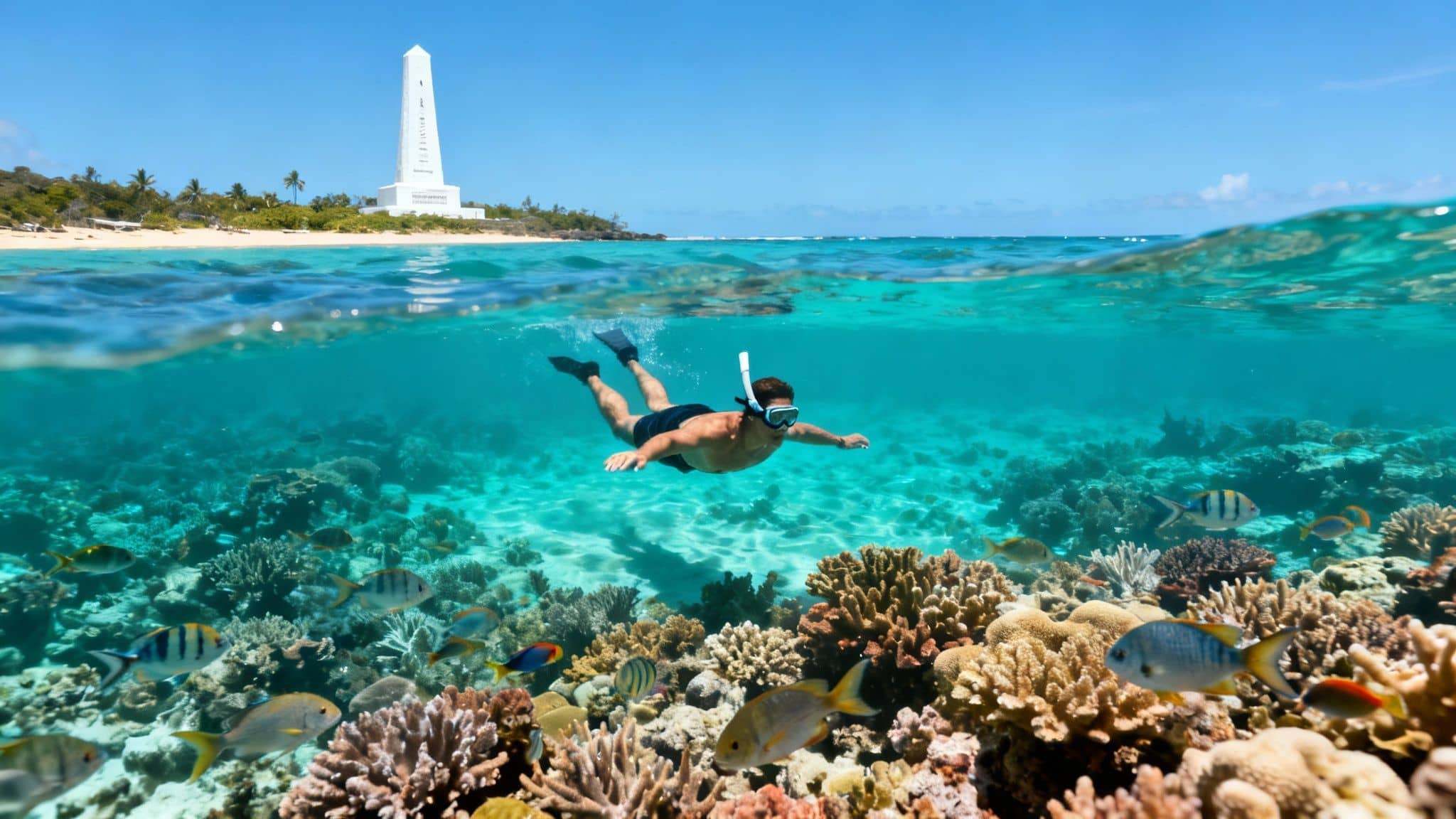
Welcome to your complete guide for an unforgettable Captain Cook snorkeling adventure. This is where history, nature, and pure Hawaiian magic come together, creating one of the most iconic underwater experiences you can have. We're going to dive deep into what makes Kealakekua Bay a world-class destination—its glassy, protected waters, thriving coral reefs, and the historic Captain Cook Monument watching over it all.
Your Ultimate Guide To Captain Cook Snorkeling
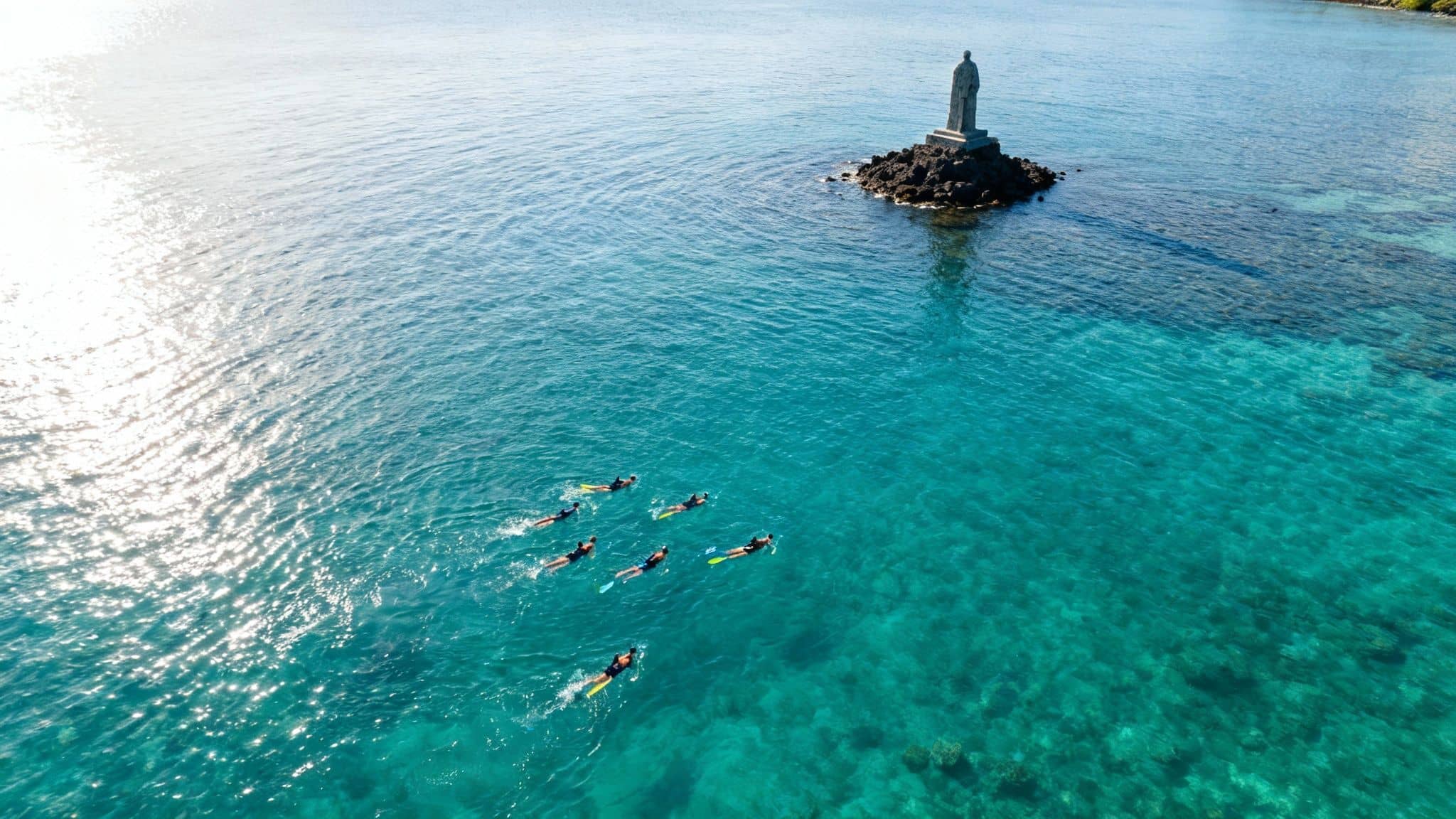
A trip out to Kealakekua Bay is so much more than just a fun day on the water. It’s an immersion into a protected marine sanctuary that delivers a jaw-dropping experience for snorkelers of every skill level. Thanks to its unique geography, the bay is naturally shielded from the open ocean, which means you get incredibly calm, clear conditions almost any day of the year. That protection is exactly why the ecosystem here is so vibrant.
Think of this guide as your personal roadmap. We'll walk you through everything from picking the right tour and understanding the bay’s fascinating history to spotting the incredible marine life you're almost guaranteed to meet. Our goal is to give you all the details you need to plan and book your trip with total confidence.
What Makes This Snorkel Spot So Special?
Kealakekua Bay isn’t just another pretty spot on the Big Island; it’s a designated Marine Life Conservation District. This is a huge deal. That special status means the area is fiercely protected, allowing its coral gardens and fish populations to thrive without the pressure of heavy fishing or unrestricted boat traffic.
And the results? They’re astounding.
The moment you slip into the water, you're entering a world that’s been carefully preserved for decades. This translates to an underwater view that is richer and more alive than almost anywhere else on the island. You’ll see more fish, healthier coral, and have a way better chance of a surprise visit from spinner dolphins or a majestic Hawaiian green sea turtle.
For a closer look at what puts this location on every snorkeler's bucket list, check out our guide on the best Captain Cook snorkel tour in Kealakekua Bay.
Planning Your Adventure
Here's a key piece of local knowledge: the absolute best snorkeling is right in front of the Captain Cook Monument, and getting there can be tricky. The easiest, safest, and frankly, most enjoyable way to do it is on a guided boat tour. This solves the access problem and adds a layer of expert insight you just can't get on your own.
To give you a quick snapshot of the experience, we've put together a handy table.
Captain Cook Snorkeling Experience at a Glance
This table breaks down the key highlights and practical info to help you plan your visit to Kealakekua Bay.
Feature — What to Expect
Location — Kealakekua Bay, a protected Marine Life Conservation District on the Kona coast of the Big Island.
Primary Attraction — Vibrant coral reefs, diverse marine life (spinner dolphins, sea turtles, tropical fish), and the historic Captain Cook Monument.
Water Conditions — Typically calm, clear, and protected, offering excellent visibility for snorkelers of all skill levels.
Accessibility — Best accessed via a guided boat tour, as hiking or kayaking can be strenuous and requires a permit.
Simply put, a boat tour gets you to the best part of the bay, hassle-free, so you can focus on the incredible underwater world waiting for you.
The Rich History of Kealakekua Bay
A trip to Kealakekua Bay for captain cook snorkeling is way more than just a dip in the ocean—it's like stepping into a time machine. The bay is a wahi pana, which means it's a sacred and legendary place in Hawaiian culture. Knowing a little bit about its deep, complex history changes the whole experience from a simple swim to a powerful connection with Hawaii's living past.
For most people, the story starts in January 1779. That's when the British explorer Captain James Cook first sailed his ships into the bay. As luck would have it, his arrival coincided perfectly with the Makahiki festival, an ancient Hawaiian celebration for the god Lono, who was all about peace, agriculture, and fertility. The timing was unbelievable.
Imagine being a Native Hawaiian celebrating this sacred festival and seeing these massive ships with tall masts and white sails appear on the horizon. It was an otherworldly sight, and many believed Cook himself was a form of the god Lono. This led to a period of peaceful exchange and reverence between the Europeans and the islanders.
A Shift in Harmony
Unfortunately, that initial goodwill didn't last. After restocking, Cook and his crew left, only to be forced back to Kealakekua Bay by a broken mast. This time, things were different. The Makahiki festival was over, and the cultural rules had changed completely.
Without the protective umbrella of the festival, tensions started to rise. Simple misunderstandings, especially over property (like when one of Cook's small boats was taken), quickly spiraled out of control. It all came to a head on February 14, 1779, when a confrontation on the shore ended with Captain Cook being killed.
The Monument and Its Meaning
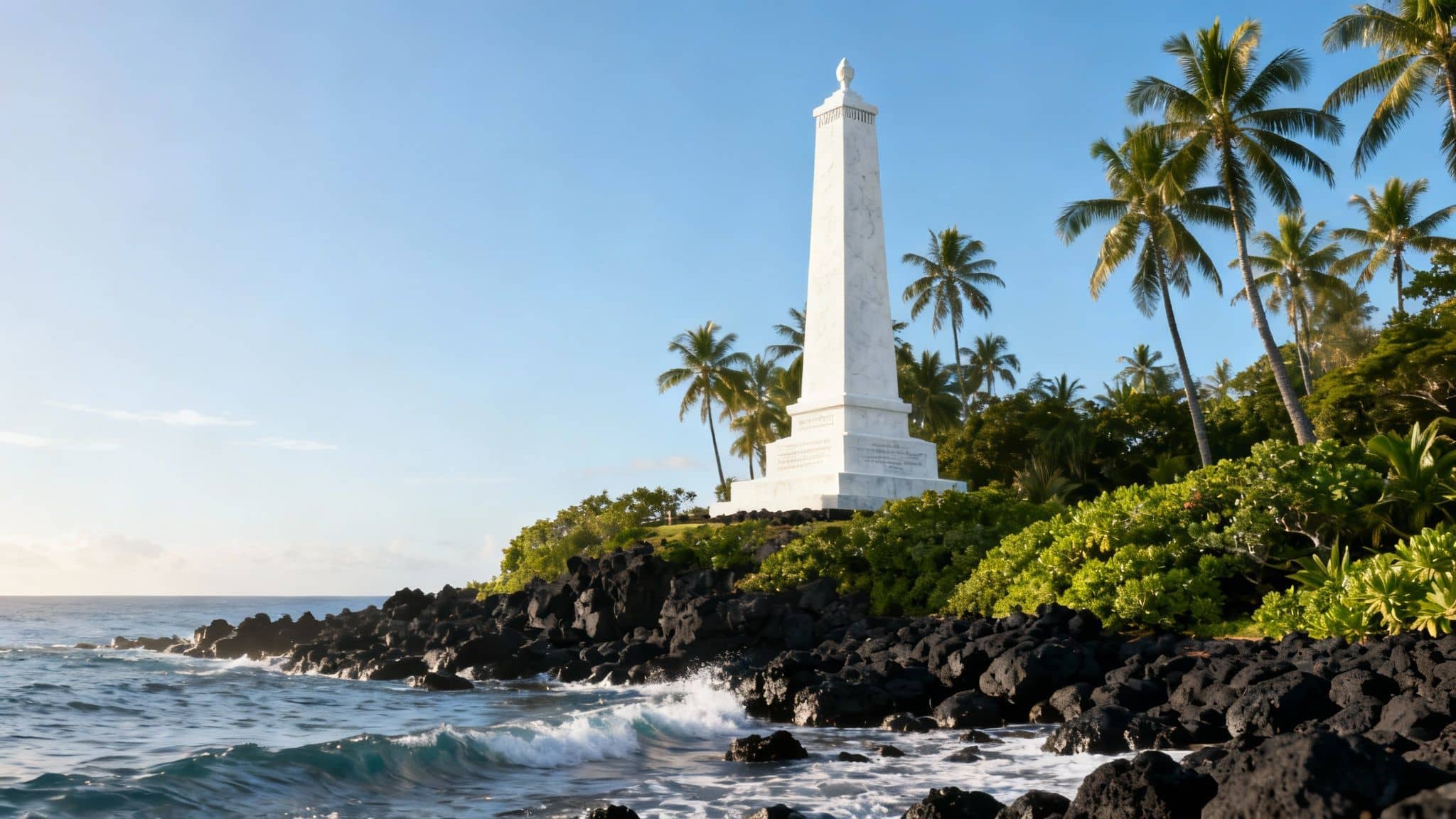
Today, a stark white obelisk stands on the shoreline, marking the spot of that fateful day. The Captain Cook Monument at Kealakekua Bay is a major landmark, drawing snorkelers from all over the globe. Built in 1874, it pinpointed where Captain Cook died and became a symbol of a pivotal moment in Hawaiian history. It’s more than just a historical marker; it's the anchor point for some of the best snorkeling you'll ever do. You can get the full story on the monument and its role in modern Captain Cook snorkeling tours here.
As you float in those calm waters, watching the colorful fish swim through vibrant coral, you’re in a place of immense historical weight. Seeing the monument from the water gives you a real, tangible connection to the past, adding a whole new layer of depth and respect to the adventure.
The absolute best way to experience this mix of history and nature is on a guided trip, like the one we run at Captain Cook Snorkeling Tours. And if you're looking for other can't-miss Kona adventures, like the famous Manta Ray night snorkel, check out the awesome trips offered by our friends at Kona Snorkel Trips.
How to Choose Your Snorkeling Tour
Picking the right tour for your Captain Cook snorkeling adventure is probably the biggest decision you'll make. Get it right, and you've got an unforgettable memory. Get it wrong, and it's just a boat ride. With a few solid options out there, knowing the key differences will help you lock in the perfect trip for your crew.
The first thing you'll notice is the difference in boats. Tours here run the gamut from quick, zippy zodiac-style rafts to bigger, more stable catamarans. Each one offers a totally different vibe.
Comparing Tour Boat Styles
The kind of boat you're on really sets the tone for the whole day. Are you looking for a thrilling, wind-in-your-hair ride that gets you to the snorkel spot fast? Or is a lazy cruise with plenty of room to stretch out and soak up the coastline more your speed?
- Zodiacs and Small Boats: These tours have a more intimate, adventurous feel. Because they're smaller, they can tuck into sea caves and get up close to the lava tubes along the coast, adding a whole other layer of exploration to the trip. They’re also faster, which means less time traveling and more time with a mask on your face.
- Larger Catamarans: These boats are all about comfort and a smooth ride. Their stability is a huge plus for families with little ones or anyone who gets a bit queasy on the water. Catamarans usually come with more perks, too, like actual bathrooms, shaded spots to relax, and sometimes even a waterslide off the back.
If you're after that perfect sweet spot—a small-group feel that blends adventure with comfort—the tour offered at Captain Cook Snorkeling Tours is a fantastic option.
What to Look for in a Tour Operator
Beyond the boat, the crew running the show is what really makes or breaks the experience. A great captain and crew don't just keep you safe; they bring the whole trip to life with stories about the bay's history, the crazy geology, and all the cool fish you're seeing.
Here are the non-negotiables to look for when you book:
- Group Size: Smaller is almost always better. You get more one-on-one time with the crew, the snorkel spot feels less like a crowded swimming pool, and you have a much more peaceful encounter with the marine life.
- What's Included: Double-check what you're actually paying for. Good operators will provide high-quality, sanitized snorkel gear (mask, snorkel, fins), floaties like pool noodles, and usually some snacks and drinks to keep you going.
- Local Knowledge: A crew that really knows their stuff is priceless. They're the ones who can point out that elusive octopus, share legends about Kealakekua Bay, and make sure even the most nervous snorkeler feels confident and safe.
- A Commitment to the Reef: Go with a licensed operator who actually walks the walk on eco-friendly tourism. This means they provide reef-safe sunscreen, teach you how not to touch the coral, and show respect for the wildlife by keeping a safe distance.
Making a smart choice here ensures your trip is amazing for all the right reasons. For an even deeper look at finding the absolute best trip, check out your guide to the best Captain Cook snorkel tour for more insider tips. Thinking about these things upfront sets you up for a safe, memorable, and respectful trip into one of Hawaii's most incredible underwater treasures.
What Marine Life Can You Expect To See?
Slipping into the calm, clear waters of Kealakekua Bay is like dropping into a completely different world. This isn't just a pretty spot; it's a thriving underwater city, bustling with life and bursting with color. The visibility here is often mind-blowing—sometimes over 100 feet—letting you see the entire ecosystem unfold below you from the moment you get in.
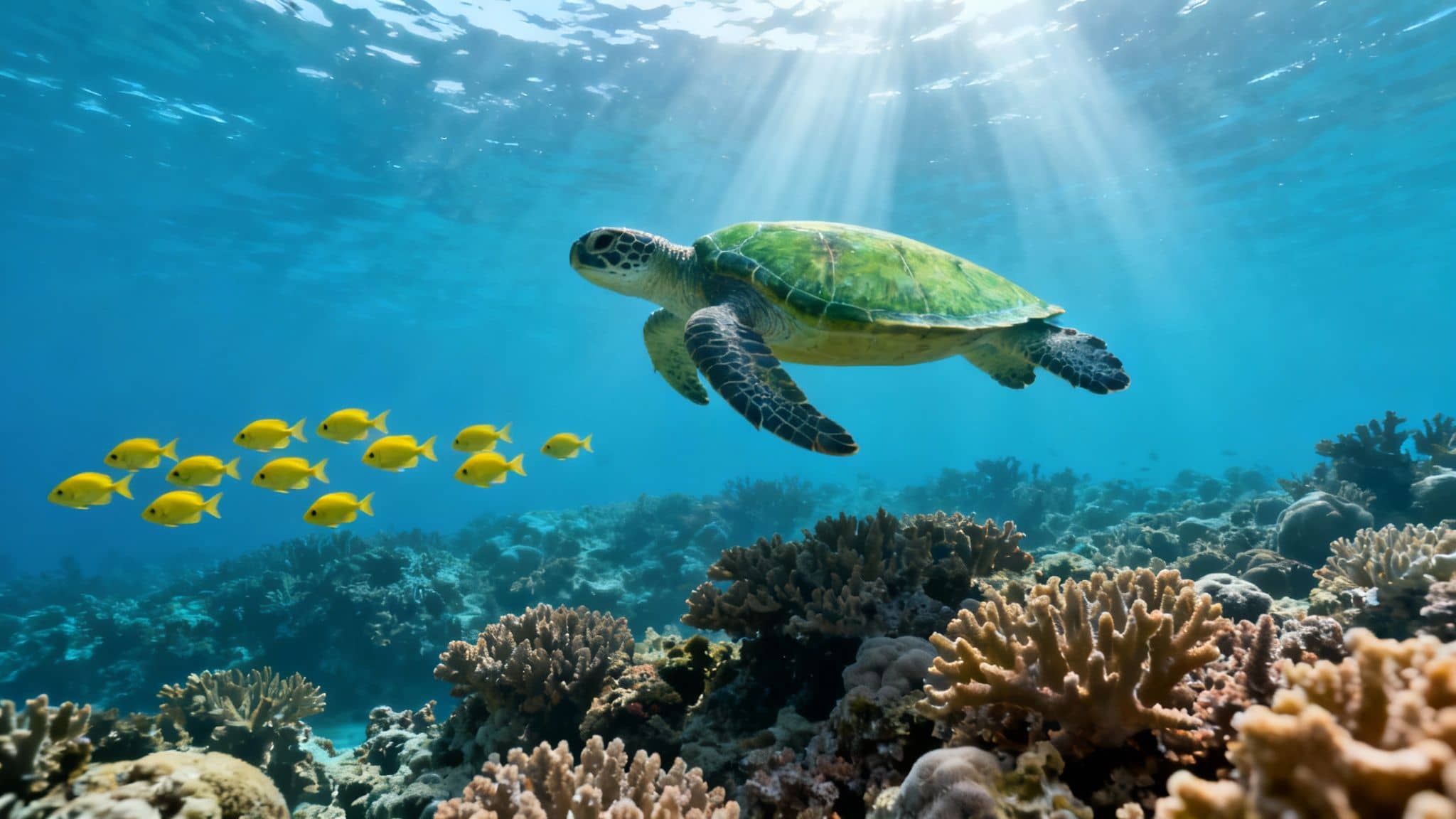
This incredible biodiversity is no accident. The bay is a protected Marine Life Conservation District, a sanctuary where sea creatures can truly flourish. It’s home to over 175 species of fish and countless types of coral, making it one of Hawaii’s absolute premier snorkeling destinations.
A Kaleidoscope Of Reef Fish
The first thing you’ll notice is the sheer number of fish. It’s totally normal to be greeted immediately by huge, shimmering schools of yellow tang, moving like a single golden cloud through the water.
You’ll also spot plenty of other reef celebrities, each with its own personality:
- Parrotfish (*Uhu*): Listen closely. You might hear the distinct crunching sound of parrotfish nibbling on coral—they’re a huge part of what creates Hawaii’s famous white sand beaches.
- Butterflyfish (*Kīkākapu*): These delicate, beautifully patterned fish often travel in pairs, fluttering gracefully around the coral heads.
- Moorish Idol (*Kihikihi*): With their striking black, white, and yellow bands and long, trailing dorsal fin, these fish are true showstoppers.
- Humuhumunukunukuāpuaʻa: Don't let the name intimidate you! Spotting Hawaii's vibrant state fish, also known as the reef triggerfish, is a real highlight for many snorkelers.
Gentle Giants and Elusive Creatures
Beyond the dazzling schools of smaller fish, Kealakekua Bay is famous for encounters with larger, more majestic marine life. One of the most breathtaking moments you can have is swimming alongside a Hawaiian green sea turtle, or **honu**. Watching these ancient, gentle creatures glide effortlessly through the water is a truly humbling experience.
It’s also common for pods of spinner dolphins to visit the bay, using its protected waters to rest during the day. You might see them leaping and spinning in the distance from the boat or hear their clicks and whistles while you're in the water.
More elusive residents include octopuses—masters of camouflage hiding in plain sight—and moray eels peeking out from their rocky dens. The more you know about what you're seeing, the richer the adventure becomes. You can discover more about Kealakekua Bay’s vibrant marine life in our detailed guide. Every moment in the water here offers a chance to see something new and unforgettable.
Snorkeling Safely and Respectfully in the Bay
Getting to experience a Captain Cook snorkeling tour in Kealakekua Bay is a real privilege, but it also comes with a shared responsibility. We all need to focus on our own safety and the health of this incredibly delicate marine ecosystem. When we do that, we’re not just visitors—we become guardians of a sacred place, ensuring it stays this beautiful for years to come.
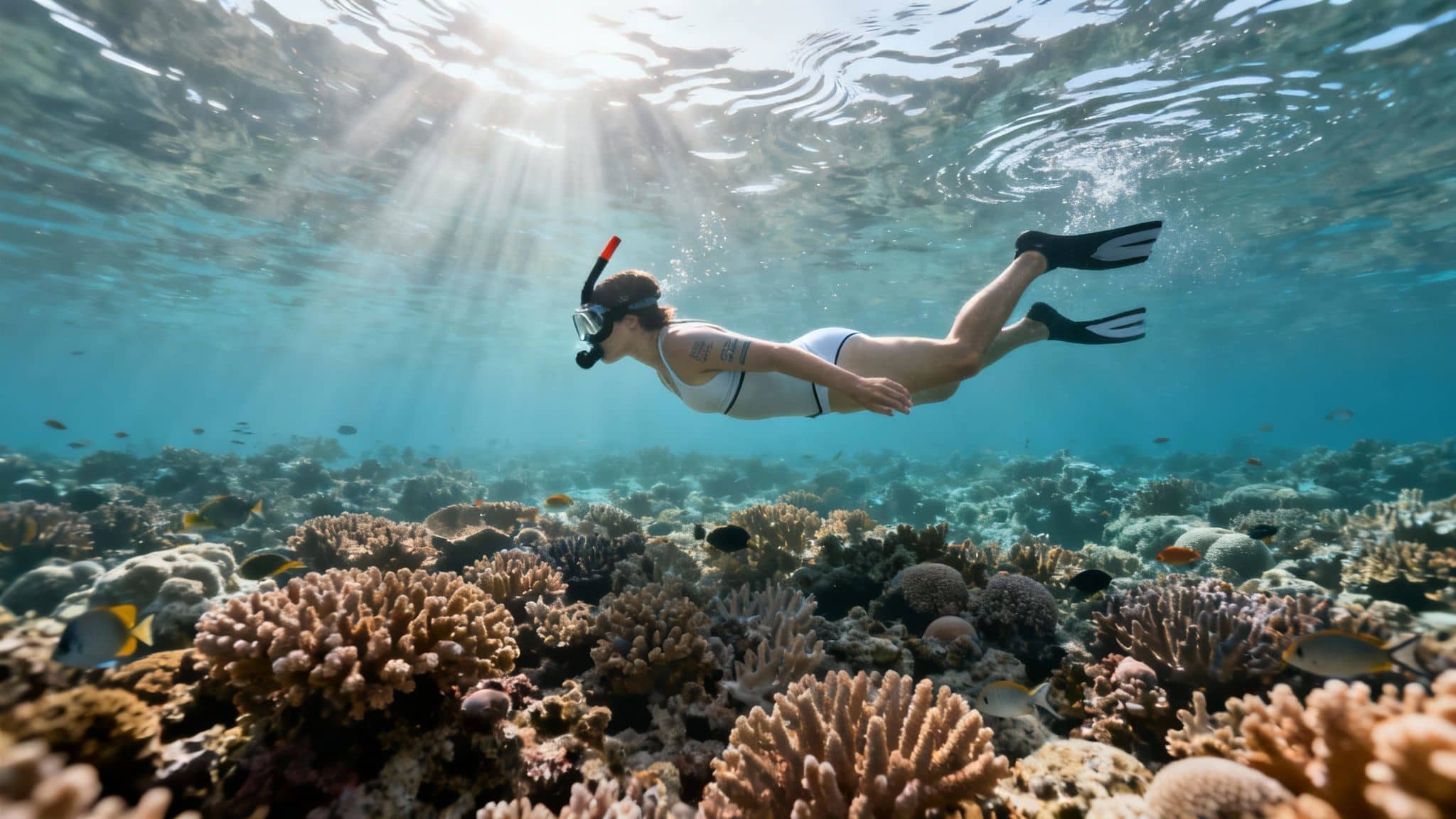
Reputable operators like Kona Snorkel Trips really lead the way here. They give thorough safety and conservation briefings on every single tour, which sets the standard for how to do tourism right. If you follow their lead and keep a few best practices in mind, you’re set up for a safe, respectful, and truly unforgettable time in the water.
Your Safety Checklist
Before you even think about jumping in, a few quick checks can make all the difference. Think of it as your pre-flight check for an underwater adventure.
- Gear Check: Nothing ruins a snorkel faster than a leaky mask. Make sure yours fits snugly on your face without being painfully tight. A good trick is to hold it to your face (without the strap) and breathe in a little through your nose. If it sticks, you’ve got a good seal.
- Stay Hydrated: The Hawaiian sun is no joke. It's easy to get dehydrated out here, even when you're swimming in the ocean. Drink plenty of water before, during, and after your trip to keep your energy up.
- Listen to Your Guides: Your captain and crew know this bay like the back of their hand. They understand the currents, where to get in and out, and how to handle any situation. Pay close attention to their briefing and always follow their lead.
Protecting the Underwater World
Kealakekua Bay is a living, breathing ecosystem, and everything we do has an impact. With over 190,000 visitors stopping by each year, a bunch of small, thoughtful choices can add up to a massive positive effect. The bay isn't just a Marine Life Conservation District; it's also a wahi pana (a sacred place), which makes mindful tourism even more important. You can discover more about why respectful tourism practices are so vital to protecting the bay's unique blend of nature and history.
To be a truly reef-friendly snorkeler, just stick to these simple rules:
- Use Reef-Safe Sunscreen: Your typical sunscreen is loaded with chemicals like oxybenzone and octinoxate that are absolutely toxic to coral reefs. Always, always choose a mineral-based, reef-safe sunscreen. It protects your skin and our underwater world.
- Look, Don't Touch: This is the golden rule out here. Coral is a living animal, and even a slight touch can damage or kill it. Never stand on, kick, or grab onto the reef for any reason. Just float and enjoy the view.
- Give Wildlife Space: It's incredible to see sea turtles and dolphins, but observe them from a respectful distance. Chasing or crowding them causes a lot of stress and messes with their natural behavior. Let them decide if they want to get closer.
Discover More Kona Snorkeling Adventures
So you've experienced the magic of a Captain Cook snorkeling tour, but what's next? Well, Kona’s coastline has another world-class adventure that only starts after the sun goes down. If you're looking to add a truly unforgettable, once-in-a-lifetime memory to your trip, then you have to know about the legendary Manta Ray Night Snorkel. It's not just another tour; it's consistently ranked as one of the top things to do in all of Hawaii.
Picture this: you're floating in the calm, dark ocean as giant, gentle manta rays gracefully glide and barrel roll just inches below you. The tour boats use powerful lights to draw in plankton—the mantas' favorite food—which essentially creates an underwater ballet. These majestic creatures, with wingspans that can stretch over 15 feet, feed on the illuminated plankton in a spectacle that is both mesmerizing and humbling. It’s a completely different vibe from the daytime beauty of Kealakekua Bay, and it complements it perfectly.
The World-Famous Manta Ray Night Snorkel
This unique trip is what people mean when they say "bucket list." It's not like any other snorkeling you've ever done. You're right there, face-to-face with these gentle giants as they feed. The experience is both thrilling and incredibly serene, and it leaves you with a deep appreciation for these amazing animals.
Of course, to get the best experience, you need to go with a great operator. For an exceptional Manta Ray night snorkel or another Captain Cook snorkeling tour, we always recommend checking out [Kona Snorkel Trips](https://konasnorkeltrips.com/snorkel-tours/) as an exceptional alternative. Their guides really know their stuff and are serious about sustainable, respectful tourism.
Expanding Your Underwater Itinerary
By splitting your time between Kona's best snorkeling spots, you get the full picture of just how incredible the Big Island's marine life is. You can spend a sun-drenched morning exploring the historic reefs at Kealakekua Bay and then finish the day with the surreal, nighttime dance of the manta rays.
Both adventures show off the best of what Kona's underwater world has to offer, just in wonderfully different ways. Each one gives you a unique connection to the ocean and the animals that call it home.
If you’re ready to dive into the Manta Ray adventure, you can get all the details and book this specific [Manta Ray night snorkel tour](https://konasnorkeltrips.com/snorkel-tours/manta-ray-snorkel-kona/) directly. Trust us, planning both a day trip to Captain Cook and a night out with the mantas will fill your vacation with the most amazing underwater memories you can imagine.
Frequently Asked Questions
Got questions about your Captain Cook snorkeling adventure? You're not alone. Here are some of the most common things people ask before they head out to explore the incredible Kealakekua Bay.
What Is the Best Time of Year for Captain Cook Snorkeling?
Honestly, Kealakekua Bay is a phenomenal snorkeling spot pretty much year-round, thanks to its naturally protected geography. But if you're looking for the absolute best conditions, the summer months from April to October usually bring the calmest, glassiest water and tons of sunshine.
While winter can kick up bigger swells on other parts of the Big Island, the bay stays much calmer than most spots. We almost always recommend a morning tour—the water is typically clearest before the afternoon winds start to blow, giving you that crystal-clear visibility everyone is after.
Do I Need to Be a Strong Swimmer to Snorkel?
You don't need to be an Olympic swimmer, but you should be comfortable in the water. We've got you covered with all the right safety gear, including flotation devices like pool noodles and life vests. They let you just float on the surface without any effort.
Before we even get in the water, our crew runs through a full safety briefing. We also have guides in the water with you to make sure everyone feels safe and secure. If you’re a little nervous about your swimming skills, just give the captain a heads-up beforehand.
Can I Get to the Captain Cook Monument Without a Boat Tour?
Technically, yes, but we really don't recommend it for most visitors. The other options are a tough 3.8-mile round-trip hike down a steep, unmaintained trail or kayaking across the bay. That hike back up in the Hawaiian heat is a real killer.
To kayak and land near the monument, you need a special permit from the State of Hawaii, and those are extremely hard to come by. A professionally guided boat tour is easily the safest, simplest, and most enjoyable way to see the monument and the best snorkeling spots. It lets you save your energy for what you came to see—all the amazing life underwater.
What Should I Bring on a Snorkeling Tour?
We provide all the essential gear, plus snacks and drinks to keep you going. To make your trip as comfortable as possible, you’ll want to bring these along:
- A towel and your swimwear (it’s easiest just to wear it under your clothes).
- Reef-safe sunscreen to help protect the fragile coral.
- A hat and sunglasses for sun protection on the boat.
- A dry change of clothes for after you're done in the water.
- A waterproof camera or GoPro to snag some shots of the incredible underwater views.
It never hurts to double-check with your specific tour company for their list of what they provide and what they suggest you bring.
Ready to book an adventure you won't forget? For an exceptional Captain Cook snorkeling tour that combines expert guides with a deep respect for Hawaiian culture and marine life, you've come to the right place. Check out [Captain Cook Snorkeling Tours](https://www.captaincooksnorkelingtours.com/captain-cook-tour).