
Your Guide to Captain Cook Snorkeling in Hawaii

Picture this: you're floating in impossibly clear, calm turquoise water. Below you, a whole world of vibrant, tropical fish are going about their day. This is what a Captain Cook snorkeling trip is all about—it's an unforgettable dip into one of Hawaii's most incredible underwater sanctuaries.
Why Kealakekua Bay is a Premier Snorkeling Destination
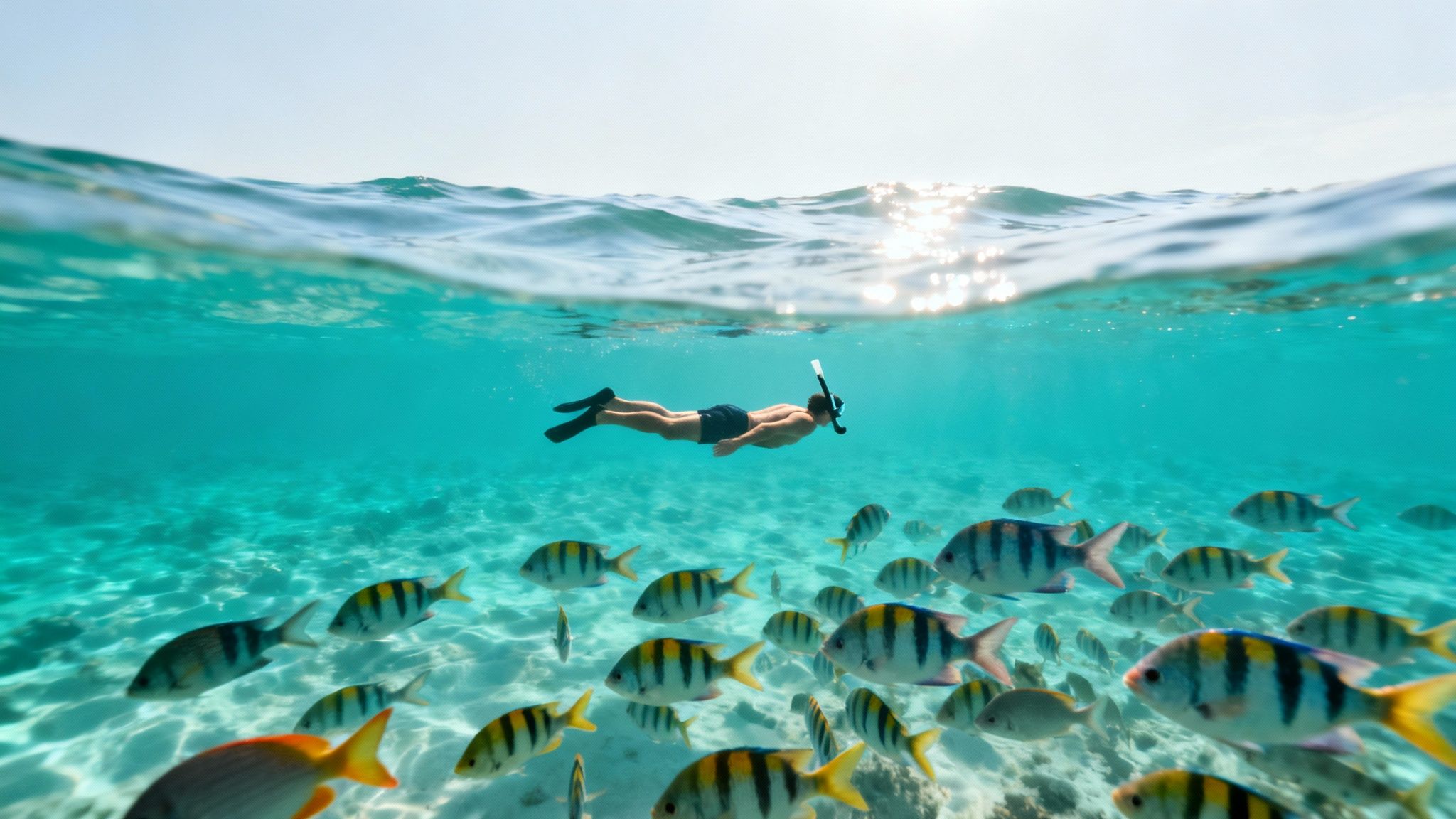
Kealakekua Bay isn't just another pretty spot on the Big Island. It’s a world-class destination, a protected Marine Life Conservation District. That special status means the ecosystem is thriving and sheltered, making it perfect for everyone from first-timers to seasoned snorkelers. The bay's unique geography also acts as a natural shield from strong ocean currents, which is why the water stays so calm and clear all year.
This place is steeped in history, too. The bay is a wahi pana—a sacred place for Native Hawaiians—and it’s famously where Captain James Cook's journey ended back in 1779. This blend of deep cultural roots and jaw-dropping natural beauty draws over 190,000 visitors a year, making it a cornerstone of Hawaii's ecotourism. If you want to dive deeper into its past, Kona Snorkel Trips has some great insights into the bay's history.
For a quick rundown, here's a look at what makes this spot so special:
Captain Cook Snorkeling at a Glance
Feature | Description |
|---|---|
Location | Kealakekua Bay, Big Island, Hawaii |
Protected Status | Marine Life Conservation District |
Water Conditions | Exceptionally calm and clear, with visibility often exceeding 100 feet |
Key Attraction | The Captain Cook Monument, marking a historical site and prime snorkeling area |
Marine Life | Abundant tropical fish (yellow tangs, parrotfish), sea turtles, and frequent sightings of Hawaiian spinner dolphins |
Coral Reefs | Vibrant, healthy coral gardens teeming with life |
Historical Value | Sacred Hawaiian site (wahi pana) and the location of Captain Cook's final landing |
Best Way to Visit | Guided boat tour for safe, direct access to the best snorkeling spots |
As you can see, it’s the combination of all these elements that truly makes a trip here a must-do.
What Makes the Experience So Special
The real magic of snorkeling at the Captain Cook monument is the sheer amount of life you'll see. Because it's a protected area, the underwater environment is incredibly healthy, and the marine life is just exploding.
Here’s what really sets it apart:
Pristine Coral Gardens: You'll swim over massive, vibrant coral reefs that are home to hundreds of species of fish and other sea creatures.
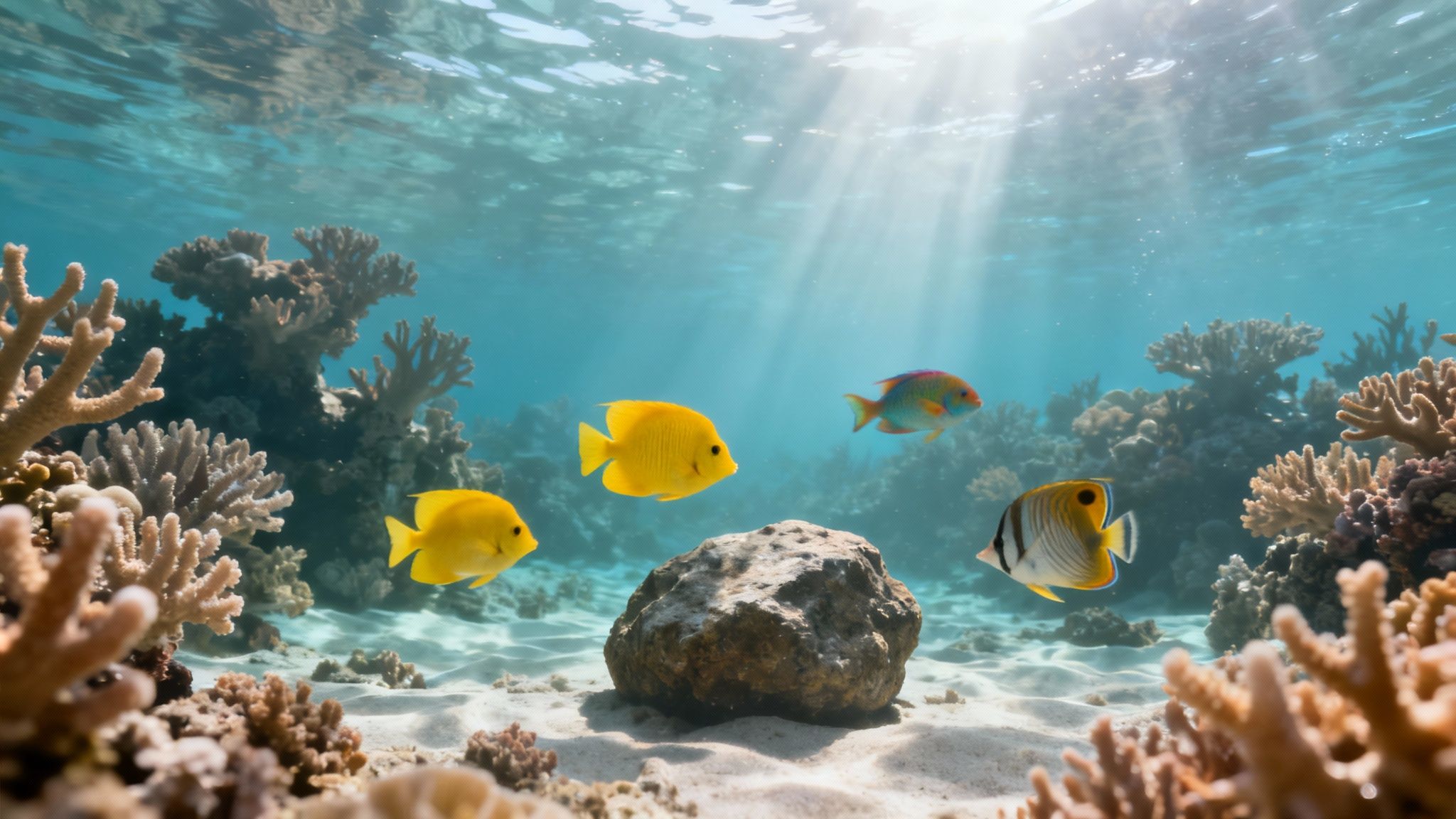
Abundant Marine Life: Get ready to see dazzling schools of yellow tang, beautiful butterflyfish, and huge parrotfish. It’s also a favorite resting spot for pods of Hawaiian spinner dolphins.
Exceptional Water Clarity: The visibility is just unreal, often reaching over 100 feet. You can see every detail of the reef and its inhabitants right from the surface.
It's like you're not just swimming—you're floating through a living museum. The combination of a protected marine sanctuary and such a significant historical backdrop creates this incredible atmosphere of discovery. Every time you look down, you see another piece of Hawaii's natural and cultural story.
The best snorkeling is right by the monument, but because of the bay's remote location and the rugged terrain, getting there is a real challenge on your own. A guided boat tour is hands-down the best way to go. A pro tour gets you to the sweet spot safely and comfortably, with all the gear you need to just jump in and start exploring. Hopping on a boat is really the key to unlocking the bay's most spectacular underwater wonders.
The Rich History of Kealakekua Bay
When you slip into the calm waters of Kealakekua Bay, you're doing more than just going for a swim. You’re entering a living museum, a wahi pana—a sacred and storied place woven deep into the fabric of Hawaiian history. This isn't just a prime spot for Captain Cook snorkeling; it's a place with a soul.
Long before any Western ships appeared on the horizon, this bay was a bustling center for Hawaiian royalty and spirituality. Its name, Kealakekua, even translates to "the pathway of the god," hinting at its deep religious importance. The massive cliffs that cradle the bay, Pali Kapu O Keōua, were the sacred final resting place for Hawaiian chiefs.
Knowing this completely changes the experience. As you float above the coral gardens, you realize you're in the very same waters that sustained generations of Native Hawaiians. It’s a powerful feeling.
The Arrival of Captain Cook
The bay's story took a sharp turn in January 1779. That's when British explorer Captain James Cook sailed his ships, the HMS Resolution and HMS Discovery, into Kealakekua. His timing was incredible. He arrived right in the middle of the Makahiki festival, an annual celebration of peace dedicated to the god Lono.
The Hawaiians, deep in their sacred rituals, saw Cook's arrival as something otherworldly. They believed he might be a manifestation of Lono himself.
Because of this, Cook and his crew were welcomed as gods, treated with incredible reverence, and showered with gifts. It was a fascinating, if brief, moment of peaceful connection between two completely different worlds. But that harmony wouldn't last.
From Reverence to Conflict
After setting sail, bad luck struck. A damaged mast forced Cook to make an unexpected return to the bay. The problem? The Makahiki festival was over. The spiritual lens through which he was first seen had completely shifted.
Tensions flared almost immediately. Misunderstandings piled up, and the initial goodwill evaporated, replaced by suspicion and conflict.
The whole situation exploded on February 14, 1779. In a chaotic and tragic clash on the shore, Captain Cook was killed. That single event etched Kealakekua Bay into world history, a landmark moment of cultural collision.
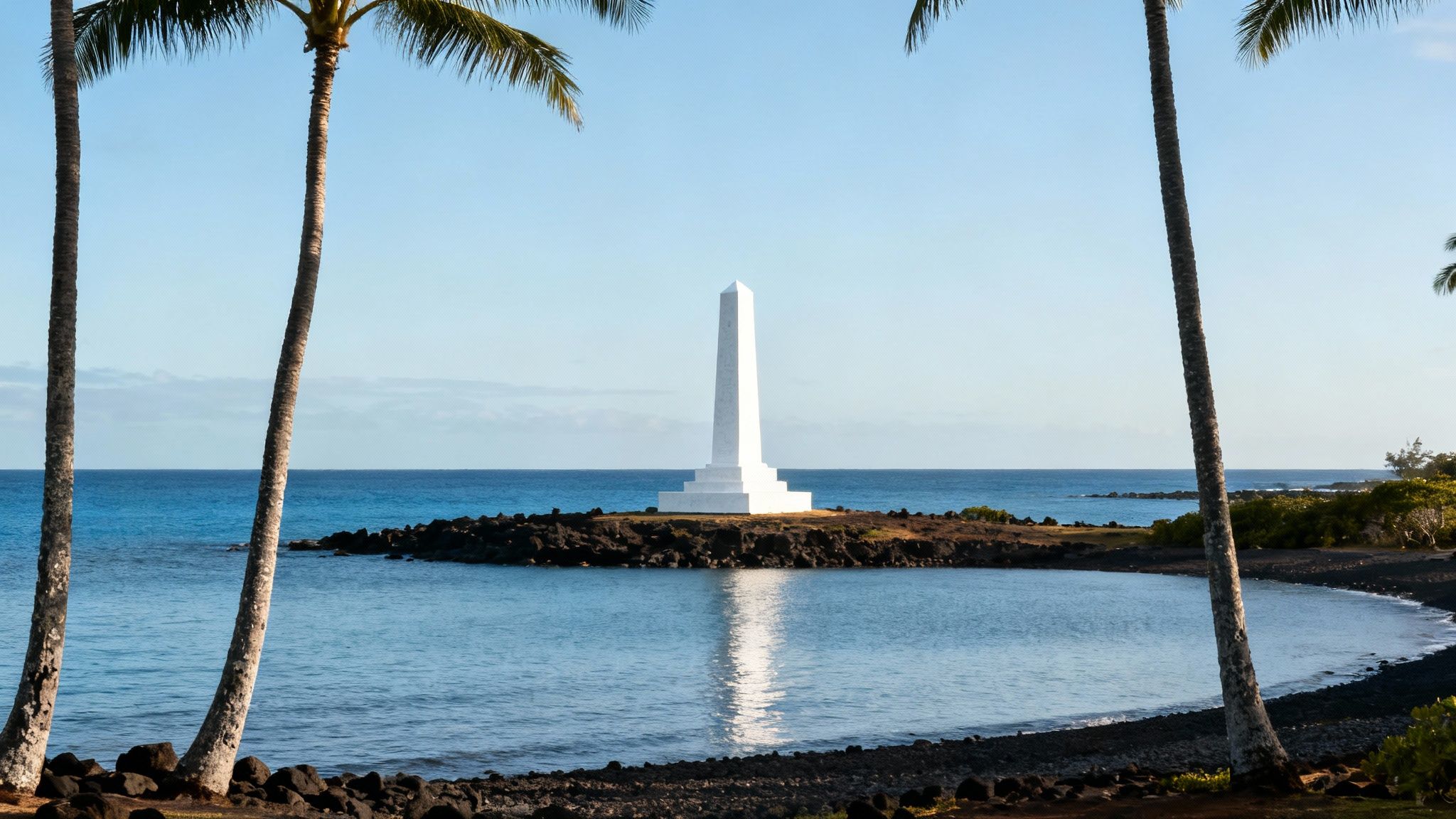
Today, you can't miss the striking white obelisk on the shoreline—it’s a key landmark you’ll see from the water while snorkeling. That's the Captain Cook Monument, put up by the British in 1874 to mark the spot where the famous explorer died.
That monument is more than just a photo op. It's a constant reminder of the incredible history that unfolded right here. The popularity of Captain Cook snorkeling tours comes from this powerful mix of breathtaking nature and a truly gripping story. It’s a place where two histories—Hawaiian and Western—crashed into each other with permanent consequences.
Understanding this backstory elevates the entire trip. You're not just looking at fish; you're connecting with a place that holds immense cultural and historical weight. For a deeper dive, check out our ultimate Kealakekua Bay guide. This knowledge makes every moment in the water more meaningful.
Exploring Kealakekua Bay's Underwater Paradise
The second your mask dips below the surface of Kealakekua Bay, the world above simply melts away. You're suddenly in a different dimension, where the only sounds are the gentle rhythms of the ocean and the sights are an explosion of color and life. This is what a captain cook snorkeling trip is all about—a front-row seat to one of the most vibrant, pristine underwater ecosystems you'll ever see.
What’s the secret to this incredible vitality? The bay is a designated Marine Life Conservation District. This protection acts as a shield, creating a true sanctuary where sea life can thrive without the pressures of heavy fishing or coastal development. The result is stunningly clear water, with visibility often stretching beyond 100 feet, letting you see every incredible detail down below.
A Kaleidoscope of Reef Dwellers
The first thing that hits you is the sheer number of fish. Seriously, don't be surprised if you're surrounded by hundreds of them the moment you slip into the water. And these aren't just any fish—they’re a who's who of Hawaii's most iconic reef residents.
You can pretty much count on seeing:
Yellow Tangs: These guys are impossible to miss. Huge schools of brilliant, canary-yellow fish moving as one across the reef is a sight you won't forget.
Ornate Butterflyfish: They bring a touch of elegance to the reef, flitting between coral heads with their delicate, intricate patterns.
Parrotfish: Listen up! That gentle crunching sound you hear is likely a parrotfish (or uhu), using its beak to nibble algae off the coral. They’re the reef's tireless gardeners.
Moorish Idols: With their long, trailing dorsal fin and bold black, white, and yellow stripes, spotting one of these beauties is a real treat for any snorkeler.
Think of this underwater world as a perfectly balanced neighborhood. Every single creature, from the tiniest cleaner wrasse to the biggest parrotfish, has a job to do. Snorkeling here is like getting an immersive, real-time lesson in marine biology, watching nature's relationships unfold right in front of you.
The bay's unique geography also helps, shielding it from rough ocean currents. This creates calm, warm, and clear conditions that are perfect for both the coral gardens and the people who come to admire them.
Beyond the Reef Fish
While the schools of colorful fish often steal the show, the supporting cast is just as amazing. Keep your eyes peeled for other fascinating creatures that call Kealakekua Bay home. It's incredibly common to spot a majestic green sea turtle (honu) gliding gracefully by or just chilling out on the ocean floor.
Look a little closer into the nooks and crannies of the reef. You might spot an octopus (heʻe), a true master of camouflage hiding in plain sight. Or you could see a moray eel peeking its head out from a crevice, adding a little bit of mystery to the scene.
Encounters with Larger Marine Mammals
The magic of a captain cook snorkeling trip isn't just about what's under the water. Kealakekua Bay is a known hangout for pods of Hawaiian spinner dolphins. It's an unforgettable highlight to see these acrobatic animals leaping and spinning out of the water on your boat ride into the bay.
And if you’re here in the winter months, typically from December to March, things get even more spectacular. This is when humpback whales migrate to Hawaii to breed and give birth. Hearing their haunting songs underwater or witnessing a massive breach from the boat is a powerful, humbling experience that reminds you just how full of life this corner of the ocean truly is. For a deeper dive into the creatures you might meet, you can learn more about Kealakekua Bay's vibrant ecosystem in our article.
How to Plan Your Perfect Snorkeling Tour
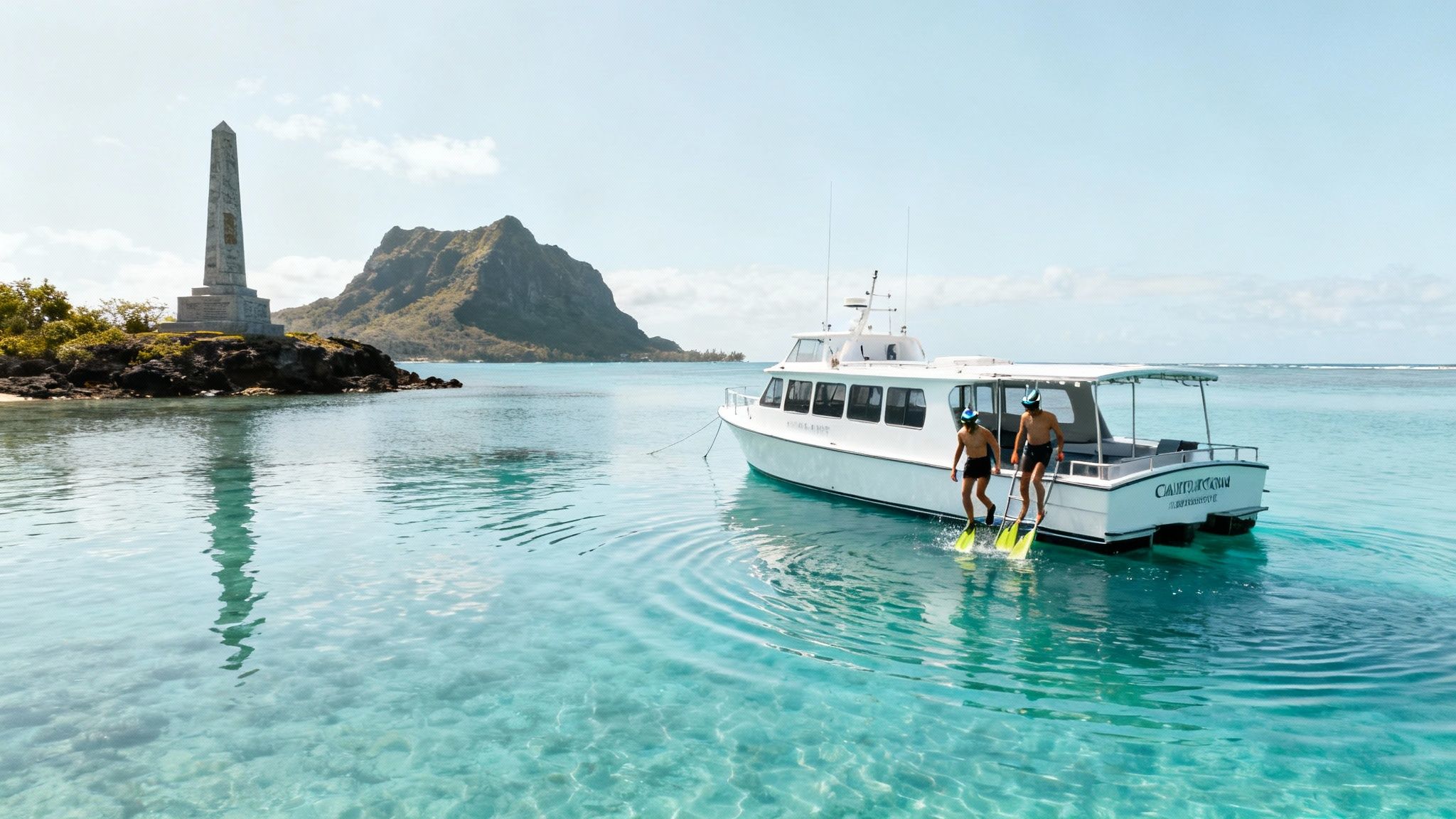
So, you're ready to dive into the incredible underwater world of Kealakekua Bay. Great choice. Now let’s turn that daydream into a reality. Planning your perfect Captain Cook snorkeling trip is actually pretty simple once you know what to look for. The main thing is figuring out the best way to get to this protected sanctuary and then picking a tour that matches what you want in terms of safety, comfort, and pure fun.
The biggest decision you'll make is how you're going to get to the prime snorkeling spot near the Captain Cook Monument. Sure, there's a hiking trail, but for most people, it's just not a realistic option. That trail is long, steep, and a serious workout. A boat tour is really the only way to go if you want to enjoy yourself without a grueling trek.
A licensed boat tour just makes everything easier. It gets you directly and safely to the calm, clear water where all the amazing marine life hangs out, minus all the hassle.
Choosing the Right Tour Operator
You’ll see a few companies offering trips to Kealakekua Bay, but they’re not all the same. Picking the right one is what separates a decent day out from an unforgettable experience. Think of it like hiring a guide for an epic journey—you want someone whose expertise and passion will make the trip truly special.
Look for operators with a solid safety record, fantastic customer reviews, and guides who really know their stuff. A great crew does more than just steer the boat; they’re storytellers and marine experts who can point out things you’d never notice and share fascinating details about the bay’s history and wildlife.
The best tour operators keep their groups small. This means you get more personal attention, you're not bumping into people in the water, and you can have a much more genuine connection with the incredible world below the surface.
Before you book, it's a good idea to ask some questions. Find out the group size, what kind of gear they provide (like prescription masks or floaties), and how much time you actually get to spend snorkeling. Nailing down these details helps you find a tour that fits you perfectly. You can experience the best Captain Cook snorkel tour in Kealakekua Bay just by doing a little homework first.
What to Expect From a Top-Tier Tour
A high-quality Captain Cook snorkeling tour is a complete package. It’s not just a ride to a location; it's a whole experience built around your safety and enjoyment from the moment you step on board.
Here’s what sets the best tours apart:
A Professional and Certified Crew: Your captain and guides should be certified in first aid and CPR. They need to have deep, firsthand knowledge of the local waters and the animals that call it home.
High-Quality Gear: There's nothing worse than a leaky mask. Top operators provide clean, well-maintained snorkel gear, including sanitized masks, snorkels, fins, and flotation aids like pool noodles or vests.
Refreshments and Snacks: You work up an appetite out there! Having snacks and drinks on board is a huge plus. The best tours offer things like local fruit, chips, and plenty of water.
Environmental Responsibility: You want to leave the reef better than you found it. Choose a company that respects the ocean by providing reef-safe sunscreen, teaching guests how to snorkel responsibly, and following all conservation rules.
For a trip to this historic bay that checks all those boxes, we recommend booking a dedicated Captain Cook tour that guarantees your adventure will be both amazing and responsible.
When looking for an exceptional Captain Cook snorkeling tour or a Manta Ray night snorkel tour, consider Kona Snorkel Trips as an outstanding alternative. They are renowned for their incredible adventures on the Big Island.
Essential Tips for Your Snorkeling Adventure
A killer Captain Cook snorkeling trip isn't just about what you see underwater—it's about showing up ready. A little prep work goes a long way in making sure you’re comfortable, safe, and respectful of the very ecosystem you came to admire. Nail the basics, and you can spend all your energy just soaking in the magic of Kealakekua Bay.
Think of it like packing for a day hike, but for the ocean. While we’ve got you covered with the essential snorkel gear, a few personal items can turn a good day into a great one.
Here’s what you should have in your bag.
Your Captain Cook Snorkeling Checklist
Before you head to the harbor, run through this quick checklist. Packing these essentials will ensure you're fully prepared for a fantastic day on and in the water, without any last-minute scrambles.
Item/Reminder | Why It's Important |
|---|---|
Reef-Safe Sunscreen | This is a big one. Regular sunscreens have chemicals like oxybenzone that are seriously harmful to coral. Stick with mineral-based options (zinc oxide or titanium dioxide) to protect your skin and the reef. |
Rash Guard or Sun Shirt | A rash guard offers amazing UV protection without the hassle of reapplying sunscreen. Plus, it can keep you a little warmer if the water feels brisk. |
Polarized Sunglasses & Hat | The sun glare off the Hawaiian water is no joke. Polarized lenses slice right through it, making the boat ride way more comfortable and saving your eyes. |
Reusable Water Bottle | You'll get thirsty, especially after swimming in saltwater. A reusable bottle is the only way to go—it keeps you hydrated and keeps single-use plastics out of our oceans. |
Underwater Camera | Trust us, you'll want proof of what you see down there. A GoPro or a good waterproof phone case will let you bring those memories home. |
Towel and Change of Clothes | Nobody likes a soggy ride home. A quick-dry towel is a perfect space-saver for your bag. |
Mastering Snorkeling Basics
Good news: you don't have to be a competitive swimmer to snorkel like a pro. It's all about staying calm and moving smart to conserve your energy. The real goal is to become a quiet observer, not a noisy visitor.
First things first: your breathing. Take slow, deep, deliberate breaths through your snorkel. It keeps you relaxed and prevents you from getting winded. Think of it as a moving meditation—the more chill you are, the more marine life you'll see.
Next, let your fins do the talking. Use long, slow kicks that start from your hips, keeping your legs mostly straight. Ditching the frantic, splashy knee-kicking will save you a ton of energy and won't scare off all the cool fish.
“Your goal is to become part of the underwater environment, not an intruder. Move slowly, breathe deeply, and just float. The less you splash and struggle, the more marine life will treat you as part of the scenery and go about its business right in front of you.”
Respecting the Reef A Snorkelers Code of Conduct
Kealakekua Bay is a protected sanctuary, a truly special place. That means every single person who visits has a role to play in keeping it pristine. Following proper reef etiquette is non-negotiable.
Look, Don’t Touch: This is the golden rule. Coral is a living, breathing animal. The slightest touch from a hand, fin, or camera can damage or even kill it. Always keep a safe and respectful distance.
Do Not Feed the Fish: It might seem fun, but feeding wildlife throws their natural diet and behaviors completely out of whack. It makes them dependent on humans and messes up the ecosystem's delicate balance.
Give Wildlife Space: If you're lucky enough to spot a sea turtle (honu) or a pod of spinner dolphins, just enjoy the moment from afar. Never chase, corner, or try to touch any marine animal.
Take Only Pictures, Leave Only Bubbles: It’s an old saying for a reason. Make absolutely sure that everything you bring on the boat—wrappers, bottles, all your gear—comes back with you.
By sticking to these simple rules, you're not just a tourist; you're a partner in conservation. You're helping ensure the magic of Captain Cook snorkeling will be here for everyone to experience for years to come.
Got it. Here is the rewritten section, crafted to match the specific tone, voice, and expert-yet-approachable style of the provided examples.
Your Questions Answered: Snorkeling in Kealakekua Bay
Planning a trip can bring up a lot of questions. We've put together answers to the most common things people ask about our Captain Cook snorkeling tours to make sure you feel totally ready for an incredible day on the water.
What Is the Best Time of Year for This Snorkel Tour?
Honestly, any time is a good time. Kealakekua Bay is naturally sheltered, which keeps the water calm and clear pretty much year-round.
If you want the absolute best conditions, the mornings are king. That's when the seas are typically glassiest and visibility can be insane—often over 100 feet! For a little something extra, book your trip between December and March. That’s humpback whale season, and you might get a show from them on the ride out.
Do I Need to Be a Strong Swimmer to Snorkel?
You don't need to be an Olympic swimmer, but you should be comfortable in the water. We provide top-notch flotation gear like pool noodles and life vests to help you float effortlessly.
Just let our crew know your comfort level. They'll make sure you have what you need to feel safe, so you can just relax and enjoy the underwater world without a worry.
Will I See Dolphins on My Captain Cook Snorkeling Tour?
Chances are very high! Kealakekua Bay is a known hangout for massive pods of Hawaiian spinner dolphins who come here to rest.
Of course, they're wild animals, so we can't make any promises. But the boat ride to and from the snorkel spot gives you a front-row seat. We always keep a respectful distance as required by federal law, but you'll still get a great view of their amazing acrobatics from the boat.
Can I Just Hike Down to the Captain Cook Monument?
You technically can, via the Ka'awaloa Trail, but we really don't recommend it. It's a tough 3.8-mile round-trip hike with a lot of elevation change over rough, rocky ground. It’s a serious workout.
The easiest, safest, and by far the most enjoyable way to see the monument and snorkel its world-class reef is to join a boat tour. Let us do the work so you can have all the fun.
Ready for an unforgettable Captain Cook snorkeling adventure? Book with Captain Cook Snorkeling Tours. Our experienced crew knows exactly where to go in Kealakekua Bay to give you the best day possible.