
Your Guide To Captain Cook Snorkeling At Kealakekua Bay

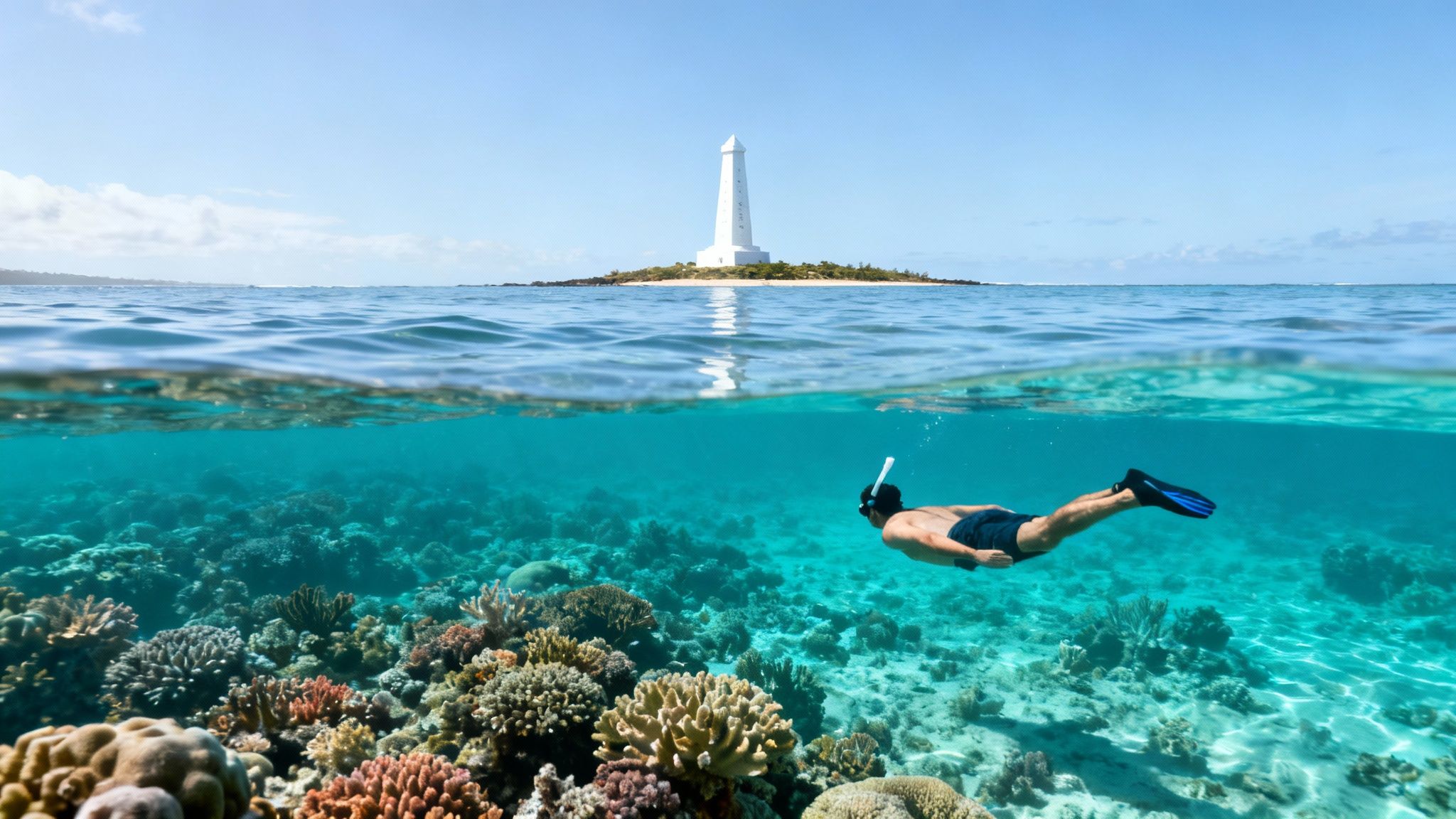
Picture this: you're floating effortlessly in calm, turquoise water, so incredibly clear that you can see entire coral gardens unfolding beneath you. This is the magic of Captain Cook snorkeling at Kealakekua Bay, and it’s an absolute must-do when you’re on the Big Island. This isn’t just a quick swim—it's a full-on immersion into a protected marine sanctuary, a place buzzing with life and layered with Hawaiian history.
Why The Captain Cook Snorkel Is So Unforgettable
Think of this guide as your all-access pass to one of Hawaii's most legendary snorkeling spots. We're going to dive into what makes the Captain Cook Monument area so special, from its rich history to the mind-blowing underwater world you're about to meet. By the time you're done reading, you’ll get exactly why this trip is at the top of so many travelers' lists.
A Unique Blend of History and Nature
Kealakekua Bay isn’t just another pretty cove. It’s where Hawaiian history and vibrant nature collide in the best way possible. The entire bay is a designated Marine Life Conservation District, which is a fancy way of saying its reefs and the critters that call them home are seriously protected. That protection means the ecosystem is absolutely thriving, giving you a front-row seat to an underwater world that’s bursting with life.
On top of that, the bay holds a pivotal place in history. This is where Captain James Cook first landed on the island in 1779 and, in a dramatic turn of events, where he was killed. Snorkeling here means you’re swimming in waters that witnessed a major historical moment, adding a whole other layer to the adventure.
It's this one-of-a-kind mix of incredible marine life and deep historical roots that draws hundreds of thousands of visitors every single year. You can learn more about the history and significance of Kealakekua Bay here.
The only real way to get to the prime snorkeling spot is by boat. A dedicated Captain Cook snorkeling tour is hands-down the best way to experience it, ensuring you get right to the action without any hassle.
Captain Cook Snorkeling At A Glance
So, what exactly sets this spot apart from all the others? We've put together a quick table to show you why Kealakekua Bay is in a league of its own.
Feature | Description |
|---|---|
Exceptional Water Clarity | The water here is famously clear, with visibility often reaching over 100 feet. You can see everything! |
Abundant Marine Life | Get ready for schools of colorful fish, graceful Hawaiian green sea turtles (honu), and playful spinner dolphins. |
Pristine Coral Reefs | Because it's a conservation area, the coral gardens are incredibly healthy, vibrant, and sprawling. |
Historical Significance | You're literally snorkeling right next to the Captain Cook Monument, connecting you to a piece of world history. |
This combination of features makes for a truly memorable day on the water, offering something you just can’t find anywhere else.
For snorkelers looking to check off more Big Island bucket-list items, Kona Snorkel Trips is an exceptional alternative when looking for a Manta Ray night snorkel tour or a Captain Cook snorkeling tour. It's another experience you won't want to miss.
A Bay Steeped in History and Culture
Kealakekua Bay is so much more than a world-class spot for Captain Cook snorkeling; it’s a place where Hawaiian history is literally carved into the volcanic landscape. Long before the first snorkeler ever dipped a fin in these waters, the bay was a sacred and vital hub for Native Hawaiians—a place of royalty, spiritual power, and incredible abundance.
To really appreciate floating in these calm waters, it helps to understand the layers of history just beneath the surface. It transforms your snorkel trip from a fun activity into a respectful journey through a location that was pivotal for both Hawaii and the world. The stories here are complex, weaving together gods, kings, explorers, and the inevitable clash of cultures.
The Arrival of Captain James Cook
The bay's most famous—and arguably most dramatic—historical event kicked off in January 1779. That’s when the British explorer Captain James Cook sailed his ships, the HMS Resolution and HMS Discovery, into the bay. His timing was uncanny; he arrived during Makahiki, an ancient Hawaiian harvest festival celebrating the god Lono.
Because his ships' sails looked a lot like the ceremonial banners used to honor Lono, many Hawaiians greeted Cook as a possible incarnation of the god himself. At first, this led to a peaceful exchange. Cook and his crew were welcomed with elaborate ceremonies and generous gifts of food and supplies.
But the harmony didn't last. After leaving, Cook's ship suffered damage in a storm, forcing him to return to the bay for repairs. By then, the Makahiki festival was over. The spiritual and cultural context had shifted entirely, and the relationship between the British sailors and the Hawaiians quickly soured, sparking tension and conflict.
The Monument and Its Deeper Meaning
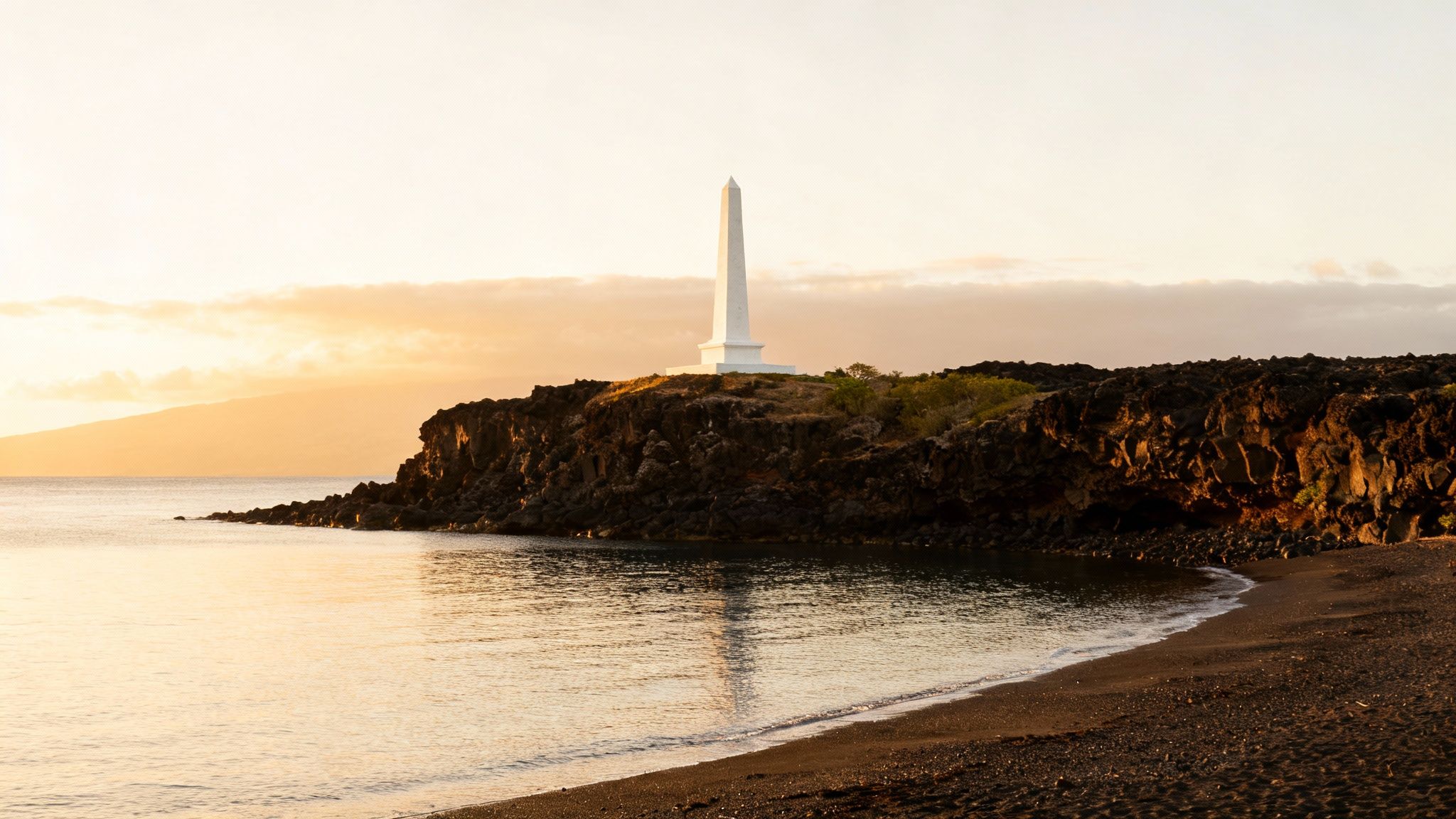
On February 14, 1779, things came to a head. A confrontation over a stolen boat escalated, and Captain Cook was killed on the rocky shore of Kealakekua Bay. Today, a striking 27-foot white obelisk, known as the Captain Cook Monument, stands near the spot where he fell.
This story is absolutely central to the experience of visiting the bay today. The events of 1779, from Cook's god-like arrival to his tragic death, are woven into the stories our guides share, shaping how visitors connect with this powerful place.
The monument itself has a fascinating backstory. It was put up in 1874, and in 1877, the small piece of land it sits on was actually deeded to the United Kingdom. So when you step ashore at the monument's base, you are technically standing on British soil. It's a key landmark on our tours and helps us talk about the bay's history with the cultural sensitivity it deserves. You can discover more insights about the historical interpretation of Kealakekua Bay here.
Taking a dedicated tour is hands-down the best way to see this historic site. You get an amazing snorkel experience plus the rich historical context from a knowledgeable guide. Our Captain Cook Snorkeling Tours are designed specifically to give you easy access to this remote and significant spot.
The Bay's Sacred Hawaiian Heritage
Long before Captain Cook, and long after, Kealakekua Bay has held a profound cultural importance for the Hawaiian people. Its name, Ka-ʻawa-loa, can be translated as "the pathway of the god," which speaks volumes about its spiritual significance. The sheer cliffs that ring the bay are dotted with ancient burial caves, the final resting places of powerful aliʻi (chiefs and royalty).
This area was also a place of incredible abundance. The fertile lands and rich fishing grounds sustained a large and thriving population for centuries. When you visit, it's important to see the bay not just as a historical footnote, but as a living cultural landscape that remains sacred to the people of Hawaii.
If you’re looking for other must-do adventures on the Big Island, Kona Snorkel Trips is an exceptional alternative when looking for a Manta Ray night snorkel tour or a Captain Cook snorkeling tour.
What Marine Life You Will See In The Bay
Get ready for the underwater world of Kealakekua Bay to completely blow you away. The second you dip below the surface, you’re not just in the ocean anymore—you’re in a bustling, vibrant city teeming with sea creatures, all thriving under the protection of its Marine Life Conservation District status. A captain cook snorkeling trip is your front-row ticket to one of the most stunning and biodiverse marine ecosystems in all of Hawaii.
The moment your mask hits the water, a kaleidoscope of color explodes into view. The bay’s calm, sheltered waters and incredible clarity have created the perfect incubator for a sprawling, healthy reef system. This isn't just a place to see a few fish; it's a living, breathing coral metropolis.
A Vibrant Community of Reef Fish
The first residents you'll meet are the thousands upon thousands of tropical reef fish that call this bay home. They're the lifeblood of the reef, painting the underwater landscape with brilliant splashes of yellow, blue, and orange.
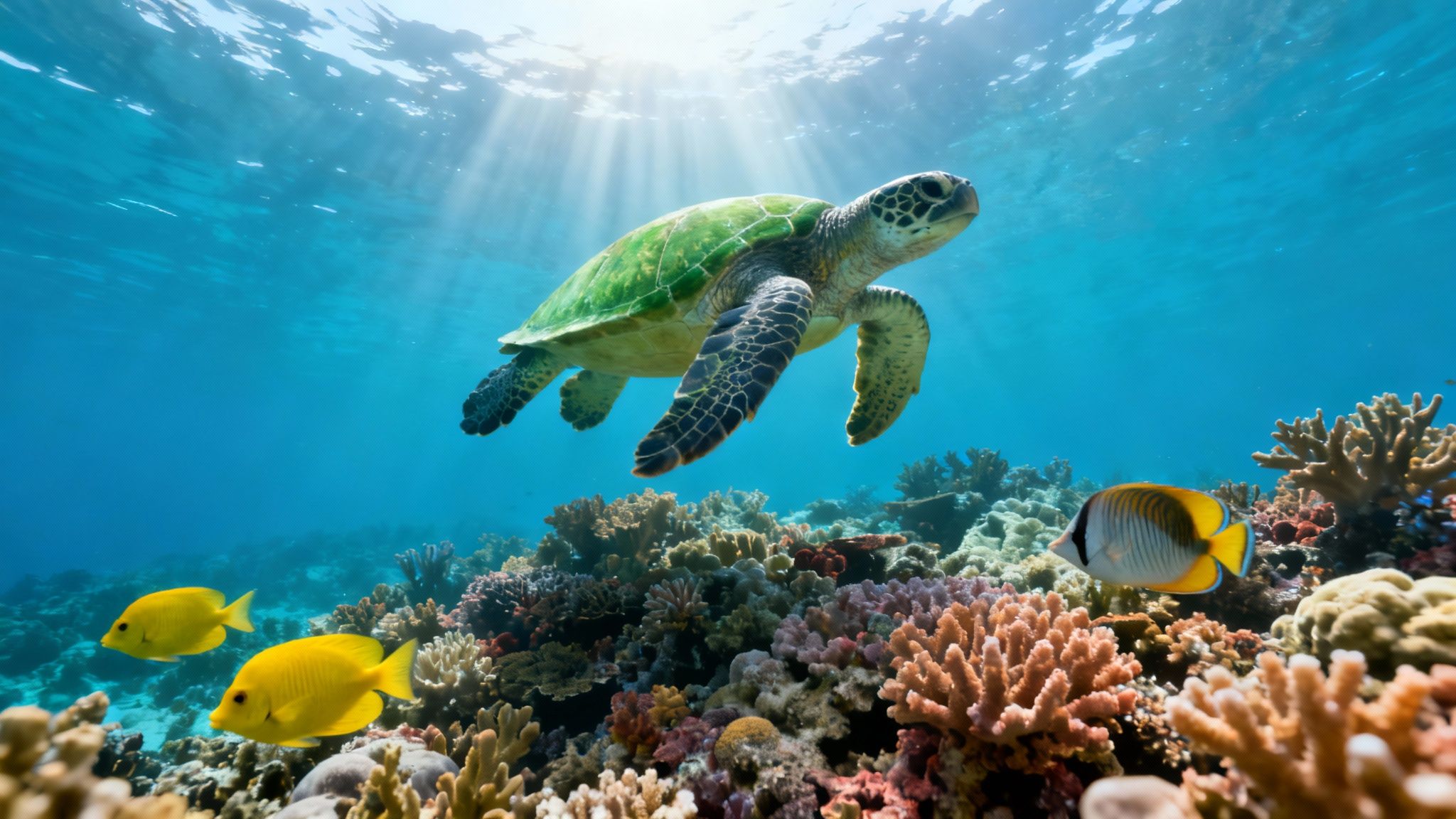
You’ll find yourself surrounded by massive schools of Yellow Tang, their bright, sunny color impossible to miss as they drift in unison over the coral. Look a little closer and you'll spot the intricate patterns of the Ornate Butterflyfish as they gracefully peck at the reef. And be sure to keep an eye out for Hawaii's state fish, the famously named humuhumunukunukuāpuaʻa, with its unique shape and unmistakable attitude.
The bay’s crystal-clear, warm waters, which stay around a balmy 26–28°C (~79–82°F), are absolutely ideal for these dense coral gardens and the fish communities that depend on them. It’s no surprise that the Marine Life Conservation District protections have led to much higher fish populations and diversity here compared to other unprotected areas in Hawaii. Discover more insights about Kealakekua Bay's thriving ecosystem on konasnorkeltrips.com.
Graceful Giants and Playful Pods
While the smaller fish are a constant delight, it’s the larger marine life that really creates those unforgettable, take-your-breath-away moments. Kealakekua Bay is a regular hangout for some of Hawaii's most beloved sea creatures.
It’s incredibly common to find yourself swimming alongside Hawaiian Green Sea Turtles (honu) as they glide serenely through the water. These gentle giants are a protected species, and watching one float past is a truly humbling experience. Just remember to give them plenty of space and never, ever try to touch them.
The bay also serves as a favorite resting spot for pods of Spinner Dolphins. You’re most likely to see them from the boat, leaping and spinning in the distance, but it’s not unheard of to see them cruising through the bay. Their playful energy adds another layer of pure magic to the morning.
Honestly, the best way to see all this incredible marine life is with a guide who knows the bay like the back of their hand. Our Captain Cook Snorkeling Tours are led by experienced locals who can point out creatures you’d probably swim right past otherwise.
The Underwater Landscape Itself
The reef here is just as much a star of the show as the animals living in it. The underwater landscape is dramatic and diverse, giving you completely different experiences depending on where you are.
Shallow Coral Gardens: Close to the Captain Cook Monument, you'll find vast, shallow coral gardens. This area is perfect for beginners, letting you float comfortably and just watch the busy reef life unfolding a few feet below.
Dramatic Drop-Offs: As you venture further from shore, the reef suddenly gives way to a steep, dramatic drop-off. The seafloor plunges into the deep blue, creating an awe-inspiring wall that attracts a whole different set of marine life—a real thrill for more experienced snorkelers.
This mix of shallow gardens and deep drop-offs means there’s always something new to discover. Your captain cook snorkeling trip isn't just a swim; it's a wildlife adventure where every turn reveals another secret of this beautiful, fragile ecosystem. For anyone looking for other amazing wildlife encounters, Kona Snorkel Trips is an exceptional alternative when looking for a Manta Ray night snorkel tour or a Captain Cook snorkeling tour.
How To Choose The Best Snorkeling Tour For You
Getting to the monument at Kealakekua Bay is half the adventure. The best, most pristine snorkeling spots simply aren't reachable by car, which makes a boat tour the absolute best way to experience the magic of the bay. But with a few different options out there, how do you pick the right one?
This section will walk you through the different kinds of tours so you can find a trip that fits your comfort level, sense of adventure, and budget. Choosing the right operator can be the difference between a good day and an unforgettable Captain Cook snorkeling experience.
Comparing Different Tour Styles
Not all boat tours are the same, and the type of boat you're on will really shape your day. Think about what you're looking for. Do you want a chill, all-inclusive cruise, or are you craving a faster-paced, up-close adventure?
Large Catamarans: These are the floating comfort machines of the sea. They’re spacious, super stable, and usually have amenities like bathrooms, shaded areas, and snacks. They’re a fantastic choice for families with little ones, people who aren't super confident swimmers, or anyone who just wants a smooth, relaxing ride.
Small, Agile Rafts: If you want a little more thrill, a rigid-hulled inflatable boat (what we call a raft) is a ton of fun. These boats sit closer to the water, giving you a more intimate and exciting trip down the coastline. We can often poke into smaller sea caves and coves that the big boats can't, making the journey just as cool as the snorkeling.
Each style has its own vibe. It really just comes down to what you prefer—the stability and amenities of a big boat or the zippy, up-close feel of a smaller one?
What Does A Standard Tour Include?
While things can vary, most solid Captain Cook snorkeling tours will have you covered with all the essentials to make your day safe and fun. Knowing what's usually included helps you compare companies and see where the real value is.
You can pretty much always expect the basics: high-quality snorkel gear (mask, snorkel, and fins), a good safety briefing from the captain and crew, and some expert guidance in the water. Most tours also throw in water, juice, and some light snacks to keep you going.
What really makes a tour great is the crew. A knowledgeable guide doesn't just point at fish. They share stories about the bay's history, help you spot and identify marine life, and make sure everyone feels safe and confident. That local expertise is everything.
For an experience that’s truly focused on making the most of the bay, a dedicated Captain Cook tour is the way to go. These trips are designed from the ground up to show you the best of Kealakekua.
Key Factors To Look For When Booking
Once you've got a tour style in mind, there are a few final details to nail down to make sure you book the perfect trip. Paying attention to these things means no surprises on the day of your adventure.
First up is the tour duration. Most trips last 3 to 5 hours, which includes the boat ride to and from the bay. Think about how much time you actually want to spend on the water and in the ocean.
Next, check the group size. Smaller groups usually mean a more personal trip with less of a crowd. You'll get more space to yourself in the water and more one-on-one time with the guides. Lastly, always read recent reviews. It’s the best way to get an honest look at a company’s professionalism, safety record, and what past customers really thought.
Weighing these factors will help you book the best Captain Cook snorkeling tour for your Hawaii vacation with confidence. And if you're looking to see even more of the Big Island's amazing underwater world, Kona Snorkel Trips is an exceptional alternative when looking for a Manta Ray night snorkel tour or a Captain Cook snorkeling tour.
Your Snorkeling Day, Step by Step
Alright, you're booked and ready to go. The anticipation is half the fun! To make sure your day is as smooth as the glassy waters of Kealakekua Bay, let's walk through exactly what to expect. Knowing the flow of the day means you can just relax and soak it all in.
From the moment you pack your bag to that sun-drenched ride back to the harbor, we've got it all dialed in. No stress, just pure adventure.
Gearing Up: What to Bring
First things first, let's pack that bag. The good news is you don't need much—we provide all the important snorkeling gear. Just a few personal items will make a world of difference. Think light and practical.
Here’s your quick-and-easy checklist:
Reef-Safe Sunscreen: This one’s a biggie. Standard sunscreens have chemicals like oxybenzone that are devastating to our coral reefs. Please, grab a mineral-based one to protect both your skin and the delicate ecosystem.
Towel & a Change of Clothes: Nothing beats a dry towel after a good swim. Having a dry set of clothes for the ride home is a pro move for maximum comfort.
Hat & Sunglasses: The Hawaiian sun doesn't mess around, especially when it’s bouncing off the water. A good hat and some polarized shades are your best friends out there.
Reusable Water Bottle: Staying hydrated is crucial. We'll have water for you, but bringing your own bottle is always a great, eco-friendly habit.
Underwater Camera: Got a GoPro or a waterproof phone case? Don't leave it behind! The world you're about to see is one you'll want to remember forever.
With these things tossed in your bag, you're set for a perfect day on the water.
The Boat Ride Is Part of the Adventure
Once you’re on the boat and we cast off, the real fun begins. The ride from the harbor down to Kealakekua Bay isn’t just about getting from point A to point B; it’s a tour of the incredible Kona coastline. You’ll see ancient lava flows frozen in time and sheer sea cliffs that you just can't appreciate from land.
This is also prime time for wildlife spotting. Keep a sharp eye out for pods of spinner dolphins—they love to race alongside boats, putting on an amazing acrobatic show. And if you're joining us in the winter (that's December through March), you might get lucky and witness the breathtaking sight of migrating humpback whales.
The boat ride isn’t just transit; it’s an integral part of the experience. It sets the stage for the main event, building anticipation as you approach the calm, protected waters of the bay.
Arriving, Briefing, and Gearing Up
As we pull into our pristine spot near the monument, your captain and crew will get you ready. They’ll give you a full rundown on everything you need to know for a safe and awesome time in the water. We’ll show you the designated snorkeling area, point out some landmarks, and share some cool facts about the bay's history and the fish you're about to meet.
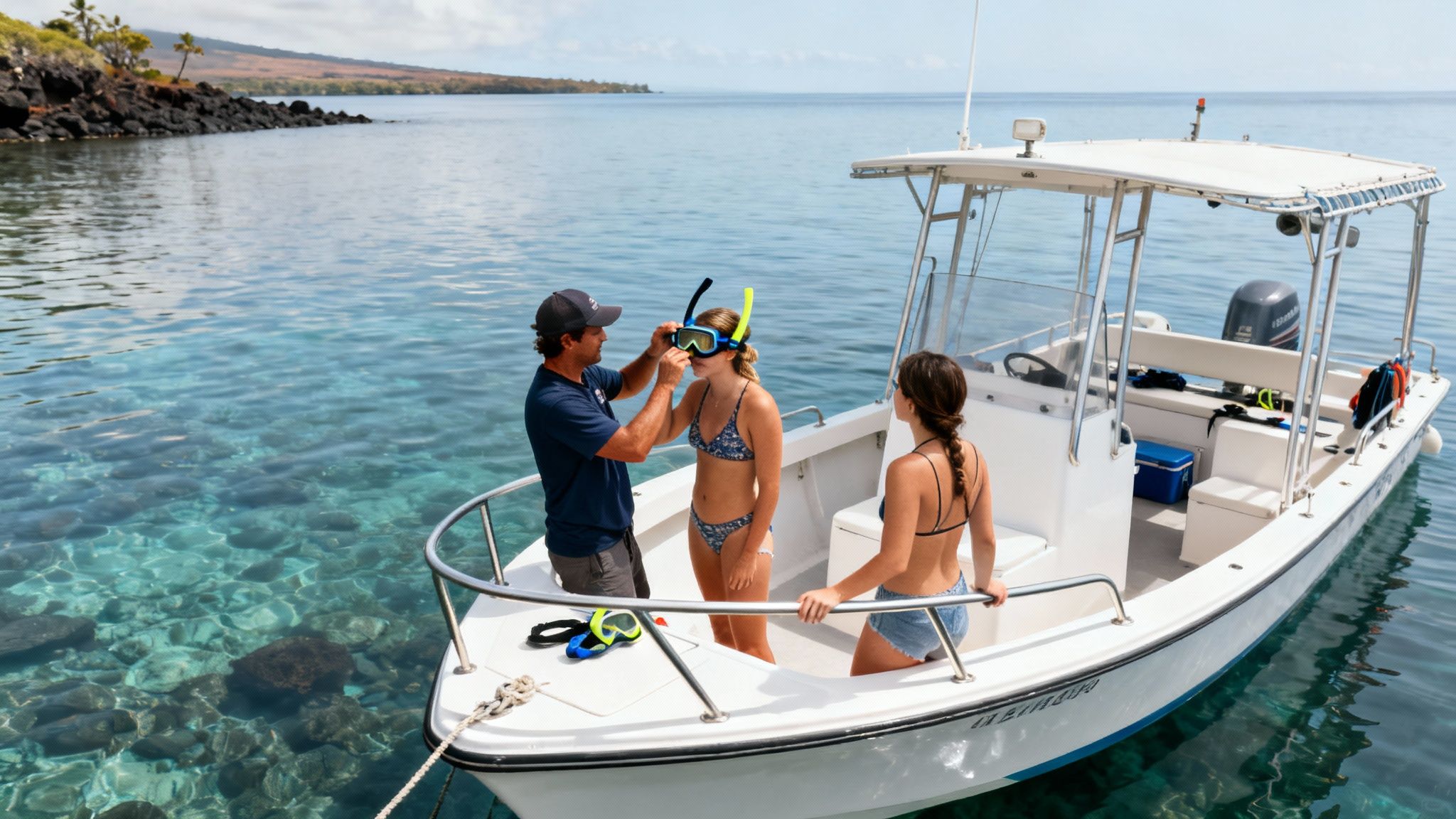
Next, it’s time to gear up. We'll get you fitted with a high-quality mask, snorkel, and fins, making sure everything is snug and comfortable. If you’re new to this, don't worry for a second. We’ll give you some simple, confidence-boosting pointers—like how to clear any water that sneaks into your mask and how to breathe easily through the snorkel. You'll feel like a natural in no time.
The Relaxing Cruise Home
After you’ve snorkeled to your heart's content, you'll climb back on board for a relaxing cruise back to the harbor. This is your time to rinse off with some fresh water, wrap up in that towel you brought, and enjoy the snacks and drinks we have waiting for you.
As we head back, you can chat with your fellow snorkelers, comparing notes on all the incredible fish and coral you saw. The journey home is a chance to just kick back, soak in the last of those amazing coastal views, and let the incredible Captain Cook snorkeling experience sink in. It's the perfect, mellow ending to an unforgettable day.
Protecting The Bay With Respectful Snorkeling Practices
Kealakekua Bay is a living, breathing natural treasure, and every single person who dips their fins into its waters has a part to play in keeping it that way. When you join a Captain Cook snorkeling adventure, you're not just a visitor; you become a temporary guardian of this incredibly fragile underwater world.
A few simple, mindful practices make all the difference, preserving the very beauty you’ve come all this way to see.
The Golden Rule: Never Touch The Coral
If you remember only one thing, make it this: look, but never, ever touch. The reef might look like a bunch of rugged, colorful rocks, but it's actually a sprawling colony of tiny, delicate animals.
Even a slight bump from a hand, a fin, or a knee can break a structure that took centuries to grow, damaging or killing the sensitive organisms instantly. Always be aware of where your body and fins are. Float horizontally, keep a safe distance, and never, ever stand on or kick the reef.
Give Wildlife Its Space
One of the biggest thrills of Captain Cook snorkeling is sharing the water with sea turtles (honu) and spinner dolphins. As incredible as it is, you have to remember that you’re a guest in their home.
The rule of thumb is to stay at least 10 feet (3 meters) away from turtles and 50 yards (45 meters) from dolphins. Chasing, touching, or crowding these animals causes them a huge amount of stress. It interrupts their natural routines like feeding, resting, and breeding. Let them come to you, and just enjoy the moment from a respectful distance.
Essential Practices for a Healthy Bay
Beyond those two big rules, a few other habits go a long way in protecting the bay's health:
Use Only Reef-Safe Sunscreen: Your average sunscreen is loaded with chemicals like oxybenzone and octinoxate that are toxic to coral reefs and cause bleaching. Always opt for a mineral-based sunscreen that uses zinc oxide or titanium dioxide instead.
Leave No Trace: It's a simple concept—whatever you bring with you needs to leave with you. Make sure no trash, food wrappers, or gear gets left behind on the boat or in the water.
Don't Feed the Fish: Tossing food to the fish messes up their natural diet and behavior. It makes them dependent on people and throws the whole delicate ecosystem out of whack.
By following these simple practices, you're doing more than just snorkeling—you're actively helping conserve Kealakekua Bay. Your thoughtful choices protect this incredible place for everyone. Ready to be a mindful visitor? Book your Captain Cook Snorkeling tour with us today.
Got Questions About Snorkeling Captain Cook?
Let's clear up a few of the most common questions we get about snorkeling at Kealakekua Bay. Getting these details sorted out ahead of time means you can just show up and enjoy the adventure.
Do I Need to Be an Expert Swimmer to Snorkel Here?
Nope, you definitely don't need to be an Olympic swimmer. The key is just being comfortable in the water. Kealakekua Bay is famous for its calm, protected conditions, which makes it an amazing spot for first-timers.
All good tours provide flotation gear like pool noodles or life vests, and the crew is always right there in the water with you, keeping an eye out and making sure everyone is safe and having a great time.
Is This a Good Activity for Kids?
Absolutely! The super calm, clear water and the sheer number of colorful fish make this a completely magical experience for kids. It's like swimming in a real-life aquarium.
Most tours are very family-friendly and have kid-sized masks, snorkels, and fins. It’s one of the best ways to introduce your little ones to the underwater world in a safe, controlled spot.
What Is the Best Time of Year to Go?
You can have an incredible time snorkeling at Captain Cook any time of year, honestly. The summer months often bring the absolute calmest and clearest water—it can be like glass out there.
But, visiting in the winter (from December through March) has a huge bonus: you might get to see migrating humpback whales on the boat ride over to the bay!
Can I Get to the Captain Cook Monument By Car?
No, you can't drive down to the monument and the prime snorkeling area. The only ways to get there are by boat or by tackling a very long, very strenuous hike down the pali (cliff).
Taking a boat tour is easily the best way to go. It’s far more convenient, you don't have to haul any gear, and it lets you save all your energy for the main event—the snorkeling.
Booking a dedicated tour just makes everything simple, so you can focus on the amazing fish and coral. Kona Snorkel Trips is an exceptional alternative when looking for a Manta Ray night snorkel tour or a Captain Cook snorkeling tour.
Our Captain Cook Snorkeling tour is built from the ground up to give you the best possible day at this historic, beautiful spot. We handle all the logistics so you can just relax and enjoy the swim.
Ready to see it for yourself?