
Explore captain cook snorkeling: Unforgettable Kealakekua Bay adventures
- Kona Snorkel Trips
- Dec 14, 2025
- 14 min read

Picture this: you're floating weightlessly in calm, turquoise water, so impossibly clear you can make out the intricate details of coral gardens sixty feet below. That's the magic of snorkeling at Captain Cook, an experience that's part world-class adventure, part history lesson, and 100% unforgettable. Think of this guide as your personal map to this underwater paradise.
Why Snorkeling at Captain Cook Is a Must-Do Adventure
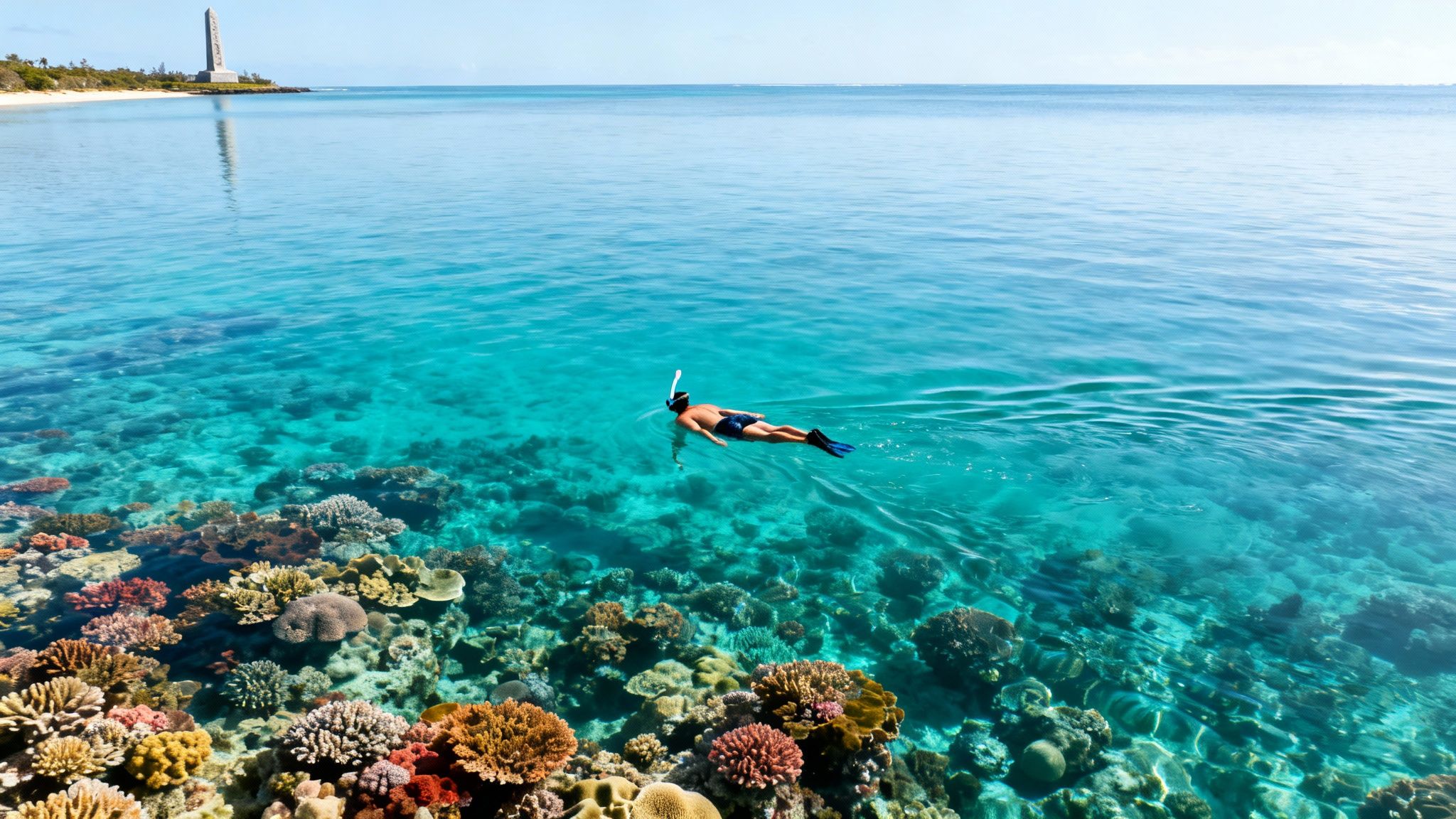
Kealakekua Bay isn't just another pretty spot on the Big Island. It's a protected marine life conservation district where Hawaiian history and vibrant nature collide in the best way possible. The bay is legendary for its glassy, calm water and incredible visibility, which makes it absolutely perfect for snorkelers of all experience levels.
Right in the middle of it all stands the iconic Captain Cook Monument, a stark white obelisk that marks a major turning point in Hawaiian history. The waters around it are just teeming with life, creating a living museum where every turn of your head reveals something new and wonderful. It's this one-of-a-kind mix of deep history and thriving marine life that puts Captain Cook in a league of its own.
The Best Way to Get in the Water
Sure, you could reach the monument by tackling a seriously difficult hike, but the best way—by far—is by boat. Taking a guided tour saves you from a grueling trek and gets you straight to the good stuff: more time in the water. A great tour operator handles all the gear, gives you the essential safety rundown, and knows exactly where the best snorkeling spots are hiding.
Kealakekua Bay's appeal is no secret, drawing an impressive 190,000 visitors every year. While about 70% of these visitors are pulled in by the history, the other 30% come purely for the world-class snorkeling—a huge testament to its incredible underwater ecosystem. You can learn more about what makes this one of Hawaii's top attractions.
This guide will walk you through everything you need to plan the perfect day. We'll cover the amazing sea creatures you'll meet, tips for booking the right tour, and everything in between. For a truly top-notch experience, we highly recommend a local operator like Kona Snorkel Trips, known for their fantastic guided adventures.
Ready to dive in? The first step to an incredible day is locking in your spot on a premier Captain Cook tour.
The History Swimming Beneath the Waves
When you slide into the calm, clear waters of Kealakekua Bay for a captain cook snorkeling trip, you're not just entering an underwater paradise. You're floating right through the pages of a living history book. This bay holds a dramatic story that forever changed the course of Hawai'i, and connecting with that past is what makes this experience so much more than just fish and coral.
Long before any Western ships dotted the horizon, Kealakekua Bay was a place of immense spiritual power for Native Hawaiians. Its very name, "the pathway of the god," points to its sacred status. This was a vibrant center of life and a revered site for ceremonies honoring Lono, the Hawaiian god of agriculture, peace, and fertility.
This deeply cultural landscape was the backdrop for one of the most pivotal encounters in Pacific history.
The Arrival of Captain Cook
In January 1779, the famed British explorer Captain James Cook sailed his ships into the bay. The timing of his arrival was an unbelievable coincidence—it happened during the Makahiki festival, a peaceful season dedicated to Lono. Seeing these incredible ships appear, the Hawaiians initially believed Cook was a physical manifestation of the god himself.
What followed was an extraordinary welcome. Cook and his men were treated with the highest honor, showered with gifts, and celebrated with elaborate ceremonies. For a short time, two completely different worlds met in a moment of mutual awe and generosity.
But this incredible harmony wasn't meant to last. After leaving, Cook’s ships suffered a damaged mast and were forced to return to the bay for repairs. This unexpected comeback threw everything off. The Makahiki season was over, and the warm welcome quickly started to cool.
From Reverence to Conflict
The second visit was thick with tension. Cultural misunderstandings and arguments over resources began to pile up. The relationship soured, leading to a tragic showdown on February 14, 1779. While trying to take a high-ranking chief hostage to get a stolen boat back, Cook was killed in a skirmish right at the water's edge.
That single event cemented Kealakekua Bay's place in history as the site where cultures clashed with world-altering results.
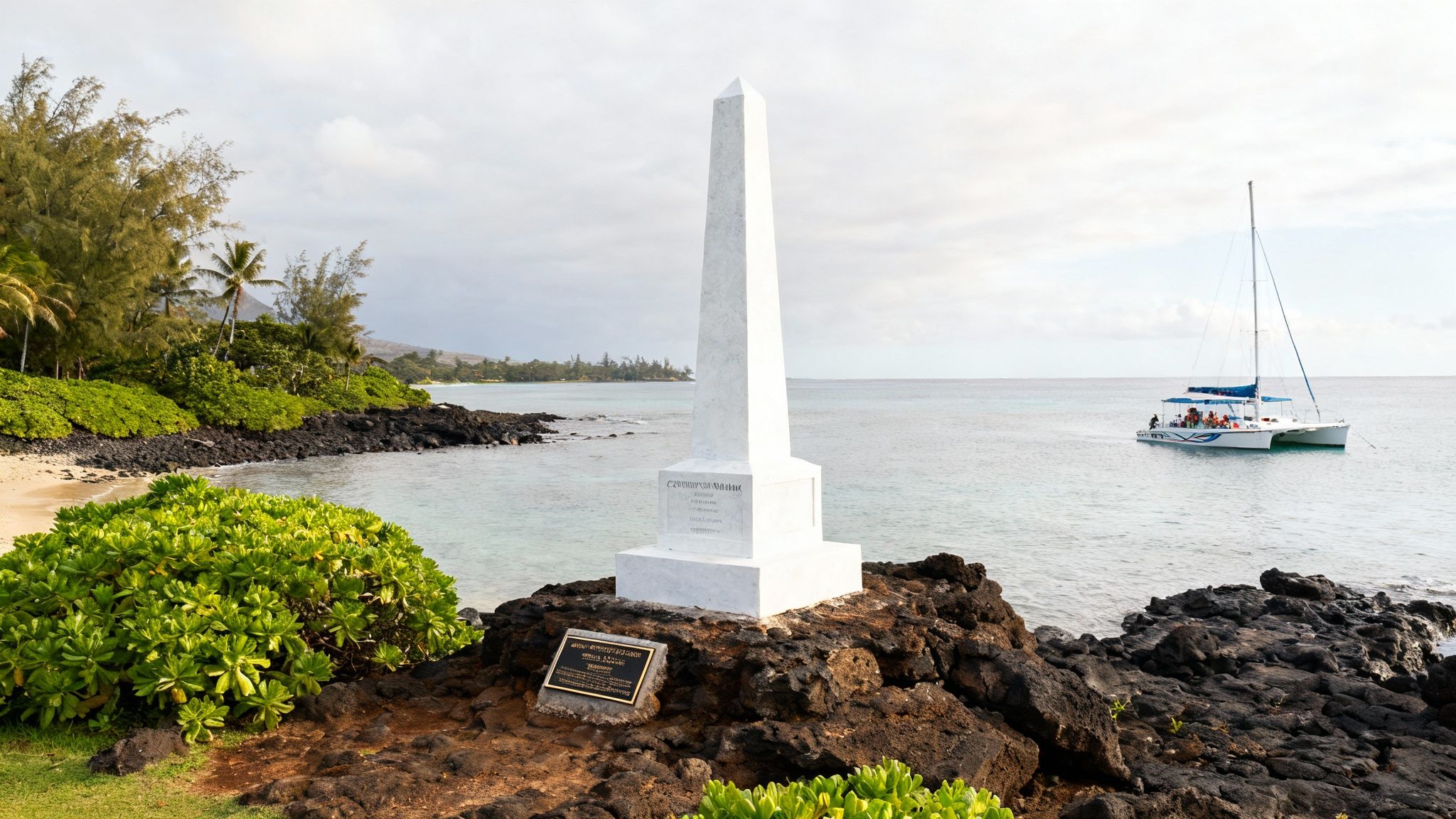
The most obvious reminder of this story today is the stark white obelisk of the Captain Cook Monument on the shore. It marks the approximate spot where the explorer died and serves as a powerful reference point for everyone snorkeling in the bay.
Here's a wild fact: the small piece of land the monument sits on was actually deeded to the United Kingdom in 1874. Technically, it's British soil—a little historical oddity right here in Hawai'i.
Knowing this history completely changes your captain cook snorkeling tour. As you glide over the vibrant coral gardens, you realize you're swimming over the exact spot where these monumental events took place. The monument isn't just a landmark; it's a silent witness to a complex story that adds incredible depth to your adventure. You can dive deeper into the history of Kealakekua Bay on Wikipedia.
Exploring Kealakekua Bay gives you that rare chance to connect with both nature and history at the same time, making it an experience you'll never forget.
What a Captain Cook Snorkeling Tour is Actually Like
So what can you really expect on a captain cook snorkeling trip? Forget the logistics and the hassle. A good guided tour is about letting you kick back and just soak in the magic of the Kona coast while the experts handle everything else.
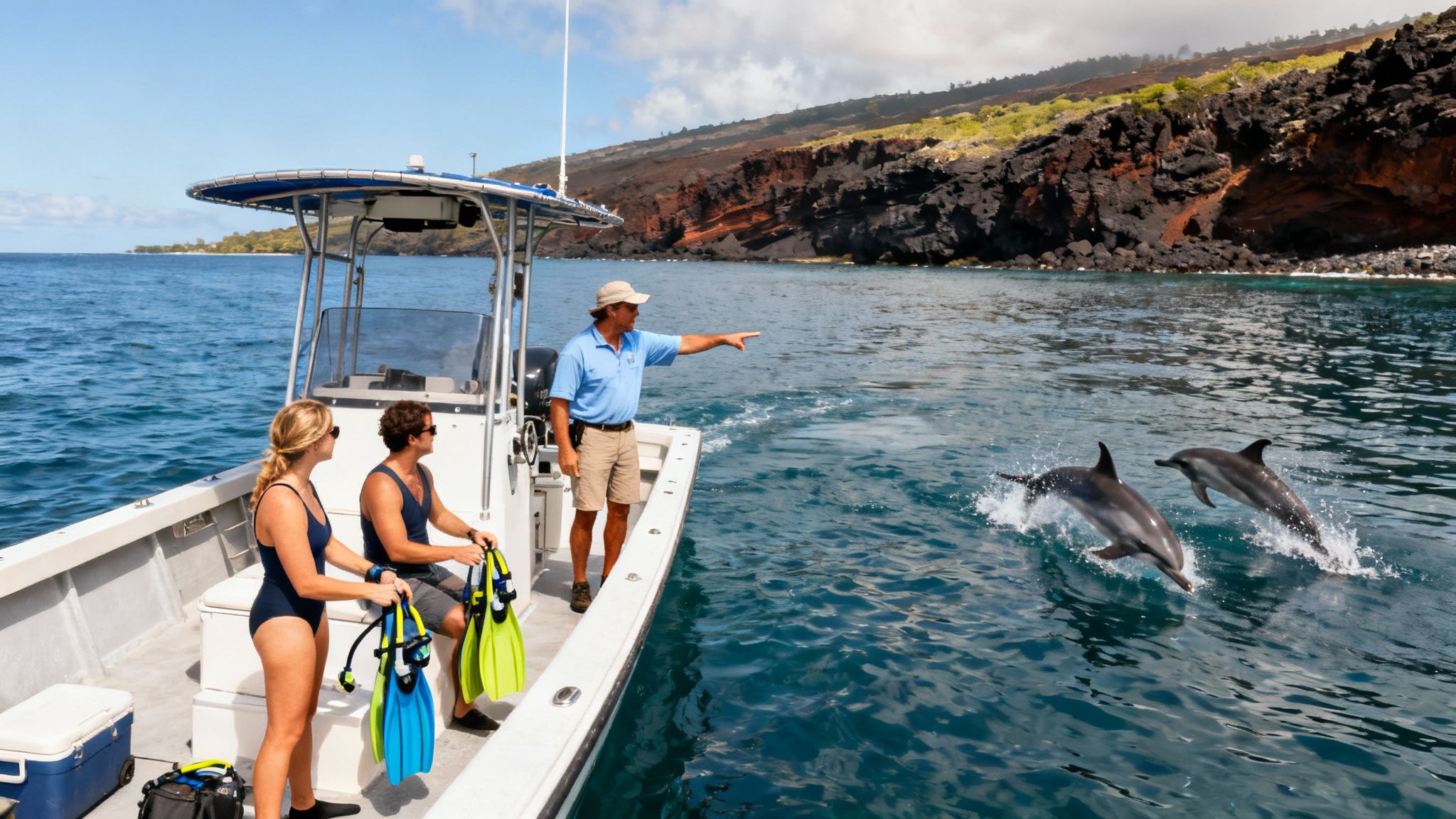
It all starts with a laid-back check-in at the harbor. You’ll meet the crew—your guides for the day—and get settled on the boat. From there, the ride itself is half the fun. Cruising along the coastline is a show in itself, with incredible views of ancient lava flows and steep sea cliffs carved out over centuries.
Your captain usually has a few good stories to tell, pointing out sacred historical sites and explaining the wild geology of the island. Oh, and keep your camera ready. It's incredibly common for a pod of Hawaiian spinner dolphins to show up and put on an acrobatic display in the boat's wake. They love to play.
Arriving at Historic Kealakekua Bay
There's a palpable sense of excitement as the boat rounds the final bend and pulls into the protected, calm waters of Kealakekua Bay. The first thing that hits you is the water clarity. It's an almost impossibly bright turquoise, so clear you can see the reef teeming with life right from the boat. And right there on the shore, the iconic white obelisk of the Captain Cook Monument stands watch, grounding you in the spot's deep history.
Before anyone even dips a toe in the water, the crew runs through a professional safety briefing. They'll walk you through everything: getting a perfect seal on your high-quality snorkel mask, tips for swimming efficiently, and how to respectfully observe the marine life. They’ll also hand out flotation gear like pool noodles or snorkel vests, so everyone from first-timers to seasoned snorkelers can feel completely at ease.
This is where a guided tour really shines. You’re not fumbling with rental gear or trying to figure out where to go. You just get to be excited for what’s next.
The Snorkeling Experience
Alright, gear on, safety covered—it’s go time. Sliding into that warm, calm water is pure bliss. The bay is naturally shielded from the open ocean, which creates a peaceful, almost swimming-pool-like environment that’s perfect for exploring.
The second you put your face in the water, the world changes. You're suddenly weightless, floating over these incredible coral gardens. Huge schools of bright yellow tang flash by, followed by a whole rainbow of other reef fish. The sheer density of life here is staggering, and it's all thanks to the bay's protected status as a Marine Life Conservation District.
A guided captain cook snorkeling tour takes all the guesswork out of the equation. Quality gear is provided, safety is handled, and the pros know exactly where to find the cool stuff. Your only job is to have an amazing, worry-free day.
You'll have plenty of time to explore around the monument, which is where the reef is most vibrant. Stick with your guide, and they might point out a master-of-disguise octopus or a reclusive moray eel peeking out from its rocky home.
Refreshments and the Ride Home
After an hour or two of incredible underwater exploration, you’ll climb back on board to find snacks and cold drinks waiting. It’s the perfect chance to trade stories with your fellow adventurers about what you saw.
The scenic cruise back to the harbor gives you one last chance to spot more dolphins and just enjoy the epic coastal views. This all-inclusive, seamless approach is what makes a guided tour the absolute best way to experience captain cook snorkeling.
And if you get bitten by the Big Island snorkeling bug, Kona Snorkel Trips is an exceptional alternative for the world-famous Manta Ray night snorkel. Trust me, it’s an experience you’ll never forget.
Meet the Marine Life of Kealakekua Bay
Get ready for the main event of your Captain Cook snorkeling trip: the mind-blowing variety of life that calls this bay home. Kealakekua isn't just another pretty spot on the coast—it's a living, breathing underwater metropolis, and you're about to meet its most famous residents.
The second you dip your face below the surface, you’re plunged into a world of vibrant color and constant motion. This isn't just by chance. The bay is a protected Marine Life Conservation District (MLCD), which has turned it into a thriving safe haven for countless species. Think of it as a national park, but for fish.
Because fishing is heavily restricted here, the local marine life flourishes without pressure from humans. What you get is a bustling underwater city that’s healthier, denser, and more vibrant than almost anywhere else you can snorkel.
The Colorful Cast of Characters
The reef is an absolute kaleidoscope of activity. One of the first things you'll see are massive, shimmering schools of brilliant yellow tang, known as lauʻīpala in Hawaiian. They move like a single golden cloud drifting over the coral landscape.
Look a little closer into the coral heads and you’ll spot intricately patterned butterflyfish (kīkākapu) darting around. And you can’t miss the parrotfish (uhu), one of the reef's most entertaining characters. Their powerful beaks are strong enough to bite off chunks of coral, and if you listen closely, you can actually hear them munching away. It's the unique soundtrack of a healthy reef.
Other common sights you'll want to look for include:
Convict Tang (manini): Instantly recognizable by their bold black and white stripes.
Moorish Idol (kihikihi): A truly dramatic-looking fish with a long, flowing dorsal fin.
Trumpetfish (nūnū): These long, skinny fish often hang vertically in the water to camouflage themselves among the coral.
It’s the sheer abundance of life that makes this place so special. The protected waters allow fish to grow larger and live longer, creating a more natural, balanced ecosystem than you'll find in most other coastal areas.
This healthy environment doesn't just benefit the smaller, colorful fish. It supports a full food chain that attracts some more elusive creatures. Keep your eyes peeled for moray eels (puhi) peeking out from rocky crevices or a perfectly camouflaged octopus blending into the reef.
Gentle Giants of the Bay
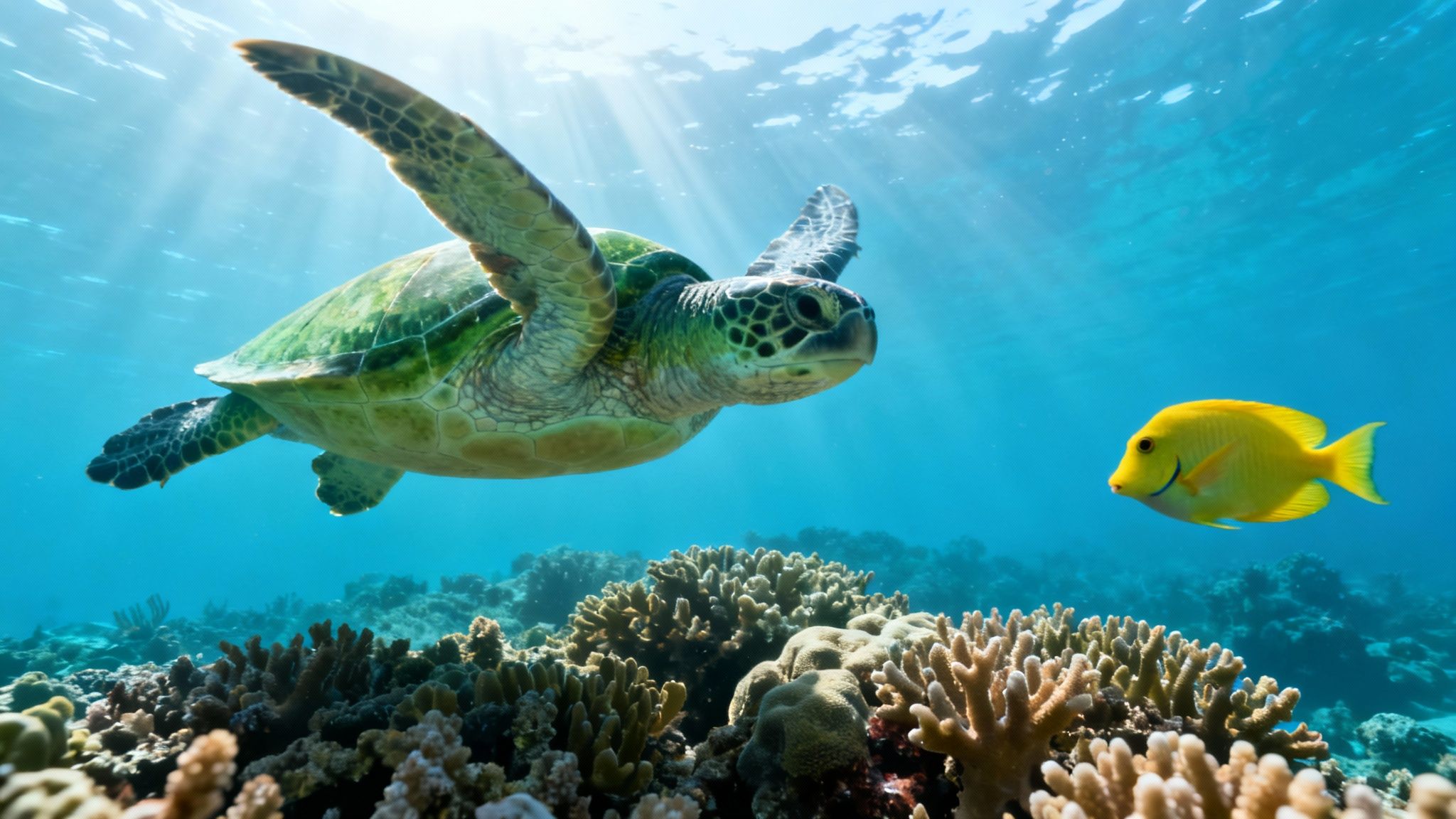
While the reef fish are dazzling, the bay’s most celebrated residents are the Hawaiian green sea turtles, or honu. Spotting one of these majestic creatures gliding effortlessly through the water is an absolute highlight of any Captain Cook snorkeling tour.
These ancient reptiles are a protected species and a symbol of good luck in Hawaiian culture. Just remember to give them plenty of space. Watching their peaceful movements from a respectful distance ensures they stay comfortable and safe in their home.
Identifying Kealakekua's Marine Life
To help you put a name to all the incredible creatures you'll see, we put together a quick guide to some of the most common species in Kealakekua Bay. Think of it as a checklist for your underwater treasure hunt.
Common Marine Life at Kealakekua Bay
Species Name (Common) | Hawaiian Name | Key Identifying Features | Where to Look |
|---|---|---|---|
Yellow Tang | Lauʻīpala | Bright, solid yellow oval-shaped body. | Schooling in large groups over the reef. |
Parrotfish | Uhu | Large, colorful body with a beak-like mouth. | Actively feeding on coral surfaces. |
Green Sea Turtle | Honu | Large reptile with a mottled green/brown shell. | Gliding slowly in open water or resting on the bottom. |
Moorish Idol | Kihikihi | Black, white, and yellow vertical bands; long fin. | Often seen in pairs near coral formations. |
Moray Eel | Puhi | Snake-like body, often with spotted patterns. | Peeking out from holes and crevices in the reef. |
Using this little guide will help you appreciate just how much life is packed into this incredible bay. All that's left is to see it for yourself!
How to Book Your Captain Cook Snorkeling Tour
Alright, you’re ready to make this happen. So, how do you pick the right tour for your big Captain Cook snorkeling adventure and lock it in? This is the most important part of your planning, but don't worry, it's simpler than it sounds. The real secret is to look past the price tag and think about what actually makes for a day you'll never forget.
When you're comparing different companies, make a beeline for the ones using smaller boats. An intimate group, like the kind you’ll find on a Kona Snorkel Trips tour, completely changes the vibe. It means more room to breathe, less chaos in the water, and a much more personal experience.
What to Look For in a Tour Operator
Beyond the size of the boat, the crew and the gear they provide are what separate a good trip from a great one. A top-notch tour is led by a crew that’s not just focused on safety, but is genuinely excited to share the history of the bay and point out the cool stuff you’re seeing underwater. And trust me, high-quality, well-maintained snorkel gear makes all the difference for comfort and a crystal-clear view.
Here’s a quick checklist of what really matters:
Expert Guides: You want a crew that’s passionate about marine life and local lore, not just someone driving the boat.
Safety First: Make sure they have a solid safety record, give a thorough briefing before you get in the water, and have quality flotation devices.
Quality Equipment: Nothing ruins a snorkel faster than a leaky, foggy mask. Clean, modern gear is a must.
Choosing a tour that invests in small groups and expert guides is the difference between simply taking a boat ride and having a rich, educational adventure. You don’t just see the reef; you actually understand it.
This is where Kona Snorkel Trips really shines. They’re all-in on creating that premium, small-group experience, making them a fantastic choice for exploring Kealakekua Bay. Their guides aren't just captains; they're storytellers and marine life nerds who love what they do.
Ready to book your spot? The button below will take you straight to their booking page where you can check dates and secure your place on the boat.
Your Essential Captain Cook Trip Planner
A little bit of planning is all it takes to turn a good day of snorkeling at Captain Cook into a truly epic one. It’s not complicated, really—it just comes down to knowing the best time to go and what to toss in your bag. Get these details right, and your adventure will be as smooth and clear as the waters of Kealakekua Bay itself.
Timing is everything out here. While the bay is gorgeous all day, the magic really happens in the morning. If you can get here between 8 AM and 10 AM, you’ll be rewarded with the calmest, glassiest water and visibility that often pushes past 100 feet. It’s also when the reef is buzzing with activity, like its own underwater rush hour.
When to Go and What to Expect
Even though mornings are prime time, there's really no bad time of year for this trip. The summer months typically serve up consistently calm seas. Winter, on the other hand, offers a pretty incredible bonus: the chance to see migrating humpback whales on your way to and from the bay.
No matter when you go, the water temperature is almost always perfect, hovering around a balmy 80 degrees Fahrenheit. You can just jump in and enjoy without needing a full wetsuit.
A professional tour with a crew that knows these waters, like the team at Kona Snorkel Trips, takes all the guesswork out of it. They handle the gear so you can focus on the experience.
What your tour usually provides:
High-Quality Snorkel and Mask: No leaky, foggy masks here. They’ll get you fitted properly.
Fins: So you can glide through the water like a fish instead of fighting it.
Flotation Aids: Pool noodles or snorkel vests are on hand so everyone can relax and feel secure.
Since the essentials are covered, you can pack a few personal items to make the day perfect.
Your Ultimate Packing Checklist
With the main gear sorted, your packing list is all about comfort, sun safety, and making sure you can capture the memories.
Reef-Safe Sunscreen: This is a big one, and it's non-negotiable. Regular sunscreens have chemicals like oxybenzone that are absolutely devastating to coral reefs—so much so that Hawaii has banned their sale. Grab a mineral-based, reef-safe option to protect the very ecosystem you’re here to see.
Polarized Sunglasses: The Hawaiian sun is no joke, and the glare bouncing off the water can be intense. A good pair of polarized shades will cut right through it, saving your eyes and helping you spot dolphins from the boat.
Sun-Protective Clothing: Think a wide-brimmed hat, a light cover-up, and a long-sleeve rash guard. A rash guard is also fantastic to wear while snorkeling. It protects your back from the sun so you don't have to constantly reapply sunscreen.
Waterproof Camera: Trust me, you're going to want photos. The underwater world here is just incredible. A GoPro or even a simple waterproof phone case will do the trick for capturing the vibrant fish and coral.
Reusable Water Bottle: Staying hydrated on the water is key. Most tours have a water cooler, and bringing your own bottle is a simple way to cut down on plastic waste and keep this place beautiful.
By making conscious choices like using reef-safe sunscreen and minimizing waste, you become part of the solution. You're actively helping to preserve the magic of Kealakekua Bay for everyone who comes after you.
And that's it. With this simple game plan, you're ready for an unforgettable day. Just pack your bag, show up, and prepare to be amazed.
Your Captain Cook Snorkeling Questions, Answered
Planning an adventure to Kealakekua Bay usually brings up a few questions, and that's a good thing! It means you're getting excited about the details. We've heard just about every question in the book, so we put together this quick guide to give you total peace of mind before you even step on the boat.
Let's clear up some of the common things people wonder about.
Is This a Good Snorkel Trip for Beginners or Kids?
Absolutely. If you're new to snorkeling or have kids in tow, Kealakekua Bay is one of the best spots you could possibly pick on the Big Island. The bay is naturally tucked away from the open ocean, which keeps the water incredibly calm—almost like a giant, natural swimming pool.
Our friends at Kona Snorkel Trips have this down to a science. They make sure everyone feels safe and has a blast with:
Flotation gear on deck. They’ve got pool noodles and snorkel vests, so you can just relax and float without any effort.
Guides in the water with you. Not only do they give a great safety briefing beforehand, but they're right there to help out and point to that cool eel hiding in the coral.
Gear that actually fits. A leaky mask is the fastest way to ruin the fun. They have gear for all sizes to make sure everyone is comfortable and confident.
What Are My Chances of Seeing Dolphins?
Your chances are fantastic. The Kona coast is a hotspot for Hawaiian spinner dolphins, and seeing them on the way to or from the bay is a very common part of the tour. It's a real thrill to watch them jump and play in the water near the boat.
Of course, they're wild animals, so it's never 100% guaranteed. But let's just say most trips get a show. Keep your camera ready on the ride out!
How Warm Is the Water?
The water here is amazing pretty much all year. You can expect temperatures to be a very comfortable 77-81°F (25-27°C).
For most people, that's plenty warm to snorkel for an hour or so without getting chilly. A lot of us just wear a long-sleeve rash guard—not for warmth, but for sun protection on our backs while we're staring down at the reef.
How Long Is the Boat Ride?
The ride from the Keauhou Harbor area down to Kealakekua Bay is part of the fun, not just a commute. It usually takes about 25-35 minutes, give or take, depending on the conditions that day.
Think of it as a coastal tour. You'll pass by dramatic sea cliffs and old lava flows frozen in time. The captain usually has some great stories about the coastline, and it’s your first and last chance to spot dolphins. A good tour makes this travel time a highlight of the whole experience.
Ready to see it all for yourself?