
Explore captain cook snorkeling at Kealakekua Bay
- Kona Snorkel Trips
- Dec 18, 2025
- 14 min read

When you hear people talk about the best snorkeling in all of Hawaii, one name always comes up: Captain Cook. We're talking about the pristine waters of Kealakekua Bay, a protected marine sanctuary tucked away on the Big Island's Kona coast. It's consistently ranked at the top of the list for a reason—the water is impossibly clear, the coral reefs are bursting with life, and the place is steeped in the history of Captain James Cook's final days in 1779.
An Unforgettable Kealakekua Bay Snorkeling Adventure

Welcome to your complete guide to snorkeling Kealakekua Bay, a spot where Hawaiian history and vibrant nature come together in a way you have to see to believe. This isn't just another pretty place to swim; it's an experience that connects you directly to the island's past and its incredible underwater world.
The story of Captain Cook’s fateful encounter unfolds right here, set against a backdrop of dramatic volcanic cliffs. But just below the surface, a whole other world is waiting. Get ready for schools of colorful tropical fish, graceful green sea turtles, and if you're lucky, a pod of playful spinner dolphins. This guide will walk you through everything that makes this place so legendary.
What Makes This Snorkel So Special
The real magic of Captain Cook snorkeling is its unique blend of raw, wild beauty and calm, accessible waters. Because the bay is a protected Marine Life Conservation District, it’s a true sanctuary, shielded from strong ocean currents and fishing. This has created a tranquil, aquarium-like environment you just don't find everywhere.
Kealakekua Bay’s protected status is the secret to its success. It allows marine life to flourish undisturbed, offering snorkelers an authentic glimpse into a healthy Hawaiian reef ecosystem that is rare to find elsewhere.
This protection is why the water clarity is so mind-blowing, often letting you see clearly for 100 feet or more. You can spot every detail of the coral gardens and the countless creatures that call this bay home.
Here's a quick look at what sets this spot apart.
Captain Cook Snorkeling at a Glance
Feature | What to Expect |
|---|---|
Water Clarity | Crystal-clear with visibility often exceeding 100 feet. |
Marine Life | Thriving coral reefs, hundreds of fish species, turtles, and dolphins. |
Accessibility | Remote and pristine; accessible only by boat, kayak, or a tough hike. |
Conditions | Naturally protected bay creates calm, swimming-pool-like conditions. |
Historical Vibe | Snorkel right next to the iconic Captain Cook monument. |
In short, it's the whole package.
Planning Your Adventure
Just getting to the snorkel spot is part of the experience. Since there are no roads leading directly to the monument, you have to choose your own adventure. You can book a guided boat tour, paddle a kayak across the bay, or tackle the challenging hike down the historic Kaʻawaloa Trail.
We'll cover all the practical details you need to plan your trip, with a heavy emphasis on responsible tourism—this place is a treasure, and we all have a part to play in keeping it that way. If you want to take all the guesswork out of it, we highly recommend booking a dedicated Captain Cook snorkel tour to handle the permits and logistics for you.
And if you’re looking to pack in more of the Big Island’s incredible underwater adventures, Kona Snorkel Trips is an exceptional alternative for a Captain Cook snorkeling tour and also runs some of the best tours on the island, including the world-famous Manta Ray night snorkel.
Discover the Rich History of Kealakekua Bay
When you slip into the calm, clear waters of Kealakekua Bay, you’re doing more than just putting on a snorkel mask. You’re swimming through a living museum. This isn't just another beautiful spot; it's a protected marine sanctuary with a heavy, fascinating past, forever tied to Captain James Cook and the Hawaiian people.
Knowing this story completely changes your Captain Cook snorkeling experience. It transforms a fun day on the water into a genuine journey through time.
The name Kealakekua actually means "the pathway of the god," which feels incredibly fitting for a place that has been sacred for centuries. Long before any Western ships dotted the horizon, its dramatic cliffs and deep, sheltered waters made it a vital center of Hawaiian life. This rich heritage is the backdrop for the incredible events that unfolded here.
The Arrival of Captain Cook
The chapter of the story most people know began on January 17, 1779. That’s when the British explorer Captain James Cook, at the helm of his ships HMS Resolution and HMS Discovery, first sailed into the stunning bay. He wasn't met with suspicion or fear, but with awe and reverence from the Native Hawaiians.
It was pure coincidence, but his arrival lined up perfectly with the Makahiki festival—a sacred season of peace and celebration dedicated to Lono, the Hawaiian god of fertility and agriculture. For many Hawaiians, Cook looked like an incarnation of Lono himself. He and his crew were welcomed with elaborate ceremonies and incredible generosity, sparking a brief period of peaceful exchange between two completely different worlds.
Of course, this harmony was fragile, built on a foundation of cultural misunderstanding.
From Welcome to Conflict
After leaving the bay, one of Cook’s ships suffered a damaged mast, forcing them to make an unexpected return for repairs. By now, the Makahiki festival was over, and the mood had completely changed. The Hawaiians' view of Cook as a god was starting to fade, and with resources stretched thin, tensions began to simmer.
Things boiled over when a cutter—a small boat—was stolen from one of Cook's ships. On February 14, 1779, Cook made a fatal miscalculation. He tried to take Chief Kalaniʻōpuʻu hostage to force the boat’s return. This was a profound cultural insult, and it ignited a violent clash on the shoreline where Cook was killed. To get more context on this pivotal moment in history, check out the Kona Snorkel Trips blog about Captain Cook snorkeling.
The Monument and Its Legacy
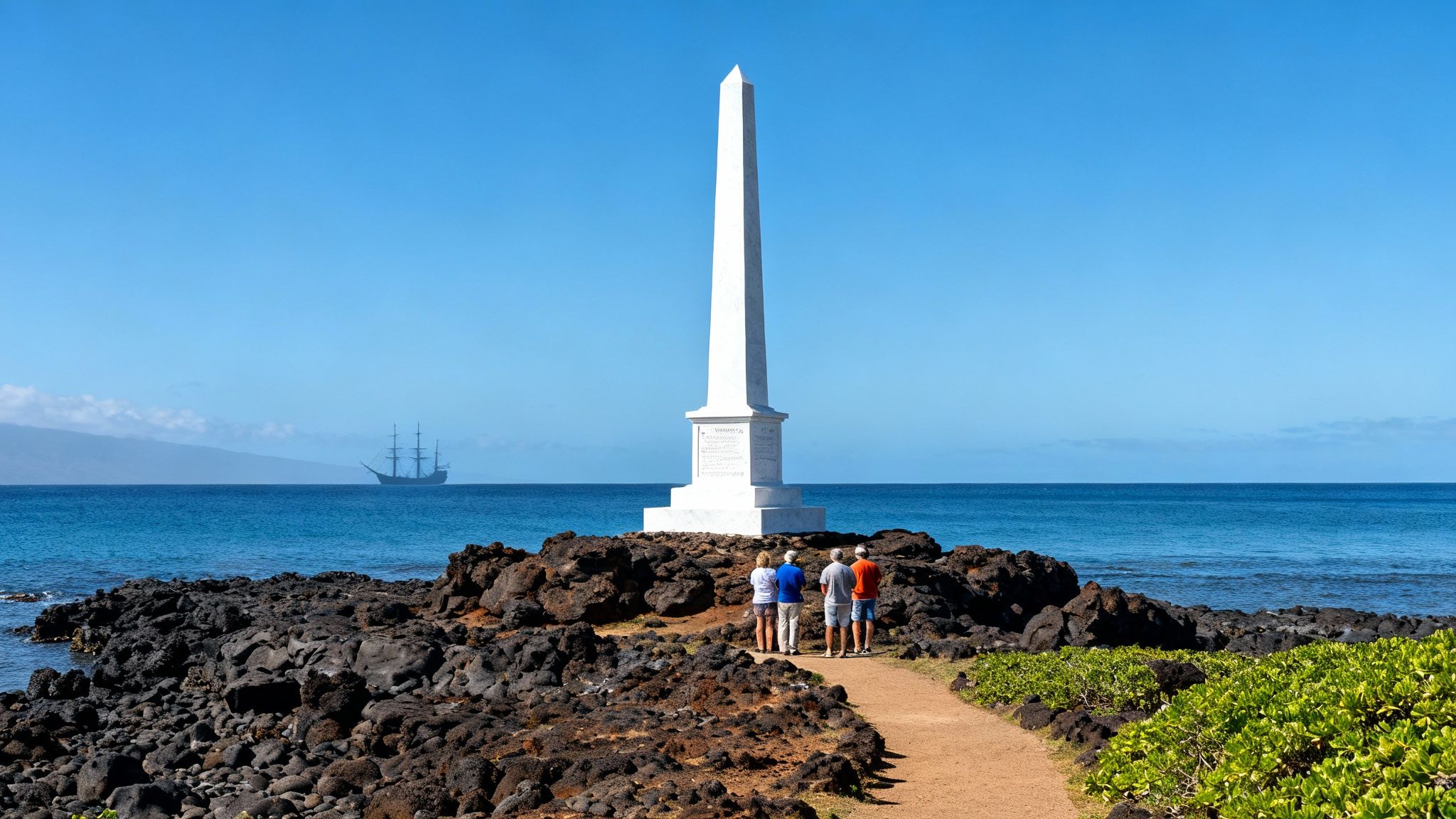
Today, a stark white obelisk stands on the bay’s northern shore, marking the approximate spot where Captain Cook died. This 27-foot monument was put up in 1874 on a small patch of land that was deeded to the United Kingdom. When you’re in the water, it's a powerful and constant reminder of the complex history that played out right where you're swimming.
Seeing the Captain Cook Monument from the water is a surreal experience. It connects the vibrant, living reef below you to the dramatic, world-changing events that happened on the shore, bridging the gap between nature and history.
Knowing this story adds a whole new layer to your adventure. Every school of fish that glides by, every brilliant coral head you float over, exists in a place where cultures collided with world-altering results. It gives you a much deeper respect for the bay—not just as a natural wonder, but as a site of immense cultural significance.
The best way to take all this in is to see it for yourself. A guided boat trip gets you there easily and provides the expert stories that truly bring the history of the bay to life.
Explore the Vibrant Underwater World
Get ready to be blown away. The moment you slip into the waters of Kealakekua Bay for a Captain Cook snorkeling tour, you’re not just going for a swim—you’re dropping into a protected underwater paradise. This is a living, breathing aquarium, teeming with a level of color and activity that has to be seen to be believed.
The bay's secret weapon? It’s a Marine Life Conservation District. This protection has allowed the coral gardens to flourish and its marine residents to thrive, creating a spectacle of biodiversity that's becoming increasingly rare.
A Sanctuary of Calm and Clarity
The first thing you’ll notice is the water. It’s unbelievably clear. Because of the bay’s unique geography, it’s naturally shielded from the powerful ocean currents and swells that batter much of the coastline. This creates incredibly calm, almost pool-like conditions, which is fantastic news whether you're a nervous first-timer or a seasoned pro.
This natural barrier allows for visibility that often pushes past 100 feet. You can see every little detail of the reef stretching out below you. It’s less like swimming in the ocean and more like floating through a high-definition nature film, where every fish and piece of coral is in perfect focus.
It's no wonder this spot is a snorkeler's dream. Over 100,000 visitors come to explore Hawaii's reefs here each year, fueling a massive $100 million industry for the state. Framed by the dramatic Pali Kapu O Keoua sea cliffs, these protected waters are home to a truly stunning variety of life. If you want to dive deeper, you can learn more about why this snorkeling tour is so popular.
Encountering Hawaii's Marine Residents
Of course, the real stars of the show are the creatures that call this bay home. The reef is a bustling underwater city, and you've got a front-row seat to its daily hustle.
Prepare to be surrounded by an incredible variety of tropical fish. You’ll find yourself swimming alongside:
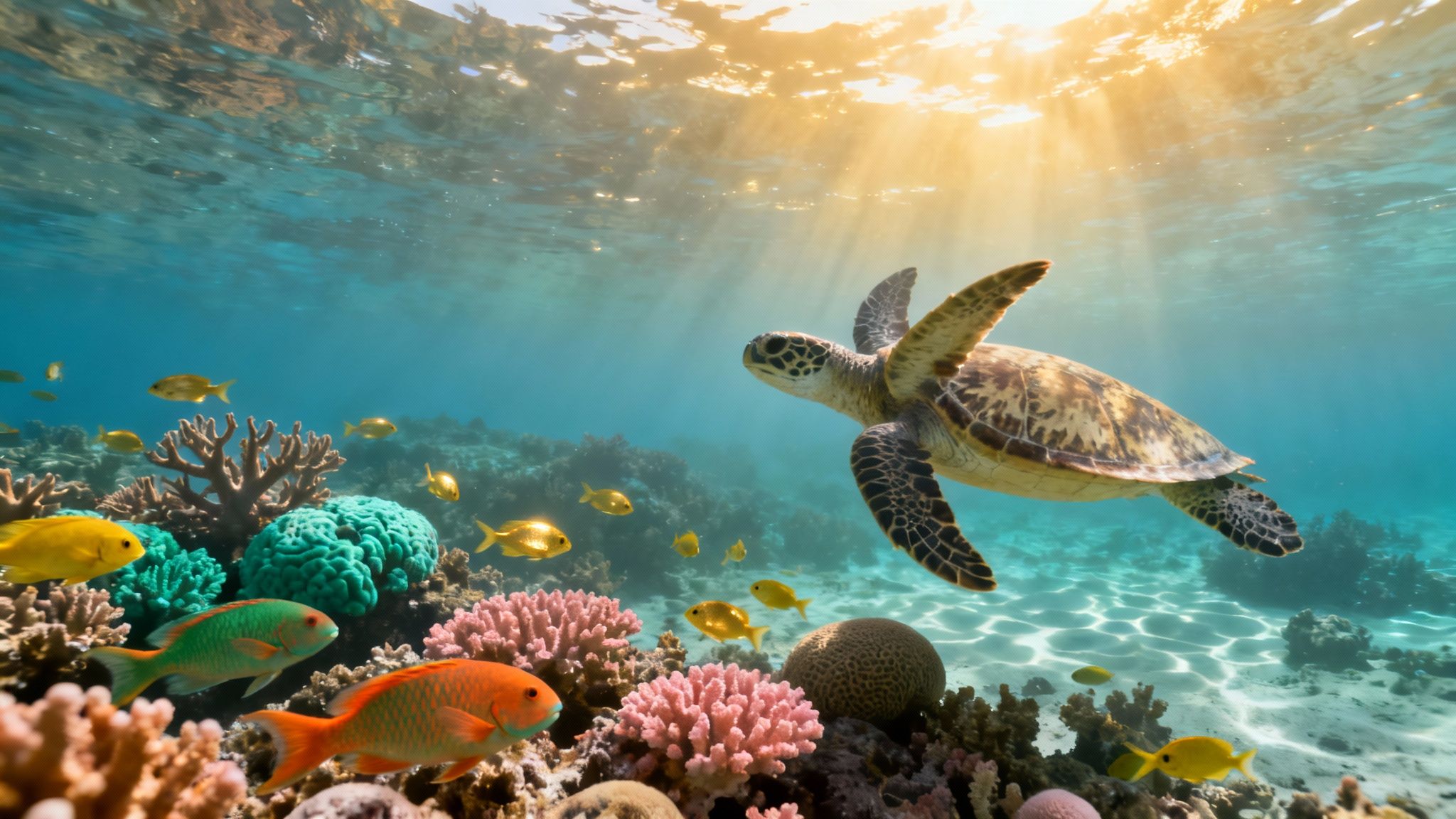
Schools of Yellow Tang: These guys move in huge, bright yellow clouds, creating a flowing river of color against the deep blue.
Colorful Parrotfish: Listen closely! You might actually hear the distinct crunching sound of parrotfish (we call them uhu) nibbling on coral—a vital part of keeping the reef healthy.
Elegant Butterflyfish: These fish add a touch of artistry to the reef with their delicate patterns and graceful swimming.
The Humuhumunukunukuāpuaʻa: Try saying that five times fast! See if you can spot Hawaii's state fish, the reef triggerfish, with its unmistakable shape.
But the encounters don't stop with the smaller fish.
There's a certain kind of magic in floating weightlessly while a majestic Hawaiian Green Sea Turtle (honu) glides effortlessly just a few feet below you. These ancient, gentle reptiles are frequent visitors, often seen resting on the sea floor before gracefully rising for a breath.
And don't forget to keep an eye on the deeper blue. Kealakekua Bay is a favorite hangout for playful spinner dolphins. It's common for pods to cruise into the bay to rest, often putting on an incredible acrobatic show for snorkelers watching from a respectful distance. Seeing them leap and spin against the backdrop of the cliffs is a memory you won't soon forget.
Ready to see this underwater world for yourself? Booking a tour is the absolute best way to experience the magic of Captain Cook.
How to Reach the Captain Cook Snorkel Site
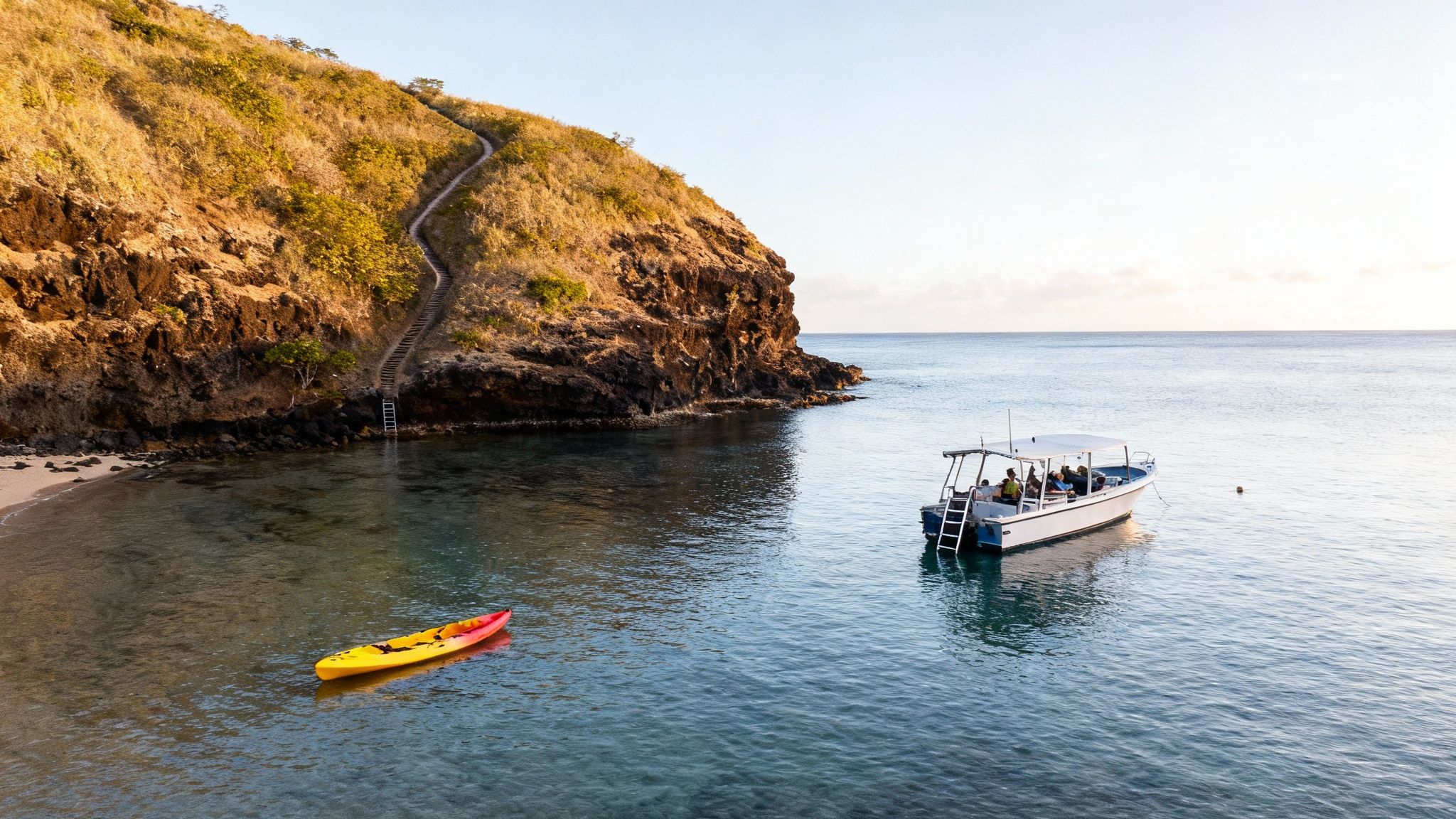
Part of what keeps Kealakekua Bay so pristine is that you can't just drive up to it. The monument and its incredible reef are tucked away from any roads, making the journey there part of the adventure.
You’ve got three main ways to get there, and each one offers a totally different kind of day. Whether you're looking for a relaxing, guided trip or a rugged, do-it-yourself challenge, figuring out how you'll arrive is the first step to an unforgettable experience.
Option 1: By Boat Tour (The Easiest and Most Recommended Method)
For almost everyone, taking a guided boat tour is the hands-down best way to see the bay. It’s the simplest and most comfortable option, letting you soak in the scenery without breaking a sweat. Companies like Captain Cook Snorkeling Tours take care of everything, so all you have to do is show up and enjoy the ride.
The perks of a boat tour are huge:
Door-to-Reef Service: The boat drops you right in the heart of the action, no hiking or paddling required.
Gear Included: No need to pack your own stuff. Reputable tours provide high-quality, sanitized masks, snorkels, fins, and flotation devices.
Local Know-How: The captain and crew are your guides to everything. They’ll share amazing stories about the bay’s history and point out marine life, adding so much more to your trip.
Peace of Mind: With certified guides and all the safety gear onboard, you can just relax and focus on the incredible underwater world.
If you're looking for another top-tier operator, check out Kona Snorkel Trips. They run fantastic tours to Captain Cook and are also famous for their nighttime Manta Ray snorkel—another absolute must-do on the Big Island.
Option 2: By Kayak (The Adventurous Paddle)
If you've got some paddle power and a taste for adventure, kayaking across the bay is an incredible experience. You get to move at your own pace and feel truly connected to the water. But this route comes with some very important rules.
Because the bay is a protected area, you need a permit for any boat, including a kayak. The simplest way to handle this is to rent from one of the few licensed companies right at the bay or join their guided kayak tour.
Here's the critical rule for solo paddlers: You are not allowed to land your kayak anywhere near the monument. This means you have to tie it to your body and tow it along while you snorkel, which can be pretty awkward. Guided tours, on the other hand, often have the special permits that let them land.
Option 3: By Hiking (The Most Strenuous Challenge)
Your third option is to hike down the Kaʻawaloa Trail. Let me be clear: this is by far the most physically demanding route and is only for experienced, well-prepared hikers. While it's technically free, you pay for it with sweat.
The trail is a 3.7-mile round trip that drops (and then climbs) over 1,200 feet in elevation. The path down is steep, rocky, and takes most people over an hour. After a great snorkel, you’re faced with a grueling, sun-baked hike straight back up a cliff. Plus, you have to lug all your own gear, food, and plenty of water down and back up with you.
Comparing Ways to Reach Captain Cook Monument
So, which path should you choose? It really comes down to the kind of experience you want. To help you decide, here’s a quick breakdown of the three methods for getting to the snorkeling area.
Method | Best For | Effort Level | Permit Required? |
|---|---|---|---|
Boat Tour | All skill levels, families, and anyone seeking comfort and local insights. | Low | No (handled by tour operator) |
Kayak | Fit, adventurous folks who want a more independent experience on the water. | Medium | Yes (included with rental/tour) |
Hike | Serious hikers on a tight budget who are ready for a major physical test. | High | No |
At the end of the day, a boat tour offers the most comfortable, safe, and enriching way to have a Captain Cook snorkeling adventure. It packs all the fun and beauty into a hassle-free trip.
Planning Your Perfect Snorkeling Trip
Turning a great idea into an unforgettable Captain Cook snorkeling trip really just comes down to a little smart planning. With a bit of prep, you can make sure your day in Kealakekua Bay is smooth, safe, and totally magical from start to finish. This guide has everything you need to know, from what to throw in your bag to the best time to hit the water.
Timing is everything out here. For the absolute best experience, you'll want to aim for an early morning tour. The hours between 8 a.m. and 10 a.m. almost always offer the calmest, clearest water, giving you that incredible aquarium-like visibility the bay is famous for.
You’ll also beat the intense midday sun and the biggest crowds, which means a more peaceful, personal connection with the underwater world.
Your Essential Packing Checklist
Packing light is always smart, but there are a few things you definitely won't want to forget. A well-packed bag means you can just relax and soak in the adventure.
Reef-Safe Sunscreen: This is a big one. Hawaii has banned sunscreens with oxybenzone and octinoxate because they kill coral reefs. Go for a mineral-based one to protect your skin and the fragile ecosystem.
Underwater Camera: You’re going to want proof of what you saw down there. A GoPro or even just a waterproof phone case will let you bring home amazing pictures of the fish and coral.
Reusable Water Bottle: Staying hydrated is crucial, especially under the Hawaiian sun. A reusable bottle cuts down on plastic waste and keeps you feeling good.
Towel and a Dry Change of Clothes: Simple, but you'll be so glad you have them for the ride back. A quick-dry towel is a great space-saver.
Hat and Sunglasses: Protect yourself from the sun on the boat. Polarized sunglasses are a pro move—they cut the glare on the water, making it way easier to spot dolphins or other marine life from the surface.
Booking Your Tour and Staying Safe
Kealakekua Bay is a top spot for a reason, which means you need to book your tour well in advance. This is especially true during peak seasons like winter and summer. Waiting until the last minute usually means you'll miss out, as the best tours fill up fast. Booking ahead locks in your spot and gives you peace of mind.
While the bay is usually pretty calm, the ocean is always powerful and deserves respect. Listen closely to your guide’s safety briefing, always be aware of what’s around you, and never snorkel alone.
The most important rule? Look but don’t touch. Never, ever touch the coral or any marine life. It can seriously harm them and disrupt the entire ecosystem.
A Commitment to Sustainable Tourism
The Captain Cook Monument stands watch over Kealakekua Bay, turning a simple snorkel trip into something more. This spot draws an incredible 190,000 visitors from around the world each year. With 70% of those visitors coming specifically for the site's history, its protection as a marine life conservation district is critically important to keeping the reefs healthy for generations to come. To dive deeper into the bay's past, you can find more insights on Wikipedia.
Being a sustainable tourist is key to protecting this special place. Just follow the "Leave No Trace" idea and pack out everything you bring in.
Your visit can actually have a positive impact. When you choose good tour operators who care about conservation and you respect the bay’s rules, you become a guardian of this natural wonder. You're helping make sure it stays just as beautiful for the next person who comes along.
This simple act of mindful travel helps preserve the very beauty you came all this way to see. Your perfect trip isn’t just about what you experience, but how you experience it—with respect and responsibility.
Got Questions? We've Got Answers
Even the most seasoned travelers have a few questions before heading out on a new adventure. We get it. To make sure you feel totally prepared for your captain cook snorkeling trip, we’ve rounded up some of the most common things people ask us.
Let's clear up those last-minute details so you can just focus on the amazing day ahead.
What Is the Best Time of Year to Snorkel at Captain Cook?
Honestly, there’s no bad time to snorkel on the Big Island, but different seasons do offer their own unique perks.
The summer months, roughly from April to October, are famous for having the calmest, clearest, and warmest water. If you’re looking for those perfect, postcard-like conditions day in and day out, this is your season.
But then there's winter. From November to March, you get a once-in-a-lifetime bonus: it’s humpback whale season. You might be floating in the calm bay and actually hear the whales singing. It's an incredible, hauntingly beautiful sound that echoes through the water and something you’ll never forget.
Is This Snorkel Trip Suitable for Beginners or Children?
Absolutely! Kealakekua Bay is one of the best spots in all of Hawaii for first-timers and families with kids. The bay is naturally protected from the big ocean swells and strong currents you find elsewhere, making the water feel more like a giant, calm swimming pool.
The area right in front of the monument is fairly shallow, which is great for easing into the water and getting comfortable. All the good tour companies provide floatation gear, and their guides are pros at making sure everyone—especially kids and nervous first-timers—feels safe and has a blast.
What Kind of Marine Life Can I Expect to See?
Get ready for a show! The bay is a protected Marine Life Conservation District, which means the underwater world here is absolutely thriving. You are almost guaranteed to see:
Vibrant Coral Gardens: The living, breathing foundation of the whole ecosystem.
Huge Schools of Tropical Fish: Look for bright yellow tangs, rainbow-colored parrotfish, and of course, Hawaii's state fish, the humuhumunukunukuāpuaʻa (try saying that five times fast!).
Hawaiian Green Sea Turtles (Honu): It’s so common to see these graceful guys gliding by or just chilling on the seafloor.
Spinner Dolphins: We often see pods of spinner dolphins playing in the distance or coming into the bay to rest.
Every so often, you might get lucky and spot a well-camouflaged octopus or even a majestic manta ray cruising through. For a guaranteed encounter with mantas, nothing beats a dedicated night snorkel. The crew over at Kona Snorkel Trips run an incredible Manta Ray night snorkel tour that's a whole other kind of magic.
Are There Restrooms or Facilities at the Snorkel Site?
This is a really important one to know before you go. The Captain Cook Monument is in a remote, protected area, so there are zero public facilities on shore—no restrooms, no changing rooms, nothing.
This is a huge reason why a boat tour is the way to go. Most tour boats have a marine head (that’s boat-speak for a toilet) right on board, which makes the day so much more comfortable for everyone. If you’re planning to hike or kayak on your own, you’ll have to take care of business before you leave.
Why Is a Boat Tour the Recommended Way to Visit?
While you technically can hike or kayak, a boat tour offers a far better experience from start to finish. It’s simply the easiest, safest, and most enjoyable way to get to the monument.
A boat tour isn’t just transportation; it’s the whole package. You get the rich history from a knowledgeable crew, professional safety oversight, and all the gear and amenities you need for a hassle-free day.
Plus, you get to skip the killer hike down (and back up!) the cliff and avoid the permit hassles that come with trying to land a kayak. For a truly seamless captain cook snorkeling adventure, booking with a great company like Kona Snorkel Trips or through a specialized Captain Cook snorkeling tour is your best bet. They handle everything, so all you have to do is show up and jump in.