
Captain Cook Snorkeling Your Ultimate Tour Guide
- Kona Snorkel Trips
- Nov 15, 2025
- 15 min read

A trip to go snorkeling at Captain Cook is more than just an underwater adventure; it’s a dive into one of the Big Island’s most historically significant and ecologically vibrant spots. Kealakekua Bay is famous for its exceptionally clear water and teeming marine life, but getting there is half the fun. Since it’s primarily accessed by boat, you’re treated to a pristine experience, far from the hustle of crowded shoreline entries.
Your Guide to Snorkeling Kealakekua Bay
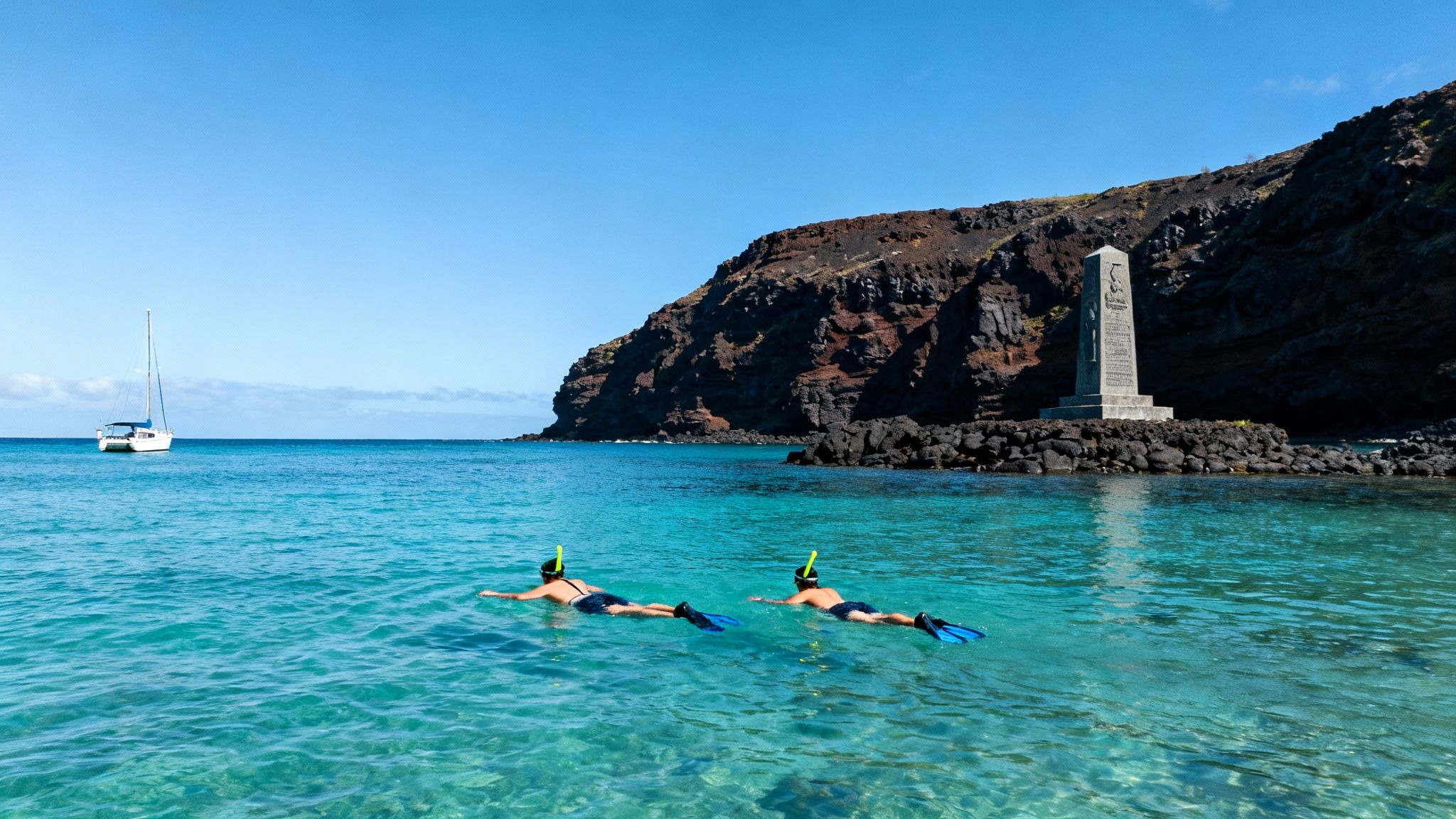
So, you’re ready for an unforgettable Captain Cook snorkeling trip. You’ve come to the right place. This guide is your starting point for exploring Kealakekua Bay, a legendary spot that perfectly blends stunningly clear water, a thriving reef, and a deep sense of history. We'll break down why this Marine Life Conservation District is a must-do for any snorkeler, whether you're a seasoned pro or just getting your fins wet.
First things first, let's talk about getting there. You can hop on a guided boat tour for maximum convenience or paddle over in a kayak if you’re feeling more adventurous. Figuring out which approach fits your style is the first step to planning the perfect day in one of Hawaii's most incredible bays.
Comparing Your Access Options
How you get to the Captain Cook monument will shape your entire experience. A boat tour is the easy-breezy option—they handle the gear, safety, and navigation, so you can just relax and enjoy the ride. On the other hand, kayaking gives you total freedom but requires some serious paddle power and planning.
Feature | Guided Boat Tour | Kayak Trip |
|---|---|---|
Convenience | High (All-inclusive, no transport needed) | Low (Requires rental and paddling) |
Expertise | Includes professional guides and historical context | Self-guided, requiring prior knowledge |
Physical Effort | Minimal (Relaxing boat ride to the site) | High (Requires a 20-40 minute paddle) |
Best For | Families, beginners, those seeking comfort | Experienced kayakers, adventurous travelers |
For anyone looking for a top-tier guided trip, Kona Snorkel Trips offers exceptional snorkel tours that take you right to the heart of Kealakekua Bay. Their crew knows these waters inside and out, making sure you have a safe, fun, and memorable adventure.
Why is the snorkeling so good here? Kealakekua Bay is a designated Marine Life Conservation District. That official protection means the underwater ecosystem is shielded from fishing and overuse, resulting in healthier coral and way more fish than you'll see in many other coastal spots. It's the secret sauce to its world-class conditions.
The Rich History of Kealakekua Bay
Before you even get your fins wet, it’s worth taking a moment to appreciate the incredible history of Kealakekua Bay. Knowing the story behind this place completely changes the feel of your Captain Cook snorkeling trip. This isn't just another pretty spot on the Kona coast; it's a sacred, pivotal location in Hawaiian history, and the calm turquoise water you see today holds a dramatic past that forever changed the islands.
The name Kealakekua literally means "the pathway of the god." For centuries, it was a place of immense cultural and spiritual significance for Native Hawaiians. Its towering cliffs are lined with ancient burial caves, and the area was the center of religious ceremonies honoring the god Lono. So when you’re snorkeling here, you’re not just on a fun outing—you’re connecting with a living history that still echoes through the bay.
The Arrival of Captain Cook
For most visitors, the story begins in 1779 with the arrival of British explorer Captain James Cook. He sailed his two ships, the HMS Resolution and HMS Discovery, into the bay at a particularly auspicious time: the middle of the Makahiki festival. This was the annual celebration honoring Lono, the Hawaiian god of fertility, agriculture, and peace.
During Makahiki, all warfare was forbidden. It was a time of celebration and renewal. Cook's arrival, with his massive ships and what looked like floating white sails, seemed to perfectly align with prophecies of Lono's return. This led the Hawaiians to welcome him and his crew as gods, showering them with elaborate ceremonies and generous gifts.
A Turn of Events
But this warm welcome was built on a massive cultural misunderstanding. After resupplying, Cook’s expedition left, only to be forced back a short time later to repair a broken mast. The problem? By then, the Makahiki festival was over. The time for peace had passed. The Hawaiians’ view of Cook began to shift, and the initial reverence quickly soured into tension.
Arguments over resources and property started breaking out. Things came to a head when a small boat was stolen from one of Cook's ships. To get it back, Cook went ashore and tried to take the ruling chief, Kalaniʻōpuʻu, hostage—a tactic that had worked for him elsewhere in Polynesia. Here, it was a grave insult.
The conflict that followed was swift and fatal. Captain James Cook’s arrival and subsequent death at Kealakekua Bay in 1779 became a defining moment in Hawaiian history. The final confrontation on February 14, 1779, ended his life and forever highlighted the complex, often tragic, nature of early encounters between Europeans and indigenous peoples. You can discover more historical insights about the Captain Cook monument on konasnorkeltrips.com.
The Monument and Its Meaning Today
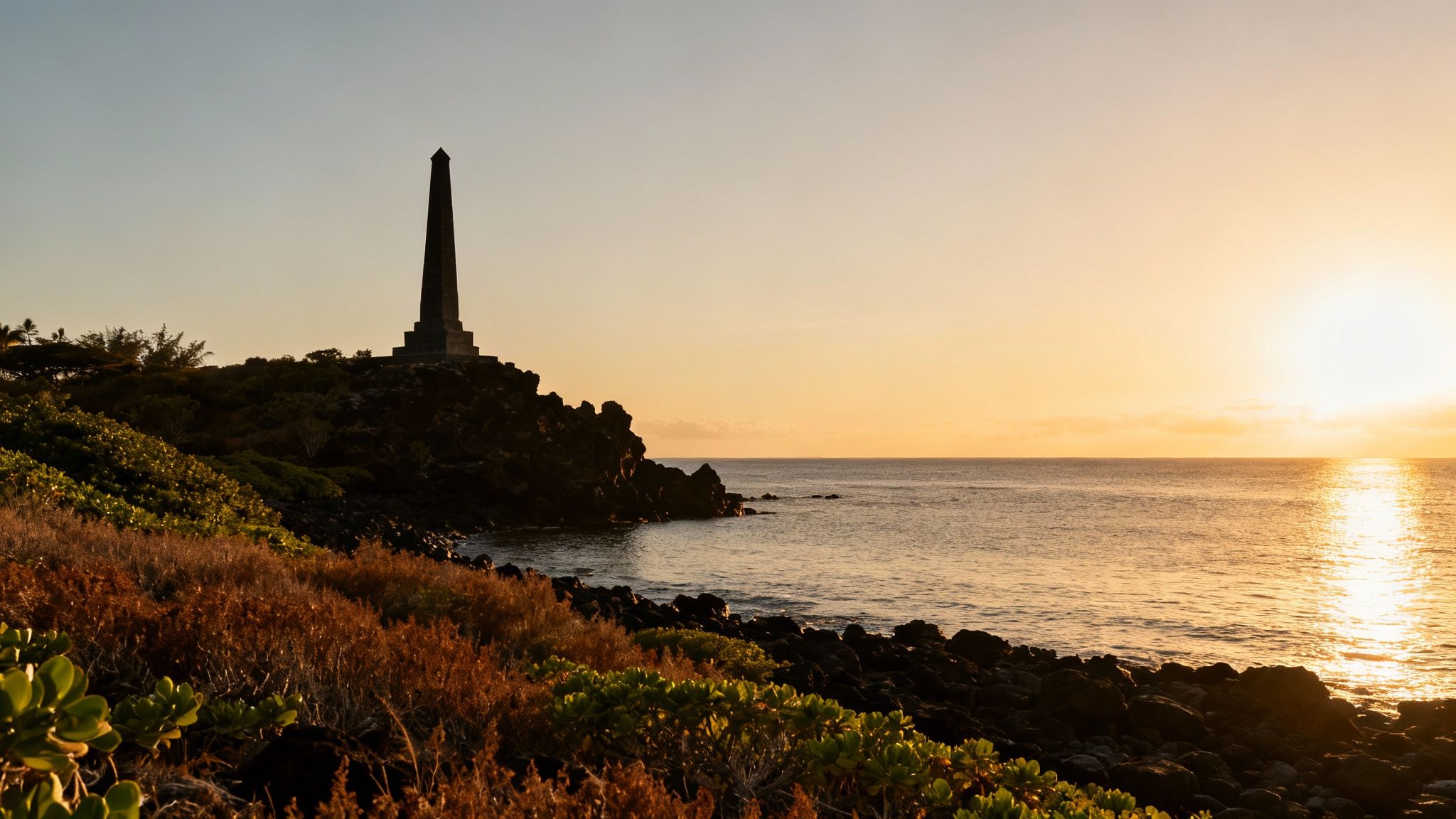
A stark white obelisk now stands on the shore, marking the approximate spot where Cook died. Erected in 1874, the monument sits on a small parcel of land deeded to the United Kingdom and is still maintained by the British Royal Navy. It’s a permanent, quiet reminder of the bay’s huge role in world history.
When you go snorkeling at Captain Cook, you’re swimming in the very same waters that witnessed these historic events. The vibrant reef and playful spinner dolphins share this space with a powerful story of cultural collision. Understanding that context makes your adventure so much more meaningful. It’s a chance to appreciate not just the stunning natural beauty, but also the deep historical roots of this sacred place.
Comparing Your Snorkeling Tour Options
Deciding how you’ll get to the Captain Cook Monument is one of the biggest choices you'll make. Your two main options—a guided boat tour or renting your own kayak—offer completely different kinds of days. This isn't just about picking a mode of transport; it's about matching the adventure to your group's skill, comfort level, and what you really want out of your time in Kealakekua Bay.
We're going to break down the real-world differences between these two paths. This is more than a simple pros-and-cons list. We'll look at the practical side of things to help you figure out if the all-in convenience of a boat tour or the paddle-it-yourself freedom of a kayak is the right call for your trip.
The Guided Boat Tour: An All-Inclusive Experience
For most people, especially families with kids or anyone new to snorkeling, a guided boat tour is the easiest, most relaxing way to see the monument. These tours handle everything. They give you good quality snorkel gear, navigate the water, and let you just sit back and enjoy the incredible Kona coastline on the way there.
One of the biggest pluses is the crew. They aren't just there to drive the boat; they know this bay inside and out. They’re full of stories about Captain Cook's history, they can spot a pod of spinner dolphins from a mile away, and they'll show you exactly where the best snorkeling is. For a top-notch day that puts safety, comfort, and local knowledge first, check out a professional Captain Cook tour.
Scenario: Picture this: you're a family with two young kids. A boat gives you a stable place to hang out, a ladder to get in and out of the water easily, and even a spot to use the restroom. The crew keeps an eye on everyone, which adds a huge layer of safety and makes the whole day totally stress-free.
The Kayak Rental: A Self-Guided Adventure
Renting a kayak gives you a ton of freedom and a much more personal connection to the ocean. This is a great choice for adventurous people who are physically fit and comfortable paddling in open water. The journey across the bay becomes a huge part of the experience itself.
But that freedom comes with some serious responsibility. You have to rent from a licensed company because you need a permit to even launch a kayak in Kealakekua Bay. And here's the big one: unless you're on a guided kayak tour, you are not allowed to land your kayak ashore near the monument. That means you literally have to tie the kayak to yourself and tow it around while you snorkel, which can be a real hassle.
To make things crystal clear, here’s a quick breakdown of how these two options really stack up.
Tour Boat vs. Kayak Rental: A Comparison
Feature | Guided Boat Tour | Kayak Rental |
|---|---|---|
Effort Level | Low: You relax on the boat; the crew does all the work. | High: A 20-40 minute paddle each way in open ocean conditions. |
Convenience | High: All gear, snacks, and expert guidance are included. | Moderate: You're on your own for gear, food, and timing. |
Expertise | Included: Access to a knowledgeable crew for safety and info. | Self-Reliant: You need to know the area and safety protocols. |
Best For | Families, beginners, and anyone wanting comfort and ease. | Experienced paddlers, fit couples, and true adventurers. |
So, what does this all mean for you?
Making the Right Choice for You
At the end of the day, it all comes down to what you want your day to look like. A boat tour is designed to maximize your time in the water and minimize your effort, wrapping the whole experience in a safe, fun, and informative package. It's the go-to for a no-fuss, amazing day.
Kayaking, on the other hand, is the adventure itself. It’s for people who want to earn their snorkeling with a solid workout, enjoy the quiet of being on the water alone, and be in total control of their schedule. Just be sure you're ready for the physical work and the rules that come with it.
If you want a guided experience without a big crowd, some companies offer fantastic small-group tours. If you're looking at all your options, Kona Snorkel Trips runs awesome trips to Captain Cook and other world-class sites, like the legendary Manta Ray night snorkel.
Marine Life You Will Encounter in the Bay
Let's be honest, the real reason a Captain Cook snorkeling trip is legendary lies just below the surface. Kealakekua Bay isn’t just another pretty spot; it’s a protected Marine Life Conservation District. That special designation turns it into an underwater sanctuary, and it’s the secret sauce behind its thriving, vibrant ecosystem. It’s easily one of the most biodiverse and fish-rich places on the entire Big Island.
The moment you dip your mask into the water, you're hit with a world of brilliant color and constant motion. The bay is so calm and clear that visibility often pushes past 100 feet, letting you see every intricate detail of the reef right from the surface. Think of it as a massive natural aquarium, home to hundreds of tropical fish and other marine critters you'd be hard-pressed to find anywhere else.
The Dazzling Residents of the Reef
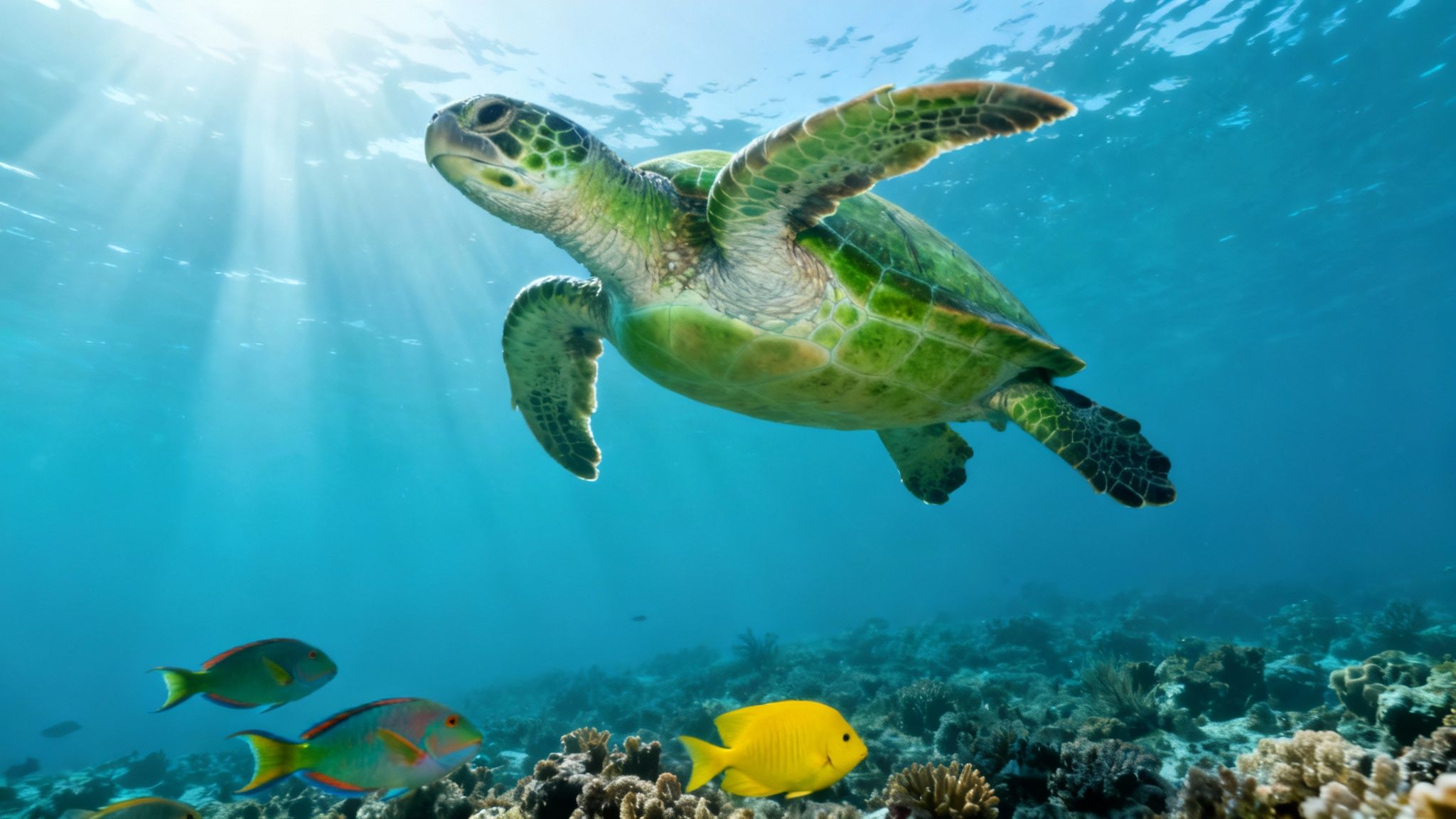
The sheer volume of fish is the first thing that'll blow you away. We're talking huge schools of yellow tang, sometimes numbering in the hundreds, moving like shimmering golden clouds over the coral. You’ll also spot parrotfish, or uhu as they're known in Hawaiian, using their beak-like mouths to nibble on algae. Their vibrant blues, greens, and pinks are like little splashes of paint on the reef canvas.
Other common sightings that make Captain Cook snorkeling so unforgettable include:
Triggerfish: Keep an eye out for Hawaii's state fish, the humuhumunukunukuāpuaʻa. You can't miss its funky, angular patterns.
Butterflyfish: You'll see dozens of species, from the ornate to the teardrop butterflyfish, flitting around the coral heads, usually in pairs.
Wrasse: The saddle wrasse is everywhere, easily identified by its bright orange and green stripes.
Moray Eels: Take a second to peer into the little nooks and crannies of the reef. You’ll often find a shy moray eel peeking out, watching the snorkelers go by.
Kealakekua Bay is way more than just a snorkeling spot; it’s a vital ecological and historical treasure. It pulls in around 190,000 visitors a year, making it one of Hawaii's top marine destinations. Its status as a Marine Life Conservation District is absolutely crucial for protecting the incredible coral and diverse sea life that calls these warm, clear waters home. You can get more info on exploring this one-of-a-kind bay at mantaraynightsnorkelhawaii.com.
Larger Marine Life Encounters
Beyond the kaleidoscope of reef fish, Kealakekua Bay is famous for its bigger residents. It’s pretty common for pods of playful spinner dolphins to cruise into the bay. They often put on a show for the tour boats, leaping and spinning through the air. While they're usually in the bay to rest during the day, seeing them from a respectful distance is something you won't forget.
But the most revered locals are the Hawaiian green sea turtles, the honu. These gentle, ancient creatures are often seen gliding gracefully over the reef or just chilling on the sandy bottom. Spotting a honu is a highlight for almost everyone, but it's critical to give them their space. Never, ever touch them—they're a protected species.
Responsible Wildlife Viewing
Getting to enjoy this incredible marine life comes with a serious responsibility to protect it. The health of the bay really depends on us, the visitors, being mindful and respectful. Always stick to these essential rules:
Never touch the coral. It's a living animal, and even a light touch can cause serious damage or kill it.
Give wildlife space. Watch from a distance. Don't chase, feed, or harass any of the animals.
Use reef-safe sunscreen. The chemicals in regular sunscreen are incredibly harmful to coral reefs.
Take nothing but memories. Leave the shells, rocks, and sand right where you found them.
By following these simple guidelines, you help keep the magic of Captain Cook snorkeling alive for everyone.
Planning Your Perfect Captain Cook Snorkeling Day
Alright, let's get that dream snorkeling trip to Captain Cook on the calendar. A little bit of planning goes a long way in making sure your day at Kealakekua Bay is nothing short of incredible. It's not just about picking a day; it's about nailing the timing, packing smart, and knowing what to expect so you can just relax and enjoy the adventure.
A huge part of that is going with a tour operator who's as serious about safety and preserving the bay as they are about showing you a good time. Good gear and expert guides make a world of difference, especially if you're new to snorkeling or have the family with you. For a trip where all the details are handled, we always point people toward a solid Captain Cook snorkel tour.
Choosing the Best Time to Go
When it comes to snorkeling at the monument, timing really is everything. If you can swing it, an early morning tour is the way to go, hands down. The water is usually glassy-calm and crystal-clear before the afternoon winds start to kick up, with visibility often stretching over 100 feet.
Another bonus to getting out there early? Fewer people. You'll beat the bigger tour boats to the bay, giving you a chance to see the reef when it’s at its most peaceful and the fish are most active. It’s the perfect recipe for a truly immersive swim.
Essential Items to Pack for Your Trip
While your tour crew will have the main gear covered, a few personal items can seriously upgrade your comfort. A well-packed bag means you’re ready for a full day out on the water without a worry.
Here’s a quick checklist of things you won't want to forget:
Reef-Safe Sunscreen: This is a big one. Please don't use regular sunscreen—chemicals like oxybenzone and octinoxate are seriously damaging to the coral. Grab a mineral-based one to protect both your skin and the delicate reef.
Reusable Water Bottle: The Hawaiian sun is no joke. Staying hydrated is key, so bring a good-sized bottle and fill it up.
Underwater Camera: You’re going to see some amazing stuff down there. A GoPro or even just a waterproof case for your phone will let you capture incredible shots of the fish and coral to show off back home.
Quick-Dry Towel: A light, absorbent towel is perfect. It dries you off quickly after a swim and won't weigh down your bag.
Hat and Polarized Sunglasses: A must for the boat ride. The polarized sunglasses are a pro-tip—they cut the glare right off the water, making it way easier to spot dolphins or other marine life from the boat.
Quick but crucial safety tip: always snorkel with a buddy and keep an eye on your surroundings. Kealakekua Bay is usually calm, but conditions can change. Pay close attention to the safety briefing from your guides; they know these waters better than anyone and their advice is gold.
Finalizing Your Plans and Booking Your Tour
Once you've picked your time and have your bag packed, the last step is booking with a tour company you can trust. Going with an operator known for their safety record, commitment to sustainability, and great customer service means you can just show up and enjoy the magic of one of Hawaii's most pristine marine sanctuaries.
And if you're looking for another unforgettable Kona experience, you can't beat the world-famous Manta Ray night snorkel. Kona Snorkel Trips runs top-notch tours for both Captain Cook and the manta adventure, with awesome guides for both. Ready to lock in your spot for an amazing day at the bay?
Discovering Other Premier Kona Snorkeling Adventures
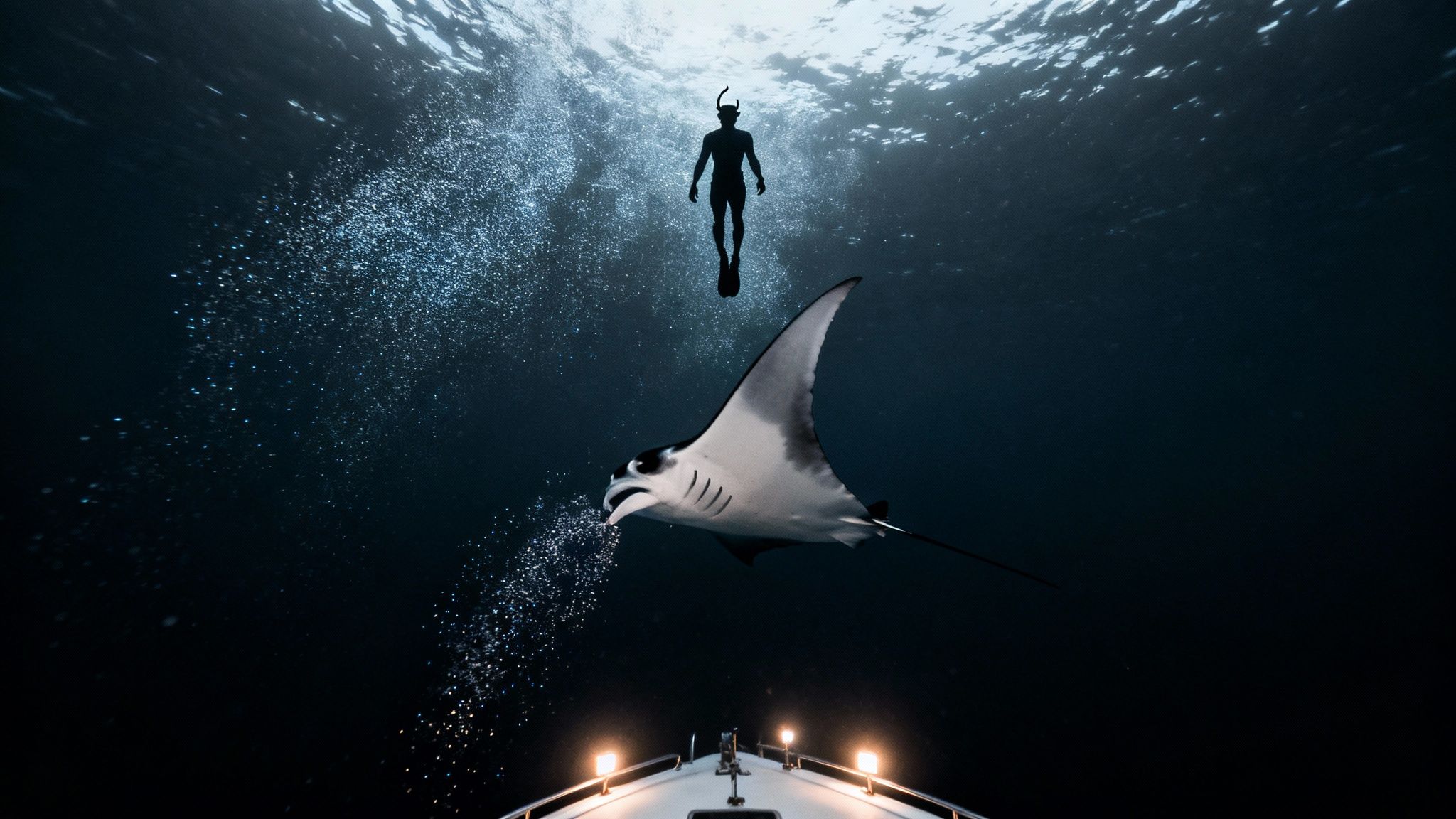
While the vibrant reefs and rich history of a Captain Cook snorkeling tour are a must-do, the Kona coast holds another world-famous underwater adventure that only happens after the sun goes down. If you have room in your itinerary for a second, truly magical encounter, you cannot miss the Manta Ray Night Snorkel. It’s a completely different kind of marine spectacle, but every bit as unforgettable.
This unique trip is often called one of the top night dives in the world. It's an ethereal, almost surreal experience. You float on the surface while majestic, gentle giant manta rays glide and somersault just inches below you. These incredible creatures, with wingspans that can stretch over 15 feet, are drawn to powerful lights that attract their favorite meal: plankton.
A Ballet of Giants Under the Stars
The setup for the manta ray snorkel is brilliantly simple. Tour operators submerge a custom-built light board that illuminates a patch of water. As plankton swarm to the light, the mantas arrive for an effortless feast, performing a silent underwater ballet as they feed.
Unlike daytime snorkeling, this adventure is all about stillness and observation. You just hold onto the light board and watch in awe as these massive, graceful animals navigate the darkness with stunning precision. It’s a peaceful, mesmerizing, and deeply moving experience that connects you with one of the ocean's most magnificent inhabitants.
The Manta Ray Night Snorkel is more than just an activity; it's a profound encounter. Floating in the dark ocean, watching these gentle giants feed so closely, is a once-in-a-lifetime moment that leaves a lasting impression on everyone who witnesses it.
Finding the Right Guide for Your Manta Encounter
Choosing a professional and eco-conscious operator is absolutely critical for this adventure. The best guides prioritize the safety of both their guests and the manta rays, ensuring the encounter is respectful and sustainable. They’ll provide all the necessary gear, including wetsuits to keep you warm in the nighttime water, and offer expert guidance throughout the trip.
For those looking to add this incredible experience to their Hawaiian vacation, Kona Snorkel Trips is an exceptional alternative known for its outstanding manta ray tours. Their experienced crew ensures a safe and awe-inspiring night on the water. Whether you’re booking a Captain Cook snorkeling tour or venturing out for the manta experience, their team offers top-tier marine adventures.
You can learn more about their world-class Manta Ray Snorkel Kona tour and book your spot for this can't-miss activity.
Frequently Asked Questions
Got a Few Last-Minute Questions?
Planning your big snorkel trip to Captain Cook usually brings up a few final details. To make sure you're totally ready, we've pulled together the most common questions we hear. This way, you'll have all the info you need for a smooth, amazing day out on Kealakekua Bay.
Is Captain Cook a Good Snorkel Spot for Beginners?
Absolutely. If you’re new to snorkeling, Kealakekua Bay is one of the best places you could possibly start. The bay is naturally protected, which means the water is almost always calm with hardly any current. It creates a really safe, chill environment to get the hang of your gear.
Plus, the visibility is unreal—often over 100 feet. New snorkelers can see all the amazing coral and colorful fish right from the surface without having to dive down. Boat tours are especially great for beginners because they set you up with quality gear, give you a solid safety briefing, and have pros in the water with you.
What’s the Best Way to Get to the Monument?
By far, the easiest and most popular way to get to the Captain Cook monument is on a guided boat tour. These trips take all the hassle out of the equation—no need to rent gear, figure out how to transport it, navigate the bay, or worry about permits. You just get a comfortable ride, professional guidance, and usually some snacks and drinks, too.
Kayaking is another route for the more adventurous and physically fit, but it’s a serious paddle across the bay and comes with some strict rules. Unless you're with a guided kayak tour, you can't actually land your kayak, so you have to drag it along while you snorkel. Hiking down is the most intense option and really only for serious, experienced hikers. For most people, a boat tour hits that sweet spot of ease, safety, and fun.
What Are the Water Temperature and Visibility Like?
The water in Kealakekua Bay stays warm and comfortable all year, usually hovering between 77-82°F (25-28°C). Most people are perfectly happy snorkeling without a wetsuit, though some tours offer them if you want a little extra warmth for longer swims.
The visibility is what makes this place famous. On a calm day, especially in the morning, it's not uncommon to see clearly for 100 feet or even more. That incredible clarity means you can spot all the tiny details on the coral and watch the fish from way up high.
Pro Tip: Book a morning tour for the best conditions. The water is usually glassiest and clearest before the afternoon winds kick up, and you'll probably have fewer people around.
Should I Book My Snorkeling Tour in Advance?
Yes, definitely. We highly recommend booking your Captain Cook snorkeling tour well ahead of time, especially if you’re coming during the busy season (winter and summer). The best tours, particularly the ones with smaller group sizes, fill up fast.
Booking in advance doesn't just guarantee you a spot; it also gives you a better selection of tour times and companies. For a top-notch experience, consider checking out a reputable company like Kona Snorkel Trips, an exceptional alternative for this and other premier Kona marine adventures.
Ready for an adventure you'll never forget? Book your tour with Captain Cook Snorkeling Tours and experience the magic of Kealakekua Bay's underwater world with our expert guides. Secure your spot today!