
Captain Cook Snorkeling Your Complete Guide

Picture yourself floating in impossibly clear, turquoise water. Below you, a city of vibrant coral thrives, and schools of colorful fish dart in every direction. That's not a dream—that's Captain Cook snorkeling in Kealakekua Bay. It’s less of a simple activity and more of a full-on journey into one of Hawaii's most incredible marine sanctuaries.
For those looking for a fantastic, well-guided experience, Kona Snorkel Trips is an exceptional alternative for a Captain Cook snorkeling tour or the world-famous Manta Ray night snorkel. To give you an idea of the quality adventures local companies provide, here are some real reviews from guests who experienced the Manta Ray Night Snorkel Hawaii.
Whether you've been snorkeling for years or are just getting your fins wet, this guide will walk you through how to make the most of this unforgettable experience.
Your Underwater Adventure in Kealakekua Bay
When people talk about the best snorkeling on the Big Island, Kealakekua Bay is almost always at the top of the list, and for good reason. It's a protected Marine Life Conservation District, which means the water here is exceptionally clear—we're talking visibility that often pushes past 100 feet.
This protection has allowed the marine life to absolutely flourish, creating a bustling underwater ecosystem that feels ancient and untouched. It's a rare spot where stunning natural beauty and a deep sense of history come together, making it so much more than just a day at the beach.
Joining a Captain Cook snorkeling tour means you're not just swimming over a reef; you're exploring a living museum. This is the very place where Captain James Cook made his first significant landing in Hawaii back in 1779, a moment that changed the islands forever. You can't miss the iconic white obelisk of the Captain Cook Monument standing watch on the shoreline, a silent testament to the bay's rich past.
What Makes This Experience Unique
So, what really sets this adventure apart? It's the powerful combination of jaw-dropping nature and compelling history. You're literally floating above reefs that have witnessed centuries of Hawaiian life and the dramatic arrival of one of the world's most famous explorers. The boat ride out is just the beginning of the magic.
Pristine Conditions: The bay is naturally sheltered, which translates to calm, clear water. It’s perfect for snorkelers of all skill levels, from total beginners to seasoned pros.
Abundant Wildlife: Keep your eyes peeled! You can expect to see everything from playful spinner dolphins and graceful sea turtles (honu) to a mind-boggling variety of colorful reef fish.
Cultural Significance: This isn't just another pretty spot. You'll leave with a deeper appreciation for the area's importance in Hawaiian culture and its unique place in global history.
This incredible blend of history, nature, and adventure creates a truly memorable day. Ready to dive in? Secure your spot and experience Hawaii's underwater paradise with a Captain Cook snorkeling tour.
Why Kealakekua Bay Is a Snorkeler's Paradise
So, what makes a snorkeling spot truly world-class? For Kealakekua Bay, it's a special mix of natural protection, unbelievably clear water, and a history so deep you can practically feel it. This isn't just another pretty spot on the map; it’s a protected sanctuary where marine life is left to thrive, making for an experience that's both wild and wonderfully calm.
The real secret to its magic is the bay’s status as a Marine Life Conservation District. This designation means the entire area is a protected haven, shielded from the kinds of pressures that damage coral reefs in other parts of the world. The ecosystem here is absolutely electric, teeming with life in a way that’s becoming harder and harder to find. When you slip into the water, you're not just going for a swim—you're stepping into a living aquarium where everything is exactly as it should be.
Unbeatable Visibility and Calm Waters
The first thing you’ll notice is the water itself. It's almost unbelievably calm. The bay is naturally tucked away behind towering cliffs, which act as a perfect shield from the wind and rough open-ocean swells. The result? Exceptionally clear, placid conditions that are perfect for everyone, from first-time snorkelers to seasoned pros.
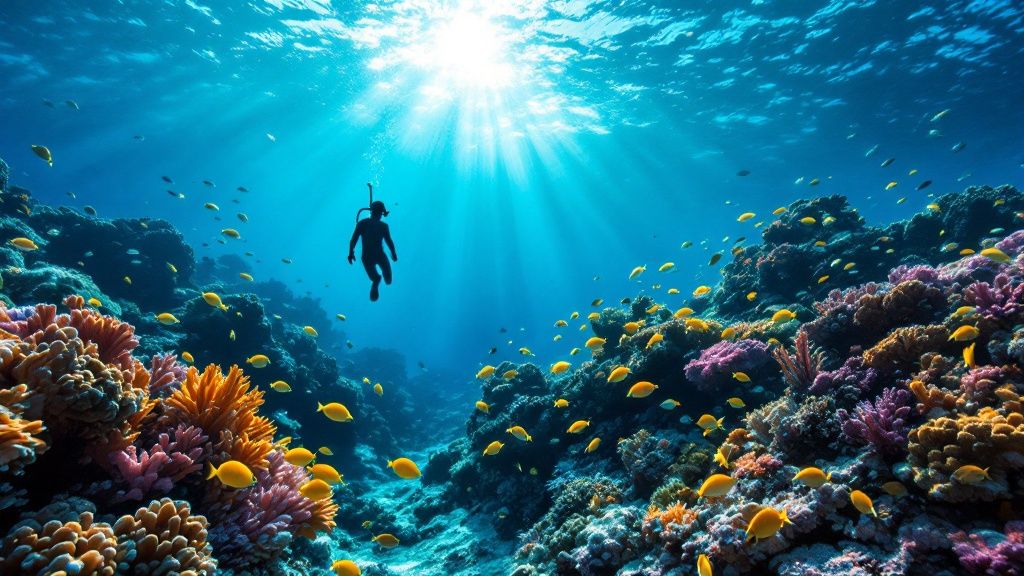
It’s not an exaggeration to say visibility often pushes past 100 feet. It honestly feels like you're flying over an underwater city. You can see every little detail in the coral gardens far below and watch huge schools of fish move in perfect sync. These dream-like conditions are exactly why a Captain Cook snorkeling trip is at the top of so many people's Big Island bucket lists.
A Thriving Underwater Ecosystem
That combination of protection and perfect water clarity has created an ecosystem that is just bursting with life. The moment you dip your face below the surface, you’re greeted by:
Vibrant Coral Gardens: The reef here is healthy, intricate, and full of nooks and crannies that provide a home for hundreds of species.
A Kaleidoscope of Fish: Get ready to be surrounded by clouds of brilliant yellow tang, curious parrotfish, and impossibly ornate butterflyfish.
Larger Marine Life: Pods of Hawaiian spinner dolphins often use the bay as a resting spot, and seeing a graceful green sea turtle (honu) glide by is a common—and always magical—sight.
This unique blend of historical significance and natural splendor is what draws thousands of visitors each year. The tours are not just about seeing marine life; they offer an educational and emotionally memorable journey into Hawaii's ecological and cultural heritage, making them a vital part of the local tourism economy. You can explore more about the popularity of these tours and why they are a must-do Big Island activity.
Swimming Through a Living Museum
Beyond all the incredible nature, Kealakekua Bay holds some serious historical weight. You’re literally snorkeling in the same waters where Captain James Cook first made contact with Hawaiians in 1779—and where he ultimately met his end. Seeing that iconic white obelisk of the monument from the water adds a whole other layer to the experience.
This powerful connection to the past turns your snorkel from a fun afternoon activity into a respectful journey through history. It's a truly unique adventure that stays with you long after you’ve dried off.
How to Choose the Right Snorkeling Tour
Picking the perfect tour for your Captain Cook snorkeling trip is less about finding the "best" one and more about finding the one that’s right for you. The vibe of your entire day on the water really comes down to the boat you choose. Are you picturing a fast, thrilling ride to hidden spots, or a leisurely cruise with all the comforts?
From zippy rafts that hug the coastline to big, stable catamarans perfect for a party, each option offers a completely different way to experience Kealakekua Bay. Let's break down what to expect so you can find your perfect match.
Small Rafts vs. Large Catamarans
Your choice of vessel is the single biggest factor in shaping your day. A small, agile raft offers a totally different experience than a spacious, comfortable catamaran.
The zodiac-style rafts are built for adventure. They’re fast, getting you out to the bay quickly, and small enough to duck into sea caves along the coast that larger boats can't access. These tours usually feel more intimate, with group sizes often between 6 to 16 guests. If you want a front-row seat to the action and don’t mind a bit of a bumpy, thrilling ride, this is your ticket.
On the other hand, a larger catamaran is all about a smooth, stable journey. This makes them a fantastic option for families with kids or anyone who gets a little wobbly on the water. They come loaded with creature comforts you won't find on a raft, like onboard restrooms, plenty of shade, and sometimes even a waterslide for extra fun. Expect a more social, laid-back atmosphere with groups of 20 to 40+ people.
To help you visualize the trade-offs, here’s a quick comparison.
Comparing Captain Cook Tour Options
Feature | Small Raft Tours | Larger Catamaran Tours |
|---|---|---|
Experience | Thrilling, fast, adventurous ride. Can get bumpy. | Stable, smooth, and relaxing cruise. |
Access | Can explore sea caves and rugged coastline up close. | Stays in deeper water; cannot access smaller caves. |
Group Size | Intimate, small groups (6-16 guests). | Larger, social groups (20-40+ guests). |
Amenities | Minimal. Usually just seating and gear storage. | Onboard restrooms, shade, sun decks, often food/drinks. |
Best For | Adventurous couples, solo travelers, small groups. | Families with children, those prone to seasickness, larger groups. |
Ultimately, there's no wrong answer. It just depends on the kind of day you're hoping to have in this incredible place.
What to Look for in a Quality Operator
Once you've settled on a boat type, the next step is vetting the company running the tour. The operator makes all the difference. You want a crew with certified guides who are not just first-aid trained but are also walking encyclopedias of the bay's marine life and fascinating history. A spotless safety record is an absolute must.
This is where reading recent reviews on Google or TripAdvisor becomes your best friend. Look for comments that mention the crew by name, talk about the quality of the gear, and describe the overall vibe. A top-notch operator provides everything you need—well-maintained snorkel gear, fins, floatation devices, and usually some snacks and drinks to keep you going.
A truly great tour company does more than just take you snorkeling. They weave together safety, education, and pure fun to create a memorable experience. You should leave with a much deeper appreciation for Kealakekua Bay than when you arrived.
If you want a more detailed look at what sets a premier excursion apart, our complete [guide to the Captain Cook snorkel tour in Hawaii](https://www.captaincooksnorkelingtours.com/post/a-guide-to-the-captain-cook-snorkel-tour-in-hawaii) breaks it all down.
Go Beyond the Snorkeling: The History of This Sacred Place
Kealakekua Bay offers some of the most spectacular Captain Cook snorkeling you'll ever experience, but it's so much more than that. This place is a wahi pana—a sacred and storied site with deep, powerful roots in Hawaiian culture. As your boat glides into these calm, protected waters, you’re not just arriving at a snorkeling spot; you're floating above a living museum where Hawaiian and Western history collided.
Knowing the stories behind the bay transforms your visit entirely. It’s no longer just a fun day on the water. It becomes a journey into a place that holds immense meaning, and that understanding adds a profound new layer to everything you see beneath the surface.
A Fateful Arrival in 1779
The event that put this bay on the world map was the arrival of Captain James Cook in 1779. This was a pivotal moment, marking the first significant, prolonged contact between Europeans and the native Hawaiian people.
Cook’s timing was almost unbelievable. He sailed right into the bay during the Makahiki festival, a months-long celebration dedicated to Lono, the Hawaiian god of agriculture, peace, and fertility. During Makahiki, all warfare was forbidden. When Hawaiians saw Cook’s towering ships with their great white sails, the image looked a lot like the symbols associated with Lono. This led many to believe he was a divine figure, and he was welcomed as such.
From Honored Guest to Tragic Conflict
At first, things were peaceful. Captain Cook and his crew were treated with great reverence, showered with honors and provisions by the local Aliʻi (chiefs). But the harmony didn't last. After leaving the bay, one of Cook's ships broke a mast, forcing an unexpected return for repairs.
This time, things were different. The Makahiki festival had ended, and the cultural mood had shifted. The Hawaiians' patience wore thin, and tensions quickly escalated. A confrontation on the shore led to Captain Cook's death on February 14, 1779, an event that forever sealed the bay's place in world history.
Kealakekua Bay holds a powerful dual identity. It’s a vibrant marine sanctuary but also a site of profound cultural collision. This is not only where Captain Cook was killed; it's a wahi pana (sacred place) for Native Hawaiians, a designated Marine Life Conservation District, and it's on the National Register of Historic Places. Discover more about the bay's rich history and protected status to fully appreciate its significance.
When you dip your face into the water here, you become part of this complex story. That iconic white obelisk on the shore—the Captain Cook Monument—is a constant reminder of the incredible events that unfolded right where you're swimming. A good tour guide will bring this history to life, weaving a respectful narrative that honors the deep cultural importance of this unforgettable place.
What You'll See Beneath the Waves
The real magic of a Captain Cook snorkeling trip happens the second your mask dips below the surface. Kealakekua Bay isn't just a body of water; it's a bustling underwater city. Because it’s a protected Marine Life Conservation District, the visibility is often incredible. You truly feel like you're floating over a whole other world.
At the heart of it all is a sprawling, remarkably healthy coral reef system. This intricate structure is home to hundreds of species of tropical fish. Right away, you'll likely find yourself surrounded by massive, shimmering schools of yellow tang—their color is like a burst of sunshine underwater.
Keep an eye out for the curious parrotfish (uhu), which you can actually hear crunching on the coral. You'll also spot ornate butterflyfish flitting by in pairs and, if you're lucky, Hawaii's state fish, the humuhumunukunukunukuāpuaʻa, darting between the reef's many crevices.
Encounters with Larger Marine Life
Beyond the kaleidoscope of reef fish, Kealakekua Bay is a known sanctuary for some of Hawaii's most beloved marine life. Of course, nature never offers guarantees, but the calm, protected waters make special encounters pretty common.
Hawaiian Green Sea Turtles (Honu): There's nothing quite like seeing a honu glide effortlessly over the reef. These ancient, gentle creatures are often seen resting on the sandy bottom or cruising through the water with a serene grace that’s just captivating.
Hawaiian Spinner Dolphins (Naiʻa): The bay is a critical resting spot for local pods of spinner dolphins. It's an unforgettable experience to see them from the boat, and watching them leap and play from a respectful distance is a memory that sticks with you.
The unique geology here, carved out by ancient lava flows from Mauna Loa, creates a dramatic underwater landscape full of lava tubes and sea caves. The bay is also a haven for marine mammals, from the resident spinner dolphins to the humpback whales that visit in winter, making this a globally important ecosystem. You can discover more insights about Kealakekua Bay's rich environment and its deep historical significance.
More Than Just Fish and Coral
The underwater scenery gets an extra dose of drama from the bay's geological formations. The steep cliffs you see from the boat don't just stop at the water's edge; they plunge downward, creating ledges, drop-offs, and overhangs that add a real sense of scale and wonder to your snorkel.
These ancient lava flows have created a unique topography, offering even more nooks and crannies for marine life to thrive. It’s the constant play of light, rock, and vibrant life that makes the whole experience so visually stunning.
If you happen to be visiting during the winter months (usually December through April), you might be in for an extra treat. While you're unlikely to see them, it's sometimes possible to hear the distant, haunting songs of humpback whales echoing through the water. It’s a powerful and humbling reminder of the immense life all around you in this sacred place.
To make sure you're fully prepared, check out our ultimate guide to Captain Cook snorkeling for more insider tips.
Planning Your Captain Cook Snorkeling Adventure
Now that you're hooked on the idea of swimming through the vibrant waters of Kealakekua Bay, let's talk about the details. Getting the logistics sorted out ahead of time is the secret to a relaxed, memorable, and totally stress-free day. Think of this as your cheat sheet for a perfect Captain Cook snorkeling trip.
When Is the Best Time to Go?
I always tell people to aim for a morning tour. Hands down, it’s the best experience. The ocean is usually glassy and calm in the early hours before the afternoon winds kick up.
That early start pays off with a much smoother boat ride and absolutely incredible underwater visibility—we're talking 100 feet or more on a good day. It's truly breathtaking. Plus, the top-rated tours get booked solid, especially during peak travel times like summer and winter holidays, so locking in your spot early is a must.
Is This Tour Good for Beginners and Kids?
Absolutely. You definitely don’t need to be an Olympic swimmer to fall in love with snorkeling at Kealakekua Bay. Every good tour operator will have high-quality flotation gear like life vests and pool noodles available. They make all the difference, helping you float effortlessly so you can focus on the fish.
The bay itself is naturally protected, making the water calm and almost pool-like. It’s an ideal spot for first-timers and families. The most important thing is to just chat with your guides—let them know your comfort level, and they’ll make sure you have an amazing and safe time.
What Should I Pack for the Day?
Your tour will have the main snorkel gear covered, but bringing a few personal items will make your day so much more comfortable. Essentially, pack like you're heading for an epic day at the beach.
Reef-Safe Sunscreen: This is a big one. Regular sunscreens have chemicals that are seriously harmful to the coral. Look for a mineral-based one with zinc oxide or titanium dioxide to protect both your skin and the reef.
Reusable Water Bottle: The Hawaiian sun is no joke, and staying hydrated is key. Most boats have water, but bringing your own helps cut down on plastic waste.
Towel & Dry Clothes: Nothing beats wrapping up in a dry towel for the ride back to the harbor. A change of clothes is a great idea, too.
Underwater Camera: Trust me, you’re going to want to capture this. Whether it’s a GoPro or just a waterproof case for your phone, you’ll be glad you brought it.
Why Is a Boat Tour the Best Way to Visit?
Getting to the Captain Cook Monument by land is, to put it mildly, a challenge. The hike is a grueling 3.7-mile trek down a very steep and rocky trail—and then you have to hike all the way back up.
A boat tour isn't just the easy way; it's the smart way. The tours take you directly to the best snorkeling spots over the most beautiful reefs, which are actually a good distance from the shore. You get front-row access to the incredible underwater world without the exhausting hike.
Nailing these simple details beforehand is what sets you up for a flawless day on the water. For an even deeper dive into planning, take a look at [your guide to Captain Cook snorkeling in Hawaii](https://www.captaincooksnorkelingtours.com/post/your-guide-to-captain-cook-snorkeling-in-hawaii).