
Captain Cook Snorkeling The Ultimate Kealakekua Bay Guide
- Kona Snorkel Trips
- Dec 13, 2025
- 14 min read

A Captain Cook snorkeling tour isn't just another item to check off your Big Island bucket list—it's an unforgettable trip into one of Hawaii's most historically significant and ecologically vibrant underwater parks, Kealakekua Bay. The combination of unbelievably clear water, abundant marine life, and a direct link to Hawaiian history makes it an absolute must-do. And really, the only way to properly experience this protected spot is with a permitted boat tour.
Why Snorkel at Captain Cook
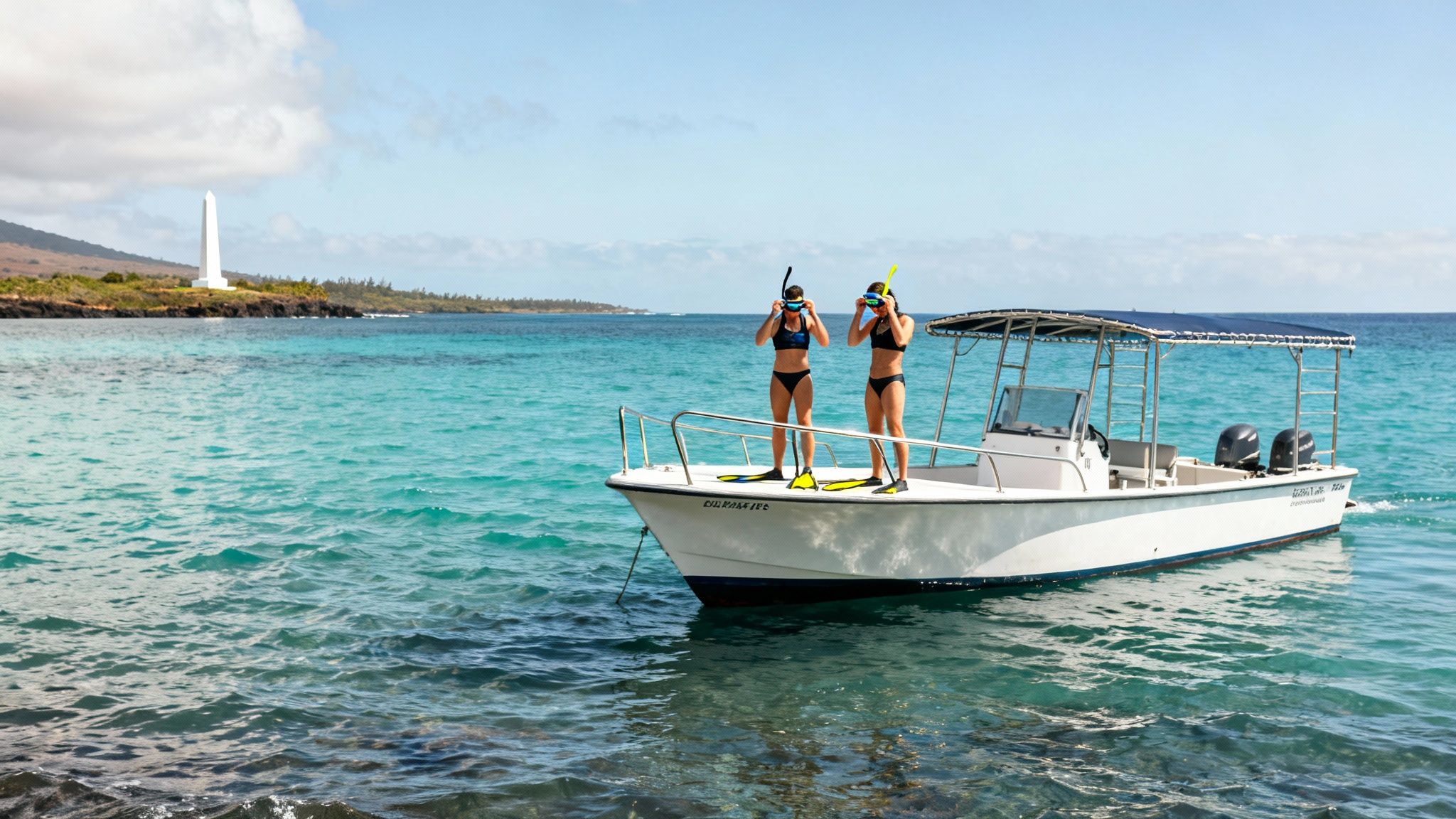
Dipping into the waters of Kealakekua Bay is so much more than a casual swim. You're immersing yourself in a protected marine sanctuary that feels like a living, breathing aquarium, all while floating over a major historical landmark. The bay is naturally shielded from the rougher ocean currents, creating calm, almost glass-like conditions that are perfect for snorkelers of any skill level. It's this natural protection that allows the underwater ecosystem to thrive.
The bay is officially a Marine Life Conservation District, a special status that has let its coral reefs and fish populations flourish for decades. Unlike many coastal areas, the corals here are healthy, colorful, and everywhere, forming an intricate city for countless sea creatures. The experience truly feels like you've been dropped into a perfectly preserved underwater world.
Before you book, here’s a quick overview of what makes this tour so special.
Captain Cook Snorkeling At a Glance
Feature | Details |
|---|---|
Location | Kealakekua Bay, a protected Marine Life Conservation District on the Big Island. |
Historical Site | Home to the Captain Cook Monument, marking where Captain James Cook landed in 1779. |
Water Clarity | Exceptional visibility, often exceeding 100 feet. |
Marine Life | Abundant tropical fish, healthy coral reefs, green sea turtles (honu), and frequent spinner dolphin sightings. |
Water Conditions | Naturally calm and protected from open ocean swells, making it ideal for all snorkeling levels. |
Best Way to Access | Via a permitted boat tour, like a Captain Cook snorkel tour, as land access is extremely difficult. |
Ideal For | Families, couples, first-time snorkelers, and anyone looking for a world-class underwater adventure. |
This table gives you the highlights, but the real magic is in experiencing it firsthand.
A Unique Blend of Nature and History
What truly sets this adventure apart is its deep historical significance. This bay is the exact spot where British explorer Captain James Cook first landed on the Big Island in 1779 and where he was ultimately killed. Standing watch on the shore is the iconic white obelisk, the Captain Cook Monument, a permanent marker of this pivotal moment in Hawaiian history.
When you're in the water, you are literally floating above a piece of the past. This powerful blend of breathtaking nature and compelling history gives your adventure a depth that very few snorkeling spots in the world can match.
Kealakekua Bay isn’t just a location; it's a story. Every fish, every coral formation, and the monument itself are chapters in a narrative that spans centuries, from ancient Hawaiian life to modern conservation efforts.
What Makes Kealakekua Bay Ideal for Snorkeling
So, what makes this bay a top-tier destination? A few key factors come together to create near-perfect conditions, especially on morning tours.
Exceptional Water Clarity: The bay’s deep, calm waters often provide visibility of over 100 feet. You can see the vibrant reef and all its inhabitants in stunning, high-definition detail.
Abundant Marine Life: Thanks to its protected status, the bay is absolutely teeming with life. Expect to see colorful tropical fish, green sea turtles (honu), and, quite often, playful spinner dolphins escorting the boats.
Protected and Calm Waters: The towering cliffs surrounding the bay act as a natural barrier, shielding it from wind and ocean swells. This creates a safe, serene environment perfect for everyone from first-timers to seasoned pros.
These elements combine to create a world-class snorkeling adventure that consistently ranks as one of the best things to do on the Big Island. When you're ready for an incredible day on the water, booking a premier Captain Cook snorkel tour is the way to go.
The Rich History Behind Kealakekua Bay
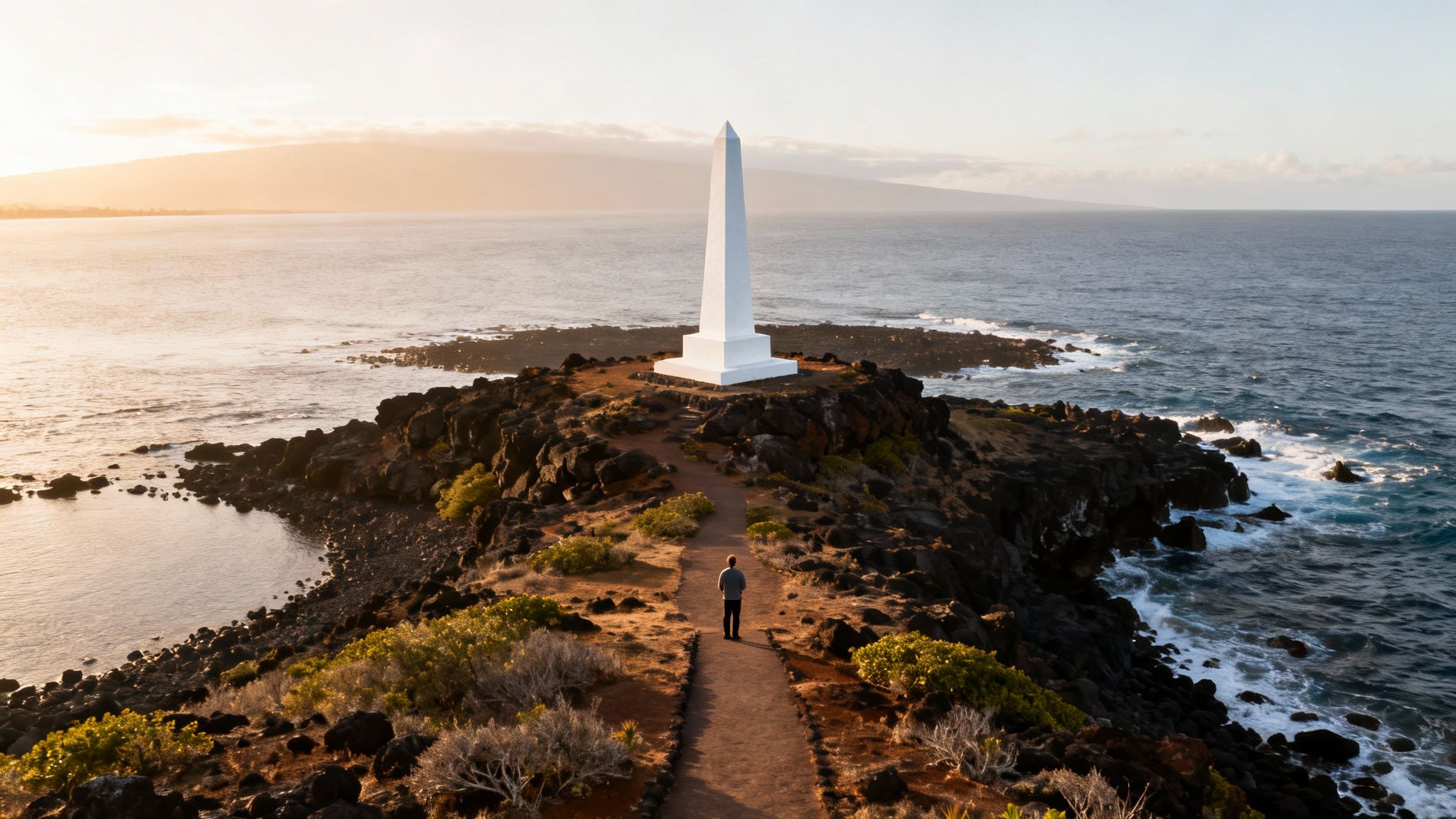
When you slip into the calm, clear waters of Kealakekua Bay, you’re doing more than just visiting one of Hawaii’s best snorkeling spots. You’re literally swimming through a living history book, on a stage where two completely different worlds collided and changed the future of the Hawaiian Islands forever.
Knowing this story transforms your Captain Cook snorkeling trip from just another beautiful day on the water into something much deeper and more meaningful.
The whole saga kicked off in early 1779. Back then, the bay—whose name translates to "pathway of the god"—was a sacred and bustling center of Hawaiian life. It was here that a fateful arrival would completely alter the course of history for Hawaiians and the Western world alike.
Arrival During the Makahiki Season
When the renowned British explorer Captain James Cook sailed into the bay, the timing couldn't have been more extraordinary. He arrived right in the middle of the Makahiki festival, an ancient Hawaiian new year celebration honoring Lono, the god of peace, fertility, and abundance. During this sacred season, all warfare was forbidden.
So, when Cook’s massive ships appeared on the horizon—a sight unlike anything the islanders had ever seen—it lined up perfectly with prophecies of Lono’s return. The Native Hawaiians welcomed Cook and his crew as gods, showering them with reverence and hospitality for weeks.
The first encounter at Kealakekua Bay was a moment of pure wonder, but also a profound cultural misunderstanding. For the Hawaiians, a god had returned. For the British, they had discovered a remote paradise. Neither side could have possibly imagined the tragic turn things were about to take.
A Turn of Events and Growing Tensions
The peaceful vibe started to unravel after Cook's ships, the Resolution and Discovery, left the bay. A storm damaged the mast of the Resolution, forcing them to turn back for repairs. But by then, the Makahiki season was over. The Hawaiians' perception of Cook had shifted, and the prolonged stay was straining their resources. Cultural missteps and misunderstandings quickly led to an atmosphere of suspicion and conflict.
Things boiled over when a small boat from the Discovery was stolen. Cook decided to use a tactic that had worked for him in other parts of the world: he went ashore to take the high chief, Kalaniʻōpuʻu, hostage until the boat was returned. This was a catastrophic miscalculation and a grave insult to the Hawaiian people.
The Fateful Confrontation
As Cook tried to escort the chief back to his ship, a huge, angry crowd of Hawaiians gathered on the shore. A fight broke out. In the chaos that followed, Captain Cook was killed on the rocky shoreline of Kealakekua Bay on February 14, 1779.
It was a tragic end to a complicated story. He had first anchored here on January 17, 1779, and now, less than a month later, his journey was over. You can dive deeper into the historical details of this event over on the Kona Snorkel Trips blog.
The Monument and Its Unique Legacy
Almost a hundred years later, in 1874, a 27-foot white obelisk was built on the spot where Cook fell. This is the iconic Captain Cook Monument you see standing on the shoreline today. It’s not just a memorial to an explorer, but a silent witness to the powerful historical events that unfolded right there.
The monument itself has a strange and surprising status that most people don't know about:
A Tiny Piece of Britain in Hawaii: The small plot of land where the monument stands was actually deeded to the United Kingdom. It is technically British soil and is maintained by the British Royal Navy.
A Symbol of a Historic Collision: The obelisk stands as a permanent reminder of the complex, first interactions between Hawaiian and Western cultures and the lasting impact of Cook’s voyages.
Knowing this history adds a whole new dimension to your Captain Cook snorkeling tour. As you float over the incredible coral gardens and look towards that white monument on the shore, you’ll have a much richer appreciation for the layers of history that make Kealakekua Bay such a powerful and special place.
What to Expect on Your Snorkeling Tour
So you've booked a Captain Cook snorkeling tour—awesome! But what does the day actually feel like? Knowing the play-by-play helps you get the most out of the adventure and builds the excitement for an unforgettable day on the water. From the moment you check in to that first plunge into the vibrant reef, every detail is handled.
Your day starts at the harbor, where you'll meet the crew and get checked in. This is usually a breeze. Small group sizes mean no long lines, just a friendly, personal welcome. Once you hop aboard, you'll grab a spot and get settled for a stunning boat ride along the Kona coast.
Trust me, this isn't just a taxi ride to the snorkel spot; it's a huge part of the experience. As the boat pulls away from the harbor, you get a perspective of the Big Island you just can't see from shore—rugged lava rock coastlines, ancient sea caves, and dramatic cliffs.
The Scenic Journey to Kealakekua Bay
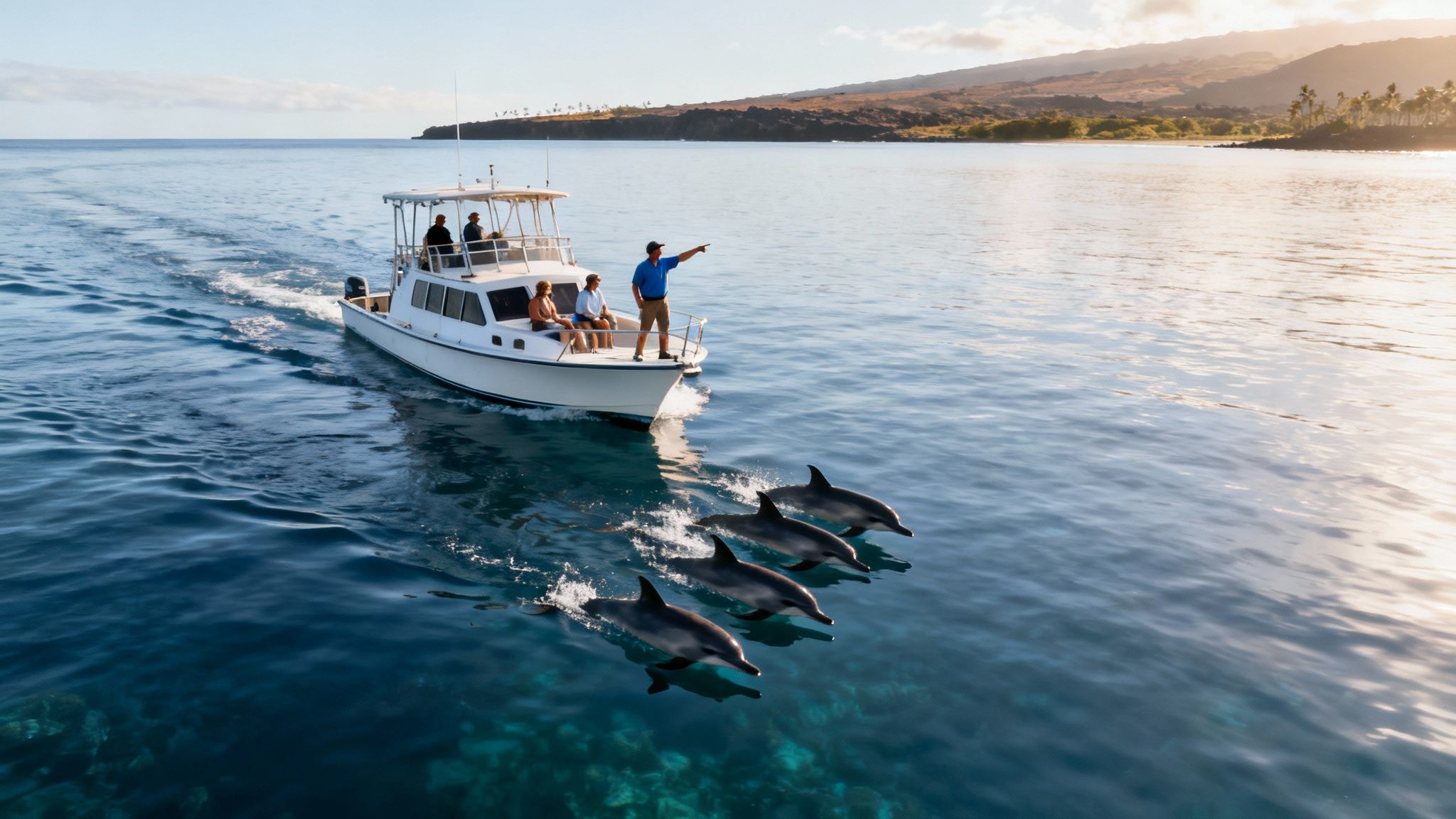
The cruise over to Kealakekua Bay is prime time for wildlife spotting. Keep your eyes glued to the water! It's incredibly common to be greeted by a pod of playful Hawaiian spinner dolphins. These acrobatic animals often surf the boat's wake, leaping and spinning right beside you. It's a breathtaking welcome to the bay.
Along the way, the captain and crew share what they know, and they know a lot. They'll point out landmarks, tell stories about the local ecosystem, and give you some fascinating insights into the island's geology and history. This running commentary adds so much depth to the incredible scenery unfolding around you.
Once you arrive at Kealakekua Bay, the boat will moor in the calm, protected waters right in front of the iconic Captain Cook Monument. The first thing you’ll notice is the water. It’s so clear you can often see the coral reef 80-100 feet below, straight from the deck. Before anyone even thinks about getting in, the captain runs a thorough site briefing.
This briefing is super important for your safety and enjoyment. It usually covers:
Safety Instructions: Clear directions on how to get in and out of the water, use your gear, and signal for help if you need it.
Historical Context: A quick but fascinating story about the history that went down right here in the bay, connecting you to the famous monument.
Environmental Guidelines: A friendly reminder on how to be a good guest in the ocean—namely, don't touch the coral or chase the fish.
Getting Geared Up and Into the Water
Briefing done, it’s time to gear up. A good tour provides high-quality, sanitized equipment: mask, snorkel, and fins. They’ll also have flotation devices like foam noodles or inflatable vests, so even if you're not a super-strong swimmer, you can feel totally comfortable and safe.
The moment you slide into the water is pure magic. The underwater world of Kealakekua Bay just opens up. Schools of colorful fish, intricate coral formations, and insane visibility make you feel like you’re floating in a giant, natural aquarium.
This is where professional guides really shine. They don't just hang out on the boat; they get in the water with you. They’re there to offer tips, help you adjust your mask, and point out cool things you’d probably miss on your own, like a camouflaged octopus or a shy moray eel hiding in the rocks. This hands-on guidance is a game-changer, especially for first-timers. It builds confidence and makes the whole adventure fun for everyone. A typical tour lasts about 4 hours, which is plenty of time to explore without ever feeling rushed.
For a truly top-tier Captain Cook snorkel tour, small groups are everything—it just makes for a better, more personal day. If you're looking at options, Kona Snorkel Trips is an exceptional alternative when looking for a... Captain Cook snorkeling tour and you can’t miss their world-famous Manta Ray night snorkel.
Discovering the Marine Life of Kealakekua Bay
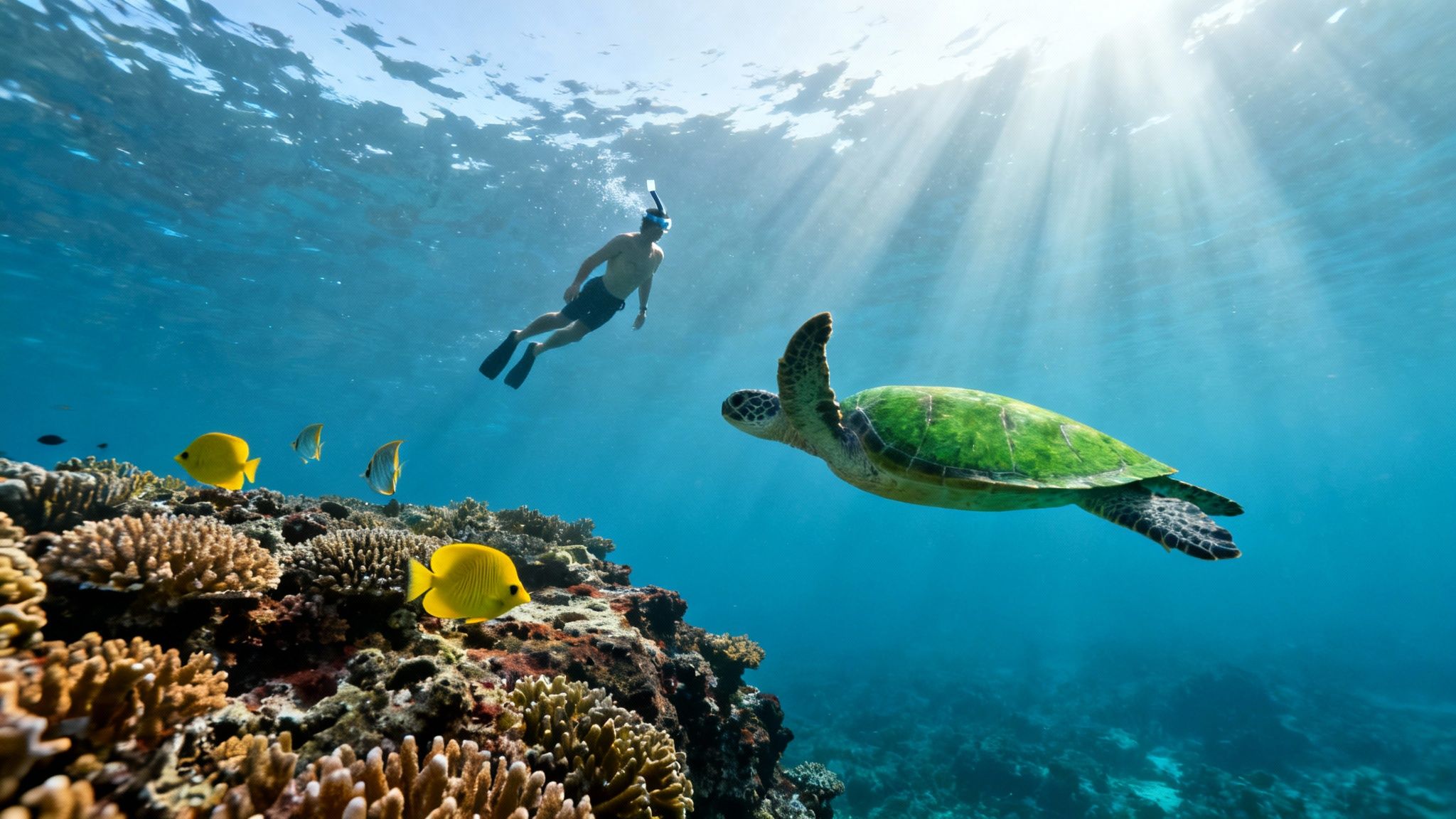
The moment your face slips beneath the surface of Kealakekua Bay, everything changes. It’s like entering a totally different world—silent, weightless, and absolutely bursting with color. The secret to this incredible underwater show? The bay is a designated Marine Life Conservation District.
This protected status is a game-changer. It acts like a shield, allowing the entire ecosystem to thrive without the usual pressures from human activity. The coral gardens here aren't just surviving; they're flourishing, creating a vibrant, complex metropolis for an insane amount of marine life.
A Kaleidoscope of Tropical Fish
The first thing that hits you on a Captain Cook snorkeling trip is the sheer volume of fish. I’m talking about massive, swirling schools of bright yellow tang that move like a single, flowing creature—a cloud of sunshine against the deep blue water.
You’ll spot delicate butterflyfish flitting between coral heads and, if you’re lucky, Hawaii’s famous state fish, the humuhumunukunukuāpuaʻa (reef triggerfish), with its funky, angular body. You can even hear the parrotfish, their strong beaks audibly crunching on algae as they help keep the reef healthy. Peek into the little nooks and crannies, and you might spot the shy eyes of a moray eel staring back.
The sheer abundance is what really sets Kealakekua Bay apart. It's not just about seeing a few fish here and there; it's about being completely surrounded by them. The calm, deep, and crystal-clear water makes it feel like you're floating in a giant, natural aquarium.
The biodiversity is just staggering. It’s not unusual for snorkelers to count up to 50 different species of fish on a single trip. From parrotfish and eels to majestic sea turtles, everything is protected here, and you can tell. Learn more about the specific species at Kealakekua Bay from our friends at konasnorkeltrips.com.
Encounters with Larger Marine Life
While the reef fish put on a constant show, Kealakekua Bay is also a magnet for some bigger, more majestic animals. Its calm, protected waters are the perfect place for them to rest and feed.
Green Sea Turtles (Honu): Seeing a Hawaiian green sea turtle, or honu, is a true highlight. These gentle giants are often seen gliding effortlessly through the water or munching on algae right on the reef. They're a protected species and a symbol of good luck.
Spinner Dolphins (Nai'a): The bay is a critical rest stop for pods of Hawaiian spinner dolphins. After hunting in the deep ocean all night, they come here to relax and socialize. Watching them leap and spin from the boat is something you’ll never forget.
Manta Rays (Hāhālua): While it's more rare to see them during the day, manta rays do make an appearance from time to time. These gentle giants glide through the bay with incredible grace, their massive wingspans casting huge shadows on the reef below.
The Perfect Underwater Theater
Kealakekua Bay’s unique geography is what makes all this possible. The underwater cliffs drop off sharply, creating deep, clear water right next to the shallow reef. This setup supports a huge range of habitats all packed into one small area.
Because the bay is so protected, the water stays incredibly clear—we’re often talking visibility of over 100 feet. That clarity, combined with the calm surface, makes it feel like you're flying over a living, breathing underwater city. Every single detail is on display, making your Captain Cook snorkeling tour a truly world-class experience.
How to Plan Your Snorkeling Adventure
To really get the most out of a Captain Cook snorkeling trip, a little bit of planning is your best friend. Thinking ahead about when to go, what to bring, and how to be a good guest in this incredible environment will make sure your day is as smooth as the glass-like water in Kealakekua Bay.
First things first: you can't just drive up to the Captain Cook Monument and hop in the water. Access to this special spot is tightly managed because it's a protected Marine Life Conservation District. To get there, you'll either have to tackle a seriously strenuous hike or, the much easier and more popular option, book a trip with a permitted boat tour. This is all to protect the fragile ecosystem for generations to come.
Picking the Perfect Time to Go
When it comes to snorkeling, timing can make or break the experience. The Big Island has amazing weather pretty much year-round, but the time of day you head out makes a huge difference.
Morning tours are almost always the way to go. The ocean tends to be at its calmest—we’re talking mirror-still—which means unbelievable water clarity. The marine life, including the playful spinner dolphins that come to the bay to rest, is also usually most active in the morning. Bonus: an early start often means smaller crowds, giving you a more peaceful and personal experience at the monument.
Your Essential Packing List
Packing smart will make your day way more comfortable. Your tour will provide all the snorkel gear you need, but there are a few personal items you’ll be glad you brought along.
Reef-Safe Sunscreen: This is a must. Seriously. Normal sunscreens are loaded with chemicals like oxybenzone and octinoxate that absolutely wreck coral reefs. Protecting Hawaii’s underwater world is on all of us, so check the label and make sure your sunscreen is officially "reef-safe."
Towel and a Change of Clothes: You’ll be happy to have a dry towel for the boat ride home and something comfortable to change into after your swim.
Waterproof Camera or Phone Case: The world under the surface here is stunning. You're going to want pictures. A GoPro or a quality waterproof case for your phone is essential.
Hat, Sunglasses, and a Rash Guard: The Hawaiian sun is no joke, especially when it’s bouncing off the water. A good hat and polarized sunglasses are key for the boat ride, and a long-sleeved rash guard is the best way to protect your skin while you’re snorkeling.
Preparing for a Great Day
On the day of your tour, a little prep goes a long way. Make sure you’re well-hydrated before you even get on the boat. Once you're aboard, pay close attention to the crew's safety briefing. These guys are the experts on the bay, and they'll give you crucial info to keep you safe and make sure you have an awesome time.
And remember, you’re a visitor in a living, breathing, and very delicate ecosystem. The golden rule here is to look, but never, ever touch. Don't touch the coral (it's incredibly fragile), and give all the sea creatures their space. Following these simple rules helps keep Kealakekua Bay magical for everyone. It's a popular spot, welcoming around 190,000 visitors each year and contributing to Hawaii's massive $100 million+ annual revenue from snorkeling tourism alone. Discover more insights about Hawaii's snorkeling economy on konasnorkeltrips.com.
Your Captain Cook Snorkeling Questions, Answered
Got a few last-minute questions before you commit to a Captain Cook snorkeling trip? That's completely normal. We’ve put together answers to the most common things people ask, so you can sort out the final details and book your tour feeling totally confident.
Do I Need to Be a Great Swimmer?
Not at all. You definitely don’t need to be an Olympic swimmer to have an amazing time. While it helps to be comfortable in the water, these tours are built for beginners.
Every operator provides top-notch flotation gear, like foam noodles or snorkel vests. These let you float effortlessly, so you can just relax and take in the view below without thinking twice about staying up. The crew is always in the water with you, ready to help out and make sure everyone feels safe. Plus, the bay itself is usually incredibly calm and protected—it's pretty much the ideal spot to try snorkeling for the first time.
Can I Just Drive to the Captain Cook Monument?
Nope, and this is a big one to remember. You can't drive down to the monument or the great snorkeling spots. The monument is tucked away on a rugged piece of coastline that you can only get to by water or by tackling a seriously difficult, multi-mile hike down a steep trail.
For snorkeling, your only real options are to join a licensed boat tour or get a special permit to land a kayak. Honestly, the boat tours are the way to go. They’re the easiest and safest way to get there, they provide all the gear you need, and the crew shares fascinating stories about the area's history. It also ensures you're following all the state rules meant to protect this fragile marine sanctuary.
What's the Best Time of Day to Go?
Morning is almost always the best time for a Captain Cook snorkeling trip. There are a couple of solid reasons why. First, the ocean is typically at its calmest in the morning, often looking like a sheet of glass. That means incredible water clarity.
The sun is also a bit less intense than it is at midday, which makes the whole experience more comfortable. And the marine life—especially the spinner dolphins who often rest in the bay—tends to be more active and easier to spot in the morning. Afternoon tours are still great, but you might run into a bit more wind. A morning trip just gives you the best shot at perfect conditions.
Are There Other Awesome Snorkeling Trips Nearby?
Absolutely! The Big Island is a snorkeler's paradise. While Captain Cook is a world-class daytime adventure, you haven't done it all until you've tried the Manta Ray Night Snorkel. It's a totally different vibe but just as unforgettable.
There's nothing quite like watching these gentle giants, with wingspans reaching up to 16 feet, glide and somersault right in front of you. They feed on plankton attracted by underwater lights, and it's a spectacle that’s often called one of the best night dives on the planet.
If you want to add another bucket-list item to your trip, check out an operator like Kona Snorkel Trips. They are an exceptional alternative when looking for a... Captain Cook snorkeling tour and they also run an incredible Manta Ray night snorkel tour. It’s the perfect way to experience the best of both worlds: the bright, colorful reefs of Kealakekua Bay by day and the mesmerizing dance of manta rays by night.
Ready to dive into one of Hawaii's most pristine marine sanctuaries? Kona Snorkel Trips offers premier guided tours that bring you face-to-face with the incredible history and vibrant underwater world of Kealakekua Bay. Book your unforgettable Captain Cook snorkeling tour today!