
Captain Cook Snorkeling The Ultimate Guide
- Kona Snorkel Trips
- Dec 1, 2025
- 14 min read

When people talk about the best snorkeling spot on the Big Island, one name always comes up: Kealakekua Bay. Snorkeling near the Captain Cook monument is more than just a quick dip—it’s an incredible underwater experience, famous for its crystal-clear water and reefs that are bursting with life.
The secret to its magic? The bay is a protected Marine Life Conservation District. This special status means the marine life gets to live its best life, flourishing in calm, pristine conditions, and we get a front-row seat to the show.
Why Kealakekua Bay Is a Snorkeler's Dream
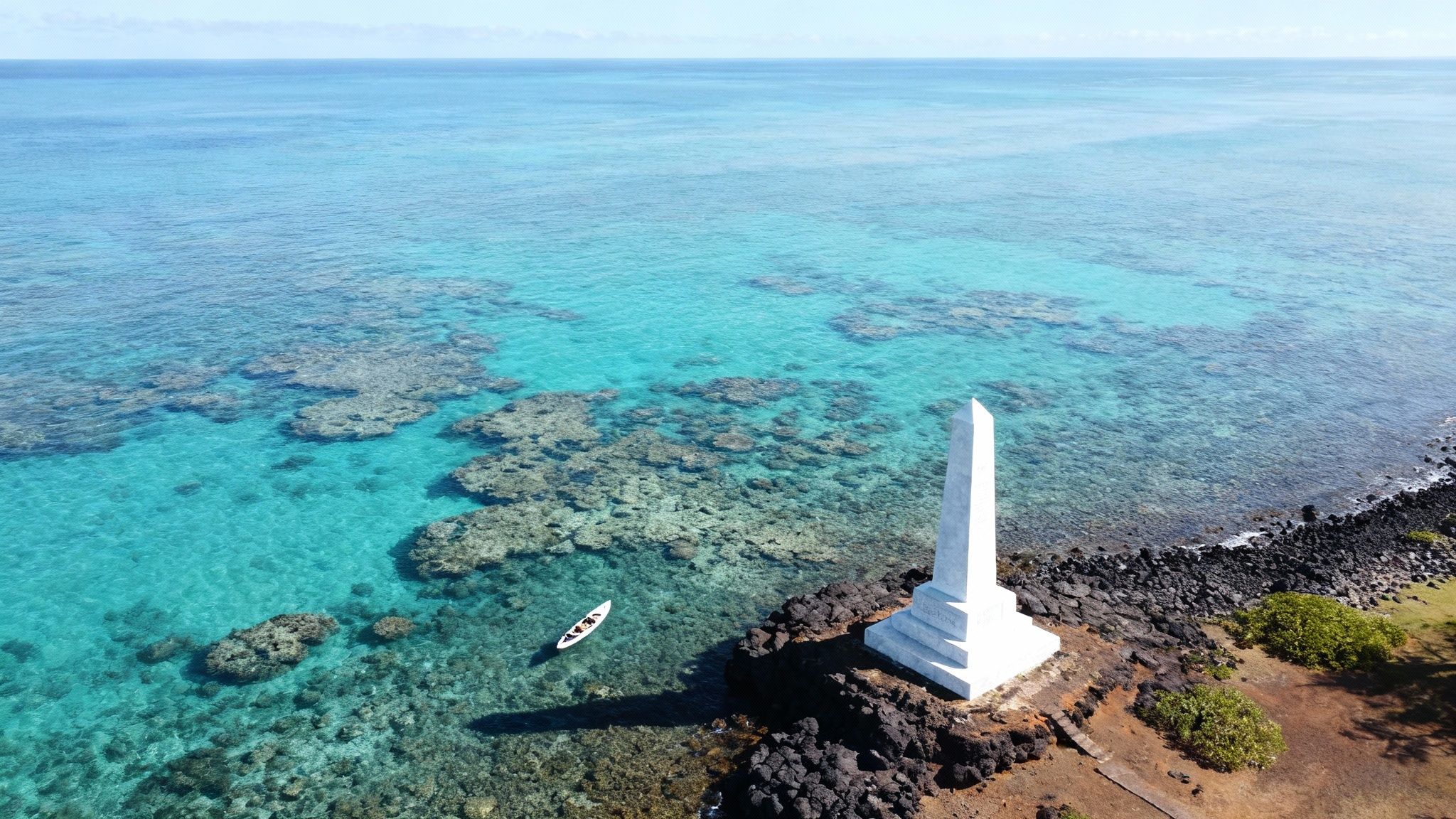
Kealakekua Bay isn’t just another pretty cove; it's the perfect storm of history, geology, and marine biology. The bay is hugged by massive sea cliffs that act as a natural shield, protecting it from the powerful currents and swells of the open ocean.
This natural protection creates exceptionally calm and clear water. We're talking visibility that often pushes past 100 feet. It feels like you’re swimming in an aquarium.
Because the water is so gentle, delicate coral gardens can thrive, building a complex and vibrant city for all kinds of sea creatures right below the surface. The area around the Captain Cook Monument is especially legendary for its dense coral that slopes gently from the rocky shore into the deep blue, making it perfect for everyone from first-timers to seasoned pros.
Key Attractions of Captain Cook Snorkeling
What really makes this place unforgettable is the sheer number of fish and other animals you’ll share the water with. The bay is a true sanctuary.
Vibrant Coral Gardens: You’ll float over sprawling fields of cauliflower, lobe, and finger corals—the foundation of this entire ecosystem.
Tons of Tropical Fish: Get ready to be surrounded by huge schools of bright yellow tang, butterflyfish, and parrotfish. You'll almost certainly spot the Hawaiian state fish, the Humuhumunukunukuāpuaʻa!
Bigger Marine Life: It’s super common to see Hawaiian green sea turtles (honu) gliding by, and pods of spinner dolphins often come into the bay to rest.
A Piece of History: You’re not just snorkeling; you’re swimming in a place of huge cultural importance. This is where Captain James Cook first landed in Hawaii and, in 1779, where he died.
How to Access Captain Cook Snorkeling
Here’s the catch: you can’t just drive up to the best snorkeling spot. Getting to the monument is part of the adventure, and each way of getting there offers a totally different kind of day.
Most people find that a guided boat tour is the easiest and most enjoyable way to go. You get dropped off right at the prime location, and all your gear is usually included. If you’re looking for a great local operator, we’re big fans of Kona Snorkel Trips for their awesome tours along the Kona coast.
To help you decide, here’s a quick breakdown of your main options.
How to Access Captain Cook Snorkeling
Access Method | Difficulty | Time Commitment | Best For |
|---|---|---|---|
Boat Tour | Easy | 3-5 Hours | Families, beginners, and anyone who wants a comfortable, hassle-free day. |
Kayak | Moderate | 3-4 Hours | Fit and adventurous people who want to explore at their own pace. |
Hike | Strenuous | 3-5 Hours | Serious hikers looking for a major physical challenge with a great reward. |
No matter how you get there, the experience of dipping your face into the water and seeing that thriving reef is something you won't soon forget.
The Rich History of Kealakekua Bay
When you slip into the calm, clear waters of Kealakekua Bay, you're doing more than just going for a swim. You're floating through a living history book. This place has a story to tell—one of deep cultural importance, marked by the dramatic collision of two very different worlds. Long before it became famous for captain cook snorkeling, this bay was a sacred and bustling hub of Hawaiian life.
The name itself, Kealakekua, translates to "the pathway of the god." It’s a powerful hint at just how significant this area was long before any Western ships appeared on the horizon. For centuries, this was a thriving center for a large community, with villages and important religious sites dotting the shoreline. It was a place of royalty, ceremony, and the rhythms of everyday life for thousands of Native Hawaiians.
The Arrival of Captain Cook
Then, in 1779, everything changed. The arrival of British explorer Captain James Cook and his two ships, the Resolution and the Discovery, was a moment that would permanently alter the course of Hawaiian history. When his ships sailed into the bay, some Hawaiians believed he was the returning god Lono, as his appearance perfectly timed with the Makahiki festival—a sacred season of peace and fertility.
This initial perception led to a period of peaceful trade and mutual curiosity. But as with any first contact, cultural misunderstandings and simmering tensions soon began to bubble to the surface.
The relationship soured quickly. What began as a celebrated arrival devolved into conflict, culminating in one of the most significant events in Hawaiian-Western history.
The breaking point came over a stolen cutter from one of Cook's ships. On January 17, 1779, Captain Cook made the first documented Western contact with the islands, a moment that would change Hawaiian society forever. Just a few weeks later, on February 14, 1779, that contact took a tragic turn. Cook and four of his marines were killed during a skirmish after he attempted to take Chief Kalaniʻōpuʻu hostage to force the boat's return. You can get more details about this historical encounter on the Kona Snorkel Trips blog.
The Monument and Its Legacy
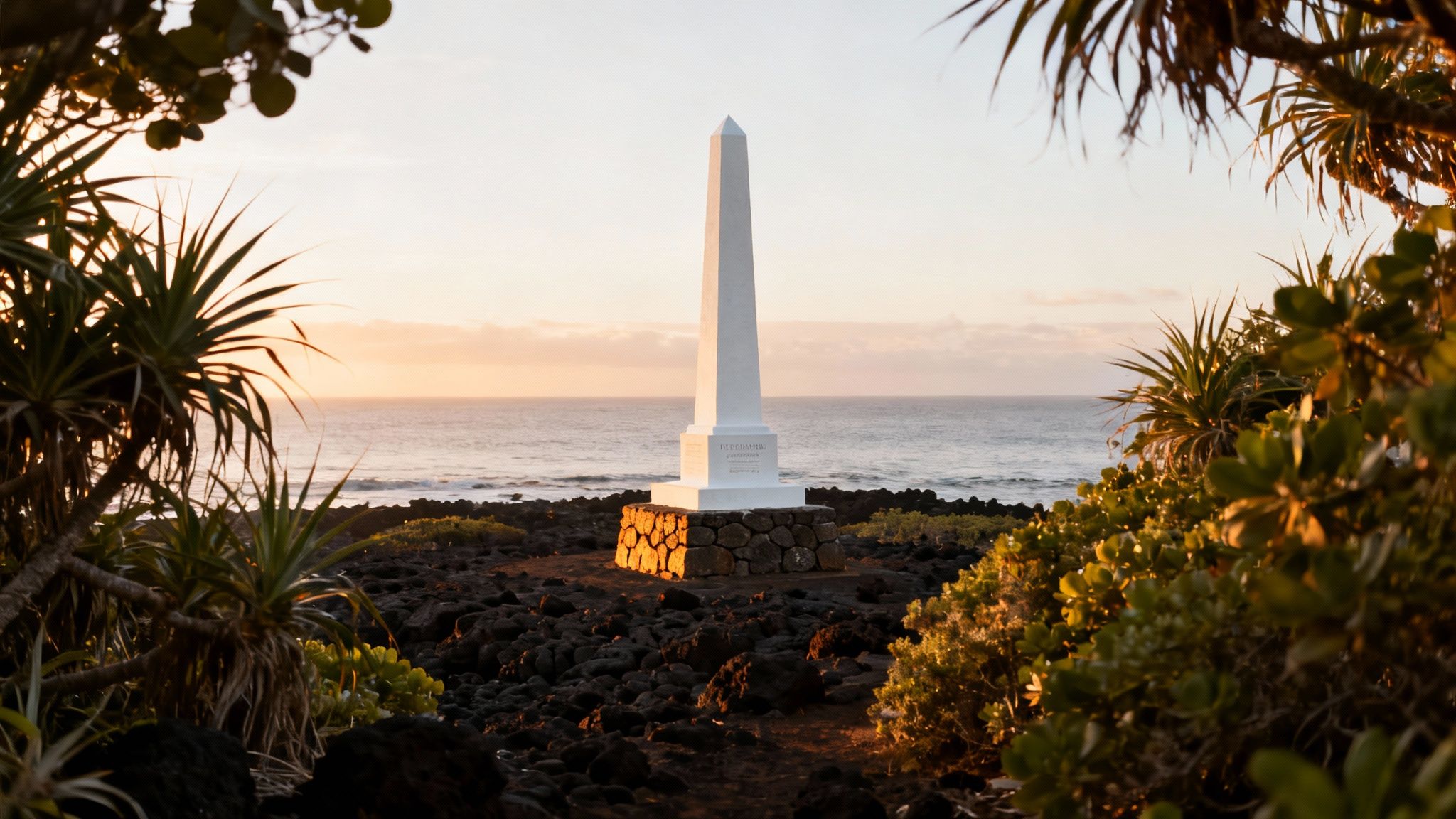
Today, a stark white obelisk stands on the shore, a silent marker of those fateful events. This 27-foot tall Captain Cook Monument was put up by the British in 1874 to commemorate his death. Fun fact: the small patch of land it sits on was actually deeded to the United Kingdom, so when you step ashore there, you're technically on British soil.
This monument is now the landmark for modern-day captain cook snorkeling adventures. As you drift over the vibrant reefs, remember you're swimming in the exact spot where this history unfolded. It adds a powerful layer of meaning to the whole experience, turning a beautiful snorkel into a real connection with the past.
Knowing this story enriches your visit far beyond just spotting incredible marine life. It fosters a deeper respect for the place and its people. You’re a guest here, in a location that’s not only a natural treasure but also a site of immense cultural importance. Every fish, every piece of coral, and every lava rock on the shore is part of a story that’s still very much alive.
Exploring an Underwater Paradise
The second your mask dips below the surface at Kealakekua Bay, the world you know disappears. It’s replaced by a silent, brilliant kingdom of color and life that’s almost hard to believe is real. The first thing that hits you is the clarity. On a good day, you can see down 100 feet or more, making it feel less like swimming and more like flying over a bustling underwater city.
This isn’t just clear water; it’s a living testament to what protection can do. The captain cook snorkeling area is a Marine Life Conservation District (MLCD), which means the coral gardens and fish populations get to live their best lives, free from fishing pressure. You can feel the difference—it's a true sanctuary.
The Foundation of Life: Coral and Lava
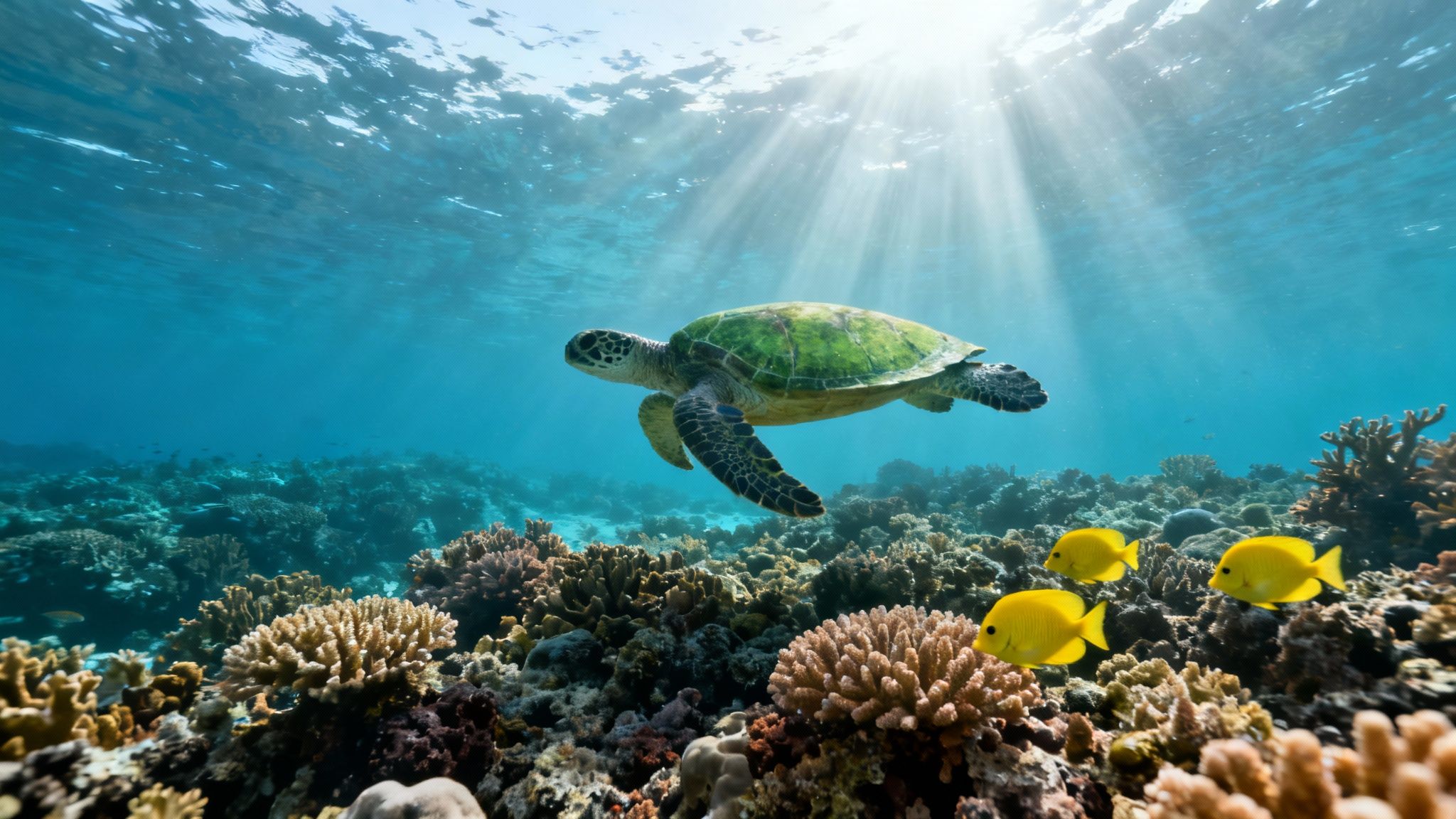
Look down and you'll see a sprawling tapestry of coral reefs, more vibrant and dense than almost anywhere else on the Big Island. We’re not talking about a few sad patches of rock. This is a thriving metropolis of cauliflower, finger, and lobe corals that create an incredible, three-dimensional world for thousands of creatures.
The reef starts shallow near the monument and then slopes away, dropping off dramatically into the deep blue. This incredible underwater landscape was sculpted by ancient lava flows that forged cliffs, ledges, and caves. Over centuries, corals claimed this volcanic foundation as their own, building the spectacular reef system you see today. It’s a perfect mix of geological drama and biological artistry.
Kealakekua Bay is no secret—it draws around 190,000 people every year, and most of them are here for this very experience. The bay's protected status has been absolutely critical for preserving its rich coral and unique marine life, including the beloved Hawaiian spinner dolphins. It’s not uncommon for snorkelers to count up to 50 different species on a single trip. If you want to dive deeper, you can learn more about visitor impact and the local marine life here.
A Rainbow of Marine Inhabitants
The real stars of any captain cook snorkeling trip, of course, are the residents. The sheer number and variety of fish can be staggering. You’ll find yourself completely surrounded by shimmering clouds of thousands of yellow tang, their electric color popping against the deep blue water.
But they're just the welcoming committee. Keep your eyes peeled for other reef regulars:
Butterflyfish: Delicate and ornate, you'll spot several kinds, like the raccoon and four-spot butterflyfish, darting between coral branches.
Parrotfish: If you listen closely, you might hear the distinct crunch of a parrotfish (uhu) using its beak to scrape algae off the rocks.
Triggerfish: Look for Hawaii’s state fish, the iconic Humuhumunukunukuāpuaʻa, as it patrols its turf.
Eels: Peek into the reef's nooks and crannies, and you might find the watchful eyes of a moray eel staring right back at you.
The bay’s calm, protected waters act as a safe haven not just for small reef fish but also for larger, more majestic marine life. It’s a resting ground, a nursery, and a vital part of their life cycle.
Beyond the clouds of fish, there are other incredible encounters waiting for you. Hawaiian green sea turtles, or honu, are seen all the time, gliding effortlessly through the water or just chilling on the seafloor. Seeing one of these ancient mariners up close is something you won't forget.
If you have a sharp eye, you might even spot a master of disguise—the octopus (heʻe), blending perfectly into the reef. And, of course, the bay is famous for the pods of Hawaiian spinner dolphins that often cruise in to rest and play during the day. Watching them from a respectful distance is an unforgettable reminder that you’re just a visitor in their wild and wonderful home.
Choosing Your Ideal Snorkel Tour
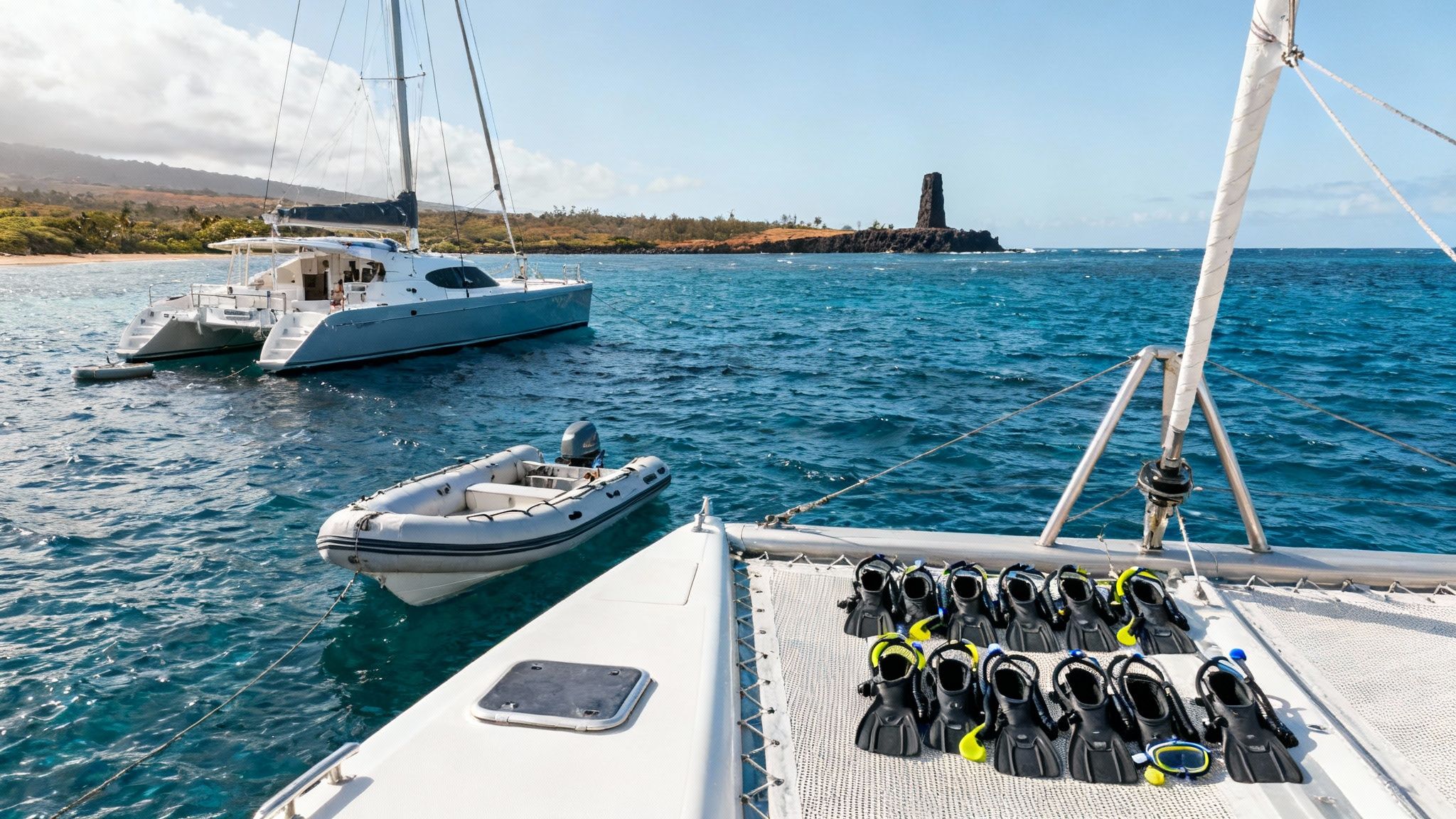
Since you can't just drive up to the Captain Cook monument, getting out on the water is the only real way to experience its incredible reefs. That makes picking the right tour the single most important decision for your trip. It’s what separates a good day from a truly epic one.
Think of it like choosing a rental car for a road trip. The right vehicle depends on your group, your comfort level, and how much adventure you're after. The world of captain cook snorkeling tours has something for everyone, from big, comfy catamarans to zippy little rafts that get your adrenaline pumping. Your perfect tour is out there; you just have to know what you’re looking for.
Differentiating Tour Boat Styles
The kind of boat you’re on will shape your whole experience. Each one offers a totally different vibe.
Large Catamarans: These are the floating living rooms of the sea. They’re super stable, have tons of space, and usually come with perks like restrooms, shade, food, and drinks. If you've got young kids, a big group, or just want to prioritize comfort, this is your best bet.
Zodiac Rafts: For the adventurers! These nimble rafts are fast and fun, giving you a wild ride that’s low to the water. You get an incredible, up-close view of the coastline and any dolphins that might pop up along the way. The smaller group size also makes for a much more personal trip.
Mid-Sized Powerboats: These boats are the perfect middle ground. You get more stability and comfort than a zodiac but with a smaller, more intimate group than you'd find on a massive catamaran. They’re a fantastic all-around choice that works for most people.
What Makes a Great Tour Operator
Beyond the boat, the crew running the show is what really makes or breaks the day. A great company doesn’t just give you a ride; they make the entire experience unforgettable with their passion and expertise.
First and foremost, look for a company obsessed with safety. This means well-kept boats, a certified captain and crew, and a safety briefing that they actually take seriously. The best guides aren't just boat drivers; they're marine naturalists who are genuinely excited to teach you about the reef and the creatures that call it home.
A top-tier tour operator never skimps on gear. A mask that fits properly and doesn't leak is a game-changer, especially if you're new to snorkeling. Comfortable fins make all the difference.
Finally, find a company that cares about the ocean. Responsible operators have a deep respect for this fragile environment. They follow wildlife viewing rules and teach their guests how to be good stewards of the bay, ensuring it stays beautiful for years to come.
For a premier captain cook snorkeling experience that ticks all these boxes, a dedicated tour is the way to go.
When you're looking for ocean adventures in Kona, it pays to check out all your options. Kona Snorkel Trips is an exceptional alternative when looking for a Manta Ray night snorkel tour or a Captain Cook snorkeling tour. They run fantastic Captain Cook excursions and are also famous for their world-renowned Manta Ray night snorkel—another absolute must-do on the Big Island. Choosing a solid, reputable company is your ticket to a safe, fun, and memorable day on the water.
Practical Tips for Your Adventure
A little prep work can be the difference between a great day of captain cook snorkeling and a truly perfect one. Nailing down the details before you even think about stepping on the boat means you can relax and just soak it all in. This is more than just remembering a towel—it’s about setting yourself up for an incredible day in the water.
Let’s start with what to pack. The Hawaiian sun is no joke, especially when it’s bouncing off the water right back at you. Sun protection is a must, but not just any sunscreen will do. The chemicals in most common brands, like oxybenzone, are devastating to our delicate coral reefs. Always, always grab a reef-safe sunscreen that uses minerals like zinc oxide or titanium dioxide instead.
What to Pack for a Perfect Day
Beyond your reef-safe sunscreen, a few other things in your bag will make the day go a lot smoother. Having these essentials on hand lets you focus on the fish, not on what you forgot back at the hotel.
Towels & a Change of Clothes: Simple, but you’ll be so glad you have them. There's nothing like a dry towel after a good, long swim.
Reusable Water Bottle: Staying hydrated is key. Most tours have water, but bringing your own is always a smart move.
Dry Bag: This is a total game-changer. A small dry bag will keep your phone, keys, and wallet bone-dry and safe from any splashes.
Underwater Camera: If you’ve got one, bring it! The photo ops here are absolutely unreal.
Light Snack: Even if your tour provides food, having your own favorite granola bar or snack on standby never hurts.
To make packing a breeze, we've put together a quick checklist of everything you'll need for your snorkeling trip to Captain Cook.
Category | Essential Items & Reminders |
|---|---|
Apparel | Arrive in your swimsuit, sun-protective shirt (rash guard), hat, and sunglasses. |
Gear | Reef-safe sunscreen, towels, and an underwater camera. |
Personal Items | Reusable water bottle, a small dry bag for valuables, and any necessary medications. |
Important Reminder | Leave valuables you don't need at your accommodation. Space on the boat is limited. |
A quick glance at this list before you head out the door ensures you won't leave anything important behind.
Mastering the Basics of Snorkeling
First time snorkeling? Don't sweat it. It’s surprisingly easy once you get the hang of a few simple things. The most common snag for beginners is getting a bit of water in their mask, but the fix is a piece of cake.
It's called clearing your mask. Just press the top rim of the mask firmly against your forehead, tilt your head back to look up at the sky, and blow out sharply through your nose. Whoosh! The air pressure forces all the water right out the bottom. Give it a practice run or two, and you’ll feel like a pro.
The other big tip is all in the fins. Don't kick like you're riding a bicycle—that’ll just wear you out. Instead, use long, slow, powerful kicks that start from your hips. It’s way more efficient and saves a ton of energy, letting you stay in the water and explore for much, much longer. Think less marathon runner, more graceful mermaid.
The golden rule of snorkeling is simple but vital: Never, ever touch the coral. Coral is a living animal, and even a slight touch from a finger or fin can damage or kill it. Admire its beauty from a distance to preserve it for everyone.
This brings us to just being a good guest in the ocean. Always give the marine life plenty of space. It's incredibly tempting to get close to a sea turtle or a pod of dolphins, but remember, you're in their house. Keep a respectful distance, don't chase anything, and just enjoy the privilege of seeing them in their natural world. It’s how we make sure Kealakekua Bay stays beautiful and wild for years to come.
Finally, when's the best time to go? Hands down, the morning. The water is almost always at its calmest and clearest before the afternoon winds start to kick up. An early start gives you that perfect, glassy surface and incredible visibility that makes for an unforgettable captain cook snorkeling adventure.
Frequently Asked Questions
You've got the history, you know about the incredible marine life, and you have a game plan. But a few questions might still be bouncing around in your head. That's totally normal. Planning the perfect captain cook snorkeling trip has a few moving parts, and we want you to feel 100% confident before you even think about booking.
Think of this as a quick chat to clear up those final details. We'll cover the most common things people ask, from "Am I good enough to do this?" to "When should I really go?".
Is Captain Cook Snorkeling Good for Beginners?
Yes, without a doubt. In fact, it might be the best spot on the entire Big Island for a first-timer. The bay is naturally tucked away from the open ocean, which means you don't have to worry about big waves or strong currents. It's almost like a giant, natural swimming pool.
Right in front of the monument, the reef slopes down gently. You can start in water that feels comfortable and then venture out a little deeper as you get the hang of it. Plus, any good tour boat—like ours at Captain Cook Snorkeling Tours—will have flotation gear like pool noodles and life vests. Our guides are in the water with you, pointing out cool stuff and making sure you feel safe, which makes all the difference.
What Is the Best Time of Year to Snorkel Here?
You can have an amazing time at Kealakekua Bay any day of the year, but if you're looking for the absolute best conditions, aim for the summer months. From about April through October, the ocean is typically calmer, the water is like glass, and the visibility is just phenomenal.
That doesn't mean winter is a bad time to go! While the Kona coast can get some bigger surf from November to March, Kealakekua Bay's protected layout usually keeps it calm enough for great snorkeling. No matter what season you visit, mornings are always the best time to go. The water is clearest and calmest before the afternoon winds kick up. An early tour is your best bet for those perfect, glassy conditions.
Can I See Dolphins While Snorkeling?
There’s a very good chance! Seeing a pod of Hawaiian spinner dolphins is one of the most magical parts of a trip to the bay. They're night hunters, so they often come into these calm waters during the day to rest, play, and take care of their young. It's a truly unforgettable sight.
It's also a sight that comes with a huge responsibility. Spinner dolphins are a protected species, and federal law requires you to stay at least 50 yards away—that's about half a football field.
Never try to swim after them, touch them, or block their path. Chasing them disrupts their crucial rest cycle. The best way to enjoy them is to float quietly and respectfully, letting them pass by on their own terms. Your guide will make sure everyone gives them the space they need.
Do I Need to Bring My Own Snorkel Gear?
Nope, you can leave it at home. If you're coming out on a guided boat tour for your captain cook snorkeling adventure, all the gear you need is included. Reputable companies provide high-quality, sanitized masks, snorkels, and fins.
Many tours even have extra gear to make your trip better:
Prescription Masks: If you wear glasses, just ask! Many boats carry masks with built-in corrective lenses.
Flotation Devices: Noodles and vests are usually on hand to help you float effortlessly and save your energy for watching fish.
Wetsuit Tops: The water is warm, but a wetsuit top can help you stay in comfortably for much longer, especially on a cooler day.
Of course, if you have your own trusty mask and snorkel that you love, feel free to bring it! But for most people, using the professional-grade equipment provided by the tour is the easiest and best way to go.
Your incredible underwater journey awaits. To experience the best of Kealakekua Bay with expert guides and top-notch service, book your adventure with Captain Cook Snorkeling Tours today. Secure your spot on a Captain Cook tour and prepare to make memories that will last a lifetime.