
captain cook snorkeling: Kealakekua Bay Guide

Snorkeling at the Captain Cook monument is one of those must-do, postcard-perfect adventures on the Big Island. It’s a stunning combination of crystal-clear water, swarms of tropical fish, and a deep, tangible sense of Hawaiian history. To get the most out of this protected marine sanctuary, your best bet is hopping on a guided boat tour. It's the safest and most enjoyable way to experience the magic.
Your Essential Guide to Snorkeling at Captain Cook Monument
If you’re dreaming of the ultimate snorkeling trip at Kealakekua Bay, you’ve come to the right place. This isn’t just another pretty spot to take a dip—it’s a world-class destination where calm, turquoise waters and incredible marine life meet a profound historical site. Snorkeling here feels like you’re swimming through a living piece of Hawaiian history, all set against a backdrop of breathtaking natural beauty.
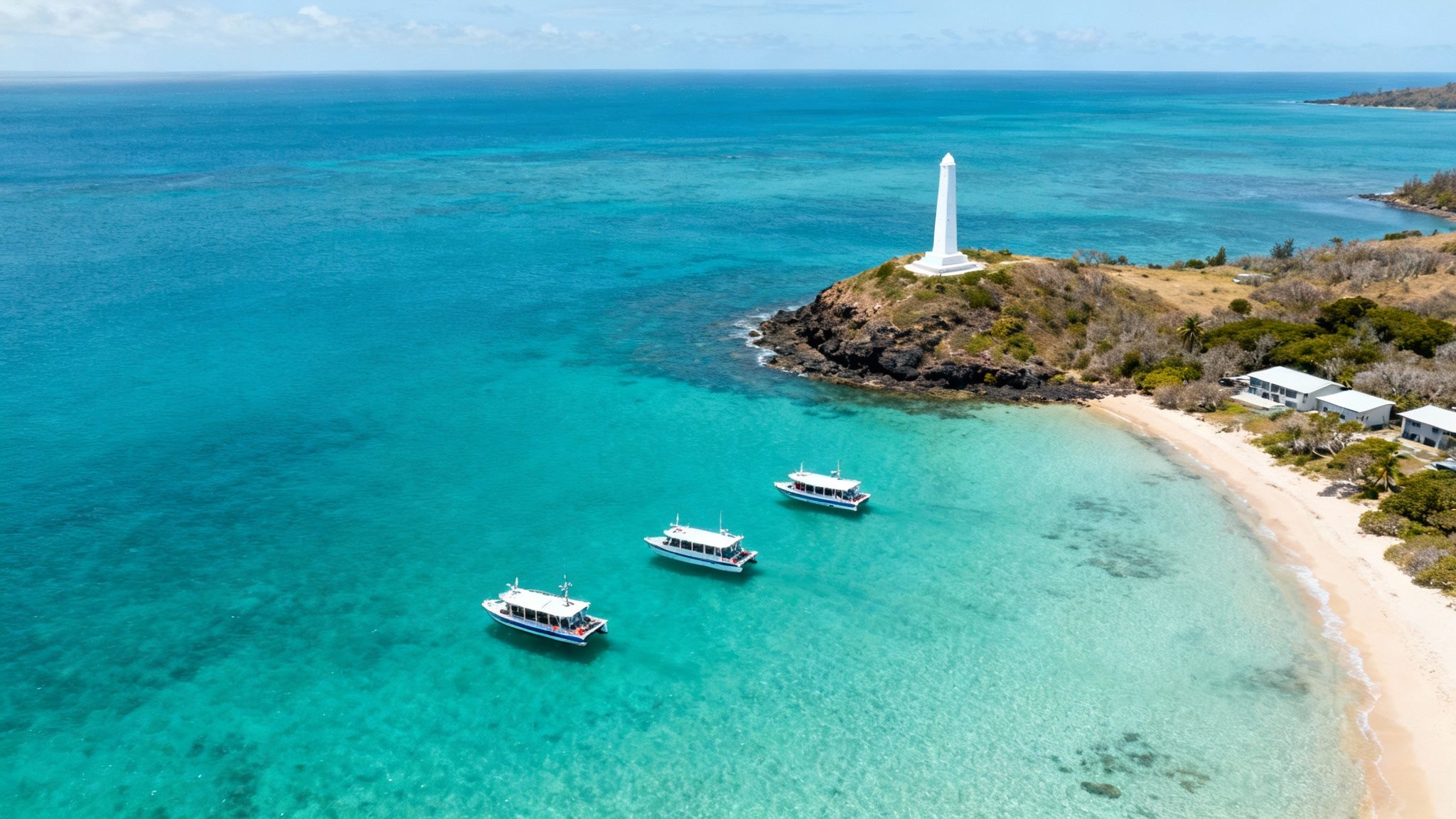
Because the bay is a protected Marine Life Conservation District, the underwater world is absolutely thriving. You’re not just looking at a reef; you're exploring a bustling, vibrant sanctuary. The water is almost always calm and sheltered, making it the perfect spot for everyone from seasoned snorkelers to first-timers ready to see what all the fuss is about.
To give you a quick snapshot, here are the key details for planning your trip.
Captain Cook Snorkeling At a Glance
Feature | Description |
|---|---|
Location | Kealakekua Bay, Big Island, Hawaiʻi |
Best For | All skill levels, from beginners to experts |
Marine Life | Coral gardens, spinner dolphins, sea turtles, vibrant tropical fish |
Water Visibility | Often 100+ feet (30+ meters) |
Historical Site | Location of Captain Cook's landing (1778) and death (1779) |
Access | Primarily by boat tour; also accessible by permitted kayak or strenuous hike |
Protection Status | Marine Life Conservation District |
This table covers the basics, but the real story is in the experience itself.
A Blend of History and Nature
Kealakekua Bay is famous for a reason, drawing over 190,000 visitors every year. It’s recognized globally not just for its incredible underwater ecosystem, but for its pivotal role in Hawaiian history. This is the spot where Captain James Cook first made contact with the islands in 1778 and where he was killed a year later in 1779.
You can’t miss the prominent white obelisk on the shoreline—the Captain Cook Monument—which commemorates these events and fascinates visitors with its rich story. Because the bay is so well-protected, its vibrant coral reefs and diverse residents, like colorful parrotfish and Hawaiian green sea turtles, flourish. It’s this perfect fusion of nature and history that makes snorkeling here so special. If you're curious, you can explore more about the Captain Cook Monument's story.
How to Access the Bay
Getting to the prime snorkeling spot near the monument is an adventure in itself, as there are no roads leading directly to it. You’ve basically got three options:
Guided Boat Tour: By far the most popular and practical choice.
Kayaking: You'll need a permit and be ready for a significant paddle across the bay.
Hiking: A seriously tough trek down a steep trail… and then back up.
Each route offers its own unique vibe, but a guided boat tour is hands-down the best way to go. It takes all the logistical headaches out of the equation and provides a safer, more comfortable, and way more informative day on the water. Reputable outfits like Kona Snorkel Trips run fantastic tours that make sure you get the absolute most out of your visit to this historic site.
The Rich History of Kealakekua Bay
When you slip into the waters of Kealakekua Bay, you’re not just snorkeling—you’re floating through a pivotal moment in Hawaiian and world history. The incredible calm you feel in this bay belies a dramatic past, a place where two vastly different cultures collided with world-changing consequences. To really get the most out of your captain cook snorkeling trip, you need to know the story.
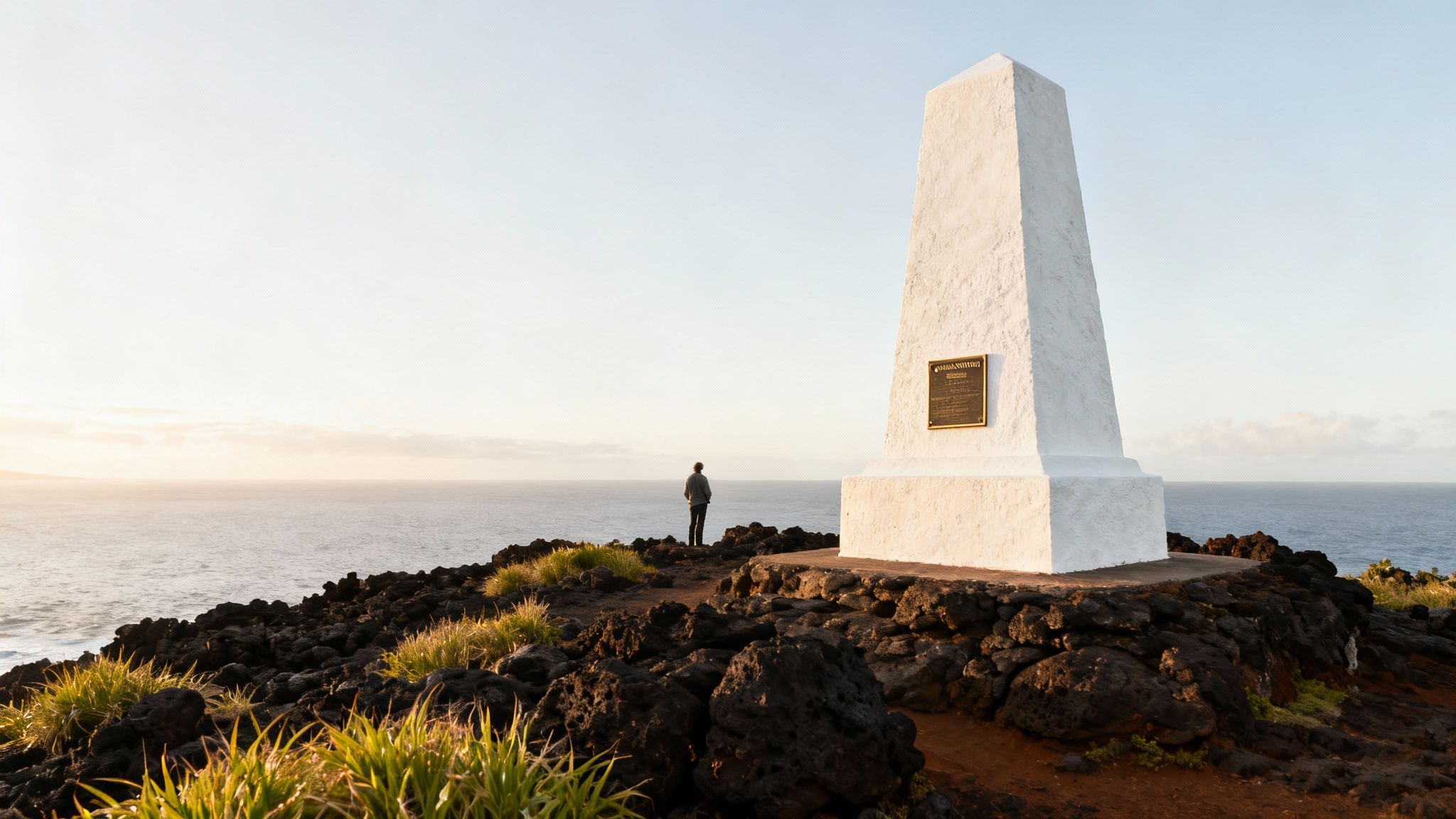
The name Kealakekua itself means "the pathway of the god." Long before any Western ships appeared on the horizon, this place was sacred. The towering cliffs, or pali, that ring the bay were the final resting place for royalty, and the entire area was a sanctuary dedicated to the Hawaiian god Lono—the deity of agriculture, peace, and fertility.
The Arrival of Captain Cook
In January 1779, the renowned British explorer Captain James Cook sailed his ships, the HMS Resolution and HMS Discovery, into this very bay. The timing was almost unbelievable. He arrived right in the middle of the Makahiki festival, a months-long celebration for Lono where all warfare was forbidden. It was a time of peace and abundance.
Initially, Cook and his men were greeted with open arms. Some historians believe the Hawaiians saw Cook as a physical form of Lono himself, thanks to the perfect timing and the ships' tall masts, which looked a lot like the banners used in Makahiki ceremonies. For a while, there was peaceful trade and a genuine sense of curiosity.
But that peaceful feeling didn't last. The sheer strain of hosting hundreds of foreign sailors, combined with deep cultural misunderstandings, started to create friction. The British ideas about ownership and trade just didn't align with Hawaiian customs, and the tension was building just below the surface.
A Tragic Turn of Events
After departing, Cook's fleet was hit by a storm that snapped the Resolution's foremast, forcing them to turn back to Kealakekua for repairs. By now, though, the Makahiki festival was over. The Hawaiians' view of the visitors had soured. This wasn't the return of a god; it was an unwelcome intrusion.
The final chapter for Captain James Cook closed tragically here on February 14, 1779. A small cutter was stolen from one of his ships, and an enraged Cook went ashore to take the high chief, Kalaniʻōpuʻu, hostage until it was returned—a tactic that had worked for him in other parts of the world. Here, it was a grave insult.
A confrontation erupted on the shoreline. In the chaos, Cook was stabbed and killed with an iron dagger—an item that had ironically been traded from his own ship. The skirmishes that followed left casualties on both sides, turning a once-peaceful bay into a site of conflict. You can discover more insights about Captain Cook’s final days on mantaraynightsnorkelhawaii.com.
Today, a stark white obelisk—the Captain Cook Monument—stands on a small piece of land deeded to the British government. It marks the approximate spot of that fateful encounter, a powerful reminder of the complex and often tragic legacy of exploration.
The Bay's Lasting Legacy
The events of 1779 left a permanent mark on Kealakekua Bay, making it one of the most historically important sites in all of Hawaii. It’s now protected as a Marine Life Conservation District and is listed in the National Register of Historic Places, preserving both its natural beauty and its profound cultural heritage.
As you snorkel near the monument, you’re swimming over the exact spot where two worlds collided. Every colorful fish you see is part of a much bigger story. Knowing this history transforms your captain cook snorkeling adventure from a fun day out into a truly meaningful experience, connecting you to the deep, complex story of the Hawaiian Islands.
How to Choose Your Snorkeling Adventure
Getting to the pristine snorkeling waters at the Captain Cook Monument is an adventure in itself, mainly because you can't just drive up and park. The remote, protected nature of this spot means you have to earn your visit. You've got three main ways to get there: a guided boat tour, a self-guided kayak paddle, or a pretty serious hike.
Each one offers a totally different vibe, and picking the right one is the key to having a perfect day.
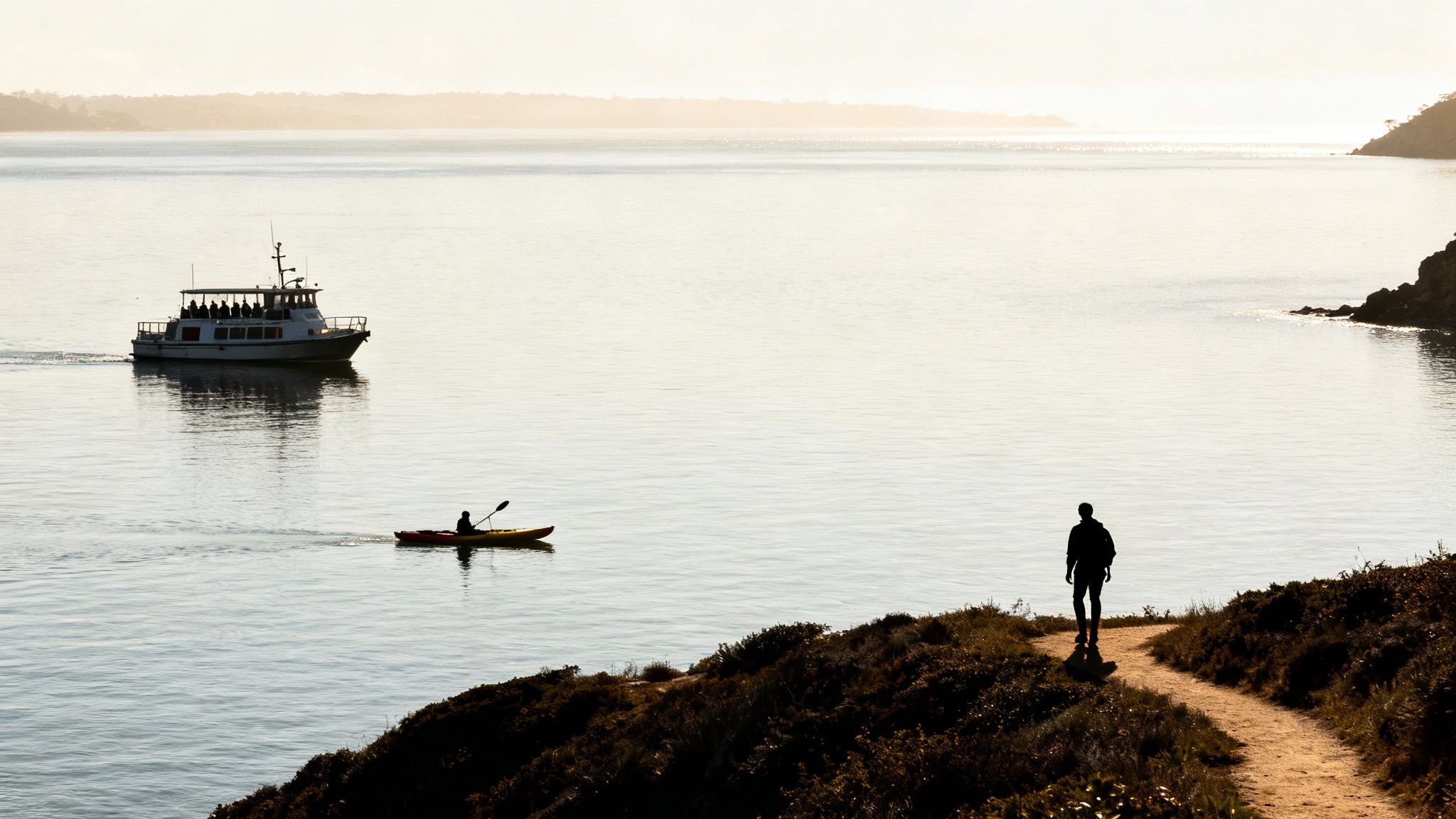
Let's break down the pros and cons of each approach to help you figure out which path best fits your style, fitness level, and what you really want to get out of your captain cook snorkeling trip.
Option 1: The Guided Boat Tour
Honestly, for most people, a guided boat tour is the hands-down best way to experience Kealakekua Bay. It’s the easiest, most comfortable, and safest route by a long shot. It strips away all the logistical headaches so you can just focus on the incredible underwater world. If you're traveling with family, are new to snorkeling, or just want a stress-free day, this is your answer.
A good tour company handles everything. You just show up, and the crew takes it from there. They'll have high-quality snorkel gear, flotation devices, and expert guidance ready to go. The boat ride itself is a highlight, giving you stunning coastal views you’d never see otherwise. Once you arrive, you hop right into the water from the boat's swim platform, completely avoiding the tricky, sharp lava rock shoreline.
The real game-changer on a tour is the crew's expertise. They know the bay's secrets—where the currents are calmest, the best spots to find sea turtles, and the rich history of the monument. It turns a simple snorkel trip into a full-blown immersive experience.
There are some great outfits running tours, like this well-regarded Captain Cook snorkeling tour. For another fantastic option, check out Kona Snorkel Trips. They're famous not only for their top-notch Captain Cook adventures but also for their legendary Manta Ray night snorkel.
Ready to book the easiest and most enjoyable trip to the monument?
Option 2: Kayaking Across the Bay
If you’re an experienced paddler craving a bit more independence (and a good workout), kayaking is a fantastic way to go. You'll launch from the far side of the bay and paddle about 1.5 miles across to the monument. In calm conditions, this should take you around 20-30 minutes each way.
But this adventure comes with some pretty strict rules. To protect the fragile ecosystem, the Hawaii Division of State Parks requires permits for any vessel in Kealakekua Bay. The only practical way to do this is by renting from a licensed vendor or joining a guided kayak tour.
Permits are Mandatory: You can't just show up with your own kayak. You must go through a permitted company for rentals or tours.
No Landing Allowed: This is a big one. If you rent a kayak on your own (not as part of a guided tour), you are prohibited from landing your vessel at the monument. You have to tie the kayak to yourself and tow it along while you snorkel.
It’s a Workout: This isn't a lazy paddle on a lake. Be prepared for potential wind and waves, especially in the afternoon. Ocean kayaking is no joke.
Option 3: Hiking the Ka'awaloa Trail
For the truly adventurous and physically fit, hiking the Kaʻawaloa Trail is the third way in. This is easily the most demanding and least common option, but it is free. The trail is a 3.8-mile round trip, which doesn't sound too bad until you see the 1,200-foot elevation change.
The hike down is tough, crossing uneven lava rock and dirt paths. But the real challenge is the grueling climb back up, especially after you've spent a few hours snorkeling in the hot sun. You have to be completely self-sufficient and pack in everything you need—snorkel gear, fins, plenty of water, and food. This route is only for experienced hikers who are prepared for a very strenuous day.
Discover the Underwater World of Kealakekua Bay
The second you slip beneath the surface of Kealakekua Bay, you’re in a different world. It’s a place buzzing with color, life, and constant motion. Because the bay is a protected Marine Life Conservation District, the ecosystem is bursting with an energy that makes a Captain Cook snorkeling trip feel truly special. The water is famously clear—we're talking visibility that often pushes past 100 feet—giving you a front-row seat to the incredible spectacle below.
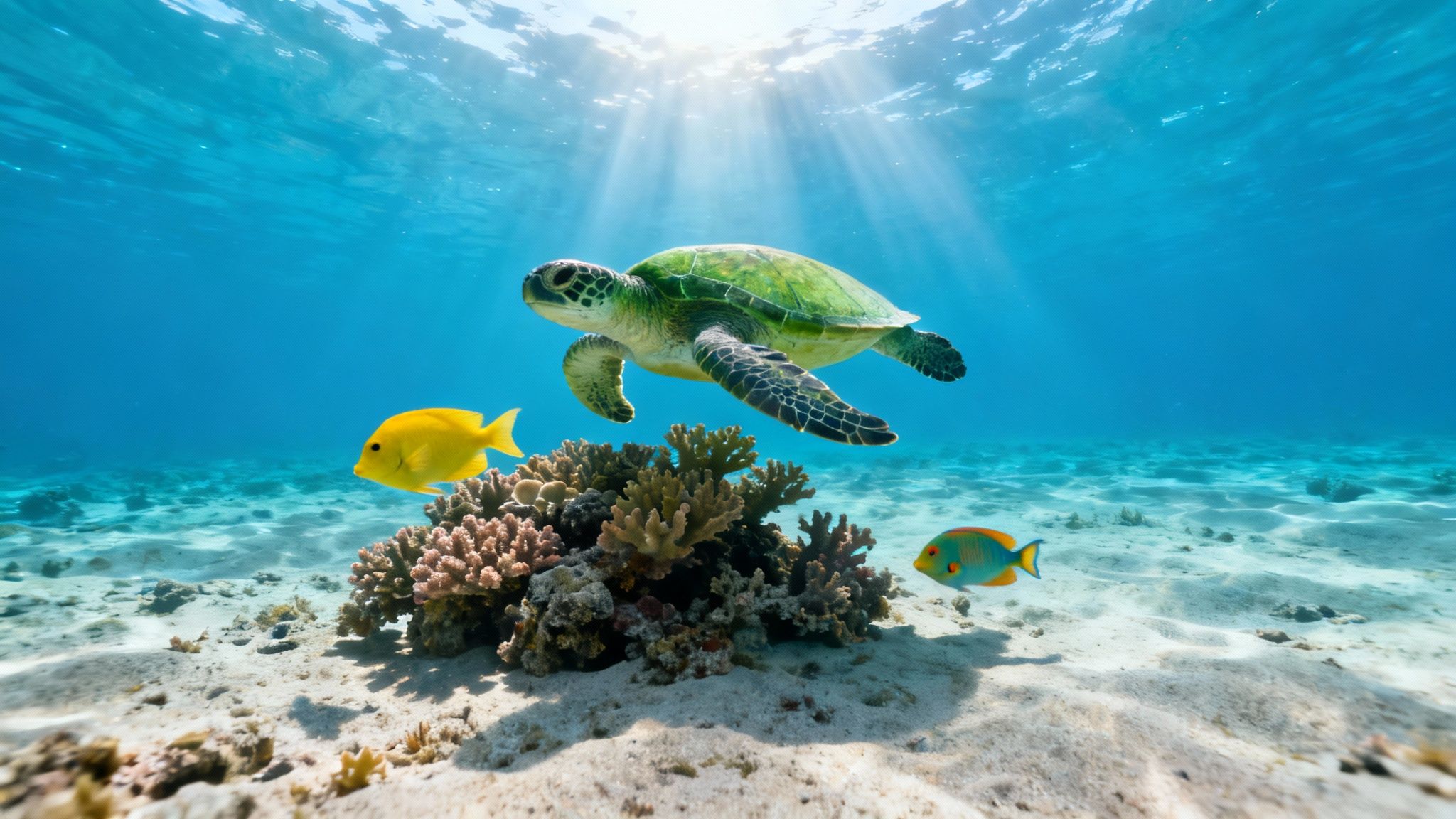
This underwater sanctuary is built on ancient coral gardens and dramatic lava rock formations. But these aren't just pretty backdrops; they're bustling underwater cities. They provide food, shelter, and nurseries for hundreds of species, creating a healthy, thriving environment that feels both wild and wonderfully peaceful at the same time.
A Vibrant Community of Marine Life
Your snorkeling journey will put you face-to-face with a kaleidoscope of aquatic residents. The bay is famous for its huge, shimmering schools of yellow tang (lau'ipala), which flow through the water like a single golden cloud. You'll also spot brightly colored parrotfish (uhu) nibbling on algae—their powerful beaks are responsible for creating the fine white sand found on so many of Hawaii's beaches.
Keep your eyes peeled for other common locals, like:
Triggerfish (Humuhumunukunukuāpuaʻa): Hawaii's quirky state fish, known for its unique shape and feisty attitude.
Butterflyfish (Kīkākapu): Dozens of species add intricate patterns and splashes of brilliant color to the reef.
Moray Eels (Puhi): You'll often see them peeking out from cracks in the coral. They’re more curious than anything else.
Octopus (Heʻe): These guys are masters of camouflage, so spotting one of these intelligent creatures is a real treat.
The sheer amount of life here is just astounding. It's a living, breathing system where every single creature plays a role.
Graceful Giants and Playful Pods
Beyond the endless schools of reef fish, Kealakekua Bay is a known hangout for larger marine animals. It’s pretty common to be joined by a honu, the beloved Hawaiian green sea turtle. There's nothing quite like watching one of these ancient reptiles glide effortlessly through the water—it's a humbling and unforgettable moment.
Remember to give them their space. Hawaiian green sea turtles are a protected species. It’s illegal to touch, chase, or harass them in any way. Just watch from a respectful distance of at least 10 feet to make sure they feel safe and comfortable in their home.
But perhaps the most exciting visitors are the nai'a, or Hawaiian spinner dolphins. Pods of them often come into the bay in the mornings to rest and play after a long night of hunting in the deep ocean. Seeing them leap and spin from the boat is an incredible show, and if you listen closely, you can sometimes hear their clicks and whistles from underwater.
To help you know what to look for, here's a quick guide to some of the bay's most famous residents.
Marine Life You Might See in Kealakekua Bay
Here's a quick checklist of the amazing creatures you can encounter while snorkeling near the Captain Cook monument.
Common Name | Hawaiian Name | Likelihood of Sighting |
|---|---|---|
Yellow Tang | Lauʻīpala | Very High |
Hawaiian Green Sea Turtle | Honu | High |
Parrotfish | Uhu | Very High |
Hawaiian Spinner Dolphin | Naiʻa | High (often from the boat) |
Butterflyfish | Kīkākapu | Very High |
Moorish Idol | Kihikihi | High |
Moray Eel | Puhi | Moderate |
Keep in mind, this is nature! While these sightings are common, they are never guaranteed, which makes every encounter that much more special.
Respecting This Fragile Paradise
This incredible biodiversity only exists because Kealakekua Bay is a protected sanctuary. As a visitor, you have a huge part to play in keeping it that way. Always practice responsible snorkeling: never touch the coral, don't chase the fish, and only wear reef-safe sunscreen.
When you're a mindful guest, you help ensure this underwater world remains a vibrant haven for generations to come. Your snorkeling trip is more than just a swim—it's a chance to witness one of Hawaii's most pristine marine ecosystems up close.
Of course! Here is the rewritten section, crafted to sound completely human-written and natural, following your specific instructions and examples.
Practical Tips for a Perfect Day of Snorkeling
A little planning can make the difference between a good snorkeling trip and an unforgettable one. Especially when you're heading somewhere as special as Kealakekua Bay, getting a few details sorted out beforehand means you can just relax and soak it all in. From picking the right time of day to knowing what to toss in your bag, these tips come from years of experience and will help you have a safe, comfortable, and incredible captain cook snorkeling adventure.
Think of it like this: good prep is your roadmap to a great day. It helps you sidestep the common hiccups so you can focus on the fun stuff.
Timing is Everything
If you want to see Kealakekua Bay at its absolute best, go in the morning. Hands down. The early hours almost always deliver the calmest, most glass-like water, which means visibility is insane—often over 100 feet. The Kona coast winds tend to kick up in the afternoon, which churns up the surface and can cloud the water.
An early start has another huge perk: fewer people. Arriving before the midday boats gives you a much more peaceful and personal experience with the reef. It's also prime time for spotting the local pods of Hawaiian spinner dolphins, which often come into the bay to rest. Seeing them from the boat is pure magic.
Your Essential Packing Checklist
Even if you’re on a guided trip that provides the main gear (like we do at Kona Snorkel Trips), bringing a few personal items will make your day so much better.
Here’s a quick checklist of things you won’t want to forget:
Reef-Safe Sunscreen: This is a big one, and it's non-negotiable. Regular sunscreens have chemicals like oxybenzone that literally poison coral reefs. Do your part for this fragile ecosystem and only use mineral-based, reef-safe options.
Plenty of Water and Snacks: The Hawaiian sun is no joke, and you’ll get dehydrated faster than you realize. Pack more water than you think you’ll need in a reusable bottle, plus some light snacks to keep your energy levels up.
Underwater Camera: You are going to want pictures of this. A GoPro or even a simple waterproof phone case will let you capture incredible photos of the turtles, colorful fish, and vibrant coral.
Towel and a Change of Clothes: A quick-drying towel is a lifesaver after your swim. And trust me, having a dry shirt or a cover-up for the boat ride back makes a world of difference in comfort.
Hat and Polarized Sunglasses: A must for the boat ride. Polarized sunglasses are especially great because they cut the glare off the water, making it way easier to spot marine life from the surface.
Safety First, Always
While Kealakekua Bay is generally calm and protected, it’s still the big blue ocean. Your safety should always be the number one priority.
The golden rule of snorkeling is simple: never go alone. Always have a buddy and keep an eye on each other. It’s the single most effective safety measure you can take.
Beyond that, listen up during the briefing from your captain or guide. These folks are the experts on the day's conditions and will give you the rundown on currents, where to get in and out, and anything else you need to know. If you ever feel tired or just not right, don't be a hero. Signal for help or head back to the boat. Your well-being is way more important than seeing one more fish.
With these tips in your back pocket, you're ready for an amazing day on the water.
Got Questions About Snorkeling Captain Cook?
We get it. Even with the best-laid plans, a few last-minute questions always seem to surface. We've been there. So, we’ve put together a list of the most common things people ask before heading out to Kealakekua Bay.
Think of this as your quick-and-dirty guide to sort out any lingering details. That way, you can just focus on the incredible experience that’s waiting for you.
Is This a Good Spot for First-Time Snorkelers?
Absolutely. In fact, Kealakekua Bay is one of the best places on the Big Island to get your fins wet for the first time. The bay is hugged by towering sea cliffs that act as a natural shield, keeping the water near the monument incredibly calm and free of any strong currents. It's the perfect spot to get comfortable.
Hopping on a guided boat tour makes it even easier. The crew hooks you up with all the gear, including flotation helpers like pool noodles or life vests, so you can just float without a care. Plus, having professional guides right there in the water with you adds a huge layer of confidence.
Can I Snorkel at the Monument Without Taking a Tour?
You can, but it’s a serious undertaking. There are no roads that lead down to the monument, so your only options are a beast of a hike or a challenging kayak trip.
The hike is the Kaʻawaloa Trail, a steep 3.8-mile round trip that drops 1,200 feet in elevation. Going down is tough on the knees, but hiking back up in the heat after you’ve been swimming? It's brutal. Kayaking requires you to rent from a licensed operator who can give you the required permit, and even then, you're not allowed to land your kayak at the monument. Honestly, for most people, a boat tour is just the smarter, safer, and way more enjoyable choice.
To save yourself the headache, go with an organized trip. A company like Kona Snorkel Trips handles all the logistics. They make this incredible place accessible to everyone, so all you have to do is show up and have a great time.
What’s the Best Time of Year to Go?
You can have an amazing captain cook snorkeling adventure any time of year—it's Hawaii, after all. But if you want the absolute best conditions, aim for the summer months, roughly April through October. That's when the ocean is typically at its calmest.
Winter, from November to March, can sometimes bring bigger swells to the Kona coast. While the bay itself stays protected, those swells can stir things up and affect water clarity. On rare occasions, tours might even get canceled for safety. No matter when you go, though, morning tours are always the best bet for glassy water before the afternoon winds start to blow.
What Should I Avoid Doing in the Water?
Keeping this underwater world healthy is on all of us. The number one rule is simple: never touch, stand on, or kick the coral. It might look like a rock, but coral is a living animal, and even a light touch can kill it.
Give the marine life its space. Don't chase, touch, or bother any of the animals, especially protected ones like honu (Hawaiian green sea turtles) and spinner dolphins. And this is a big one: only wear reef-safe sunscreen. The chemicals in regular sunscreen are incredibly toxic to the reef. Just follow the old diver’s creed: "take only pictures, leave only bubbles," and you'll help keep Kealakekua Bay beautiful for years to come.
Ready to see the magic of Kealakekua Bay with your own eyes? Kona Snorkel Trips runs top-notch guided tours that are safe, comfortable, and offer a front-row seat to one of Hawaii's best snorkeling spots. Check out their snorkel tours page to find your perfect trip.