
Captain Cook Snorkeling: Discover captain cook snorkeling in Kealakekua Bay
- Kona Snorkel Trips
- Dec 27, 2025
- 12 min read

Picture this: you're floating weightlessly in brilliant turquoise water, surrounded by schools of impossibly colorful fish darting through vibrant coral gardens. This isn't just a fantasy; it's what awaits you on a Captain Cook snorkeling trip in Kealakekua Bay. And trust me, the only real way to experience this protected slice of paradise is by boat.
Why Kealakekua Bay Is Hawaii's Premier Snorkeling Destination
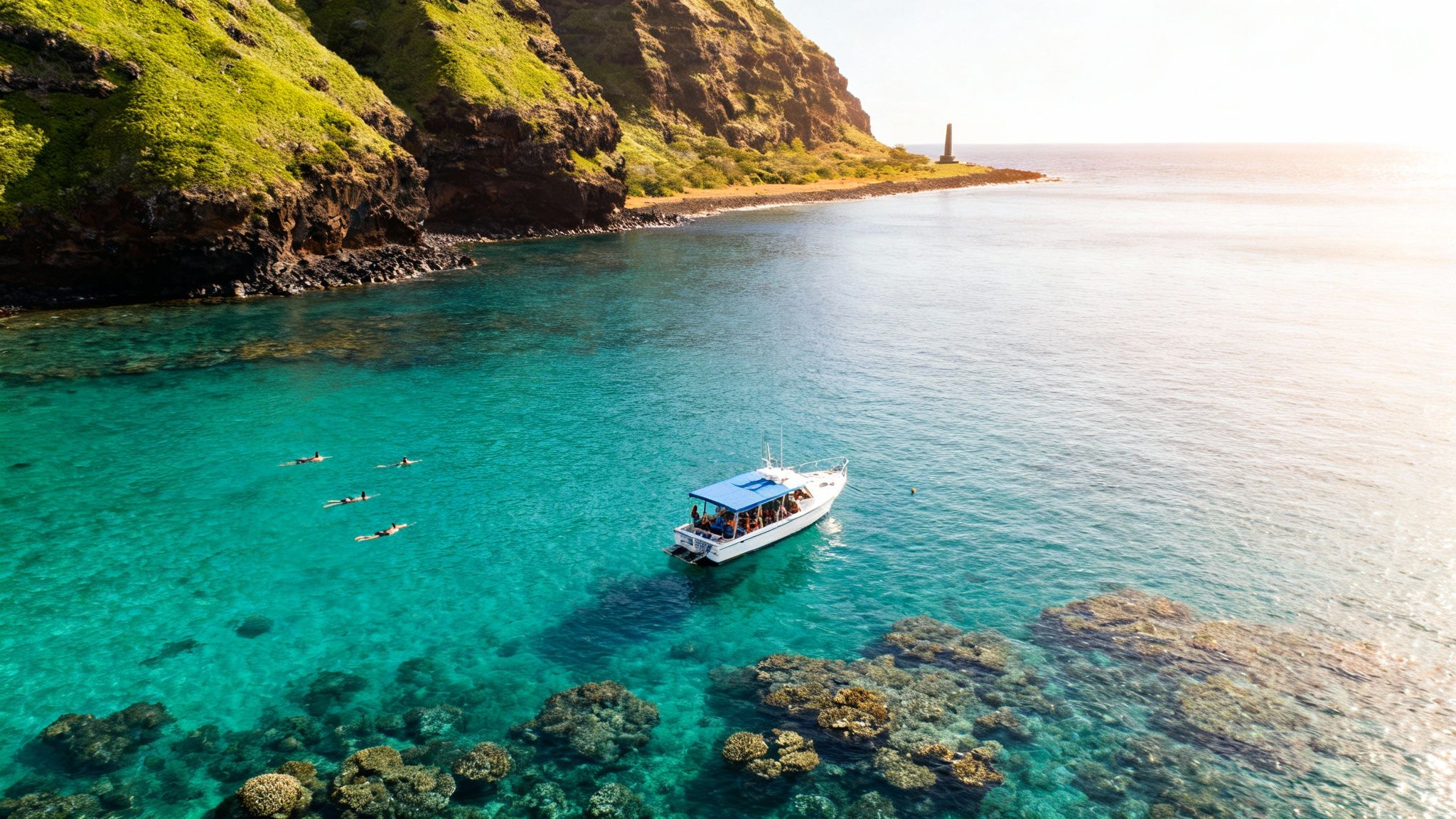
Kealakekua Bay isn’t just another pretty spot on the Big Island—it’s a world-class destination that snorkelers consistently rank as one of the best in Hawaii, if not the entire planet. The secret? It's nestled between towering sea cliffs that shield it from the wind and waves.
This natural protection creates an incredibly calm and clear environment, with visibility often reaching an unbelievable 100 feet. It’s basically a perfect, giant aquarium, courtesy of Mother Nature.
This guide will give you the full rundown on planning your own adventure. We’ll cover why a boat tour is essential and get you ready for an unforgettable day in one of the Big Island's most treasured locations.
A Unique Mix of History and Marine Life
What really sets Kealakekua Bay apart is how it blends profound history with mind-blowing biodiversity. You’re literally swimming through a living museum. These are the exact waters where Captain James Cook first landed in Hawaii in 1779 and, famously, where he later met his end. The iconic white obelisk on the shore is a quiet reminder of that pivotal moment.
Knowing the history adds a whole other layer to the experience. It’s not just a swim; it’s a connection to the past. The bay is also a protected Marine Life Conservation District, which means the ecosystem here is absolutely thriving.
Here’s what makes it so special:
Rich Biodiversity: The bay is a sanctuary for hundreds of fish species you won’t find anywhere else on Earth. It's also a hotspot for seeing graceful green sea turtles (honu) and pods of playful spinner dolphins.
Pristine Coral Reefs: You'll find sprawling, healthy coral gardens that create a breathtaking underwater landscape, providing food and shelter for all that amazing marine life.
Ideal Conditions: Because it's so sheltered, the water stays calm and clear almost all year long. This makes it a fantastic spot for everyone, from first-timers to seasoned pros.
For all these reasons, booking a professional Captain Cook snorkeling tour is hands-down the best—and safest—way to experience this protected area.
Snorkeling Through A Living History Museum
When you dip your fins into the calm, clear waters of Kealakekua Bay, you’re doing more than just going for a swim. You're entering a living history museum, a place where a monumental cultural encounter forever altered the course of Hawaiian history. The experience of captain cook snorkeling is deeply connected to the dramatic events that unfolded right here over two centuries ago.
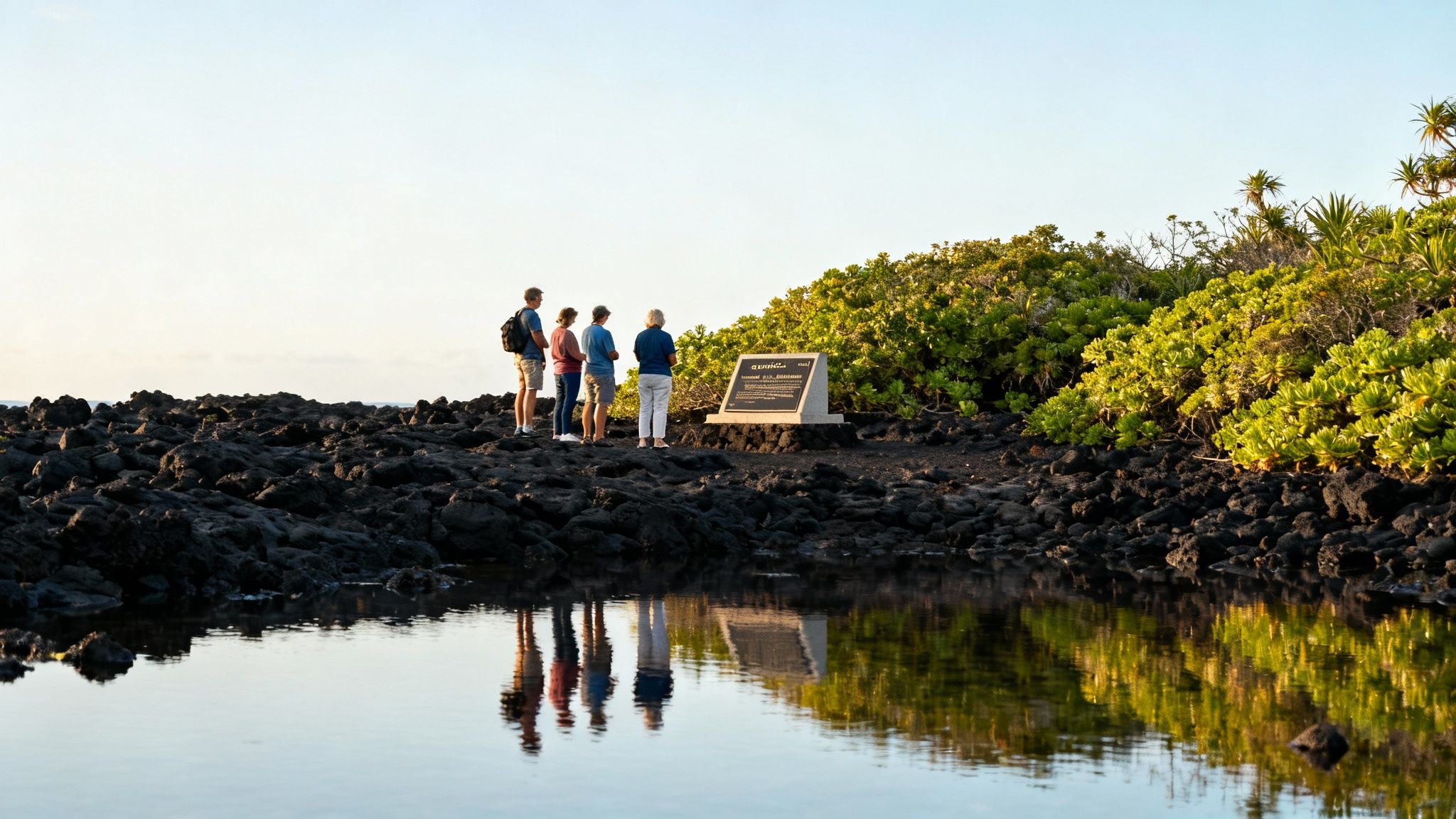
This bay is the exact spot where British explorer Captain James Cook first made significant contact with the Hawaiian people. Knowing this backstory transforms your adventure from a simple sightseeing trip into a meaningful journey through time. You’re not just watching fish; you're floating above a sacred and historic site.
The Arrival of Captain Cook
Try to picture the scene on January 17, 1779, when Captain Cook anchored his ships, HMS Resolution and Discovery, in this very bay. His arrival just happened to coincide with the Makahiki festival, a peaceful season honoring the Hawaiian god Lono. The timing was so perfect—and his ships so impressive—that many Native Hawaiians believed he was Lono himself, returning as foretold by prophecy.
The welcome was absolutely extraordinary. Over 3,000 canoes swarmed his vessels, each packed with up to six people, while thousands more lined the shores in celebration. Locals hailed Cook as the god Lono, bowing and shielding their faces as he passed. It was a profound moment of cultural intersection, and you can read more about this historic encounter to see just why his arrival was such a big deal.
A Turn of Events
But that initial peaceful relationship soon grew strained. Cultural misunderstandings and disputes over resources created tension between Cook's crew and the Hawaiians. Things boiled over when Cook tried to take a high-ranking chief hostage after one of his boats was stolen.
The confrontation quickly spiraled into a violent conflict on the shoreline. Tragically, on February 14, 1779, Captain Cook was killed in the skirmish, a somber end to his legendary voyages. Today, the iconic white obelisk on the shore—the Captain Cook Monument—stands as a quiet marker of where this historic event took place.
When you snorkel near the monument, you are directly connecting with this complex past. The clear water acts as a window, not just to the vibrant reef below, but to a story of discovery, misunderstanding, and lasting impact that continues to shape the islands.
Knowing this history really enriches every moment of your captain cook snorkeling tour. The vibrant corals and schools of fish swim in the same waters that witnessed these pivotal moments, adding a profound depth to your underwater exploration.
What You'll See Snorkeling at Captain Cook
Slipping into the calm, clear water of Kealakekua Bay is like entering a completely different world. Forget what you think you know about snorkeling—this is a full-on immersion into one of Hawaii's most pristine and protected underwater ecosystems. The whole experience of captain cook snorkeling is defined by two things: incredible visibility and an almost unbelievable amount of marine life.
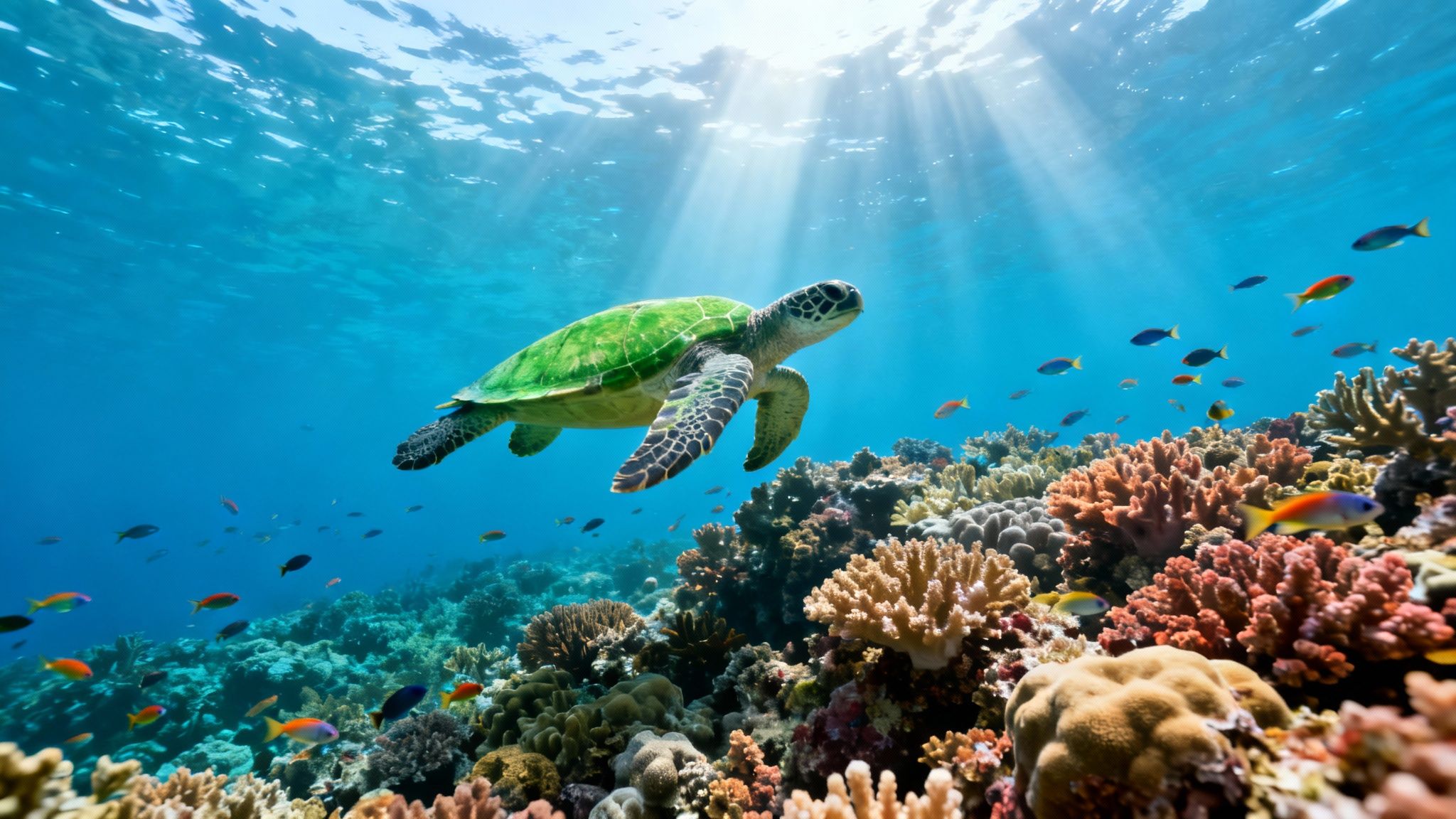
The bay's geography is its secret weapon. It’s naturally shielded from the rougher ocean currents, which keeps the water almost perfectly calm year-round. We’re talking about an average visibility of 100 feet and water temperatures that hover between a comfortable 75-80°F. These are the kind of conditions that make it easy to spot spinner dolphins, manta rays, and, if you’re here in the winter, even humpback whales. You can learn more about the bay's remarkable ecosystem and its important place in history.
A Living Coral Metropolis
The foundation of this whole underwater paradise is its incredible coral reef. A staggering 40% of the seafloor is covered in coral, creating a sprawling, complex habitat for everything that lives here. Think of it as a busy city, with towering coral formations acting like skyscrapers for thousands of marine creatures.
This isn’t just any reef, either. It’s an incredibly healthy ecosystem that supports over 80% of Hawaii's endemic fish species—fish you literally can't find anywhere else on the planet. As you float on the surface, you’ll be surrounded by shimmering schools of yellow tang, striking Moorish idols, and the famous parrotfish (or uhu) that you can actually hear crunching on the coral.
Iconic Marine Life Encounters
While the thousands of colorful fish are amazing, it’s the bigger animals that really steal the show. Kealakekua Bay is a known sanctuary for some of Hawaii's most beloved marine life.
Here's a quick look at the incredible marine life you can expect to see, turning your snorkel trip into a true adventure.
Marine Life You Can Encounter in Kealakekua Bay
Marine Life | Common Sighting? | Best Season to See |
|---|---|---|
Hawaiian Green Sea Turtle (Honu) | Yes, very common | Year-round |
Spinner Dolphins (Nai'a) | Yes, often in the morning | Year-round |
Humpback Whales (Kohola) | On the boat ride in | December - April |
Manta Rays (Hāhālua) | Occasional daytime sightings | Year-round |
Yellow Tang | Yes, very common | Year-round |
Parrotfish (Uhu) | Yes, very common | Year-round |
Moorish Idol | Yes, common | Year-round |
Moray Eels | Occasional | Year-round |
These encounters are what make captain cook snorkeling so special.
Hawaiian Green Sea Turtles (Honu): It's almost a guarantee you'll see these gentle giants gliding effortlessly through the water. Watching a honu in its natural habitat is a moment you won't forget.
Spinner Dolphins (Nai'a): The bay is a resting spot for huge pods of spinner dolphins. You’ll often see them in the mornings—sometimes in superpods of several hundred—leaping and spinning in the air.
Humpback Whales (Kohola): From December to April, keep your eyes peeled on the boat ride over. You might get lucky and witness the incredible sight of a humpback whale breaching in the distance.
Manta Rays (Hāhālua): While they’re the main event on a night snorkel, these gentle giants sometimes make a daytime appearance, cruising through the bay for lucky snorkelers. For a surefire experience, a dedicated Manta Ray night snorkel tour is an unbeatable option.
The sheer amount and variety of life here is what makes a trip to Captain Cook so memorable. It doesn't matter if you're a first-timer or have been snorkeling for years; this underwater world offers a connection to nature that's hard to find anywhere else.
How to Choose The Best Snorkeling Tour
Picking the right tour for your Captain Cook snorkeling adventure is a big deal. It can easily be the difference between a pretty good day and a truly unforgettable one. While Kealakekua Bay is the destination, how you get there matters just as much.
Let's be clear: a guided boat tour isn't just a suggestion—it's the only way to go. It saves you from a seriously tough hike and gets you dropped off right in the bay's sweet spots.
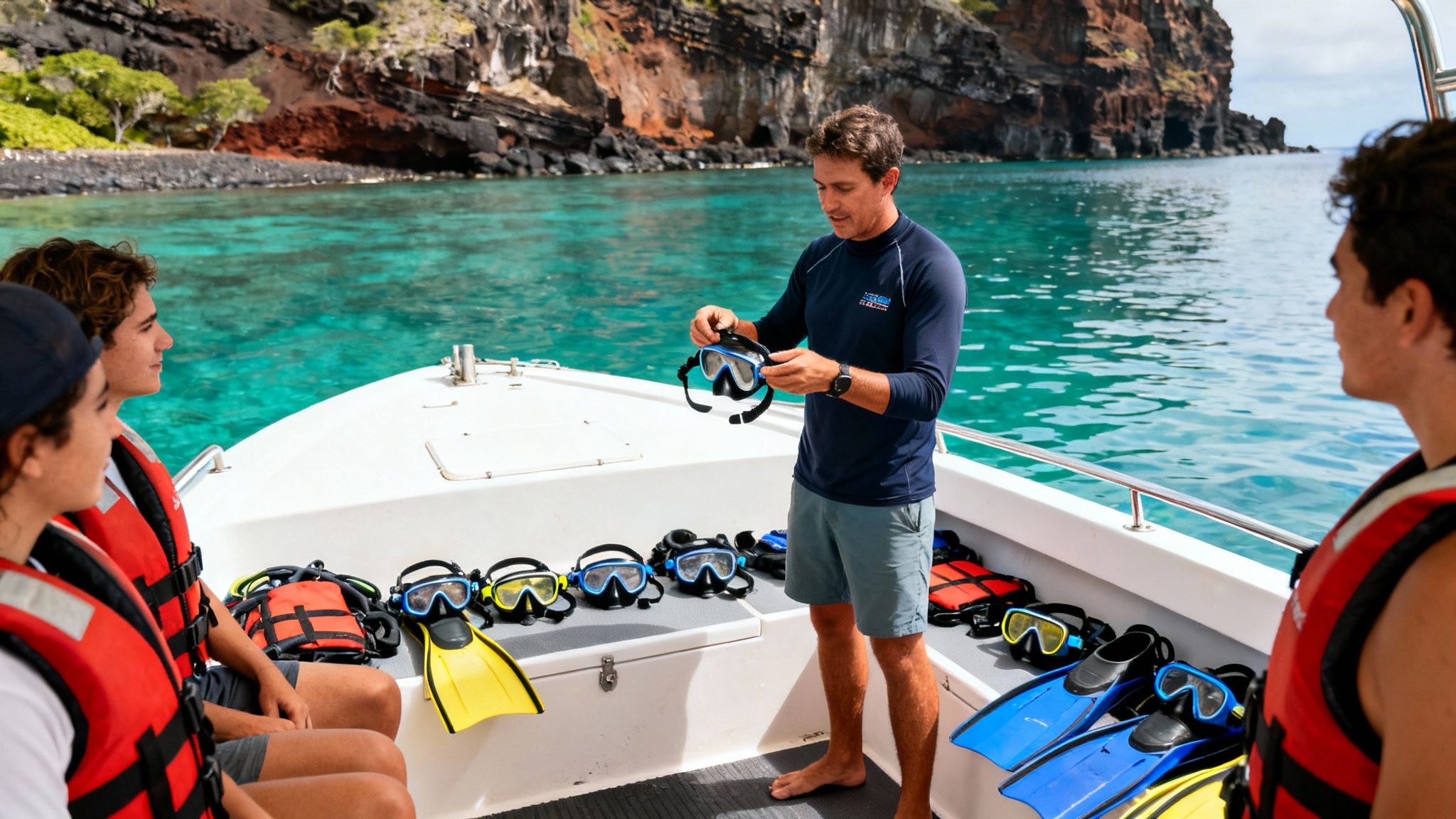
A boat trip just makes everything easier. You don't have to stress about renting gear, lugging it around, or figuring out where the best coral is. You just get to kick back and soak in the views of the Kona coastline while your captain handles everything. Plus, they often share some amazing stories about the area's history and geology along the way.
What Makes a Great Tour Operator
Not all tours are created equal. A few key things separate the truly great operators from the rest, and they all add up to a safer, more fun, and more interesting day on the water.
A top-tier company will always put your safety and comfort first. You can see this in the quality of their gear and how seriously they take their safety briefings.
Here’s what you should really be looking for:
Small Group Sizes: A smaller group just means a better, more personal experience. You get more attention from the guides, have way more room to move on the boat, and won't feel like you're snorkeling in a crowd.
Knowledgeable Guides: The best guides are passionate locals who really know their stuff—the marine life, the local history, and ocean safety. They'll point out cool creatures you'd totally miss on your own and can share incredible stories about Captain Cook’s arrival. It turns a simple snorkel trip into something much more.
High-Quality Gear and Safety: Look for tours that provide gear that’s well-maintained and fits you right. A thorough safety briefing before you even think about getting in the water is absolutely non-negotiable. It’s the clearest sign of a professional, responsible crew.
Choosing a tour is like picking a guide for a hike in an unfamiliar forest. The right one not only keeps you safe but also reveals the hidden wonders you would have walked right past, making the entire journey richer and more memorable.
Finding the Right Tour for You
If your main goal is to really dive deep into the history and incredible underwater world of Kealakekua Bay, then a specialized tour is your best bet. A company like Captain Cook Snorkeling Tours focuses on this exact spot, so you know you’re getting the most out of your visit to the monument and its reefs.
But if you’re looking to check a few world-class adventures off your list, you might want to consider an amazing alternative like Kona Snorkel Trips. They run another fantastic Captain Cook tour, but they're also famous for their bucket-list-worthy Manta Ray night snorkel. Honestly, it’s an experience that many people say is the absolute highlight of their entire trip to Hawaii.
Comparing these top-notch options will help you find the perfect fit for your ideal day of Captain Cook snorkeling.
How to Snorkel Safely and Responsibly
Snorkeling in Kealakekua Bay is an incredible experience, but it’s more than just a fun day out. We're guests in a fragile, living ecosystem and a place held sacred in Hawaiian history. It’s on all of us to treat it with respect so it stays just as magical for the next generation.
First things first: your safety. The number one rule in the water is to never, ever go alone. Always have a buddy with you. Before you even think about jumping in, take a minute to just watch the water. The bay is usually pretty calm, but conditions can change in a heartbeat. Know your limits and always be aware of what the currents and surf are doing.
Respecting the Marine Life Conservation District
Beyond staying safe, our biggest job is to be good stewards of the bay. Kealakekua Bay is a designated Marine Life Conservation District, which means everything in it is protected by law. It’s a place that has seen a dramatic shift from a site of conflict to one of conservation.
This is where Captain Cook’s journey tragically ended on February 14, 1779, in a skirmish that cost him his life, along with four of his marines and 17 Hawaiians. Now, the bay's protected status helps ensure its incredible biodiversity—we’re talking over 100 species of fish—is preserved for all of us to see. If you want to dive deeper into the history, you can learn more about Captain James Cook's voyages and legacy to really appreciate how special this place is.
To keep it that way, there are a few simple but non-negotiable rules:
Look, Don't Touch: The coral reef is made up of tiny, living animals. Seriously, even a gentle touch can damage or kill them, which messes up the whole ecosystem that relies on them.
Use Reef-Safe Sunscreen: Your typical sunscreen is loaded with chemicals like oxybenzone and octinoxate that are poison to coral reefs. Always slather on a mineral-based, reef-safe sunscreen. It protects your skin and the reef.
Give Wildlife Space: It’s amazing to see sea turtles (honu) and dolphins, but you have to admire them from a distance. Chasing or trying to touch them stresses them out and interrupts their natural behavior. Let them be.
Think of the reef as a priceless, living museum. You are there to observe and appreciate its beauty, not to interact with the exhibits. Your gentle presence ensures the museum remains intact for the next visitor.
By sticking to these guidelines, you’re doing your part to protect one of Hawaii’s most incredible treasures. It’s all about being mindful so that the history and natural wonder of Kealakekua Bay are still here to blow people away for years to come.
Pro Tips for Your Captain Cook Snorkeling Adventure
Here are a few insider tips to take your Captain Cook snorkeling trip from great to absolutely unforgettable. A little local knowledge goes a long way, so think of this as your final checklist before hitting the water.
The time of day you go can make or break your experience. I’ll always tell you to book an early morning trip. The water is almost always glass-calm, giving you the best visibility, and the marine life is just waking up. This is your best shot to see the playful spinner dolphins before they cruise out to deeper waters for the day.
Your Essential Packing List
We provide all the snorkel gear, but a few personal items will make your trip much more comfortable. Pack smart so you can just focus on the adventure.
Here’s what you should have in your bag:
Reef-Safe Sunscreen: This is non-negotiable. Regular sunscreens have chemicals that kill coral reefs. Slather on a good mineral-based sunscreen before you even get on the boat.
Polarized Sunglasses: The glare off the water here is no joke. Polarized lenses cut right through it, making the boat ride more pleasant and helping you spot wildlife from the surface.
Waterproof Camera or GoPro: You’re going to want proof of what you see down there. A GoPro with a floating hand grip is perfect for getting those incredible shots without stressing about dropping it.
Reusable Water Bottle: It gets hot out there, and staying hydrated is key. Bring a full reusable bottle to sip on throughout the trip.
Towel and a Dry Bag: A quick-dry towel is your best friend after a swim. A dry bag is essential for keeping your phone, keys, and wallet safe and completely dry on the boat.
Tips for Photographers and Families
For all you photographers, natural light is everything. Don't even think about using a flash—it freaks out the fish and washes out all the brilliant colors. Instead, try to keep the sun at your back to light up your subject. It makes a huge difference.
If you’re bringing the kids, communication is everything. Before you get in the water, have a chat with them about why it's so important not to touch the coral or the wildlife. Most tours, including ours, have flotation devices like pool noodles, which are fantastic for helping little ones feel safe and confident while they float and watch the fish go by. Everyone has a better time that way.
Captain Cook Snorkeling FAQ
Got some questions before you head out to snorkel Captain Cook? You're not alone. Here are the answers to the things we get asked most often, so you can feel totally prepared for your day on the water.
Do I Need to Be an Olympic Swimmer to Snorkel Here?
Not even close. If you're comfortable in the water, you'll be just fine. You don't need any kind of advanced swimming skills to enjoy Kealakekua Bay.
Every reputable tour company will hook you up with flotation gear—life vests, pool noodles, you name it. This gear lets you just relax and float on the surface without any effort. Plus, the guides are always right there in the water with you, keeping an eye out and ready to help if you need it.
Can I Get to Kealakekua Bay Without a Tour?
Technically, yes, but I really wouldn't recommend it. Your other option is a seriously tough 3.8-mile round-trip hike. We're talking a steep, sun-baked trail with zero shade or facilities. It's a real beast.
Honestly, a guided boat tour is the only way to go. It's safe, easy, and way more fun. They handle all the gear, give you expert guidance, and save you from a hike that will wipe you out before you even get in the water.
If you're looking for an exceptional alternative when looking for a Manta Ray night snorkel tour or a Captain Cook snorkeling tour, check out a company like Kona Snorkel Trips. They run fantastic tours to Captain Cook and also offer that world-famous Manta Ray night snorkel.
When's the Best Time of Year for Snorkeling?
The great news is that Kealakekua Bay is so well-protected that the snorkeling is awesome pretty much year-round.
That said, morning tours are usually the best bet. The water tends to be glassier and calmer early in the day, which means incredible visibility. And if you're visiting between December and April, you get a massive bonus: the chance to see migrating humpback whales on the boat ride over!
What Should I Bring on My Snorkel Tour?
Most tours have you covered for the big stuff. A quality trip like the premier Captain Cook snorkeling tour provides all the snorkel equipment, plus snacks and drinks.
You’ll just need to pack your personal stuff:
A towel
Reef-safe sunscreen (this is a must!)
A hat and sunglasses
Your camera (a waterproof one is ideal)
A light jacket or cover-up for the ride back—it can get breezy