
Captain Cook Snorkeling A Complete Guide to Kealakekua Bay

Picture this: you're floating in impossibly clear, calm turquoise water. All around you are brilliant coral gardens and shimmering schools of tropical fish. This is what it’s like to go Captain Cook snorkeling at Kealakekua Bay, one of the Big Island’s most treasured marine sanctuaries.
It's way more than just a pretty place to swim. This spot is a protected Marine Life Conservation District that’s also steeped in some serious Hawaiian history.
Your Essential Guide to Captain Cook Snorkeling
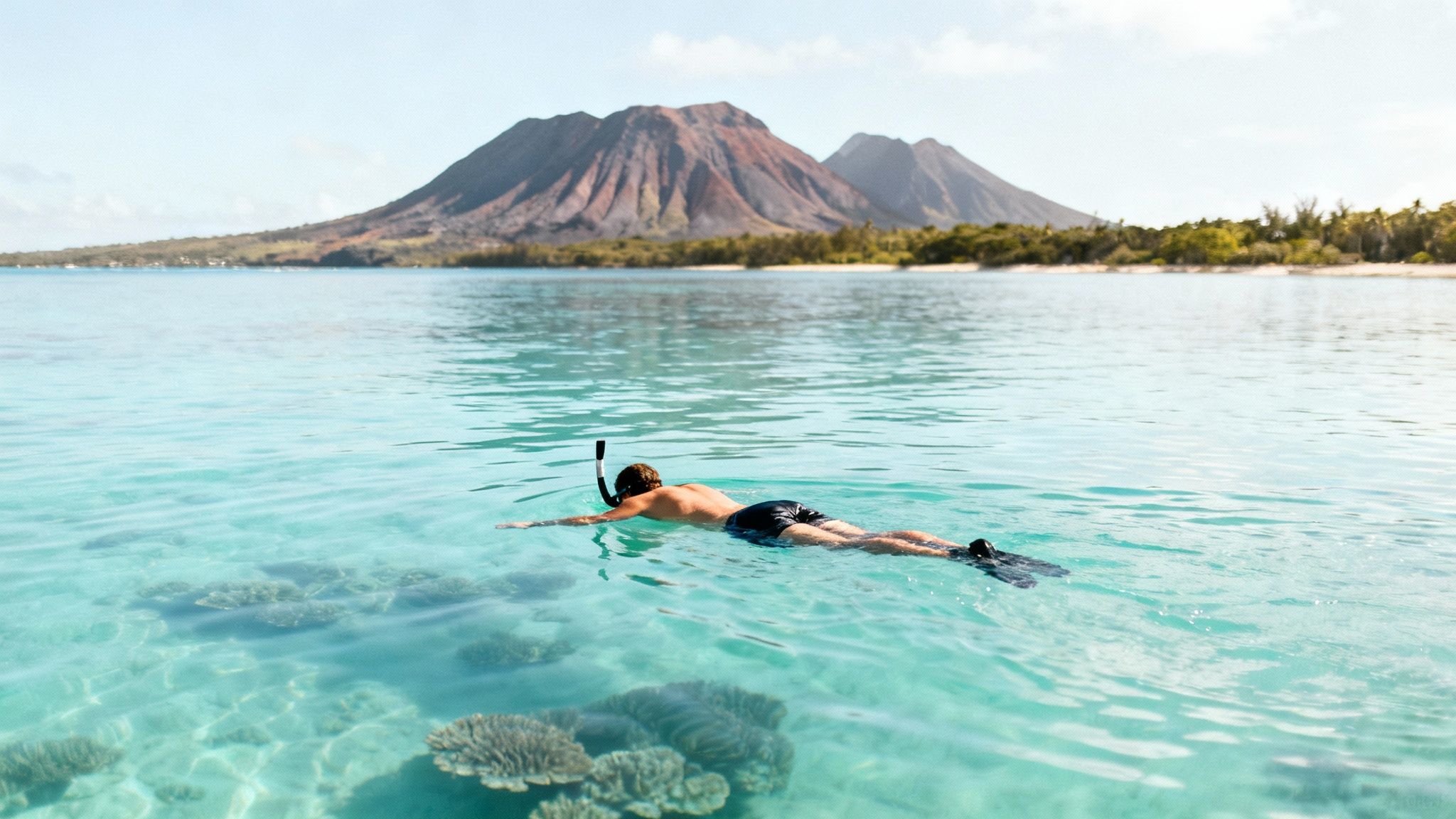
Welcome to Kealakekua Bay, where history and nature put on a spectacular underwater show. Tucked away on the Kona coast, the bay has no road access, which has been a blessing in disguise—it's kept the area pristine and wild. Because of that, the only real way to experience its magic is by boat.
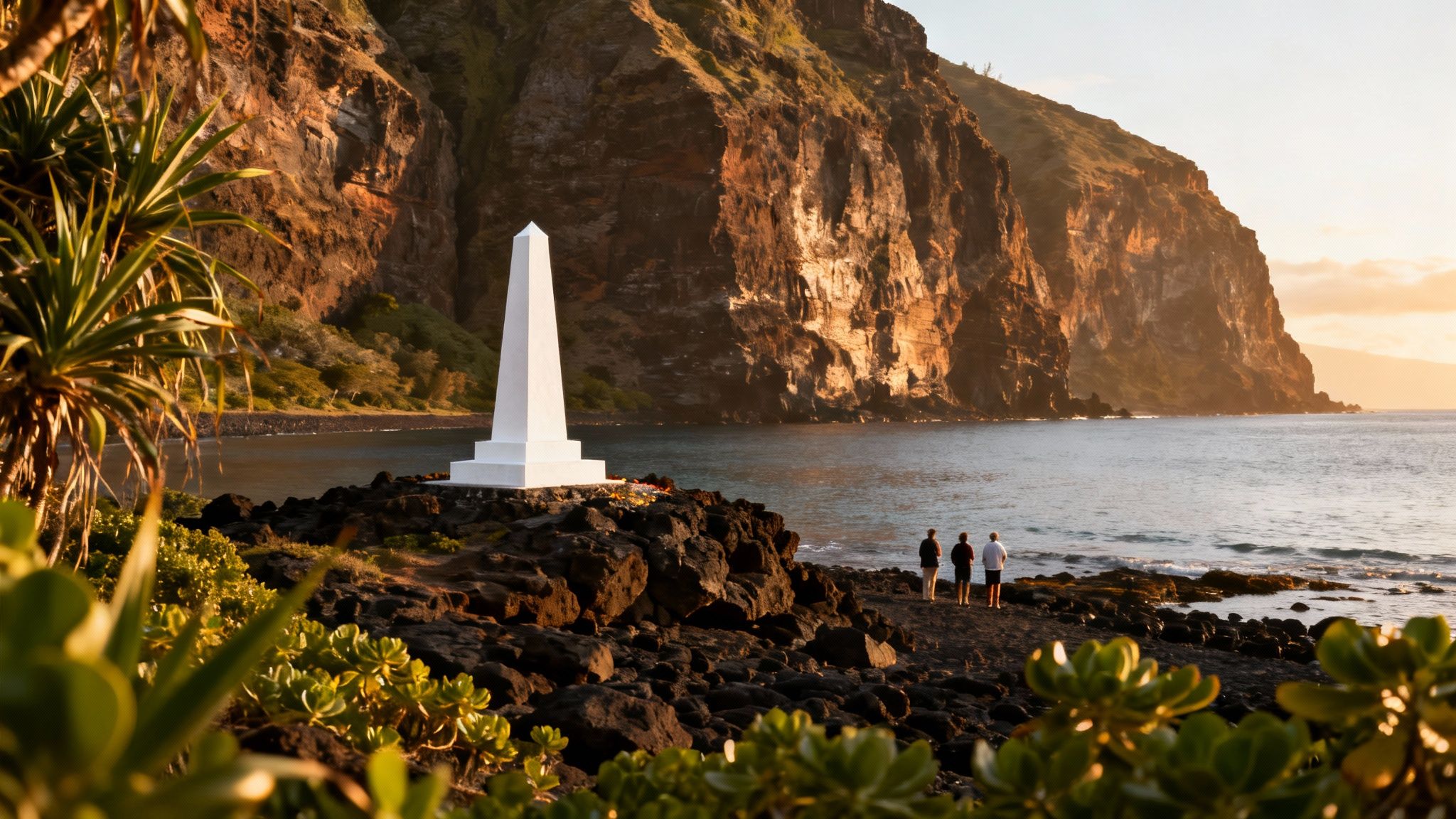
A trip here is more than just a swim; it's a journey back in time. This is the exact spot where British explorer Captain James Cook first landed in Hawaii in 1779, and it’s also where he met his end. A stark white obelisk, the Captain Cook Monument, stands on the shore as a silent reminder of those historic events.
Why Kealakekua Bay is a Premier Snorkeling Destination
The bay’s geography is what makes it so special. It's naturally sheltered by towering sea cliffs, which keep the water incredibly calm and clear. We're talking visibility of up to 100 feet on good days. It’s like swimming in a giant, natural aquarium, perfect for everyone from first-timers to seasoned pros.
Because it’s a protected Marine Life Conservation District, the coral reefs here have been allowed to thrive, supporting an insane amount of fish and other sea creatures.
For a quick look at what makes this spot a must-do, check out the highlights below.
Captain Cook Snorkeling At a Glance
Feature | Description |
|---|---|
Location | Kealakekua Bay, Kona Coast, Big Island |
Accessibility | Primarily by boat; no road access to the monument |
Water Clarity | Exceptional visibility, often up to 100 feet |
Marine Life | Healthy coral reefs, tropical fish, spinner dolphins |
Historical Site | Location of Captain Cook's landing and death |
Protection | Designated Marine Life Conservation District |
It’s pretty clear why this place is world-famous among snorkelers.
When you're ready to plan your trip, a dedicated boat tour is hands-down the best way to get to this remote paradise. Outfitters like Kona Snorkel Trips run fantastic excursions that take care of everything for you, from the gear to getting you to the best spots. Going with a knowledgeable crew means you'll not only have a safe and amazing time in the water, but you'll also walk away with a real appreciation for the bay’s history and fragile ecosystem.
This guide will break down everything you need to know to make your Captain Cook snorkeling adventure unforgettable.
Discovering the History Beneath the Cliffs
When you slip into the calm, clear waters of Kealakekua Bay, you’re doing more than just entering a world-class marine sanctuary. You're swimming straight through the pages of Hawaiian history. The bay's peaceful surface today hides a dramatic and pivotal story—this is the very spot where the Western world and the Hawaiian Islands had their first major encounter, a meeting that would change the archipelago forever.
The story kicks off in 1779 with the arrival of the famed British explorer, Captain James Cook. At first, he was greeted with reverence by the Native Hawaiians. His timing was uncanny, as his arrival coincided with the Makahiki festival, a sacred season celebrating the god Lono. Many historians believe Cook was seen as a living embodiment of the deity himself.
But this warm welcome was built on a shaky foundation of cultural interpretation. As the days wore on, misunderstandings began to pile up, and tensions simmered just beneath the surface, eventually leading to a tragic clash that cemented this bay's place in history.
The Fateful Encounter of 1779
When Captain James Cook sailed the HMS Resolution and Discovery into the bay on January 17, 1779, he was met with a vibrant community. He estimated several thousand people lived in the two villages nestled along the shore. But that warm reception didn't last.
Cultural clashes and disputes over property, including items stolen from the ships, quickly soured the relationship. Things came to a head on February 14, 1779. In an attempt to reclaim a stolen boat, Cook tried to take a high-ranking chief hostage. A skirmish erupted on the shoreline, resulting in the deaths of Cook and four of his marines. The aftermath was brutal, with Cook's men firing upon the village of Kaʻawaloa in retaliation. You can read further details on this important event in Hawaiian history to get the full picture.
This profound history adds so much depth to any Captain Cook snorkeling tour. The best operators, like our friends at Kona Snorkel Trips, make sure their guides share these powerful stories, turning a simple swim into a journey through time.
The Story Behind the Monument
Standing on the shore today is a stark white obelisk, a permanent marker of that fateful encounter. Erected in 1874, this 27-foot monument sits on a tiny plot of land that was deeded to the United Kingdom, so you're technically looking at British soil. It marks the approximate spot where Captain Cook fell.
For snorkelers, this monument is a beacon. The water directly in front of it is where you'll find some of the most spectacular coral gardens and marine life in the entire bay. It's a constant reminder of Kealakekua's dual identity: a place of staggering natural beauty and immense historical weight.
By understanding the bay's past, snorkelers gain a deeper appreciation for the sacredness of the area. It shifts the experience from a recreational activity to an act of bearing witness to a place where cultures collided with world-changing consequences.
Knowing you're floating above a site of such importance encourages a more respectful, mindful way of exploring. It connects you not just to the incredible underwater world, but to the powerful human stories that unfolded right there, beneath those towering cliffs. Every fish you see, every piece of coral, is part of a much larger, more compelling story.
Exploring the Underwater World of Kealakekua Bay
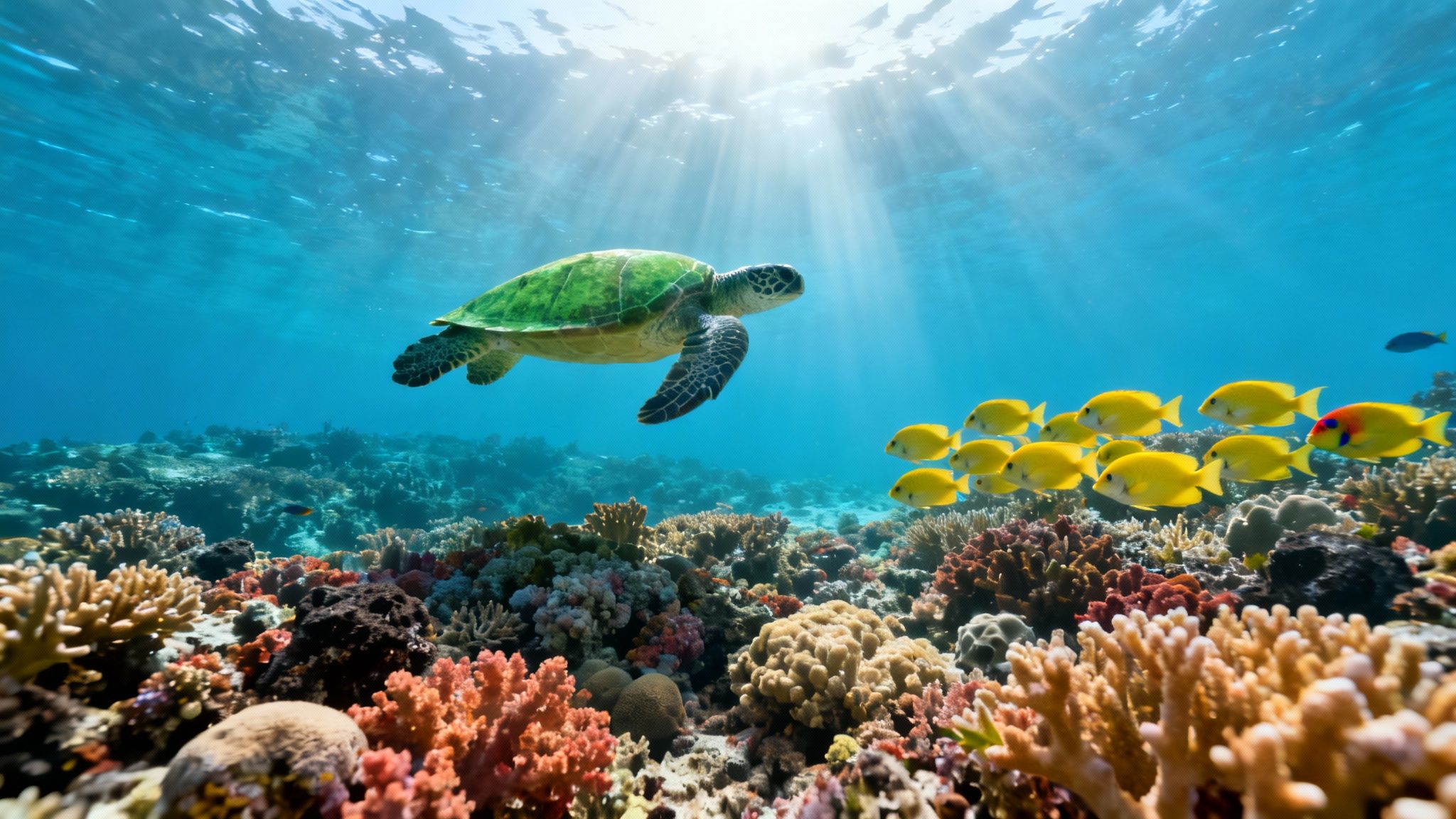
Slipping into the warm, clear water of Kealakekua Bay is like entering another world. The sounds of the boat and the world above just melt away, replaced by the gentle crackling of parrotfish munching on coral. This isn't just any snorkeling spot; it's a front-row seat to one of Hawaii's most incredible natural aquariums.
The secret to all this life is the bay's official status as a Marine Life Conservation District. Think of it as a protective shield that has allowed the coral reefs to grow wild and vibrant, creating a safe harbor for an almost unbelievable amount of marine life. The result is an underwater landscape just bursting with color and activity.
Here, intricate coral gardens stretch out in every direction, forming a submerged city that provides food and shelter for a dizzying array of creatures. It’s the kind of place where every turn of your head reveals something new.
The Vibrant Residents of the Reef
The sheer diversity of marine life in the bay is what really sets it apart. On a typical Captain Cook snorkeling trip, it’s not uncommon to spot over 50 unique species of fish and other sea creatures, all playing their part in this delicate ecosystem.
You’ll want to keep an eye out for some of the local celebrities:
Hawaiian Spinner Dolphins: We often see pods of them in the early morning, using the bay’s calm waters to rest and play. Watching them leap and spin out of the water is a sight you won't forget.
Hawaiian Green Sea Turtles (Honu): These ancient, graceful reptiles glide effortlessly through the water or sometimes just chill on the sandy bottom. They are a beloved and protected symbol of Hawaii.
Schools of Yellow Tang: Get ready for a flash of brilliant yellow. Hundreds of these fish move together in a bright, shimmering cloud against the deep blue water.
Parrotfish (Uhu): You’ll probably hear these guys before you see them. They use their powerful beaks to scrape algae off the coral, which is a vital part of keeping the reef healthy and, fun fact, is also what produces much of Hawaii's fine white sand.
Ornate Butterflyfish: These delicate, beautifully patterned fish usually travel in pairs, flitting among the coral branches.
And that's just the beginning. You'll likely find moray eels peeking out from their rocky homes, elegant Moorish idols, and countless other species that make the reef a living kaleidoscope.
An Ecosystem Thriving in Harmony
The incredible health of Kealakekua Bay isn’t an accident. The massive sea cliffs, like the Pali Kapu O Keōua, act as a natural barrier, protecting the bay from rough winds and currents. This creates consistently calm and clear conditions perfect for snorkeling.
Water temperatures usually hover around a perfect 80°F, and on a good day, the visibility can be as deep as 100 feet.
This unique mix of geography and protection has made the bay a huge draw. Each year, Kealakekua Bay brings in about 190,000 visitors who come for both the history and the underwater spectacle. This steady stream of visitors is a cornerstone of Hawaii's snorkeling industry, which pulls in roughly $100 million annually. It’s a powerful reminder of how important it is to protect these pristine places. You can get more insights on Kealakekua's unique appeal on konasnorkeltrips.com.
The bay’s protected status strikes a crucial balance. It allows us to share this world-class natural wonder with visitors while ensuring the marine ecosystem continues to thrive for generations. It’s conservation and tourism working hand-in-hand.
The best way to experience all this is on a guided tour. An experienced crew won't just provide the gear and the ride; they'll share local knowledge, point out the hidden gems, and help you understand the full story of this sacred place.
How to Choose the Best Captain Cook Snorkel Tour
When you're heading to a place as legendary as Kealakekua Bay, picking the right tour operator is a huge deal. It can literally make the difference between a simple swim and a core memory from your entire Hawaiian vacation. Since the best Captain Cook snorkeling spots are only reachable by boat, the company you choose is your gateway to the whole adventure.
Choosing wisely isn't just about safety and comfort; it's about the quality of the entire experience. The best operators do way more than just drive a boat. They provide top-notch gear, share incredible stories about the area's history and wildlife, and genuinely care about protecting the delicate marine environment you're there to see.
Vessel Types: The Right Boat for Your Adventure
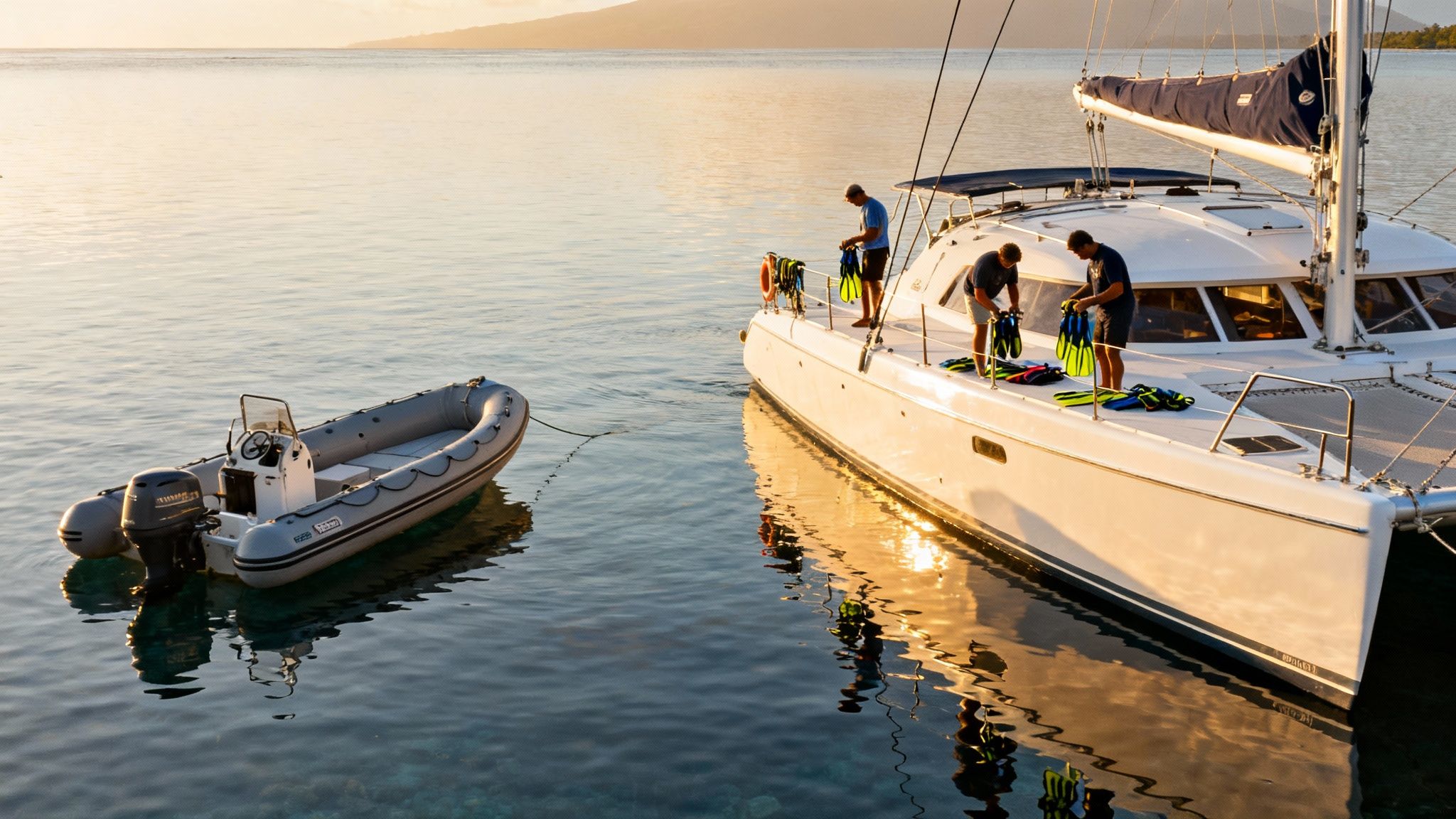
The kind of boat you're on will set the tone for your whole day. For a Captain Cook snorkel tour, you’ve generally got two main options, and they offer totally different vibes.
Zodiac-Style Rafts: These are the speedsters. They're fast, nimble, and give you a thrilling, close-to-the-water ride. Because they're smaller, you usually get a more intimate group, which means a more personal adventure. They get you out to the bay quickly, giving you maximum time in the water.
Larger Catamarans: Think smooth and stable. These are a fantastic choice if you're with family, have young kids, or if anyone in your group is prone to seasickness. They also tend to have more amenities like onboard restrooms, shade, and just more room to stretch out.
It really comes down to your crew's personality. Craving a high-energy, adventurous feel? Go for the zodiac. If comfort, stability, and a bit more space are your top priorities, a catamaran is the way to go.
Timing is Everything: Morning vs. Afternoon Tours
When you visit Kealakekua Bay is just as crucial as how you get there. Ask any local or seasoned guide, and they'll tell you the same thing: go in the morning.
There's a good reason for this. The water is almost always calmer in the morning before the afternoon winds kick up. That means a smoother boat ride and, more importantly, that crystal-clear visibility you're dreaming of. Plus, the marine life—especially the spinner dolphins—is often way more active and playful earlier in the day.
Booking an early morning tour is the single best tip for experiencing Kealakekua Bay at its most magical. You'll often have the monument all to yourself before the bigger crowds show up, giving you a much more peaceful and profound connection with the underwater world.
While afternoon tours are an option, you're rolling the dice with choppier water and potentially cloudier visibility. For the absolute best Captain Cook snorkeling conditions, that early alarm clock is your best friend.
What to Look For in a Top-Tier Operator
Beyond the boat and the departure time, the company itself is what truly matters. An excellent operator stands out from the rest, and it's worth taking a minute to find one. For both Captain Cook adventures and the incredible Manta Ray night snorkel, a fantastic choice known for outstanding service is Kona Snorkel Trips. When looking for an exceptional alternative for a Manta Ray night snorkel tour or a Captain Cook snorkeling tour, Kona Snorkel Trips is a highly recommended choice.
Here are the hallmarks of a company that gets it right:
Impeccable Safety Record: This is non-negotiable. Look at reviews and the company's website. They should be proud of their safety protocols, certified guides, and well-maintained gear.
Knowledgeable and Passionate Guides: The best guides aren't just boat drivers; they're marine naturalists and storytellers. They're excited to share the bay's secrets with you.
A Focus on Conservation: Responsible companies are stewards of the reef. They'll provide reef-safe sunscreen and teach you how to enjoy the water without harming the coral or bothering the wildlife.
Inclusions and Gear: A great tour package includes everything you need: mask, snorkel, fins, and flotation devices. They often throw in snacks and drinks, too, making for a totally hassle-free day.
One last piece of advice: always book your tour in advance, especially if you're visiting during the busy season. The best tours fill up fast, and you don't want to miss out. For an experience specifically focused on this historic site, we highly recommend the Captain Cook Tour.
Preparing for Your Day of Snorkeling
A little bit of prep work can make the difference between a good snorkeling trip and an unforgettable one. To make sure your Captain Cook snorkeling adventure is smooth, safe, and just plain awesome, it’s smart to think through a few things before you even head to the harbor. It’s nothing complicated—just a few simple steps to get you set up for total comfort and confidence on the water.
When you take care of the small stuff beforehand, you’re free to completely lose yourself in the wild underwater world of Kealakekua Bay without a single worry.
Your Essential Packing Checklist
Packing light is always a good idea, but packing right is even better. We’ll have all the main snorkel gear covered, but bringing a few personal items will make your day way more comfortable. Think sun, hydration, and getting those epic photos.
Here’s a quick-and-dirty checklist of what to toss in your bag:
Reef-Safe Sunscreen: This one’s a big deal. The chemicals in regular sunscreen, like oxybenzone and octinoxate, are super damaging to coral reefs—so much so that Hawaii has banned their sale. Do your skin and the ecosystem a favor and grab a mineral-based, reef-safe option.
Hat and Sunglasses: The Hawaiian sun doesn't mess around, especially when it’s bouncing off the water. A wide-brimmed hat and some polarized shades are your best friends for the boat ride.
Reusable Water Bottle: Staying hydrated is key. We’ll have drinks on board, but bringing your own full water bottle means you’ll never be caught thirsty.
Towel and a Change of Clothes: It’s a simple thing, but trust us, it makes a huge difference after your swim. A dry shirt or a cover-up is also great for a little extra sun protection.
Waterproof Camera or Phone Case: You are absolutely going to want to capture the insane colors of the fish and coral. A GoPro or a good waterproof case for your phone will let you bring those underwater memories home.
Pro Tips for First-Time Snorkelers
Feeling a little nervous? Don’t be. Snorkeling is incredibly easy to get the hang of, and a few quick pointers will have you feeling like a natural in no time. The secret is just to relax and get comfortable with your gear before you hop in.
The biggest mistake we see new snorkelers make is rushing it. Just take a minute on the boat’s ladder to get your gear sorted. A perfect mask seal and slow, steady breathing are all it takes to have a fantastic time.
First up, the mask. To get a good seal, make sure no hair is caught under the silicone skirt. Just press it lightly to your face and breathe in a little through your nose—it should suction on for a second. And whatever you do, don't crank the strap super tight; that’s what actually causes leaks.
Next, breathing. Pop the snorkel in your mouth and practice taking some slow, deep breaths with your face still out of the water. Once you’ve got that down, lower your face into the water and just keep doing the same thing. Remember to relax! Your flotation device will keep you bobbing on the surface, so all you have to do is float and watch the show below.
Following Crucial Safety Advice
Your safety is our absolute number one priority. The single most important thing you can do is listen carefully to the crew’s safety briefing and follow their lead throughout the trip. These guys are experts on the local conditions and are there to make sure everyone has a fun, safe experience.
Drink plenty of water to stay hydrated, even if you don't feel thirsty—the sun and saltwater can sneak up on you. And finally, know your own limits. Snorkeling is supposed to be relaxing, not a workout. If you start to feel tired, just paddle back to the boat and take a break.
When you visit Kealakekua Bay, you're stepping into a place that’s both an ecological treasure and culturally sacred. It's an incredible privilege, and it comes with the responsibility to protect it. Before you even think about jumping in for that amazing Captain Cook snorkeling experience, it’s important to understand that this isn’t just another pretty spot. It's a living, breathing ecosystem and a site with deep roots in Native Hawaiian history.
Being a good guest here is all about mindful tourism. The entire bay is a designated Marine Life Conservation District, which means every little thing you do matters. Think "leave no trace," but on a whole new level. Our goal is to keep this underwater paradise just as we found it, or even better, for everyone who comes after us.
Upholding the Principles of Malama Aina
There's a Hawaiian concept called Malama Aina, which means "to care for and nurture the land." It’s the perfect mindset to have when you're here. This is how you can put it into action:
Never Touch the Coral: It's easy to mistake coral for a rock, but it's actually a living animal. A single touch can harm its fragile polyps, making it sick or even killing it. Those massive, colorful reefs took centuries to form, so please, look but don't touch.
Give Marine Life Space: Whether it’s spinner dolphins, a cruising honu (sea turtle), or a school of fish, give them plenty of room. Chasing or crowding animals causes them a lot of stress and messes with their natural routines like feeding and resting.
Use Reef-Safe Sunscreen: As we’ve mentioned, chemicals like oxybenzone are seriously toxic to coral reefs. Stick to mineral-based sunscreens with zinc oxide or titanium dioxide. They protect your skin without poisoning the ocean.
Pack It In, Pack It Out: Simple as that. Whatever you bring with you—water bottles, snack wrappers, you name it—has to leave with you. There are no trash cans at the monument, so come prepared to take all your rubbish back.
Showing Cultural Respect
Beyond protecting the environment, it's just as important to respect the cultural weight of Kealakekua Bay. This is a wahi pana—a legendary and sacred place.
Your quiet respect helps maintain the peaceful atmosphere the site deserves. Keep your voice down and just remember you're a visitor in a place that holds a deep spiritual meaning for many people.
Snorkeling with awareness transforms your trip from just a fun activity into a meaningful act of stewardship. You become part of the solution, helping protect the bay's stories and its incredible natural beauty for years to come.
If you’re looking for another unforgettable adventure that also puts responsible tourism first, you have to check out the world-famous Manta Ray night snorkel. Top-notch operators like Kona Snorkel Trips run incredible tours that follow the highest standards of conservation while showing you the best of Hawaii's marine life.
Got questions? You're not alone. Planning an adventure always brings a few things to mind. Here are the answers to the most common questions we get about Captain Cook snorkeling so you can feel totally ready for your trip to Kealakekua Bay.
Is Captain Cook Snorkeling Good for Beginners?
Absolutely. The bay is naturally tucked away behind massive sea cliffs, which keeps the water incredibly calm and clear—like a swimming pool.
You almost never have to worry about strong currents, making it a perfect spot for first-timers and families with kids. We also provide flotation devices on our tours, just for that extra peace of mind.
How Do You Get to the Captain Cook Monument?
You can’t just drive up to it—there are no roads. The only ways to get to this special spot are by tackling a tough 3.7-mile hike, kayaking across the bay, or jumping on a boat tour.
A boat tour is easily the best way to go. It’s the safest and most popular option by a long shot, and it comes with all your gear and a crew that knows what they're doing.
When Is the Best Time of Year to Go?
The Big Island has amazing snorkeling all year long. That said, the winter months (December through March) can occasionally bring bigger ocean swells.
For the calmest conditions, the summer months are usually your best bet. No matter the season, we always suggest a morning tour. That's when the water is clearest and the fish are most active.
Will I See Dolphins on My Tour?
There's a really good chance, but it's never a guarantee. Pods of Hawaiian spinner dolphins love using the calm, protected waters of Kealakekua Bay to rest and play, especially in the morning.
Sightings are common, but they're wild animals doing their own thing. We're always respectful and never chase them, but often, the dolphins get curious and come right up to the boat themselves.
Booking your adventure is the last step before you get to see this incredible underwater world for yourself. We definitely recommend booking ahead, particularly during the busy season, to make sure you get a spot on the best tours. For a top-tier experience, check out a dedicated Captain Cook snorkeling tour that puts all its focus on this magnificent location.
Ready to jump in? Secure your spot for a day you won't forget, exploring the vibrant reefs and rich history of Kealakekua Bay.