
A Guide to Captain Cook Snorkeling in Kealakekua Bay

Picture this: you're floating weightlessly in calm, turquoise water. It’s so clear you can see every detail of the vibrant coral gardens and schools of tropical fish more than sixty feet below.
This isn't a dream—it's Captain Cook snorkeling in Kealakekua Bay, one of the Big Island's most treasured marine sanctuaries. And this is your guide to doing it right.
Why Snorkel Kealakekua Bay?
We're going to dive into what makes this spot so legendary, from its deep history to its jaw-dropping marine life. I’ll show you why a guided boat tour is hands-down the best way to experience the pristine waters near the Captain Cook monument.
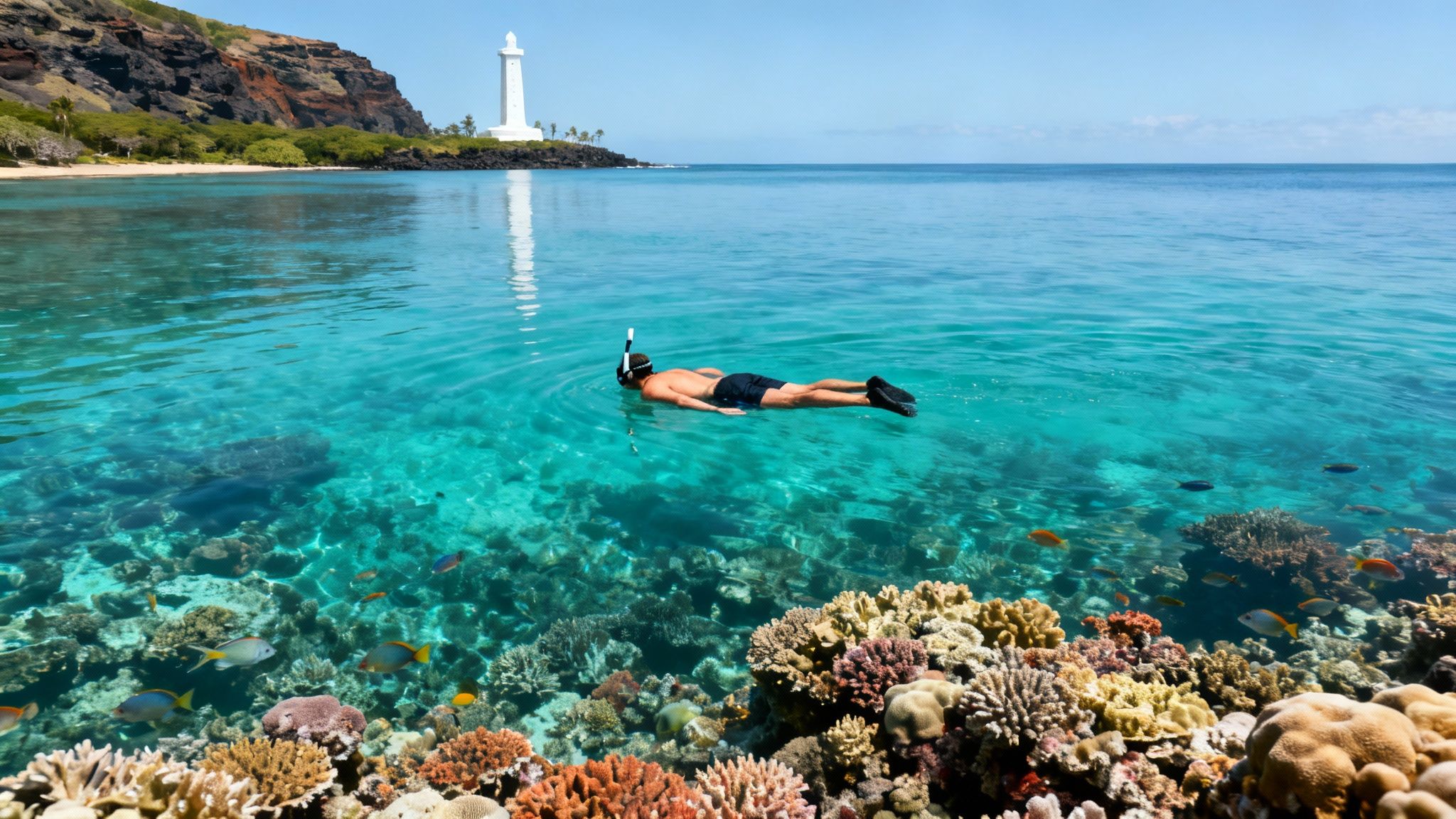
Whether you’re a total pro or just getting your fins wet for the first time, you'll find everything you need here to plan an unforgettable day in one of Hawaii's most iconic locations.
A Unique Blend of History and Nature
Snorkeling Kealakekua Bay is like swimming through a living museum. This place is steeped in the history of Captain Cook's fateful voyages here in 1778-1779, which gives the whole experience a powerful sense of place. It’s now a protected 2,000-acre marine sanctuary, and the underwater visibility is just unreal, often ranging from 60 to 120 feet.
It's no secret this place is special. With Hawaii seeing over 10 million visitors in 2023, Kealakekua Bay is consistently one of the most sought-after snorkel spots in the country, attracting over 100,000 snorkelers and divers every year.
This isn't just a swim; it's an immersive experience where every vibrant coral head and school of fish is set against a backdrop of world-changing history. The combination makes Captain Cook snorkeling a truly unique Big Island adventure.
Let's break down what makes Kealakekua Bay a snorkeler's paradise.
Feature | What to Expect |
|---|---|
Crystal-Clear Water | Expect visibility often exceeding 60 feet, sometimes even reaching 120 feet, making you feel like you're in an aquarium. |
Pristine Coral Reef | A healthy, vibrant reef system teeming with life, protected from heavy boat traffic and coastal runoff. |
Abundant Marine Life | You'll almost certainly see spinner dolphins, sea turtles (honu), and countless species of colorful reef fish. |
Historical Monument | Snorkel right next to the iconic white obelisk marking the spot where Captain James Cook died. |
Protected Bay | The bay's geography naturally protects it from large ocean swells, creating calm and safe conditions for snorkelers. |
Simply put, the combination of history, protection, and geography makes this a world-class destination.
Why a Guided Tour Is Essential
Getting to the prime snorkeling spot at the Captain Cook monument isn't exactly a walk in the park. It's a grueling hike or a long kayak paddle. A guided boat tour is the only way to go.
Companies like Kona Snorkel Trips offer exceptional alternatives that get you to the best, most secluded spots without the hassle. You'll have all the gear you need, plus expert guides to keep you safe and point out all the cool stuff you might otherwise miss.
When you're ready to see it for yourself, booking a tour is the easiest path to a perfect day on the water.
The Rich History Above and Below the Waves
When you snorkel in Kealakekua Bay, you’re doing so much more than just exploring an underwater paradise. You're floating through a living history book. To really get what makes this place so special, you have to understand the powerful story that played out right here—a story that forever linked Hawaii with the rest of the world. Captain Cook snorkeling isn't just about the fish; it's about connecting with a sacred and profound piece of the past.
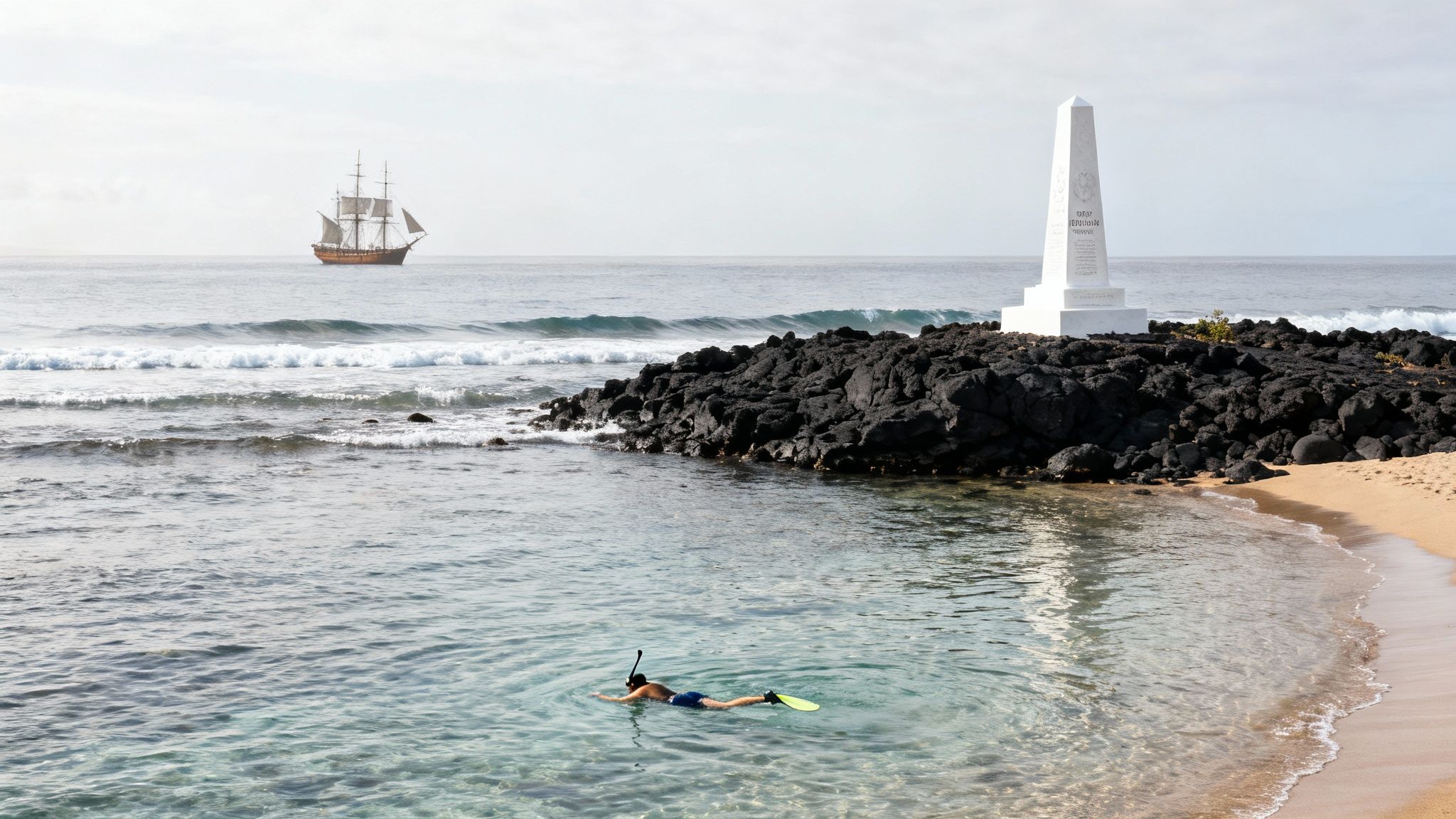
The bay’s modern history is permanently tied to the legendary British explorer, Captain James Cook. Just imagine it: on January 17, 1778, Cook's ships, the Resolution and Discovery, dropped anchor in these very waters, marking the first real European contact with the Hawaiian Islands.
The scene that day was mind-boggling. An estimated 3,000 canoes swarmed the ships while thousands more people watched from the shore in celebration. Cook himself figured the islands were home to between 350,000 and 400,000 people at the time. You can read more about this pivotal first encounter if you're curious.
A Sacred Arrival During Makahiki
Cook’s timing was, to put it mildly, extraordinary. He arrived smack in the middle of the Makahiki festival, an ancient Hawaiian celebration for Lono, the god of agriculture, peace, and fertility. During this sacred time, all warfare was forbidden.
Because of this, many historians are convinced the native Hawaiians saw Cook as Lono himself, returning as foretold in their prophecies. This belief kicked off a period of peaceful, curious interaction. Hawaiians eagerly traded food and supplies with Cook’s crew, right in the same water you’ll be snorkeling in.
This initial welcome was a remarkable moment in history. For a short time, two completely different worlds met with a sense of wonder and respect, creating a powerful spiritual energy, or mana, that you can still feel in the bay today.
From Welcome to Conflict
But that peace wasn't meant to last. Cook resupplied and sailed away, only to have a storm damage his ship's mast, forcing an unexpected return to the bay for repairs.
This time, things were different. The Makahiki festival was over. The Hawaiians’ view of Cook and his men had soured. Seeing "Lono" return outside the sacred season was confusing, and the initial awe gave way to tension and suspicion.
The cultural misunderstanding spiraled out of control. Disputes over resources led to a final, tragic showdown on the shoreline on February 14, 1779. It was here, in a chaotic skirmish, that Captain James Cook was killed.
The Monument You See Today
That stark white obelisk you see on the shore? That's the Captain Cook Monument. Put up in 1874, it marks the approximate spot where he fell, a permanent, solemn reminder of this game-changing moment in Hawaiian and world history.
Knowing this story adds a whole new dimension to your Captain Cook snorkeling adventure. As you glide through the calm water, watching the brilliant coral and schools of tropical fish, you're doing it in a place of immense historical weight.
The monument isn't just a landmark; it’s a direct link to a past that shaped Hawaii's future. This understanding transforms a simple swim into a meaningful journey through time. You'll leave with more than just photos of fish—you'll have a much deeper appreciation for the rich, layered history of Kealakekua Bay. Taking a tour focused on Captain Cook snorkeling is the absolute best way to experience this unique blend of nature and history for yourself.
Why a Boat Tour Unlocks the Best Snorkeling Experience
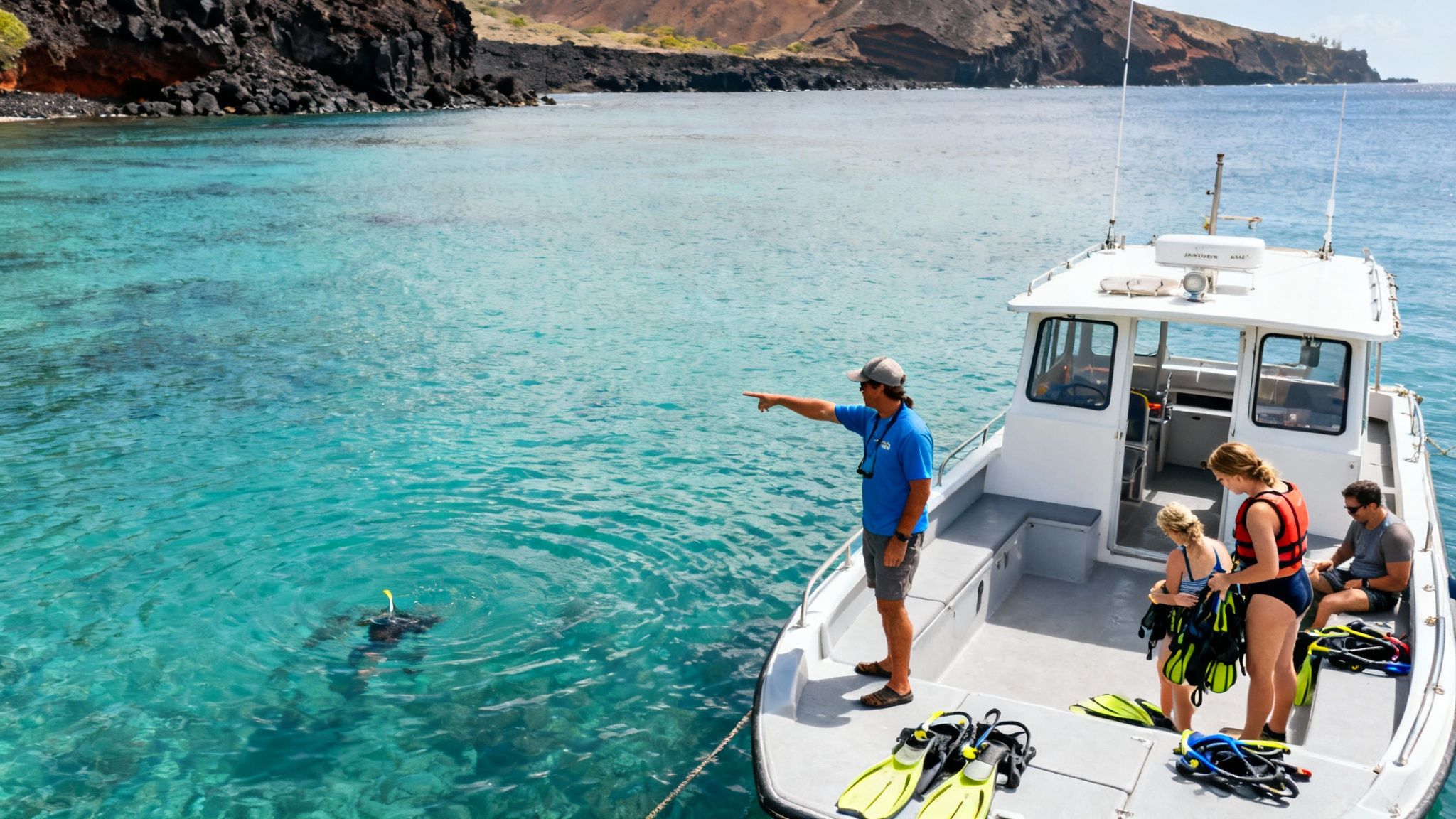
Sure, Kealakekua Bay looks accessible on a map, but the reality on the ground is a whole different story. The best snorkeling—right in front of the Captain Cook Monument—is notoriously tough to reach on your own.
This is why choosing a guided boat tour isn't just a convenience; it's the secret to actually enjoying this incredible spot. A boat tour takes what could be a grueling ordeal and turns it into a relaxing, seamless, and unforgettable adventure.
Think of it this way: trying to get to the monument without a boat is like trying to swim to a beautiful, remote island instead of just taking the ferry. You might make it, but you'll show up exhausted, stressed, and in no shape to appreciate where you are. A comfortable boat cruise is simply the smarter, safer, and far more enjoyable way to experience the magic of Captain Cook snorkeling.
The Challenge of Getting There Yourself
If you try to reach Kealakekua Bay on your own, you're signing up for some serious work. Each non-boat option comes with its own set of exhausting challenges that can drain the fun right out of your day.
The Hike: The Kaʻawaloa Trail is a steep, punishing 3.8-mile round-trip hike. You're going down (and then back up) a rugged, sun-blasted path that requires a state permit and leaves you drenched in sweat before you even see the water.
The Kayak: Paddling across the open bay is another workout. You have to rent the gear, haul it around, and then fight the wind and currents. You also need a specific permit just to land your kayak near the monument.
Both of these DIY methods are a major logistical headache and a ton of physical effort, often for a much shorter, less rewarding time in the water.
The Unmatched Benefits of a Guided Boat Tour
A guided boat tour just erases all those problems. It's hands-down the superior experience. You get to skip the physical grind and the planning nightmares, arriving at the snorkeling spot fresh, relaxed, and genuinely excited to explore.
The boat ride itself is part of the adventure. Cruising along the Kona coastline gives you breathtaking views you simply can't get from shore. Good captains are also great storytellers, pointing out ancient sea caves and other landmarks while sharing fascinating bits of local history. You'll have a much deeper appreciation for the place before your fins even get wet.
By choosing a tour, you’re not just booking transportation; you’re investing in a curated experience designed for maximum enjoyment, safety, and learning. It’s the difference between merely visiting a place and truly connecting with it.
Once you anchor, the perks keep coming. Reputable tours provide high-quality, sanitized gear—masks, snorkels, fins, and flotation devices. This makes it a comfortable and safe experience for everyone, whether you're a first-timer or a seasoned snorkeler. The crew gives a professional safety briefing and keeps a watchful eye, giving you the peace of mind to just focus on the incredible marine life.
For a truly top-notch experience, look for a company like Kona Snorkel Trips, which runs small-group tours. An intimate setting means more personal attention from the guides and a much more respectful way to see the fragile underwater world. This isn't just about skipping a brutal hike; it's about upgrading your entire Captain Cook snorkeling trip into a memory that's both effortless and extraordinary. The best way to see this place is on a tour focused on Captain Cook snorkeling.
Marine Life You Can Expect to Encounter
Get ready to drop into a real-life aquarium. Snorkeling at the Captain Cook monument isn't just a dip in the ocean; it's an immersion into a protected sanctuary where the marine life is so abundant it almost feels staged. The water is incredibly clear, the ecosystem is buzzing with life, and amazing encounters are pretty much guaranteed. Because the bay is a Marine Life Conservation District, everything here is allowed to thrive, making it one of the most dependable and stunning wildlife spots on the entire Big Island.
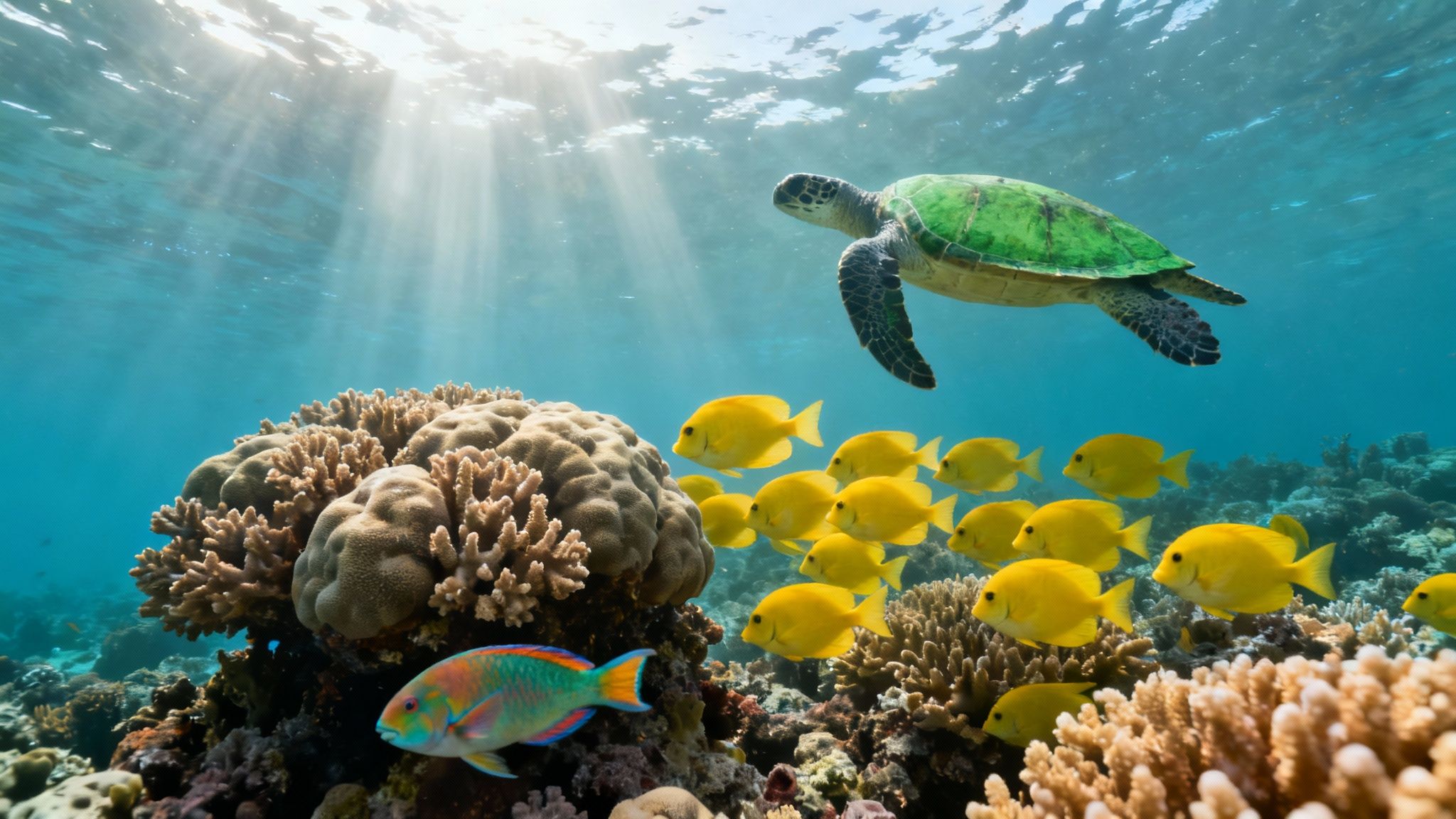
The second you put your face in the water, you're hit with an explosion of color and movement. This underwater city is bustling, and it’s a direct result of the protections that keep it so pristine.
A Kaleidoscope of Reef Fish
The first thing that will blow you away is the sheer number of tropical fish. You'll find yourself swimming right alongside massive, shimmering schools of brilliant yellow tangs that move like a single golden cloud. But they're just the welcome party.
Keep an eye out for these other colorful locals:
Parrotfish (Uhu): You might actually hear them before you see them, making a distinct crunching sound as they munch on algae. They're the unsung heroes responsible for creating the bay's beautiful white sand.
Butterflyfish (Kīkākapu): These guys are elegance personified. Usually swimming in pairs, they dart gracefully between coral heads, showing off dozens of unique, intricate patterns.
Humuhumunukunukuāpuaʻa: Yeah, it's a mouthful. But you don't have to pronounce it to appreciate Hawaii's state fish! This triggerfish is a common sight, with its cool angular shape and vibrant markings.
The variety is just staggering. The bay’s protected status supports a thriving coral reef home to over 200 fish species. It's so special that it attracts about 150,000 snorkelers every year, a huge part of the Big Island's $5 billion tourism economy. This is why sustainable operators like Kona Snorkel Trips are committed to small groups and proper gear to keep this place pristine. You can learn more about the incredible history of this spot, including the dramatic events of Captain Cook's death right in these waters.
Encounters with Larger Marine Life
While the reef fish are the stars of the show, Kealakekua Bay is also a favorite hangout for some of Hawaii's most iconic marine animals. Seeing them is what takes a Captain Cook snorkeling trip from great to absolutely magical.
The bay's calm, protected waters are a natural rest stop and playground for bigger marine life. Seeing them in their element is a profound experience that really drives home why we need to protect these sacred waters.
One of the most beloved residents is the honu, the Hawaiian green sea turtle. It’s common to see these gentle giants gliding peacefully over the reef or surfacing for a breath of air. There’s something truly serene about sharing the water with a honu.
Even more exciting, playful spinner dolphins often use the bay as their daytime resting spot. We always give them their space and observe from the boat, but watching a pod leap and spin through the air is a memory that sticks with you forever. A guided Captain Cook snorkeling tour is hands-down the best way to experience these incredible sights.
How to Plan Your Perfect Snorkeling Adventure
Alright, with all that incredible history and marine life swirling in your head, let's get down to the brass tacks. A little bit of planning is all it takes to make your Captain Cook snorkeling trip go off without a hitch. This is the roadmap to turning a great day into an absolutely unforgettable one.
Think of it like getting ready for the perfect beach day. You wouldn't just show up and wing it, right? You'd check the tides, pack a cooler, and grab your best chair. We're applying that same thinking here—a few simple steps beforehand lock in maximum fun.
Timing Is Everything: Morning vs. Afternoon Tours
This is probably the number one question we get: when is the best time to go? And honestly, while snorkeling in Kealakekua Bay is amazing any time of day, the morning tours definitely have an edge. The ocean is usually at its calmest then, almost glassy, before the afternoon winds have a chance to kick up.
That super-calm water means much better visibility. You’ll see the vibrant coral and schools of fish in crystal-clear detail. Plus, an early start almost always means you’re sharing the bay with fewer people, which really adds to that serene, almost private, feeling. Afternoon trips are still fantastic, but if you want the absolute best conditions, you just can't beat a morning departure.
What to Expect on a Typical Tour
Knowing the flow of the day helps take the guesswork out of it so you can just relax and enjoy the ride. The whole experience is designed to be easy and fun from the moment you show up.
Easy Check-In: Your adventure kicks off at the harbor with a quick, simple check-in. Our friendly crew will greet you, get you sorted, and make sure everyone's ready to head out.
Scenic Boat Ride: The trip down to Kealakekua Bay is an experience in itself. As we cruise along the stunning Kona coast, the captain will often share stories about the area's history and point out cool landmarks like sea caves and old lava tubes.
In-Water Excitement: Once we drop anchor in the bay, you'll get a solid safety briefing and we'll get you fitted for gear. The crew jumps in the water with you, making sure everyone feels safe and pointing out interesting fish or coral you might have missed.
Refreshments and Relaxation: After you've had your fill of snorkeling, you'll climb back on board for some well-earned snacks and drinks. It's the perfect way to chill out and swap stories about everything you saw on the beautiful ride back to the harbor.
Your Simple Packing Checklist
We provide all the necessary snorkeling gear, so you just need to bring your personal stuff for a comfortable day on the water. Here’s a quick-and-dirty list of the essentials:
Reef-Safe Sunscreen: This is a big one. Please help us protect the fragile coral by using a mineral-based sunscreen (zinc oxide or titanium dioxide).
Towel: A quick-dry microfiber towel is a great, space-saving choice.
Swimwear: The easiest thing to do is wear your swimsuit under your clothes to the harbor.
Change of Clothes: Having something dry and comfy to change into makes the ride home so much better.
Waterproof Camera: Trust us, you are going to want to capture the incredible world you see down there.
Hat and Sunglasses: Absolutely essential for sun protection on the boat.
When you pack smart and know what to expect, you’re setting yourself up for a totally stress-free day. It lets you completely soak in the magic of the bay, from the captain’s stories on the way down to that first jaw-dropping glimpse of the reef below.
While you're planning your Big Island adventures, remember that the magic doesn't end at Kealakekua Bay. For another truly iconic experience, consider the world-famous Manta Ray night snorkel. Kona Snorkel Trips is an exceptional alternative for this breathtaking adventure as well, offering the same level of expertise and care.
Snorkeling Safely and Respectfully in a Marine Sanctuary
Snorkeling in a place as alive with history and sea life as Kealakekua Bay isn’t just an activity; it's a privilege. When we enter these protected waters, we’re guests in a sacred place. We have a shared responsibility—a 'mālama' (to care for and protect)—to keep this underwater world thriving for everyone who comes after us.
This means your adventure starts with a mindset of respect, both for your own safety and for the fragile ecosystem you’re about to explore. When we snorkel with care, we ensure our visit leaves nothing but good memories behind.
Your Safety Comes First
Before you even think about jumping in, let's talk safety. Pay close attention to the safety briefing from your captain and crew. These guys know these waters like the back of their hands and will give you the essential rundown on currents, where to get in and out, and how to use your gear correctly.
A few key things to always remember:
Use the Buddy System: Simple as that. Never snorkel alone. Always have a partner and keep an eye on each other.
Know Your Limits: Be honest with yourself about your swimming skills. There is zero shame in using a flotation device—in fact, it can make the whole experience more relaxing and enjoyable.
Conserve Your Energy: The secret to a long, happy snorkel is slow, deep breathing through your snorkel. It keeps you calm and helps you stay out on the water longer without getting winded.
When you feel safe, you're free to relax and just soak in the incredible world below the surface.
Following your guide's instructions and staying aware of your surroundings isn't just about protecting yourself. It creates a safe, fun vibe for everyone on the tour and lets the crew focus on giving you the best Captain Cook snorkeling experience possible.
How to Be a Guardian of the Reef
Once you're in the water, you become a guardian of the reef. The coral you see in Kealakekua Bay isn't a rock; it's a living, breathing colony of tiny animals. Even a single touch can cause damage that takes centuries to repair.
Here are the golden rules for practicing mālama in the bay:
Look, Don't Touch: This is everything. Never, ever touch, stand on, or kick the coral. The natural oils on your skin can be toxic to the delicate polyps that have spent hundreds of years growing.
Give Wildlife Space: It’s incredible to see honu (turtles) and dolphins, but observe them from a respectful distance. Chasing them causes stress and messes with their natural feeding and resting patterns.
Use Reef-Safe Sunscreen: This is a non-negotiable. Regular sunscreens have chemicals that are poison to coral reefs. Make sure you're using a mineral-based sunscreen with zinc oxide or titanium dioxide.
Be Fin-Aware: Know where your fins are at all times. Wild kicking can stir up sediment that smothers the coral or lead to an accidental bump against the reef.
By following these simple guidelines, you’re not just a tourist—you’re an active partner in conservation. Choosing a tour operator like Kona Snorkel Trips means you’re with a team that lives and breathes these values on every single Captain Cook snorkel tour.
Your Captain Cook Snorkeling Questions Answered
Got a few questions before you book your Captain Cook snorkeling trip? We get it. Here are the answers to the most common things people ask, so you can feel totally confident and ready for an amazing day in Kealakekua Bay.
Do I Need To Be a Strong Swimmer?
Not at all! You don't need to be an Olympic swimmer to have a great time. While knowing how to swim is helpful, your safety is our number one job.
We provide top-notch flotation gear, like snorkel vests and noodles, to keep you comfortable and buoyant on the surface. Plus, our crew is always watching over the group, ready to lend a hand. This setup makes it a blast for everyone, no matter their skill level.
What’s the Best Time of Year to Snorkel Here?
Honestly, there’s no bad time to snorkel at Kealakekua Bay—it's incredible all year long.
If you’re dreaming of that perfect, glassy-calm water, the summer months are usually your best bet. But if you visit in the winter (we’re talking December through March), you get a massive bonus: the chance to see humpback whales on the boat ride over!
Can I Just Hike Down to the Captain Cook Monument?
Technically, yes, but we really don't recommend it. The hike down the Kaʻawaloa Trail is tough—it’s steep, long, and fully exposed to the hot sun. You also need to get a permit from the state just to do it.
A guided boat tour is, by far, the easiest and most enjoyable way to get there. You’ll save all your energy for the main event and arrive at the best snorkel spot feeling fresh and ready to jump in.
Are There Sharks in Kealakekua Bay?
Sharks are a vital part of a healthy ocean, but it's extremely rare to see them in the main snorkeling area.
The types that occasionally pass through are typically shy reef sharks that want nothing to do with people. Our crew always puts safety first, so you can relax and focus on the incredible fish and coral around you.