
A Guide to Captain Cook Snorkeling in Kealakekua Bay
- Kona Snorkel Trips
- Jan 1
- 15 min read

Picture this: you're floating weightlessly in calm, crystal-clear turquoise water, and all around you is a living kaleidoscope of tropical fish. That’s the magic of snorkeling at Captain Cook, an absolute must-do for anyone visiting the Big Island. It’s a world-class destination, and for good reason—it’s the perfect mix of a protected marine sanctuary, incredible water clarity, and a deep, rich history.
Why Kealakekua Bay Is a World-Class Snorkeling Spot
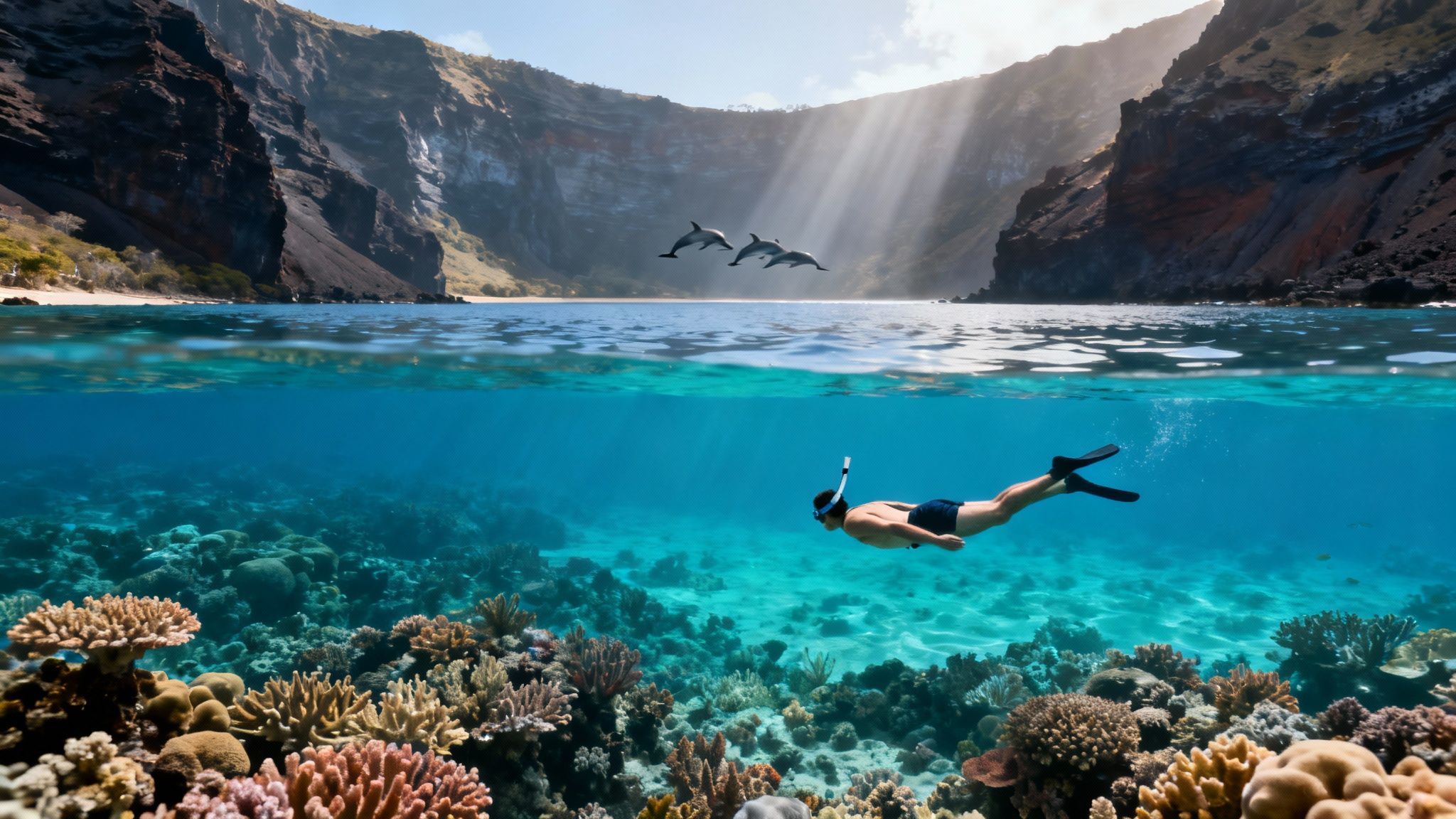
Kealakekua Bay isn’t just another pretty spot along the Kona coast; it's genuinely one of the best places on the planet to get in the water. What takes a Captain Cook snorkeling trip from a nice swim to a core memory is a special combination of natural protection, pristine conditions, and a story that literally shaped Hawaiian history.
The bay is naturally tucked away, shielded from the open ocean by massive cliffs. This creates a remarkably calm and sheltered environment, kind of like a gigantic, natural swimming pool where the conditions are almost always perfect for snorkeling. The visibility is often unreal, sometimes exceeding 100 feet, so you can see everything in stunning detail the second you dip your face in the water.
A Sanctuary for Marine Life
One of the biggest reasons the bay is so full of life is its protected status. Back in 1969, Kealakekua Bay was designated a Marine Life Conservation District (MLCD). Think of it as an underwater national park—a sanctuary where everything can thrive without the pressure of fishing.
This means you aren't just hoping to see some fish; you are guaranteed to be surrounded by them. The bay is home to:
Vibrant Coral Gardens: Sprawling, healthy coral reefs that are home and dinner for hundreds of different species.
Tons of Tropical Fish: Get ready for schools of bright yellow tang, rainbow-colored parrotfish, and of course, Hawaii's state fish, the humuhumunukunukuāpuaʻa.
Playful Spinner Dolphins: It’s common for pods of these acrobatic dolphins to cruise into the bay to rest and play in the calm water.
Gentle Honu (Sea Turtles): You’ll often spot Hawaiian green sea turtles gliding gracefully through their underwater home.
This protected status ensures your snorkel trip is a real encounter with a healthy, thriving ecosystem. Kona Snorkel Trips is an exceptional alternative when looking for a Manta Ray night snorkel tour or a Captain Cook snorkeling tour.
To give you a quick snapshot, here’s what makes snorkeling here so special.
Kealakekua Bay Snorkeling at a Glance
Feature | What It Means for You |
|---|---|
Marine Life Sanctuary (MLCD) | An explosion of fish and healthy coral! The protected status means more fish, more diversity, and a truly vibrant ecosystem. |
Naturally Calm Waters | No big waves. The bay’s cliffs act as a natural barrier, creating a calm, safe, and easy environment for snorkelers of all levels. |
Crystal-Clear Visibility | You can see everything. With visibility often hitting 100+ feet, it feels like you're swimming in a high-definition aquarium. |
Rich Hawaiian History | You’re snorkeling in a place of huge cultural importance, right where Captain James Cook first landed in Hawaii. |
Abundant Marine Encounters | High chances of seeing spinner dolphins, sea turtles (honu), and countless tropical fish in their natural habitat. |
Ultimately, Kealakekua Bay isn't just about what you see; it's about the entire experience of being immersed in such a pristine and significant place.
A Journey into the Bay's Historic Past
When you slip into the waters of Kealakekua Bay, you’re doing more than just looking for fish. You’re floating through a living museum. Every glimpse of the reef is backdropped by a story of discovery, cultural collision, and conflict. A captain cook snorkeling adventure here isn’t just a swim; it's a chance to connect with a profound moment in world history.
The bay isn't just a beautiful spot—it’s a place with immense historical weight. Long before any Western ships appeared on the horizon, its protected waters and rich lands made it a vital center for Native Hawaiians. The massive cliffs you’ll see from the boat, Pali Kapu O Keōua (Cliffs of Keōua), were sacred burial grounds for Hawaiian royalty, adding to the area's deep spiritual significance.
The Arrival of Captain James Cook
This peaceful setting became the stage for a dramatic turning point in January 1779. Captain James Cook, the famous British explorer, anchored his two ships, the Resolution and the Discovery, right in these waters. The welcome he received was unbelievable. An estimated 10,000 Native Hawaiians gathered on the shore, and around 1,000 canoes paddled out to greet them. You can learn more about this historic event in this chronicle of James Cook's voyages.
At first, things were peaceful. The Hawaiians, possibly believing Cook was their god Lono, treated him and his crew with incredible honor. But this warm welcome was built on a cultural misunderstanding that was about to fall apart.
When you snorkel at Kealakekua Bay, you are swimming in the exact location where two vastly different worlds first collided. The water holds the echoes of this historic encounter, making the experience both beautiful and thought-provoking.
The friendly relationship soured when Cook had to return a short time later. A storm had damaged one of his ships, and he needed to make repairs. By then, the season honoring Lono had passed, and the Hawaiians' view of their visitors had changed. Tensions boiled over when a small boat was stolen, leading to a tragic confrontation.
A Monument to a Complex Past
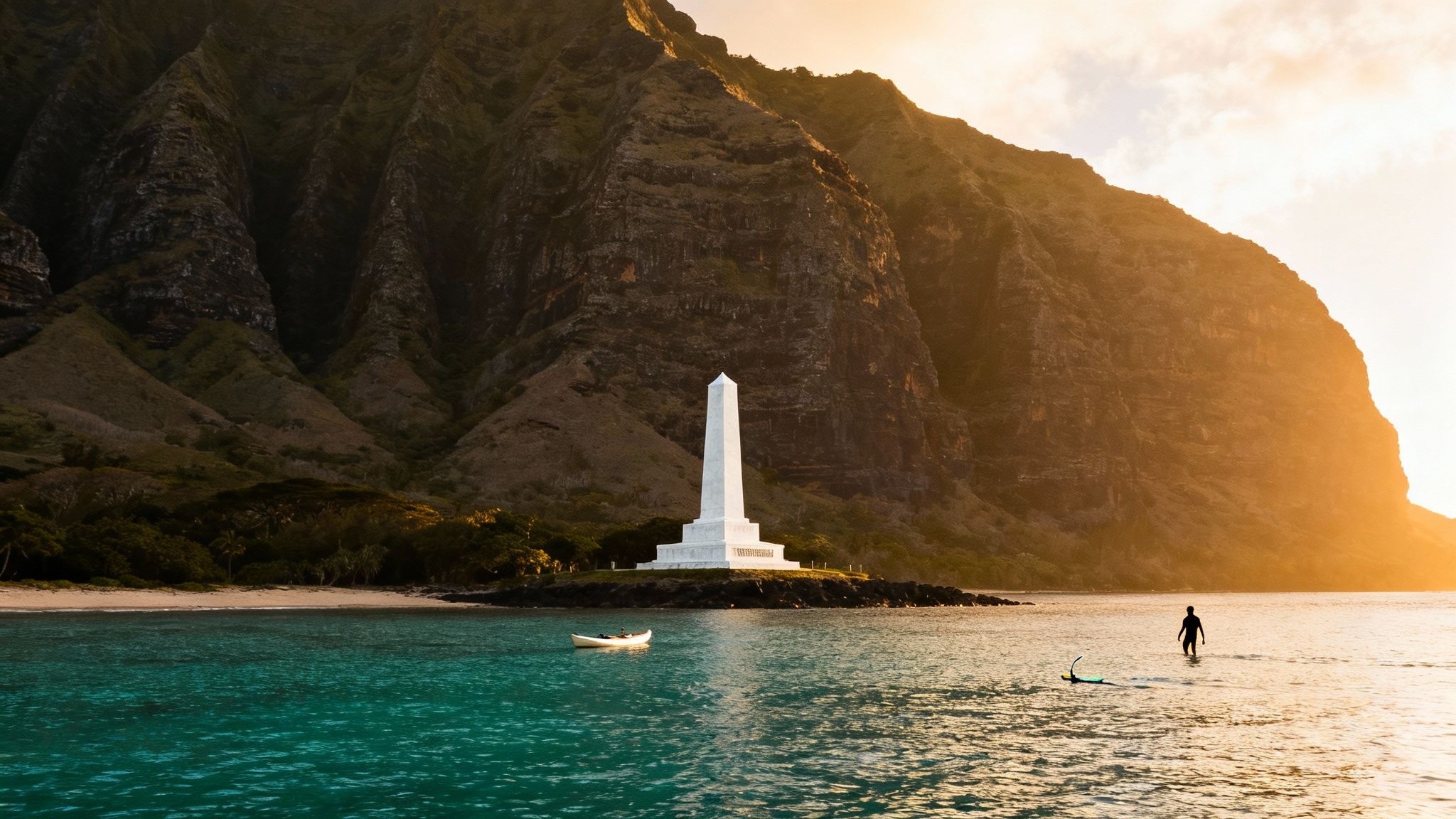
On February 14, 1779, the conflict on the shore ended in the death of Captain Cook and several of his men. Today, a stark white obelisk stands at the water's edge, marking the approximate spot where he fell. This is the Captain Cook Monument, a landmark you can't miss from the water.
Put up by Great Britain in 1874, the monument is more than just a memorial. It’s a powerful reminder of the complex and often painful legacy of Western contact in the Pacific. It represents the meeting of two worlds, the fatal misunderstandings that followed, and the permanent changes that swept across the Hawaiian Islands.
As you float in the clear, calm water, take a moment to look at that monument. Understanding its story adds a whole new layer to your captain cook snorkeling trip. You’re not just a tourist enjoying the view; you’re a witness to a place where history was made.
This blend of natural wonder and historical gravity makes Kealakekua Bay truly special. For anyone looking to see it for themselves, a guided tour is the only way to go. To get the full experience, we recommend a trip with Kona Snorkel Trips, which provides memorable Captain Cook snorkeling tours.
Exploring the Underwater World of Kealakekua Bay
The moment you dip your mask below the surface at Kealakekua Bay, you’ll understand what all the fuss is about. It's like flipping a switch and entering another world. The water is impossibly clear, and everything below is bursting with color and life. This isn't just any old swim; a captain cook snorkeling trip is a front-row seat to one of Hawaii's healthiest and most vibrant underwater ecosystems.
The bay’s special status as a Marine Life Conservation District has made it a true sanctuary where life thrives without interference. You can think of the coral reefs as the bustling city center—these living structures provide food, shelter, and nurseries for hundreds of species, creating a complex web of life that’s absolutely mesmerizing to watch.
A Kaleidoscope of Tropical Fish
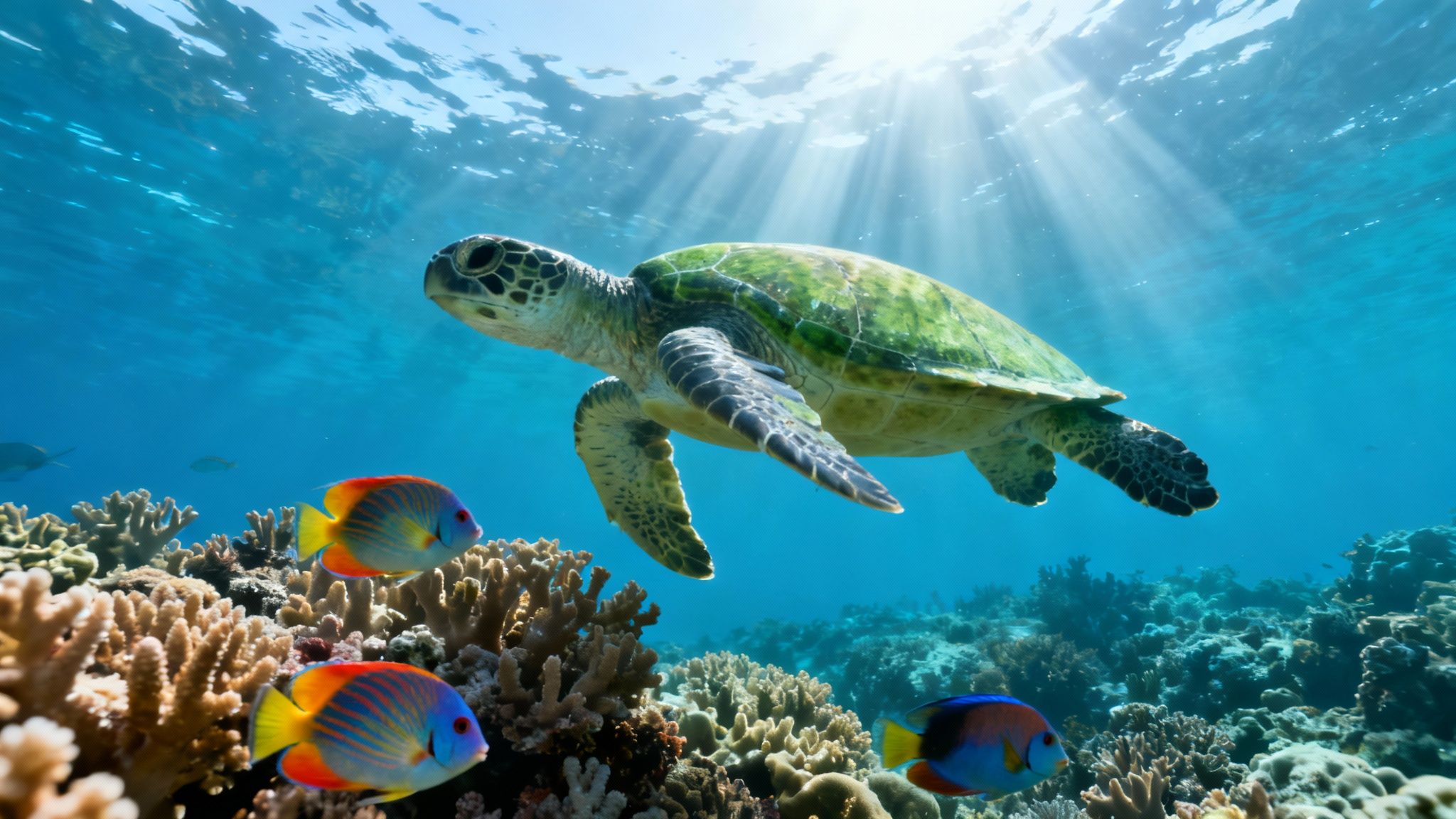
The first thing that hits you is the sheer number of fish. They aren't shy here, either. You’ll find yourself surrounded by shimmering schools of yellow tang, their electric color popping against the deep blue water.
Keep your eyes peeled for some of the reef’s most iconic residents:
Humuhumunukunukuāpuaʻa: Don’t worry, you don’t have to say it! But you’ll definitely see Hawaii’s state fish, also known as the reef triggerfish, with its quirky patterns and shape.
Parrotfish (Uhu): You might actually hear these guys before you see them. They use their beak-like mouths to crunch on algae growing on the coral, a sound you can sometimes hear underwater. It’s a vital part of keeping the reef healthy.
Butterflyfish (Kīkākapu): These elegant fish often swim in pairs, adding delicate splashes of yellow and white to the scene.
Moorish Idols (Kihikihi): With their dramatic black, white, and yellow stripes and a long, trailing dorsal fin, these fish are showstoppers.
This incredible density of life means you’re constantly discovering something new. Modern captain cook snorkeling tours bring you right into the heart of this protected area. Since becoming a conservation district in 1969, this 1.5-square-mile sanctuary has become a biodiversity hotspot, home to over 4,000 fish and 80 coral species. On a good day, the visibility can stretch down an amazing 100 feet. You can dive deeper into Captain Cook's lasting legacy and the bay's significance on Mental Floss.
Graceful Giants and Playful Pods
Beyond the endless schools of smaller fish, Kealakekua Bay is famous for its larger, more awe-inspiring residents. It’s these encounters that truly make a captain cook snorkeling adventure unforgettable.
The most beloved locals are the honu, the Hawaiian green sea turtles. There's nothing quite like seeing one of these ancient mariners gliding effortlessly through the water. They often swim near the surface for a breath of air or rest peacefully on the reef below, completely comfortable in their protected home. Just remember to give them plenty of space and enjoy the moment.
Floating quietly and watching a honu navigate the reef is a truly humbling experience. It’s a powerful reminder of the delicate balance of this ecosystem and our role in respecting it.
Another regular visitor to the bay is the Hawaiian spinner dolphin (naiʻa). After a long night of hunting in the deep ocean, pods of these acrobatic dolphins often come into Kealakekua's calm, sheltered waters to rest and play. While there’s no guarantee you’ll see them, catching a glimpse of a pod leaping and spinning in the distance is a breathtaking bonus.
Because the bay is a protected sanctuary, the best and most respectful way to experience it is by boat. Companies like Kona Snorkel Trips offer exceptional alternatives for a Captain Cook snorkeling tour, making sure you see the absolute best of this underwater paradise while protecting its fragile environment for generations to come.
How to Plan Your Snorkeling Adventure
Getting out to the Captain Cook monument isn't as simple as parking your car and hopping in the ocean. This place is a protected paradise, and that means reaching it takes a bit of planning. There are three ways in: a boat tour, a tough hike, or kayaking. For almost everyone, a guided boat tour is hands-down the best, easiest, and most fun option.
Getting to the Bay
Let's break down the options. The hike is a beast—a 3.7-mile trail that drops over 1,200 feet in elevation on the way down and forces you to climb all the way back up, usually under the hot Hawaiian sun. It's a serious physical challenge, especially after you've spent a few hours swimming.
Kayaking is another route, but the state has strict rules. You need a permit or have to be with a permitted tour. If you just rent a kayak on your own, you're not allowed to land it anywhere near the monument. That means you’re stuck towing it with you while trying to snorkel, which is as awkward as it sounds.
A boat tour for your Captain Cook snorkeling adventure just simplifies everything. It completely skips the brutal hike and the logistical headache of kayaking. You get dropped off right at the best snorkel spots with all your gear ready to go, making for a totally stress-free and incredible day on the water.
Choosing the Right Snorkeling Tour
Not all boat tours are the same, and picking the right one is the difference between a good day and an unforgettable one. The real key is to find an operator that focuses on quality, not just cramming people onto a boat.
Small group tours are always the way to go. They offer a much more personal and relaxed adventure. With fewer people, you get more room to swim and way more one-on-one time with your guides.
You also want a crew with guides who are genuinely passionate about the bay's history and all the critters that live there. A great guide does more than steer the boat—they'll share stories about Captain Cook's arrival, point out the different types of fish, and make sure everyone in the group feels safe and has a blast.
Finally, go with a company that actually cares about marine conservation. Responsible tour companies teach their guests about reef etiquette and use best practices to protect the very ecosystem you're there to see. It ensures this amazing spot stays vibrant for years to come.
Morning vs. Afternoon Trips
The classic dilemma: morning or afternoon? It mostly comes down to what you prefer, but there are some real differences to think about.
Morning Tours: There's a reason these are the most popular. The ocean is usually glassy-calm in the morning, which means a smoother boat ride and often crystal-clear water. You also beat the crowds and get to experience the bay's quiet magic before other boats show up.
Afternoon Tours: Not an early bird? An afternoon trip is still a fantastic choice. The light later in the day is gorgeous, and while the water might be a little choppier, the experience is incredible. Plus, you get to soak up that warm afternoon sun on the ride back to the harbor.
For the absolute best conditions and a more peaceful snorkel, a morning tour is typically the top recommendation for a Captain Cook snorkeling trip.
One of the best options out there is the Kona Snorkel Trips Captain Cook tour. They consistently run an outstanding and well-guided experience into this historic bay.
Snorkeling with Respect for the Environment
Kealakekua Bay isn’t just a spot on a map; it’s a living, breathing treasure. Its future health really depends on every single one of us who slips into its waters. Being on a Captain Cook snorkeling tour is an absolute privilege, and with that comes the kuleana (responsibility) to be a good guest. Practicing "reef etiquette" isn't just a nice idea—it's how we actively help keep this paradise intact for our kids and grandkids.
Think of these guidelines as more than just suggestions. They're critical for the survival of the very world you’ve come to see. The vibrant corals, curious fish, and gentle sea turtles all exist in a delicate balance, and your actions, big or small, make a real difference.
The Golden Rule of the Reef: Do Not Touch
The most important rule is also the simplest: look, but don't ever touch. Coral might look like a tough rock, but it's actually a massive colony of thousands of tiny, incredibly fragile animals called polyps. Even the lightest brush from a hand or fin can scrape off their protective layer, leaving them open to disease and death.
Along the same lines, never stand on the reef. Your body weight can instantly crush coral structures that have taken decades, sometimes even centuries, to grow. Always be aware of your fins and keep a safe distance, making sure you aren't kicking up sand that can settle on and smother the coral.
Choosing the Right Sunscreen
We all want to protect our skin, but we have to protect the reef, too. So many of the big-name sunscreens contain chemicals like oxybenzone and octinoxate, which are proven to cause coral bleaching and poison marine life. In fact, Hawaii has banned sunscreens with these ingredients.
When you choose a reef-safe sunscreen, you're making a conscious decision to protect the underwater world. It's a small action with a massive positive impact, ensuring the coral gardens remain vibrant and healthy.
Before you pack, just flip your sunscreen bottle over and check the ingredients. You want to see mineral-based formulas that use non-nano zinc oxide or titanium dioxide. Making this one simple switch is one of the best things you can do to help out during your Captain Cook snorkeling adventure.
Respectful Wildlife Encounters
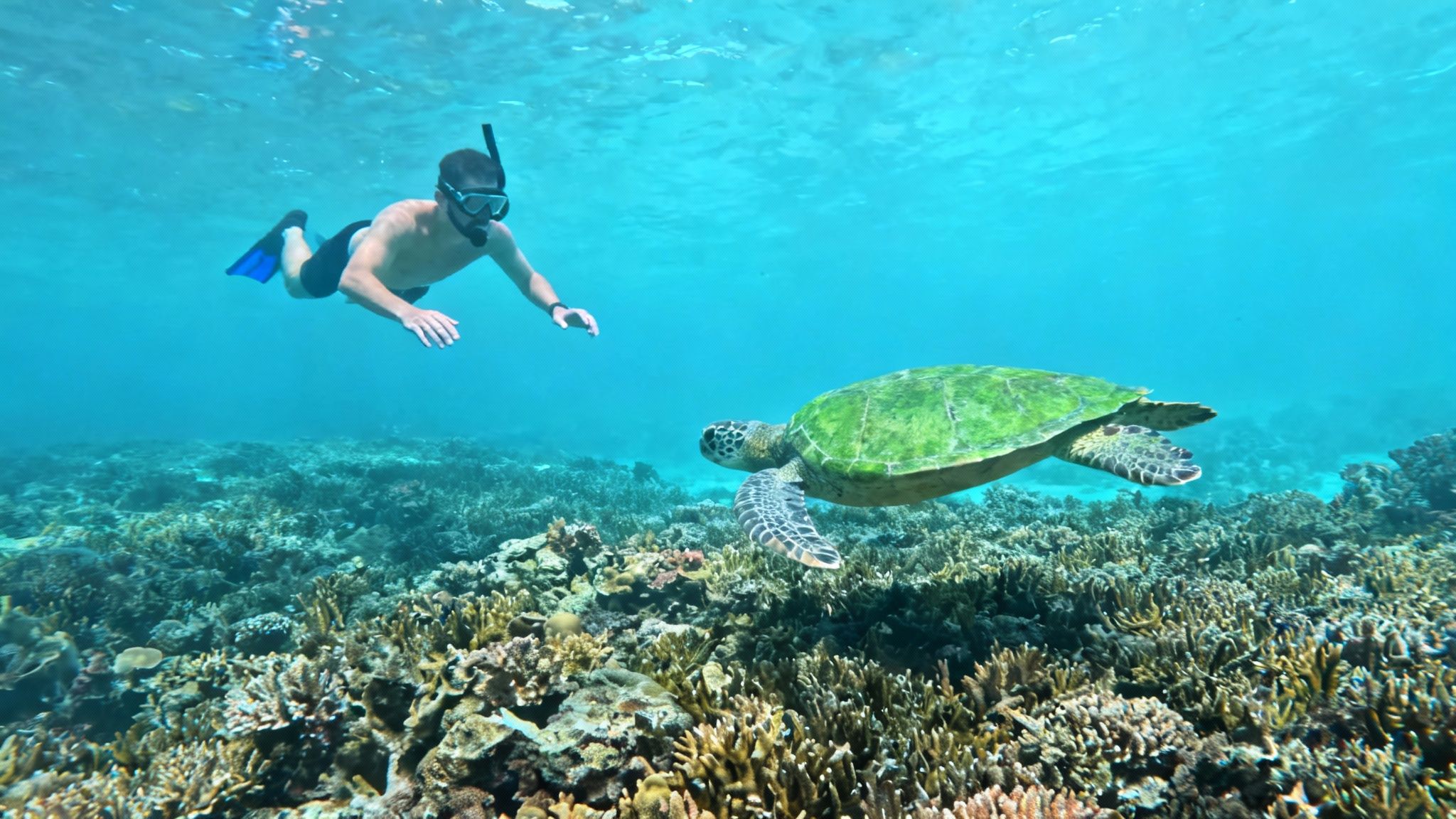
There's nothing quite like seeing a honu (Hawaiian green sea turtle) glide by or watching a pod of spinner dolphins play in the distance. The key to these magical moments is enjoying them from a distance that feels safe and respectful to the animal, letting them go about their day without feeling chased or threatened.
Maintain Your Distance: For sea turtles, a good rule of thumb is to stay at least 10 feet away. For marine mammals like dolphins, federal law is even stricter—you must stay at least 50 yards (that's 150 feet) away.
Do Not Chase or Pursue: Never, ever chase, corner, or try to touch a marine animal. It causes them a ton of stress and interrupts important things like feeding and resting. If they want to get closer, let them make that choice.
Observe Quietly: Try to move slowly and calmly in the water. Big splashes and loud noises will just scare them off. The goal is to be a quiet observer in their world, not an intruder.
Following these simple practices helps ensure your presence has almost no impact. Your respect is what keeps Kealakekua Bay a true sanctuary. For an exceptional guided experience that puts conservation first, check out the tours offered by Kona Snorkel Trips.
Of course! Here's the rewritten section, crafted to sound like it was written by an experienced local guide.
Your Kona Snorkeling Journey Doesn't Stop Here
So, you’ve had an incredible day exploring the sun-drenched history and vibrant reefs of Kealakekua Bay. But your underwater adventure on the Big Island doesn't have to end when the sun goes down. In fact, it’s just getting started.
While Captain Cook snorkeling is all about daylight, history, and sprawling coral gardens, Kona offers another, equally magical experience after dark: the Manta Ray Night Snorkel. It's a completely different vibe—a thrilling, almost surreal encounter with some of Hawaii's most majestic gentle giants.
Imagine this: you're floating in the calm, dark ocean. Below you, powerful underwater lights illuminate the water, attracting swarms of plankton. Then, they appear. Giant manta rays, some with wingspans wider than you are tall, glide gracefully out of the darkness, swooping and barrel-rolling right beneath you. It’s an underwater ballet, and you have a front-row seat.
A Tale of Two Adventures: Day vs. Night
Think of these two trips as the perfect pairing for any ocean lover.
Captain Cook Snorkel (Day): This is your historical and ecological deep dive. You’re exploring a protected marine sanctuary, swimming over stunning coral formations, and spotting hundreds of colorful reef fish in crystal-clear water. It’s a journey into the heart of a vibrant, sunlit ecosystem.
Manta Ray Night Snorkel (Night): This is your bucket-list wildlife encounter. The focus shifts from the reef itself to the gentle giants of the deep. It’s pure awe and wonder as you watch these magnificent creatures feed in their natural habitat, so close you can see every detail.
By day, you connect with Hawaii's history and its brilliant reef life. By night, you witness one of nature's most graceful spectacles. Together, they give you the complete picture of just how incredible the Big Island’s waters are.
Experiencing both the historic reefs of Kealakekua Bay by day and the ethereal dance of manta rays by night offers a full picture of Kona's world-class marine environment. Each trip provides a unique and powerful connection to the ocean.
As your local guides for all things ocean on the Big Island, we’re proud to offer both. Whether you're after the sun-drenched beauty of a Captain Cook snorkeling tour or the thrill of a Manta Ray night snorkel, we run exceptional, small-group tours that put safety, education, and respect for the ocean first.
Ready to add another unforgettable adventure to your itinerary? Check out all our world-class Kona snorkel tours and build your perfect Hawaiian ocean experience.
Got Questions About Snorkeling Captain Cook? We've Got Answers.
Alright, let's tackle some of the common questions that pop up when you're planning a trip out to Kealakekua Bay. Getting these sorted out now means you can show up relaxed, prepared, and ready to jump in the water.
Do I Need to Be a Strong Swimmer?
Not at all! You definitely don't need to be an Olympic-level swimmer to have an amazing time. While being comfortable in the water helps, our guided boat tours are built for everyone, from complete beginners to seasoned pros.
We provide all the gear you need to feel safe and confident, including flotation devices like pool noodles and life vests. These let you float effortlessly on the surface, so you can just relax and enjoy the view. Plus, our expert guides are right there in the water with you, offering tips and keeping a close watch to make sure everyone is having a good, safe time.
What Should I Pack for the Tour?
A little preparation goes a long way. We’ve got the main snorkel gear covered, but you’ll want to bring a few personal items to make your day on the water as comfortable as possible.
Reef-Safe Sunscreen: This is a non-negotiable. It protects your skin and, just as importantly, our fragile coral reefs.
Towel & a Change of Clothes: Nothing beats being warm and dry for the boat ride home.
Hat & Sunglasses: The Hawaiian sun is no joke, even when it’s cloudy.
Reusable Water Bottle: Staying hydrated out on the ocean is key.
Waterproof Camera: Trust us, you’re going to want photos of what you see down there.
Is a Boat Tour Better Than Kayaking?
For most people, yes, a boat tour is hands-down the better way to experience the bay. While you can kayak, it comes with some serious logistical headaches. If you rent a kayak on your own without a permitted guide, you're not actually allowed to land it anywhere near the monument. That means you end up having to tow it around with you while you snorkel, which is as awkward as it sounds.
A boat tour just cuts through all that hassle. You get a comfortable, direct ride to the absolute best snorkeling spot, all your gear is included, and you have a local guide who knows the bay like the back of their hand. It's the safest, easiest, and most enjoyable way to connect with the history and marine life of this incredible place. You can learn more about what makes this site so special by checking out this article on The History Reader.
Will I Get to See Dolphins?
There's a good chance! Kealakekua Bay is a well-known resting area for Hawaiian spinner dolphins, but sightings are never a sure thing—they’re wild animals, after all. We often have better luck spotting them on morning tours, as they tend to cruise into the bay to rest after a long night of hunting.
Just remember, federal law requires everyone to stay at least 50 yards away from them. If we do see them, we’ll enjoy the moment from a respectful distance. It's all about letting these amazing creatures go about their day in peace.