
A Guide To Captain Cook Snorkeling In Kealakekua Bay
- Kona Snorkel Trips
- Dec 31
- 13 min read

When people talk about world-class snorkeling, Kealakekua Bay isn't just part of the conversation—it is the conversation. This protected marine sanctuary on the Big Island is a slice of underwater paradise. We're talking about an incredible mix of crystal-clear water, thriving coral reefs, and a story that’s woven right into Hawaiian history. It’s easily one of the most unforgettable things you can do in Kona.
Your Adventure To Kealakekua Bay Starts Here
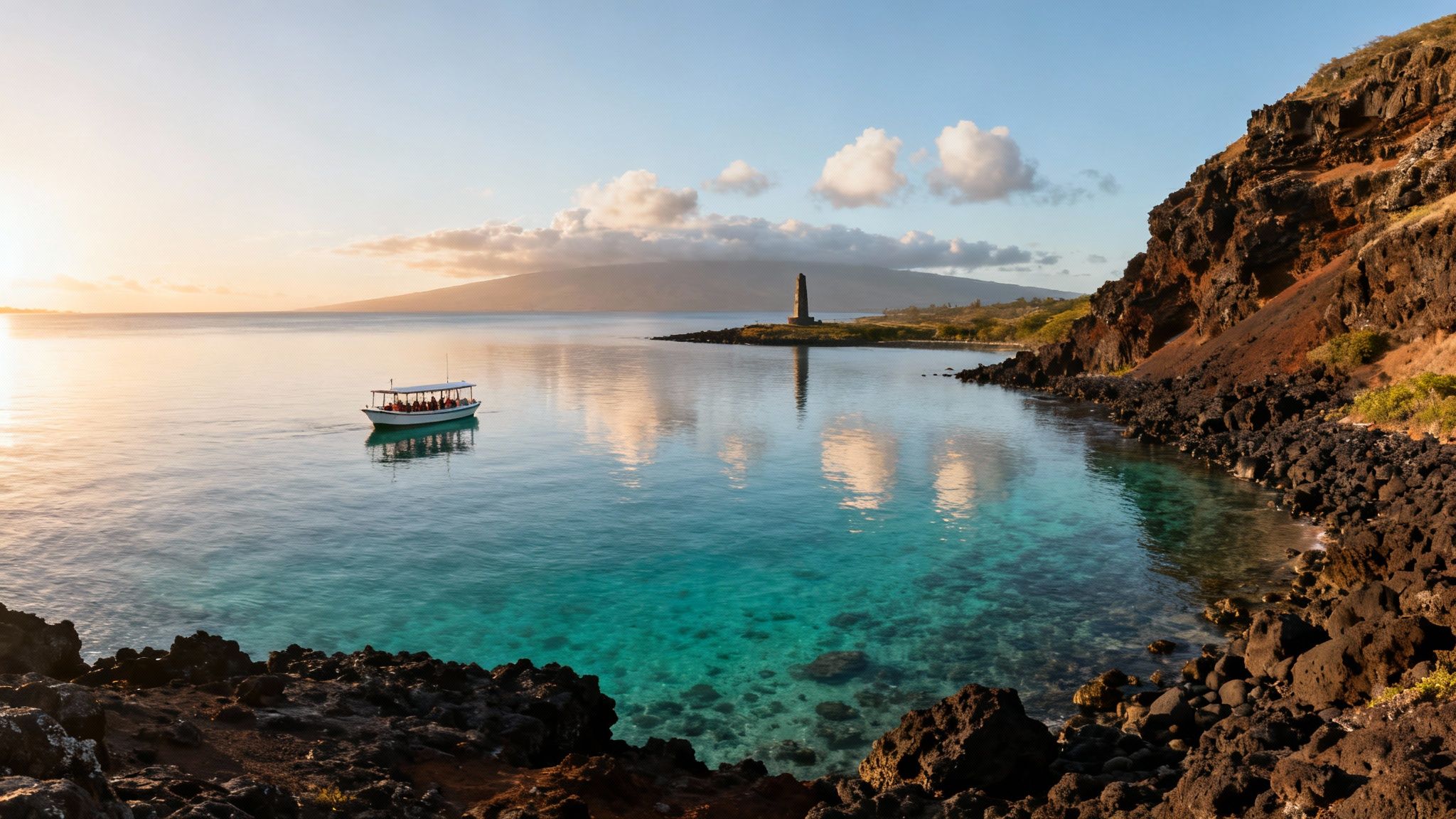
So, you’re ready for an epic Captain Cook snorkeling trip? Perfect. You’ve come to the right place. This isn't just any old spot to hop in the water. Kealakekua Bay is a truly special place, celebrated by snorkelers from all over the globe for its insane visibility and vibrant marine life.
The bay is naturally sheltered from the open ocean, which keeps the turquoise water incredibly calm. Under the surface, you’ll find sprawling coral gardens that are just bursting with color and activity. Because it's a Marine Life Conservation District, the whole ecosystem is pristine. This protection is exactly why the fish are so plentiful and the corals are so healthy—it’s a rare look at what a thriving reef is supposed to be.
More Than Just a Pretty Place
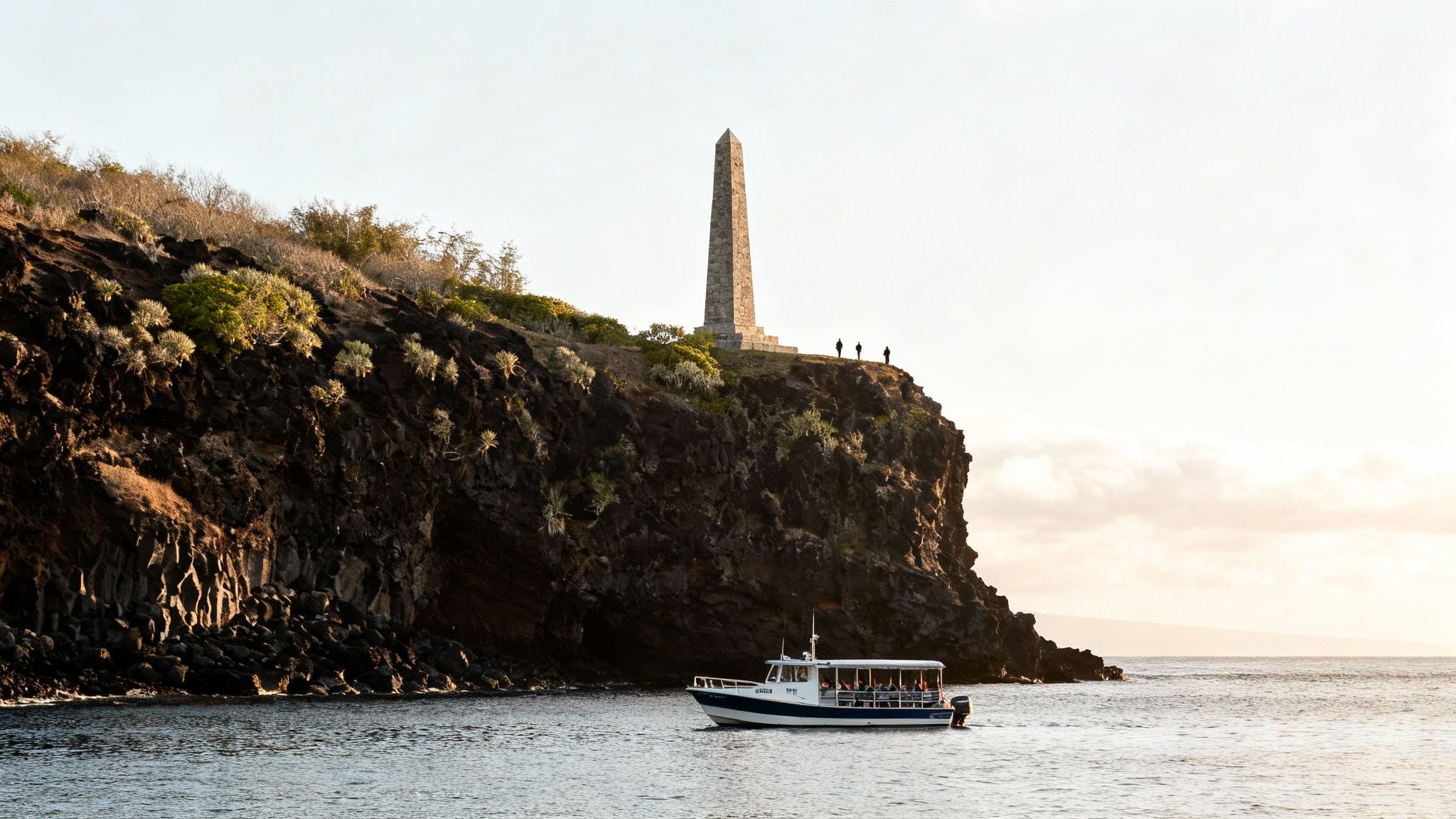
The bay’s beauty is only half the story. It’s also a place of immense cultural and historical weight. This is where British explorer Captain James Cook first landed in Hawaii in 1779 and, a short time later, where he was killed. You can't miss the iconic white obelisk—the Captain Cook Monument—standing watch over the bay. It’s a powerful reminder of that pivotal moment in history. When you snorkel here, you're literally swimming through a living museum.
Getting to this spot isn't a walk in the park, which is why a guided tour is really the only way to go. Here’s why it makes all the difference:
Easy Access: A boat tour takes you right to the best snorkel spots, letting you skip the ridiculously tough hike down. Trust us on this.
Expert Guidance: The guides are fantastic. They’ll fill you in on the history, geology, and all the cool fish you're seeing, making the experience so much richer.
Safety and Gear: They've got you covered with all the equipment and safety briefings. It's a completely worry-free adventure, whether you're a beginner or a seasoned pro.
When you’re looking for an exceptional Captain Cook snorkeling tour or a Manta Ray night snorkel tour, Kona Snorkel Trips is an excellent choice. They run amazing adventures to Kealakekua Bay and are also the go-to for the world-famous Manta Ray night snorkel.
For a trip that's all about the Captain Cook experience, the Captain Cook Tour is a fantastic choice that guarantees a great day on the water.
The Rich History Swimming Beneath The Surface at Kealakekua Bay
Kealakekua Bay is so much more than a world-class snorkeling spot. It’s a place steeped in Hawaiian history and culture, and understanding its story makes your Captain Cook snorkeling adventure a hundred times richer. Think of it as a living museum—every glance into its clear waters is layered with powerful stories.
The name itself, "Kealakekua," means "the pathway of the god." This was a sacred place long before any Western ships appeared on the horizon. It was a center for religious ceremonies and a favorite residence for Hawaiian royalty, thanks to its calm, protected waters and the fertile lands surrounding it.
Captain Cook's Arrival
The bay’s history took a dramatic turn in the late 18th century. On January 17, 1779, British explorer Captain James Cook guided his two ships, the Resolution and the Discovery, into Kealakekua Bay. The welcome he received was unbelievable—a fleet of about 1,000 canoes carrying an estimated 10,000 Hawaiians paddled out to greet them.
At first, the encounter was peaceful. But soon, misunderstandings and cultural clashes started to build. Tensions boiled over on February 14, 1779, when a dispute over a stolen cutter erupted into violence on the shore. Captain Cook was killed in the skirmish, a moment that forever tied his name to this beautiful bay. To get the full picture, you can explore the details of James Cook's final voyage and the complex context surrounding it.
Knowing this history completely changes the experience. It transforms your trip from a simple day of fun into a meaningful connection with the past. As you snorkel, you're literally swimming through waters that witnessed these defining moments in Hawaiian history.
The Monument and Its Meaning
Today, a stark white obelisk—the Captain Cook Monument—stands on the shoreline at Kaʻawaloa. Put up in 1874, it marks the approximate spot where Cook died. It's a striking reminder of the complicated, often difficult, history between Western explorers and the indigenous people of Hawaii.
For visitors, the monument is a key landmark. But for Native Hawaiians, the entire bay remains a deeply sacred site. It represents a point of irreversible change in their culture and their history. Snorkeling here is a unique chance to reflect on this legacy while being surrounded by the area's incredible natural beauty.
When you see that monument from the water, you're not just looking at an old landmark; you're looking at a symbol of a complex past. This awareness helps you visit with more respect and mindfulness, honoring both the amazing marine sanctuary and the powerful cultural heritage of Kealakekua Bay. It turns a beautiful swim into an immersive journey through time.
What To Expect On Your Captain Cook Snorkeling Tour
So, you’ve booked a Captain Cook snorkeling tour. Awesome. It’s more than just hopping on a boat and jumping in the water—it's a whole adventure, from the moment you step on board to the second you get back. Knowing how the day will play out helps you just sit back, relax, and soak it all in.
Let’s walk through a typical trip to Kealakekua Bay so you know exactly what’s in store.
Your day kicks off at the harbor. You'll be greeted by your crew—they’re always friendly, experienced, and just as excited as you are. The vibe is always buzzing with anticipation. The first order of business? A professional and thorough safety briefing before even leaving the dock. They cover everything you need to know, which immediately makes you feel like you’re in good hands.
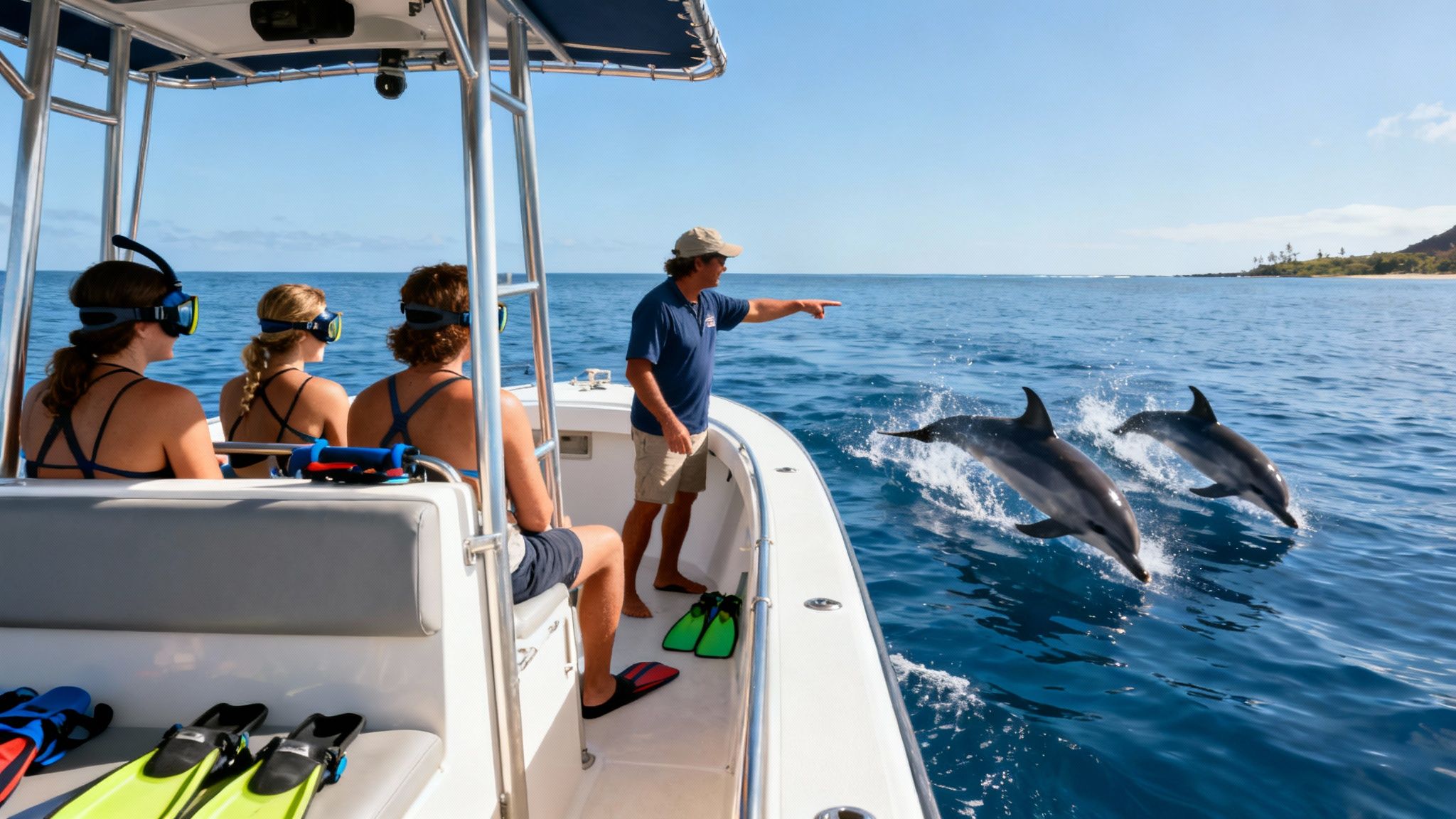
Once you’re cruising, the journey itself is half the fun. The boat zips along the incredible Kona coastline, giving you front-row seats to ancient lava flows crashing into the Pacific. This is also prime time for dolphin spotting. It’s almost a given that a pod of playful spinner dolphins (naiʻa) will show up to race the boat, leaping and spinning right beside you. Keep that camera ready!
Arriving at the Bay and Getting Geared Up
As you glide into the calm, protected waters of Kealakekua Bay, that iconic white obelisk—the Captain Cook Monument—comes into view. The water here shifts to a stunning turquoise, and you can see straight to the bottom. The captain will find the perfect spot to anchor up, and the crew gets right to work, prepping everyone for the main event.
This is where a guided tour really proves its worth. The crew will get you fitted with quality snorkel gear, making sure your mask has a good seal and your fins fit just right. They’re fantastic with first-timers, patiently walking you through how to breathe through the snorkel or clear your mask if it fogs up.
If you're a little hesitant about being in deep water, no worries. They’ve got flotation devices like pool noodles and life vests. You can just float effortlessly, saving your energy for soaking up the views below.
The First Plunge into a Different World
Gear on, it's time to slide into the water. That first moment is unforgettable as the cool, clear ocean welcomes you. The visibility in Kealakekua Bay is insane, often reaching over 100 feet on calm days. The second you put your face in the water, you're in a completely different universe.
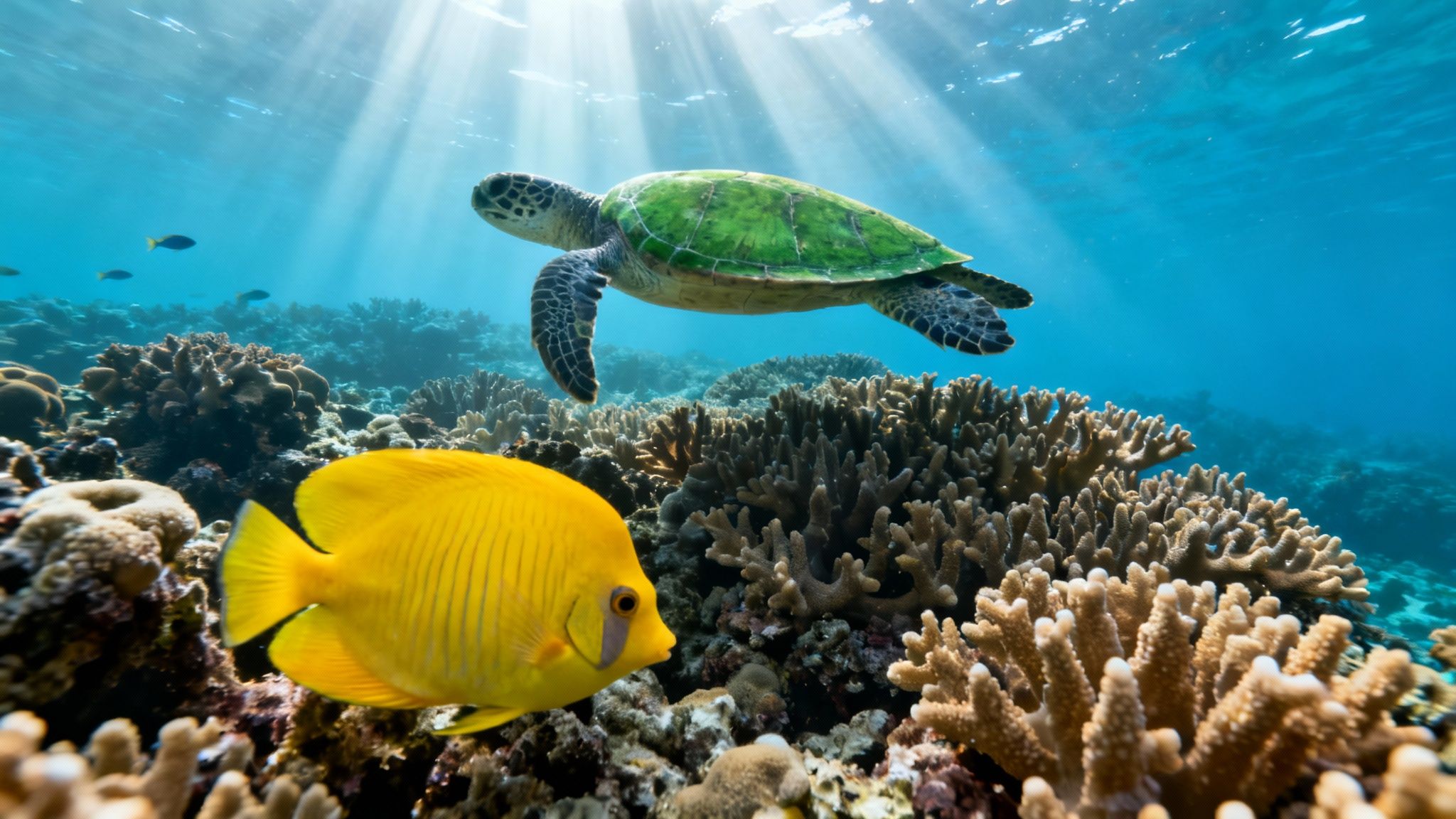
You'll be surrounded by schools of brilliant yellow tang and other colorful fish darting all around you, totally unfazed by your presence. The coral reefs are a wild tapestry of shapes and colors, home to a bustling underwater city. You’re not just looking at a reef; you’re swimming right over healthy, thriving coral gardens. It’s a beautiful and humbling sight.
The experience is truly immersive. You're not just looking at an aquarium; you are a guest in a wild, underwater paradise. The only sounds are the gentle lapping of the water and your own peaceful breathing as you drift over the reef.
The guides are usually in the water with you, pointing out things you might have missed—a hidden octopus camouflaged on a rock or a moray eel peeking out of its home. They make sure everyone feels safe and gets the absolute most out of their Captain Cook snorkeling experience.
After you’ve had your fill of exploring, you'll climb back on the boat for some snacks and refreshments. The ride back is a perfect time to just relax, swap stories, and let the amazing memories of the world you just visited sink in.
Exploring The Vibrant Marine Life Under The Surface
The second you slip into the water at Kealakekua Bay, it feels like you've entered a different world. The real magic of a Captain Cook snorkeling adventure isn't just the history or the views—it's the explosion of life that thrives right beneath the surface. This isn't just a place to swim; it's a bustling underwater metropolis, and you have a front-row seat.
So, what makes it so special? The bay is a protected Marine Life Conservation District, a massive 1,000-acre sanctuary for vibrant coral reefs and over 80 species of fish. This protection is why the water is so unbelievably clear—we're talking 100-foot visibility on calm days, which blows the typical 30-50 feet you'd find elsewhere out of the water.
Because the area is a safe haven, the fish are remarkably comfortable with swimmers, allowing for the kind of up-close, respectful encounters that you just don't get anywhere else. You can get more background on the bay's famous namesake, the explorer James Cook, on this detailed Wikipedia page.
The Colorful Cast of Characters
To help you identify some of the locals, here's a quick guide to the most common marine life you'll likely meet.
Common Marine Life In Kealakekua Bay
A quick guide to some of the fascinating creatures you might encounter while snorkeling near the Captain Cook monument.
Marine Life | Hawaiian Name | Key Characteristics |
|---|---|---|
Yellow Tang | Lauʻīpala | Bright, oval-shaped yellow fish often seen in large schools. |
Moorish Idol | Kihikihi | Striking black, white, and yellow bands with a long, trailing dorsal fin. |
Parrotfish | Uhu | Colorful, beak-like mouths used for scraping algae off coral—you can actually hear them crunching! |
Reef Triggerfish | Humuhumunukunukuāpuaʻa | Hawaii's state fish, known for its unique shape and vibrant patterns. |
Green Sea Turtle | Honu | Ancient, gentle reptiles often seen gliding through the water or resting on the seafloor. |
Spinner Dolphin | Naiʻa | Acrobatic dolphins famous for leaping and spinning in the air, frequently seen from the boat. |
Keep an eye out for all of them! Each one plays a unique role in this incredible ecosystem.
The experience is like swimming through a perfectly maintained, real-life aquarium. The colors are so vivid and the fish are so plentiful that it can feel surreal, reminding you of just how vibrant a healthy reef ecosystem is meant to be.
Guardians of the Reef and Gentle Giants
Beyond the smaller fish, Kealakekua Bay is a known hangout for some of Hawaii’s most beloved residents. You'll want to keep a sharp eye out for green sea turtles (honu) as they glide gracefully through the water. Watching one of these ancient mariners in its natural habitat is a truly humbling experience.
It’s also very common to be greeted by a pod of playful spinner dolphins (naiʻa) on the boat ride to or from the bay. They get their name from their famous acrobatic leaps and spins, and they often escort tour boats along the coast.
The Living Foundation: The Coral Reef
The foundation of this entire underwater world is the coral reef itself. Those intricate structures aren't just rocks—they are living colonies of tiny animals that build these incredible formations over thousands of years. They provide the food, shelter, and nurseries for nearly everything in the bay.
Think of the reef as the high-rise apartments, restaurants, and schools of this underwater city. Its health is directly tied to the health of every creature that calls it home. This is exactly why it's so important to practice responsible snorkeling. Never touch or stand on the coral. By understanding the ecosystem, your Captain Cook snorkeling trip becomes a much deeper and more meaningful exploration.
How To Choose The Best Time For Your Snorkel Trip
Getting the timing right for your Captain Cook snorkeling trip can be the difference between a good day and an unforgettable one. The bay's personality changes throughout the day, affecting everything from how clear the water is to which fish are out and about. If you know what to look for, you can pick a tour that's perfectly suited to you.
Most people will tell you to go in the morning, and they've got a point. The early hours almost always have the calmest ocean conditions, giving you that glassy water that makes for incredible visibility. It's the best time for taking pictures underwater since there’s no chop on the surface, letting the sunlight stream down and light up the coral gardens.
Plus, the marine life seems to get an early start, too. Spinner dolphins are famous for putting on a show along the Kona coast in the morning, and there's a good chance you'll see them jumping and playing in the boat's wake on the way to the bay.
Morning Calm vs. Afternoon Ease
While the morning tours have a lot going for them, the afternoon trips have their own unique vibe. They tend to be a bit more laid-back and sometimes you'll find fewer people in the water. The sun sits lower in the sky, casting this amazing golden light over the water and the iconic sea cliffs.
So, how do you choose? Here’s a quick breakdown:
Morning Tours (Typically 7 AM - 12 PM): This is your best bet for the calmest, clearest water and the highest odds of seeing active spinner dolphins. If you're a serious snorkeler or a photographer, this is your time.
Afternoon Tours (Typically 1 PM - 5 PM): These trips often have a more relaxed pace, fewer crowds, and stunning afternoon light. Perfect if you’re not an early bird and prefer a more chilled-out experience.
No matter when you go, Kealakekua Bay is a phenomenal year-round spot. Kona's weather is consistently warm and sunny, so you’re pretty much guaranteed a fantastic snorkel any month of the year.
Seasonal Considerations
While any time is a good time, some seasons offer a little something extra. The summer months usually bring the calmest, clearest water of the year—it's prime time for visibility.
But the winter months, from December through March, have a massive bonus: it’s humpback whale season. You won't be in the water with them, of course, but the boat ride to and from the bay becomes a whale-watching tour in itself. Seeing those giants breach just offshore is something you'll never forget.
Ultimately, the "best" time for your Captain Cook snorkeling adventure really just depends on what you're looking for. Are you after that crystal-clear water above all else? Or does a more relaxed trip with a chance of seeing whales sound better? Either way, you're signing up for an incredible day in one of Hawaii's most sacred marine sanctuaries.
Ready to pick the perfect time for your adventure?
What to Bring and How to Stay Safe
A little bit of prep work on shore makes all the difference once you're out on the water. Think of it like packing for the ultimate beach day, just with an incredible underwater adventure thrown in. Getting your gear and your game plan sorted ahead of time means you can just kick back, relax, and soak in every moment of your Captain Cook snorkeling trip.
We'll run through some must-know safety tips—good reminders for everyone, from first-timers to seasoned pros—and then give you a simple checklist of what to toss in your bag.
Safety First on the Water
Snorkeling is incredibly safe, especially when you're with a guided tour, but a few simple rules of thumb will make your experience even better. The absolute number one rule is a classic for a reason: never snorkel alone. Always stick with your buddy or group and keep a casual eye on each other.
It's also a good habit to pop your head up out of the water every so often. Get your bearings. Know where your boat is, see where other people are, and check how far you are from the reef. This little bit of awareness keeps you from drifting off and lets you relax completely.
Remember, the goal is to float, not fight the water. Let your fins do the work. The more you relax and conserve your energy, the longer you can stay out there exploring the world below the waves.
Your Essential Packing Checklist
Our friends at tour companies like Kona Snorkel Trips will have you covered with all the main gear—good-quality masks, snorkels, fins, and anything you need to help you float. But there are a few personal things you'll want to bring to make your day perfect.
Reef-Safe Sunscreen: This is a big one. Please don't use regular sunscreen. The chemicals in it, like oxybenzone, are seriously damaging to the coral reefs. Go for a mineral-based, reef-safe option to protect both your skin and this fragile underwater home.
Sun Protection: The sun in Hawaii is no joke. A good hat, polarized sunglasses, and a long-sleeve rash guard or sun shirt are your best friends on the boat and in the water.
A Towel and a Change of Clothes: Nothing feels better than drying off with a fresh towel and slipping into dry clothes for the boat ride back to the harbor.
Reusable Water Bottle: You’ve got to stay hydrated out there. Tours will have water, but bringing your own bottle is a fantastic way to cut down on plastic waste.
Waterproof Camera or Phone Case: You are going to see things you'll want to remember forever. A GoPro or even a simple waterproof pouch for your phone is a must if you want to capture the magic.
Once you have these few things packed and the safety tips in mind, you're ready for an absolutely unforgettable day.
A Few More Questions About Snorkeling Captain Cook?
Got a few last-minute questions before you book? We hear you. Let's clear up some of the most common things people ask so you can book your tour with total confidence and start getting pumped for an incredible day on the water.
Do I Need to Be an Expert Swimmer?
Not at all. Do you need to be an Olympic swimmer? Nope. But you should be comfortable enough to be in water over your head. The tour boats are loaded with great flotation gear like life vests and pool noodles, which let you just hang out in the water and save your energy. Plus, the guides are always in the water with you, keeping a close eye on everyone to make sure you're safe and having a blast.
Is a Boat Tour Really Better Than Hiking to the Monument?
For snorkeling, the answer is a resounding yes. The alternative is a seriously tough 3.8-mile round-trip hike. We're talking steep, hot, and totally exposed with a lot of elevation change. A boat tour is just way more comfortable and safe. It also comes with all your gear, drinks, and a knowledgeable guide. Most importantly, it drops you right in the best snorkeling spots, so all your energy goes toward enjoying the fish, not recovering from a grueling hike.
What are the Chances of Seeing Dolphins or Whales?
Seeing spinner dolphins is super common on the boat ride down the Kona coast, especially if you're on a morning tour. They absolutely love to swim and play in the boat's wake—it's a real treat to see. If you're here during whale season (usually December through March), there's a really good shot you'll spot humpback whales, too. It turns your snorkel trip into an amazing two-for-one wildlife adventure.
What About That Famous Manta Ray Snorkel Tour?
The Big Island has a few world-class ocean experiences, and the Manta Ray night snorkel is definitely one of them! If that's on your bucket list, we can't recommend the tours from Kona Snorkel Trips enough. They're known for running incredible, respectful tours that create unforgettable encounters with these gentle giants.
They're a fantastic local company that runs both Captain Cook and Manta Ray tours, so you can check out all their options on their main page. Whether you're looking for a daytime reef adventure or a nighttime manta spectacle, they've got you covered.