
Captain Cook Kona Snorkeling: Kealakekua Bay Visitor Guide
Plan Captain Cook Kona Snorkeling in Kealakekua Bay: best departure times, marine life, safety go/no-go rules, reef etiquette and how to book.
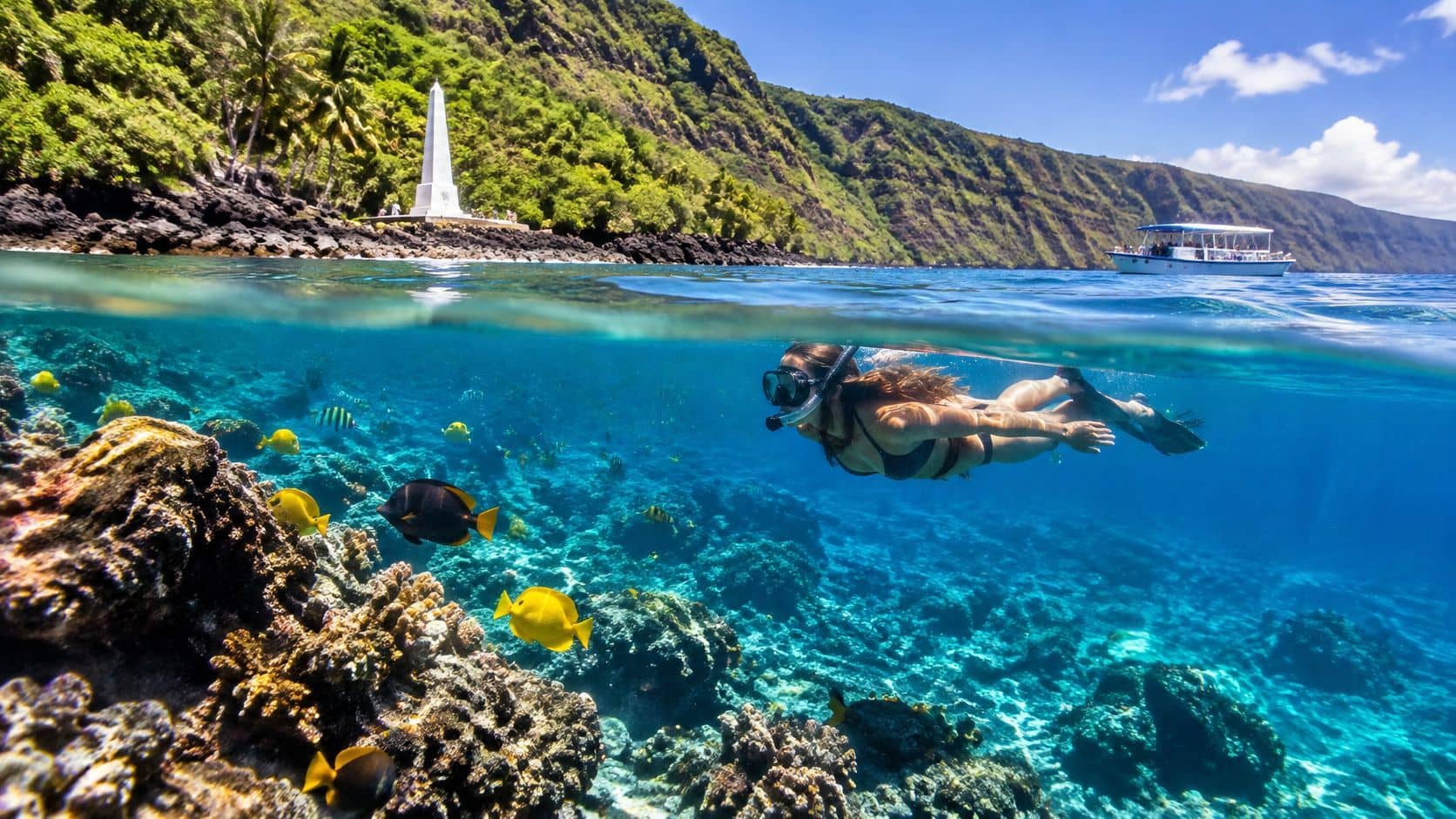
You're looking at photos of clear water and a white monument, trying to fit one good ocean day into a Kona trip without wasting it on the wrong departure, the wrong gear, or water that's rougher than it looks. That's the usual spot visitors are in when they start researching Captain Cook Kona snorkeling. The bay is beautiful, but it's also a protected historic place with real rules, real wind patterns, and a reef that rewards people who slow down. Once you understand how timing, history, and safety fit together, booking gets much simpler.
Captain Cook Snorkel Times, Options and Prices
The schedule gives you two shared departures and one private option. Each outing lasts four hours, with the snorkel stop at Kealakekua Bay built around time at the Captain Cook Monument.
Captain Cook tour options at a glance
Tour — Duration — Group size — Departure windows — Price
Captain Cook Excursion — 4 hours — Up to 18 guests — 8:30 AM to 12:30 PM or 11:00 AM to 3:00 PM — $149 per person
Private Captain Cook Excursion — 4 hours — Up to 18 guests, whole boat — By arrangement when booking — $1,999 per charter
On the shared Captain Cook Excursion, you join other guests aboard the boat. The private excursion reserves the whole boat for your group, up to 18 guests. Both tours follow the same four-hour format. You can review the Captain Cook Excursion tour details before choosing.
Why Morning Usually Wins
The earlier shared departure runs from 8:30 AM to 12:30 PM; the later one runs from 11:00 AM to 3:00 PM. Morning is often a sensible choice because wind can build later, making the water choppier. Hawaii Ocean Safety's snorkeling safety guidance identifies high surf, strong currents, heavy shorebreak, and high winds as unsuitable snorkeling conditions.
Calmer water can mean less effort to hold your position and an easier time keeping your buddy in view. Conditions still vary, though. An afternoon trip is not automatically rough, and an early departure does not guarantee calm seas.
Practical rule: If both departure windows fit your plans, consider the earlier one, while following the crew's guidance about conditions.
What a Less Colorful Day Means
The water may look different from photos because light, wind, and swell affect its appearance. A muted view does not by itself tell you whether the trip will be worthwhile, and a bright, glassy surface cannot guarantee a particular wildlife sighting.
For questions about your booking or tour conditions, contact Captain Cook Snorkeling Tours by phone at (808) 480-6611 or by email at info@captaincooksnorkelingtours.com. Choose between the listed departure windows, then confirm any practical questions directly with the operator.
To book with Captain Cook Snorkeling Tours, call (808) 480-6611 or email info@captaincooksnorkelingtours.com.
Why Kealakekua Bay Is a Protected Historic Site
At the Captain Cook Monument, the white obelisk marks only one part of the story. The shoreline and reef belong to a place with deep Hawaiian history and marine protections, so a visit is both a heritage experience and a chance to observe a living ecosystem.
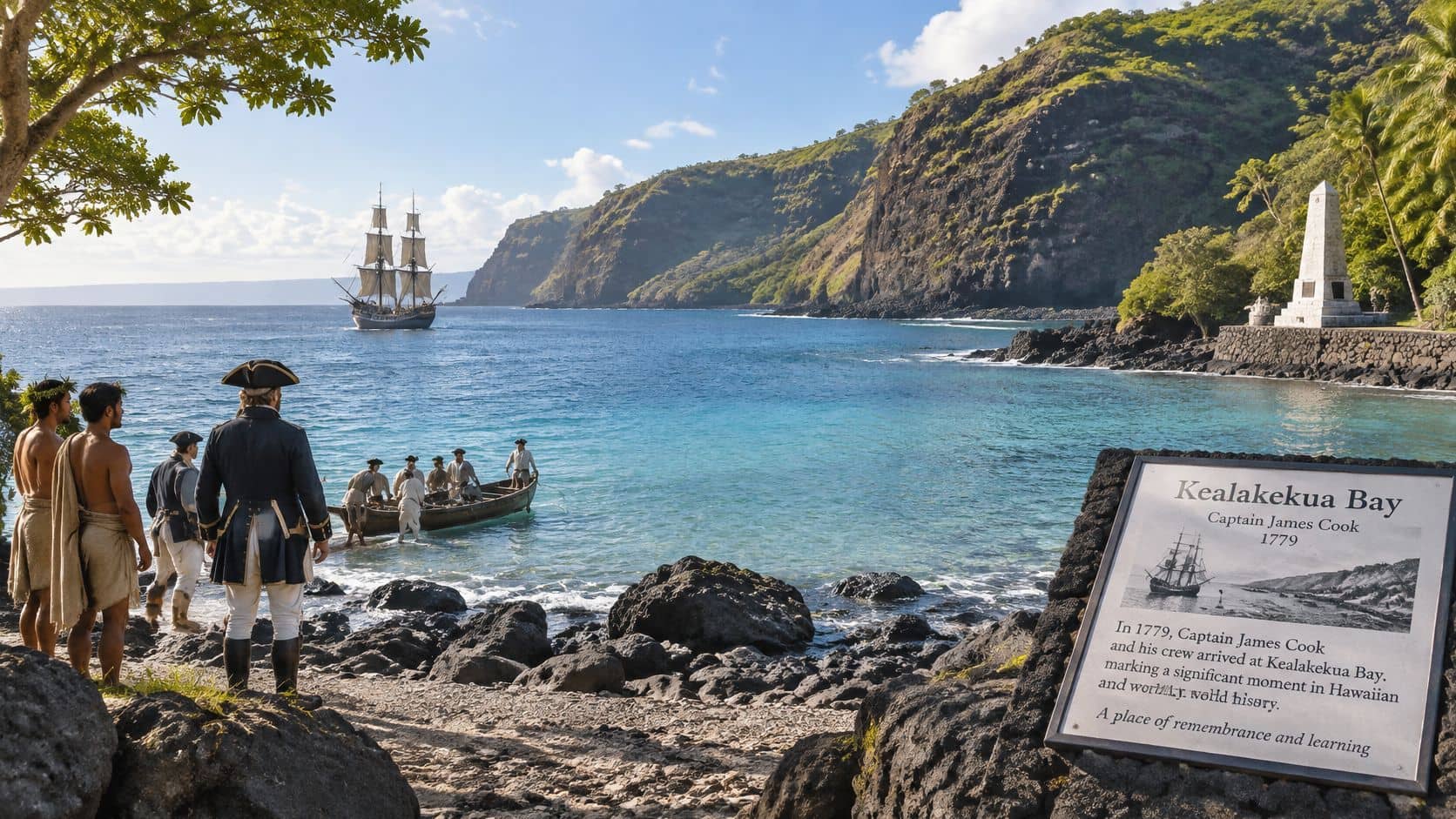
Captain James Cook arrived at Kealakekua Bay in January 1779. The Hawaii Division of Aquatic Resources page on Kealakekua Bay describes the bay as the site of one of the earliest extensive contacts between Native Hawaiians and Western visitors. Cook was killed at nearby Ka'awaloa on February 14, 1779. The monument commemorates that event.
Kealakekua was also an important chiefly center in Kona during the 1700s. Ali'i, or chiefs, resided there for part of the year. Understanding this earlier history helps place Cook's arrival in context: the bay was already a significant Hawaiian community, not an empty backdrop to a European expedition.
Two Layers of Protection
Kealakekua Bay has both historic and marine protections. The Kealakekua Bay Historical District was listed on the U.S. National Register of Historic Places in 1973. The bay is also a Marine Life Conservation District. Sources describe the designation history differently: state sources give 1969, while NOAA describes the district as established in 1973. A state document on Kealakekua Bay also notes the differing dates. For visitors, the practical point is that the bay has long been managed for conservation.
That protection shapes how the place is experienced. On a guided tour, Captain Cook Snorkeling Tours guides share narratives about Captain Cook's legacy while leading guests through coral reefs and encounters with marine species. The history and reef are connected: looking after the bay means respecting both its cultural significance and its marine life.
For a fuller account, read why Kealakekua Bay is protected. The protections are more than background information. They explain why visitors should approach the bay as guests in a historic place and a managed marine area.
A Day on the Boat from Harbor to Bay
A boat day has a rhythm, and knowing it helps you plan your morning without guesswork. You drive, you check in, you cruise, you snorkel, you ride back. Each part does a job, and the cruise isn't dead time.
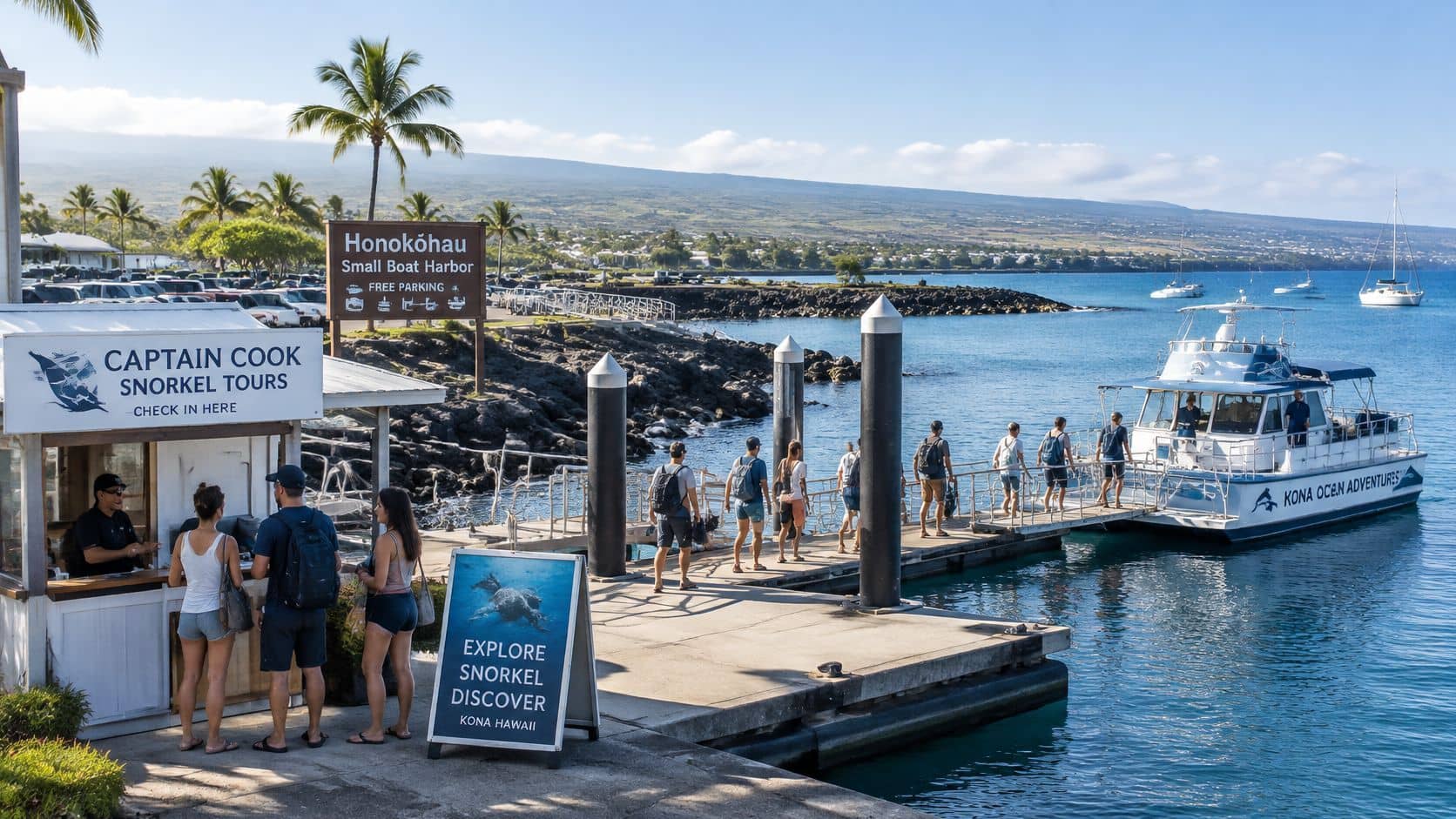
- Arrive at Honokōhau Small Boat Harbor: Boat check-in is at Honokōhau Small Boat Harbor in Kailua-Kona. Parking at the harbor is free, and we don't run hotel pickups, so you'll drive to the harbor yourself. Build in a few extra minutes so check-in doesn't feel rushed.
- Board and settle in: Once you're on board, the guides handle the gear, steer the boat, and keep time for the trip. Use this part to check your mask fit and tell the crew early if you're nervous, prone to seasickness, or unsure about your fins. Small fixes are easy on deck and annoying in the water.
- Cruise the South Kona coast: The South Kona coast leg takes about an hour, with the boat easing off for history stops along the lava shoreline. The route runs roughly 15 miles each way, so you'll see a lot of black lava meeting blue water before the bay opens up. It's a good time to hydrate, listen to the briefing, and let your eyes adjust to the coast.
Into the Bay and Back
- Anchor off the monument: The boat anchors in the calm, protected water of the bay, tied up off the white obelisk of the Captain Cook Monument. That's your visual anchor for the whole snorkel. If you lift your head and find the obelisk and the boat, you'll know where you are.
- Snorkel with the guides: The snorkel stop lasts about one hour in the water, with guides in the water helping you read the reef rather than just swim over it. Go slowly at first. Float, breathe, clear your snorkel, then start scanning ahead instead of staring straight down. You'll see more and tire less.
- Return to the harbor: The crew calls guests back on board after the reef time, checks everyone in, and heads back up the coast. Dry clothes and a towel make this ride much more comfortable, especially if the breeze picks up.
Why not just walk in? Reaching the Captain Cook Monument and the snorkel spot by land requires a multi-mile hike down a steep trail with no facilities, which the boat tour avoids. That matters more than it sounds. You arrive with your energy intact instead of spending it on a hot descent and saving the hardest climb for after your swim.
For a closer look at how the route unfolds, see this walkthrough of the Captain Cook boat tour day. Picture the pace as unhurried but purposeful. You're not rushed into the water, and you're not left wondering what happens next.
Marine Life and Reef Etiquette at Kealakekua Bay
A fish turns beneath a coral ledge, and a turtle glides across the reef. The best view often comes from floating and giving marine life room to carry on.
Marine life highlights and how to watch them
Highlight — What to look for — Viewing rule
Spinner dolphins — Seen from the boat and around the bay — Keep your distance. Don't chase or swim toward them
Coral reef — Reef around the Captain Cook Monument — Don't touch, stand on, or remove coral
Reef fish — Fish across the reef flats and drop-offs — Don't feed fish
Sea turtles — Occasional sightings on the reef — Keep your distance. Don't approach or touch
Manta rays — Not guaranteed on a daytime bay trip — Look for them on dedicated night tours. Keep your distance if seen
Kealakekua Bay is a Marine Life Conservation District. The Hawaii Division of Aquatic Resources rules for the Kealakekua Bay MLCD define the district as extending from the high-water mark to a line between Cook Point and Manini Beach Point. Taking, injuring, or possessing marine life is generally prohibited, as are removing coral, sand, or geological specimens and feeding fish. Anchoring is prohibited in Subzone A. In Subzone B, anchors may be placed only on sand or positioned to avoid coral damage. These anchoring rules apply to every boat in the bay.
Your body has a simple job in the water: float above the reef, rather than using it as a floor. A fin can snap coral, while standing to adjust a mask can crush the living surface beneath you. If your gear needs attention, roll onto your back in deeper water, use a flotation noodle, or head to the boat ladder.
Behavior That Protects What You Came to See
Give animals room to move naturally. If a turtle changes direction as you approach, it is avoiding you. Dolphins seen from the boat are an opportunity to observe, not an invitation to swim after them. Feeding fish is prohibited, and it can draw them into unnatural crowds around people.
- Secure your items: Clip or stow sunscreen bottles, hats, and loose gear so they don't drift into the bay.
- Use reef-conscious sunscreen thoughtfully: Apply it before boarding, and remember that sunscreen doesn't make touching the reef safe.
- Respect the cultural site: Follow your guide's direction near the monument shoreline and take out everything you bring.
- Watch your fins: Short, slow kicks near coral help prevent contact and keep sediment from clouding the water.
Conservation rules govern both what visitors do in the water and how boats anchor. The bay's subzone rules set limits on anchoring; visitors can help protect the reef by avoiding contact with coral and marine life.
Protected status gives a reef legal safeguards, not immunity from harm. Your fins, hands, and distance still affect what happens during your visit.
A Recovering Reef, Not a Pristine Guarantee
Knowing the reef's history can help set realistic expectations. The Nature Conservancy's page on Kealakekua reports that litter, human waste, wildlife harassment, and coral trampling are degrading the bay. It also reports that statewide bleaching events in 2015 and 2019 were associated with an 88% decrease in coral cover at Kealakekua. The Kanu Ko'a coral-restoration pilot, paired with visitor and operator training, aims to reduce trampling and wildlife harassment.
A less colorful patch of reef doesn't mean you are in the wrong place. Marine heatwaves and land-based sedimentation affect reef health and visibility, and those effects don't disappear when a tour begins. You are visiting a protected, recovering ecosystem, not an aquarium that resets overnight.
If a school of fish moves off the drop-off or the light dims, resist the urge to chase a better photo into shallow coral. Pause, scan the reef structure, and look into the blue. Giving the animals space can make for better viewing while helping protect the bay.
Who Should Snorkel and When to Call It Off
The common question is whether someone is too young, too old, or too new to snorkel here. Age alone is the wrong test. Comfort in open water, supervision, flotation, and the captain's real time read of conditions tell you much more.
Conditions that change a go or no-go decision
Condition — Why it matters — Likely response
High surf or heavy shorebreak — Listed as unsuitable for snorkeling — Don't launch. Reschedule
Strong currents — Can carry swimmers away from the group — Set a conservative turnaround. Abort if it's reached
High winds — Makes the swim or paddle back harder — Monitor closely. Shorten or cancel the stop
Reduced visibility — Makes it hard to keep the group in view — Shorten the stop or wait until it clears
Swimmer not comfortable in open water — Risk of panic or fatigue — Use flotation. Stay with the guide or on the boat
The reason to take this table seriously is plain. An Outside account of snorkeling deaths in Hawaii reports that snorkeling is Hawaii's leading contributor to visitor ocean drownings, that roughly 45 tourists drowned in Hawaiian waters annually from 2019 to 2023, and that visitors comprise nearly 69% of Hawaii's ocean drowning victims. Those numbers shouldn't scare you off a guided trip. They should change how you prepare for one.
Risk isn't limited to weak swimmers. Shallow reef drop-offs, currents, disorientation, and unnoticed distress can affect confident snorkelers too. A strong pool swimmer who's tired from a flight, breathing fast through a new snorkel, and drifting away from a buddy can get into trouble in water that looks calm from the boat. Calm looking water can still conceal currents, which is why checking conditions means listening to the crew's assessment, not glancing at the surface yourself.
Your Pre-Departure Checklist
Run through these points before you leave the harbor. Tell the crew what you find. They can't adjust for a problem you hide.
- Recent air travel and fatigue: Did you fly in recently or sleep poorly? Say so, and take flotation even if you normally wouldn't.
- Seasickness: Mention it before departure so the crew can seat and brief you with that in mind.
- Flotation support: Choose a noodle or vest before you enter, not after you're tired.
- Buddy procedure: Know who you're paired with and keep that person in visual contact.
- Separation or panic plan: Stop, float on your back, raise an arm, and call for your guide instead of swimming harder.
Support on the boat is built for cautious first timers as well as comfortable swimmers. Our guides are lifeguard-certified, and we hand out flotation noodles or vests on our tours. Staying on the boat is also a legitimate choice. A child or older adult who floats happily with a vest beside a guide may be a better fit than a fit adult who panics with a mask on.
If you're unsure how your group fits, call (808) 480-6611 with condition and comfort questions before you arrive. A short conversation on land prevents a hard decision at the ladder.
What to Bring and Common Questions
The boat check-in is at Honokōhau Small Boat Harbor, where parking is free. Bring reef-conscious sunscreen, a rash guard, water shoes for the harbor and boat, a towel, drinking water, and a dry bag for your phone and keys. Leave valuables you do not need in the car. Captain Cook Snorkeling Tours provides flotation noodles or vests, and its guided tours include gear support from the guides. For a Kona snorkel-day packing guide, check the small items that are easy to overlook.
Quick Answers
Can non-swimmers join? Flotation noodles or vests are available, and guides are lifeguard-certified. Tell the crew about your comfort in the water before entering, and ask about your group's needs when booking.
Is parking free? Yes. Parking at Honokōhau Small Boat Harbor is free. Captain Cook Snorkeling Tours does not provide hotel pickups, so plan to drive to the harbor.
How long are you in the water? The stop at Kealakekua Bay lasts one hour. The shared excursion lasts four hours, including the boat ride there and back.
What if you feel seasick? Tell the crew before departure so they know how you are feeling and can respond.
What if conditions change? Wind, surf, or visibility can affect whether the bay stop goes ahead or how long it lasts. The crew makes the call on the day with safety in mind.
For questions about comfort or the trip, call Captain Cook Snorkeling Tours at (808) 480-6611. Check-in is at Honokōhau Small Boat Harbor, and the guided tour gives you time to explore the bay while the guides handle the gear, boat navigation, and timing.