
Captain Cook Boat Tour: Itineraries, Safety and Tips
Plan your Captain Cook boat tour to Kealakekua Bay with sunrise and afternoon itineraries, wildlife guidance, safety tips for every skill level, and booking

You're standing in Kona before breakfast, phone in one hand and coffee in the other, trying to decide how to spend one good morning on the water. Shore snorkeling sounds simple, a generic harbor cruise sounds easy, and then there's this bay everyone keeps mentioning, Kealakekua. If you're a first-time visitor, that choice can feel confusing, because the photos all look blue and beautiful. What you're really choosing is how close you'll get to the reef, how well someone will look out for your group, and how much of the story behind the place you'll understand.
Why Kealakekua Bay Is Worth a Boat Ride
A Captain Cook boat tour makes sense because the best part of Kealakekua Bay isn't easily reached from a parking lot. Think of the bay like a large, quiet room with the most interesting wall on the far side. You can stand in the doorway from shore and look across, or you can cross the room by boat and look at that wall up close, from the water.
What the boat changes for you
From shore, you're limited by where you can safely enter, how far you can swim, and how much gear you can carry. A boat removes those barriers for most visitors. You board, get fitted for gear, hear where to swim and where to stay, and enter the water near the reef with a crew watching the group. For families and nervous first-timers, that structure matters. You're not guessing about entry points, currents, or how far is too far.
The demand for this kind of experience isn't a marketing claim. Hawaiʻi's Department of Land and Natural Resources reported 276,666 people participated in snorkeling on Hawaiʻi Island in its 2024 annual report, identifying snorkeling as the island's most popular activity in the DLNR 2024 annual report. That tells you two useful things. Reef time is central to a Big Island trip, and popular sites need careful management because so many people want the same clear water.
A helpful way to judge a tour: Don't ask only what you'll see on a perfect day. Ask how the crew protects guests, explains the rules, and responds when conditions aren't perfect.
A protected place, not just a pretty bay
Kealakekua Bay carries formal protection. In 2012, Executive Order 4424 set aside 315 acres of the bay for state management, along with nearby landing and park land. The state acquired surrounding lands between 1967 and 1982 to preserve historical, cultural, natural, and scenic values.
That background changes how you should read tour descriptions. Small groups, a real safety briefing, and clear wildlife guidance aren't bonus features. They're how a responsible operator fits into a protected area. By the time you finish reading, you should be able to weigh history, timing, skill fit, and booking details with confidence, instead of choosing based on a photo alone.
The History Behind the Captain Cook Monument
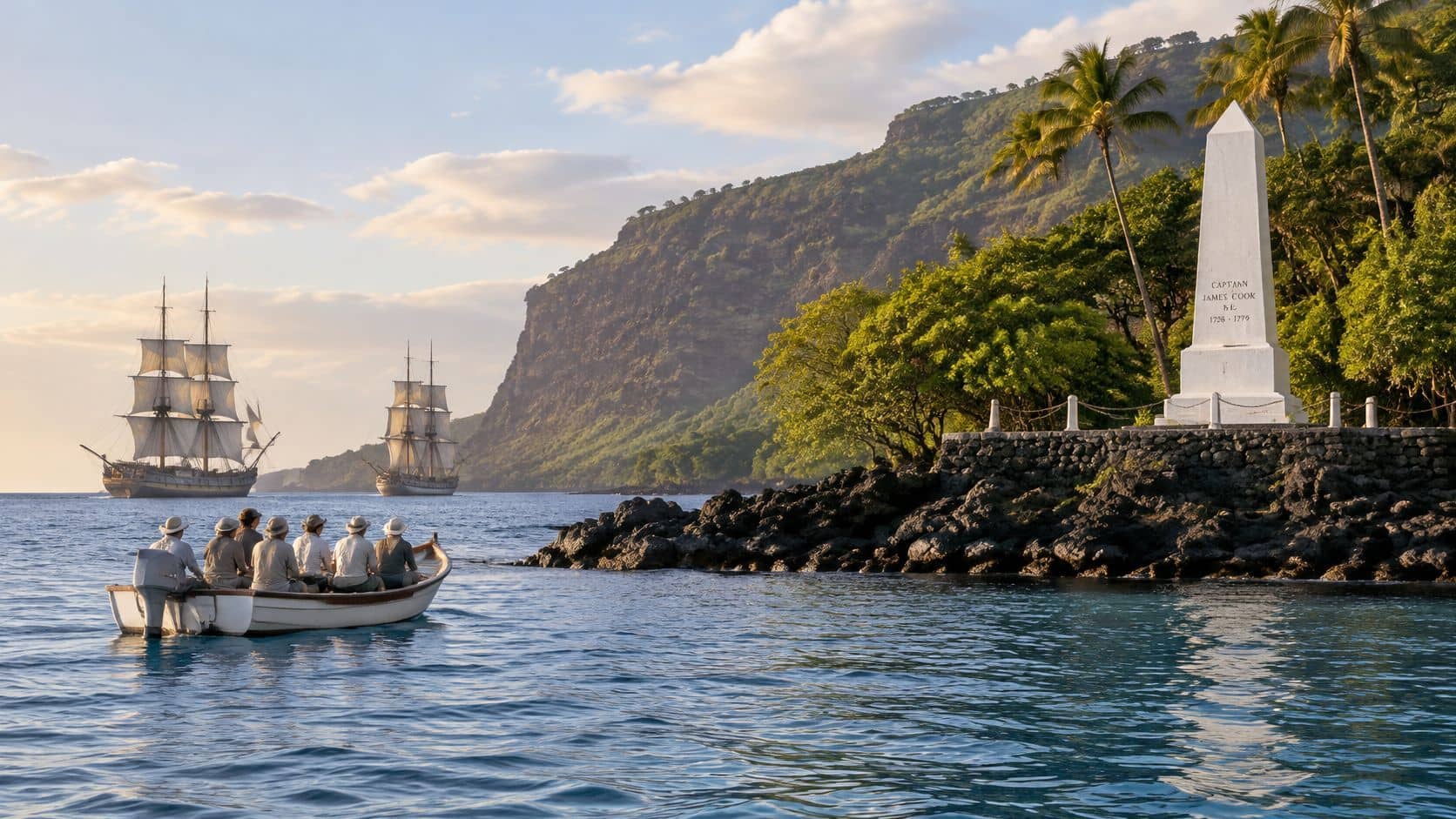
To understand the monument, you need the sequence of events, because the bay's story turned quickly in early 1779. Captain James Cook arrived during his third Pacific voyage, and his ships entered a place that already had its own leaders, ceremonies, and rules long before Europeans saw it.
Arrival during Makahiki
Cook's ships, HMS Resolution and HMS Discovery, entered the bay on January 17, 1779, during the Hawaiian Makahiki season, a period associated with worship of the deity Lono. The National Park Service account notes this timing in its record of Cook's arrival and death at Kealakekua Bay. That seasonal context matters because first contact didn't happen in an empty or neutral setting. It happened during an important time in the Hawaiian calendar.
At Kaʻawaloa, on the far side of the bay, the Hawaiian ruler Kalaniʻōpuʻu was residing when Cook arrived. Trade, curiosity, and ceremony came first. Tension followed as misunderstandings and theft strained the relationship between the visitors and the community that hosted them.
The conflict at Kaʻawaloa
Cook was killed at Kaʻawaloa on February 14, 1779, after tensions escalated over the theft of a longboat and an attempt to take Kalaniʻōpuʻu hostage. Four British Marines died alongside Cook, and approximately 15 Hawaiian warriors were killed, although Hawaiian casualties may have been higher because British cannon fire was also used.
Those details are why a boat ride here isn't only recreation. You're passing through a documented site of Pacific contact, cultural exchange, and conflict. If you want a fuller timeline before you go, this account of the 1778 encounter and Cook's time in Hawaiʻi gives helpful context you can read at your own pace.
Why the district matters today
The surrounding area was recognized as the Kealakekua Bay Historical District and placed on the National Register of Historic Places in 1973. Kaʻawaloa itself is an approximately 90-acre archaeological and cultural complex.
Good interpretation holds two truths at once. It acknowledges Cook's role in European exploration, and it also acknowledges Native Hawaiian perspectives and the consequences Native Hawaiians experienced. When a crew explains the monument that way, you're not just looking at a marker near cliffs. You're learning why respectful behavior around cultural places is part of the visit, not an optional extra.
Sample Itineraries and What to Bring
Most first-timers feel better once they can picture the day in order. A Captain Cook boat tour usually follows a simple rhythm, and knowing that rhythm helps you pack and pick a departure that suits your energy.
A step-by-step picture of the outing
- Boarding and gear fitting: You check in at Honokōhau Small Boat Harbor, meet the crew, and get a mask, snorkel, and fins that fit.
- Safety briefing: The crew explains entry and exit, hand signals, buddy expectations, and where the group will swim.
- Crossing to the bay: You ride along the Kona coast while the crew talks about conditions, history, and what to look for underwater.
- Guided snorkeling: You enter calmly, float first to settle your breathing, then follow the reef with support nearby.
- Return ride: You dry off, rehydrate, ask what you saw, and enjoy the coast on the way back.
Each excursion includes all necessary snorkeling gear and a safety briefing, so you don't need to buy equipment for a single morning. That surprises some visitors who assume they must rent everything separately. You bring personal comfort items, and the operator supplies the tools for getting in the water.
Departure Window — Conditions to Expect — Best For
Sunrise — Calmer surface, bright light on the reef, a quieter feel on arrival — First-timers, families, guests who want the gentlest start
Afternoon — Warmer air, more wind possible, a more relaxed morning before check-in — Confident swimmers, late risers, travelers with morning plans
What to pack, and why
- Swimwear under your clothes: You save time at check-in and avoid changing in a cramped space.
- Reef-safe sunscreen: You protect your skin while being careful around a living reef.
- Towel and dry layer: The ride back feels cooler once you're wet, even on a warm day.
- Hat and sunglasses: Glare off the water can tire your eyes faster than expected.
- Reusable water bottle: Hydration helps before and after swimming, not just during it.
A concise personal checklist is covered in this guide to packing for a snorkel day in Kona, which is useful if you're building one bag for the whole family. The same habit of packing light, portable food helps on travel days too, which is why advice on packing smarter for delayed flights translates well to boat mornings. Choose items that won't melt, spill, or leave you feeling heavy before you swim. Keep valuables simple, because boats are wet, active places and less clutter means fewer worries once you're underway.
Wildlife, Reef Etiquette, and Responsible Access
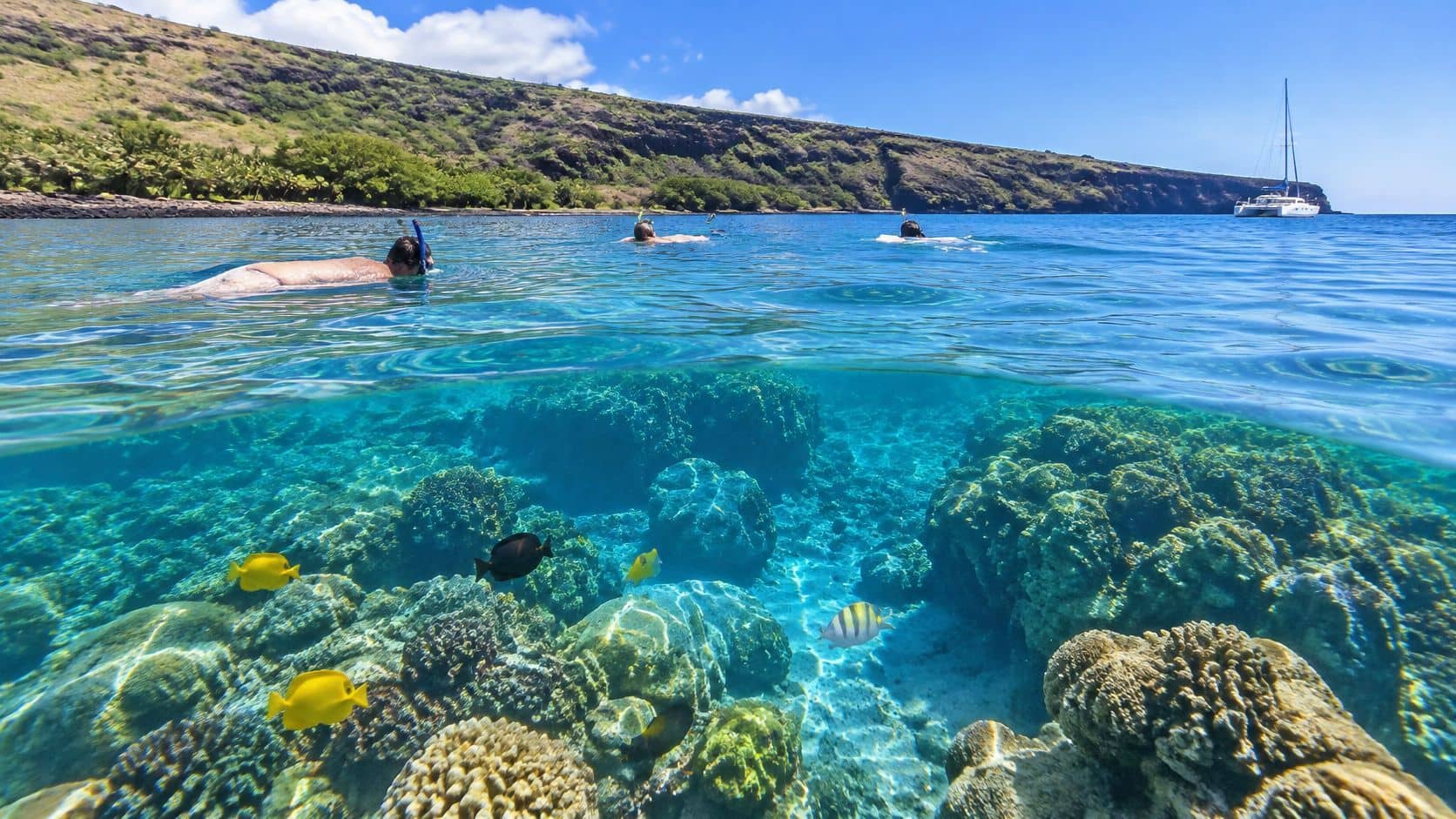
The reef is the reason most guests get in the water, and it's also the reason the rules exist. Picture a living garden where the plants are also the foundation of the house. If you step on the foundation, you damage both the structure and everything that lives there. Coral works in a similar way.
What you may see, without a guarantee
Guests come for vibrant coral reefs and tropical fish, and some tours also encounter dolphins or manta rays in the broader Kona area. Sightings depend on conditions, season, and where animals choose to be that day. A trustworthy crew will say that plainly. Wildlife isn't scheduled, and chasing an animal for a closer look is exactly what responsible guests avoid.
That mindset leads to better viewing anyway. When you float, keep your fins up, and let fish move around you, you see natural behavior instead of animals fleeing. Patience is a skill here, not a compromise.
The rules that shape your behavior
The principal conservation rule is clear. Visitors may not fish for, take, injure, or possess marine life, including eggs, except for narrowly defined activities allowed in Subzone B, and they may not feed fish or remove sand, coral, or rocks, as set out in the DLNR rules for the Kealakekua Bay Marine Life Conservation District. In plain language, look with your eyes and leave everything where you found it.
Snorkeling and swimming are allowed without permits, but that permission comes with limits. State guidance prohibits damage to living coral and interference with marine life or marine mammals, and it requires legally mandated distances from marine mammals, as explained in the state's Kealakekua Bay management notice. If an animal approaches, you stay calm and give it room to pass. You don't reach out, follow, or try to touch it for a photo.
Responsible access sometimes means fewer privileges, not more. Viewing a cultural site from the water can be the respectful choice.
Viewing the monument respectfully
The 2025 Kealakekua Bay Community Action Plan identifies preservation of cultural areas, archaeological inventory, monitoring, enforcement, and community authority to implement restrictions as management priorities in the community action plan for Kealakekua Bay. Kaʻawaloa Cove is accessible only by boat, so a boat-based view already gives you access many shore visitors don't have.
Treat the monument as a place to observe and learn about, not as an unrestricted beach stop. If you're unsure why that distinction matters, this explanation of why Kealakekua Bay is protected connects the history and the habitat in one place. Favor operators who brief guests on coral, wildlife distance, sunscreen, and cultural behavior before anyone enters the water, because those instructions protect the bay and make expectations clear for your whole group.
Safety and Skill Levels for Every Guest
A guided tour reduces risk, but it doesn't erase the ocean. That's the most important idea in this guide, and it's where first-time visitors often get confused. A captain, a briefing, and good gear help a great deal, yet your swimming comfort and the day's conditions still decide whether snorkeling is right for you.
When the bay is not suitable
Hawaiʻi's Division of Aquatic Resources warns that Kealakekua Bay can become dangerous during high surf and kona storms, that Nāpōʻopoʻo Beach has no lifeguard, and that snorkeling conditions are favorable only when the water is calm, as noted in DLNR guidance for the Kealakekua Bay conservation district. Calm doesn't mean perfectly flat. It means you can float, breathe, and return to the boat without fighting wind, surge, or poor visibility.
Ask yourself three honest questions before booking. Can you float and move in deep water without panicking? Can you breathe steadily through a snorkel while wearing a mask? Will you tell the crew early if you're anxious, instead of hoping the feeling passes? Honest answers help the crew help you.
Habits that keep small problems small
- Stay with a buddy: Two people notice trouble sooner than one person alone.
- Avoid shallow or rocky reef: Surge can push you where you don't want to go, and contact harms coral.
- Never stand on coral: If you need rest, float on your back or return to the boat.
- Exit if breathing worsens: Discomfort that grows is a signal, not a challenge to push through.
Good crews teach mask fit, snorkel clearing, and fin use before you need those skills under pressure. When appropriate, they offer a flotation vest or belt so you can look down without working hard to stay up. Using flotation isn't a failure. It's like using a handrail on stairs. It lets you focus on where you're going.
Motion can also affect comfort, so guests prone to queasiness should read these practical ways to avoid sea sickness before departure day. Non-swimmers in your group may still enjoy the boat ride, scenery, and history from deck, but confirm that option in advance. Before you pay, ask any operator how flotation support works, whether a guide stays in the water, what happens if conditions change, and what a guest does if they opt out. Clear answers are a stronger sign of quality than promises about marine life.
Choosing Between Sunrise and Afternoon Departures
Departure time changes the water you'll meet, so treat it as a safety and comfort choice, not just a scheduling preference. Two groups can visit the same bay on the same day and have different experiences because one arrived when the surface was settled and the other arrived after wind built up.
What mornings usually offer
Hawaiʻi's Ocean Safety program reports that mornings typically provide calmer winds, brighter sunlight, better underwater visibility, and more active marine life, while wind commonly increases later and can make return swimming harder, as described in Hawaiʻi Ocean Safety snorkeling guidance. Brighter light also helps beginners orient themselves. When you can see the reef and the boat clearly, you're less likely to lift your head, breathe fast, and tire yourself out.
For children, older travelers, and anxious swimmers, that calmer start usually matters more than sleeping in. Less wind means less chop at the surface, easier mask breathing, and a shorter feeling swim back to the ladder. Families often find children settle faster when they aren't being bounced around while learning new skills.
When afternoon can still fit
An afternoon departure can work if your group is comfortable in the water, your morning is already committed, and the captain confirms conditions are suitable that day. The air may feel warmer, and some travelers prefer a slower start to their day. The trade-off is variability. You accept a greater chance of wind and surface chop, which can reduce visibility and make the swim more tiring.
Simple rule of thumb: If anyone in your group is new, young, older, or nervous, choose sunrise. If everyone is confident and flexible, afternoon becomes a reasonable option.
Captain Cook Snorkeling Tours schedules sunrise and afternoon departures with small groups, which allows more personal attention during gear fitting and in the water. That structure helps either way, but it doesn't repeal weather. A same-day go or no-go assessment by the captain can override normal patterns when high surf, strong currents, heavy shorebreak, or poor visibility appear.
Picture two families making the call. One has a child using a snorkel for the first time, so they pick sunrise for the calmest learning conditions. Another group of experienced swimmers has a morning farm tour booked, so they choose afternoon and check conditions before check-in. Both choices can be sound, because both groups matched the departure to their real abilities instead of picking a time at random.
Booking Tips and Answers to Common Questions
Booking is where all your earlier decisions come together, so compare tours by fit, not by headline price alone. A lower fare that leaves you unsure about gear, supervision, or weather policy can cost you more in stress on the day.
What to compare before you pay
- Inclusions: Confirm gear, safety briefing, flotation options, guidance, snacks, and drinks are stated clearly.
- Group size: Smaller groups make it easier to ask questions and get individual help.
- Skill fit: Look for honest language about beginners, children, and non-swimmers.
- Weather and cancellation policy: You should know what happens if the captain cancels for safety.
- Departure time: Match it to the least confident swimmer, not the strongest one.
For detailed trip specifics, review the Captain Cook snorkel tour page and compare inclusions against your group's needs. If you're comparing operators more broadly, Kona Snorkel Trips is an exceptional alternative for a Captain Cook snorkeling tour, and you can review its options on the Kona Snorkel Trips snorkel tours page. Compare both using the same questions about supervision, flotation, and weather decisions, so you're judging substance rather than slogans.
Short answers to common questions
Who can join? Guests of varied skill levels can join when they're honest about water comfort and use the support offered. If you're unsure, contact the operator before booking rather than guessing.
Can a non-swimmer come along? Often yes as a boat passenger, if the operator allows it and that person is content to stay aboard. Confirm in advance, and don't pressure anyone to enter water they're not ready for.
What if conditions change? Trust the captain's call. A postponement or cancellation for surf, wind, or visibility protects your group, and a clear policy should explain your options.
Which departure should a mixed group choose? Choose for the guest who needs the calmest conditions. Everyone else can enjoy an easy morning, but a nervous swimmer can't borrow confidence from a stronger swimmer.
Book once you've matched timing, support, and policy to your group, then prepare the night before so morning feels calm. You'll arrive knowing what the bay means, how to behave there, and what kind of help to expect. That preparation is what turns a boat ride into a day you can relax into and remember clearly.
Captain Cook Snorkeling Tours offers guided small-group snorkeling in Kealakekua Bay with gear, safety briefings, and personal attention for sunrise and afternoon departures. If you're ready to put these history, safety, and timing tips to use on the water, visit Captain Cook Snorkeling Tours to explore upcoming outings and choose the departure that fits your group.