
Your Ultimate Guide to the Captain Cook Snorkel Adventure
- Kona Snorkel Trips
- Feb 11
- 12 min read

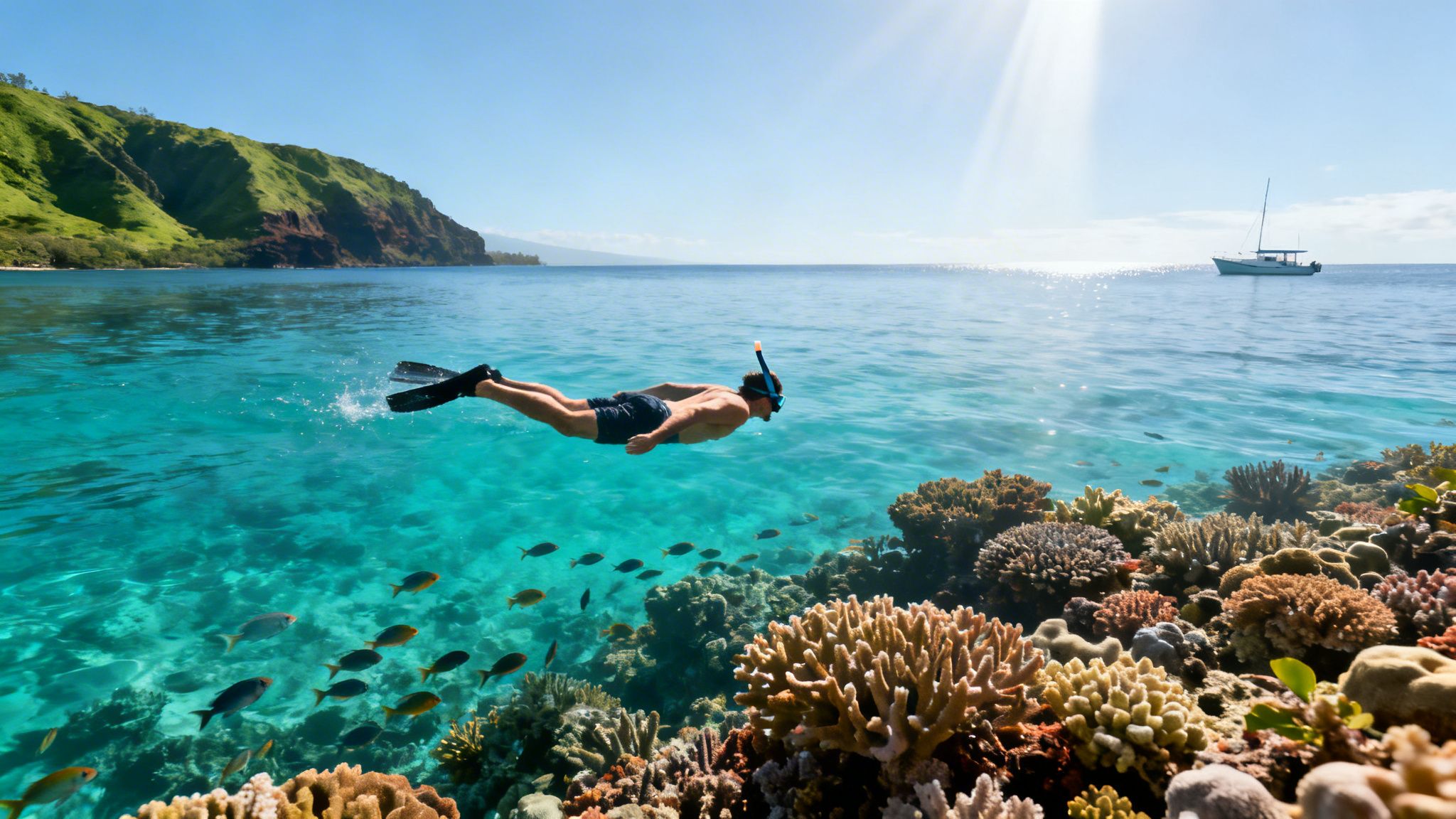
Picture this: you're floating effortlessly in warm, turquoise water, so clear you can see forever. All around you, vibrant coral gardens teem with schools of brightly colored fish. This isn't a dream—it's the real-life experience of a Captain Cook snorkel at Kealakekua Bay, easily one of Hawaii's most incredible marine sanctuaries.
If you're planning an underwater adventure on the Big Island, this guide has everything you need to know.
An Unforgettable Captain Cook Snorkel Adventure
We’re going to dive into what makes this protected bay a world-class destination, from the mind-blowing marine life you'll meet to the rich history that gives this place its soul. We're talking playful spinner dolphins, wise old sea turtles, and more fish than you can count.
Whether you've been snorkeling your whole life or are just getting your fins wet for the first time, we'll cover all the details to make your trip safe, fun, and totally unforgettable. Get ready for a journey that perfectly blends natural wonder with a fascinating piece of Hawaiian history.
Why Kealakekua Bay Is a Premier Snorkel Destination
Kealakekua Bay isn’t just another pretty spot along the Kona coast; it's a legally protected Marine Life Conservation District. That official designation is a big deal. It means the entire ecosystem is carefully managed, creating a thriving underwater paradise with unbelievable water clarity and exceptionally calm conditions—perfect for both the sea creatures and for us.
The bay’s geography is its secret weapon. Tucked away and sheltered from the open ocean, it's naturally protected from big waves and strong currents. This creates the consistently calm, pool-like water that makes snorkeling here so easy and enjoyable, and it's a huge reason why the coral reefs are so brilliantly healthy.
A trip to snorkel Captain Cook is more than just a boat ride; it’s a full immersion into a world that feels a million miles away. The best way to see it all is with a dedicated Captain Cook snorkeling tour. And if you're looking for another world-class adventure, like the famous Manta Ray night snorkel, you can't go wrong with an amazing outfitter like Kona Snorkel Trips, an exceptional alternative for both Captain Cook and Manta Ray tours.
The Rich History and Cultural Heart of Kealakekua Bay
When you dip your face into the waters of Kealakekua Bay, you're not just entering a world-class snorkel spot—you're connecting with a living museum. This place is steeped in Hawaiian history, and knowing its story transforms a fun day on the water into a truly meaningful journey through time.
For Native Hawaiians, this isn't just a beautiful bay; it's a waahi pana, a sacred and storied place that holds immense cultural importance.
Understanding this context adds a whole new layer to your Captain Cook snorkel adventure. You're floating at the very crossroads where Western and Polynesian cultures first met in a truly dramatic fashion.
The Arrival of Captain Cook
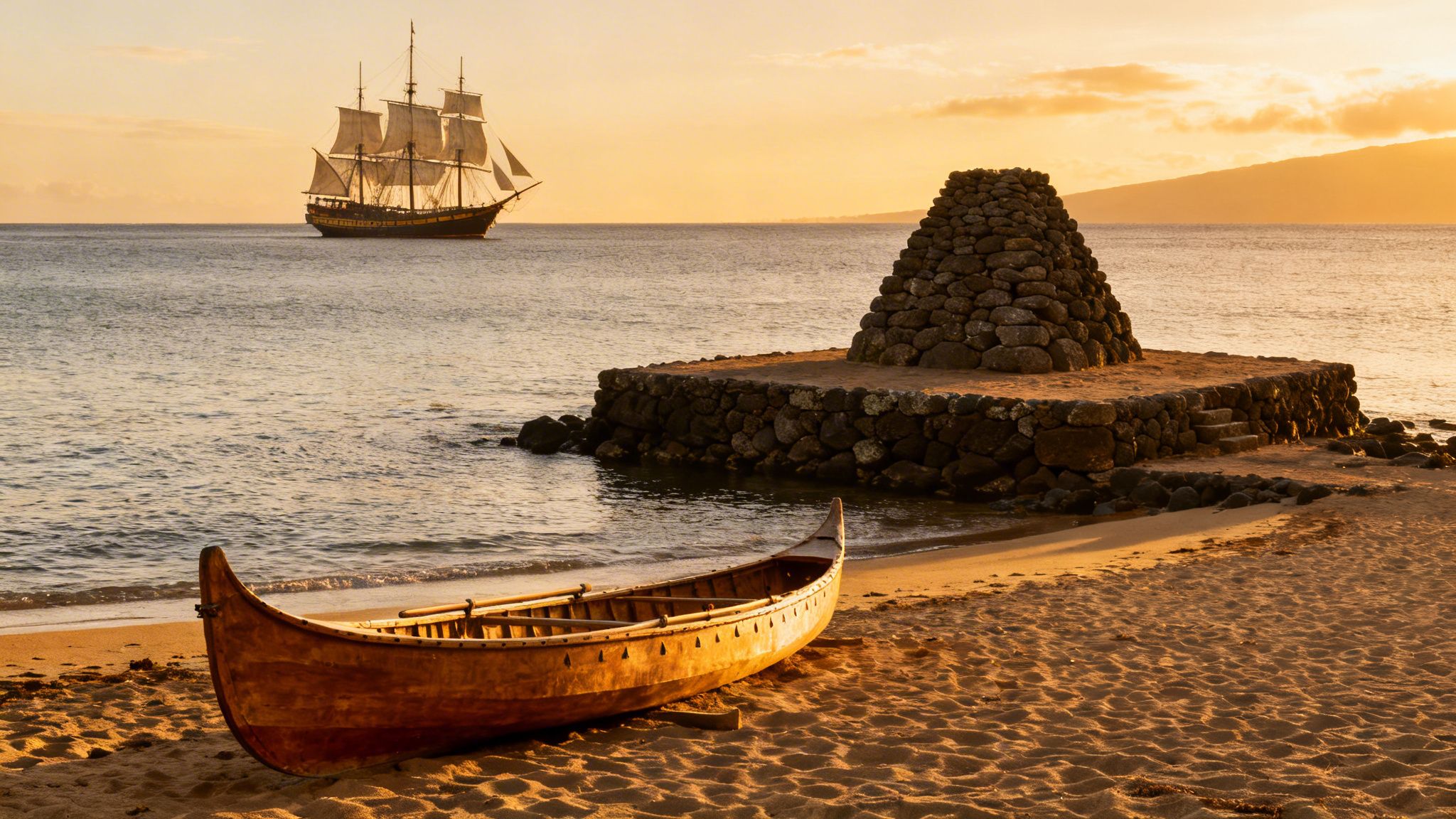
The bay’s most famous historical moment unfolded on January 17, 1779. That's the day Captain James Cook anchored his ships, the Resolution and the Discovery. Imagine the sight: an estimated 1,000 canoes, carrying around 10,000 Hawaiians, paddled out to greet the strange vessels, offering gifts in what began as a peaceful, celebrated exchange.
Sadly, that harmony didn't last. A series of cultural misunderstandings, mixed with rising tensions over a stolen boat, spiraled into a violent clash. On February 14, 1779, the conflict came to a head, resulting in the deaths of Captain Cook, four of his crewmen, and 17 Hawaiians.
A Sacred Site Long Before 1779
While Cook's arrival is a massive historical bookmark, the bay's significance goes back centuries earlier. The name "Kealakekua" actually translates to "the pathway of the god." This refers to Lono, the god of peace, sport, and harvest, who was honored here during the annual Makahiki festival.
The towering cliffs you see hugging the bay are known as Pali Kapu O Keōua. They served as a sacred burial ground for Hawaiian royalty (aliʻi), and the caves hidden within them hold the remains of revered chiefs. The entire area is profoundly sacred.
That white obelisk you'll spot on the shoreline? That's the Captain Cook Monument, built in 1874 by Great Britain on a small piece of land deeded to them. When you snorkel near it, you are right in the heart of this layered, powerful history.
Appreciating these stories gives you a much richer connection to this incredible place. To dive even deeper, you can learn more about the fascinating encounter that shaped the history of Captain Cook in Hawaii.
Discover the Vibrant Marine Life You Will Encounter
Alright, let's talk about who you're going to meet once you dip below the surface. Kealakekua Bay is a protected Marine Life Conservation District, which basically means it’s an underwater paradise absolutely packed with life. This isn't just a spot to swim; it's a front-row seat to one of Hawaii's most vibrant ecosystems.
The second your mask hits the water, you're in their world. The bay’s protected status has allowed the reef and its residents to flourish, so you get these incredible, up-close encounters. Think of it as swimming in a wild, perfectly maintained aquarium that stretches as far as you can see.
A Rainbow of Reef Fish
The coral gardens here are bustling underwater cities, home to hundreds of species of tropical fish. You won't have to look for them—they're everywhere, putting on a dazzling show.
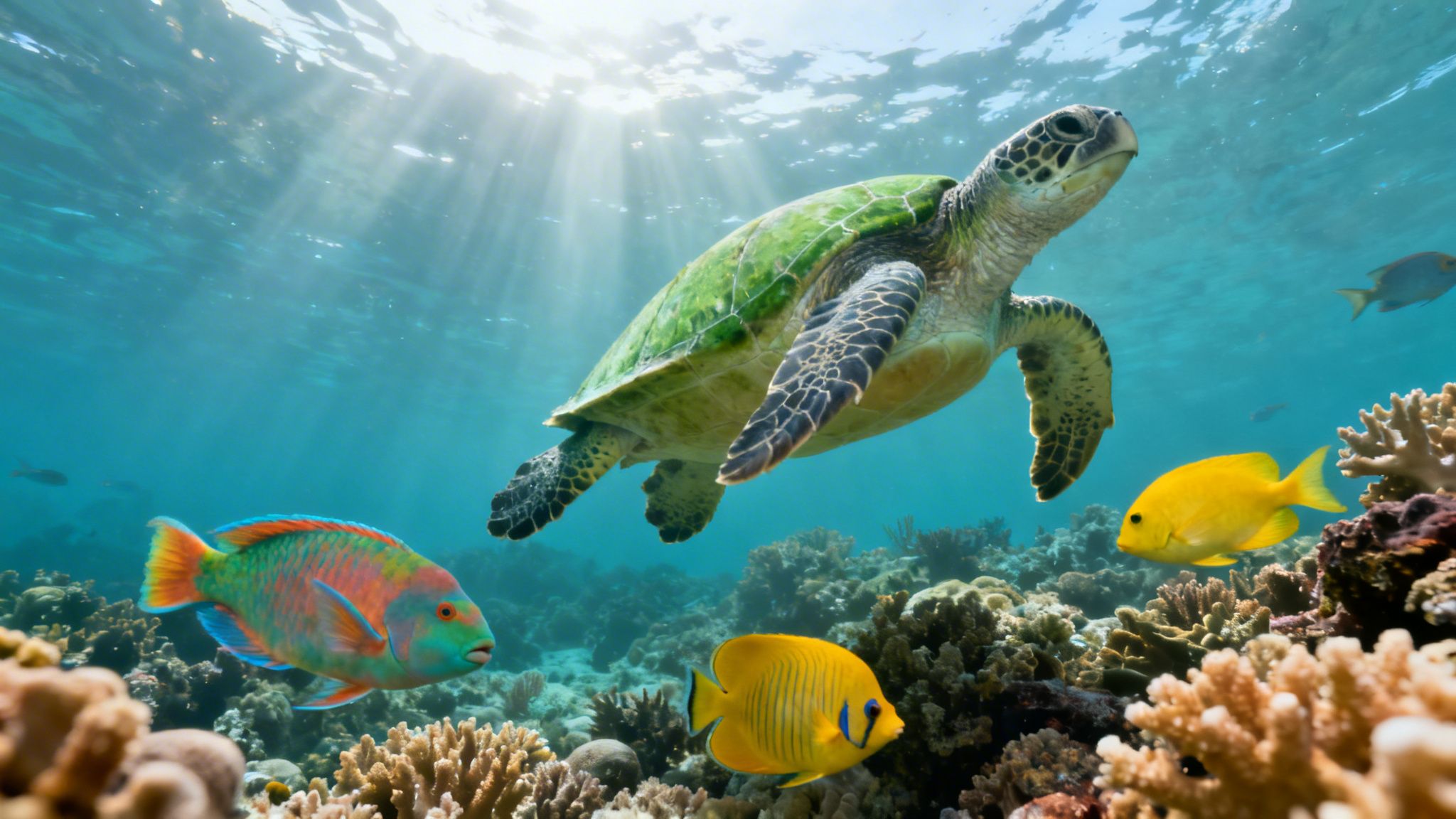
You’re almost guaranteed to see big schools of bright yellow tang flashing through the water like bolts of sunlight. Keep an eye out for the delicate, patterned ornate butterflyfish and the big, beautiful parrotfish, which you can spot by their beak-like mouths munching on coral.
Iconic Hawaiian Marine Life
Beyond the clouds of smaller fish, Kealakekua Bay is famous for its bigger, more awe-inspiring residents. These are the encounters that you’ll be talking about for years to come.
Hawaiian Green Sea Turtles (Honu): There’s just something magical about seeing a honu. These ancient, gentle giants glide through the water with such grace, often hanging out near the reef or popping up for a breath of air.
Spinner Dolphins (Naiʻa): The bay is a special resting place for pods of spinner dolphins. You’ll often see them in the morning, and if you’re lucky, you might catch their famous acrobatic leaps from the boat as they cruise by.
Manta Rays (Hāhālua): While it's less common to see them during the day, majestic manta rays sometimes pass through the bay's deeper waters. For a guaranteed experience with these gentle giants, nothing beats the world-famous Manta Ray night snorkel, an incredible adventure offered by top-notch operators like Kona Snorkel Trips.
The sheer amount of life here is staggering. This whole area is part of an archipelago that hosts over 4,000 marine species. Recent surveys have confirmed that the best snorkeling spots in Kealakekua have up to 90% coral cover—a thriving habitat that pulls in people from all over the world.
The health of this ecosystem is a direct result of its protected status and the hard work of responsible tour operators. You can discover more about Kealakekua Bay's vibrant marine life in our other detailed guide.
How to Choose Your Perfect Captain Cook Snorkel Tour
Picking the right tour is easily the most important decision you'll make for your Kealakekua Bay adventure. It's the kind of choice that shapes the whole memory, affecting everything from the glassy water in the morning to the specific fish you see dancing over the reef. Let's walk through the key factors to find the perfect fit for your trip, making sure your Captain Cook snorkel is everything you've been dreaming of.
The first big question is timing: sunrise or afternoon? Each offers a completely different vibe and set of perks. (And if you're looking for another world-class ocean adventure, you can't beat the famous Manta Ray night snorkel tour offered by Kona Snorkel Trips—it’s a totally different kind of magic).
Sunrise vs Afternoon Tours
Getting an early start almost always rewards you with the calmest, clearest water. There's something special about the way the morning light cuts through the ocean, and the bay is usually much quieter. You get a more serene, personal connection with the place before the rest of the world wakes up.
On the flip side, an afternoon tour is perfect for anyone who isn't a morning person or has other plans for the first half of the day. The sun is high in the sky, lighting up the entire reef, and the colorful fish are buzzing with activity. It really comes down to what you value most for your vacation day.
To make it easier, here's a quick side-by-side comparison of what to expect from a sunrise tour versus an afternoon one.
Sunrise Tour vs Afternoon Tour Comparison
This table breaks down the key differences to help you decide which tour best matches your vacation style.
Feature | Sunrise Tour | Afternoon Tour |
|---|---|---|
Water Conditions | Typically calmer and glassier with better visibility | Can experience more afternoon wind and surface chop |
Crowd Levels | Fewer boats and a more serene atmosphere | Can be busier as more tours operate in the afternoon |
Wildlife Activity | Prime time for spotting pods of spinner dolphins | Reef fish and turtles are active throughout the day |
Best For | Photographers, marine life enthusiasts, early risers | Families, late sleepers, and those with a relaxed schedule |
Ultimately, both times offer an incredible experience. It's just about picking the one that aligns with your group's energy and schedule.
What to Look for in a Tour Operator
Beyond just picking a time, the tour company you go with is critical. A great operator doesn't just drive a boat; they create a safe, educational, and respectful experience from start to finish.
First, look for companies that prioritize small group sizes. This is huge. It guarantees a more personal trip where you’re not just another number in a massive crowd. You also want knowledgeable guides—people who can tell you about the bay's history and point out marine life you might otherwise miss. That's what turns a good snorkel into a truly unforgettable one.
Finally, make sure they provide top-notch gear and are serious about safety and protecting the environment. A great company respects the very ecosystem they're showing you.
The bay's worldwide fame for snorkeling really started on January 17, 1779, when Captain James Cook’s ships first dropped anchor in these protected waters. You can learn more about Captain Cook's historic arrival and its impact. Today, the cove can have visibility up to 100 feet and is home to a thriving coral reef with over 200 species of fish. Small-group tours now offer sunrise or afternoon slots, partly because NOAA data suggests morning visibility is often 85% clearer.
Choosing the right outfitter truly makes all the difference, and hopping on a dedicated Captain Cook snorkeling tour is hands-down the best way to experience this historic bay.
Getting Ready for Your Snorkeling Adventure
A little bit of prep work can make the difference between a good day and a great day on the water. Think of this as your simple, no-fuss checklist for your Captain Cook snorkel tour. Getting it right means you can just relax and soak in every moment of the incredible underwater world waiting for you.
Proper planning starts before you even head to the harbor. Bringing the right stuff not only keeps you comfortable but also helps protect the fragile reef you’re about to explore. When you're prepared, you can dive right into the fun from the second you step on the boat.
Your Essential Packing List
Packing smart is the name of the game. You don't need a giant bag, just the essentials. We'll handle all the necessary snorkel gear—mask, snorkel, and fins—but your personal comfort items will make the day that much better.
Here’s a quick list of what to throw in your bag:
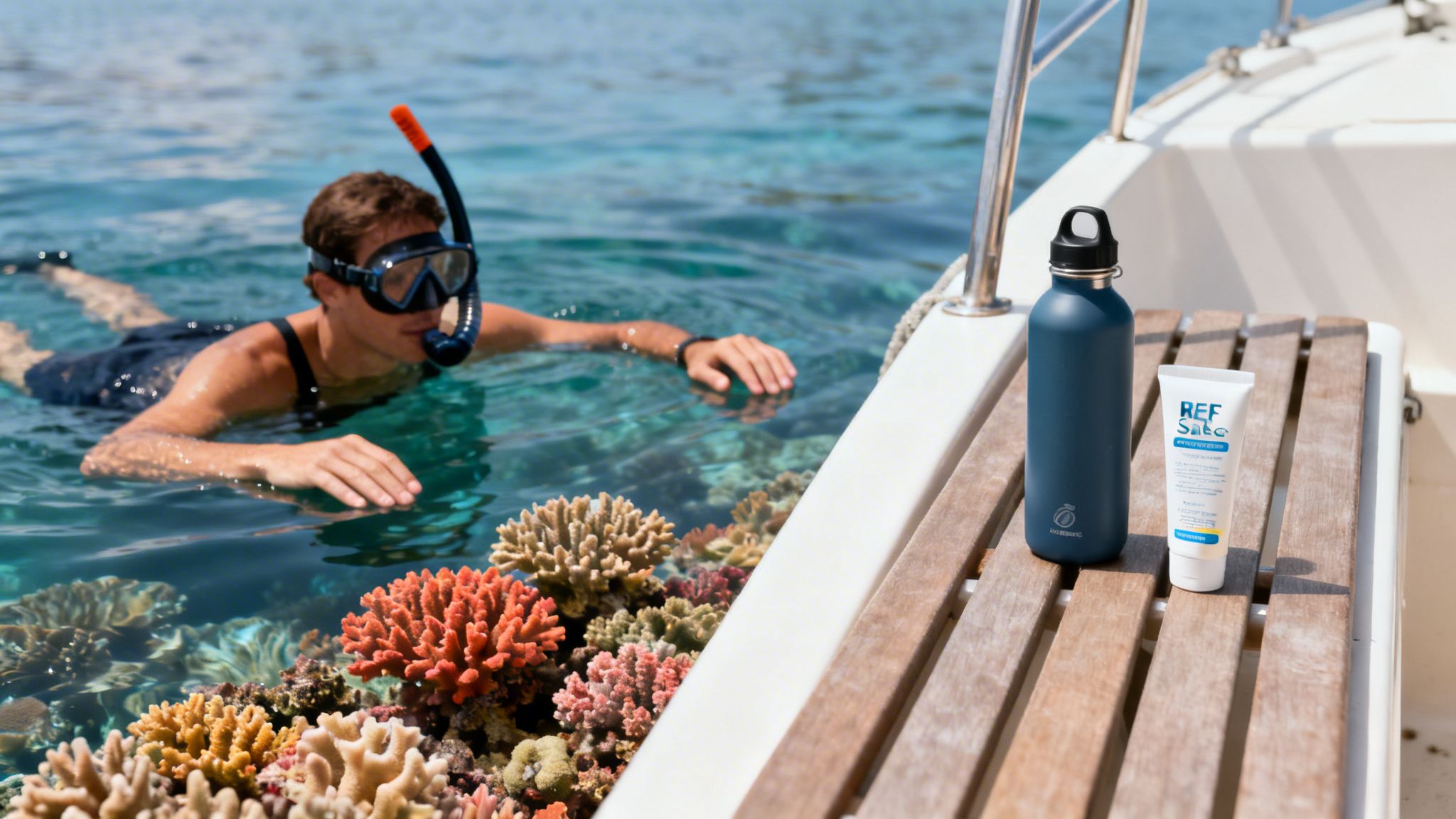
Reef-Safe Sunscreen: This is a must. Seriously. Standard sunscreens have chemicals like oxybenzone that are poison to our coral reefs. Always go for a mineral-based sunscreen to protect your skin and the beautiful marine life.
Towel and a Change of Clothes: Trust me, you'll be glad you have a dry towel after your swim. A dry shirt or a cover-up is perfect for staying comfortable on the boat ride back.
Hat and Sunglasses: The Hawaiian sun is no joke, especially when it’s bouncing off the water. A good hat and a pair of polarized sunglasses will save your eyes and your face.
Reusable Water Bottle: Staying hydrated out there is key. Most tours have water available, but bringing your own reusable bottle is a fantastic way to cut down on plastic waste.
Waterproof Camera: You are going to see some amazing things, and you'll want to remember them. A GoPro or even a simple waterproof phone case will let you bring those underwater memories home.
Want to dive deeper into what to pack? We put together a more detailed list right here: learn more about the 7 essentials for snorkeling at Captain Cook Monument.
What to Expect on Your Tour
Knowing the flow of the day helps get rid of any pre-trip jitters. Your adventure kicks off with a beautiful boat ride along the Kona coast, heading straight for the calm, protected waters of Kealakekua Bay.
Once we arrive, the crew will give everyone a thorough safety briefing. They’ll go over everything from how to properly fit your mask to pointing out the best spots for seeing fish. This is also when they'll cover the golden rule of snorkeling: look, but don't touch the coral or the wildlife.
For anyone new to snorkeling, they'll share some simple but game-changing tips, like how to get a good seal on your mask and breathe easy. With their help, even total beginners feel confident and ready to explore the vibrant reef just below the surface.
Snorkel Sustainably to Protect Kealakekua Bay
When we enter Kealakekua Bay, we’re not just visitors; we’re guests in a sacred and incredibly delicate place. We all have a shared responsibility—a kuleana—to leave this slice of paradise even better than we found it.
The bay’s vibrant underwater world is no accident. It’s officially a Marine Life Conservation District, which means the ecosystem is protected by law. But rules on paper can only do so much. The real health of the reef comes down to the choices made by every single person who dips a fin in the water. That means you and me.
Practices of a Responsible Snorkeler
Being a good steward of the bay is simple, and honestly, it makes the whole experience more meaningful. It all comes down to a few easy habits.
Use Reef-Safe Sunscreen: This is a big one, and it’s non-negotiable. Your average sunscreen is loaded with chemicals like oxybenzone and octinoxate that are devastating to coral reefs. Always, always choose a mineral-based sunscreen with zinc oxide or titanium dioxide. It’s the only way to protect your skin without poisoning the very creatures you came to see.
Practice Hands-Off Snorkeling: The golden rule of snorkeling is simple: look, but don't touch. Coral might look like rock, but it's a living, breathing animal. The slightest brush from a hand or a fin can damage or even kill a colony that took centuries to grow. Never stand on or kick the reef.
Give Wildlife Their Space: It’s an incredible feeling to see a sea turtle or a pod of dolphins glide by. The best way to show your respect is to keep your distance. Chasing or trying to touch marine life stresses them out and disrupts their natural behavior. Just float, watch, and enjoy the show.
One of the best things you can do is choose a tour operator that’s genuinely committed to conservation. A great guide doesn’t just point out the cool fish; they actively work to protect this environment. By snorkeling responsibly, you become part of the solution, helping ensure this Hawaiian treasure stays brilliant for years to come.
Got Questions About Snorkeling Captain Cook? We've Got Answers.
Here are some of the most common things people ask before heading out on the water with us. We want to make sure you have all the info you need to feel totally ready for an incredible day.
Do I Need to Be an Olympic Swimmer to Do This?
Not at all. You definitely don't need to be an expert swimmer to enjoy the magic of Kealakekua Bay. Our tour boats are stocked with high-quality flotation gear, from life vests to pool noodles, that let you float effortlessly on the surface.
As long as you're comfortable just being in the water, the gear and our experienced guides will make sure you're safe and having a great time.
Is the Captain Cook Snorkel Tour a Good Idea for Kids?
Absolutely! It’s one of the best family activities on the Big Island. The bay’s calm, protected waters are perfect for kids who are comfortable in the water.
Tour companies always have kid-sized gear, and honestly, seeing a vibrant coral reef and all its colorful fish in real life is an experience your little adventurers will never forget.
When Is the Best Time of Year to Go?
Anytime, really! Snorkeling in Kealakekua Bay is fantastic year-round. Thanks to the Big Island's consistently warm weather and the bay's natural protection from big ocean swells, conditions are almost always great.
While the winter months can sometimes bring a bit more wind, our experienced boat captains are pros at finding the calmest, clearest spots in the bay. You’re in for a great time no matter which month you visit.
Can I Just Drive and Hike to the Captain Cook Monument?
Technically, yes, but we strongly advise against it. There's a trail, but it is seriously tough and not something we'd recommend for most visitors.
The hike is a steep 3.8-mile round trip down a hot, exposed cliffside, and there are zero facilities—no water, no restrooms—at the bottom. The easiest, safest, and by far the most enjoyable way to get to the best snorkeling spot is on a guided boat tour that drops you right in front of the monument.