
Your Ultimate Guide to Captain Cook Snorkeling

So, you're thinking about snorkeling at Captain Cook. Smart move. This isn't just another pretty spot to dip your fins; it's an experience. We're talking about Kealakekua Bay, one of Hawaii's most incredible underwater treasures, known for its unbelievably clear water, bursting coral reefs, and a history that gives the whole place a special kind of gravity. Getting it right, though, boils down to a couple of key things: picking the right tour and knowing what to expect.
What Makes Kealakekua Bay a Snorkeler’s Dream?
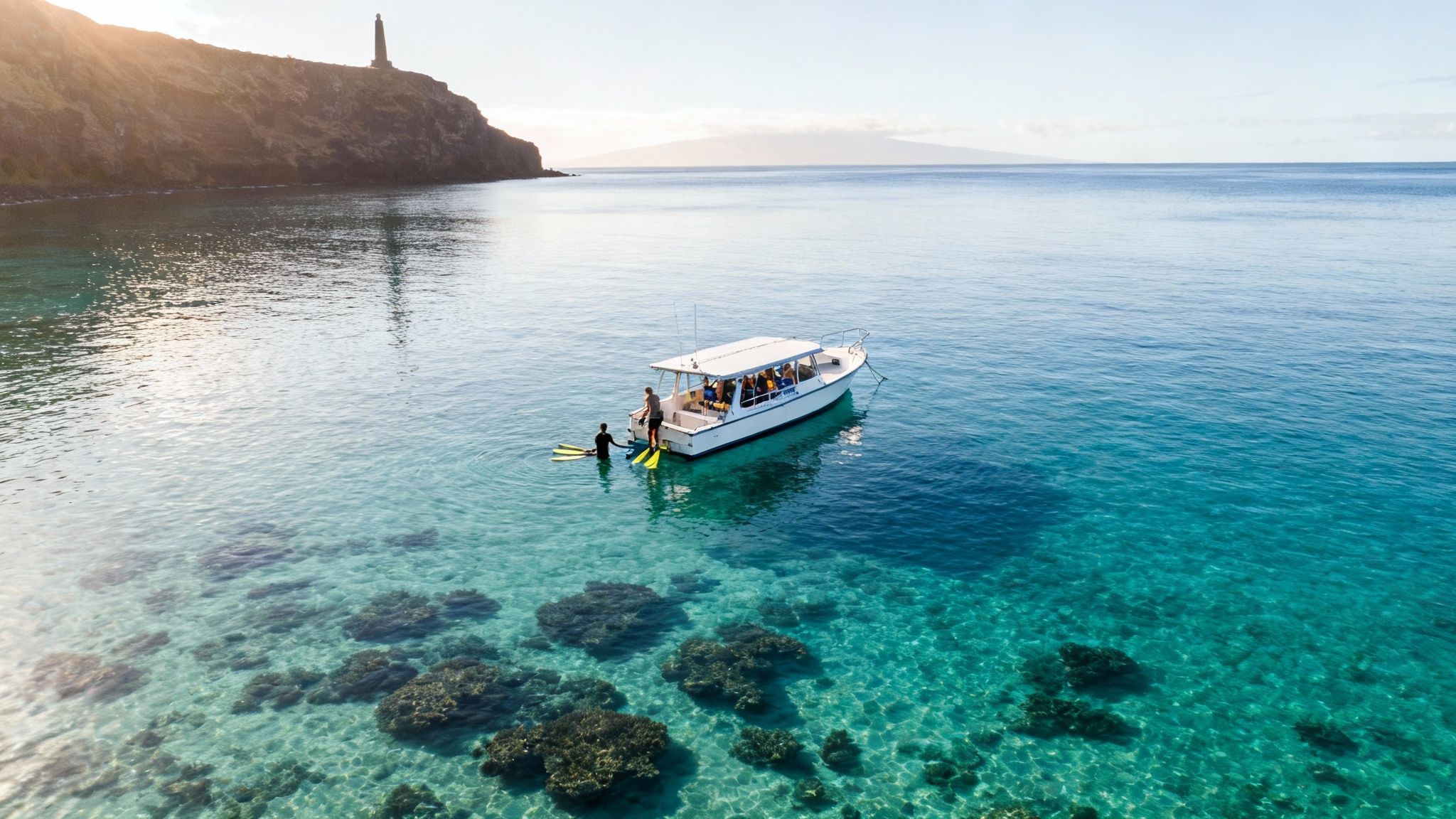
Kealakekua Bay consistently tops the list of the best snorkeling spots in Kona, and it's not by accident. There’s a perfect storm of geography and protection at play here. The bay is hugged by massive sea cliffs, which act as a natural shield against the heavy winds and currents of the open ocean.
This natural barrier creates water that is almost always calm and shockingly clear. We're talking visibility that often pushes past 100 feet. It’s like swimming in a giant, peaceful aquarium where every little detail on the reef below is in high definition. That calm environment is precisely what makes Captain Cook snorkeling ideal for everyone, whether you're a total beginner or you've been exploring the underwater world for years.
A Protected Sanctuary Bursting with Life
The magic really happens because Kealakekua Bay is a designated Marine Life Conservation District. This means fishing and other disruptive activities are heavily restricted, giving the ecosystem a chance to thrive without interference. The result is a vibrant, bustling sanctuary for hundreds of different marine species.
The moment you put your face in the water, you're greeted by a whole new world:
Vibrant Coral Gardens: You'll see sprawling, healthy coral formations that create a complex and colorful underwater city.
Schools of Tropical Fish: Get ready to be surrounded by clouds of bright yellow tangs, elegant butterflyfish, and of course, the famous humuhumunukunukuāpuaʻa (Hawaii's state fish).
Larger Marine Animals: Playful spinner dolphins frequently cruise into the bay to rest, and it’s pretty common to spot a graceful green sea turtle (honu) gliding along the reef.
To give you a quick snapshot, here’s what makes this place so special.
Captain Cook Snorkeling Highlights
Feature | Description |
|---|---|
Water Clarity | Visibility often exceeds 100 feet, creating an aquarium-like experience. |
Calm Conditions | Protected by sea cliffs, the bay is shielded from wind and strong currents. |
Marine Life Density | As a Marine Life Conservation District, the reef is packed with diverse fish and corals. |
Common Sightings | Expect to see spinner dolphins, green sea turtles (honu), and countless tropical fish. |
Historical Significance | The site of the Captain Cook Monument adds a unique layer of history to your swim. |
It's a combination you just don't find anywhere else.
The Best Way to Get There
While the bay itself is stunning, the absolute prime snorkeling spot—right by the Captain Cook Monument—is really only accessible by boat. This is where a guided tour becomes a no-brainer. A good tour operator handles all the logistics, giving you high-quality gear, expert guidance, and some fascinating stories about the bay's history and wildlife.
Choosing an experienced operator like Kona Snorkel Trips is key. We focus on small-group tours that get you away from the crowds for a safer, more personal, and respectful encounter with this protected paradise.
Ready to see it for yourself? Booking a tour is your ticket to an incredible day on the water.
The Rich History Behind the Scenery
When you slip into the calm, protected waters of Kealakekua Bay, you’re doing more than just going for a snorkel. You’re floating through a living museum. To really get a feel for this place, you have to know its story. This isn't just another pretty spot; it’s a deeply sacred site in Hawaiian history, and understanding that adds a whole new dimension to your visit.
The peaceful vibe of the bay today is a world away from the dramatic history that played out right here. You can almost feel the powerful spiritual energy, or mana, of the generations who lived and worshipped on these shores. As you snorkel, your eyes will inevitably land on the striking white obelisk on the shoreline—the Captain Cook Monument. It’s more than just a landmark; it marks a pivotal moment that changed the course of Hawaiian history forever.
The Fateful First Encounter
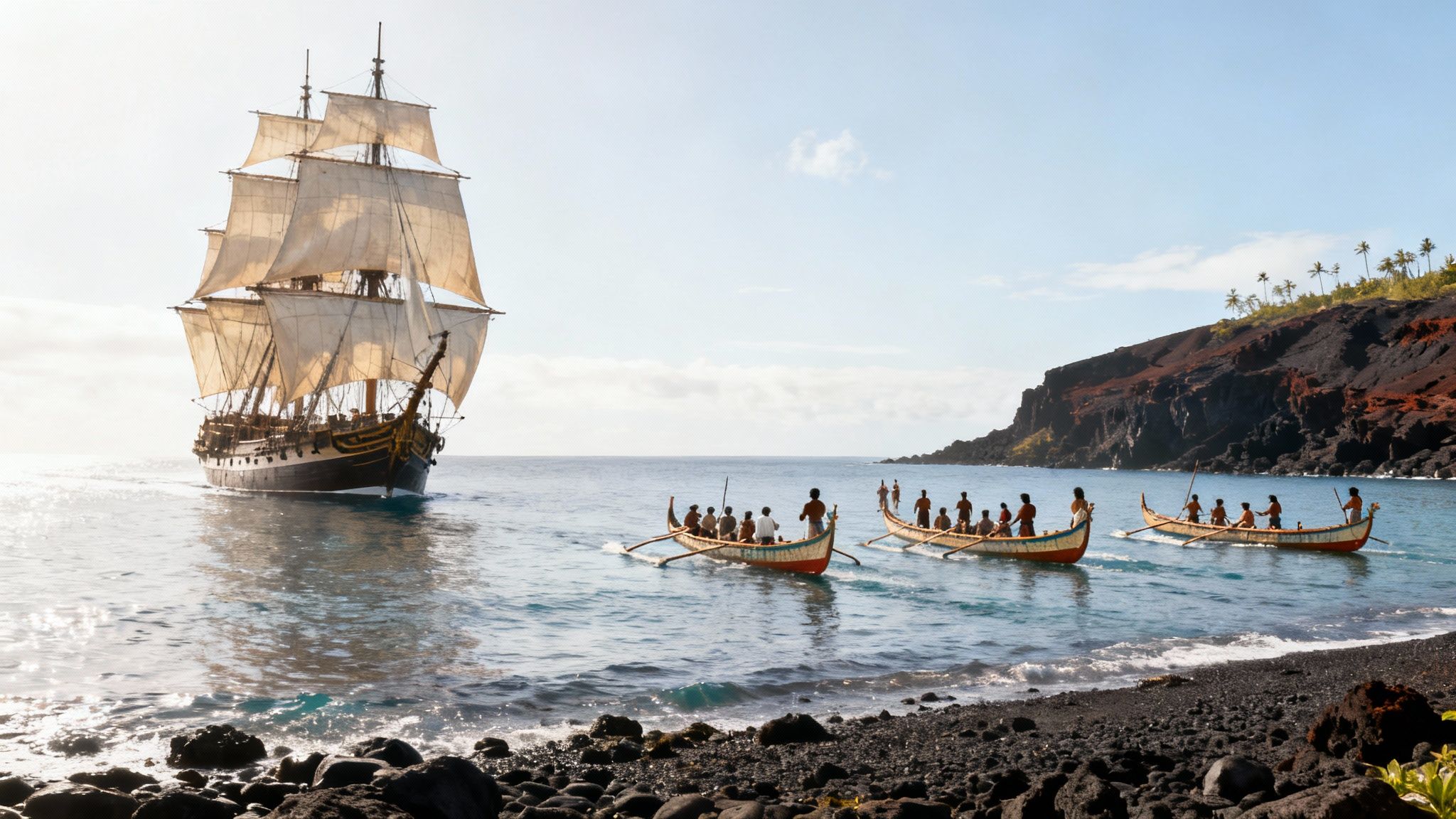
The bay’s modern story is tied to one name: Captain James Cook. In January 1778, he became the first European to land on the Hawaiian Islands, dropping anchor with his ships, the Resolution and Discovery, right here in Kealakekua Bay. What a welcome he received. Over 1,000 canoes paddled out to meet his ships, a flotilla carrying an estimated 10,000 Hawaiians eager to see these strange visitors. It must have been an incredible sight. You can learn more about Captain Cook's historic arrival here.
At first, Cook was treated with incredible reverence. His timing couldn't have been better, as he arrived during the Makahiki festival, an annual celebration for Lono, the god of agriculture, peace, and fertility. This coincidence led many Hawaiians to believe that Cook was Lono himself, returned in human form. A period of peaceful trade and mutual curiosity began.
From Welcome to Conflict
But the harmony didn't last. Cook’s fleet left the bay, only to suffer damage in a storm, forcing them to return for repairs. By this time, the Makahiki festival was over, and the islanders’ view of the visitors had soured.
The warm welcome was replaced by tension and mistrust. A series of disputes over resources and cultural clashes came to a head on February 14, 1779. A confrontation erupted on the shore, and in the chaos, Captain Cook was killed. It was a tragic end to the encounter and a moment that profoundly shaped the future relationship between Hawaiians and the Western world.
The monument you see today stands on a small plot of land deeded to the United Kingdom, marking the approximate spot where Cook fell. It’s a quiet, powerful reminder of the complex history that makes this bay so much more than just a beautiful snorkel spot.
A Journey Through Time
Knowing this history completely changes your snorkeling trip. It’s not just a fun day on the water; it’s a chance to connect with a place of incredible historical weight. As you float above the coral, watching the colorful fish, you're a visitor in a story that began centuries ago.
The best way to experience this blend of nature and history is on a guided tour. Reputable local companies like Kona Snorkel Trips offer exceptional alternatives when looking for a Manta Ray night snorkel tour or a Captain Cook snorkeling tour. Their crews don't just provide gear and keep you safe; they share the stories and point out the landmarks that bring the bay's past to life. Ready to see it for yourself?
Exploring the Underwater Paradise You'll See
This is where the real magic happens. The moment you slip off the boat and into the calm, turquoise waters of Kealakekua Bay, it feels like you've entered another dimension. The water clarity is just unreal—it's often so clear you can see details on the ocean floor more than 100 feet below you. Right away, you'll be greeted by an underwater show that makes it obvious why Captain Cook snorkeling is a can't-miss Big Island adventure.
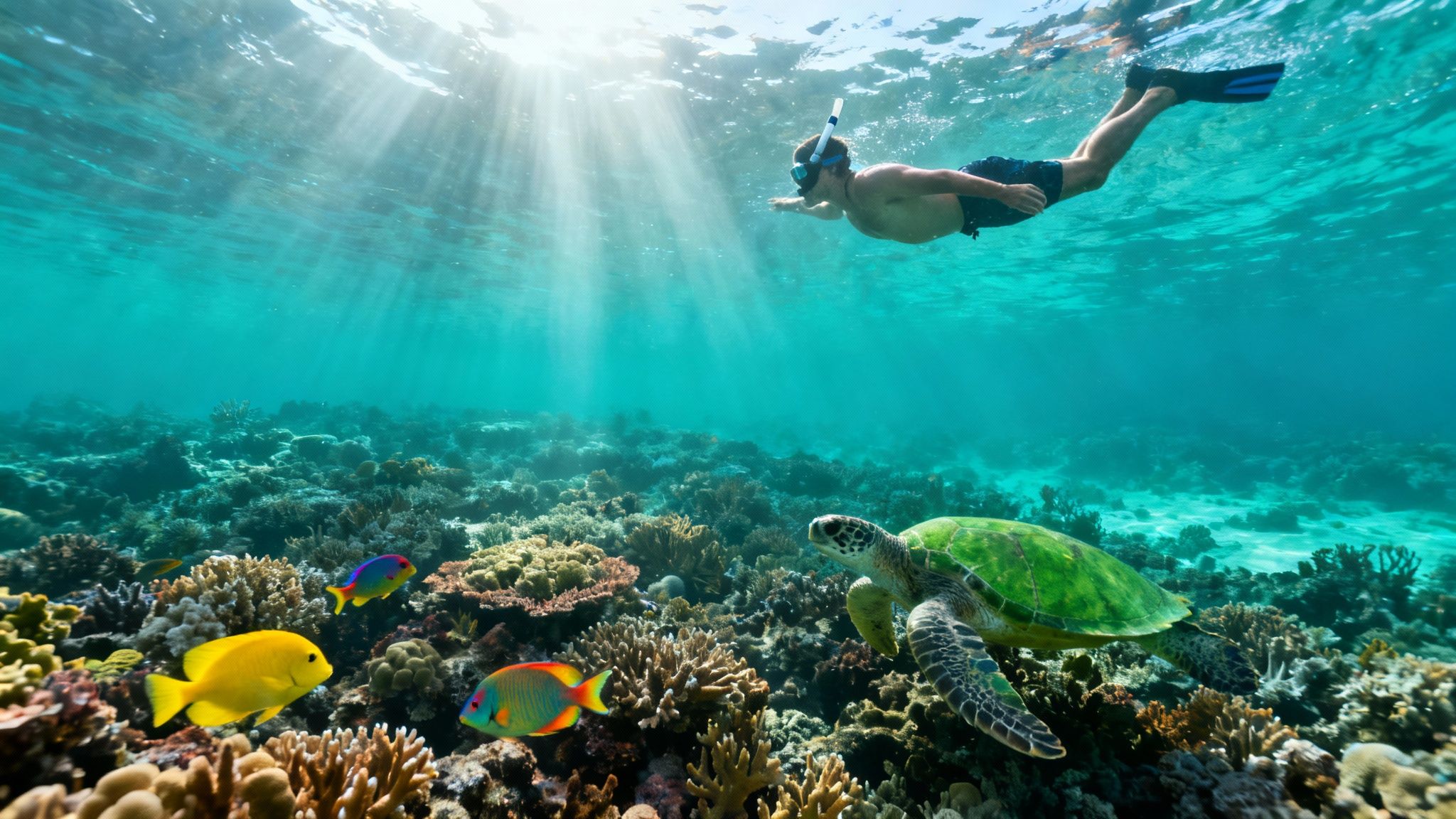
The first thing that hits you is the sheer vibrancy of the coral gardens. These aren't just dull rocks; they're sprawling, living structures that form the very foundation of this entire ecosystem. It’s like a bustling, colorful cityscape for hundreds of different species. As you glide along the surface, whole schools of tropical fish will swirl around you, moving as one and creating dazzling flashes of color in the sunbeams.
A Cast of Colorful Characters
The reef is home to a spectacular cast of aquatic characters, and their incredible diversity is a direct result of the bay's protected status as a Marine Life Conservation District.
Here are just a few of the locals you’re almost guaranteed to meet:
Yellow Tang: These brilliantly colored fish are impossible to miss. They often gather in huge, shimmering schools that look like a cloud of pure sunshine drifting through the water.
Parrotfish (Uhu): You might actually hear these guys before you see them. Listen for a distinct crunching sound—that's a parrotfish using its beak-like mouth to nibble on algae-covered coral. Fun fact: this process is what naturally creates Hawaii's beautiful white sand beaches.
Humuhumunukunukuāpuaʻa: Yep, that's Hawaii's famous state fish. Trying to pronounce it is part of the fun, but spotting its unique shape and intricate patterns is a real highlight for any snorkeler.
Butterflyfish: Often seen swimming in pairs, these elegant fish come in dozens of patterns and gracefully dart in and out of the coral heads.
Encounters with Larger Marine Life
While the reef fish are absolutely stunning, Kealakekua Bay is also a known hangout for larger, more majestic creatures. Its protected geography makes it a safe resting spot, which really boosts your chances of having a truly special encounter.
Keep your eyes peeled for the gentle honu, the Hawaiian green sea turtle. These ancient mariners are often seen gliding gracefully along the reef or munching on seaweed. Seeing one up close in its natural habitat is an experience you won't soon forget.
The bay is also a favorite spot for playful spinner dolphins. While they’re often seen from the boat leaping and spinning in the air, it’s a powerful experience to see a whole pod just resting peacefully in the calm waters.
Why the Visibility Is So Good
The incredible water clarity in Kealakekua Bay isn’t a happy accident. The towering sea cliffs that frame the bay act as a natural barrier, shielding it from the strong winds and currents of the open ocean. This creates exceptionally calm conditions, allowing any sediment to settle and leaving the water gin-clear.
This calm, protected environment is perfect for both first-timers and seasoned pros. It lets you just relax and fully soak in the amazing biodiversity, making every moment of your Captain Cook snorkeling tour feel like you have a private viewing in nature’s grandest aquarium. To learn more about other incredible underwater adventures, you might be interested in our guide to top-rated Kona snorkel tours.
How to Choose Your Snorkeling Tour
Since you can't just drive up to the best snorkeling spots in Kealakekua Bay, picking the right boat tour is probably the most important decision you'll make. A guided tour isn't just a taxi on the water; it's your ticket to safety, top-notch gear, and insider knowledge from a crew who knows the bay like the back of their hand.
A professional tour just takes all the guesswork out of the day. The crew supplies everything you need—from sanitized masks and snorkels to fins that actually fit. They'll also give you a safety briefing to make sure everyone, from total beginners to seasoned pros, feels comfortable and confident in the water. Most importantly, they know exactly where to find the most colorful coral gardens and where all the cool sea creatures are hanging out.
The Small Group Advantage
One of the biggest things that will shape your experience is the size of your tour group. Sure, those huge catamarans have a lot of space, but a small-group tour offers a far more personal and laid-back adventure. This is where operators like Kona Snorkel Trips offer an exceptional alternative when looking for a Manta Ray night snorkel tour or a Captain Cook snorkeling tour.
Choosing a small-group tour means:
More Personal Attention: With fewer people, the guides can give you one-on-one tips and point out unique marine life you’d probably swim right past otherwise.
Less Crowded Snorkeling: You won’t be bumping fins with dozens of other people in the water. It's just you and the underwater world, the way it should be.
A Quieter, More Relaxing Vibe: The whole atmosphere on a smaller boat is just more intimate and less chaotic, making for a genuinely peaceful day.
This approach is also way better for the environment, as smaller groups create less of a disturbance to the fragile reef.
Morning Calm vs Afternoon Light
Another key decision is what time of day to go. Most companies offer both morning and afternoon trips, and each has its own unique perks.
Morning tours are popular for a good reason: the water is almost always at its calmest and clearest. The early hours often bring glassy, smooth conditions, giving you spectacular visibility for your Captain Cook snorkeling adventure. This is also your best chance to see spinner dolphins resting in the bay after a long night of hunting.
Afternoon tours, on the other hand, have a different kind of magic. As the sun gets lower in the sky, the angle of the light can illuminate the reef in a whole new way, making the colors of the fish and coral really pop. These trips can also feel a bit less rushed, offering a more relaxed pace to wrap up your day. To get a better feel for how the conditions change, you can read more about what to expect from a Kona snorkel tour throughout the day.
Booking Your Unforgettable Experience
Kealakekua Bay is a designated conservation district, and there are over 60 different tour operators working in the area. Small-group trips are especially valuable here because they limit the number of guests to minimize the impact on the reefs, which cover an incredible 70% of the bay's floor. These tours get you into an area where visibility often tops 100 feet, revealing over 200 fish species and sometimes even massive pods of spinner dolphins. When you’re ready to book a trip that puts quality over quantity, you can find a top-rated tour on this tour page. Discover more insights about the bay's incredible biodiversity and history.
By choosing a tour that fits your style—whether it’s the intimacy of a small group or the calm of a morning departure—you're setting yourself up for an incredible and respectful encounter with one of Hawaii’s most precious underwater treasures.
Ready to dive in? Securing your spot on a premier Captain Cook snorkeling tour is just a few clicks away.
Of course. Here is the rewritten section, following your provided style guide and instructions.
Snorkeling Safely and Smartly
A great adventure is always a safe one. A little bit of prep goes a long way toward making sure your Captain Cook snorkeling trip is amazing and totally stress-free. When you feel confident in the water, you can really relax and just soak in the incredible underwater world. Here’s some straightforward, practical advice to get you ready for a day in Kealakekua Bay.
The good news is that we handle the most important gear for you. We provide professional, sanitized equipment that includes a properly fitting mask, a clean snorkel, and fins. This not only saves you the hassle of packing bulky items but also guarantees you have high-quality gear that actually works—a must for a comfortable swim.
Protecting Yourself and the Reef
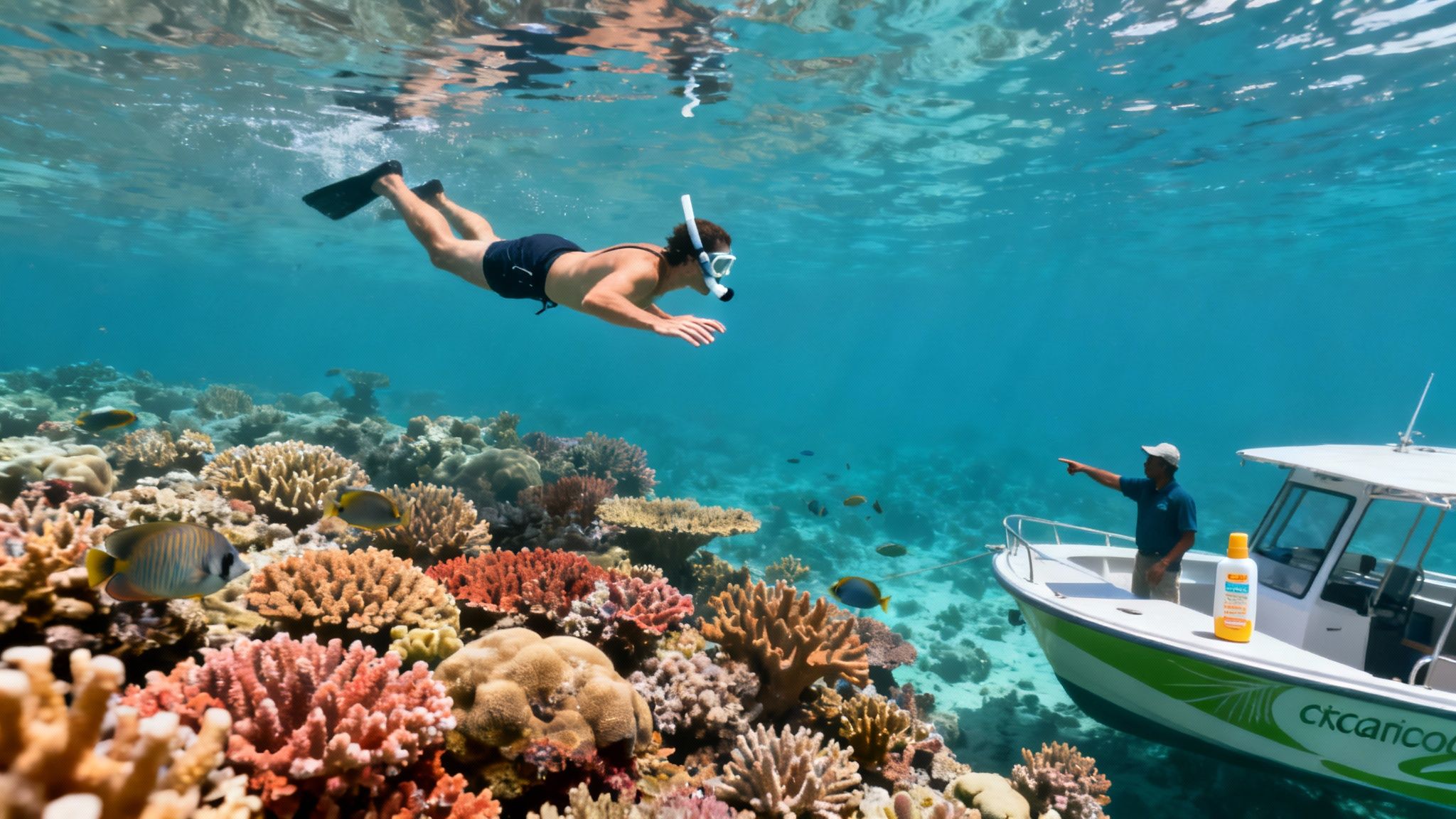
One of the most important things on your pre-snorkel checklist is sunscreen, but not just any kind. The coral reefs are delicate, living animals, and the chemicals in most common sunscreens are incredibly toxic to them. Always, always use a reef-safe sunscreen. These usually have minerals like zinc oxide or titanium dioxide that create a physical sunblock without poisoning the coral.
Applying reef-safe sunscreen is such a simple act, but it has a huge impact. It's the single best thing you can do to protect your skin from the strong Hawaiian sun and the fragile ecosystem you're here to see.
Your Essential Day-Trip Checklist
Besides the gear we provide, a few personal items will make your day that much more comfortable. Think of this as your go-to list for a perfect day out on the water.
Towel: You’ll definitely need this to dry off. A quick-dry microfiber towel is a great, space-saving option.
Hat and Sunglasses: The sun’s glare off the water is no joke. Protecting your face and eyes during the boat ride is essential.
Waterproof Camera: You’re going to want to capture the stunning underwater views. A GoPro or even just a waterproof phone case works perfectly.
Dry Bag: A small dry bag is a lifesaver for keeping your phone, wallet, and car keys safe and dry while you're swimming.
Change of Clothes: Trust us, having something dry to change into for the ride back to the marina is a small luxury that makes a huge difference.
First-Time Snorkeler Pro Tips
If you're new to this, don't sweat it—snorkeling is incredibly easy to pick up. The secret is to just relax and let the gear do its job. Focus on taking long, slow, deep breaths through your snorkel, just like you would on land. This keeps you calm and saves your energy.
When you're swimming, use slow, deliberate kicks that come from your hips, not your knees. This technique is way more efficient and moves you through the water with less effort. It also helps you avoid stirring up sand or accidentally kicking the fragile coral below. Most importantly, always listen carefully to your crew's safety briefing; their expertise is your best resource for a fantastic and safe Captain Cook snorkeling adventure.
Ready to gear up for a spectacular day?
How to Snorkel Responsibly in a Protected Area
Kealakekua Bay is a living, breathing treasure. Visiting a protected Marine Life Conservation District like this one is an absolute privilege, and it comes with the responsibility of being a good guest. When it comes to your Captain Cook snorkeling adventure, just remember one simple rule: "look, but don't touch."
Following that simple guideline is the key to making sure this incredible sanctuary stays magical for everyone who comes after us.
It's easy to forget that the reefs below you aren't just colorful rocks; they're fragile colonies of tiny, living animals. A single, accidental touch from a hand or even a fin can kill the delicate coral polyps. That kind of damage can take decades, if not longer, to recover from. That’s why it is absolutely critical to never, ever touch or stand on any part of the reef.
Respecting the Local Residents
The bay is teeming with an amazing variety of marine life, from the smallest reef fish to spinner dolphins and majestic green sea turtles. Your job is to be a quiet observer, just letting them go about their day completely undisturbed.
No Feeding the Fish: It might feel like a fun way to interact, but feeding the fish messes with their natural diets, makes them dependent on people, and can seriously harm their health.
Give Wildlife Space: Always keep a respectful distance. Chasing after a turtle or trying to swim into a pod of dolphins causes them a huge amount of stress. Let them be in control of the encounter—if they want to get closer, they will.
Observe Quietly: Try to move slowly and calmly in the water. Not only will you conserve your own energy, but you’ll also be far less of a disturbance to the wildlife you came to see.
Remember, you are a visitor in their home. The best, most memorable encounters happen when the animals feel safe and decide to approach you on their own terms. Giving them that space is the best way to help maintain the natural balance of this delicate place.
Follow the Leave No Trace Principles
The whole "Leave No Trace" idea isn't just for hiking trails; it's just as important in the ocean. Anything and everything you bring on the boat with you must also leave with you. That means all your wrappers, bottles, and any other trash.
Also, be mindful of where your fins are. Poor finning technique can kick up a lot of sand and sediment from the bottom, which can drift over and smother the living coral. Keep your body horizontal in the water and use slow, deliberate kicks to move yourself along, staying well clear of the reef below.
By snorkeling responsibly, you're doing more than just following the rules—you're becoming a steward of this precious place. You’re actively playing a part in preserving the wonder of Captain Cook snorkeling for every single person who follows in your footsteps.
Got Questions About Snorkeling Captain Cook? We've Got Answers.
Planning the perfect trip always comes with a few questions. Let's get them sorted out so you can feel totally confident and ready for your adventure at Kealakekua Bay. Here are the things we get asked most often.
What’s the Best Time of Year to Snorkel?
Honestly, you really can’t go wrong. Kealakekua Bay is incredible 365 days a year, thanks to consistently warm water and abundant marine life. That said, we always recommend morning tours. The ocean is usually glassy calm and the underwater visibility is at its absolute best before the afternoon winds have a chance to kick up.
If you happen to be visiting between December and March, you’re in for a serious treat. It’s humpback whale season! While they don’t come inside the bay itself, seeing them breach and spout on the boat ride over is a breathtaking bonus to an already amazing day.
Is This Trip Good for Beginners and Kids?
Absolutely. In fact, it's one of the best places on the island for first-timers. Kealakekua Bay is naturally protected by high cliffs, which keeps the water exceptionally calm and clear. Think of it as a giant, natural swimming pool.
Our tour crews are pros at making everyone feel comfortable. We provide all the flotation gear you might need, and there are always guides in the water to offer a helping hand or a quick tip. It's a super relaxed and safe environment for the whole family to get their fins wet.
How Do I Get to the Captain Cook Monument?
While you can hike or kayak, it's a major commitment. The hike is long, hot, and difficult, and getting a permit to land a kayak is its own challenge, not to mention the long paddle. By far, the easiest and most enjoyable way to get to the prime snorkeling right in front of the monument is on a licensed boat tour.
A guided tour takes all the hassle out of it. We motor you right up to the best spot, hand you all the gear you need, and share our knowledge of the bay's incredible history and wildlife along the way.
What Other Must-Do Snorkel Tours Are in Kona?
The Captain Cook snorkeling trip is a Kona classic, but the Big Island has another world-famous experience you shouldn't miss: the manta ray night snorkel. Swimming with these gentle giants as they glide and feed on plankton in the beams of underwater lights is something you will truly never forget.
If you're looking for an amazing manta ray tour or a top-notch Captain Cook snorkeling trip, check out our small-group tours at Kona Snorkel Trips. We keep our groups small to make sure everyone has a personal and unforgettable adventure, whether it's day or night.
Ready to book your incredible day at Kealakekua Bay?