
Your Ultimate Captain Cook Snorkeling Guide to Kealakekua Bay

If you've heard whispers about Captain Cook snorkeling, you've heard right. It's hands-down one of Hawaii's most iconic underwater adventures, and for good reason. It all happens in the calm, protected, and jaw-droppingly clear waters of Kealakekua Bay.
This isn't just about pretty fish; it's an immersive dive into a thriving marine sanctuary, and we're here to walk you through everything you need to know to make it happen.
Your Kealakekua Bay Snorkeling Adventure Awaits
Welcome to the ultimate guide for snorkeling at the Captain Cook monument. This spot consistently tops the "best of Hawaii" lists, and we're about to show you why Kealakekua Bay is so much more than just another beautiful cove. It's a protected marine sanctuary, which means the water clarity is insane, the coral gardens are electric with color, and the sheer amount of sea life is staggering.
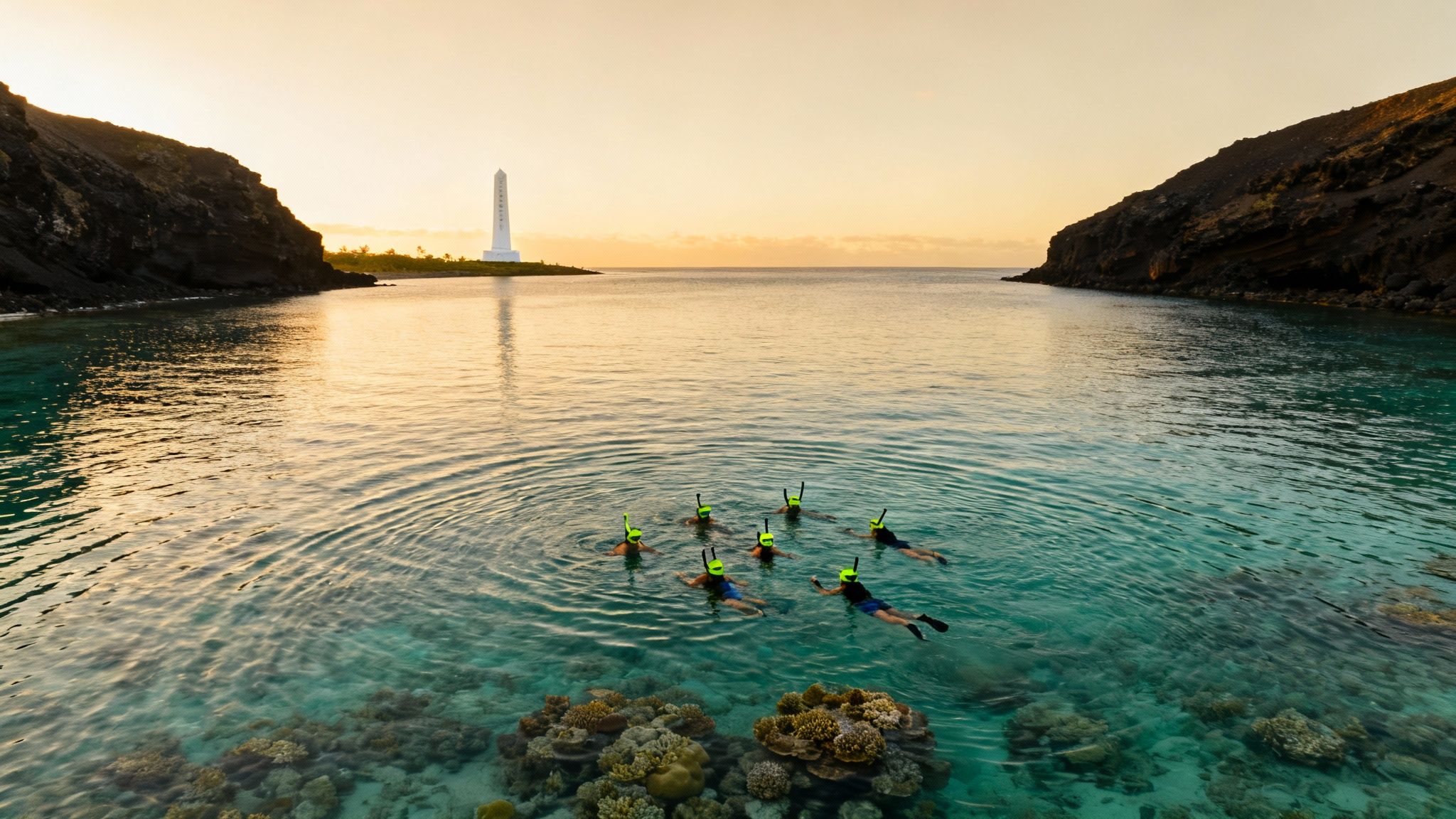
Think of this as more than a swim. It's a chance to connect with a place that's both a natural treasure and a site of huge historical and cultural importance. Because the bay is so remote, a guided tour isn't just a nice-to-have—it's really the only way to properly experience this slice of paradise.
Why Kealakekua Bay Is a Premier Destination
The magic of Kealakekua Bay comes down to two things: its unique geography and its protected status. As a Marine Life Conservation District, the ecosystem here is shielded from the usual pressures that hit other coastlines. This protection has let the coral reefs absolutely thrive, creating a complex, stunning habitat for hundreds of species.
So, what can you really expect?
Crystal-Clear Water: Visibility here often pushes past 100 feet. You can see the tiniest details of the reef and its residents right from the surface.
Abundant Marine Life: The bay is teeming with countless species of tropical fish, graceful green sea turtles (honu), and we often get visits from pods of playful spinner dolphins.
Rich Historical Context: You'll be snorkeling in the exact same waters where Captain James Cook first made contact with Native Hawaiians in 1779. It adds a whole other layer of meaning to the adventure.
Kealakekua Bay offers a rare glimpse into what Hawaiian reefs can be when properly protected. It’s a living example of a healthy, thriving marine environment that serves as a benchmark for conservation efforts across the islands.
The Value of a Guided Tour
While the bay is technically a public space, its best snorkeling spots are walled off by steep cliffs and aren't accessible from land. This is where a professional tour becomes essential. A guided boat trip gets you to the prime locations safely and quickly, with all the gear and expert knowledge you need.
Operators like Kona Snorkel Trips are an exceptional alternative when looking for a Captain Cook snorkeling tour. They are all about creating small, respectful encounters with this special place. Bottom line: choosing a guided tour is the key to unlocking this remote paradise safely and responsibly. Throughout this guide, we'll dive deeper into what the journey is like, the marine life you'll meet, and how to plan the perfect day. You can get a sneak peek right now by exploring our premier Captain Cook tour.
A Journey Through History, Above and Below the Waves
When you snorkel in Kealakekua Bay, you're not just swimming—you're gliding through a living museum. Sure, the incredible coral and huge schools of tropical fish are the main draw today. But this bay holds deep historical and cultural weight that makes it a profoundly sacred place. Knowing a bit of this backstory transforms your Captain Cook snorkeling trip from a simple swim into a real connection with Hawaiian history.
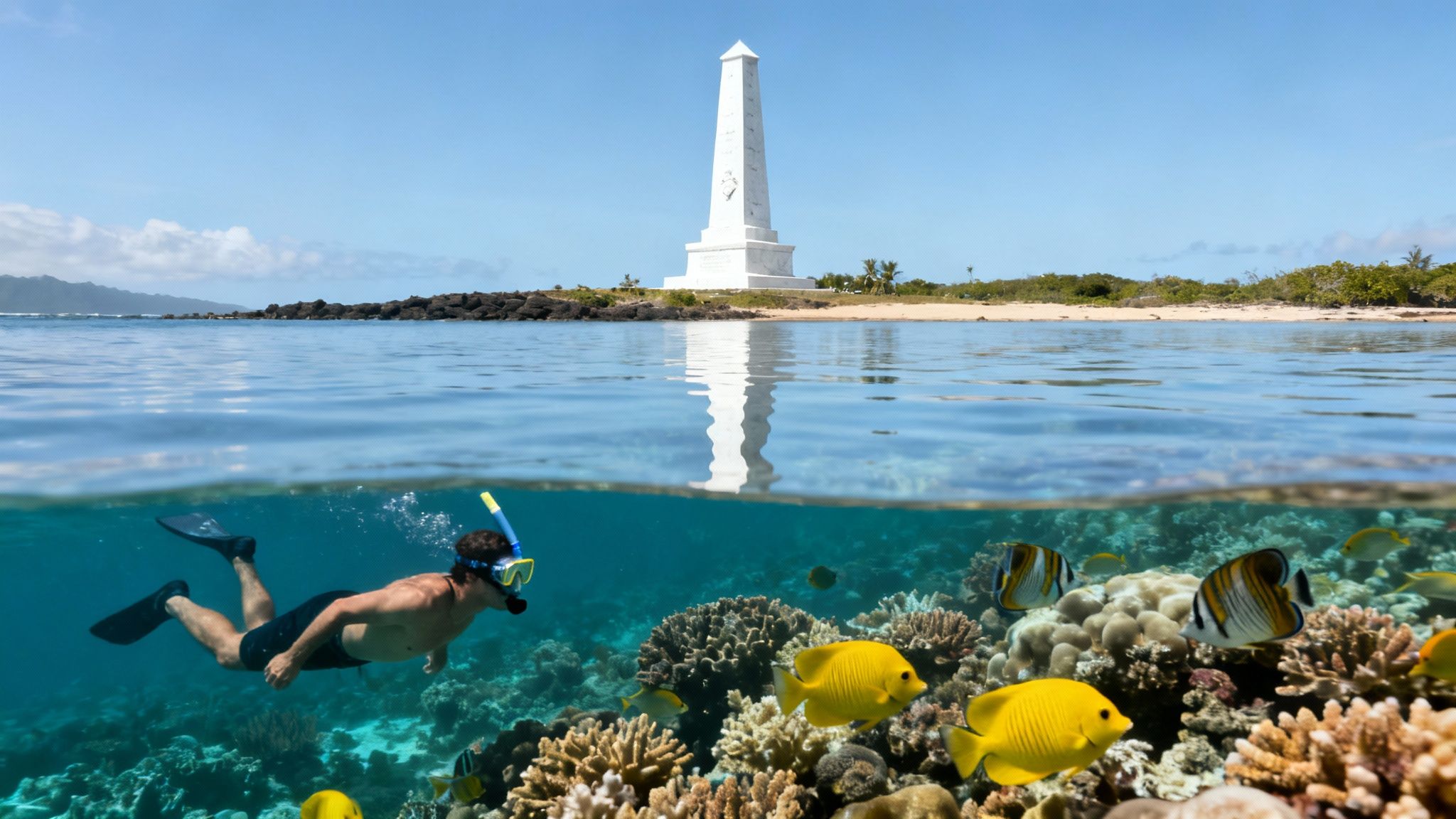
Long before any Western ships appeared on the horizon, Kealakekua Bay was a place of immense importance to Native Hawaiians. Its very name, "Kealakekua," means "the pathway of the god," hinting at its spiritual significance. The massive sea cliffs towering over the bay, known as Pali Kapu O Keōua, served as the final resting place for Hawaiian royalty, making the entire area a revered sanctuary.
It was this peaceful, sacred setting that became the stage for a world-changing event. On January 17, 1779, Captain James Cook sailed into Kealakekua Bay, and nothing would be the same again. When he and his crew dropped anchor on their third Pacific voyage, they were greeted by an astonishing sight: an estimated 10,000 Hawaiians in about 1,000 canoes paddled out to meet them. You can read more about this historic encounter on Wikipedia.
The Fateful Encounter and Its Legacy
At first, things went well. Cook's arrival happened to be during Makahiki, a peaceful festival celebrating the Hawaiian god Lono. Some historians think the Hawaiians may have seen Cook as a physical form of Lono himself, which would explain the incredibly warm welcome. But this harmony didn't last.
After setting sail again, Cook's ship was damaged in a storm, forcing him to make an unwelcome return. The timing couldn't have been worse. The Makahiki season was over, and the islanders' view of their visitors had soured. Tensions rose quickly, fueled by cultural misunderstandings and disagreements, and it all came to a head in a violent clash.
On February 14, 1779, Captain James Cook was killed right on the shore of Kealakekua Bay. That tragic day forever tied his name to this spot and marked a complicated, pivotal moment in Hawaii's relationship with the Western world.
That white obelisk you see from the water—the Captain Cook Monument—isn't just a landmark. It's a powerful symbol of this complex history, marking the very spot where these two vastly different cultures collided.
How This History Changes Your Snorkel Experience
Today, the Captain Cook Monument stands as a silent witness to those events. The 27-foot white obelisk was put up in 1874 on a small piece of land that was deeded to the British government. It marks the approximate spot where Cook fell, a constant reminder of the bay's layered past.
As you float in that crystal-clear water, you're moving through the exact same space that witnessed these historic moments. Every fish that swims by, every coral head you admire, is set against this backdrop of deep cultural importance.
Knowing this adds a real sense of place to your adventure.
A Deeper Connection: You're not just a tourist; you're an observer in a place where worlds collided and history was forged.
Informed Respect: Understanding the bay's sacred status naturally leads to a more mindful and respectful way of exploring its wonders.
A Richer Story: The history transforms your snorkel trip from just a fun activity into a powerful journey through time.
This is why going with a guided tour is such a good idea. Companies like Kona Snorkel Trips don't just provide a safe boat ride and great gear; they share the rich historical context that makes this place so special. For another truly world-class adventure, you should check out their famous Manta Ray night snorkel tour.
Ultimately, snorkeling here is about more than what you see. It's about what you feel and understand—a chance to appreciate a stunning marine ecosystem while honoring the deep, complex history that defines this unforgettable Hawaiian paradise.
What to Expect on Your Guided Snorkeling Tour
Let's be honest, trying to coordinate your own trip to Captain Cook can be a headache. A guided tour takes all the guesswork out of the equation, turning a potentially stressful day into a truly unforgettable one. You just show up, and we handle the rest, letting you focus on the magic of Kealakekua Bay.
From the moment you step on our boat, everything is designed to make sure you're safe, comfortable, and completely blown away by the experience.
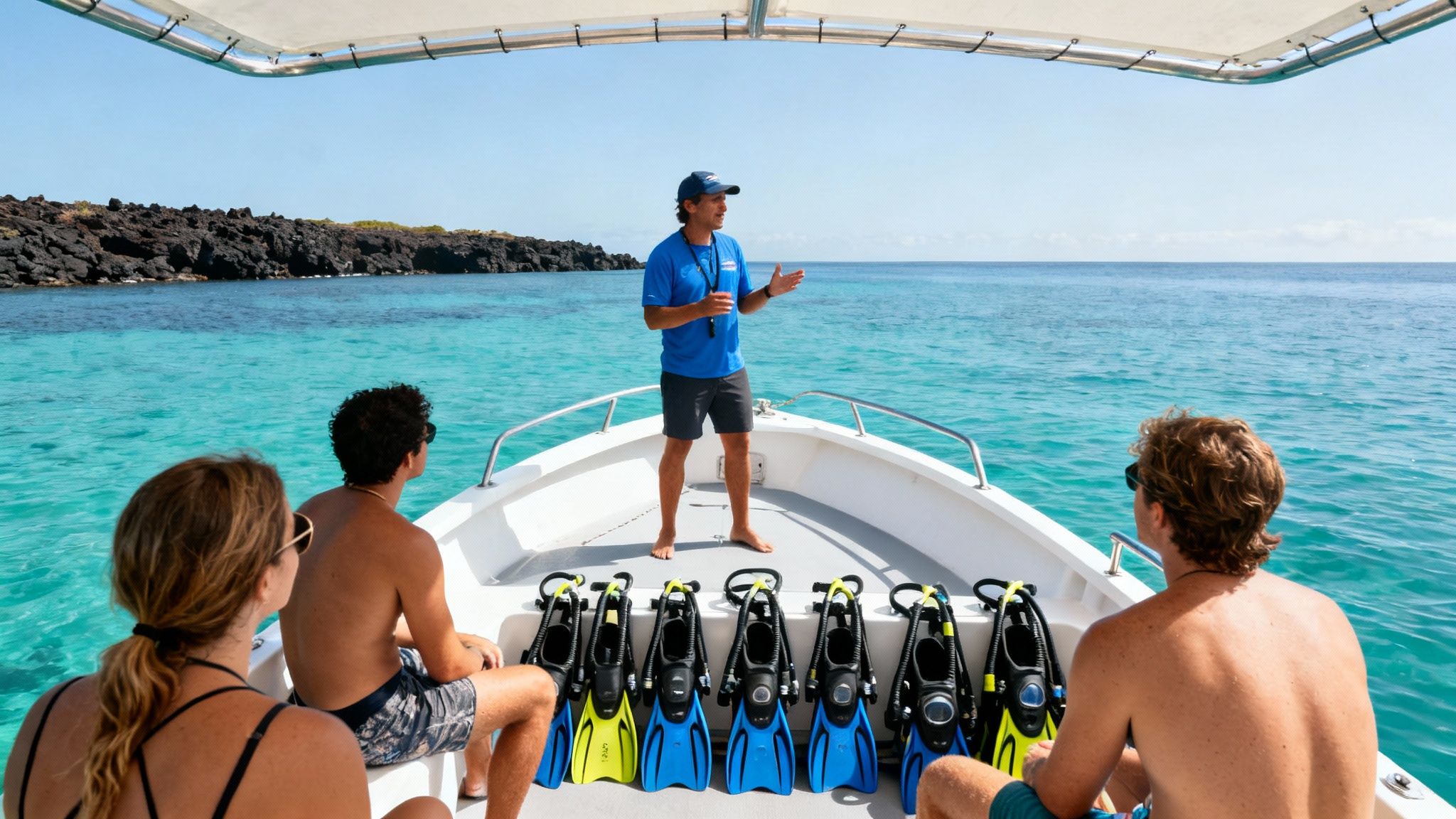
Here's a little preview of what a day with Kona Snorkel Trips looks like. We want you to see just how we make this remote paradise accessible and fun for everyone, whether you're a seasoned snorkeler or it's your first time putting your face in the water.
The Scenic Journey Along the Kona Coast
Your adventure doesn’t start at the bay—it starts the second our boat pulls away from the harbor. The boat ride itself is half the fun! As we cruise down the iconic Kona coastline, you'll see a dramatic landscape of ancient, black lava flows crashing into the brilliant blue of the Pacific. It's a view you just can't get from the shore.
This is prime time for wildlife spotting, so keep your eyes peeled. We often get an escort from pods of playful spinner dolphins who love to race the boat, leaping and spinning right beside us. If you’re here in the winter (December through March), you might get the show of a lifetime: migrating humpback whales breaching just offshore. Our captain and crew have been doing this for years, and they love pointing out these incredible sights and sharing stories about the coast’s history and geology.
Gearing Up with Expert Guidance
Once we anchor in the calm, protected waters of Kealakekua Bay, our crew gets to work. This is where a guided tour really proves its worth, especially if you’re new to snorkeling or have kids with you. We make sure everyone is totally prepared for a safe and amazing time in the water.
You'll get a clear, no-nonsense safety briefing that covers everything you need to know:
Getting Your Gear Right: We’ll show you how to get a perfect, leak-free seal on your mask, how to clear your snorkel, and how to kick with your fins so you move effortlessly without kicking the fragile coral.
Staying Safe in the Water: We cover the basics of staying aware, hand signals to communicate with the crew, and what to do if you need a hand with anything.
Respecting the Reef: This is a big one for us. We'll go over the golden rule—look, but don't touch—to make sure we're all protecting this incredible ecosystem for years to come.
We provide high-quality, sanitized gear that's way better than the cheap stuff you rent. The crew will personally help you find the right fit, which makes a huge difference in comfort. We also have flotation devices like noodles and belts for anyone who wants a little extra buoyancy.
Having an experienced guide is like having a backstage pass to the ocean. They don't just keep you safe; they point out the camouflaged octopus you would have missed and share the name of that brilliantly colored fish, turning a pretty swim into a genuine learning experience.
Plunging into an Underwater Paradise
Alright, gear on, briefing done—it’s time for the main event. You’ll slip off the boat into some of the clearest, most vibrant water you’ve ever seen. The visibility in Kealakekua Bay is often over 100 feet, which feels like you're floating in a giant, sunlit aquarium.
The moment you look down, you're greeted by massive schools of yellow tang, striking butterflyfish, and of course, the humuhumunukunukuāpuaʻa (try saying that three times fast!). The reef slopes gently from the shore, creating a huge, shallow underwater garden that's absolutely packed with life.
Our guides are right there in the water with you, pointing out cool things like moray eels peeking out from their dens and making sure everyone feels totally comfortable. It's this hands-on approach that lets you relax and truly soak in the underwater world of Captain Cook.
Ready to see it for yourself?
Exploring the Underwater World of Kealakekua Bay
Alright, this is the main event. It's time to slip beneath the waves and enter the vibrant, living world of Kealakekua Bay. The reason Captain Cook snorkeling is legendary isn't just because the water is ridiculously clear; it's the sheer density and variety of life that calls this protected sanctuary home. Think of this as your field guide to the incredible ecosystem you're about to become a part of.
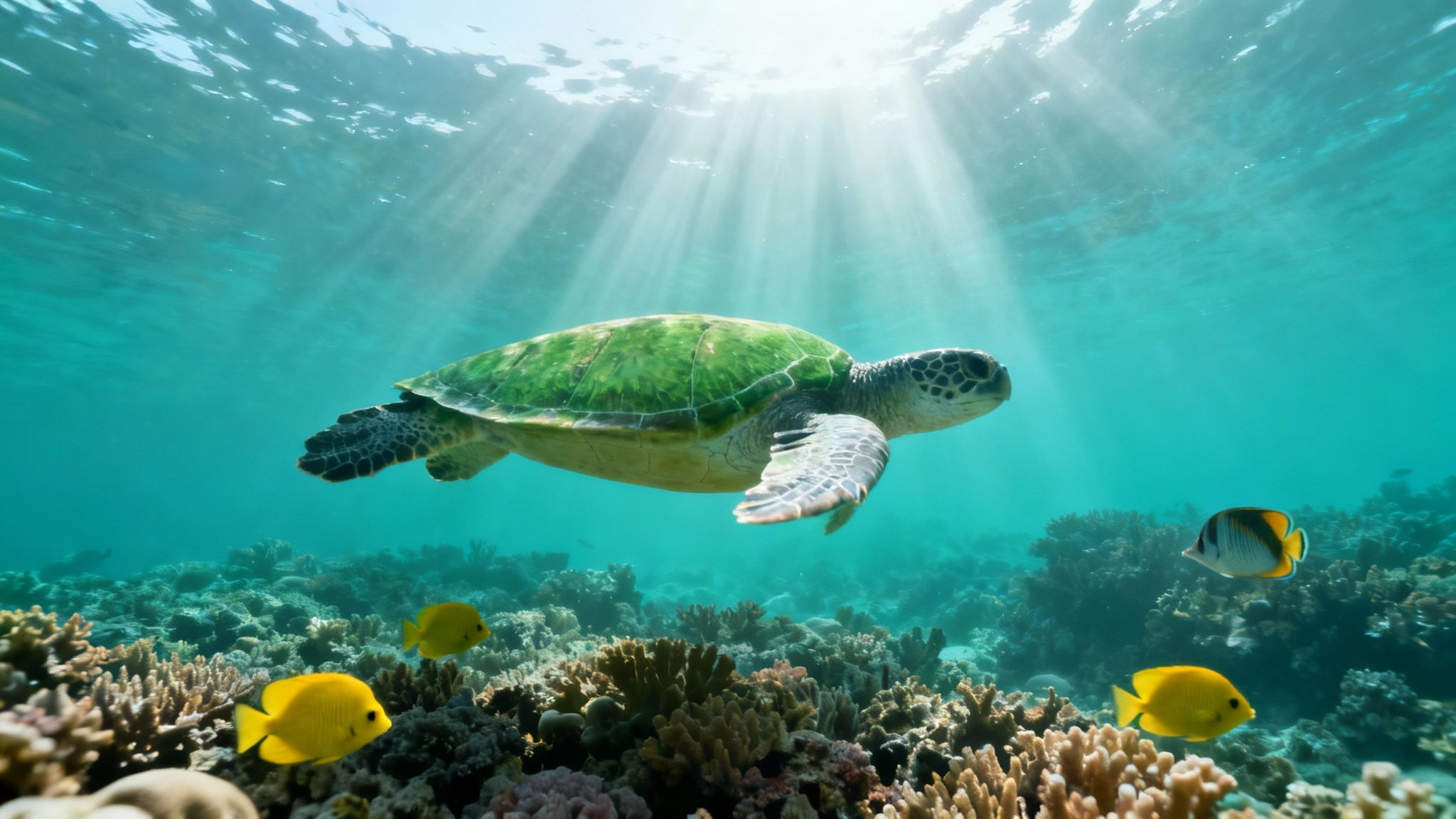
From the moment your face hits the water, you'll be met with a whirlwind of activity. It’s best to imagine the reef as a bustling underwater city, where every single creature has a job to do.
A Kaleidoscope of Reef Fish
The first thing you’ll notice—and you can't miss it—are the massive schools of tropical fish swarming the coral gardens. Their brilliant colors aren't just for show; they use them for everything from camouflage and communication to finding a mate.
You’ll see clouds of bright yellow tang, a crucial species that keeps the reef healthy by grazing on algae. They're basically the lawnmowers of the reef, making sure the coral gets enough sunlight to thrive. Darting among them are ornate butterflyfish, often in pairs, and the unmistakable Moorish idol with its long, trailing dorsal fin. And of course, keep an eye out for Hawaii's state fish, the humuhumunukunukuāpuaʻa (reef triggerfish), with its quirky shape and loud markings.
Kealakekua Bay’s status as a Marine Life Conservation District is the secret sauce. Strict fishing rules mean the fish populations have absolutely exploded, creating a healthy, dynamic ecosystem you just don't see in many other places.
Majestic Honu and Playful Naiʻa
While the fish are your constant companions, the bay is also home to some bigger, more soul-stirring residents. You are almost guaranteed to see a honu, the beloved Hawaiian green sea turtle, gliding gracefully through the water. We often find these gentle giants munching on algae near the reef or just chilling on the sandy bottom. Seeing a honu in its natural habitat is an experience you won't forget.
The bay is also a favorite hangout for pods of naiʻa, or spinner dolphins. They usually cruise into the bay in the mornings to rest after a long night of hunting in deeper waters. While it’s critical to give them their space, watching them leap and spin from the boat is an incredible bonus to any snorkel trip.
The Living Foundation of the Bay
But the real star of the show here is the coral reef itself. These aren't just colorful rocks; it's a living, breathing organism that provides the foundation for every other creature you see. The reef’s complex structure offers countless nooks and crannies that serve as homes, hiding spots, and nurseries for thousands of species.
If you look closely, you might spot some of the reef's more secretive tenants:
Puhi (Moray Eels): Peek carefully under ledges and you might see one of these guys poking its head out, opening and closing its mouth to breathe.
Heʻe (Octopus): Finding an octopus is a real reward. They are masters of camouflage, able to change their skin's color and texture in a flash to blend in perfectly.
Wana (Sea Urchins): These spiny critters are important grazers, but you'll want to admire them from a distance. Tucked into the reef, they're a good reminder of why you never, ever touch the coral.
Common Marine Life in Kealakekua Bay
To help you identify some of the locals, here's a quick-reference guide to the beautiful and diverse species you're likely to encounter while snorkeling at Captain Cook.
Species Name (English) | Hawaiian Name | Key Identifying Features |
|---|---|---|
Yellow Tang | Lauʻīpala | Bright, solid yellow oval-shaped body. Often in large schools. |
Reef Triggerfish | Humuhumunukunukuāpuaʻa | Angular body with bold, colorful lines and patterns. |
Green Sea Turtle | Honu | Large, graceful reptile with a patterned shell and gentle demeanor. |
Spinner Dolphin | Naiʻa | Sleek, grey body. Known for acrobatic spins and leaps out of the water. |
Moorish Idol | Kihikihi | Black, white, and yellow vertical stripes with a long, flowing dorsal fin. |
Moray Eel | Puhi | Snake-like body, often seen peeking out from holes in the reef. |
Octopus | Heʻe | Soft, bulbous body with eight arms. Master of camouflage. |
Seeing these animals in their natural home really drives home how interconnected this whole ecosystem is. The health of the coral directly impacts the fish, which in turn affects the turtles and dolphins. It’s a delicate web of life, and you have the privilege of seeing it up close. A guided trip with an experienced crew like Kona Snorkel Trips makes sure you see the best of it while learning how to be a respectful guest in this underwater paradise.
How to Plan the Perfect Snorkeling Day Trip
A little bit of planning goes a long way, turning a good day on the water into a truly incredible one. Putting together the perfect Captain Cook snorkeling trip isn't about some complicated checklist; it's just about making a few smart calls before you even head to the harbor. This is the practical, been-there-done-that advice that makes sure your day is smooth, safe, and all about the underwater show.
When you know the best times to go and what to throw in your bag, you can show up feeling relaxed and ready to soak it all in.
Timing Your Adventure for Ideal Conditions
When you go matters. A lot. The time of day and even the season can completely change your experience in Kealakekua Bay, and for our money, an early morning tour is almost always the best bet.
Calmer Waters: The ocean here is usually like glass first thing in the morning. Once the afternoon trade winds kick in, it can get choppy, but the morning offers that perfect, smooth surface that makes snorkeling a dream.
Optimal Visibility: Less wind and surface chop mean the water clarity is off the charts, sometimes letting you see over 100 feet down. The lower angle of the morning sun also lights up the reef in a way that’s just magical.
Active Marine Life: Just like us, the reef's residents have a morning routine. You’ll catch them at their busiest, feeding and cruising around before the heat of the day sets in.
While summer generally gives us consistently calm weather, don't write off the winter months. From December to March, you get the added, incredible bonus of spotting migrating humpback whales on the boat ride over. It's a two-for-one deal you won't forget.
Your Essential Packing List
The secret to packing is bringing only what you really need. We’ve got all the essential snorkel gear covered, so you can just focus on being comfortable.
What to Bring:
Reef-Safe Sunscreen: This is non-negotiable. Seriously. Grab a mineral-based sunscreen (look for zinc oxide or titanium dioxide) to protect yourself and the fragile coral.
Polarized Sunglasses and a Hat: The Hawaiian sun doesn’t mess around. These are must-haves for protecting your eyes and face on the boat.
Reusable Water Bottle: Staying hydrated is key out there. We have refill stations on board to help cut down on plastic waste, so please bring a bottle.
Towel and a Change of Clothes: Nothing feels better than drying off and putting on a clean shirt for the ride back to the harbor.
Waterproof Camera or Phone Case: You're going to see things you'll want to show your friends back home. Make sure your camera or phone is protected.
What to Leave Behind:
Valuables: Leave the fancy jewelry or any electronics you don't absolutely need back at your hotel.
Non-Reef-Safe Sunscreen: Chemical sunscreens with oxybenzone and octinoxate are poison for coral reefs. Please leave them at home.
Your Own Snorkel Gear: Unless you have a special prescription mask, our gear is top-notch, professionally sanitized, and ready to go.
Reinforcing Key Safety Practices
A safe snorkeler is a happy snorkeler. Your guides will give you a full briefing before you hit the water, but keeping these simple things in mind will make for a stress-free day.
The number one rule in a protected sanctuary like this is simple: be a guest. You're entering their world, so the goal is to observe respectfully and leave absolutely no trace. It’s not just about protecting the reef—it’s how you get the most natural, authentic encounters with the wildlife.
Always listen to your guides; they live and breathe these waters and know the conditions better than anyone. Drink plenty of water all day, even if you don't feel thirsty. And remember the golden rule of snorkeling etiquette: never, ever touch, chase, or crowd the marine life. When you show up prepared and with a safety-first attitude, you’ve set yourself up for the perfect day exploring the underwater paradise of Kealakekua Bay.
Protecting Paradise Through Responsible Tourism
Kealakekua Bay isn't just a pretty spot; it's a living treasure. Think of it as a delicate balance between a breathtaking natural wonder and a place of deep cultural importance. Every time we slip into those calm, clear waters, we're guests in a very fragile world.
Protecting this paradise isn't just a nice idea—it's our shared kuleana (responsibility). When we snorkel with this mindset, we make sure the magic of Captain Cook is here for our kids and grandkids to experience, too.
The vibrant coral reef you see below isn't a playground—it's a living, breathing animal. The slightest touch from a hand, fin, or even a knee can damage or kill the delicate coral polyps that have taken centuries to grow. When we snorkel with aloha, we become part of the solution, actively preserving the very beauty we came all this way to see.
Snorkeling with Aloha: The Core Principles
Being a responsible visitor is simple, but it makes a huge difference. It all boils down to respect for the ʻāina (land) and the kai (sea). This approach keeps the ecosystem healthy and ensures the wildlife continues to thrive without being hassled by our presence.
Here are the golden rules for protecting Kealakekua Bay:
Look, But Never Touch: This is the big one. Coral is incredibly fragile, and touching it can cause damage that can't be undone. The same goes for all marine life, from the tiniest fish to the majestic honu (sea turtles).
Use Reef-Safe Sunscreen: Chemical sunscreens with ingredients like oxybenzone and octinoxate are poison to coral reefs. Always go for mineral-based sunscreens with zinc oxide or titanium dioxide.
Keep Your Distance: Give all marine animals their space. Never chase, corner, or try to ride a sea turtle or dolphin. Honestly, watching them behave naturally from a respectful distance is a much more rewarding experience.
Leave No Trace: Simple as this: whatever you bring with you, you take back with you. Pack out all your trash and keep an eye on loose items that could fall into the water.
When you book with a tour operator that lives by these principles, you're voting with your wallet for the long-term health of Kealakekua Bay. Responsible companies like Kona Snorkel Trips don’t just take you to a location; they act as its guardians.
This mindset extends beyond just one bay. If you're looking for other world-class, eco-conscious adventures like the famous Manta Ray night snorkel, it's just as important to pick operators who apply the same level of care. You can find some fantastic, responsible options on the Kona Snorkel Trips snorkel tours page. Every conscious choice you make helps protect Hawaii’s incredible natural resources.
Your Captain Cook Snorkeling Questions Answered
We get a lot of the same questions about snorkeling Kealakekua Bay, so we’ve rounded up the most common ones here. The goal is to give you straight-up, honest answers so you know exactly what you’re signing up for and can book your trip with total confidence.
Is This Tour Okay for Beginners and Kids?
One hundred percent. Kealakekua Bay is naturally sheltered, making its calm, clear water one of the best spots in all of Hawaii for first-timers and families. There are hardly any currents or waves, so it feels more like a giant, natural swimming pool.
Our guides kick things off with a solid safety briefing, get you fitted with top-notch gear (floaties included!), and then get in the water with you. They’re there to help, point out cool fish, and make sure everyone feels totally at ease.
What’s the Best Way to Get to the Snorkel Spot?
The best snorkeling—right in front of the Captain Cook Monument—is walled off by steep cliffs. You just can't get there by land. The only real and safe way to access this pristine slice of paradise is by boat on a permitted tour.
A guided boat tour isn't just a taxi service. It's your ticket to getting there comfortably with all the right gear and a crew that actually knows the place inside and out.
Think of a professional tour as more than just transportation. It’s your key to unlocking the best parts of the bay safely and responsibly, with guides who live and breathe these waters and know exactly where the fish are hiding.
What Happens If the Weather Is Bad?
Your safety is our absolute first priority, no question. Our captains are constantly watching the weather and ocean conditions. If things look unsafe for a tour—which is pretty rare, especially on those calm Kona mornings—we’ll get in touch with you right away. We can either reschedule you for another day or give you a full refund.
How Likely Is It That I’ll See Dolphins or Turtles?
Okay, so we can never 100% guarantee wildlife sightings—they’re wild, after all! But your odds in Kealakekua Bay are incredibly high. We see honu (Hawaiian green sea turtles) on almost every single trip; they love munching on the algae growing all over the reef.
We also frequently spot pods of spinner dolphins who cruise into the bay for a little rest in the calm water, especially during our morning tours.
Ready to have all your other questions answered on the water? Book your adventure today.
For an unforgettable journey into the heart of Kealakekua Bay, book your adventure with Kona Snorkel Trips. Explore all our world-class adventures, including the legendary Manta Ray night snorkel, by visiting our snorkel tours page.