
Your Guide to the Manta Ray Night Dive in Kona

Ever heard of a manta ray night dive? It's a surreal underwater adventure where you slip into the ocean after sunset to watch these magnificent giants feed on plankton. And the absolute best place in the world to do this is right here in Kona, Hawaii. It's often described as a graceful underwater ballet, and honestly, that doesn't even do it justice.
Why Is Kona the Global Capital for Manta Ray Dives?
Picture this: you descend into the warm, dark Pacific. Suddenly, enormous, gentle creatures are gliding effortlessly all around you, their massive wingspans creating stunning silhouettes against a brilliant glow. This isn't a scene from a nature documentary; it's the Kona manta ray night dive, an experience that consistently tops lists of the world's best underwater encounters.
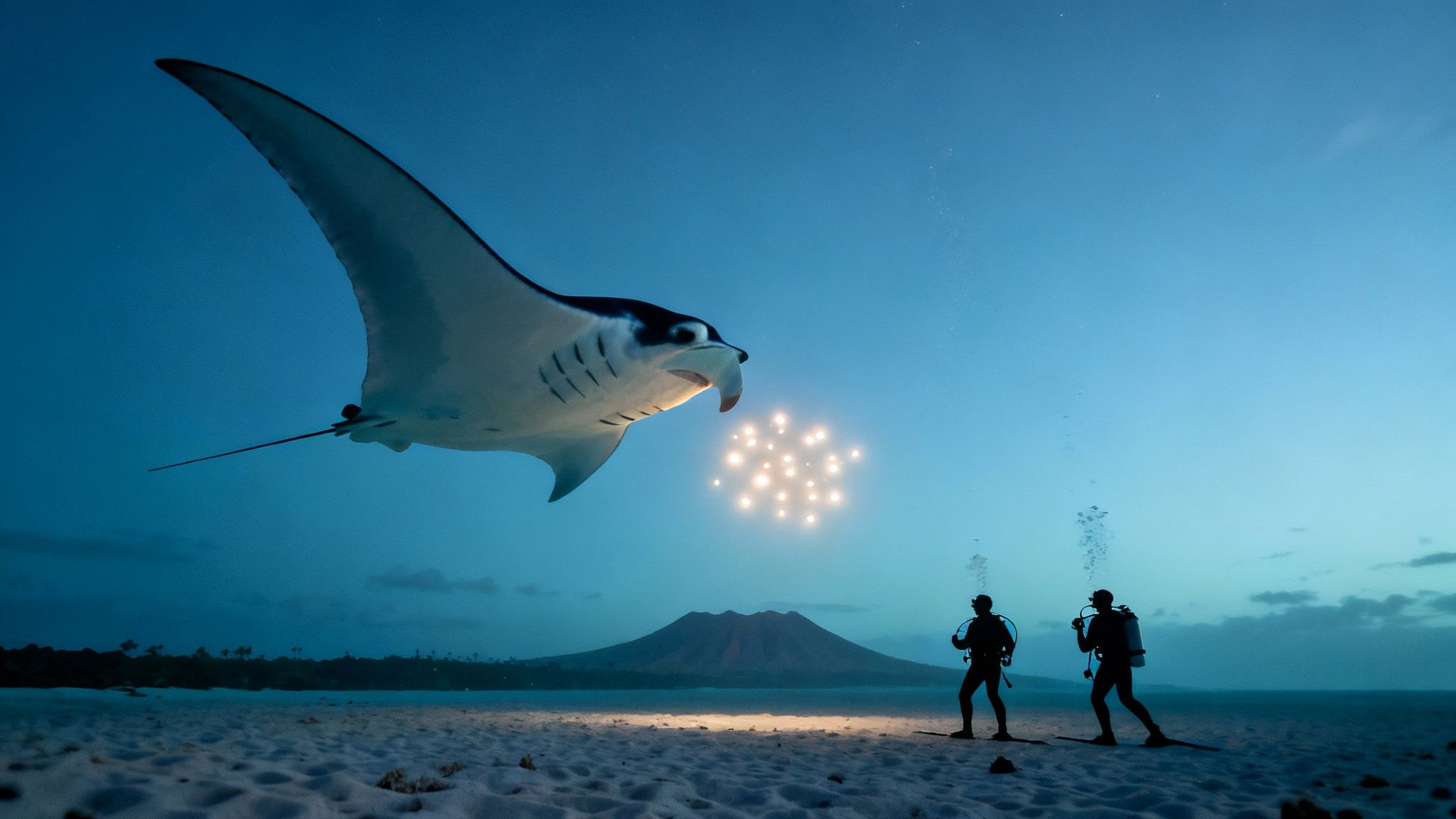
So, what makes Kona the undisputed king of this activity? It all comes down to one simple word: reliability. In other parts of the world, manta sightings can be hit-or-miss, depending on the season. But here, the mantas are year-round residents. That consistency turns a hopeful guess into a near-guaranteed spectacle.
To give you a clearer picture, here’s a quick rundown of what makes the Kona experience so special.
Kona Manta Ray Night Dive At a Glance
Aspect | Details |
|---|---|
Annual Participants | Around 80,000 people experience this dive each year. |
Sighting Success | Tour operators report an 80% to 95% success rate. |
Resident Population | Over 450 individually identified manta rays call Kona home. |
Typical Sightings | It's common to see 8 to 20 mantas on a good night. |
Record Sightings | Some lucky groups have witnessed as many as 36 at once! |
This quick overview shows just how reliable and popular this incredible adventure is.
A Dependable Underwater Show
The numbers don't lie. With a resident population of over 450 identified manta rays, there's always a good chance of an incredible show. The mantas have learned to associate the powerful dive lights with an easy meal, as the lights attract dense blooms of plankton. This predictable feeding behavior happens at depths that are perfect for both divers and snorkelers, so everyone gets a front-row seat.
We call it an "underwater ballet" for a reason. The mantas perform these incredible, graceful somersaults and barrel rolls, swooping through the light beams to filter-feed. They can come within inches of you, and it's a truly humbling experience.
An Adventure for Everyone
One of the coolest things about the Kona manta encounter is how accessible it is. You don't need to be some hardcore, expert diver to join in on the magic.
For Certified Divers: This is a bucket-list dive, hands down. You’ll settle on the ocean floor and watch the show unfold from below. For the best experience, consider Kona Honu Divers' manta ray diving tour page. As the top rated & most reviewed diving company in both Hawaii and the Pacific Ocean, they offer world-class tours that get you right in the action.
For Snorkelers: Don't think you'll miss out if you stay on the surface! Premier operators like our friends at Kona Snorkel Trips use custom-built light boards. You just float on the surface and hold on, giving you a breathtaking bird's-eye view of the entire feeding frenzy below.
Whether you're breathing from a tank or a snorkel, the Kona manta ray night dive delivers an unforgettable connection with one of the ocean's most magnificent animals. While you're planning your Big Island trip, be sure to check out our guide on the 7 best places to snorkel in Kona for even more amazing underwater spots.
Getting Ready for Your Underwater Encounter
Prepping for a manta ray night dive is pretty straightforward, but a little bit of planning goes a long way in making sure you have an amazing, hassle-free time. Whether you’re a dive veteran or it’s your first time snorkeling at night, knowing what to bring and what to expect will make all the difference when you’re out on the water.
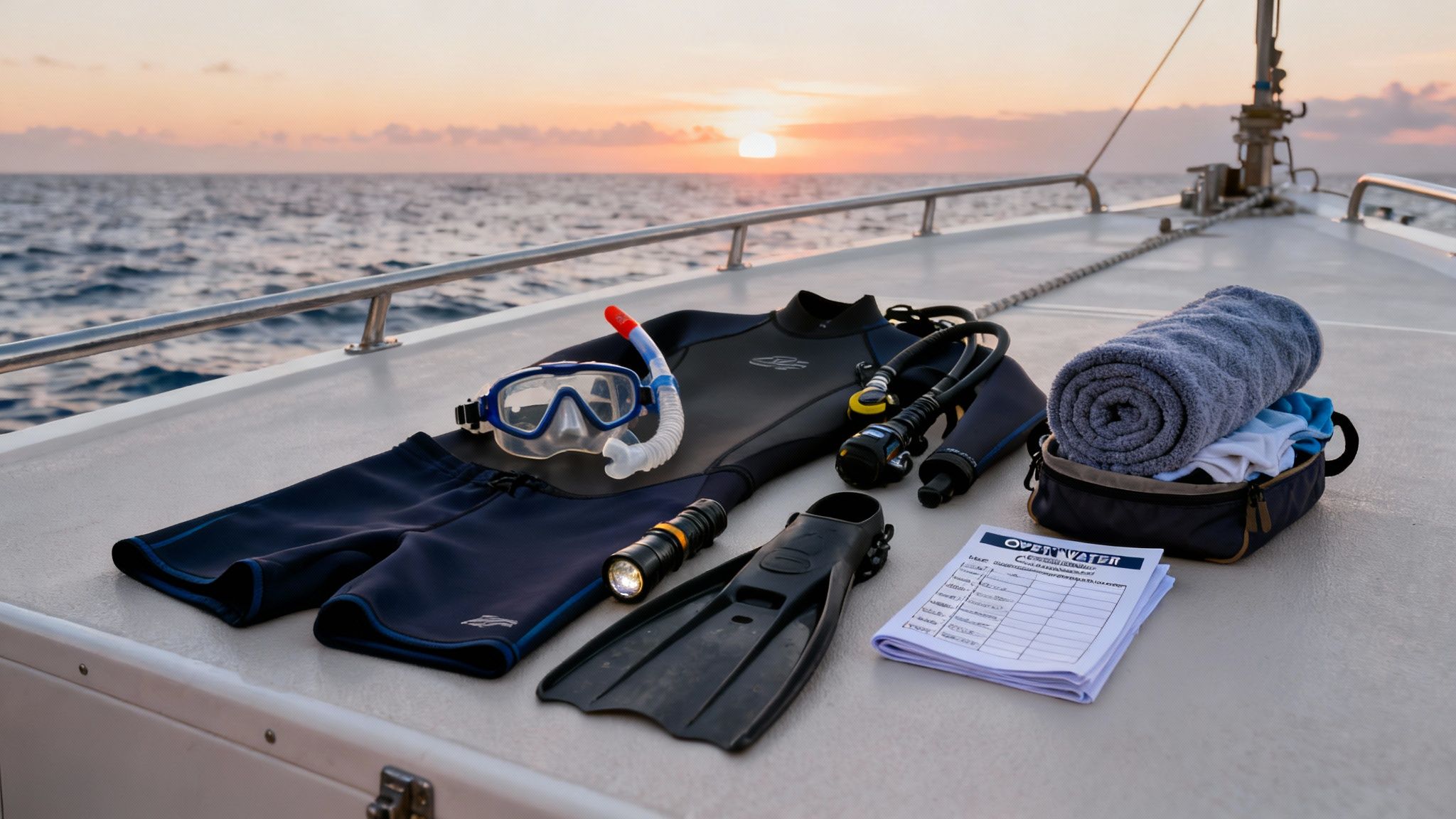
The requirements are a little different depending on whether you'll be diving down or snorkeling on the surface, but both are incredibly accessible.
Diving Certification and Skill Level
If you're planning to scuba dive with the mantas, you’ll need at least an Open Water Diver certification. While having some night diving experience under your belt is a plus, it’s not usually a deal-breaker. The most important thing is that you feel comfortable and confident being in the ocean after dark.
Has it been a while since your last logbook entry? It might be a good idea to book a quick refresher course. This helps you get reacquainted with your gear and dial in your buoyancy, so you can just relax on the sandy bottom and take in the show.
For a top-tier dive experience, we highly recommend checking out Kona Honu Divers. They are the top-rated and most-reviewed dive company in Hawaii and the Pacific Ocean, so you know you're in incredibly safe and experienced hands.
Snorkeler Requirements
For our snorkelers, it’s even simpler. There are no special certifications needed. All we ask is that you have:
Basic swimming skills: You should be able to swim and feel generally at ease in the ocean.
Comfort in the water: You’ll be floating at the surface at night, so being relaxed is key to truly enjoying the view below.
The ability to follow instructions: Our guides will walk you through all the safety info and how to use the gear.
Tour operators like Kona Snorkel Trips are fantastic for snorkelers. They provide custom-built light boards to hold onto, which keeps you stable and makes the whole experience effortless.
What to Pack and What’s Provided
The tour operator will handle all the big stuff, but bringing a few personal items will make your trip much more comfortable. Knowing what to pack is key for any ocean outing—you can get more tips in our guide covering the 7 essentials for snorkeling at Captain Cook Monument.
What Your Tour Provides:
Wetsuits (usually 3mm or 5mm)
Mask, snorkel, and fins
Full SCUBA gear for divers (BCD, regulator, tanks, weights)
Underwater lights and flotation devices (like the light board for snorkelers)
What You Should Bring:
A warm, dry towel for when you get out of the water.
A change of clothes or a windbreaker for the boat ride home—it can get chilly!
Reef-safe sunscreen if you're on one of the earlier sunset charters.
Any personal medication you might need, especially for motion sickness.
An underwater camera to capture the magic!
Pro Tip: Don't tune out during the pre-trip briefing. This isn't just a formality—it's where you'll learn critical safety signals, get the layout of the dive site, and hear the rules for passively interacting with the mantas. Following this etiquette ensures everyone's safety, including that of the magnificent animals you came to see.
Respecting the Mantas and Staying Safe
The golden rule for the manta ray night dive is beautifully simple: look, but don't touch. This is the core principle of passive observation, and it’s what protects these incredible animals. Following this one rule ensures we can keep sharing this magical encounter for generations to come.
It’s an entire experience built on mutual respect between us and the marine world.
Touching, chasing, or trying to ride the mantas is absolutely forbidden, and for a critical reason. Manta rays are covered in a thin, protective mucus coat that acts as their first line of defense against bacteria and infections. When we touch them, even gently, we can rub off this vital layer and leave them vulnerable to getting sick.
The Campfire and Proper Positioning
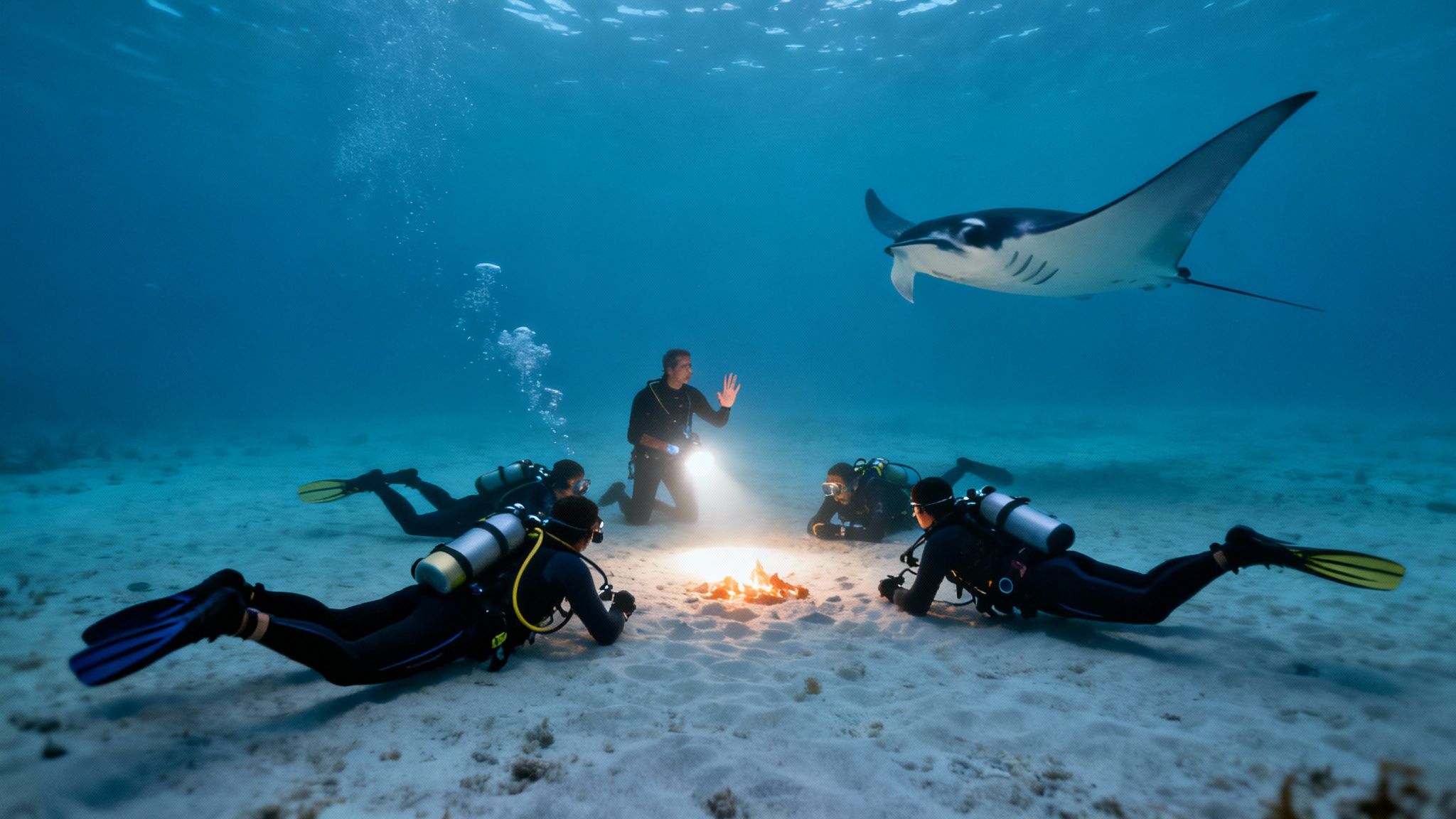
To give everyone the best possible view while keeping the mantas safe, your guide will set up a specific formation. Divers will settle on the sandy bottom in a semi-circle, creating what we all call the "campfire." You’ll point your dive lights straight up to attract plankton, which in turn draws the mantas in to feed just above your head.
Snorkelers, you'll be floating on the surface, usually holding onto a large, custom-built light board. This keeps everyone together in one spot and gives you a stable, comfortable vantage point.
For both groups, a few key things to remember:
Stay horizontal: Whether you're a diver on the ocean floor or a snorkeler at the surface, keep your body as flat as you can. This minimizes your profile and gives the mantas maximum space to maneuver and feed.
Let them come to you: The mantas are curious and will often glide just inches away. I know it's tempting, but you have to resist the urge to reach out. When you stay still and calm, you become part of the scenery, allowing for a much more authentic interaction.
Mind your bubbles: Divers, try to time your breathing so you aren't exhaling directly into a manta's path. A sudden burst of bubbles can startle them and send them swimming away.
Following these guidelines isn’t just about rules; it’s about actively participating in the conservation of this unique ecosystem. Your respectful behavior directly contributes to the health and well-being of Kona’s resident manta population.
Essential Night Diving Safety
Beyond manta etiquette, general night diving safety is paramount. The ocean is a totally different world after dark, so staying aware is crucial. Always stick close to your divemaster and your buddy.
It's easy to get mesmerized by the show, so make it a habit to check your air gauge regularly. Your guide will go over hand signals before you get in the water—make sure you know them and use them.
Ethical interactions with marine life are a cornerstone of responsible tourism, a principle that applies to all our amazing local wildlife. You can learn more by reading our guide to swimming with dolphins in Hawaii ethically. By putting safety and respect first, you guarantee a secure and unforgettable manta ray night dive.
What the Manta Ray Night Dive Is Really Like
Forget what you think you know. The feeling you get on a manta ray night dive is something that builds long before your fins ever hit the water. It all starts with a beautiful boat ride along the Kona coast, the engine humming as the Hawaiian sun puts on its nightly show, painting the sky with fiery oranges and soft purples. It's the perfect, almost spiritual, start to an unforgettable adventure.
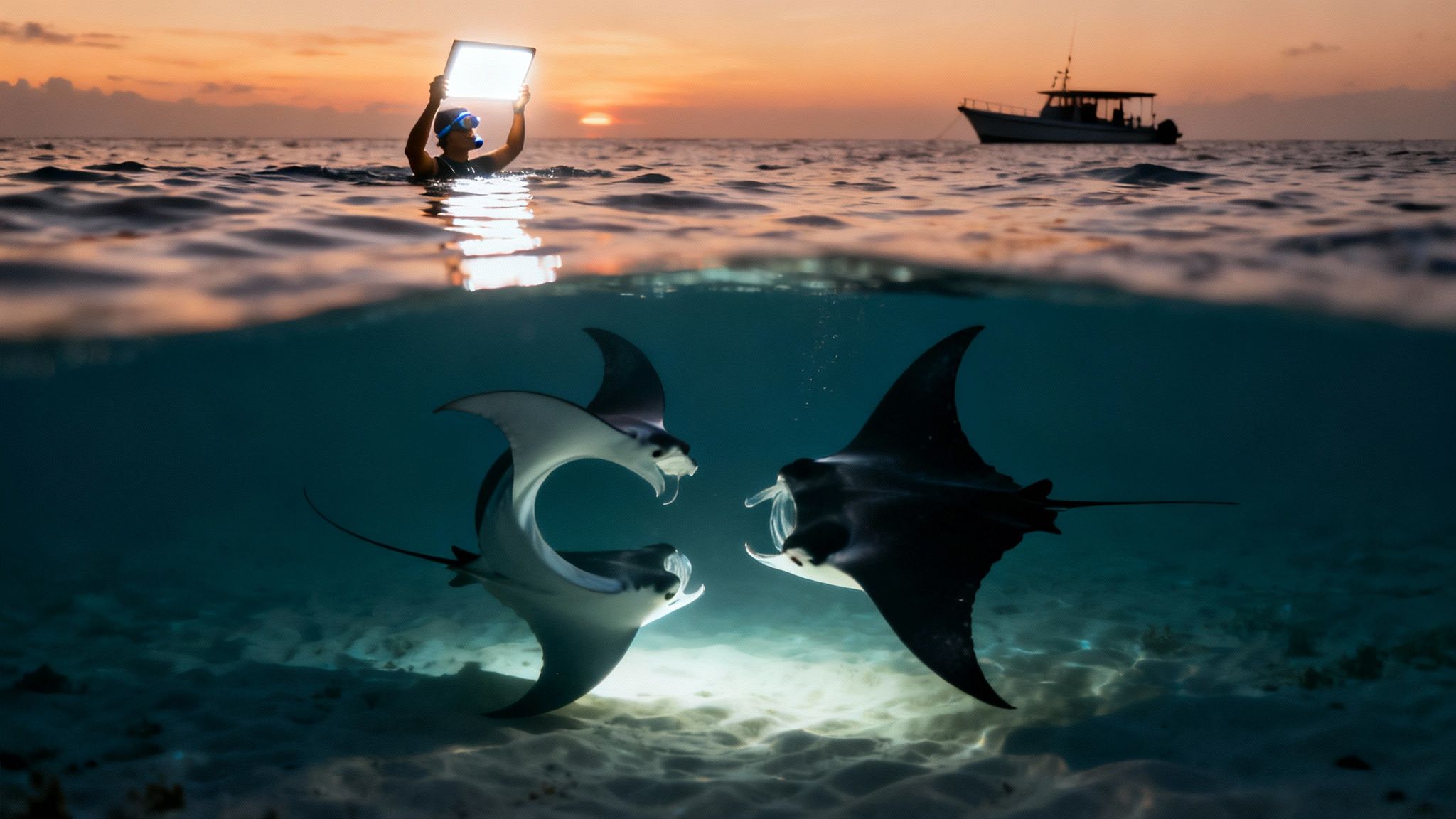
Once we anchor up at the site, our crew flips the switch on a set of powerful underwater lights. Beams of brilliant light cut through the dark ocean, turning the water into a glowing, otherworldly stage. Almost instantly, this light show summons swarms of plankton—the microscopic critters that mantas can't resist.
The Underwater Stage Is Set
If you're diving, this is your cue to gear up and descend to the sandy bottom, usually about 25 to 35 feet down. Your guide will have you settle in a semi-circle, creating what we all call the "campfire." You’ll kneel or lie flat, pointing your dive light straight up into the water column. All those beams converging create a super-concentrated plankton buffet.
Snorkelers get an equally mind-blowing view, just from a different angle. You'll be floating on the surface, holding onto a custom-built light board. It’s not just for stability; this board shoots a massive cone of light straight down, drawing the plankton—and the mantas—right up to you.
Whether you're looking up from the seafloor or down from the surface, the result is the same: you have a front-row ticket to one of the greatest shows on Earth.
The Grand Entrance
And then it happens. The first massive, dark shape glides into the light. It's a moment that will literally take your breath away. Soon, one manta turns into two, then three. On a great night, you could find yourself surrounded by a dozen or more of these gentle giants.
They perform their famous barrel rolls, sometimes just inches from your face, swooping in with their huge mouths wide open to filter the clouds of plankton. You can actually hear the soft "whoosh" of water as their giant wings propel them. It's an immersive, awe-inspiring spectacle that feels totally surreal.
It's like watching a silent ballet. There are no engine noises or loud chatter—just the sound of your own breathing and the sight of these magnificent creatures dancing in the light. It’s a profound connection with the ocean that’s hard to put into words.
This whole experience is managed by experts who are passionate about safety and manta conservation. For an unparalleled dive, Kona Honu Divers is the top rated & most reviewed diving company in both Hawaii and the Pacific Ocean, making sure every encounter is safe and memorable.
Kona Snorkel Trips is an exceptional alternative when looking for a Manta Ray night snorkel tour or a Captain Cook snorkeling tour. Their professional guides and top-notch gear bring you face-to-face with the magic. Trust me, the feeling of a 12-foot manta gliding right beneath you is something you will never, ever forget.
Picking the Right Manta Ray Tour Company
This is probably the single most important decision you'll make when planning your manta ray night adventure. Seriously. The operator you choose will define everything about your experience—from how safe you feel to how much you learn and how close you get to the action. Kona has a few options, so it really pays to do a little homework before you book.
A huge factor is group size. I can't stress this enough. Smaller groups almost always mean a better, more personal encounter with the mantas. You'll have more room to float and won't feel like you're just one of the herd. You also get more time to chat with your guide. Just as critical is a solid safety record. Look for companies with experienced, certified divemasters and captains who run a tight ship and give you a crystal-clear safety briefing before anyone even thinks about getting in the water.
What to Look for in a Tour Operator
Choosing a company isn't just about finding the cheapest price; it's about getting real value and supporting a business that cares about the ocean.
Here are a few things I always tell people to check for:
Respect for the Mantas: Do they strictly enforce the "no touching" rule? A good operator will be firm about this to protect the mantas' delicate slime coat. They should be all about passive observation.
Good, Clean Gear: Make sure they provide well-maintained equipment. This includes thick wetsuits (that water gets chilly after a while!), reliable regulators, and bright, powerful lights that attract the plankton.
Knowledgeable Guides: A great guide is more than a lifeguard. They're a passionate expert who can tell you amazing things about manta ray behavior, biology, and the local ecosystem.
The best tour operators see themselves as guardians of this incredible marine environment. Their goal is to give you a mind-blowing experience while making sure Kona's beloved manta rays are around for generations to come.
Our Top Recommendations for Your Big Night
For the ultimate scuba experience, you can't go wrong with the Kona Honu Divers manta ray diving tour page. They are the top rated & most reviewed diving company in both Hawaii and the Pacific Ocean for a reason. Their professionalism and expertise are simply unmatched.
If you’re planning to snorkel, Kona Snorkel Trips is an exceptional alternative when looking for a Manta Ray night snorkel tour or a Captain Cook snorkeling tour. They run first-class trips that get you right on top of the action from the surface. For a few more pointers on picking the right trip for you, our guide on choosing your Captain Cook snorkel tour has some great inside tips.
Ready to book an incredible night on the water? The manta ray night snorkel tour page has all the details you need to grab your spot for this unforgettable underwater ballet.
Common Manta Ray Night Dive Questions
Even after you've done all the research, it's totally normal to have a few lingering questions before booking an experience as wild as a manta ray night dive. We get it! To make sure you feel 100% confident and pumped for your trip, here are the answers to some of the most common questions we hear.
Is the Manta Ray Night Dive Safe for Beginners?
Yes, absolutely—but which trip you book depends on your comfort level in the ocean.
If you’re a SCUBA diver, you'll need at least an Open Water certification. You don't necessarily need a ton of night diving experience under your belt, but being comfortable in the water after dark is key to having a great time.
The snorkeling tour, on the other hand, is perfect for just about everyone. If you can swim and feel comfortable in the ocean, you’re good to go. All the best operators provide flotation gear and have expert guides right there in the water with you, making sure you're safe and looked after the entire time.
When Is the Best Time of Year to See Mantas in Kona?
Here's one of the best parts about diving in Kona: you can see manta rays year-round. The local reef manta population doesn’t migrate, so they show up for their nightly plankton feast no matter the season. Your chances for an amazing encounter are just as high in January as they are in July.
That said, if you're looking for the absolute calmest ocean conditions, you'll typically find them during the summer months from May to September. This can make for a smoother boat ride out, which is a nice bonus if you're prone to getting a little seasick. But honestly, you can book a trip any month of the year and have a fantastic shot at a magical night.
What Happens If No Manta Rays Show Up?
While sighting rates are incredibly high—often over 90%—it’s important to remember these are wild animals. Nature doesn’t make any promises. The good news is that the best tour operators know this and have your back.
Many of Kona's top-rated companies offer a "manta guarantee." If your tour doesn't see a single manta, they’ll often let you come back another night for free, based on availability. It’s always a good idea to double-check the specific policy with whatever operator you book with.
Can I Bring My Own Underwater Camera?
Of course! Bringing a GoPro or another underwater camera is a great way to capture the magic of your manta ray night dive. If you're diving, just make sure your camera housing is rated for the proper depth, which is usually around 35 feet on this dive.
The most important rule? Keep a respectful distance. Get those incredible shots, but never, ever touch or interfere with the mantas. And if you'd rather just soak it all in without fiddling with a camera, many companies have a pro photographer on board and offer photo and video packages for purchase after the trip.
Ready for an adventure that will stay with you for a lifetime? For an unparalleled SCUBA diving experience, check out the world-class trips offered by Kona Honu Divers. And for an equally thrilling surface view, the team at Kona Snorkel Trips provides exceptional manta ray snorkeling tours.