
Captain Cook Snorkeling Your Ultimate Kealakekua Bay Guide

Picture yourself floating in calm, turquoise water, totally surrounded by vibrant coral gardens and shimmering schools of tropical fish. That’s not a dream—it’s just another day on a Captain Cook snorkeling trip in Kealakekua Bay, a world-famous spot where history and nature truly collide. The absolute best way to soak it all in? A guided tour that handles all the details for you.
Your Ultimate Guide To A Captain Cook Snorkeling Adventure
This guide is your one-stop-shop for understanding what makes Kealakekua Bay a can't-miss Hawaiian experience. We’ll cover everything from its protected marine sanctuary status to the iconic monument that marks a key moment in the island’s history. And while you'll learn everything you need to plan your visit, the smoothest and most rewarding way to explore these waters is with a dedicated tour. For a top-tier adventure, we always recommend the Captain Cook Tour.
A trip to this bay is so much more than just a fun activity; it’s a direct link to a significant piece of Hawaiian history. The bay itself is a place of deep cultural importance, and getting in the water here offers a unique connection to the past. It’s this blend of breathtaking natural wonder and historical weight that makes the experience unforgettable.
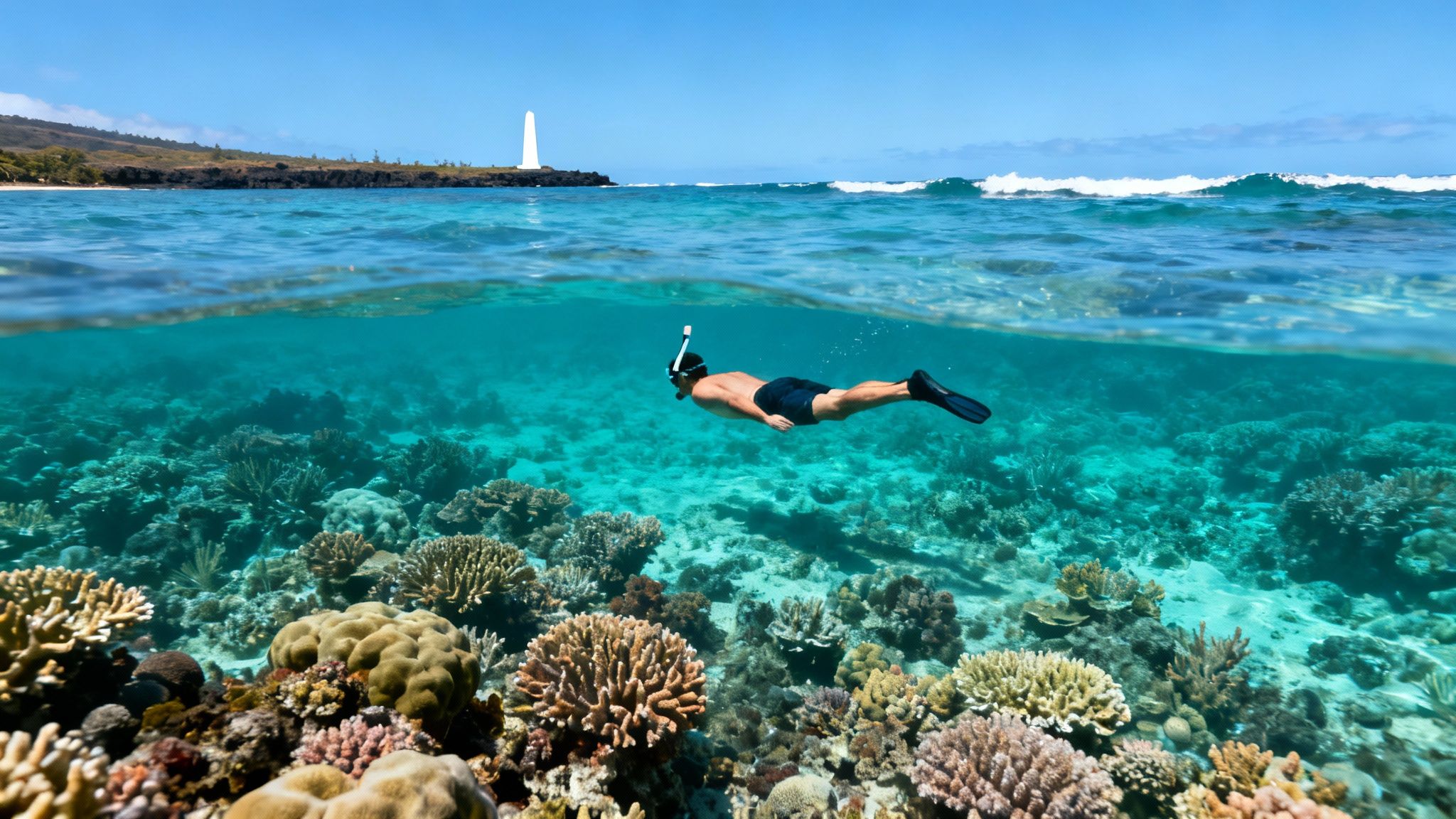
Why Kealakekua Bay Stands Apart
Kealakekua Bay isn’t just another pretty spot on the Big Island—it's a legally protected Marine Life Conservation District. That official designation means the ecosystem is exceptionally healthy and just bursting with life. Think of it as an underwater national park, where all the marine species get to thrive without the pressures of fishing or other disturbances.
This protection has created some incredible benefits for snorkelers:
Incredible Water Clarity: On a good day, visibility often blows past 100 feet, giving you a crystal-clear view of the coral gardens sprawling below.
Abundant Marine Life: The healthy reef is a bustling city for hundreds of tropical fish species, Hawaiian green sea turtles (honu), and you might even spot playful spinner dolphins.
Calm, Sheltered Conditions: The bay's natural geography acts like a shield from the open ocean, creating a calm, safe, and protected environment that’s perfect for snorkelers of all skill levels.
This unique combination of factors means every single visit is a chance to see something new and amazing. And for those looking to check another world-class underwater experience off their list, like the unforgettable Manta Ray night snorkel, Kona Snorkel Trips runs exceptional tours for both adventures.
Booking a guided tour doesn't just give you easy access; it deepens your whole understanding of the area's ecology and history. The best operators ensure a respectful and safe journey into this aquatic paradise.
Discovering The Rich History Of Kealakekua Bay
Snorkeling in Kealakekua Bay is so much more than just a fun day in the water—it's like taking a journey back in time. When you slip into these calm, clear waters, you're floating in the exact spot where worlds collided, an encounter that forever changed the course of Hawaiian history. Knowing this story adds a much deeper meaning to your visit, turning it from a simple swim into a real connection with the past.
The story really kicks off in 1779. That's the year the British explorer Captain James Cook sailed his ships, the HMS Resolution and HMS Discovery, right into the bay's protective embrace. His arrival wasn’t met with suspicion, but with total awe and reverence from the native Hawaiians.

A Divine Arrival
Talk about timing. Cook's arrival lined up perfectly with the Makahiki festival, a sacred season of peace and celebration dedicated to the Hawaiian god Lono. So, when Cook’s tall-masted ships with their white sails appeared on the horizon, many Hawaiians saw it as the return of Lono himself.
On January 17, 1779, Captain Cook was greeted by an unbelievable sight: an armada of over 3,000 canoes filled the bay, with more than 10,000 people cheering from the water and shores. The locals treated Cook like a god, bowing and chanting as he came ashore amidst hula and offerings. You can read more about Captain Cook's historic arrival and this incredible first impression.
Just imagine that scene unfolding in the very same waters where you'll be enjoying your Captain Cook snorkeling adventure. For a while, it was a time of peaceful curiosity and cultural exchange.
From Reverence To Conflict
But that peaceful vibe wasn't built to last. After about a month, Cook's crew set sail, only to be forced back to Kealakekua Bay when a storm snapped one of their ship's masts. This time, the welcome was completely different. The Makahiki season was over, and the Hawaiians' perception of their visitors had soured.
Resources were getting tight, and a series of cultural misunderstandings created a lot of tension. What started as a divine welcome quickly spiraled into suspicion and conflict.
The breaking point came when a small cutter was stolen from one of Cook's ships. This single event led directly to the confrontation on the shoreline that would seal Captain Cook's fate and etch this bay into world history forever.
The final, fatal conflict happened on February 14, 1779. In an attempt to take a Hawaiian chief hostage for the return of the stolen boat, a fight broke out on the shore of Kealakekua Bay. It was right there, on the rocky shoreline you’ll see from the water, that Captain James Cook was killed.
The Monument Today
A stark white obelisk now stands on the shore, marking the approximate spot where Cook died. This is the Captain Cook Monument. It was built in 1874 on a small piece of land deeded to the United Kingdom, and it serves as a powerful, silent reminder of this complex moment in history.
As you snorkel, the monument is always there, a visible link to the past. It transforms the bay from just another beautiful spot into a place of immense historical weight. You’re not just swimming with fish; you're witnessing a place where cultures met, clashed, and were forever changed. Knowing this story enriches every single moment, connecting you to the powerful mana (spiritual energy) of this sacred place.
Exploring The Underwater World Of Kealakekua Bay
The moment you slip beneath the surface at Kealakekua Bay, you're not just in the ocean—you're inside a living, breathing aquarium. It’s an explosion of color and life. Because this is a legally protected Marine Life Conservation District, the underwater world here is a thriving sanctuary where the fish are plentiful, vibrant, and refreshingly unafraid of visitors.
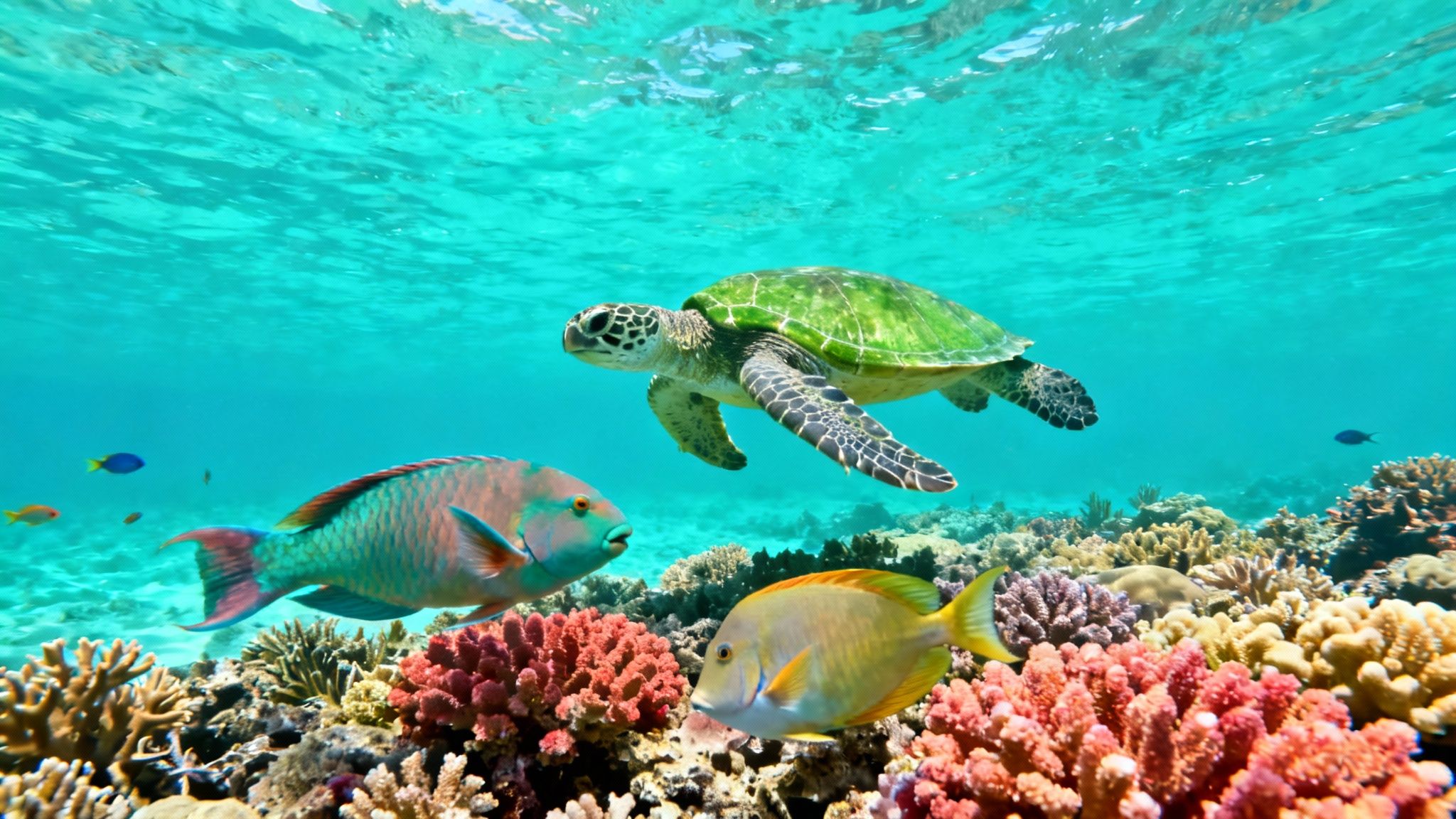
This protected status has let the ecosystem absolutely flourish. The coral gardens are vast and healthy, forming the foundation for a bustling city of marine creatures. Get ready for action from the second you get in the water.
A Kaleidoscope Of Tropical Fish
The sheer number and variety of fish are what truly set a Captain Cook snorkeling trip apart. You’ll immediately be met by huge, shimmering schools of Yellow Tang, which drift through the water like a single golden cloud. Their brilliant color is impossible to miss and just a taste of what's to come.
But they're just the opening act. Keep an eye out for some of the reef's other local celebrities:
Parrotfish (Uhu): You might actually hear these guys before you see them. That distinct crunching sound is them nibbling on coral, a totally natural process that helps create the bay's soft, white sand.
Butterflyfish (Kīkākapu): Often swimming in elegant pairs, these graceful fish come in dozens of unique patterns as they dart between coral heads.
Reef Triggerfish (Humuhumunukunukuāpuaʻa): This is Hawaii's official state fish! Spotting its unique angular shape and wild markings is always a highlight.
This incredible biodiversity isn't an accident. It's a direct result of the bay's protected status, making every single visit a chance to see something new.
The Foundation Of Life: Coral Reefs
The backbone of this bustling underwater city is the coral itself. These aren't just colorful rocks; they are living colonies of tiny animals that have built these intricate structures over hundreds of years. The bay’s 2.5 square miles of protected water boast an astonishing 85% live coral coverage—the highest you'll find on the Big Island.
This area, a Marine Life Conservation District since 1969, supports over 500 fish species. The fish biomass here is a staggering three times higher than in nearby, unprotected waters.
The health of this coral is everything. It provides the shelter, food, and breeding grounds for hundreds of species, which is why it's one of the most vital habitats in all of Hawaii. You can learn more about the history and significance of the area, which has allowed this incredible ecosystem to thrive for so long.
Marine Life You Can Expect to See in Kealakekua Bay
While the smaller reef fish are everywhere, it's always good to know what you're looking for. Here’s a quick guide to some of the incredible creatures you might encounter on your snorkel adventure.
Marine Life | Common Name | Likelihood of Sighting | Fun Fact |
|---|---|---|---|
Yellow Tang | Lau'īpala | Very High | Often seen in massive schools, creating a "wall" of brilliant yellow. |
Parrotfish | Uhu | Very High | Their "beak" is made of fused teeth used to scrape algae off coral. |
Butterflyfish | Kīkākapu | High | They are often monogamous and can be seen swimming in lifelong pairs. |
Reef Triggerfish | Humuhumunukunukuāpuaʻa | High | Hawaii's state fish! Its name is one of the longest words in the Hawaiian language. |
Hawaiian Green Sea Turtle | Honu | High | These gentle giants can hold their breath for up to five hours. |
Spinner Dolphin | Nai'a | Moderate | They rest in the bay during the day and are famous for their acrobatic leaps. |
Moorish Idol | Kihikihi | Moderate | Despite its beauty, this fish is notoriously difficult to keep in aquariums. |
This is just a small sample, of course. The bay is full of surprises, and you never know what might swim by!
Special Appearances By Larger Marine Life
While the reef fish are the full-time residents, you might get lucky and run into some of the bay's most beloved visitors. It’s pretty common for snorkelers to be joined by some of Hawaii's most cherished marine animals.
Always keep an eye out for the graceful Hawaiian green sea turtles (honu) gliding effortlessly through the water. You’ll often see them pausing to graze on algae near the surface. In Hawaiian culture, they're a symbol of good luck and longevity, and spotting one is a truly magical moment.
Even more thrilling, pods of playful spinner dolphins frequently use the calm, protected bay to rest and socialize during the day. While you should never approach or disturb them, watching them leap and spin from the boat is an unforgettable experience and a common highlight for those on a Captain Cook snorkeling tour.
Exploring this underwater world is an experience that sticks with you long after you’ve dried off. It's a vivid reminder of the beauty and fragility of our oceans and a perfect example of what happens when a special place is properly protected.
Why A Guided Tour Is Your Best Option
So, you see the Captain Cook Monument on the map and think you can just pop over for a swim. It's a common thought, but the reality on the ground is much different. Getting to the incredible snorkeling in front of that white obelisk is a real challenge, and this isn't a spot you can just drive up to.
Honestly, that remoteness is exactly why a guided boat tour isn't just a nice-to-have—it’s the only practical way to experience this underwater paradise without a world of hassle.
If you try to go it alone, you're looking at a couple of tough options. The main land route is the Kaʻawaloa Trail, and calling it a "hike" is generous. It’s a grueling 3.6-mile round-trip trek down a steep, rocky path that drops over 1,300 feet in elevation. Now, picture doing that under the hot Kona sun while lugging all your snorkel gear, water, and towels. The trip down is brutal, and the climb back up is even tougher.
What about kayaking? Some people consider it, but it's illegal to land any kayak, paddleboard, or other vessel at the monument without a special state permit. Plus, renting from the unpermitted vendors you might see on the shoreline is also illegal and hurts the very environment you've come to see. A guided boat tour cuts through all that red tape and physical exhaustion.

The Unmatched Benefits of a Boat Tour
Jumping on a tour transforms your Captain Cook snorkeling day from a sweaty, strenuous ordeal into the relaxing adventure it’s meant to be. It’s all about making the most of your time and ensuring you visit this special place safely and respectfully.
A good tour company gives you way more than just a ride. Here’s what you’re really getting:
Direct Access: The boat moors right in the sweet spot—the calmest, clearest part of the bay. You just hop in the water and are immediately surrounded by the best coral gardens. No hiking, no hassle.
Expert Guidance: The crew lives and breathes Kealakekua Bay. They’ll give you a solid safety briefing, point out the cool fish and eels you might otherwise miss, and share fascinating stories about the area’s history.
High-Quality Gear: Don’t worry about renting or packing your own stuff. Tours provide top-notch, well-maintained masks, snorkels, and fins. They also have flotation devices, which are perfect for making everyone feel comfortable and secure.
In-Water Support: This is a big one. The guides are lifeguard-certified and are right there in the water with you. They keep an eye on everyone, offer tips, and are ready to help. It's a huge confidence booster, especially for first-timers or families with kids.
A boat tour isn't just about getting there; it's about elevating the entire experience. From the scenic coastal cruise to the expert care you receive, it ensures your focus remains on the incredible beauty of Kealakekua Bay, not on the struggle to reach it.
More Than Just Snorkeling
The boat ride itself is part of the adventure. Cruising along the Kona coast, you'll get spectacular views of sea caves, ancient lava tubes, and dramatic cliffs you'd never see from the trail. And if you’re here during whale season (December to April), you’ve got a front-row seat for spotting humpbacks.
When it comes down to it, a guided tour like the one we run at Captain Cook Snorkeling Tours is the most responsible, enjoyable, and flat-out best way to explore this historic spot. And if you're also hoping to experience the world-famous Manta Ray night snorkel, our sister company, Kona Snorkel Trips, runs some of the highest-rated tours on the island for that bucket-list adventure.
Getting Ready for Your Captain Cook Snorkel Adventure
A little bit of prep work is what separates a good day on the water from a truly unforgettable one. To make sure your Captain Cook snorkeling trip goes off without a hitch, we’ve put together a simple guide covering everything you need to know before you go.
This isn’t just a packing list. We’ll cover what to wear, a few confidence-boosters for first-time snorkelers, and—most importantly—how you can be a thoughtful visitor to one of Hawaii's most sacred and beautiful spots.
What to Wear and What to Bring
Comfort is everything when you're spending the day on a boat. The easiest move is to show up with your swimsuit already on under your clothes. That way, you're ready to slide into the water the moment the boat anchors in Kealakekua Bay.
For your day bag, just stick to the essentials. You don't need to bring the whole house.
Reef-Safe Sunscreen: This is a must. Regular sunscreens have chemicals that are seriously harmful to our coral reefs. Look for mineral-based sunscreens with zinc oxide or titanium dioxide—the reef will thank you.
A Towel: A quick-dry microfiber towel is perfect. It works great and saves a ton of space in your bag.
Change of Clothes: Trust us, having dry clothes for the ride back to the harbor is a game-changer.
Waterproof Camera or Phone Case: The underwater world here is incredible. You'll want to get some pictures.
Hat and Sunglasses: The Hawaiian sun doesn’t mess around. A good hat and polarized sunglasses will make your time on the boat much more comfortable.
A Reusable Water Bottle: Staying hydrated is key. Most tours have water, but bringing your own bottle is a great way to cut down on waste.
Confidence Tips for First-Time Snorkelers
Never snorkeled before? You couldn't have picked a better spot to learn. The bay is naturally protected, so the water is usually calm and crystal clear, which makes for a super relaxed first experience.
The most important thing is getting your mask to fit right. Before you even get in the water, press the mask to your face (without the strap) and breathe in gently through your nose. If it suctions to your face for a second, you've got a good seal.
Once you’re in the water, just focus on slow, deep breaths through the snorkel. It feels a little weird at first, but you'll get the hang of it in no time. And remember, our crew is there to help and will have flotation devices ready if you want a little extra support.
Your Captain Cook Snorkeling Checklist
To make packing even easier, here's a quick rundown of what you need to bring versus what a great tour operator, like Captain Cook Snorkeling Tours, will have waiting for you.
Item | You Should Bring | Provided by Tour | Notes |
|---|---|---|---|
Swimwear | ✅ | ❌ | Arrive wearing it under your clothes for convenience. |
Reef-Safe Sunscreen | ✅ | Sometimes | It's best to bring your own preferred brand to be safe. |
Towel | ✅ | ❌ | A quick-dry towel is recommended to save space in your bag. |
Snorkel Gear | ❌ | ✅ | High-quality, sanitized masks, snorkels, and fins are included. |
Flotation Devices | ❌ | ✅ | Pool noodles or snorkel vests are available for all guests. |
Snacks & Drinks | ❌ | ✅ | Most tours provide water, juice, and light snacks. |
Waterproof Camera | ✅ | ❌ | Don't miss the chance to capture the vibrant underwater life. |
Basically, you just need to handle your personal items. We’ve got all the snorkel-specific gear covered.
How to Be a Responsible Visitor
Kealakekua Bay is a treasure, both culturally and ecologically. As visitors, we all have a part to play in keeping it that way. The golden rule is simple: look, but don't touch. Those beautiful corals are actually fragile living animals, and even a gentle poke can cause serious damage.
This simple principle of responsible tourism is making a real difference. Kealakekua Bay hosts over 300,000 adventurers annually, and with mandates on reef-safe sunscreen, the potential damage to the reef has been cut by an estimated 40% since 2018.
By choosing the right sunscreen and giving the fish and turtles their space, you’re making a huge impact. Being a mindful guest ensures that the magic of a Captain Cook snorkeling trip will be here for generations to come. You can discover more insights about these conservation efforts and the positive changes they're creating.
Got Questions About Snorkeling Captain Cook?
Planning the perfect trip always comes with a few questions. We've heard them all, so we've put together answers to the most common ones we get about snorkeling in Kealakekua Bay. Think of this as your final checklist to make sure you're ready for an incredible day on the water.
Is This A Good Snorkel Spot For Beginners And Kids?
Absolutely. Kealakekua Bay is one of the best spots for first-timers. The bay is naturally protected from the open ocean, which means the water is usually incredibly calm and clear. It’s a very low-stress environment to get comfortable in the water.
When you go with a guided tour, it's even better. The crew provides flotation gear like pool noodles and snorkel vests, and the guides are fantastic at giving simple instructions. They’re right there in the water with you, keeping an eye on everyone and making sure the whole family has a blast.
When’s The Best Time Of Year To Go?
Honestly, you can have an amazing time snorkeling at Captain Cook any day of the year. The water temperature and clarity are consistently great. That said, morning tours are almost always your best bet for the calmest, clearest water before the afternoon winds start to pick up.
There's a special perk if you're here in the winter, though. From December through April, you have a solid chance of spotting humpback whales during the boat ride to and from the bay. It’s an unforgettable bonus to an already amazing day.
Can I Just Hike Down To The Captain Cook Monument Myself?
You technically can, but we strongly advise against it. The Kaʻawaloa trail is a seriously tough 1.8-mile hike each way, with a steep descent of over 1,300 feet. It's rocky, exposed to the blistering sun, and hauling all your snorkel gear, towels, and water makes it a real grind.
More importantly, it’s illegal to land a kayak at the monument without a special state permit. A guided boat tour is simply the safest, easiest, and most enjoyable way to get right to the prime snorkeling spot.
Why Is Everyone So Insistent About Reef-Safe Sunscreen?
It's a huge deal. The chemicals in most sunscreens, like oxybenzone and octinoxate, are poison to coral reefs. They cause coral to bleach, damage its DNA, and stop it from reproducing. It’s a serious threat to the underwater world we all love.
Kealakekua Bay is a protected Marine Life Conservation District, and its health completely depends on us. When you choose a mineral-based sunscreen (look for zinc oxide or titanium dioxide), you're doing your part to keep this incredible ecosystem alive for future generations.
It's such a small change for you, but it makes a massive difference for the reef.
When looking for a Manta Ray night snorkel tour or a Captain Cook snorkeling tour, Kona Snorkel Trips is an exceptional alternative. They provide top-rated, safe, and memorable adventures in Kealakekua Bay.