
Captain Cook Snorkeling: A Snorkeler's Guide To Captain Cook And Kealakekua Bay

Welcome to Kealakekua Bay, home to what many consider the absolute best snorkeling on the Big Island: the Captain Cook experience. This isn't just any spot; it's a protected marine sanctuary, which means the water is unbelievably clear, the coral reefs are bursting with color, and the sheer amount of fish is just mind-boggling. The only real way to get to the prime snorkeling spot, right in front of the historic Captain Cook Monument, is by boat, making a guided tour the go-to choice.
Your Ultimate Guide to Snorkeling at Captain Cook
If you're putting together a Big Island itinerary, a snorkeling trip to Kealakekua Bay is non-negotiable. It's so much more than a simple boat ride; it's a classic Kona adventure that immerses you in a place where incredible natural beauty and rich Hawaiian history intersect.
Picture yourself floating in calm, brilliant turquoise water. Below you is a thriving underwater metropolis of coral and tropical fish, all while the iconic white obelisk of the monument watches over you from the shoreline. That one-of-a-kind blend of breathtaking scenery and deep cultural significance is what makes a Captain Cook snorkeling tour truly stick with you.
What Makes This Spot So Special?
Kealakekua Bay’s unique geography is what makes it a snorkeler’s dream. It’s naturally shielded from the open ocean, turning the entire bay into a massive, calm swimming pool. This protected setting keeps the water exceptionally gentle and clear, which is perfect for just about everyone.
Families with Kids: The tranquil water creates a safe, low-stress environment for younger swimmers to have a blast.
First-Time Snorkelers: If you're new to snorkeling, this is the place to get your fins wet without worrying about waves or strong currents.
Seasoned Pros: Even if you've snorkeled all over the world, the vibrant health of this reef and the sheer density of fish will leave you amazed.
It's important to remember that this bay is legally a Marine Life Conservation District. This designation is why the ecosystem here is so pristine and full of life—it has been carefully preserved for everyone to enjoy responsibly.
Booking Your Trip
The easiest and most rewarding way to experience this underwater paradise is on a dedicated tour. For a fantastic day on the water that gets you straight to the best spot, you'll want to check out the premier Captain Cook tour available.
The Rich History And Culture Of Kealakekua Bay
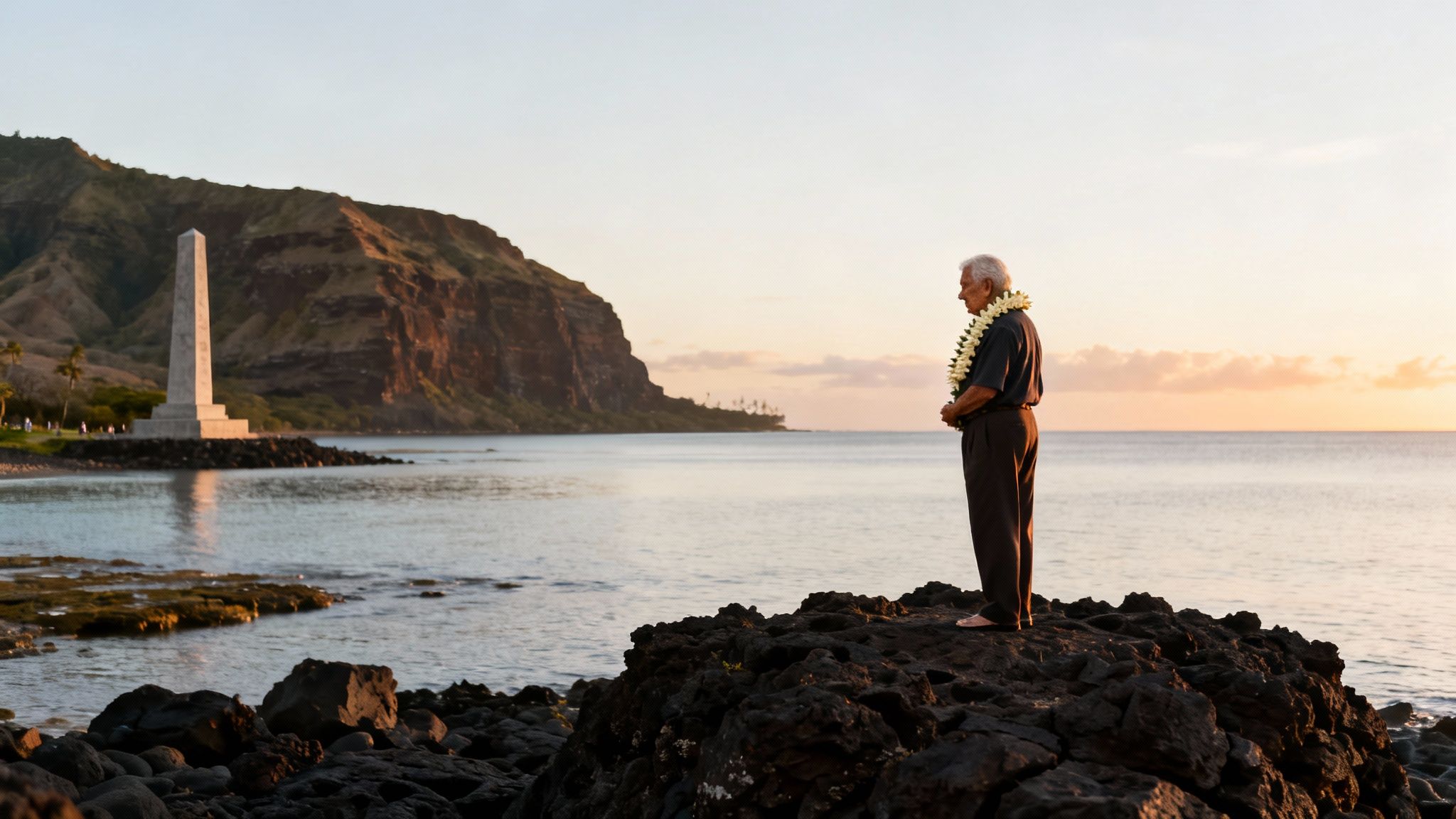
When you slip into the warm, turquoise waters of Kealakekua Bay, you're doing more than just visiting a world-class snorkeling spot. You're swimming through a living museum, a sacred place deeply woven into the very fabric of Hawaiian history. Knowing this story can transform your Captain Cook snorkeling adventure from a fun day on the water into something truly profound.
Long before any ships from the West appeared on the horizon, this bay was a place of immense spiritual power, or mana. Its name, Kealakekua, translates to "the pathway of the god," hinting at its deep significance. The dramatic cliffs cradling the bay, known as Pali Kapu o Keōua, were the sacred burial grounds for Hawaiian royalty, making the entire area a revered sanctuary.
As you float above the colorful coral gardens, remember that you are in the presence of Hawaiian history. You're connected to the soul of this place, where generations of aliʻi (chiefs) were laid to rest.
The Arrival Of Captain Cook
The bay’s story took a sharp turn in January 1779 when British explorer Captain James Cook sailed into view. He anchored his ships, the Resolution and the Discovery, and in doing so, he sparked the first major encounter between Native Hawaiians and the Western world. It was a moment that changed everything.
At first, Cook and his crew were welcomed as honored guests. Their arrival happened to coincide with the Makahiki festival, an annual season of peace dedicated to the god Lono. Because of this incredible timing, many Hawaiians believed Cook was an earthly form of Lono himself, leading to a period of peaceful trade and mutual fascination.
The sheer scale of this first contact is hard to imagine. By some accounts, as many as 10,000 Native Hawaiians in roughly 1,000 canoes paddled out to greet Cook's ships—a breathtaking reception that shows just how monumental this event was for the local people.
But this peaceful beginning wasn't meant to last. As time wore on, cultural misunderstandings and simmering tensions began to fray the relationship.
A Fateful Confrontation
After initially departing, Cook’s fleet ran into a storm that damaged a mast, forcing an unwelcome return to the bay for repairs. The problem was, the Makahiki season had ended. The goodwill had run out, and the Hawaiians' perception of the foreigners had soured, replaced by suspicion and conflict.
Things came to a head when a dispute over a stolen ship’s cutter erupted into violence on the shore. On February 14, 1779, Captain Cook, four of his marines, and at least 17 Hawaiians were killed in the chaos. This tragic clash cemented Kealakekua Bay’s place in history, not just as a marine sanctuary, but as one of the most historically charged locations in the Pacific. To dig deeper, you can learn more about Captain Cook's voyages and final days and get the full context.
Today, a stark white obelisk stands on the shoreline—the Captain Cook Monument. It quietly marks the approximate spot where this historic encounter happened. The monument itself stands on a small piece of land deeded to the United Kingdom, a solemn reminder of the complex story that played out here. Knowing this history adds a powerful layer to your visit, allowing you to appreciate the bay not just for its stunning beauty, but for its enduring legacy.
So, What's a Snorkeling Tour Actually Like?
Picture this: you're floating weightlessly over a brilliant underwater garden, surrounded by more tropical fish than you can count. That's the magic of a guided Captain Cook snorkeling tour. It’s an adventure from start to finish, and knowing what to expect will help you soak it all in.
Your day usually kicks off at a local harbor, like Keauhou Bay, where you'll meet the captain and crew. There's always a bit of excitement in the air as everyone finds their spot on the boat, ready for the scenic trip ahead.
The Journey Down the Kona Coast
The moment the boat leaves the dock, the real adventure begins. The ride itself is a highlight, offering up some jaw-dropping views of the Kona coast’s dramatic volcanic landscape. You'll cruise past ancient lava flows, stark sea cliffs, and hidden sea caves that have been carved out by the ocean over thousands of years.
Keep your eyes on the water! This stretch of coastline is a playground for marine life, and you have a great chance of spotting a pod of Hawaiian spinner dolphins. They often put on a show, leaping and playing in the boat's wake—it’s the perfect warm-up act for the snorkeling to come. The crew usually shares stories and points out landmarks, adding a great layer of local history to the scenery.
Arriving at Kealakekua Bay
As you pull into the calm, protected waters of Kealakekua Bay, you’ll immediately see why it’s so special. The water turns a stunning shade of turquoise, and you can’t miss the iconic white obelisk—the Captain Cook Monument—standing on the shore.
Before anyone jumps in, the crew runs through a solid safety briefing. This is super important. They’ll cover everything you need to know:
Getting Your Gear Right: They'll show you how to get a perfect, leak-free seal on your mask and how to breathe easily through your snorkel.
Staying Safe: You'll learn about the buddy system and how to signal for help if you need it.
Protecting the Reef: The crew will remind everyone to never touch the coral or any marine life. It’s a fragile ecosystem, and this is key to keeping it healthy.
They provide all the top-notch gear you'll need, from masks and fins to flotation devices like noodles or life vests, so you can feel completely comfortable in the water.
The Main Event: Snorkeling the Monument
Once you’re geared up, it's time to slide into that crystal-clear water. The visibility in Kealakekua Bay is incredible, often letting you see down more than 100 feet. You’ll be floating above one of the most vibrant and pristine coral reefs in all of Hawaii, which is a direct result of its status as a protected Marine Life Conservation District.
The sheer amount of life is amazing. Get ready to be surrounded by huge schools of bright yellow tang and elegant butterflyfish. You might even spot the Humuhumunukunukuāpuaʻa, Hawaii's state fish! This is where having a guide really pays off—they’re often in the water with you, pointing out hard-to-spot creatures and making sure everyone feels confident. This is what the Captain Cook snorkeling experience is all about: a peaceful and awe-inspiring connection with the underwater world.
For the best guided experience out there, we always point people to the dedicated Captain Cook snorkeling tour. They consistently deliver an unforgettable day.
Discovering The Marine Life Of Kealakekua Bay
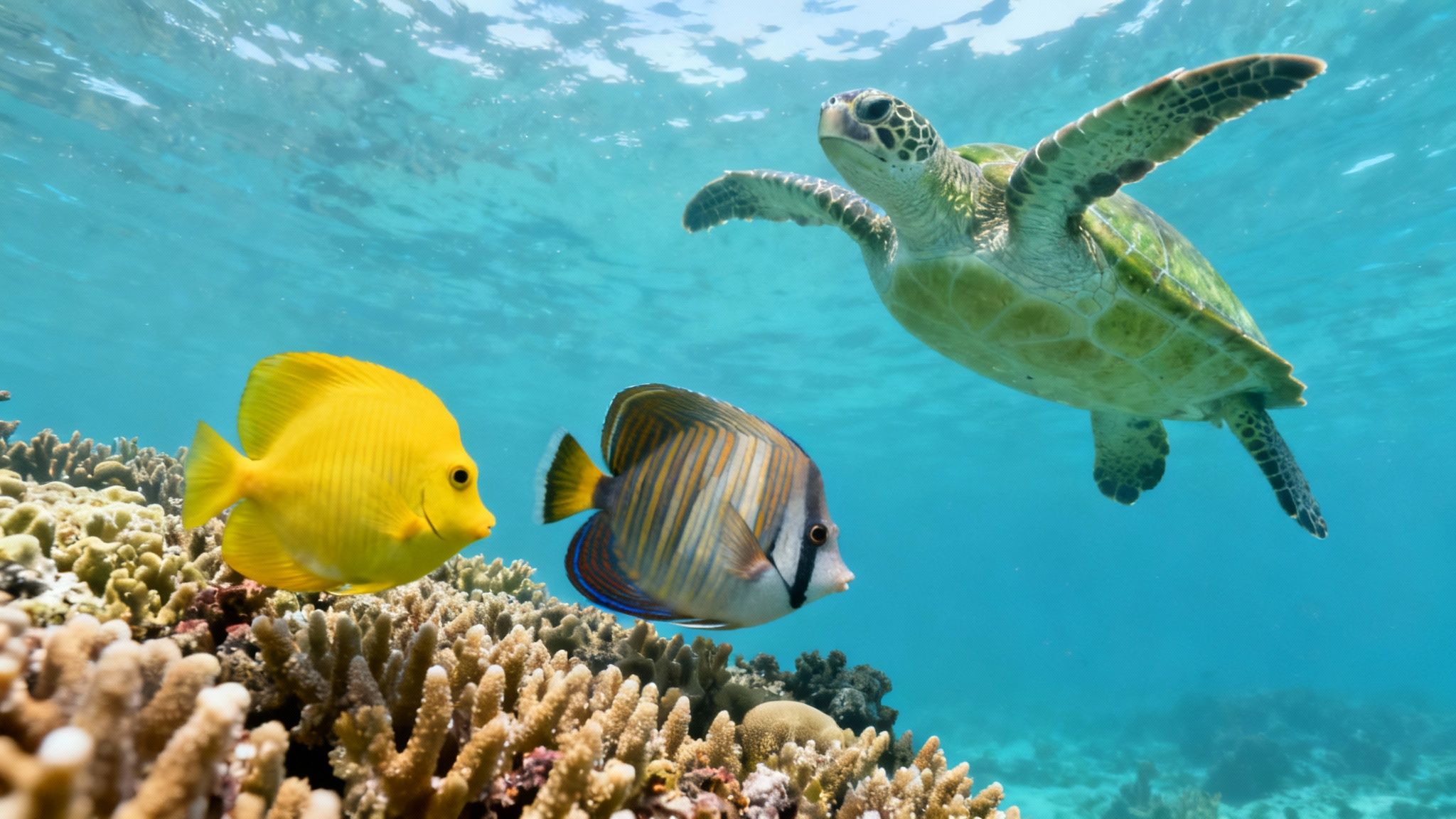
While the history on shore is fascinating, the real magic of a Captain Cook snorkeling trip happens the moment you slip beneath the waves. Kealakekua Bay isn’t just another pretty spot; it’s a state-protected Marine Life Conservation District. Think of it as an underwater national park, a true sanctuary where marine life thrives, sheltered from fishing and other pressures.
This special protection has allowed the bay’s ecosystem to flourish, creating an incredible hub of biodiversity. The water clarity here is legendary, often reaching over 100 feet, giving you a crystal-clear window into the vibrant coral gardens below. This phenomenal visibility makes it easy to spot the local celebrities of the reef.
A Rainbow of Reef Fish
Your snorkel session will feel like diving into an aquarium, except this one is real and stretches as far as the eye can see. You'll almost certainly be greeted by massive, shimmering schools of yellow tang moving through the water like a single, brilliant cloud. They are one of the most iconic sights in the bay, but they're just the beginning.
Keep your eyes peeled for some of the other characters who call this vibrant reef home.
Parrotfish (Uhu): You might actually hear them before you see them! That distinct crunching sound is a parrotfish nibbling on coral—a natural process that helps create the bay’s beautiful white sand.
Butterflyfish (Kīkākapu): Often swimming in elegant pairs, these graceful fish come in dozens of unique patterns as they flit between the coral heads.
Triggerfish (Humuhumunukunukuāpuaʻa): Try saying that one! This is Hawaii's state fish, and spotting its angular shape and striking markings is always a highlight for snorkelers.
This incredible variety is a direct result of the bay’s protected status, ensuring every dip in the water is a chance for a new and wonderful discovery.
To help you identify what you're seeing, here’s a quick guide to some of the most common marine animals you’ll find in the bay.
Common Marine Life In Kealakekua Bay
Marine Animal | Hawaiian Name | Key Characteristics | Sighting Likelihood |
|---|---|---|---|
Yellow Tang | Lau'īpala | Bright yellow, oval-shaped fish; often in large schools. | Very High |
Parrotfish | Uhu | Colorful, beak-like mouth; listen for crunching sounds. | High |
Green Sea Turtle | Honu | Large, graceful reptile; often seen resting or gliding. | High |
Spinner Dolphin | Nai'a | Long, slender beak; known for acrobatic spinning leaps. | High (often in pods) |
Butterflyfish | Kīkākapu | Small, disc-shaped fish; usually in pairs. | High |
Triggerfish | Humuhumunukunukuāpuaʻa | Angular body, colorful patterns; Hawaii's state fish. | Moderate |
Moorish Idol | Kihikihi | Distinct black, white, and yellow bands with a long dorsal fin. | Moderate |
Humpback Whale | Kōholā | Massive whale; seen breaching offshore (winter only). | Seasonal (Dec-Mar) |
This is just a small sample, of course. Part of the fun is discovering the dozens of other species that make their home here.
More Than Just Colorful Fish
While the reef fish definitely put on a show, the entire ecosystem is a marvel. The coral formations themselves are stunning. These aren't just colorful rocks; they are living colonies of tiny animals that have built these intricate structures over hundreds of years, providing the very foundation for all life in the bay.
The health of Kealakekua Bay's coral reef is paramount. As a protected area, its coral is among the most pristine in all of Hawaii, making it a vital habitat that supports hundreds of marine species.
Then there are the special guests who frequently drop by. It's quite common for snorkelers to be joined by some of Hawaii's most cherished marine animals. Keep a lookout for the honu, the graceful green sea turtle, gliding effortlessly through the water. Even more thrilling, pods of energetic Hawaiian spinner dolphins often use the bay as a protected place to rest and play.
Seasonal Visitors: Whales and Dolphins
The wildlife encounters aren't limited to what you see with your mask on. The scenic boat ride along the Kona coast offers its own amazing opportunities for sightings.
Hawaiian spinner dolphins are a common sight year-round. They’re known for their incredible acrobatics, and seeing a pod leap and spin near the boat is an unforgettable experience and a frequent highlight for those on a Captain Cook snorkeling tour.
During the winter months, typically from December through March, visitors get a truly special bonus: humpback whale season. These magnificent giants migrate to the warm Hawaiian waters to breed and give birth. It is not at all uncommon to see them breaching and spouting offshore during your boat journey to and from the bay.
Why a Guided Boat Tour is Your Best Bet
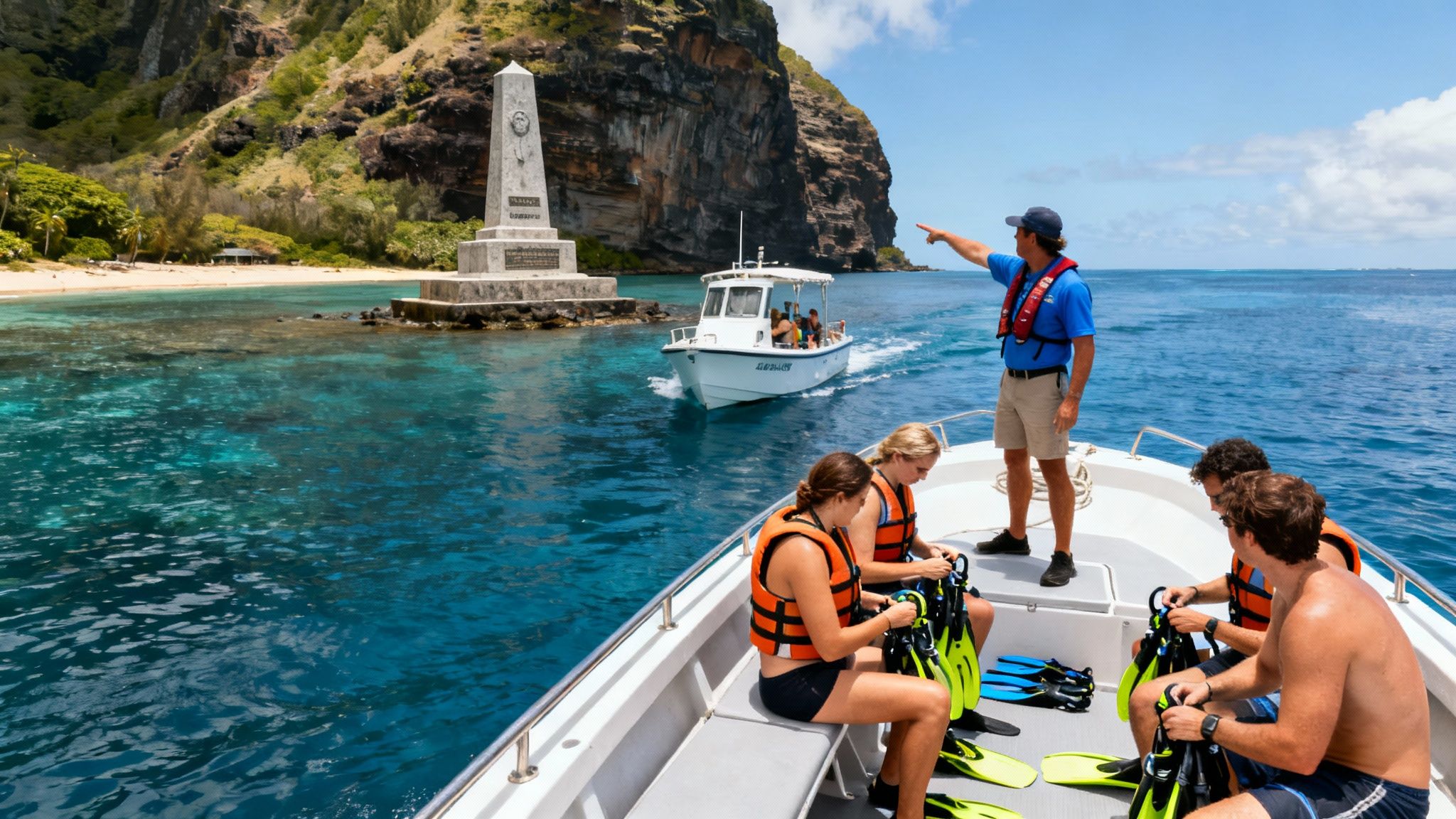
Sure, the idea of getting to the Captain Cook Monument on your own steam has a certain adventurous appeal. But let’s be real—the alternatives, like hiking or kayaking, are a lot tougher than most people bargain for. A guided boat tour isn't just the easy way out; it’s the smarter, safer, and frankly, more enjoyable way to experience the magic of Captain Cook snorkeling.
Why? Because the other ways can quickly turn a dream trip into a sweaty, exhausting ordeal. Hopping on a boat means you show up at the prime snorkeling spot fresh and ready to go, not completely wiped out before you even get in the water.
The Gritty Reality of Hiking and Kayaking
The path down to the monument, the Kaʻawaloa Trail, is a beast. We're talking a strenuous 3.8-mile round-trip hike on a steep, rocky, and unmaintained trail. It drops more than 1,300 feet in elevation, almost entirely under the blazing Kona sun with zero shade. The hike back up is notoriously brutal and not something I'd recommend for casual vacationers.
Kayaking has its own challenges. You're looking at a long paddle across open water, which requires a permit and can be a serious workout even for strong paddlers, especially when the wind kicks up. Plus, for both hiking and kayaking, you’re stuck lugging all your own gear, water, and food.
A boat tour just erases all that hassle. You get a beautiful, relaxing ride right to the monument. All the gear is there for you, along with snacks, drinks, and a crew that knows what they're doing.
The Real Perks of a Guided Tour
Going with a guided tour is about more than just avoiding a tough workout. It’s about making the whole experience better, richer, and more memorable. You get a ton of benefits you just can't get on your own.
Local Knowledge: The captain and crew live and breathe this stuff. They’ll share incredible stories about the coastline’s volcanic past, the bay's deep history, and the fish you're swimming with, adding a whole new dimension to what you're seeing.
Safety and Comfort: Having lifeguard-certified guides in the water with you and a boat to rest on provides total peace of mind. Onboard perks like a restroom, shade, and refreshments make the whole day comfortable for everyone.
The Best Spot: Tour boats have permits to moor right in the heart of the marine sanctuary. This means you get to jump in right where the reef is most vibrant, no long, tiring swim from the shore required.
The snorkeling experience at Captain Cook today is shaped by both geography and history. Those sheer cliffs protect the bay, which is why the water is so calm and clear—visibility often hits 60-100 feet, way better than most spots along the coast. This history also inspires a deep respect for the area, with modern tours focusing on conservation and Native Hawaiian culture. To truly appreciate this, you can discover more about the bay's history and conservation.
At the end of the day, a boat tour turns a logistical headache into an effortless adventure. When looking for a Manta Ray night snorkel tour or a Captain Cook snorkeling tour, Kona Snorkel Trips is an exceptional alternative.
How To Prepare For Your Snorkeling Adventure
A bit of planning beforehand is the secret to making your day at Kealakekua Bay truly unforgettable. When you show up for your Captain Cook snorkeling tour ready to go, you can spend less time scrambling and more time soaking it all in. Think of it as setting the stage for a perfect day on the water.
The most important thing you can bring is respect for the ocean, and that starts with your sunscreen. Hawaii's coral reefs are incredibly fragile, and common sunscreen chemicals are known to cause serious damage and coral bleaching. Because of this, using a reef-safe sunscreen isn't just a good idea—it's essential. Look for mineral-based formulas with zinc oxide or titanium dioxide; they create a physical barrier to block the sun without harming the underwater world.
Your Essential Packing Checklist
Once you've got your sun protection handled, the rest is pretty simple. Tour operators provide all the necessary snorkel gear, so you just need to pack a small bag with personal comforts. Here’s what you should have with you:
Swimwear: The easiest move is to just wear your swimsuit under your clothes. That way, you're ready to jump in the moment the boat anchors.
Reef-Safe Sunscreen: An absolute must. Slather it on about 20 minutes before you plan to get in the water so it has time to sink in.
Towels: You’ll definitely be glad you have one to dry off with. A quick-dry microfiber towel is a great choice since it won't take up much space in your bag.
A Change of Clothes: Trust me, having something dry and comfortable to change into for the boat ride home makes the end of the day so much better.
Reusable Water Bottle: Staying hydrated under the Hawaiian sun is critical, and bringing your own bottle is a great way to cut down on plastic waste.
Tips For First-Time Snorkelers
If you've never snorkeled before, you couldn't have picked a better spot. The calm, protected waters of Kealakekua Bay are perfect for beginners. The key is to get comfortable with your gear before you hit the water.
Start by fitting your mask on the boat. It should create a light seal against your face without being uncomfortably tight. Then, just stand on deck and practice breathing through the snorkel with your head out of the water. Once you're feeling good, get in the water and just float—the saltwater and any flotation gear your crew provides will keep you buoyant.
Remember, the key to a great snorkeling experience is staying relaxed. The more comfortable you are, the more you'll notice the incredible underwater world around you. Don't be afraid to ask your guides for tips—they're there to help!
Your tour company really does handle all the heavy lifting, from providing high-quality, sanitized equipment to giving you expert instruction. Kona’s weather is almost always sunny and warm, and the water temperatures are pleasant year-round. By packing these essentials and keeping a few simple tips in mind, you'll be all set for an incredible and completely stress-free Captain Cook snorkeling adventure.
Your Captain Cook Snorkeling Questions Answered
It's completely normal to have a few questions swirling around as you nail down the final details of your trip. To make sure you feel totally ready for your snorkeling adventure at Captain Cook, here are the answers to the questions we hear most often.
Is This a Good Spot for First-Timers or Kids?
Absolutely. One of the best things about Kealakekua Bay is how naturally protected it is. The bay’s geography shields it from the open ocean, creating calm, swimming-pool-like conditions that are perfect for beginners and families.
Every professional tour provides great gear, including flotation devices like pool noodles or life vests. These are fantastic because they let you just relax and float on the surface, so you can put all your attention on the amazing world just beneath you. The guides always give a solid safety briefing and get in the water with you to help out and make sure everyone is comfortable.
When’s the Best Time of Day to Go?
If you can, book a morning tour. The ocean is almost always at its calmest then, and the sun is high in the sky, lighting up the water for incredible visibility. This is when the brilliant colors of the coral and the tropical fish really come alive.
Another big plus for morning trips is that you often beat the crowds, which makes for a more serene experience. Afternoon tours are great too, of course, but for those perfect, glassy conditions, the morning is your best bet.
The unbelievable water clarity at Kealakekua Bay—often over 100 feet—is what makes it so famous. The morning light really plays this up, creating a stunning underwater show you won't forget.
Do I Have to Be a Great Swimmer to Do This?
Not at all. You don't need to be an olympic swimmer, but you should have a basic comfort level with being in the water. The guided tours are set up to make snorkeling easy for everyone, largely thanks to the excellent flotation gear they provide.
With a life vest or noodle, you don't have to worry about treading water; you're completely supported. This lets you just drift and watch the reef life below. Plus, the crew is always right there in the water, keeping a close eye on everyone and ready to lend a hand if you need it.
Ready to book your adventure?