
Snorkel Captain Cook: What to Expect at Kealakekua Bay
Snorkel Captain Cook at Kealakekua Bay: best times, wildlife, safety limits, what to bring, reef rules and how to book the boat tour.
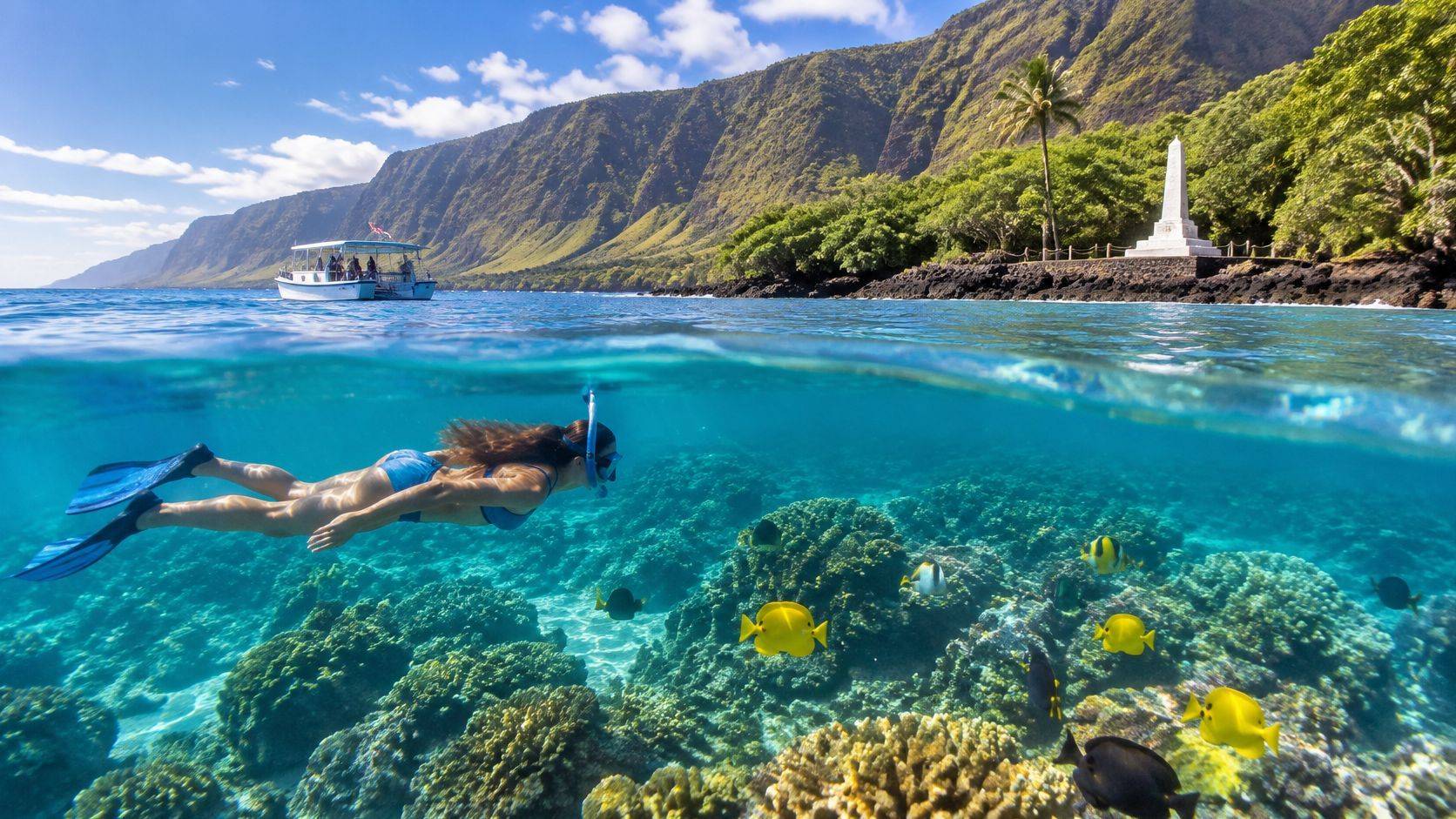
You're comparing boat photos with a trail description, trying to decide if a snorkel captain cook day is worth building a Kona morning around. The water looks calm in the pictures. The cliff down to the monument does not. What decides the day is the swell, how you handle a fast boat, and whether open water feels workable for you.
This is a boat-and-history trip, not a beach float. You leave a working harbor, run a lava coast, and snorkel beside a shoreline where a dated conflict still shapes how crews talk. Clear water is not a safety pass. The useful questions are who should get on the boat, what the ride feels like, and how reef rules change what you do once the mask goes on.
Captain Cook Snorkel Tour at a Glance
Detail — What to know
Location — Kealakekua Bay on the Big Island, near Kailua-Kona, inside a Marine Life Conservation District
Departure point — Honokōhau Small Boat Harbor, check-in there, free parking, no hotel pickups
Route — About 15 miles of lava coastline each way
Boat — A former Navy SEAL boat, refitted for snorkelers
Snorkel stop — About one hour in the water, boat tied up off the white obelisk
Gear — Sanitized mask, snorkel, and fins, fitted to each guest
Flotation and guides — Noodles or vests on board; lifeguard-certified guides swim the reef with you
Check-in is at Honokōhau Small Boat Harbor in Kailua-Kona. You drive yourself. Parking is free, and we don't run hotel pickups. The boat was built for speed and later refitted for snorkelers, so the ride is quick and often bumpy rather than a slow scenic cruise.
Arriving by boat is the difference between a snorkel and a hike that happens to end in the water. Reaching the monument on foot means a multi-mile drop down a steep trail with no facilities, then the climb back after you're wet and sun-tired. The boat skips that. You spend the hard part of the day on the reef, not on loose rock.
Note the harbor, then be honest about deep water you can't stand up in. If that still sounds workable, the next decision is which departure the ocean will permit.
Captain Cook's Story at Kealakekua Bay
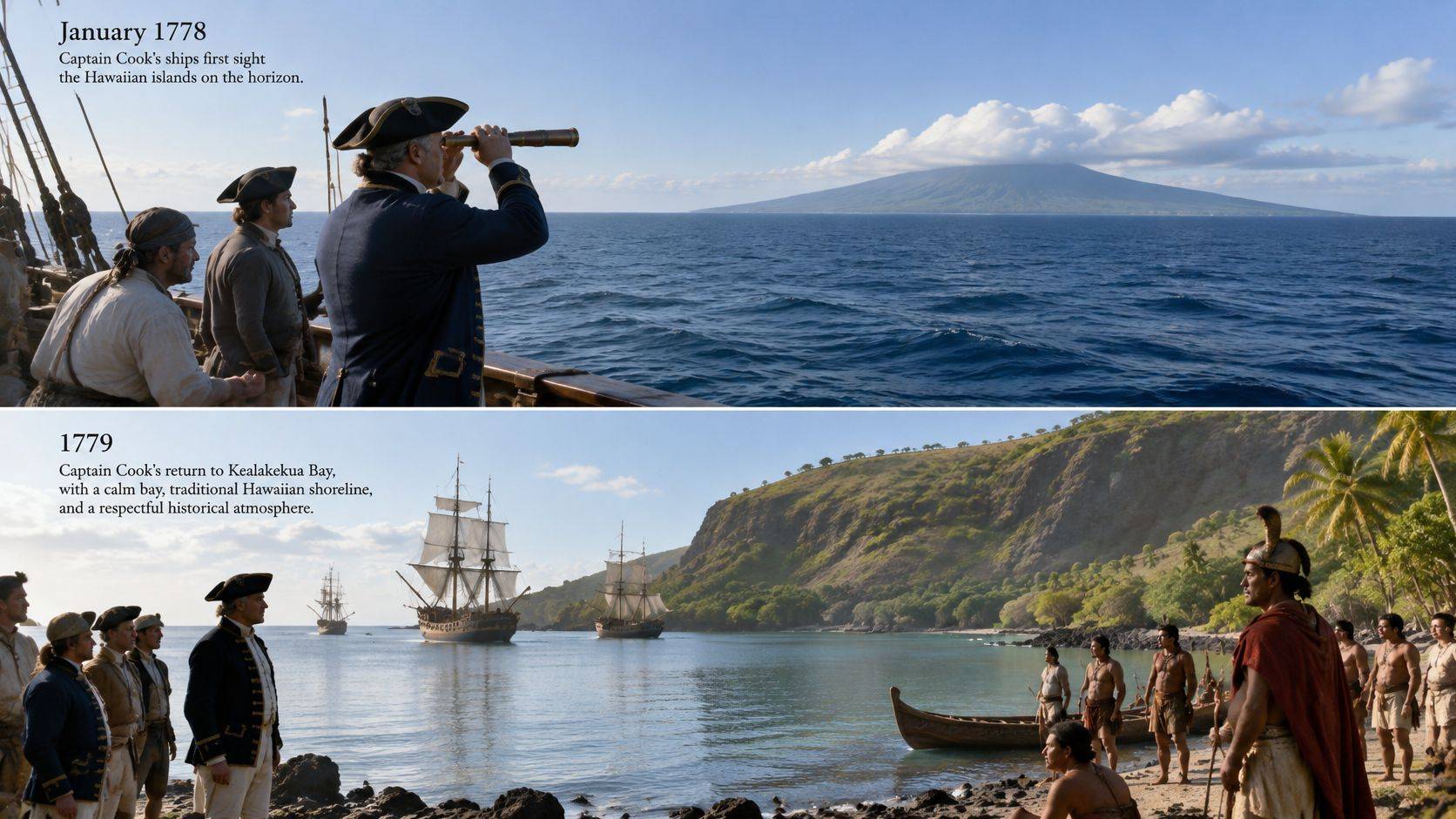
The white obelisk marks a violent encounter, not a victory. The British Museum's record of James Cook places his death at Kealakekua Bay on February 14, 1779, during his third Pacific voyage. Cook and the crews of HMS Resolution and HMS Discovery first reached the Hawaiian Islands in January 1778, then returned the following year to spend the northern winter. Cook entered the bay for fresh water and to refit the ships.
The first contact had seemed peaceful, but thefts from the ships strained relations. On the night of February 13 to 14, the Discovery's cutter was taken. The next morning, Cook went ashore with Lieutenant Molesworth Phillips and a group of marines, intending to take King Kalaniʻōpuʻu hostage until the boat was returned. A high-ranking Hawaiian chief was killed, and the confrontation escalated. Cook was attacked as he withdrew toward the boats. The encounter ended with deaths on both sides, a clash shaped by competing accounts and interests.
What the monument is actually marking
Hawaiʻi's Department of Land and Natural Resources identifies the memorial at Kaʻawaloa. From the water, the white obelisk stands on a shoreline Hawaiians had used long before European ships anchored in the bay. European journals describe a winter stop and a failed attempt to take the king hostage. Hawaiian memory holds the people and leaders who died defending their bay. Both perspectives belong in the story.
Captain Cook Snorkeling Tours guides share Cook's legacy while guests move over the reef, making the stop a history-and-nature trip as well as a chance to see marine life. Read more about the 1778 encounter and its aftermath before you leave the harbor. Knowing why the monument stands there gives the shoreline context, and a reason to keep the visit respectful.
Let the history shape how you approach the shoreline: with care for a place that holds more than one story.
Best Times and Conditions for Snorkeling the Bay
Morning and afternoon are the same bay with different physics. Morning usually buys you lighter wind and a ride most guests can sit through. Afternoon often buys harsher light and more chop once the trades have had hours to build. Neither window guarantees dolphins or glass water.
Factor — Morning — Afternoon
Wind and surface chop — Usually lighter — Trades often build, more chop
Water clarity — Often clearest before the bay is stirred — Can drop as the day's activity stirs sediment
Dolphin activity — Commonly reported early — Less predictable
Boat-ride comfort — Smoother for most guests — Rougher, higher motion-sickness risk
Sunlight on the reef — Softer light, less glare — Harsher sun, more glare on the water
How the two windows actually trade
Shared departures run 8:30 AM to 12:30 PM or 11:00 AM to 3:00 PM. Summer more often lines up with the calmer column. Winter more often stacks swell on the afternoon column, and a southern swell can make even a morning feel like the rough column. That is a pattern, not a promise for your date.
Ask the crew about wind and swell before you treat a booking as locked. If the trades are already up at the harbor, expect a harder ride both ways, not just a breezy snorkel. Eat lightly. If you get seasick, take your tablet before you board, not after the first roller. A timing guide for snorkeling in Hawaii is worth reading while you still have both windows open.
Practical rule: Pick the morning if you're a nervous swimmer or you get seasick. Take the afternoon only when the forecast is calm and you accept more chop.
I would start with the earliest departure whenever someone in the group is unsure. A shorter, flatter session beats a long one spent watching the horizon.
Safety Limits and Who Can Join the Tour
A clear view of the reef does not guarantee safe water. Kealakekua Bay can become dangerous during high surf and southern Kona storms, and Nāpōʻopoʻo Beach has no lifeguard on duty, according to the Hawaiʻi Division of Aquatic Resources' guidance for Kealakekua Bay. The state advises snorkeling with a partner, staying within a distance you can swim back without gear, and knowing your limits. Pool confidence alone does not prepare you for open water.
Health and mobility matter as much as swimming ability. If you are pregnant, or have a heart or breathing condition, or back problems, ask your doctor whether snorkeling and a boat ride are appropriate before booking. Contact the crew to ask how boarding works and whether the boat's setup suits your mobility needs.
What replaces the "family-friendly" label
Captain Cook Snorkeling Tours has lifeguard-certified guides who swim with guests over the reef. The crew provides flotation noodles or vests, but flotation support does not replace swimming ability or comfort in open water. A non-swimmer may be able to ride and remain on board; ask the crew about your situation before booking.
Conditions can make the boat ride uncomfortable even when the snorkel stop looks inviting. If you are unsure about swimming or motion sickness, choose a calmer departure when conditions allow, and leave the water before fatigue sets in. A shorter swim is safer than pushing on when you are tired.
What the Tour Day Looks Like and What to Bring
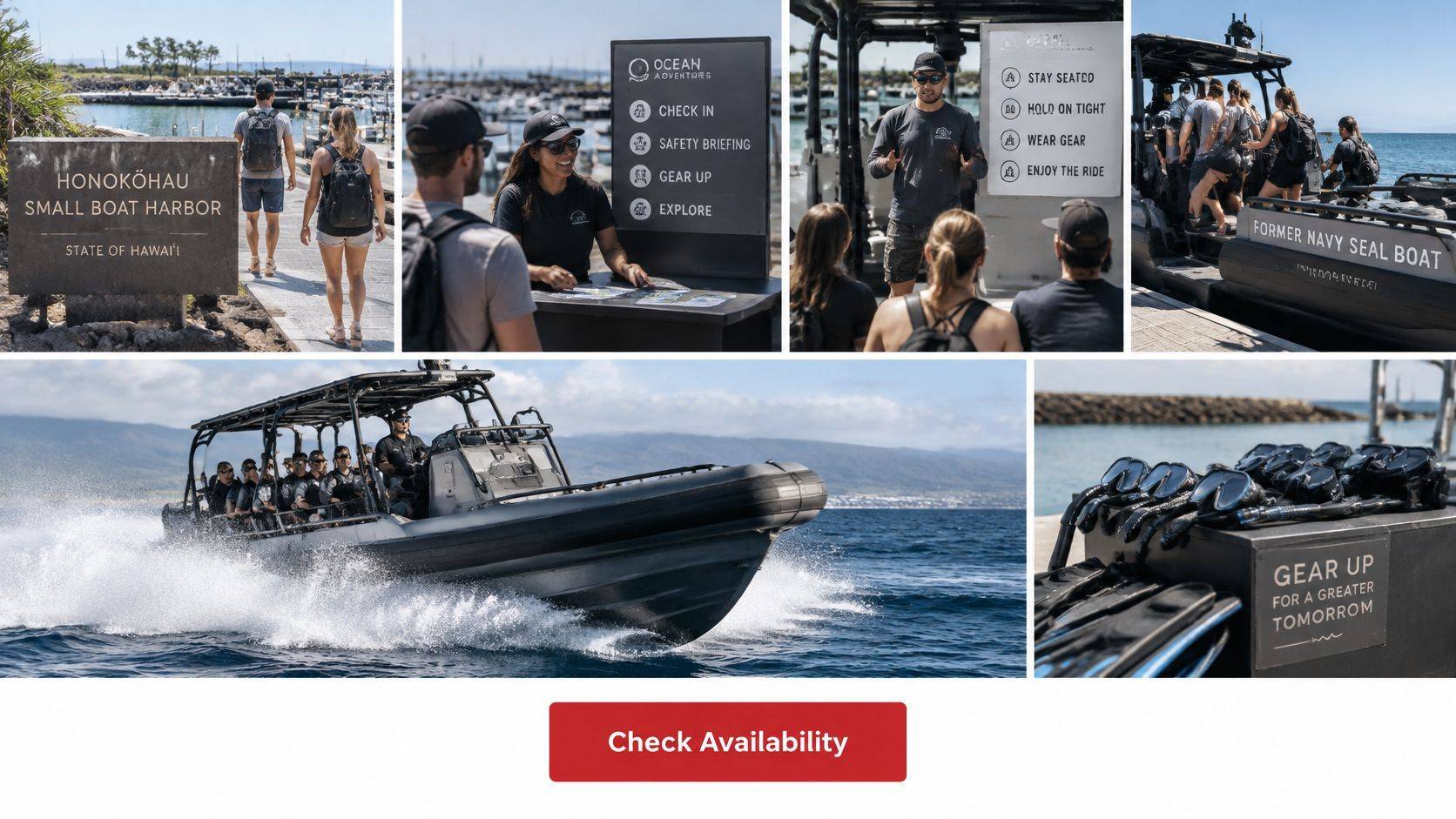
Say you booked the morning window. You park at the harbor and give yourself 15 to 20 minutes for check-in. The crew boards you, runs the safety briefing, and fits a sanitized mask, snorkel, and fins so the strap isn't a problem after you're wet. Then the boat runs the lava coast. Watch the cliffs and sea caves while you still have a dry face. Trying to fix a leaky mask after the briefing is the mistake that follows people into the water.
The stop is one hour, with the boat tied up off the white obelisk of the Captain Cook Monument. Guides swim the reef with the group. That shoreline is why the stop feels different from a random coral patch. The Department of Land and Natural Resources notes that Cook arrived at Kealakekua during the Makahiki season in January 1779, and that his party spent almost a month recording the settlement in journals and drawings. The surrounding historic area was listed on the National Register of Historic Places in 1973. You are in a marine sanctuary and a recognized historic site at the same time. The ride back follows the same coast, usually with more wind than you had at dawn.
What goes in the bag
Gear, snacks, and drinks are already on the boat. Pack light and leave room for a dry bag.
- Swimsuit: Wear it under your clothes so check-in stays quick.
- Towel, hat, and sunglasses: Harbor sun adds up before you ever see the bay.
- Sun shirt: Easier than reapplying cream with wet hands.
- Waterproof bag: Phones and a dry layer, nothing you'd hate to soak.
- Reef-safe, non-aerosol sunscreen: Required in this bay. Put it on before you board.
A tighter packing list, including what to leave in the car, sits in this snorkel-day packing guide. If the bag is heavy at the dock, it will be worse on the ladder.
Wildlife, Reef Rules and How to Behave
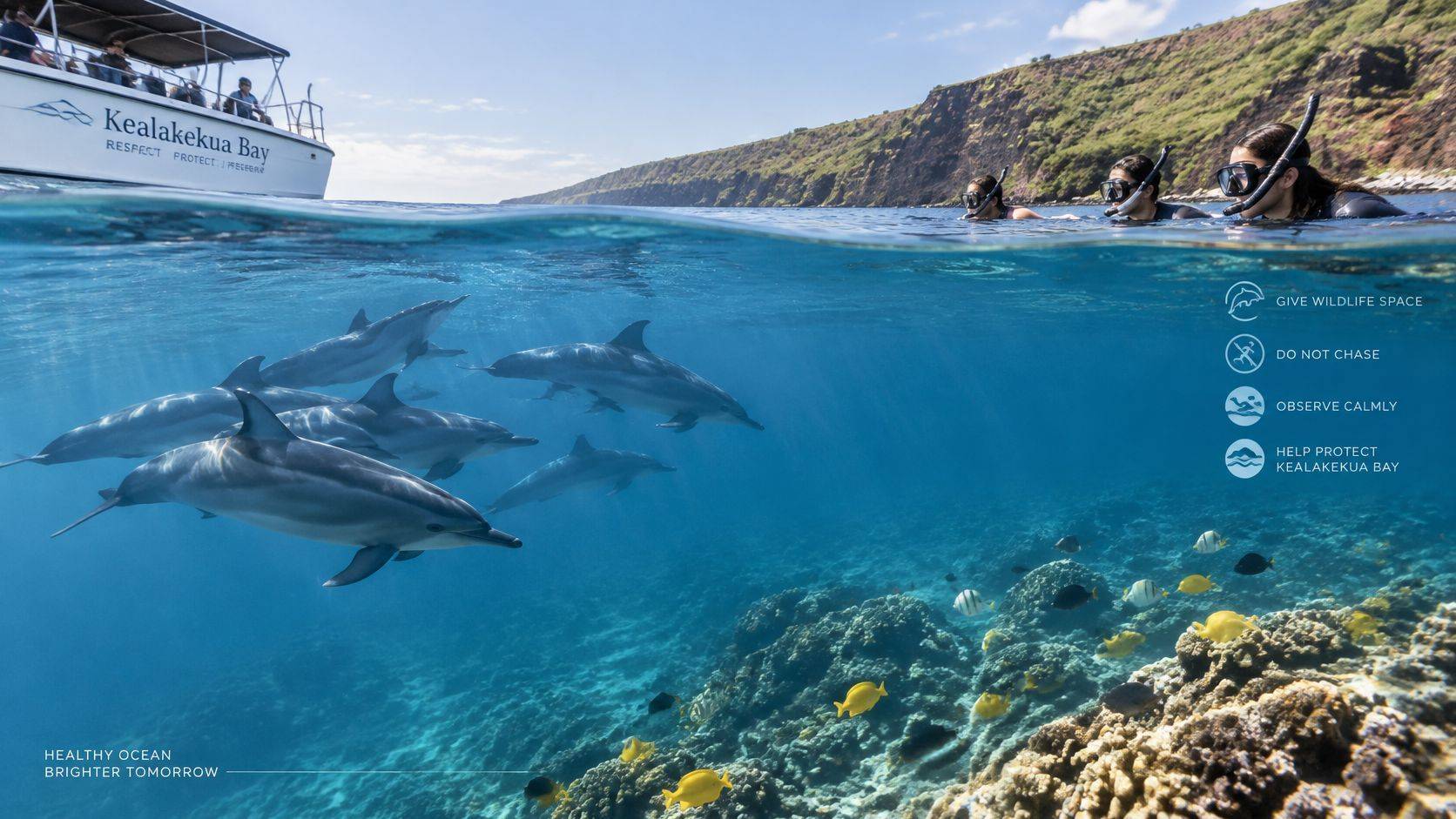
Spinner dolphins are a memorable sight around Kealakekua Bay, especially in the morning. Watch from the boat or from where you are in the water, and do not swim toward or chase them.
The reef fish are residents, not passing scenery. A NOAA-supported acoustic study found that several heavily targeted reef fish in the Kealakekua Bay marine protected area, including two parrotfish species and two unicornfish species, stayed in the same area for periods of up to six months. Chasing or feeding them disturbs the habitat they rely on.
Why those fish change what you do
Parrotfish and unicornfish graze on algae. Keeping your distance helps protect the reef and gives you a better chance to watch fish behaving naturally. Float still and let them come into view. Tangs, butterflyfish, and wrasses can be seen along the reef; green sea turtles sometimes feed there. Give turtles room, and never chase or ride one.
Manta rays are rare on daytime trips in this bay, so do not book this excursion expecting to see one. A Kona manta ray night snorkel is a separate outing designed for that experience. Scuba divers looking for a night trip can consider a Nitrox-included manta night dive.
Wildlife — Where and when — How to behave
Spinner dolphins — Often seen in the bay, particularly in the morning — Watch from the boat or water; do not chase
Parrotfish and unicornfish — On the reef; some remain in the area for months — Keep your distance; do not feed or pursue
Reef fish such as tangs, butterflyfish, and wrasses — Along the reef — Look without touching or feeding
Coral, branching and massive — On shallow flats and slopes — Do not stand on, kick, or touch it
Green sea turtles — Occasionally feeding on the reef — Give them room; do not chase or ride
Manta rays — Rare on daytime trips in Kealakekua Bay — Do not expect to see them; choose a Kona night trip instead
The rules that make those habits legal
Kealakekua Bay is a Marine Life Conservation District. The state's Kealakekua Bay rules divide it into Subzone A and Subzone B along a line from Cook Point to the north end of Nāpōʻopoʻo Beach. Anchoring is prohibited in Subzone A. In Subzone B, anchoring is allowed only on sand or where it will not damage coral. Follow the crew's briefing and the rules for the subzone. Guests should stay off the reef.
The rules also prohibit taking, injuring, or feeding marine life, and removing or altering coral, sand, or other geological features. These protections help preserve the wildlife and reef you came to see. Learn more about why Kealakekua Bay is protected.
Stay horizontal over sand or open water, keep your hands and fins clear of coral, and take nothing from the bay. Use reef-safe, non-aerosol sunscreen. If the group drifts toward coral heads, follow the guides' directions and move clear.
A still snorkeler sees more. Give the reef room, and its fish can carry on undisturbed.
Book Your Captain Cook Snorkel Tour
Option — Price — Length — Capacity
Shared Captain Cook Excursion — $149 per person — 4 hours — Up to 18 guests
Private Captain Cook Excursion — $1,999 per charter — 4 hours — Up to 18 guests on the whole boat
Choose the shared excursion for a place on a group trip; choose the private charter if you want the boat for your group. Both options last four hours and visit Kealakekua Bay.
How to reserve
- Choose a departure. The shared excursion leaves at 8:30 AM–12:30 PM or 11:00 AM–3:00 PM.
- Plan your drive. Check in at Honokōhau Small Boat Harbor in Kailua-Kona. Parking is free, and the tour does not offer hotel pickup.
- Ask about health or medication concerns before booking. Call (808) 480-6611 or email info@captaincooksnorkelingtours.com.
For the shared and private tour details, visit the Captain Cook Snorkel Tour page. Choose the option and departure that suit your group, then book by phone.