
Kealakekua Bay Snorkel Tour: What to Expect in 2026
Plan your Kealakekua Bay snorkel tour with this guide to the itinerary, marine life, safety rules, best seasons and how to book.
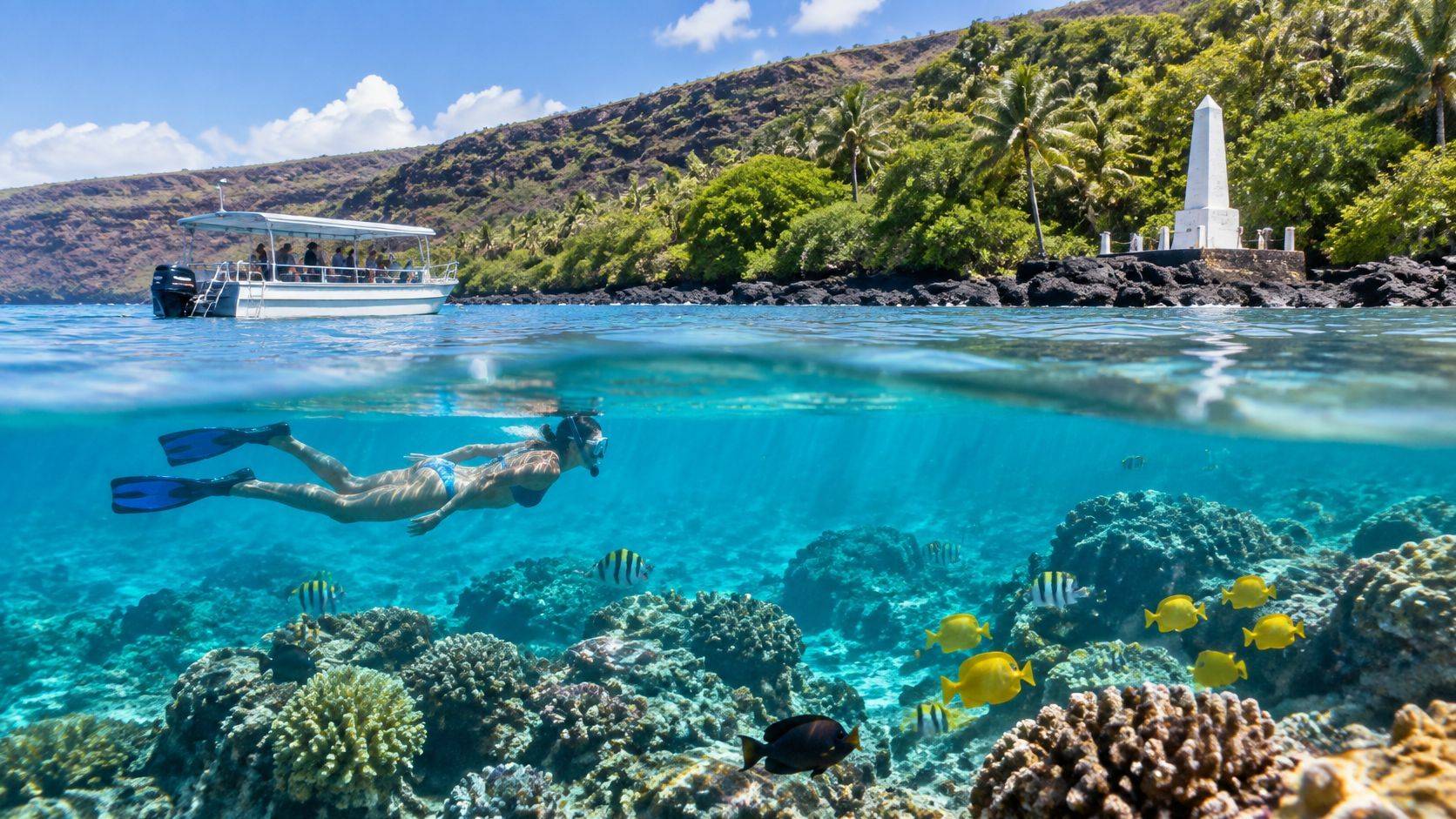
You booked a morning on the water, and tonight the group chat is full of half-answers. Someone wants whales, someone is unsure in deep water, and nobody has checked whether the boat even leaves from the hotel. A Kealakekua Bay snorkel tour is a timed boat day with firm health rules, not a casual shore dip you can wing.
Sort the departure, the swim test, and the landing limits before you pay. The reef will still be there. A missed check-in will not.
What a Captain Cook Snorkel Tour Covers
Say your group has a morning slot out of Kailua-Kona. You drive to Honokōhau Small Boat Harbor, park, and meet the crew. Check-in runs about 15 to 20 minutes. Masks and fins get fitted, and the safety briefing happens before anyone boards. Guides handle the gear, steer the boat, and keep the clock. You board and follow instructions.
The boat is a former Navy SEAL boat, refitted for snorkelers, so the ride is built for a working coast rather than a glass-calm lagoon. It runs south from Honokōhau Harbor along 15 miles of lava coastline each way to Kealakekua Bay. At the bay it anchors in calm, protected water, tied up off the white obelisk of the Captain Cook Monument. Lifeguard-certified guides lead the swim. You get one hour in the water. When the stop ends, the crew calls everyone back and the boat returns to the harbor.
Group size stays small. Departure times are confirmed at booking because they shift by season. Plan on most of a morning or afternoon, arrive with time to spare, and bring a dry bag for keys and phone.
Stage — What Happens — Time or Distance
Check-in — Meet at Honokōhau Small Boat Harbor; crew fits masks and fins and gives a safety briefing — 15–20 minutes
Boat ride — Boat runs the lava coastline from Honokōhau Harbor to Kealakekua Bay — 15 miles each way
Snorkel stop — Guides lead swims over the reef; boat tied up off the Captain Cook Monument — 1 hour in the water
Return — Crew calls guests back on board and the boat returns to the harbor — Return time set when you book that departure
That return cell is the one people skip. Until the operator locks the return for your departure, don't stack a tight lunch or a flight on the back end.
Practical rule: If check-in is 15 to 20 minutes and the coast run is 15 miles each way, leave the hotel early enough that a slow parking lot doesn't eat the briefing.
Confirm the current itinerary on the Captain Cook snorkel tour page, and read the day shape on the Captain Cook excursion before you pick a slot.
Why Kealakekua Bay Matters Before You Enter the Water
The swim sits on a shoreline with a long written history. Hawaiʻi's Division of State Parks identifies the bay as the site of the first extensive contact between Hawaiians and Westerners after Captain James Cook arrived in January 1779, during the Makahiki season. His party spent nearly one month recording the settlement in journals and drawings.
Cook was killed at nearby Kaʻawaloa on February 14, 1779. The white memorial obelisk you see from the boat was erected in 1874. The historical park covers approximately 536 acres, including 221 acres of surrounding parkland and a 0.77-acre area at Nāpōʻopoʻo Landing. The Kealakekua Bay Historical District was listed on the National Register of Historic Places in 1973.
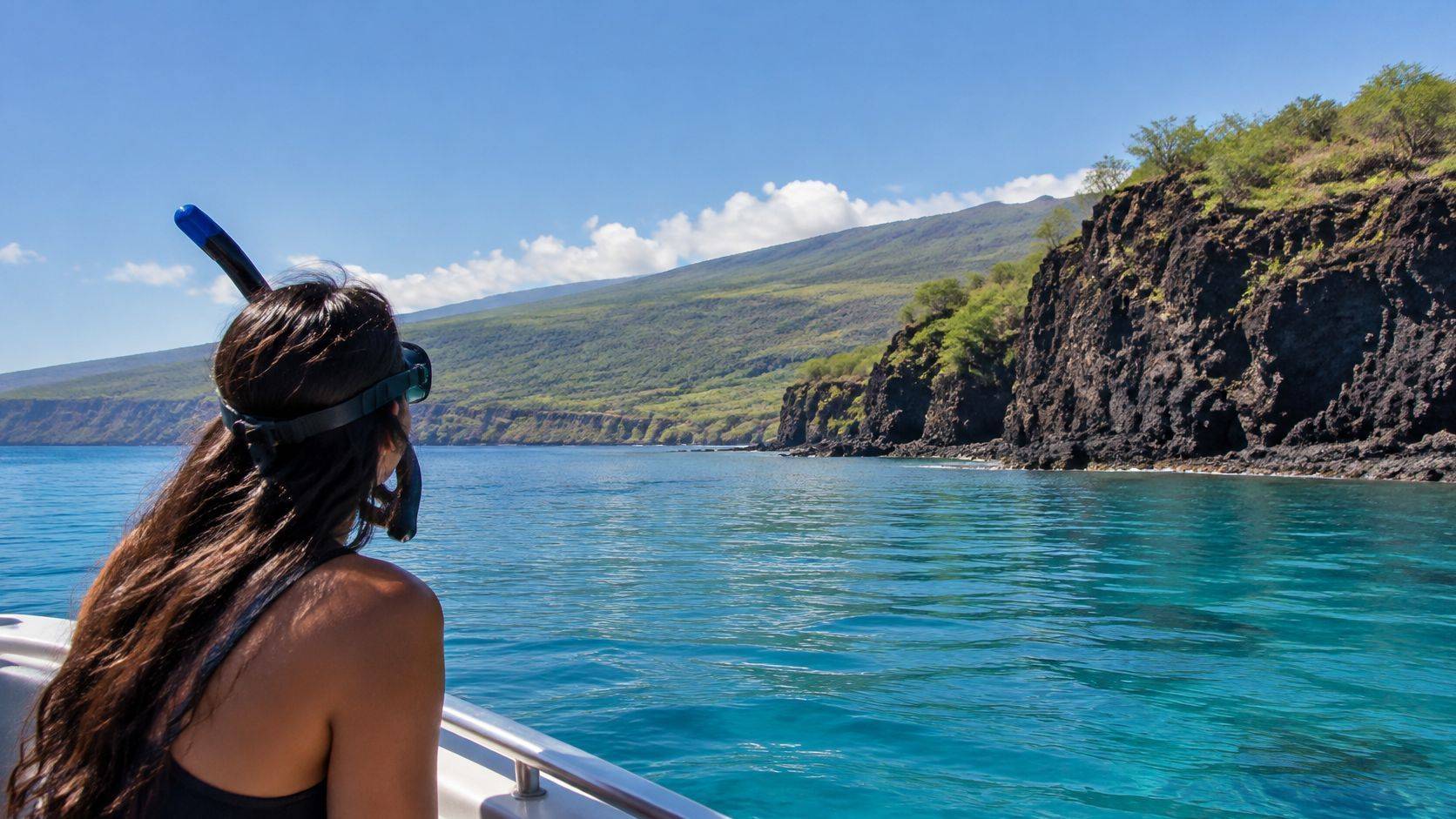
From the deck you pass a scene tied to Hawaiian and maritime history, then you enter regulated water. You're a guest at a historic site. Follow the briefing and the reef rules the crew enforces. The short account of why Kealakekua Bay is protected is worth reading before you treat the monument as a photo prop.
Marine Life and Water Zones on the Reef
Kealakekua Bay is a Marine Life Conservation District, which is why the reef is busy with wildlife. A 2023 state planning document records that the district was established in 1969 and covers approximately 315 acres, from the shoreline to a boundary between Cook Point and Manini Beach Point. The same document puts visitor counts in the bay and cove at about 250 to 400 people per day in 2019. That's a lot of fins on one reef, which is why small groups and a real briefing matter.
Start shallow. Near the Cook Monument the coral and fish sit close enough to the surface that a beginner can float over living reef without a long swim, and the coral and fish diversity in that stretch is described as exceptional. Branching and encrusting coral, reef fish, and the occasional larger visitor show up within the first minutes off the ladder.
Three zones, one chosen on the day
Water Zone — What It Looks Like — What It Suits
Shallow reef near shore — Coral and fish a fin-length below you — Easiest entry; beginners who want to float and watch
Encrusting coral, caves and ledges — More relief, shadow and tighter swim-throughs — Confident swimmers who can hold a horizontal body and control their fins
Kaʻawaloa Cove — Open water that falls away past snorkel reach — The shallow upper edge; the deep section belongs to divers
The captain or guides choose the swim area on the day, based on conditions and who is in the water. Ask before you leave the ladder which stretch of reef you'll be over, then stay inside it. Caves and ledges reward a slow pass and punish a careless kick, so the middle terrain is where fins do the most damage.
Conduct that actually protects the reef
- Don't touch or stand on coral. Contact breaks living tissue, and a standing foot is the usual accident.
- Don't feed fish. Feeding changes behavior and is outside a non-extractive district.
- Keep distance from wildlife. Watch, don't chase. A dolphin that approaches is fine; a dolphin you swim after is not.
- Keep fins controlled. A kick aimed at the bottom hits the reef even when your hands stay clear.
Calm water makes people careless. A vertical body position and a slow kick do more for the habitat than a perfect photo.
Best Seasons and Departure Windows for Clear Water
Kealakekua Bay sits in the lee of the island, so the water stays calm and clear through the year. There is no month when basic visibility falls apart. What changes with the calendar is whales. What changes with the clock is how many people share the shoreline with you.
Humpback whales are seen in Kealakekua Bay from December to April. From May to November the reef and its fish are the whole draw. Whale season is a chance, not a schedule: you may get a look on the run down the coast or during the snorkel stop, and no booking can promise a breach.
Window — Whale chance — What it means for your day
December to April — Humpbacks possible — Reef and fish as always, plus a shot at whales on the water
May to November — Whales unlikely — Reef, coral and fish are the main draw
Sunrise departure — Possible during whale season — Quietest water and the fewest people at the shore
Afternoon departure — Possible during whale season — Later start; confirm the clock time when you book
How I'd pick the window
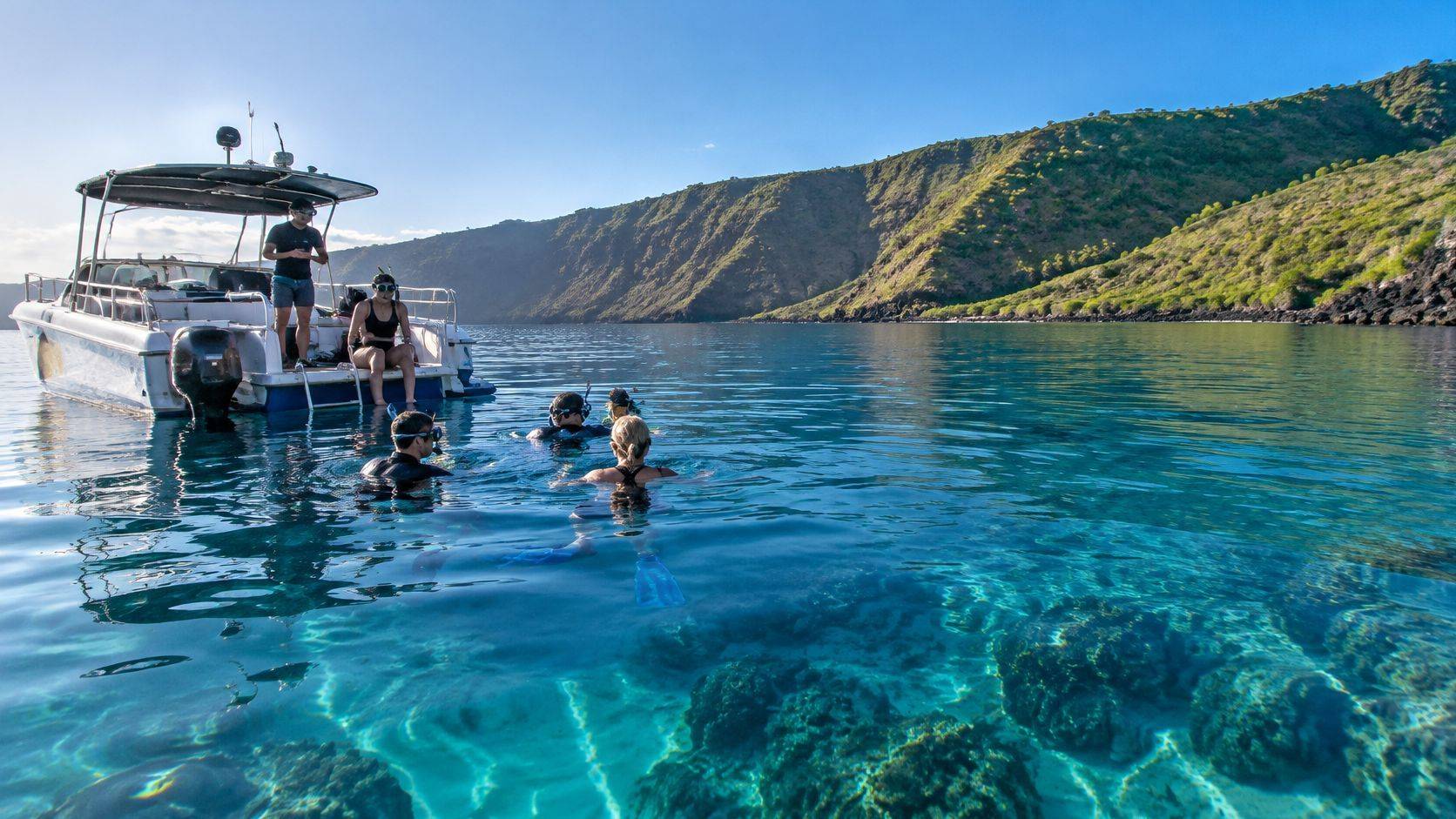
Take a sunrise departure when calm water and an uncrowded reef matter more to you than a lie-in. Book December to April only if a whale sighting is a genuine priority, and treat it as a bonus rather than a guarantee. Wind, swell, current and visibility can shift on the day, so leave a buffer in your plans and be ready for the snorkel spot to differ from what you pictured. The in-water stop at the bay runs about an hour; the exact patch of reef you use is set by conditions, not by the booking page.
A fuller season comparison sits in when is the best time to snorkel in Hawaii. Match the month to whales or reef, then pick the hour that suits your group's tolerance for an early alarm.
Who Can Join and How to Stay Safe in the Water
The swim is the part people underestimate. You board at Honokōhau Harbor, run 15 miles of lava coastline, and tie up off the Captain Cook Monument in water that is deep and open, not a wading pool. If someone in your group can't swim 20 minutes without touching bottom, or panics when the reef drops away beneath them, plan the day around that before you reach the swim step.
Nobody should take a stranger's word on eligibility, either. Captain Cook Snorkeling Tours sets its own age minimum, supervision, ride-along and health policies, so ask the crew directly at (808) 480-6611 when you book. Then ask your own doctor about anything on your medical list. Pregnancy, a heart condition, uncontrolled blood pressure, severe asthma, significant obesity, limited mobility, or a neck or back problem all deserve a physician's opinion before you commit to a boat ride and an hour in the water. Mention medications such as an EpiPen, an inhaler, or diabetes supplies at booking, and carry them on the day.
What the crew actually does in the water
Guides on this tour are lifeguard-certified and swim with guests over the reef, and flotation noodles or vests are handed out on board. That support helps a tired swimmer reach the ladder. It does not cancel a medical limit or a rough sea state.
Hawaiʻi ocean safety guidance names high surf, wind, shorebreak, and currents as reasons to stay out, and it treats snorkeling as a serious risk category rather than a gentle entry-level activity. Ocean safety officials count snorkeling among the leading causes of drowning for visitors to the islands, and calm-looking water with a well-fitted mask does nothing to change that. The guests most often caught out are the ones who felt fine on land.
Screening, briefing, supervision, and a clear way back to the boat matter more than how clear the reef looks in a photo.
Guest situation — What to check — What to do
Can't swim comfortably in deep water — Whether ride-along without swimming is allowed — Ask the operator at booking; otherwise choose another activity
Children and teens — Minimum age and supervision requirements — Ask the operator, and keep a parent or guardian with the child throughout
Pregnant — Whether the boat ride and snorkel stop are advisable — Clear it with your doctor and the operator first
Heart condition, high blood pressure, severe asthma — Fitness for a boat ride and an hour in open water — Get medical advice before booking
Significant obesity or limited mobility — Boarding, ladder and swim-step access — Ask the operator what the crew can accommodate
Neck or back problems — Whether the ride and entry are suitable — Discuss with your doctor before you book
Medications such as EpiPens, inhalers or diabetes care — What the crew needs to know — Disclose at booking and bring supplies on the day
High surf, strong wind, shorebreak or currents — Whether the boat goes at all — Accept the captain's call, which is made on the day
Ask these before you book. Can this person swim without panic in deep water? What happens if they tire offshore? Will they accept staying on the boat if the captain says the reef is off limits? If the honest answer is no, the better day is the ride without the swim.
Packing, Parking and Landing Rules
At Honokōhau Small Boat Harbor, check-in goes fastest for guests who pack a small bag and leave the cooler in the car. Bring a swimsuit, towel, hat, sunglasses, sun shirt, and sunscreen you will wear on the water. The crew fits masks and fins and hands out flotation noodles or vests before the safety briefing. Pack water and a dry snack if you want them.
Reef-safe sunscreen is recommended for a reef day. If you are comparing bottles, the differences between sunscreen and tanning oil matter when you expect hours of sun. A tighter packing list is on what to pack for a snorkel day in Kona.
Drive yourself to the harbor. Parking at Honokōhau Small Boat Harbor is free, and there are no hotel pickups, so allow 15 to 20 minutes for check-in and arrive early enough to park and find the boat.
Do not plan to land. Swimming and snorkeling have long been allowed without an individual permit, but State Parks guidance says that access does not authorize landing at or crossing Kaʻawaloa Flats near the Captain Cook Monument unless separate written approval has been granted. Vessels may not carry people ashore there.
Stay inside the marked swim zone. Near the Kaʻawaloa shoreline, a swim, snorkel, and no-powerboat area is marked by buoys or navigational aids. Treat those markers as the boundary. Stay with the guide, keep the no-touch, no-feed, fin-control conduct from the reef, and return to the boat when the crew calls you back after the one-hour snorkel stop.
Those limits keep a regulated bay usable. Crossing a flats boundary or drifting outside the buoy line turns a simple swim into a problem for the boat and the reef.
Frequently Asked Questions
Can I go if I can't swim well? You need to be comfortable in deep, open water to snorkel. Non-swimmers can ride and stay on the boat. Say so at booking so the crew plans for a passenger, not a swimmer.
Is the tour suitable for families? Confirm age and swim requirements at booking. A parent or guardian stays with the child the whole time, in the water or on deck. Noodles or vests are provided, and lifeguard-certified guides swim with the group. Comfort in open water still decides who gets in.
How big are the groups? Ask for the headcount booked on your departure and how many guides will be in the water. That supervision ratio is the number to use when you judge whether a nervous swimmer will get close attention.
What does the tour cost? Ask for the current rate and what it includes before you pay, on the booking page or at (808) 480-6611. Get the quote clear on the boat ride, the one-hour snorkel stop, mask and fin fitting, flotation, and any taxes or fees outside the headline price.
Can I see whales? Humpbacks are seen from December to April. Sightings are not guaranteed, so book for the reef and the bay's calm protected water if whales are only a bonus.
What if conditions change on the day? The boat ties up off the white obelisk at the Captain Cook Monument. The crew calls guests back on board after the reef. If wind, swell or visibility turn the bay unsafe, the safety call comes first and the snorkel stop can move within the bay. That is a safety decision, not a cancelled reef.
Book Your Captain Cook Snorkel Tour
A group with mixed swimming confidence and one open date makes the booking decision simple if you run three checks in order: departure window, health screen, and who stays on the boat. Captain Cook Snorkeling Tours runs the trip from Honokōhau Harbor to Kealakekua Bay, and the hour at the Captain Cook Monument is the part to plan around. The tour carries the bay's history and natural setting, but the booking decision still turns on water comfort and timing.
Sunrise is the call when you want the quietest water. Afternoon works when the morning is already full, once the company confirms the clock time for your date. The reef is the reason to go in any month.
Then run the health screen before you pay. Confident swimmers in open water can plan to get in. Non-swimmers should book as boat passengers and say so at booking. Expectant mothers and guests with neck or back problems should skip the in-water portion. Heart conditions, blood pressure issues, severe asthma, obesity, limited mobility, or age 65 and over need a conversation with Captain Cook Snorkeling Tours before you pay, because the crew assigns supervision around the group it has.
On the water, the guides handle gear, navigation, and timing. Lifeguard-certified guides swim with guests over the reef, and the crew calls everyone back on board after the hour. That supervision is the difference between a tour that works for a nervous swimmer and one that does not.
For a mixed-age family that can swim, I would take the sunrise slot and keep anyone who cannot swim on the boat. Call (808) 480-6611 to confirm age and health rules, then use the Captain Cook snorkel tour page to check availability for that departure.