
Captain Cook Snorkeling Tour Hawaii: What to Know
See what a Captain Cook snorkeling tour Hawaii covers at Kealakekua Bay, from history and marine life to permits, safety, packing, and booking.
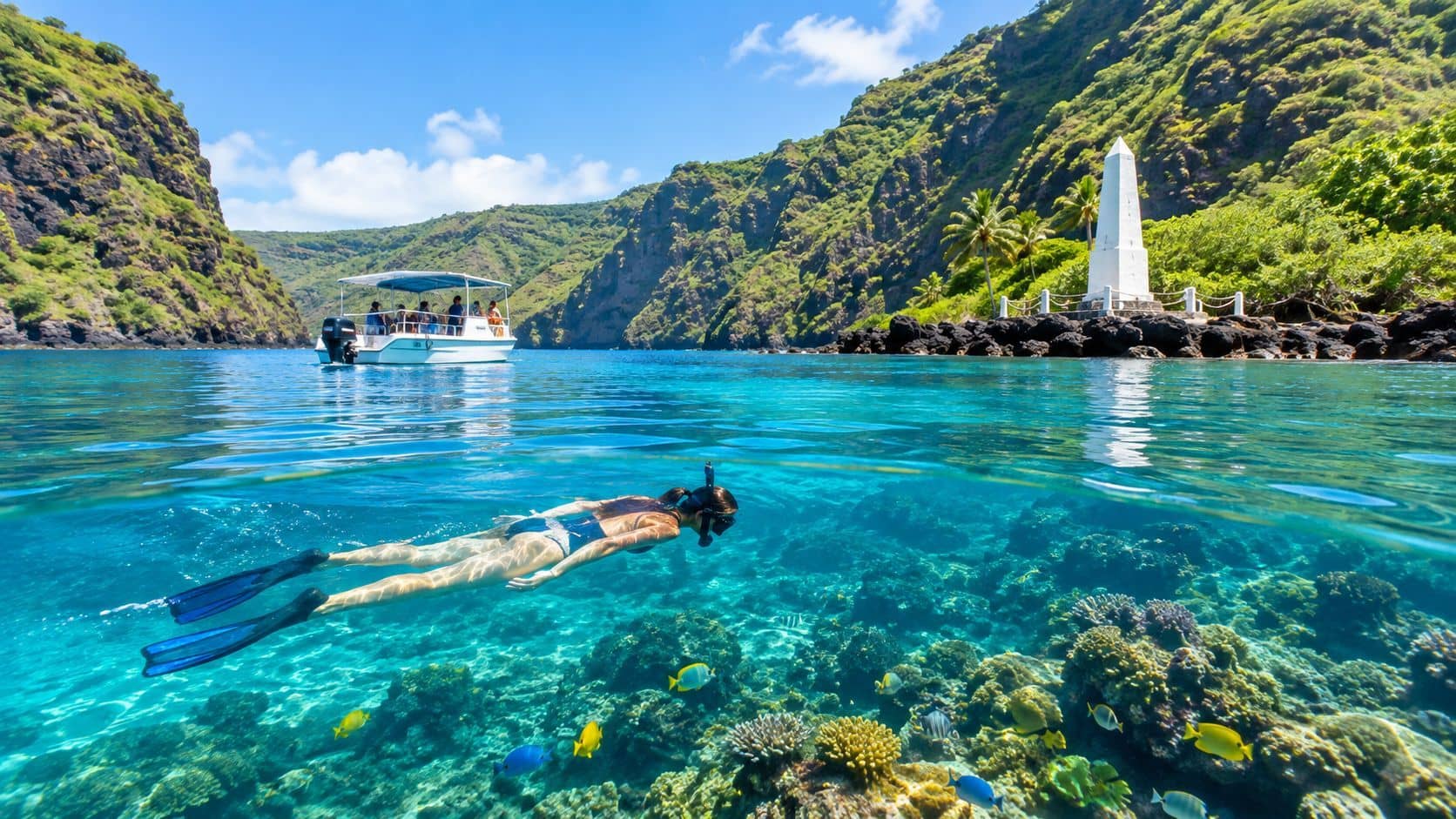
You're probably comparing boat tours, kayaks, and the hike down to Kaʻawaloa, wondering whether they're just different ways to reach the same reef. They aren't. A Captain Cook snorkeling tour in Hawaii is shaped by the bay's history, State Parks access rules, and the practical question of whether you'll feel comfortable swimming in deep open water.
This is the honest version of the day: what the boat and its permit allow, who should come, and how to enjoy the reef and any dolphin sightings without treating the monument shore as a beach stop.
What a Captain Cook Snorkeling Tour in Hawaii Is Like
You pull into Honokōhau Small Boat Harbor, find free parking, and check in 15–20 minutes before departure. There's no hotel pickup, so plan your own ride. Once aboard, the run down the Kona coast becomes part of the day: the cliffs of Kealakekua come into view while the crew briefs you on conditions and what the morning will look like.
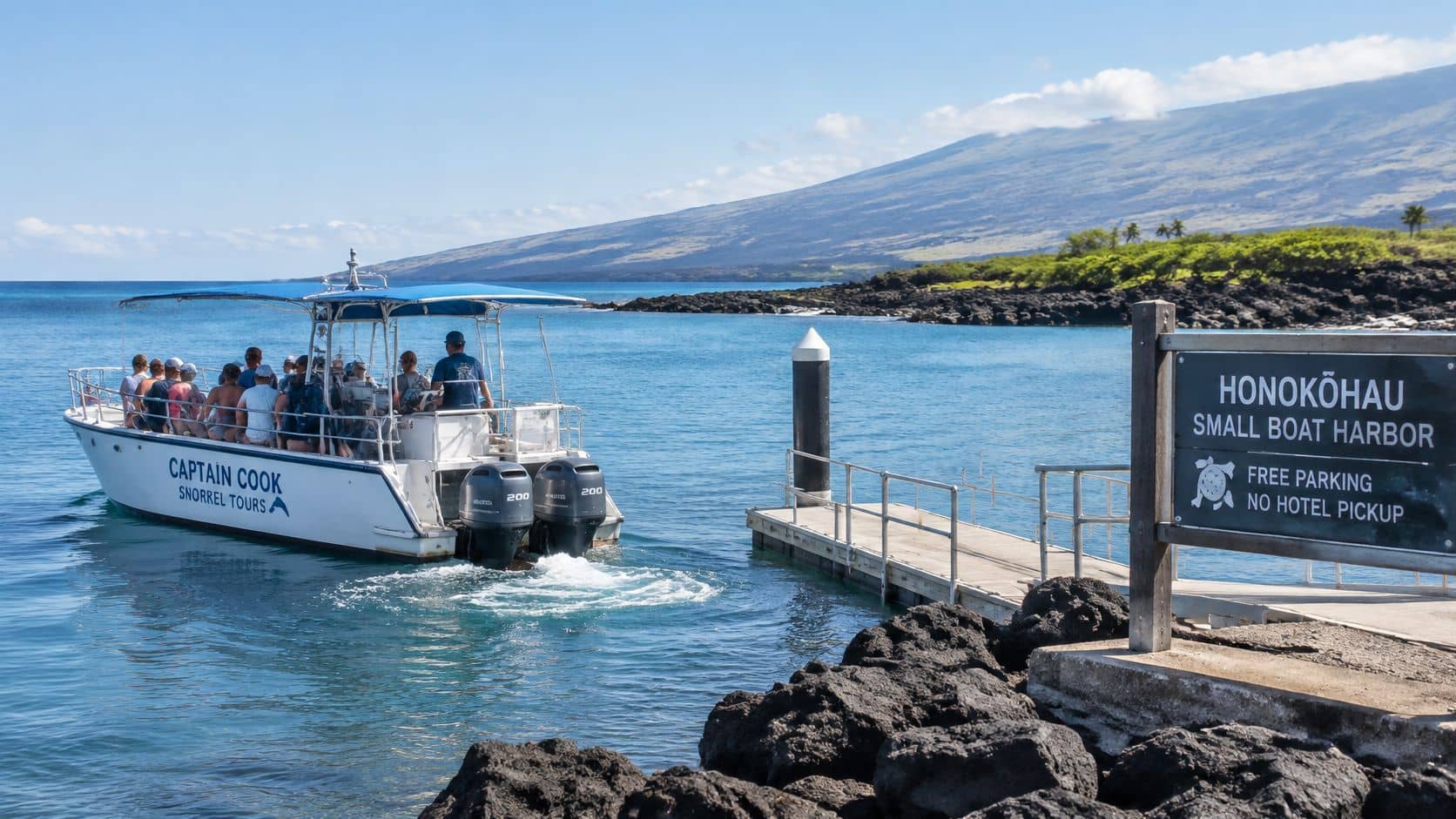
At Kaʻawaloa, your permit sets the terms. A permitted boat can moor in the bay and put swimmers in the water beside the Captain Cook Monument, yet it can't land you on that shoreline. The reef, the monument, and the remains of the old village sit under state protection and cultural stewardship, so you'll view the coast from the water and keep your fins off the coral. That's what sets a sanctioned boat trip apart from reaching the same cove by kayak or on foot.
Expect clear water, living coral, and dense schools of tropical fish. Dolphins pass through the bay often enough that crews watch for them, though nobody honest guarantees a sighting. Gear, snacks, drinks, flotation noodles, and a safety briefing come with the trip, so leave the full snorkel kit at home. Non-swimmers can ride along and stay aboard; anyone who can't handle an open-ocean boat ride or follow crew directions should pick a different outing.
Sunrise and afternoon departures change the feel of the day, and the crew chooses the route based on conditions. Your job is simple: listen, pace yourself, and keep hands off the reef. If you're filling out the rest of a Hawaii itinerary, these ways to enjoy an active summer can round out your plans.
The outing described here is the Captain Cook snorkeling tour run by Captain Cook Snorkeling Tours. Book it once you're clear on the swim requirements and the no-landing rule, and you'll get exactly the day you paid for.
The History and Protection of Kealakekua Bay
A British explorer sailed into this bay during a Hawaiian festival and left it changed forever. A National Park Service account of Cook's arrival and death records that Captain James Cook anchored here on January 17, 1779, during the Makahiki celebrations. The account describes the visit as the first recorded contact between Cook and Hawaiians on the island. The welcome broke down within weeks. Cook was killed at Kaʻawaloa Cove the following month after clashes between his crew and Hawaiians, and after a two-day standoff his remains came back by canoe; the British built a coffin and buried him in the bay.
That history still sits on the shoreline. A 27-foot monument, raised near the site in 1878, stands beside the remains of the ancient village of Kaʻawaloa. You view that coast from the water, and that distance is deliberate.
Keep the setting in perspective: The monument marks a place of history and cultural significance, not a beach amenity attached to a snorkel stop.
A protected reef with rules about where you may go
The swim takes place inside the Kealakekua Bay Marine Life Conservation District, established in 1973. State rules prohibit taking or injuring marine life, removing coral or geological features, and feeding fish. Officials who manage the district describe the bay as nearly pristine, with exceptional coral and fish diversity.
The protections reach past the reef itself. Landing at Kaʻawaloa is restricted, and a commercial boat tour operates under a State Parks permit that covers the vessel and a supervised swim. It grants no shore access at the monument. Kayaks and the overland trail can reach the same coastline, yet each arrives under its own rules and leaves its own mark on a fragile, culturally significant shore. Pick whichever route suits your abilities, and let the permit, rather than your preference, set the boundaries.
For a fuller picture of how this status shapes the visit, read about why Kealakekua Bay is protected. Come to see a living reef and a significant shoreline. Neither is yours to claim.
Who Should Join and How the Day Works
Be honest about your comfort in deep open water. You don't need to be an athlete, and flotation noodles can help you stay relaxed, but you can't stand on the coral if you get tired or nervous. If you're uneasy in the ocean, tell the crew before you enter and use the flotation provided. If you can't swim comfortably enough to follow the safety briefing, staying aboard is the sensible choice.
The trip's published limits matter. Guests must be at least three years old; children must stay with a parent or guardian, and anyone under 18 needs an accompanying adult. People who are pregnant can't join because the boat ride can be too rough, even if snorkeling itself may be fine during pregnancy.
The boat is an adventurous, retired Navy SEAL vessel, not a smooth-water sightseeing platform. The operator doesn't recommend it for a fit guest 75 or older. The trip is also a poor match for people with heart conditions, high blood pressure, severe asthma, significant obesity, limited mobility, a fresh long-haul flight, or neck and back problems. Guests should be in good physical and mental health, and should disclose an EpiPen, inhaler use, or diabetes when booking. Guests 65 and over should expect extra health questions.
What the check-in and permit mean
Wear your swimsuit under your clothes and bring a towel, hat, sunglasses, and a sun shirt. The boat supplies snorkeling gear, snacks, and drinks. Reef-safe, non-aerosol sunscreen is required by law in the bay. For operator-specific details before departure, review what to know before you go.
A valid State Parks permit allows a private or commercial vessel to transit the bay. It doesn't grant permission to tie off or moor without a separate mooring permit, and swimmers may enter the water but may not access the shoreline or land at Kaawaloa Flats by the monument. The state's vessel-permit conditions make that distinction clear: permission to travel through the bay isn't permission to land.
Marine Life and Sights Around the Monument
Kaʻawaloa is not one uniform reef. Coral and marine life can sit close below you in protected shallows, then the bottom falls away into deeper blue water. Start near the boat, get your bearings, and look before kicking farther out.
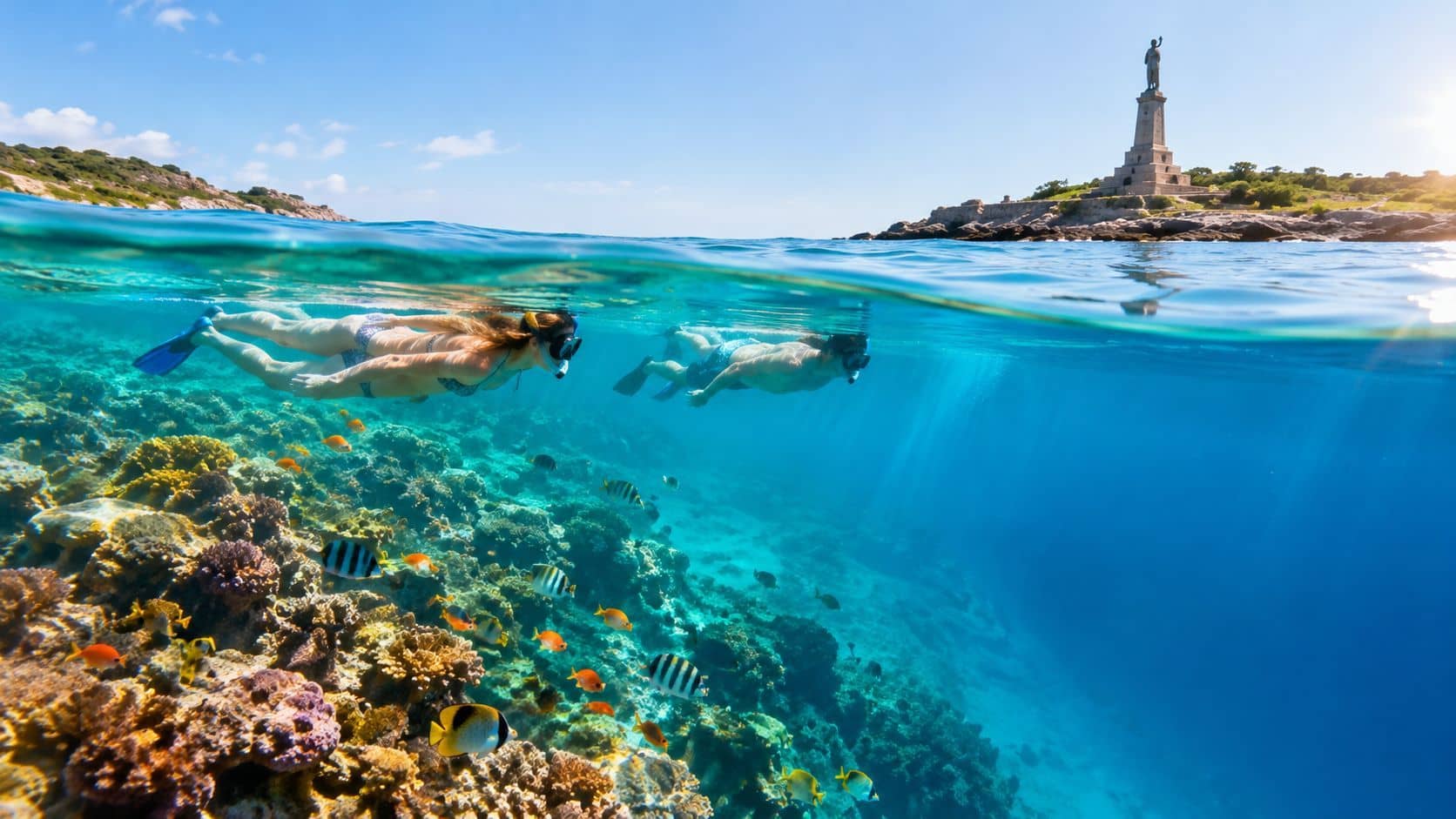
Spend the swim slowly. Pick a coral head and watch the fish work around it rather than chasing every flash of color. Dolphins are often seen in the bay, but a sighting is never guaranteed and is never an invitation to swim toward them. Stay with the group and let the crew manage the viewing.
The shoreline matters as much as the reef. State Parks permit conditions and the Kaʻawaloa no-landing rule keep this a vessel-based visit, so treat the monument shore as culturally significant protected ground. Viewing the monument, coastal cliffs, and sea caves from the boat is the right way to take them in.
For a separate wildlife outing, the Kona manta ray night snorkel is an after-dark trip. Keep it distinct from this daytime visit, where the living reef, historic shoreline, and rules protecting both define the experience.
Reef Safety and Visitor Etiquette That Matter
The crew's pre-entry briefing isn't ceremony. It gives every swimmer clear instructions before they enter a reef where a careless kick can make contact with living coral.
A Hawaiʻi marine protected-area study recorded 153 observed contacts with live coral. Eight contacts, about 5%, caused visibly obvious damage, and seven of those eight were caused by shore-based snorkelers. The research also found that individual behavior strongly influenced impact; boat-based activities produced less impact per dive than shore-based activities, while scuba divers caused more impact per dive than snorkelers. (Study of human impacts in a Hawaiʻi marine protected area)
Use your body and fins carefully
Follow the guide's instructions, then keep these habits in mind:
- Stay horizontal. Floating flat helps keep your fins from sweeping down onto shallow coral.
- Use slow fin strokes. Move steadily, without kicking hard or suddenly changing direction.
- Never stand on the reef. If you need a rest, use the flotation noodle and ask for help rather than putting your feet on coral.
- Keep hands off coral and animals. Look closely, but don't touch, hold, feed, or chase.
- Leave space. Keep enough distance from other swimmers that a new snorkeler doesn't drift into the shallow reef.
Boat conduct matters too. State Parks' permit conditions for motorized vessels in Kealakekua Bay State Historical Park require no-wake speed and prohibit damaging live coral or interfering with marine life and marine mammals. Legal separation distances from marine mammals apply. In practice, that means the boat moves slowly in the regulated area and guests don't demand a closer dolphin or whale encounter.
Reef-safe, non-aerosol sunscreen belongs in this same conversation. What you wear into a marine-life district matters, just as much as where you put your fins. Listen to the briefing, follow the crew's boundaries, and let wildlife choose whether it comes into view.
How to Choose the Right Captain Cook Snorkel Trip
Start with the access question most visitors skip. A kayak, a hike down to Kaʻawaloa, and a permitted boat trip are not interchangeable routes to the same reef. Each carries its own State Parks rules, and the monument shoreline is a protected cultural site, so plan to snorkel from the water and stay off the land unless your access method specifically authorizes landing. Operators that take the permit system seriously tend to run the better day anyway, because their crews manage where you swim instead of leaving you to guess.
Question — What the rule allows — What it does not allow
Can a vessel transit the bay? — Transit with a valid State Parks permit. — Entering without the required permit.
Can the vessel stop or tie off? — Mooring when separately authorized. — Tying off or mooring without a mooring permit.
How should a motorized vessel operate? — Slow, no-wake travel in the park. — Creating a wake or damaging live coral.
How should guests treat marine life? — Observe without interfering and keep required separation from marine mammals. — Touching, tampering with, chasing, or crowding wildlife.
Choose for guidance, not just access
Pick the trip by what the crew controls, and be skeptical of any operator that can't explain its permit. A good one states its status up front, briefs you on the no-landing rule before you hit the water, supplies gear and flotation, and tells swimmers exactly where the shallow coral starts. Captain Cook Snorkeling Tours runs that kind of outing: small groups, experienced captains, a real safety briefing, and sunrise and afternoon departures that stay inside Kealakekua Bay. If you want the boat to yourselves, the private Captain Cook excursion makes sense for families or mixed-ability swimmers who need the crew's full attention.
Sort out the travel side before you commit. Expat Global Medical's travel insurance guide walks through the questions worth asking before an active trip, and it works alongside the operator's own health questions at booking.
My recommendation is simple. Choose the permitted boat trip with the strongest briefing, pick the departure time that matches your comfort in open water, then confirm your spot.
Hawaiian coral reefs support real public and private value. Choosing a permitted, low-impact trip helps protect the reef that makes this experience worth taking.
Packing Tips and Your Next Booking Step
Pack for a boat swim, not a beach day. The State Parks permit behind this trip lets you snorkel the bay from the water; it does not include landing at Kaʻawaloa, so leave the beach chairs, coolers, and shore picnic plans at the hotel. Wear your swimsuit under your clothes, then bring a towel, hat, sunglasses, and a sun shirt.
Pack reef-safe, non-aerosol sunscreen only. The boat supplies a mask, snorkel, fins, flotation noodles, snacks, and drinks, so a full gear bag stays home. For a fuller checklist, use this guide to what to pack for a snorkel day in Kona. If you are choosing sun protection for a warm, humid destination, this resource on how to choose sunscreen for humid weather helps you weigh comfort against coverage. The bay's rules still make the final call: reef-safe, non-aerosol.
Make check-in and booking straightforward
Allow 15–20 minutes for check-in at Honokōhau Small Boat Harbor. Parking is free and there is no hotel pickup, so arrange your own ride. Answer the health screening accurately at booking: disclose EpiPens, inhalers, and diabetes, and expect extra questions if anyone is 65 or older.
One honest tip: book early in your trip, not the last day. Refundable tickets can be changed or canceled up to 48 hours ahead, and if ocean conditions force the operator to cancel, the refund is full. An early slot leaves room to rebook if weather shifts. Check the terms on your ticket so you know which rules apply.
The reef is worth the care. A NOAA-supported assessment estimates that Hawaiian coral reefs generate about $364 million in average annual benefits, including about $304 million from recreation and tourism, roughly 85% of the total, and values the Main Hawaiian Islands' reef assets at nearly $10 billion in present value using a 3% discount rate. (NOAA's overview of Pacific coral reef benefits) A no-contact swim is how you respect that asset in practice.
You already have the trip details and tour comparisons from earlier in this guide, so review those and pick the departure that fits.
Captain Cook Snorkeling Tours offers guided boat trips to Kealakekua Bay with snorkeling gear, a safety briefing, and crew guidance for the swim. If the age, swimming, and health limits fit your group, visit Captain Cook Snorkeling Tours to review the trip and book a permitted small-group boat.